It’s Not Too Late

pexels-photo-289740.jpeg

There is a teacher shortage. Schools of education at universities across the country are finding it more and more difficult to attract students. Young people are entering the Teach For America program to eliminate loan debt, but rarely staying past the the required two year term. Even experienced educators are leaving the profession far more frequently than their counterparts of the past. Concerns that this trend will lead to a crisis in our schools are being whispered but only minimally addressed, mostly without the kind of difficult and honest discussions that are needed. Will we one day awake to find our classrooms packed with children, but understaffed with qualified adults to guide them in their educations?

The problems inside schools began long ago when the public took it for granted that intelligent women would provide the bulk of the heavy lifting in education. There was indeed a time when there were few career paths readily available for college educated females beyond teaching or nursing. A few brave souls became doctors, engineers and such, but mostly those avenues were exceedingly difficult to travel. The roadblocks for women were quite real save for the worlds of service. The best and brightest were often attracted to the idea of educating future generations, and many women found a way to display their intellectual talents in classrooms across America.

All of that began to change once pioneering souls pushed their way into what had always been male dominated professions, sometimes at great personal cost. Slowly opportunities in high status, well paying jobs opened for more and more women. Schools were no longer able to assume that the cream of the female academic crop would automatically opt for traditional roles in the nation’s schools. Teaching more and more often became a vocation with only the most dedicated individuals willing to endure the low pay and increasingly low opinions of the public toward educators. The mantra “Those who can’t, teach” became a national indictment of the teaching profession, and all the while did little or nothing to shore up the reputation of the career while also creating increasingly more difficult demands for those who stayed.

Teaching is a rewarding profession, but mostly in psychological rather than tangible ways. Most educators are akin to missionaries in their zeal, and like those who toil to save souls they rarely achieve the levels of financial success accorded to their college educated peers in other careers. Their work hours are much longer than the visibly prescribed school day, often extending into the late night at home and intruding on the time shared with their families. The public perception that teachers are paid sufficiently because they do not work for three months out of the year and are finished during the school year at three in the afternoon is a falsehood that somehow continues to be perpetuated by government bureaucrats who set teacher salaries at the lowest possible levels. Anyone who has ever taught knows of the late night planning and grading marathons that extend daily hours to ridiculous levels, not to mention the required training sessions that have reduced summer vacations for teachers to little more than a month. If educators were actually paid by the hour for every minute that they spend engaged in their work they would all be earning six figure salaries. As it is they are likely to find less financial security both during their active working years and later in retirement than those who work for the United States Postal Service.

If pay were the only concern for the teaching profession there would still be legions of altruistically centered individuals who would be attracted to the profession because of the sheer joy that comes from helping young people to learn. It is noble and important work. Sadly it has become so politicized that it has been made more and more difficult to endure. The responsibilities piled on teachers and the lack of respect accorded them have made the work less and less attractive to all but the most dedicated. Teachers constantly hear the insults of politicians and the public hurled at them. Our president speaks of them with disdain. Parents wince when their bright children indicate an interest in being educators. Reformers tend to listen to everyone but the teachers in crafting plans to improve the situation. All the while once willing teachers are driving away from schools never to return to what they view as a far too difficult and thankless task.

Perhaps the true caliber of our nation’s teachers is no better illustrated than in the horrific times that a shooter comes to a school intent on inflicting harm. Time and again educators protect their students with their very lives, taking bullets rather than allowing their kids to become victims. The heroes who do such things are not as unusual as they may seem. Teachers, like first responders, do not run away from such situations They stay to insure the safety of their charges. It is who they are, and yet we rarely see events honoring them the way we do our military, police officers and firefighters. Teachers quietly maintain the safety of our children day in and day out with little or no fanfare. Now adding insult to injury there are some who would have them train to use guns in the event of an emergency, all while we ridicule them and complain about how ineffective they are.

Teachers have been tirelessly doing their jobs with pay that does not fairly compensate them in conditions that are enormously stressful and without the kind of appreciation that they have duly earned because they understand the importance of their work. They are generous individuals who don’t require much more than the knowledge that they have made a difference in people’s lives. We as a society have taken advantage of their good natures far too long. Unless we begin to recognize their enormous contribution to society by honoring and compensating them fairly we may one day take our children to schools and find that they are closed for lack of manpower. The handwriting is on the wall. It is time to remember, appreciate and hear the dedicated individuals who provide the foundation of all that runs the engines of our society. It’s not too late, but if we wait too long it may be. 

So Beautiful To Me

pexels-photo-658687.jpeg“She woke up every morning with the option of being anyone she wished. How beautiful it was that she always chose herself.” —-Unknown

I was a gangly, awkward girl all the way through high school, so shy that I often hid in the library pretending to do homework so I wouldn’t have to mix it up with my fellow classmates in the cafeteria each morning. I often found myself wishing that I was more like this girl or that. There was the beautiful young woman with that almost electric smile, the sweet person who was able to talk with anyone. All of them had something that I wanted and thought that I would never have, a car, a boyfriend, tons of confidence. I was a mound of teenage angst, and all the while so was everyone else but I had little idea that they were as confused and self conscious as I was.

Ultimately I grew up, literally overnight. When my mother had her first and scariest mental breakdown I found myself mostly on my own in finding her the care that she needed. My love for her was so strong that I was able to pull strength from deep inside my mind that I never thought that I had. At first I simply copied the attitudes of the women that I knew and admired for their courage. Eventually muscle memory trained from encounters with doctors and bankers and such transformed me into my own person. I no longer needed to pretend to be someone. I knew that I was someone.

I met a married a remarkable man who loved to tell the story of how he was “thunder struck” from the moment that he first saw me. He became my best friend and my muse. He thought that I was beautiful just as I was and that even my imperfections were made me unique. I was hardly the kind of person who would turn heads in a room full of people, but he convinced me that loveliness begins from inside and radiates outward with little relationship to external features. It is an aura derived from depth of character and inner determination to live life with joy.

I vividly recall the very day when I totally embraced and chose myself. It had started with an unremarkable daily routine of washing my face and brushing my teeth. I was in the process of hopelessly attempting to tame my fine fly away hair when I caught a unique glimpse of my image in the mirror. It was as though I was seeing myself with a new set of eyes, and I realized how much I liked me. I smiled at the realization that even if I had the option of being anyone I wished, I would choose myself. It was a stunning moment that transformed me forevermore. It was as though I had unlocked the power that had always been there, but I had never before realized.

Over time I worked with young adolescents in middle schools and high schools. I saw their unsteadiness firsthand, and understood that even the most self assured among them was in truth filled with self doubts and sometimes even self loathing. Trying to fit into our own skin is a painful developmental process that takes as much time to achieve as physical or academic growth. Researchers into such things now know that our brains are not fully developed until well into our twenties and even then some of us take a bit longer. Just as babies meet their milestones at varying ages, so too do we adults find and believe in ourselves at different times of life. Sadly there are those who sometimes never reach a point of fully appreciating their own essences.

Of course it is in our natures to question ourselves from time to time. The stresses of living bear down on us and cause us to become dissatisfied. We look over our fences and invariably find grass that is greener than ours. There is always someone who ages more gracefully, drives a better car, lives in a more exclusive neighborhood, earns more money. If we spend a lifetime of comparing we are continually wishing to be someone other than ourselves. We never quite reach that joyful moment of truly liking ourselves and wanting to be no other, or we interrupt our contentment with waves of jealousy.

I once read a book whose title now eludes me that posited a theory that even if we were to have multiple opportunities to think and act in ways other than the ones that we initially chose we would in all probability react to various people and events in much the same way. In other words we each view the world based on our genetics and environmental realities, and those factors guide our thinking through a series of motions and emotions that slowly but surely teach us how to be. We become ourselves through trial and error, and hopefully learn to accept ourselves with whatever strengths and weaknesses we may have. As mature adults we work with what we have to make the changes that we desire. We learn to use our best traits not so much to make ourselves more attractive, but to better the world around us. The most lovely among us are those who have been able to think less about how they may appear and more about how to help the people they encounter.

I now enjoy and embrace the opportunities to be with the individuals who once walked the halls of my high school with me. We have all grown older and wiser and far more beautiful than ever before. Our thoughts are not of who seems to have done the best, but simply of each other’s welfare. We know and like who we are as individuals and we revel in the well being of every member of our group. Looking back we are able to see that our blessings have outweighed our trials. All of us know that our thinning hair and expanding waists do not define us. The wrinkles on our faces and wear and tear on our hands are badges of honor, bearing witness to our hard work and compassion. The mistakes we have made attest to our adventurous spirits. We smile at the images in the mirror without seeing the flaws or wishing that it were that of someone else. It is beautiful to choose ourselves.

The Legacy

Mary B. Ulrich & Sharron

We each possess a unique gift which we might give our children and our grandchildren. It is the story of who we are and from whence we have come. The links that we provide from one generation to the next form a foundation for the young. Sometimes to get where they are going they need to know where they have been. They learn this when we tell them about our family history. 

I grew up in two different worlds. The first was marked by refinement and a certain level of privilege. Before my father died we lived in homes that were newer and more spacious than those of the other members of our extended family. Our house was always beautifully furnished and filled with books and music. We went on yearly vacations, traveling all over the United States in fancy cars. I mostly took my good fortune for granted. I had little idea how much work it had taken my father to earn his college degree so that he might have a well paying job that supported our lifestyle. I did not then understand that our position in the middle class had been an enormous social leap for both of my parents. I had no idea that our situation was as fragile as it actually was.

Part two of my biography was one of great challenges. My father’s death changed our situation in palatable ways. Our economic status shrunk overnight. My mother had to use her intellect and resources to stretch our budget into almost impossible proportions. Every decision had to be weighed and measured with great care lest we find ourselves without the basics of living. Somehow she always managed to see us through each struggle that we faced, but I still find myself wondering how she performed so many miracles. We had just what we needed to survive and not a bit more. Vacations became a thing of the past other than visiting our grandparents’ farm. Somehow in spite of the rigidity of our budget we never felt deprived. Our mother put food on the table at every meal and kept our few articles of clothing clean and mended.

As children we were entertained by friendships with children in the neighborhood. We built forts out of Christmas trees or by hanging sheets and bedspreads on the clotheslines where our laundry dried on warm sunny days. We held games of Red Rover and Swing the Statue in the front yard and rode our bicycles down to the woods or the park. Someone was always inventing some adventurous way of spending the daylight hours, and everyone ran free in their shorts and bare feet so that we hardly noticed that we may not have had clothes as fine as theirs.

On Friday nights we always went to visit our Slovakian grandmother who welcomed us with  mugs of sugary coffee laced with so much milk that we hardly noticed the taste of the brew. She gave us slices of fresh rye bread from Weingarten’s grocery and on very special days fried up slices of round steak in her big iron skillet.

The most English we ever heard from her was her greeting of “Hello, pretty boy/girl.” She made us feel loved and special even though we never once were able to have a conversation with her. Most of the time she sat in her chair and in the corner of her tiny living room smiling at us while we ran around like a bunch of noisy hell cats. My aunts and uncles engaged in games of penny poker or argued as though they were still young children vying for their mother’s attention. We played “hide and find,” our own version of the childhood game that has been around for centuries. Sometimes we created our own family newspaper or watched episodes of “The Twilight Zone” or Friday night wrestling.

We often sat in our bachelor uncle’s bedroom talking and telling jokes within view of his loaded pistol which we would never have dared to touch. Sadly we did use his records as coasters for our drinks, but he didn’t seem to notice our disrespect for his prize collection of music from Louis Armstrong and other jazz greats. We knew that he worked for the Post Office and had once been a railroad man until he broke his leg in an accident. He had matchbooks from gambling spots in Galveston and there was a mysterious air about him. He was both a bit scary and a great big teddy bear at one and the same time and he loved us all.

We often wondered about our grandfather who had died before most of us were born. We knew little of him, but heard that he had worked at a meat packing plant all the way up until the time that he had a stroke from which he eventually died. He had built a huge library of books of all sorts that he brought home one at a time each Friday evening after he was paid. He owned a cow that provided milk for his eight children and cherished the goal of one day having a farm of his own. Each Sunday afternoon he gave his family lessons on morality and good citizenship and taught them to be proud of who they were. I would have like to have met him because I think he must have been a very interesting man.

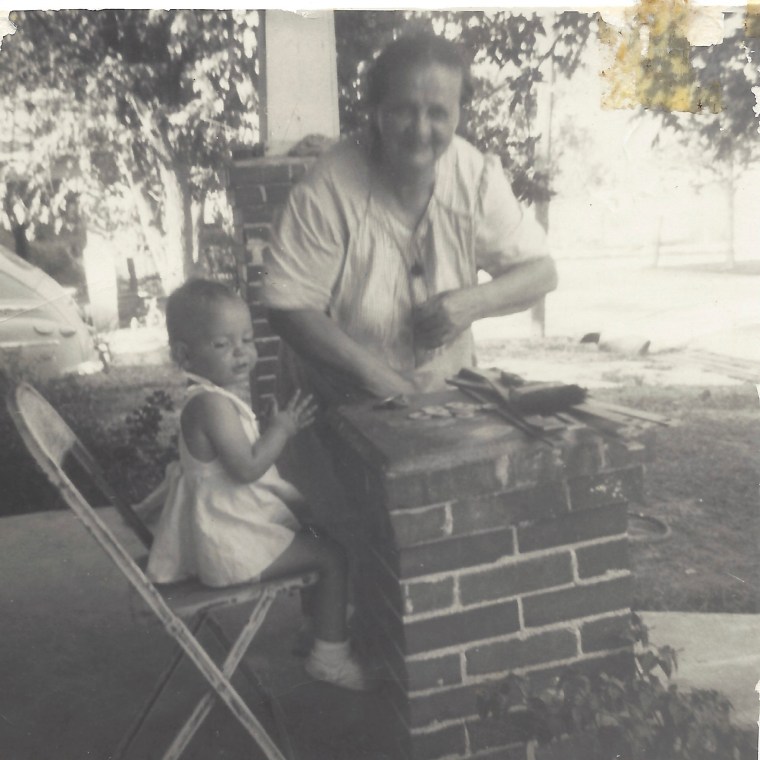
On Sundays we always went to see people from our father’s side of the family. Our mother thought that it was important for us to stay in contact with them. My paternal grandmother was a tiny woman who was famous for her cooking. Going to her house always meant that we would be treated to an extraordinary meal. When she wasn’t busy creating yummy dishes, she was either crocheting or embroidering or making quilts. Her sewing was like delicate works of art and her crooked old hands belied her ability to weave intricate stitches and knots. Her gardens were legendary and she even knew how to talk with birds. I always found it fascinating that her knowledge of the world was encyclopedic given that she was illiterate. I don’t have any recipes or instructions from her because she carried all that she knew inside her head.

My grandfather was a strong man with great big hands that he used to build things. He smoked a pipe and told the most delightful stories. He might have been a wonderful writer but for lack of time. He worked until he was eighty eight years old and only quit because his supervisor thought that his advanced age made him a liability. He read for hours every single day and was able to quote passages well into his nineties. He drove an old black Plymouth whose leather seats smelled of sweet tobacco. Life had always been hard for him, but he was a survivor of the highest order and insisted on maintaining optimism no matter how terrible things became.

I learned that I was from strong stock, people who were determined to live and love and carry on regardless of what befell them. They taught me the value of hard work, education and determination. They helped me to realize that I need not be held back by my circumstances. They encouraged me and my brothers to dream big and to believe in ourselves. They were always there in both the good and bad times. We knew that we were never alone, and still aren’t. This is who we were and what has made us who we are. Our children and grandchildren are part of the unending thread that traces back through the centuries. I hope that they always remember how grand and noble their heritage truly is. The legacy of their family is indeed rich.

The Dialogue

28280054_10215824501665701_6479894520174864930_n

Teachers talk all of the time. They desperately want to do the right thing for their students. They literally take their worries and concerns home, sometimes keeping them awake in the dark of night. Their constant worry is whether or not they have done all that they possibly can. They wonder what is really most important for preparing their charges for life. Is a laundry list of knowledge and skills enough, or is there actually something more important than grades and test scores? What is the recipe, the correct ingredients, the proper method for putting a life together?

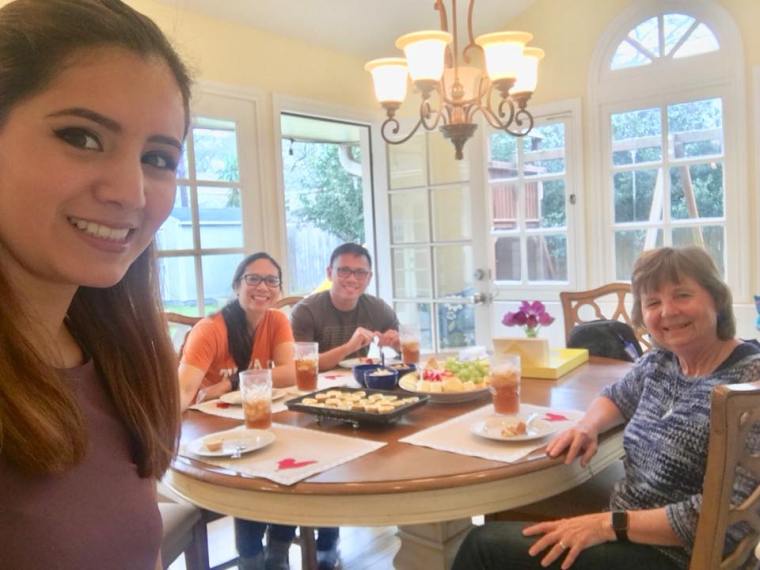
This past weekend I was with two extraordinary educators and a student who is on the brink of launching her career after spending most of her life learning. We spoke of our concerns about education and all agreed that what is too often missing is the opportunity to help young people develop a foundation of particular traits that will serve them well in any situation. The young lady who had once been our student is a stunning example of a process gone right. She earned a bachelors degree in psychology and immediately followed up by working toward a masters degree in clinical counseling. It has taken her almost eight years to reach her goals. In that time she has had to work as well as study. Somehow she understood the need to focus on the prize, often with great sacrifice. She adhered to an unwavering belief that God must always be first, family second and career third. All are important, but always in that order. She values life from birth until death and plans to work in palliative care at a hospital. Somehow she has made her journey appear to be easy, but we know that it was not. She had the same kind of stresses and problems that all humans have. perhaps even more, and yet she was able to overcome them and remain healthy, optimistic and kind. What we wondered gave her the courage and confidence that she must have needed on many different occasions? Why was she able to find joy and success when so many falter and fail?

One hint that she humbly provided was that her core of values guide her along the way, but mostly her faith. Her heart is strong and it is her foundation. She is willing to work, and always determined to make a difference in our society. She is less concerned with grades or scores or rankings, and more inclined toward finding purpose in the things that she wants to do. In other words, she has found a passion for people and good works that motivates her to keep going even when times become difficult.

As we explored many ideas we concurred with her philosophies and noted that as educators we have the power to help our young develop a sense of meaningfulness, but all too often our jobs force us to concentrate on areas that are far less important. We become distracted and fractured and unlikely to have either the time or the energy to encourage each and every one of our students. We want to help them on a deeper basis but know that other demands cause us to fall short. It is frustrating, maddening even. We are in the trenches with society’s most important resource and all too many times we are bombarded with so much bureaucratic minutiae that we have to ignore our own instincts about what is most important in the care and guidance of our young.

I recall a workshop from long ago criticizing the American tendency to teach a vast array of concepts in a shallow manner as opposed to going deeply into a few key concepts. As a mathematics teacher I always felt as though I was in a race to keep up with all of the topics. Too many times I was forced to move ahead even when I sensed that my students had not yet mastered what they needed to know. I wondered why I had to teach them how to create a stem and leaf plot when they lacked an understanding of fractions and decimals. I felt that I was somehow contributing to the slow destruction of their confidence, I wondered if they would one day be telling people that they were not good in math because I had made them feel inadequate by ignoring their need for just a bit more time to master certain ideas.

During my career I worked in a variety of schools. The best of them created situations that allowed our students to feel as though they were members of a caring family. There were adults watching over them and helping them to develop traits that would serve them well in any situation. We taught them to work hard and be nice. We reminded them to remember and appreciate kindnesses. We urged them to leave any place where they wandered in a better state than they had found it. We rewarded character as much as grades. We taught them about wisdom and honor. We joined hands with their parents in the work of caring for them. We showed them how to rise to great expectations even as they stumbled in the process. We encouraged them to demonstrate true grit, helping them to realize that those unwilling to give up will ultimately enjoy great accomplishment and happiness. Mostly we wanted them to know that they were never alone. There would always be someone on whom they might rely.

Dialogues such as the one I enjoyed with my colleagues and a former student are commonplace among teachers. We understand how critical our roles truly are. Educational reform is happening every day in small ways inside the classrooms of the majority of dedicated individuals on whom our future depends. Teachers are changing lives one student at a time, and when they witness the fruit of their labors in the form of an adult who is ready to commence the heavy lifting of important work, they know that their efforts have not been in vain. Such a realization is a teacher’s greatest reward.

The Virtue In The Body Of The People

pexels-photo-296881.jpeg

“The general Government…can never be in danger of degenerating into a monarchy, an Oligarchy, an Aristocracy, or any despotic or oppressive form; so long as there is any virtue in the body of the people.” George Washington

People that I love are afraid. People that I love are deeply saddened. People that I love are angry. People that I love have grown cynical. My daughter worries that her beautiful sons may become targets for a crazed gunman at their schools. A former colleague in education just wants to cry as he hears his students asking what they should do if a shooter comes to their classroom. A principal fields the concerns of his teachers who now see every backpack brought into their classrooms as potential trouble. A former student struggles to recover from the trauma of being in the recent shooting incident in Las Vegas, and even as she makes progress news of more tragedy shakes her confidence. She attends a movie to help alleviate her stress and overhears children discussing what to do if an attacker brings havoc to the theater. As a nation we are deeply troubled and we want to do something, but all we hear are the same knee jerk reactions from our President and Congress and little desire to do anything other than say prayers or blame everything on guns. We already think we know that this will end with nothing being done almost ensuring that there will be yet another mass shooting sometime and somewhere in the future.

Washington D.C. has lost it’s resolve and worries most about invoking the ire of the various and sundry bases. Instead of representing all of the people our leaders now see themselves as only being beholden to a narrow group of people who finance their campaigns and mold their political philosophies. They don’t seem to realize or care that vast numbers of citizens need them to work for them as well. This should not be a nation of laws built only on the voices of about thirty percent of the electorate at any given time. Our lawmakers and executive should be attuned to the concerns and desires of the nation as a whole. While each elected official certainly has a foundation of devoted supporters, most elections are won with the votes of independent thinkers who choose sides based on a multitude of reasons. They need to be heard and their opinions heeded. All ideas both pro and con must be considered without knee jerk reactions. Taken together answers to the problems that face our nation will be found, but if our leaders continue to voice the same tired platitudes nothing will be done. It is up to the virtuous citizens of our country to demand a sincere effort to curb the murderous trends.

Gun violence is a plague on our nation. We have all heard that most of the shooters in such incidents would not have been subject to many of the proposed laws. The thinking appears to be that since none of the suggestions for solving this dilemma would be a hundred percent effective then it is best to do nothing at all. On the other hand there are those so focused on gun control issues that they continue to miss the point that law abiding gun owners fear that their rights will ultimately be curtailed. Both of these groups need to set aside their prejudices regarding this issue and open their minds and hearts to the myriad suggestions that are circulating among the people of this country.

One of my former students noted that this is a heart issue. He was of course alluding to the social, emotional and mental health aspects at the core of many of the shooters’ motivations. While there are exceptions, in general most of the killers have displayed signs of gravely deviant behavior long before embarking on their murderous sprees. All too often they live in isolation, growing more and more dark while those who know them either throw up their hands in frustration or turn away entirely. We have to create avenues and programs for helping them even if ultimately that means committing them to psychiatric care facilities. It will be difficult but the process of dealing with those whose minds have become sick is almost always a long journey. We should not leave the individuals or their families to travel alone.

A former principal posted an article about a teacher who uses a simple exercise to find the students in her class who are feeling alone or being bullied. Each Friday before they leave her room she tells her pupils to name four people with whom they would like to sit in the next week. She prompts them to tell her whom they most admire in the class as well as the names of students about whom they are worried. She spends hours over the weekend studying the responses so that she might identify the loners, the unloved, and then she makes certain to reach out to those children and their parents. This same teacher insists that parents attend tutoring sessions with their children. She wants the adults to understand what their children are learning, but mostly she wants to create a bond between the school and the families.

We need far more of this type of involvement from our teachers and our schools if we are to identify troubled souls long before they are so sick and enraged that they are killing others. Dividing large schools into smaller, caring groups can often solve the problem of having students fall through the cracks. In one of my former jobs each teacher belonged to a team that consisted of educators representing each of the core subjects. All of the the team members taught the same students and met several times each week to stay apprised of any brewing troubles whether they be academic, behavioral or both. They discussed ways to support one another and their students. Part of their discussions always included making note of pupils who had become withdrawn or who appeared to have few or no friends. Such a team approach needs to be implemented in all schools so that no child will become a cipher.

I recall a teacher with whom I worked talking about the community efforts to help children when we were growing up. She noted that if one of the neighborhood kids did something vile his/her actions were immediately reported to the parents. The youngsters understood that they were being watched and protected. They realized that there were many people who cared about them. I loved such stories because they reminded me of my own situation. My father had died when my brothers and I were very young. The people of our neighborhood quietly took on the job of helping us. There were wonderful men who encouraged my brothers to join sporting teams and taught them how to build things. All of us were included in the family circles of so many of our nearby friends People took the time to let us know that we were not alone and should not be afraid. We turned out well through the efforts of my mother, but also because of a vast support system from the people who lived near us. Thus it worries me that we have so little interaction in many of our local communities these days.

Of course there is also the issue of controlling the use of guns in our nation, even knowing that there will no doubt always be an illegal underground just as there always is in such instances. There are many common sense things that we can try that will have no effect on law abiding gun owners. The old Brady Bill from the Bill Clinton era had some notable ideas. Perhaps we should revisit that law and then find ways to improve it. It makes sense to strengthen the kind of background checks that we presently have to fill in the cracks that exist. We can take another look at tightening the ages at which individuals can purchase and own guns to mirror the laws for alcohol. We have to ask ourselves what type of guns and ammunition need to be prohibited. The average gun owner doesn’t require an arsenal for protection, so instituting such changes will hardly affect most people but it may help to reduce the availability of weapons for those contemplating mass murder.

We can tighten security at schools with architectural changes and the use of technology. We don’t need to arm our teachers. That will only create a whole new set of problems. If we want to hire well trained guards, we need to understand that they will not provide a complete answer. It will only be by admitting to the complex nature of overhauling the many problems that lead to such tragedies that we may begin to reduce the violence.

When I was as young as many of the victims of the horrific massacre in Florida movements to end the egregious war in Vietnam and to provide basic civil rights to all Americans began on high school and college campuses. It was when students across the country joined the efforts of adults who were already working to foment change that more attention was drawn to these issues. A revolution not unlike that of the founders of our country began to unfold and it continued until all of the collective voices exerted enough pressure that they were finally heard.

In this present time there are plans for young people to mount a campaign to bring about changes to make our schools and our movie theaters and our music venues safe again. I applaud them in advance and urge them to remain patient and willing to stay the course. I believe that this is a watershed moment in our country being lead by the virtue in the body of the people. I suspect that George Washington would approve.