
 A life is touched by what is happening on the worldwide stage and what is happening inside the privacy of a home. Each of us evolve from the basics of our DNA through the millions of great and small interactions that we have with life outside of our own bodies and souls. Whether our existence is isolated or played on a global stage we become unique individuals based on everything that happens to us and the way in which we choose to adapt to our circumstances. Our destinies are driven both by our free wills and our circumstances. How we view life and react to its challenges is influenced by what we have seen and heard but ultimately each of us has the capacity to direct the ways in which we face down difficulties. Nobody is immune to troubles but many learn to deal with them with courage and optimism.
One of the highlights of my career as an educator came when I worked for a KIPP Charter School. Much like humanity it was not a perfect system but it got most things right. The founders liked to use slogans, something that is usually a bit annoying to me. There was one, however, that spoke loudly and clearly to my soul, “No Excuses.” I had based most of my life on that very concept and I had found it to be a saving grace. When I spoke to my students of overcoming difficulties I was not just some middle class maven from the suburbs attempting to sacrifice myself to kids from harsh circumstances. I had walked in their shoes. I understood what it was like to grow up with economic and social challenges. I knew them, not from books and theories but from my own story. What I also understood was that they didn’t have to be trapped in a forever world of poverty and want. I had used my talents to escape from the cycle that had daunted my family for generations and I knew that they had the power to do so as well.
So many of our leaders are kind hearted souls who only imagine what life is like for the have nots in our society. They generously work to improve conditions for people but have never known the feelings that come from want and dysfunction. They went to plush doctors’ offices as children rather than sitting for hours in a public clinic or a hospital emergency room because their parents had insurance and the funds to pay deductibles. They don’t possess any real concept of the fears and the troubles that so many children in our society endure on a daily basis, but I do.
Long ago I went to a movie with my husband when we were still dating. I can’t recall much about the film but there was one scene that has stuck with me forever. The hero of the story was a poor boy from quite sad circumstances. He had earned a scholarship to a renowned university where he managed to pose as someone from a successful family by dent of his intellect. He met a beautiful and well to do young woman and the two of them fell in love. She was anxious for him to meet her family and so in time she arranged for the two of them to spend a weekend at her home. When he saw the luxury in which his girlfriend had lived for all of her life he was suddenly overwhelmed. In one scene he opened the refrigerator to see a cornucopia of plenty. He was mesmerized by the sight of fruits and vegetables and snacks of every variety all there for his taking at any time of day. His girlfriend was unable to understand why the sight of a full larder had so affected him, but I knew exactly what was happening in his mind. I had never seen such a vision of edible riches either. In fact, there were many times toward the end of a month when the inside of the refrigerator in my home was almost bare. I momentarily shifted nervously in my theater seat as I watched the movie unfold because I realized that my date, who would later become my spouse, had experienced a far more comfortable existence than I had. I related far more easily to the poor of all races than with the white middle class.
As a child I was driven by both fear and determination to use my talents to ultimately loosen the grip of poverty and uncertainty that had so often dogged my family after my father died. As an adult I made it my vocation to show young people the way out of economic want. I had learned that excuses about my past only proliferated my problems. I took command of my destiny and worked my way out of the difficulties that had stalked me and my ancestors for generations. I realized that I lived in a time when there were far more opportunities for success than there were excuses for standing still.
I learned much from my mother and my teachers about hard work and diligence. I was often slammed by circumstances but I watched and learned and kept moving forward even when it was painful and I was exhausted. I used my wits and my hard work to achieve a lifestyle that is comfortable and secure. For decades I attempted to teach my students the same skills and attitudes and many of them have succeeded beyond their wildest dreams. I suspect that they accepted my advice because they somehow knew that I was real when I told them that I understood.
It is laudable for the wealthier classes to work for the good of the less fortunate but they so often underestimate the gravity of dire situations and the pride of those who endure economic challenges. It is painful to hear someone pontificating about parents who have been unable to provide for their children. It does little good to publicly point to the obvious. Kids in difficult circumstances want to be shown the way to improve their lot without attention being placed on the things that they lack. They also desire a bit of understanding and compromise when they struggle to meet expectations.
I recall a young man who needed to work each summer to add to the family income. The school insisted that he participate in a formal internship program that provided mentoring and experience but no money. He stood his ground and asked that he be given credit for doing his job. The hapless administrator was unable to see that the knowledge and skills that he gained in securing employment, clocking in each day, and saving his funds for a rainy day was in reality as valuable as the internship that she had designed. Sadly she demonstrated to this student and his family that she was clueless about the reality of their lives.
I saw many such situations play out over and over again. Teachers were often ignorant of the juggling acts that students had to endure just to exist. So many of our kids quietly attempted to work at low paying jobs in the evenings and still keep up with the assignments from their teachers. They often existed on fewer than four hours of sleep. Their health declined and so did their grades. They were unwilling to share their stories with adults who seemed unable or unwilling to understand their dilemmas. Instead they became known as slackers who quietly bore the brunt of insults about their character. Adults from a different socio-economic world often were unable to comprehend the challenges that their students faced.
Those who struggle in our society do not require our pity. In fact they rarely want it. Instead they need someone to show them how to escape from the ravages of want and need. It is fine to give them some financial assistance but we can’t just write a check and then leave. Through our schools we can teach the poor how to navigate in a world of plenty. We can show them how hard work and determination are the keys to ending their pain. We must help them to channel their toughness and let them know that the journey will indeed be difficult but well worth the effort. The KIPP schools are making headway but they only reach a small number of students in the grand scheme of things. There are still far too many children who are being sent through their childhoods like widgets on a conveyer belt. The real key to social justice lies inside classrooms across the country. The changes that people need are made one child at a time by adults who are willing to make the effort to build true relationships with our youth. That takes understanding and time. Those things cost very little but will return profound dividends. Of this I am certain because it is the story that I have lived. We have no excuses for ignoring what we must do to begin the process of eliminating poverty.
 Last school year one of my grandson’s called me using Skype so that I might help him with his seventh grade math homework. It was an unusual request from him because he is generally quite mathematically inclined and is even taking Algebra I this year in the eighth grade. I learned that he had a long term substitute teacher who wasn’t especially equipped to teach math and so he was not grasping concepts during class the way he normally does. In addition the homework assignment didn’t appear to match the information that he had been given during regular school hours. Even worse was the fact that it was over four pages long with a total of about eighty problems. He caught on quickly and managed to complete the assignment with little help from me but it took well over two hours and he was almost falling asleep as we worked to beat the clock. I suspected that perhaps he had been given the worksheets earlier in the week and simply chose to get them completed just before they were due but he insisted that it was a one night deal. Since he is generally quite honest I had to believe that the situation was one of those travesties that students must sometimes endure.
 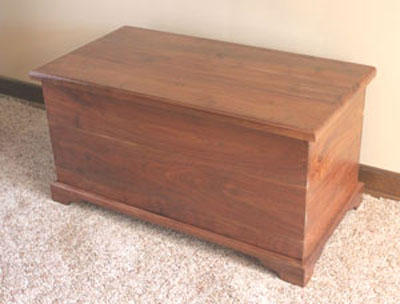 When I graduated from high school fifty years ago I received a coupon entitling me to a miniature Lane cedar chest. The idea behind the promotion was to get young ladies and their parents into the store where they would see the full sized models and consider purchasing one as a special gift. Back then coming of age for many girls meant owning a “hope chest” that they would begin to fill with special items that they might later use in a future home once they were married. In a sense it was a way of creating a kind of dowry.
  Another Labor Day has come and gone and I find myself once again going, “Meh!” I’ve never liked Labor Day. Like Pavlov’s dog I instinctively react negatively to the mere mention of it. I’ve always thought that it is misplaced on the annual calendar, coming as it does at the end of the summer. Instead of invoking a sense of celebration like other national holidays it seems to be an ill advised attempt to simply throw in one more long weekend before the days grow short and the nights long. I’ve always thought that it might be more appreciated if it were scheduled for March or April when there is often a dearth of downtime for those who work. Since I’ve been ruled by the school calendar for the majority of my life Labor Day signals an end to fun in my mind, not a reason to be happy.
 All It Takes Is A Little Love