No Golden Ticket

the-analogy-of-the-golden-ticketWhen I was a little girl I often drove my friends crazy by suggesting that we play school. Of course I always insisted on being the teacher. I had a cardboard box that was ready for a very realistic rendition of a classroom. It held paper, pencils, pens, textbooks and even prepared tests and report cards that I designed in my leisure time. I suppose that it was rather nerdy on my part but my buddies and brothers placated me now and again by sitting in the makeshift desks that I created and listening to my lessons. There is little wonder that I ultimately dedicated my entire life to education.

I literally worked my way up the ranks of schools. My first job was at Do and Learn Pre-school. I met with my four year old students on Tuesdays and Thursdays in rented rooms at the local Methodist church. I so loved my little foray into the academic world that I became convinced that I had a bonafide vocation to be a teacher. I was determined to finish my degree at the University of Houston and get started as soon as possible.

I’ve always had an abundance of energy and so in addition to working at the pre-school I was also a Sunday school teacher at my church. There I taught kindergarten kids about Jesus. Evidently the nuns who ran the program liked my work enough to recommend that I take over the pre-school and elementary classes when they decided to leave for another posting. I served as the Director of Religious Education while continuing to work on finishing my degree. This gave me my first taste of being an administrator. I was still as happy as a clam and became utterly convinced that I wanted to devote my life to children.

Upon graduating I landed a position at St. Christopher’s Catholic School which was admittedly a bit disappointing to me because I had wanted to go directly to a public school. The economy was in the ditch at the time and there were simply no jobs for teachers that year. As it was, the job at St. Christopher’s was more perfect than if I had hand picked it for myself. I had a super principal who was innovative and child centered. I had great students who allowed me to practice my teaching skills and best of all I was the one and only mathematics teacher for the junior high. I taught the full spectrum of skills and even headed the computer and newspaper electives. I was happier than ever and certain that I had chosen the correct career.

When a public school job became available I reluctantly left. I became a self contained teacher of fourth graders under the guidance of yet another incredible principal who taught me so much about classroom management and taking care of my own physical and emotional needs. The children at this school were far more needy and underserved by society than my private school youngsters. Their stories were often tragic and I had to learn how to keep my emotions in check so that I would be able to provide them with what they needed.

Over time I taught multiple subjects, students from varying races and economic backgrounds, and many different grades. Each experience strengthened my abilities and demonstrated the complexities of teaching. Eventually I became the first ever intermediate Peer Facilitator in the Pasadena Independent School District, an idea from yet another of the outstanding principal for whom I worked. Today every intermediate school has multiple Peer Facilitators. I’d like to think that I helped to convince the higher ups that it was a worthwhile position to have.

I ended my career at KIPP Houston High School, one of the KIPP Charter schools, as the Dean of Faculty. By then I had been working with kids in one way or another for almost forty years. I’d seen public, private and charter schools. I’d taught reading, language arts, mathematics, science, social studies, art, theology and journalism. I had worked in daycare, pre-school, Sunday school, fourth, sixth, seventh, eighth, ninth, tenth, eleventh and twelfth grades. I had observed countless teachers and taken part in hundreds of parent conferences. I had been a Title I Coordinator, Gifted and Talented Coordinator, Magnet School Coordinator, Peer Facilitator, AP Coordinator and Testing Coordinator as well as Dean of Faculty. I conducted training sessions and taught mathematics teachers at an Algebra seminar at Rice University. In other words, I have been around the educational block a time or two and along the way I never lost my enthusiasm for my work. Now that I am retired I continue to tutor intermediate and high school students at both public and private schools.

With all of my knowledge and experience I find it disheartening that our newest Secretary of Education, Betsy Devos, cannot even come close to matching the depth of what I know about schools. She may be a very nice lady who has contributed generously to education and she may even be quite interested in helping to improve our current educational system but it takes way more than just a desire to help to even begin to make the changes that are necessary to make our educational system as strong as possible. It requires someone with intimate knowledge of schools from the ground floor up and I personally believe that it should be an individual with experiences that are so deep and expansive that he or she has a clear understanding of how every facet works. Obviously Ms. Devos is not that person.

The public is always searching for a quick and simple fix for our nation’s educational problems. Every teacher will tell you that there is no golden ticket or one thing that will make everything all right. Children like all people are very complex. Each classroom requires individualized instruction that is seamless. It is a difficult task to pull off but there are many exceptional educators who are doing it every single day. There is something almost magical about watching a great teacher in action but the reality is that it took hours of hard work and practice and self reflection to get there. This takes time and patience and has little to do with whether a school is public, private or charter. There are good, bad and ugly examples of each. The trick is in finding more of the really good educators who understand that they will have to be nimble when adapting to the needs of their kids.

Sadly Ms. Devos appears to be of the mind that the key to improving our American schools lies in turning them into a marketplace using a business model that assumes that demand will eventually supply quality for all students. Of course we all know that even in the world of retail all the economic pressure in the world will not transform a dollar store into Saks Fifth Avenue. It is ridiculous to think of education as some type of commodity and that allowing everyone to choose will somehow spur better possibilities for everyone. It is also a pipe dream to believe that a child in a run down neighborhood will be able to take the meager funds of government to a high priced private institution and suddenly be allowed to run with wealthy. For one, most such exclusive schools have long waiting lists, require entrance exams and cost well above government allotments. Furthermore they may or may not want to accept government money because that will make them beholden to rules not of their own making. Additionally, not all private schools are actually good. I interviewed at one or two that in all honestly should have been shut down. Charter schools are also of varying quality. While the KIPP Charter Schools have managed to maintain a solid reputation, many of those currently available peddle an inferior product that should not even be allowed to exist. The complex network of neighborhood public schools display a wide variety of quality from excellence to despair. The reality is that once the best are filled to capacity most children are still caught in the web of underperforming schools from which there is no escape. If the only idea for improving our schools is to provide students with vouchers, nothing really changes and we have wreaked unnecessary havoc for everyone.

I sincerely hope and pray that Betsy Devos listens to the counsel not of lawmakers but of educators who know more than she does. My wish is that she think very carefully before the burning bridges of our public school system. The project upon which she is embarking will determine the future of millions of young children. She must be very careful and very wise. Somehow my impression of her is not particularly positive. More than anything I want to be wrong because missteps in education will impact our nation for decades.    
Memories of Another Time

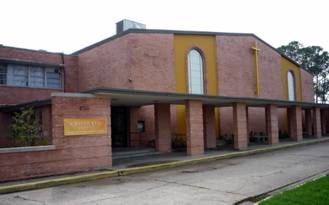
cristoreyhoustonI return to the neighborhood where I grew up at least once a week to tutor high school students in math. The area has changed more than a bit since I once walked the short blocks from my home to the high school that I attended. I suspect that only a few if any of the people who once lived there are still around. It was a working middle class suburb back in the day with a mix of blue collar types and professionals. The entire subdivision centered on the Catholic Church and school that most of us attended. There were other denominations and public institutions as well but Mt. Carmel was the main attraction. Everybody knew everybody and the community spirit was probably the best aspect of living there. It’s not an exaggeration to boast that it was heaven on earth for kids.
Our parents were quite active in providing us with a faith filled life, a great education and lots of after school activities. There was always something wonderful happening and the whole neighborhood felt like a combination of “Leave It To Beaver” land and an episode of “The Wonder Years.” My mother was quite wise to find us a home there after my father died. Our little place provided us with a sense of stability as we were growing up as well as hours of fun.

Of course things never seem to stay the same. Once I was grown and gone the whole area began to change as the old timers moved to newer homes in newer parts of town or to land they had purchased for retirement. It was just never quite the same. The new folks who moved in stayed mostly to themselves and my mother lost her sense of security. Her home was burglarized so many times that on the last break-in the thieves left without taking anything. We joked that we were surprised that they didn’t feel sorry for her and leave something behind. All of her valuables were long gone. Because she was alone and no longer had old friends on whom to depend nearby she became more and more frightened. Each time that she came home to discover an invasion of her property she was less and less willing to stay in the place where we had all shared so many memories. She decided to sell.

It was truly a shame because she had managed to pay for the house in full. She enjoyed having the extra income to make repairs and purchase a luxury now and again.  Because the area had generally deteriorated, at least on our street, she was unable to get a good price for the place. Essentially she had to start all over again making payments on a home that was little better but at least felt more safe. It stretched her already small income to the breaking point but she was always optimistic, believing that the good Lord would work things out, and somehow He always did.

I don’t think that Mama ever went back to see how our old homestead was doing which was actually for the best. The people who bought it did little to keep it in good condition. By the time that I finally drove by a few years back it was a sad broken down property. The roof was sagging and it looked as though it hadn’t been painted since the last time that Mama and me and my brothers had put a fresh coat on it. Mama had always taken pride in having a nice garden and had planted trees, bushes and flowers over the years. Literally all of that was gone. There wasn’t even much grass growing in the yard. It was stark and ugly in the saddest imaginable way. It literally hurt to see it like that. I couldn’t decide whether to be angry or just to cry.

I haven’t dared to go back again. I really don’t even like to think about how battered and neglected the house looks. I drive to my tutoring sessions from a direction that doesn’t take me near the old place. That way I keep only the positive memories of my youth that were so delightful. I picture our home at its best when it represented love and safety.

On sunny days when the temperature isn’t too hot there is a certain kind of breeze in the neighborhood that gives me a strong sense of deja vu. I can close my eyes and listen to the planes flying overhead as they approach nearby Hobby Airport and feel transported back to a time when the subdivision and the school were among the best in town. The sounds of the birds are just like they were when I was a kid and I can almost hear all of the old neighbors laughing and living inside their homes at a time when people still left their windows open and their doors unlocked. For a moment I find myself believing that they are all still there and that I might go see them after finishing my tutoring, but then something always stirs me back to reality and I remember.

The school where I was once a student has a new name now. It used to be Mt. Carmel but the Carmelites and the School Sisters of Notre Dame left and over time there wasn’t enough interest or financial help to keep things afloat. The school began to operate in the red without enough students or help from the diocese and finally was forced to close its doors. It was threatened with destruction until the Jesuits purchased the property and renovated the inside, creating a whole new high school called Cristo Rey. They brought in wealthy individuals willing to help support the education of students who might not otherwise have the privilege of an exceptional private school education. I now tutor some of those same kids and I have to admit that I am quite impressed with how well the hard working teachers and administrators have revitalized things for them.

It sometimes feels quite strange to be back in my old school fifty years after graduating. I tell my tutees about my own adventures there and they stare back at me as though I have two heads. I suspect that it is difficult for them to imagine an old lady like me as a young person with all of the same hopes and dreams that they have. I somehow feel that I am supposed to be there helping them. I have a deep connection and respect for the history of all of the wonderful things that happened inside those walls over the years. So many lives have changed for the better in the classrooms and the laboratories. I feel the spirit of all of us who launched our own lives there with the knowledge and confidence that we developed under the guidance of teachers and parents who truly cared about us.

As I walk through the hallways toward the library where I once devoured the words from books that opened whole new worlds to me I see the newest students experiencing the same emotions of joy and fear and discovery that were once mine. I know that we are somehow brethren. Some things like the freedom and wisdom and growth that come with knowledge never change. Whether they realize it or not those young men and women are part of the same long red thread of learning that wove through my mind so many years ago. We are bound together and no matter how different the world may become that red brick edifice will always represent the everlasting power and beauty of education.

Off Season Adventures

Rocky-Mountain-National-Park-16-HD-Image.jpgMost of my life has been directed by the school year calendar. Whether as a student, a parent or an educator I measured my days in six or nine week cycles filled with reading, study and compositions. It was only in the warm months of June, July and August that I had enough free time to experience the wonders of nature beyond the confines of places near my home. I saw the world from the perspective of only a quarter slice of time. I had little idea that so much was happening in the places that I so loved while I was ensconced in classrooms and libraries. Because I did not have the benefit of taking a vacation at a time of my own choosing I never truly experienced the changing of the seasons or the differences in color and light from one month to the next. Mine was always a holiday shared with vast crowds. It was not until I finally retired from my labors that I began to see the world around me in new and quite enchanting ways.

Travel is quieter and less hectic when schools are in session. Campgrounds and hotels generally have many vacancies from which to choose. The roads are less congested and the drives are leisurely. There is no ticking clock announcing a need to hurry. There is a glorious feeling of aimlessness that allows for random explorations that lead to exciting discoveries. For the first time in my life I am at liberty to take advantage of my freedom from an academic calendar and head in any direction that I choose on any day that I wish. I experience an exhilarating freedom every time that my husband and I hitch up our trailer and head onto the open road.

I have seen the rich hues of red, orange, yellow and gold that paint the fall landscape. I have felt the crackling of the fallen leaves beneath my feet and the sting of a cool afternoon on my nose. I have stood all alone in a forest while the wind blew across my cheeks and tousled my hair. I have listened to the silence all around me. I have enjoyed a steaming hot bowl of chili at the top of a mountain in a restaurant preparing to close for the coming winter. I’ve stopped at a Buccee’s when I was able to park right in front of the door and walk straight through without bumping into hordes of people. These were wondrous moments for me because heretofore I had never been able to enjoy such experiences. I would have been busy imparting the knowledge and skills of mathematics to the latest members of my class.

I have learned that the ocean is perhaps at its loveliest in the winter. Its aspect changes from hour to hour. It may be draped in early morning fog and then glistening in afternoon sunshine. The beaches are pristinely empty and it takes little imagination to feel the sense of wonder that may have been the reaction of the first explorers who landed in such glorious places. There is a majesty in hearing only the sound of the waves and the flapping of the wings of the birds who have reclaimed the area for the season. I so love staring into the horizon and feeling as though I am looking into forever. I think of all of the people who have stood in the same spot from which I am viewing the splendor of the sea and wonder what dreams and stories unfolded from my vantage point. I find buried treasure in the form of sand dollars and shells of many shapes and colors. I eat the lunch that I have brought in silence, starring out as far as my eye can see and feeling that surely I have found a tiny slice of heaven.

I have passes to the Texas state parks and all of the national parks as well. I love to explore the trails and pathways that invariably lead to the most delightful destinations. I feel my energy and health improving with each step. It is a glorious way to exercise. I have no need of machines when the great outdoors is beckoning me. Everything that I need to shed anxieties and pounds is right in front of me. I forget about the stresses and concerns that so often plague me when I am communing with the forests and the creatures that skitter around me. I feel at home enjoying the bounty that no man is capable of reproducing. For all of our genius we cannot build a mountain or an ocean but we can enjoy and honor the wondrous bounty that nature still provides us and there is no better time than when our footprints do not have to compete with big crowds.

I never sleep as well as when my trailer is parked in a secluded area surrounded by trees or the vistas of a lake. I am caressed by the quiet and warmed by the heavy blanket that I always carry for cold nights. A simple cup of tea tastes like the nectar of the gods on such nights. The starry sky puts my own place in the universe into perspective. I understand that I am but a tiny speck in the grand scheme of things and yet I am unique and important. I feel content as I become a shadow in a darkness that is not possible in the lights of the city. I feel relaxed and I find the comfort of slumber so easily.

The food that I eat on such journeys always seems to be so good. A bite of baked chicken or a crisp apple lingers on the tastebuds of my tongue. I have no need to hurry my dining. I sit at the table and slowly partake of my simple feast while enjoying the antics of a rabbit or laughing at the cardinals that zip past my window. Sometimes a family of deer strut through my campsites and on occasion I see something truly exotic like a moose or a turkey or a roadrunner. It is like having dinner and a movie, more special than the most expensive night out and often I am among an elite group lucky enough to be present when few others are there.

I feel blessed to be able to enjoy my little adventures and to discover the world as it is during the school year. It is truly grand to visit places in the off season when the tourists are mostly gone. Sometimes my husband and I may be the only people in sight. In those moments I feel as though I am royalty enjoying a private beach or a castle in a forest of my own. Who knew how many simple pleasures were just waiting for me to find them? Traveling at odd times of the year is truly one of those little known secrets. It is the best.

A Mind Is A Terrible Thing To Waste

lead_largeWe humans have a need to control our environment, to fix things that appear to be broken. All in all that is an admirable trait until it gets out of hand, which it often does. Then we become almost obsessive in our desire to find a kind of perfection in the world around us. We craft rules and laws hoping to improve everyone’s lives. Most of the time our motives are not evil or selfish. Our intentions are generally good but we sometimes miss the mark. Sadly we have a tendency to stick with our plans even when it becomes apparent that our ideas have not worked as intended. We change a little of this and a little of that, complicating our lives just a bit more with each new layer, refusing to admit that maybe we have been moving in the wrong direction all along.

For the vast majority of history only the most wealthy and powerful individuals were afforded the luxury of an education. The sons of royalty were taught to read and to cipher and once in a great while even their daughters had tutors to show them how to unlock the mysteries of numbers and words. Most of the great unwashed millions were illiterate which made them less likely to change their economic status from one generation to the next. Eventually there was a realization that societies might benefit from having a more educated populace and more emphasis was placed on providing youngsters with the basics of reading, writing and arithmetic. Still, the average soul never went very far up the educational ladder, especially if that person was a woman or a minority. Up to and including my grandfathers, nobody in my family had gone past the seventh grade in their learning and my grandmothers were both functionally illiterate.

The dawn of the twentieth century brought a whole new attitude about schooling in the United States. The Industrial Revolution had highlighted the need for a more educated populace than the more agrarian work of the past required. When the United States joined in the conflict of World War I it emerged from the isolation that had mostly defined it since its beginnings. Leaders of the nation imagined a better future for everyone and it began in the classroom. Suddenly there was an interest in education for all unlike anything that had come before. Even the poor and women were to receive the basics needed for a literate society. The debate over what knowledge and skills should be included in a publicly funded system began in earnest and it has been raging ever since.

At first it seemed as though the efforts to teach the children of the nation went fairly well, fairly quickly. More and more youngsters were reaching higher and higher levels of education. My own parents not only graduated from high school but also went on to earn college degrees, a rather amazing feat given the almost non-existent levels of education of their parents. Still there were numerous individuals within their generation who attended school only until they felt a need to drop out and begin working, sometimes as early as middle school. Blacks went to poorly funded schools that were segregated and rarely equal in the quality of supplies and books and programs being offered. There were still many reasons to note that we had not reached our goal of universally equal and excellent schooling for all.

By the time that I was in school the civil rights movement was in full bloom, highlighting the need for integration and fairness for everyone. More and more people began to take completion of high school for granted and enrollment in colleges began to increase. Nonetheless, there was a general feeling that we were still behind our counterparts from around the world. Educational research began in earnest and methods for improving schools were incorporated inside classrooms. We pushed not just to have bodies in the seats but to create real participation in the learning experience, to have teachers who inspired and created lifelong learners.

I mostly loved going to school. My teachers were dedicated individuals who had few supplies and little in the way of technology. They made up for the lack of such things with enthusiasm. I recall feeling relaxed in my classes and enjoyed the laughter that was always a part of the ones that were the most enjoyable. We had a few standardized tests here and there but very little mention was ever made of them so we took them without worry. Somehow they were a mysterious aspect of the school year that had no real meaning in our lives, at least that’s how it felt to me. It was only when we reached the moment of taking college entrance exams that we felt the pressure of achieving a particular score and even then most universities were less concerned about how we had done on a three hour test than what kind of effort we had demonstrated over the course of our four years in high school. In other words, my generation was somewhat spared the angst of continual standardized testing.

I became a teacher because I literally loved the magic of the academic process that had taken place in the schools of my youth. They made me feel happy in a strange kind of way. I wanted to help transfer my own joy of learning to the next generation. For a time it was a most rewarding way to earn a living but slowly the idea of measuring the success or failure of every aspect of education began to take a stranglehold on how things were done in classrooms. I initially supported the idea of requiring teachers to follow more stringent guidelines in the curriculum. As a result of such designs I received a more ready group of students each year. My job became easier because there were fewer gaps in learning than ever before. I believed that we were on the right track until the entire focus began to revolve around determining how well educators were sticking with the prescribed curriculum and that meant testing the students. Before long we were asking our kids to take tests to prepare for the tests. We had to throw out the fun lessons that took too long and push the students to keep moving forward even when we knew that they had not yet mastered the material. There was no time for lingering and sometimes not even for laughing. There would be a common assessment at a scheduled time. We all had to be ready lest we be judged to be poor teachers.

Now we seem to be stuck in an educational quagmire that is increasingly uncomfortable for our teachers, our students and even the parents. Every January campuses take on a sense of dread as the clock begins ticking in the countdown to the spring testing season. So much is at stake for everyone. Teachers will be appraised based on how well their kids do on the tests. Students know that the trajectory of their lives will move one way or another depending on their scores. Parents watch helplessly as their youngsters grow increasingly stressed. Administrators will rise in the ranks or be cast aside depending on the ultimate results of the children in their care. It is a situation in which few are happy and yet the insistence on adhering to high stakes testing continues unabated.

The cries for help are already appearing on the walls of Facebook and in blogs. A poet admits that questions on a seventh grade test about one of her works were too nebulous for her to answer correctly even though the words had come from her mind. A teacher recounts the horror stories that are pushing her out of the profession. A distraught parent wants to know why her child is so nervous and confused and why the teachers won’t slow down enough to allow her little one to master the materiel instead of moving from one topic to another at breakneck speed.

We have a sense that we have somehow gone astray and turned our educational system into a million dollar industry for testing companies rather than a place where learning is viewed as a pleasant experience. Our children have to be taught to think in a particular way so that they might beat the tests that they will take again and again and again.

We know that there are those among us who have the experiences that make them more likely to do well on those tests even without the instruction that they receive and others whose minds work differently who will overthink their answers and choose based on legitimate reasons that they are not allowed to explain on a bubble sheet. Our mathematics teachers are reluctant to give partial credit for answers that were calculated correctly but for one small error so that students who actually understand concepts are lumped with those who have no idea what they are doing. After all, the standardized tests will not differentiate between those who just need to check their subtraction on one step and those who have simply guessed and chosen the wrong response because they are clueless.

I don’t know what it will take to rid ourselves of this onerous situation which is forcing a generation of teachers, students and parents to become testing drones rather than thinkers. Perhaps instead of mounting a silent revolution with frustrated comments on social media we should all begin to insist that our voices be heard. Many groups are marching through the streets these days with their individual protests when the one cause that should unite us all is the education of our children. We should feel fervent in our desire to rid our schools of the plague that is killing the very liveliness and joy that should come with learning. It is in classrooms all across our nation that so many of the problems that trouble us begin. Our young women might feel more empowered if we quit subjecting them to tests that have been proven to favor their middle class male counterparts. Those who roam the streets of Chicago performing murderous acts might be more inclined to turn their attention to school if they were to find a more interesting atmosphere that is attuned to their needs rather than to constantly assessing how much they know. Our levels of poverty and unemployment will be greatly reduced if we work on providing our youth with real world skills that take note of their interests and talents rather than attempting to force them all to embark on STEM careers. It’s time that we demand that the lunacy of constant testing that is driving our entire educational system receive a major overhaul.

As the old saying goes, “A mind is a terrible thing to waste.” Right now we are sending far too many minds careening over a cliff. When will we insist that we have had enough?

Our Greatest Gift

bn-fi133_speech_gs_20141031151239I have long been a voracious reader, a willing student of things both old and new. I enjoy considering ideas and long for the days of my youth when academic institutions were places of free discussion, fountains of information from multiple avenues of consideration. I was taught by my academic mentors to be open to points of view different from my own and to listen carefully to even the strangest sounding arguments, for within even the ridiculous there is much to be learned. “Perception often defines individual truth” my professors suggested. Our beliefs are built on the foundations of our unique experiences. Our thinking is the sum total of the knowledge that we have learned and the emotions that we have felt. Our outlooks are slowly programmed as we travel through life. Unless we are willing to understand the totality of what has brought an individual to a particular conviction our arguments for or against will fall on deaf ears.

I loved the frankness of unforgettable discussions from my college days. We were encouraged to feel comfortable with a variety of philosophies. Our reading lists often included the works of thinkers who ran the gamut from the far left to the far right. We were told not to blindly accept any argument but rather to consider both the pros and cons of everything that we encountered. Lemmings and sheep were rarely welcome in the classrooms of my youth. We debated each idea on its merits and everyone felt free to hold a forum. The experience was exciting and it molded me into the open minded person that I have always attempted to be.

In the present days we seem to have adopted a different way of approaching conflicting ideas. The debates of old have evolved into wars of words. Certain ideas are not even allowed to be uttered. We are more often than not forced to choose sides even before we hear the totality of the arguments. Those who suggest that we look for compromise in thinking are thought to be non-thinkers, weaklings unwilling to take a stand. We are told that we must be on the right side of history as though there is a clear and concise way of determining which side that is. Our leaders expect us to be automatons who utter our beliefs in unison and without thoughts or questions. I shutter whenever I hear the same lines being repeated regardless of whether they come from the right or the left. Too many of us have become consumers of propaganda, believers without doing research. We follow the boy who cried wolf rather than the one who pointed out that the emperor has no clothes.

I have had to counsel college students who received failing grades on persuasive papers not because their arguments were not rational and grounded in research but because they did not regurgitate their professors’ points of view. I have spoken with young people who fear making their true beliefs known lest they become ostracized. I have watched friendships dissolve over conflicting philosophies. I wonder when our democratic society began to forget the importance of the liberty imbedded in our right to freedom of speech.

I came of age in turbulent times. My male peers were being sent to a war that many of us questioned and others supported. The dream of full integration for our Black brothers and sisters was yet to be fulfilled. My own religion was being transformed from an archaic Latin based liturgy to one that embraced many languages and tore down barriers between the clergy and the congregation. Women were forging new territory in careers once thought to be the exclusive domain of men. There was an excitement in the conversations that we had with one another. Sometimes we found ourselves in the company of friends whose thoughts were diametrically opposed to ours. We gathered around tables and debated sometimes heatedly but always in the spirit of learning. We almost always walked away with our friendships intact despite our differences.

Open debate is frowned upon today. We politely avoid topics that might bring about conflicts. We no longer know how to enjoy a lively discussion without becoming emotional. We spout sound bites rather than reasoned ideas. We close our minds and leave the room if anyone dares to utter political notions. Our feelings are so easily hurt. It is a sad state of affairs.

I find myself missing my mother-in-law more and more. She and I used to sit at her dining room table enjoying tea and cookies while our husbands watched football on Sunday afternoons. She was a convert to conservatism and I was still in my intensely radical progressivism days. We often spoke about the history of the world and the possibilities of its future. She wanted to know what I thought about the economy, international relations, religion and other subjects that would be taboo in most of today’s polite circles. She always listened with respect and then quietly presented her own reflections. We learned from each other without judgement. She was a brilliant woman who might have been intimidating had she simply closed her mind to what I had to say. Instead she taught me the power of truly open debate among friends. It is difficult to find such enjoyable adversaries like her in the super charged environment as we begin 2017.

I suspect that I am not the only one who is weary of the unofficial civil war that is waging across the globe. I’d like to think that our teachers and professors will one day return to a way of teaching our young that allows for great freedom in the exchange of ideas. I would like to see an end to the rampant use of group think in our institutions. We need more reality television like the thought provoking debates between Gore Vidal and William F. Buckley that were so popular in the late sixties. I want our news reporters to state facts, not opinions. I would rather have them ask questions and then simply listen rather than arguing and attempting to push their own opinions on all of us. I will miss Gwen Ifill because she was one of the few journalists who always remained fair minded

I was impressed by something that Van Jones of CNN recently did. Rather than repeating the idea that those who voted for Donald Trump are mostly deplorable woman hating racists he set out to learn what had really prompted them to give their nod to Trump. He travelled to different parts of the country and sat informally across from Trump voters encouraging them to talk while he listened. What he found was that their main motivation was in wanting to be heard. They felt as though they had been forgotten and somehow Trump had made them believe that they were as important as anyone in America. It was not hatred that drove them to the polls but a sense of longing to be noticed.

In the long history of the world people have time and again asked for the freedom to voice their personal concerns and to state their ideas for solving problems. It has only been when humans have been willing to consider alternative points of view that progress has been made. Our Founding Fathers understood that. They set up a republic rather than a pure democracy because they realized that it was a way to hear the voices of even those in remote corners of the nation rather than only those in our most populated areas. They long ago sat through a hot summer risking their very lives so that we might one day be able to speak our minds without fear of being silenced or imprisoned. They heard the different voices from the colonies and compromised to insure that farmers would have as much power as industrialists. They found consensus between great thinkers as different at John Adams and Thomas Jefferson, those who advocated for a strong federal government and those intent on guarding the rights of the individual states. Their genius, with the help of James Madison, eventually gave us freedom of speech in a Bill of Rights that was unmatched in the history of the world.

Let us think twice before we continue to abridge our right to peaceably assemble or petition the Government for a redress of grievances. Let’s honor our differences rather than recoil from them. There is still room in this country for both the Black Lives Matter Movement and the Tea Party, for socialists and libertarians, for democrats and republicans. We might all want to become better acquainted with the members of each group and open our minds to what they are trying to say. Freedom of speech is perhaps our greatest gift as citizens let us all encourage its unfettered exercise.