
Tick Tock

collection of vintage alarm clocksChange, chaos, confusion! No, I’m not speaking of the political realm but something far more insidious, the springing forward to Daylight Savings Time that occurs each March. Even after a week people are still dragging around trying to adjust their internal clocks to the loss of an hour and wondering just why we insist on torturing ourselves by moving the hands of our mantlepieces twice a year. Who thought of this process and does it really make a difference of any kind?

During World War I someone decided that Daylight Savings Time might help the country save energy. Maybe it was a good idea back then but somewhere along the way as our world turned into a twenty four hour frenzy of lights, television programming, computer use and shopping the concept of everyone quietly turning off their lights and going to bed doesn’t appear to be what it might once have been. Research shows that having an extra hour of daylight does little to curtail the use of electricity, gasoline, natural gas or any other form of energy, not the least of which is because we use the same hour’s worth of lighting when we rise in the dark each morning that we would have used if night came a bit earlier in the evening.

I recently read that more people have heart attacks and wrecks in the first weeks after a time change than at other moments in the year. Farmers report that their animals have difficulty adjusting to changing routines as well. So the burning question that keeps coming back to mind is why we torture ourselves by doing something that most of us dread? Why don’t we just choose either Daylight Savings Time or regular time and then stick with it forever? It would certainly be easier on the constitution.

I generally reach the point at which I am fully accustomed to the new timing just shortly before it is about to readjust again. I sleep well in those last weeks and feel a level of energy that is unbounded. Once we go through the gruesome alteration process I find myself dragging for weeks and I am plagued by insomnia for months. I suspect from comments that I hear that most people feel the way that I do. I don’t particularly care if my mornings are dark or my evenings come a bit earlier as long as I get to become acclimated to one way of marking time or another and then never again have to change unless I choose to travel to a different time zone.

Unfortunately we seem to be doomed to continuing the silly tradition of switching from one method of timing to another simply because we once started it. Have you ever noticed how reluctant we are to abandon a process once we decide to try it? It is some crazy aspect of human nature to prefer sticking with a plan even if that plan proves to be ridiculous. We see it most especially in government where that status quo becomes the way of doing things ad infinitum. We fear the idea of admitting that we my have been wrong about the merit of an idea and so we commit ourselves to absurdities again and again. It almost takes a rebellion to repeal a rule once we have made it part of our routine.

I applaud states like Arizona and Indiana that don’t go along with the time change shuffle. They merrily buck the tide and enjoy the certainty of no loss or gain in hours. They have no need of clock changers who must spend wasted time moving the hands of timepieces back and forth, back and forth twice each year.

I once saw an interesting documentary detailing the unbelievable number of days that it takes just to adjust all of the clocks that belong to the Queen of England. Many of them are complex antiques that must be very carefully calibrated and only experts are able to do so properly. It is a herculean task that is both expensive and time consuming.

I feel as though we have so many truly important problems in the world and recalibrating the time again and again should not be one of them. I advocate for suspending this policy and freeing ourselves from the tyranny of sleepless nights and energy-less days. I call for letting the natural rotation of the earth determine the timing of our habits just as it did for the thousands of years before someone got the not so bright idea of artificially determining when our days should begin and end.

Since it is more than likely that we will never rid ourselves of this onerous habit I instead extend my sympathies to those who become discombobulated each March and then again in the fall. I feel for all of the teachers who must spend the next many weeks looking at students slumped lazily on the tops of their desks. My heart goes out to the mothers of babies who insist on keeping to their sleep routines regardless of what the clocks may say. I understand the frustration of pet owners whose kitties and puppies react to the sun rather than the manmade schedule. For those like me who are now spending their nights staring at the ceiling I give you the hope that this too shall pass sometime around September or October just in time for it all to begin again.

What a piece of work is man. We sure know how to make things more complicated than they need to be. Maybe instead of making so many more new rules we may want to consider getting rid of some of the ones that make our lives more difficult. Starting with omitting all of the time changes seems to me to be a great place to start.

A Mind Is A Terrible Thing To Waste

lead_largeWe humans have a need to control our environment, to fix things that appear to be broken. All in all that is an admirable trait until it gets out of hand, which it often does. Then we become almost obsessive in our desire to find a kind of perfection in the world around us. We craft rules and laws hoping to improve everyone’s lives. Most of the time our motives are not evil or selfish. Our intentions are generally good but we sometimes miss the mark. Sadly we have a tendency to stick with our plans even when it becomes apparent that our ideas have not worked as intended. We change a little of this and a little of that, complicating our lives just a bit more with each new layer, refusing to admit that maybe we have been moving in the wrong direction all along.
For the vast majority of history only the most wealthy and powerful individuals were afforded the luxury of an education. The sons of royalty were taught to read and to cipher and once in a great while even their daughters had tutors to show them how to unlock the mysteries of numbers and words. Most of the great unwashed millions were illiterate which made them less likely to change their economic status from one generation to the next. Eventually there was a realization that societies might benefit from having a more educated populace and more emphasis was placed on providing youngsters with the basics of reading, writing and arithmetic. Still, the average soul never went very far up the educational ladder, especially if that person was a woman or a minority. Up to and including my grandfathers, nobody in my family had gone past the seventh grade in their learning and my grandmothers were both functionally illiterate.

The dawn of the twentieth century brought a whole new attitude about schooling in the United States. The Industrial Revolution had highlighted the need for a more educated populace than the more agrarian work of the past required. When the United States joined in the conflict of World War I it emerged from the isolation that had mostly defined it since its beginnings. Leaders of the nation imagined a better future for everyone and it began in the classroom. Suddenly there was an interest in education for all unlike anything that had come before. Even the poor and women were to receive the basics needed for a literate society. The debate over what knowledge and skills should be included in a publicly funded system began in earnest and it has been raging ever since.

At first it seemed as though the efforts to teach the children of the nation went fairly well, fairly quickly. More and more youngsters were reaching higher and higher levels of education. My own parents not only graduated from high school but also went on to earn college degrees, a rather amazing feat given the almost non-existent levels of education of their parents. Still there were numerous individuals within their generation who attended school only until they felt a need to drop out and begin working, sometimes as early as middle school. Blacks went to poorly funded schools that were segregated and rarely equal in the quality of supplies and books and programs being offered. There were still many reasons to note that we had not reached our goal of universally equal and excellent schooling for all.

By the time that I was in school the civil rights movement was in full bloom, highlighting the need for integration and fairness for everyone. More and more people began to take completion of high school for granted and enrollment in colleges began to increase. Nonetheless, there was a general feeling that we were still behind our counterparts from around the world. Educational research began in earnest and methods for improving schools were incorporated inside classrooms. We pushed not just to have bodies in the seats but to create real participation in the learning experience, to have teachers who inspired and created lifelong learners.

I mostly loved going to school. My teachers were dedicated individuals who had few supplies and little in the way of technology. They made up for the lack of such things with enthusiasm. I recall feeling relaxed in my classes and enjoyed the laughter that was always a part of the ones that were the most enjoyable. We had a few standardized tests here and there but very little mention was ever made of them so we took them without worry. Somehow they were a mysterious aspect of the school year that had no real meaning in our lives, at least that’s how it felt to me. It was only when we reached the moment of taking college entrance exams that we felt the pressure of achieving a particular score and even then most universities were less concerned about how we had done on a three hour test than what kind of effort we had demonstrated over the course of our four years in high school. In other words, my generation was somewhat spared the angst of continual standardized testing.

I became a teacher because I literally loved the magic of the academic process that had taken place in the schools of my youth. They made me feel happy in a strange kind of way. I wanted to help transfer my own joy of learning to the next generation. For a time it was a most rewarding way to earn a living but slowly the idea of measuring the success or failure of every aspect of education began to take a stranglehold on how things were done in classrooms. I initially supported the idea of requiring teachers to follow more stringent guidelines in the curriculum. As a result of such designs I received a more ready group of students each year. My job became easier because there were fewer gaps in learning than ever before. I believed that we were on the right track until the entire focus began to revolve around determining how well educators were sticking with the prescribed curriculum and that meant testing the students. Before long we were asking our kids to take tests to prepare for the tests. We had to throw out the fun lessons that took too long and push the students to keep moving forward even when we knew that they had not yet mastered the material. There was no time for lingering and sometimes not even for laughing. There would be a common assessment at a scheduled time. We all had to be ready lest we be judged to be poor teachers.

Now we seem to be stuck in an educational quagmire that is increasingly uncomfortable for our teachers, our students and even the parents. Every January campuses take on a sense of dread as the clock begins ticking in the countdown to the spring testing season. So much is at stake for everyone. Teachers will be appraised based on how well their kids do on the tests. Students know that the trajectory of their lives will move one way or another depending on their scores. Parents watch helplessly as their youngsters grow increasingly stressed. Administrators will rise in the ranks or be cast aside depending on the ultimate results of the children in their care. It is a situation in which few are happy and yet the insistence on adhering to high stakes testing continues unabated.

The cries for help are already appearing on the walls of Facebook and in blogs. A poet admits that questions on a seventh grade test about one of her works were too nebulous for her to answer correctly even though the words had come from her mind. A teacher recounts the horror stories that are pushing her out of the profession. A distraught parent wants to know why her child is so nervous and confused and why the teachers won’t slow down enough to allow her little one to master the materiel instead of moving from one topic to another at breakneck speed.

We have a sense that we have somehow gone astray and turned our educational system into a million dollar industry for testing companies rather than a place where learning is viewed as a pleasant experience. Our children have to be taught to think in a particular way so that they might beat the tests that they will take again and again and again.

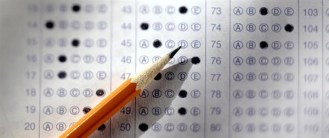
We know that there are those among us who have the experiences that make them more likely to do well on those tests even without the instruction that they receive and others whose minds work differently who will overthink their answers and choose based on legitimate reasons that they are not allowed to explain on a bubble sheet. Our mathematics teachers are reluctant to give partial credit for answers that were calculated correctly but for one small error so that students who actually understand concepts are lumped with those who have no idea what they are doing. After all, the standardized tests will not differentiate between those who just need to check their subtraction on one step and those who have simply guessed and chosen the wrong response because they are clueless.

I don’t know what it will take to rid ourselves of this onerous situation which is forcing a generation of teachers, students and parents to become testing drones rather than thinkers. Perhaps instead of mounting a silent revolution with frustrated comments on social media we should all begin to insist that our voices be heard. Many groups are marching through the streets these days with their individual protests when the one cause that should unite us all is the education of our children. We should feel fervent in our desire to rid our schools of the plague that is killing the very liveliness and joy that should come with learning. It is in classrooms all across our nation that so many of the problems that trouble us begin. Our young women might feel more empowered if we quit subjecting them to tests that have been proven to favor their middle class male counterparts. Those who roam the streets of Chicago performing murderous acts might be more inclined to turn their attention to school if they were to find a more interesting atmosphere that is attuned to their needs rather than to constantly assessing how much they know. Our levels of poverty and unemployment will be greatly reduced if we work on providing our youth with real world skills that take note of their interests and talents rather than attempting to force them all to embark on STEM careers. It’s time that we demand that the lunacy of constant testing that is driving our entire educational system receive a major overhaul.

As the old saying goes, “A mind is a terrible thing to waste.” Right now we are sending far too many minds careening over a cliff. When will we insist that we have had enough?

Education Imagination

innovationkidsI suspect that virtually everyone who has been a teacher has thought of creating a new kind of school. Most of us never get beyond the dreaming phase but now and again a brave soul founds an innovative center for learning and does quite well. The rest of us lie awake at night making plans that will never reach fruition.
My imaginary school is very different from most that exist today. It focuses on the diverse needs of both teachers and students. It begins with the philosophy that flexibility is a must and that there is no one size fits all way of teaching or learning. To that end students and educators in my world would be able to choose the hours when they wish to actually be in attendance at the school. Every child would need to be present for a particular number of hours per week to fulfill curriculum requirements but would be free to set the times that work best within a fairly liberal timeframe. For example, a particular pupil may not want to begin the day until nine or ten in the morning. That would be fine as long as he or she remained in classes for at least six or seven hours based on specific academic needs. Even starting the school day at noon would be permissible since there would be classes even in the nighttime hours, making full use of the facilities, resources, and community support. Since the pupils would be present at various hours of the day and night, teachers might also choose the schedules that works best for them, including working part time if so desired. Imagine a brilliant mathematics teacher coming in after working at NASA to teach a group of advanced mathematics teachers in the evening. Think of possibilities like offering  a four day school week.

The schedules might be a bit crazy to design but I’m certain that they would be possible with a bit of imagination. I have always felt that the traditional school hours favored those who are morning people and were set mostly to provide working parents with a place to put their children so that they might get to their jobs. The rest of us who prefer a later rising time have to drag ourselves around all day attempting to be perky when we are actually ready to tear someone’s head off because our natural sleep pattern isn’t being nurtured. In the more perfect world that I envision everybody is at school when it feels best, not based on someone else’s idea of how things should work.

I also quite toy with the idea of having school terms for two months and then breaking for a month so that there is vacation time year round, summer, fall, winter and spring. For those students who require extra instruction or desire additional enrichment there would be intersessions that teachers or other professionals would volunteer to coordinate, providing an additional source of income for anyone who prefer to work most of the year. They also present opportunities to develop internships for high school students with special talents and interests that they want to share.

Everyone has different modes of learning. In most schools teachers create lessons that draw on a number of methodologies hoping to include as many needs as possible. Instead of throwing a wide net and hoping to reach each individual, my school would assess every student to determine exactly which processes work best for them and then match them with teachers and programs that cater to their distinct learning styles.

All too often students struggle to learn when all that they need is an opportunity to have concepts presented in a manner that most closely matches the way in which their brains process information. I once had a student who needed time to think without interruption. She struggled whenever there was a great deal of sound or movement in the classroom. Given a quiet environment and teaching in a modulated tone she excelled. When she had mastered the material she enjoyed tutoring other students as a way of reviewing. By explaining concepts to her peers she reinforced her own knowledge and developed relationships and team interactions that did not work for her in the earlier stages of cognition. Her success was predicated on allowing her to be more solitary in the beginning and gradually bringing her into a group setting when she as her comfort level rose. Over time her need for isolation became more and more diminished. By realizing her needs for periods of quiet reflection she became willing to take risks that would have at one time frightened her. We need to be able to help every student flourish like this young lady by emphasizing the teaching styles that tap into their curiosity and the natural processing of their brains.

So much time is wasted during every school day. There are too many study halls where little or nothing is accomplished other than keeping the students contained for an hour. Advisory sessions and homerooms designed just to take care of business demand too much time. Home schooled students often cover the required curriculum in half of the time that it takes in a traditional classroom. That is because we don’t use the minutes and hours wisely and we too often ask more of our teachers than we should. We need to find aides to watch children at recess, particularly those who might teach them a new physical skill or work with them to develop healthier habits. Teachers should have access to more time to develop lessons or meet with parents or their peers. The same is true of other kinds of duties as well. By the end of a school day teachers have spent hours monitoring the cafeteria or standing in the parking lot as children arrive and leave. If we want our educators to be truly professional then we should not ask them to perform such tasks. We are missing opportunities to use their skills for tutoring or enriching their pupils.

I would like for all students at my school to create capstone projects at regular intervals during the course of the educational process. What they choose for their focus would be entirely based on their individual interests. Rubrics would be designed to insure the quality of the final products. As the children grow older the demands for their products would increase. They might continue to further develop their research or pick something different each time. The senior year products would require that they exhibit elements of writing, public speaking, mathematics and the scientific method.

Instead of simply having end of course exams all students would also have the option of creating a research paper, a product, or a solution for a specific problem within a particular subject. I’ve known many students who exhibit far greater understanding of the concepts that they have studied when given the opportunity to demonstrate real world skills. Mock trials, debates, film making and artistry are much more meaningful ways to measure learning than answers on a multiple choice test. Students enjoy showing their creative talents and as teachers we often discover hidden skills in our kids when we provide them with alternative methods for showing what they have learned.

I suspect the crazy quilt of learning that I have described sounds like the raving of a teacher who has gone mad. I know all of the protestations that are undoubtedly going through people’s minds as they think of the many ways that my ideas will never work in the real world, but this was after all a dream formed over decades of working in classrooms. I believe that we have to be willing to try new ways of educating our children if we are ever to really improve our schools. We must consider the needs of both our students and our teachers and be willing to take risks to make our classrooms happier and more productive places. We are killing the innate curiosity that we humans have in the traditional and homogenized environments that exist in far too many of our educational centers. We are losing the most valuable of our resources and we’ve got to be willing to try new ways of reaching those very precious minds. Thank goodness we have pioneers who are out there right now developing new theories that may one day revolutionize education. You’ve just read a few of my ideas. What are yours?

Testing, One, Two, Three, Testing

i282600889613780708._szw1280h1280_President Obama and Secretary of Education Arnie Duncan announced this weekend that they plan to ask school leaders to significantly reduce the amount of classroom time that students spend taking tests. They have suggested a guideline that would reduce that number to two percent of the school year or less. Secretary Duncan has traveled thousands of miles to locales all across the country and he has learned that teachers, students and parents are all feeling overwhelmed by the massive amount of emphasis being placed on tests. The general consensus from all sides is that the tests are determining what happens in the classroom far too often, leaving students unmotivated and stressed. The announcement represents a dramatic shift in thinking about what constitutes a proper way to measure accountability in our nation’s classrooms. The question that remains is whether or not this will have any real impact on schools or if it will only be a symbolic gesture.   Continue reading “Testing, One, Two, Three, Testing”