The Old West

virginia-city-940x624

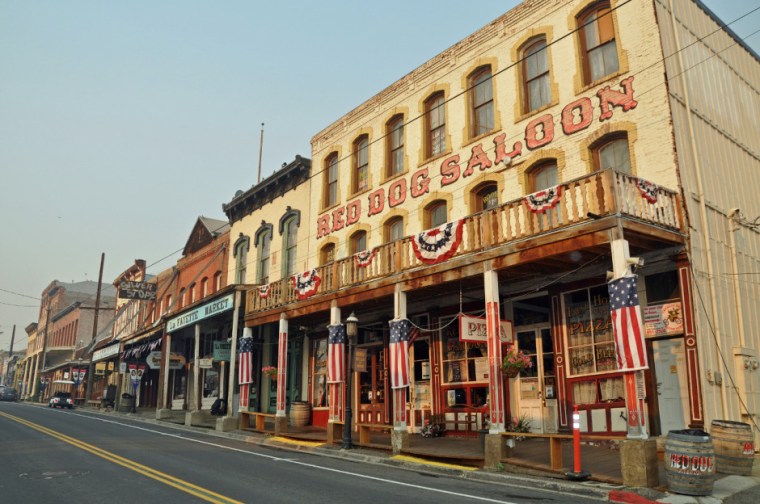
I grew up watching westerns with my Uncle Jack. I loved all of those shows about the old west but perhaps my favorite was Bonanza with its stories about the Cartwright family. Hoss and Adam and Little Joe were heroes to me and I loved the tales of their adventures. On many an episode they wandered into Virginia City to take care of business or meet up with friends. I was fascinated by the lifestyle of those long ago towns where folks endured hardship in search of gold or silver or some better way of life. Imagine my delight when our recent travels took us to the real historic Virginia City in Nevada just outside of that state’s capitol, Carson City.

This was once the site of a booming gold rush town. The decaying remnants of the old mines still litter the hillsides in a haunting way. They serve as a reminder of the ebb and flow of booms and busts in the story of mankind. Once they were alive with frantic activity designed to pull riches out of the earth. Now there is little more left than worthless mine trailings and rusty tin walls.

The road into Virginia City climbs through the hills along a paved highway that was no doubt a muddy dirt trail that people from across the globe traveled in the latter half of the nineteenth century in search of opportunity. Most of the buildings in the town date back to the glory days after the 1849 discovery of gold. An old school house tells of the families that came and a saloon is evidence of a different way to create wealth through a more insidious form of entertainment. The buildings are alive with history and seem to be whispering that if one only tarry for a time the secrets that are buried there might be revealed.

As we drove along the main street of Virginia City I found myself feeling the spirit of its settlers of old, people hoping against all hope of finding the mother lode or earning enough to survive by providing services of one kind or another. “Who were the folks who traveled here?” I wondered. What motivated them to leave everything they had ever known to travel to this desert like place where there were no guarantees that their efforts might be rewarded? What dangers lurked? How many if them left broke or forever changed?

We like to romanticize the old west but it was truly a harsh existence. There were many dangers not the least of which was being broken by the challenges. Somehow the folks who came here never thought that perhaps the land they were invading might already belong to Native Americans whose roots were hundreds of years old. They somehow assumed that they had a right to make claims of ownership without compensating those that they displaced. I truly wonder how they could not have known that there was something a bit wrong with their thinking, but then I wasn’t there. Humankind’s journey has been fraught with battles between opposing groups claiming ownership of land since the beginning of time.

Virginia City is a place where time seems to have stopped. It is a tangible piece of history that tells us a story of folks desperate to make something more of their lives. Fortunes were made and lost there. Lives were treated to elation and great disappointment. We have romanticized those tales and made them part of the tradition of the hero’s journey when perhaps they were little more than ordinary efforts to survive. Maybe back then it took great courage just to eke out a living from one day to the next, but there was probably very little glamor in any corner of places like Virginia City.

My paternal ancestors never ventured very far from the land east of the Mississippi River. It was my maternal grandparents eventually found their way to Houston, Texas from Austria Hungary. They had heard stories of a new kind of black gold, oil. While they never engaged in the search for the goo that gushed from the earth they understood that other kinds of services might be needed and they were willing to work long hours cleaning other people’s messes to provide a decent living for themselves. I suspect that their story is mirrored in the lives of those who set out to tackle the old west. Many never became rich but they found ways to work and enjoy a better lifestyle than they might otherwise have had. I suppose this is what people everywhere have always done.

We now debate whether or not this decision or that choice of our ancestors was right and just without ever knowing what peoples’ real motivations were. It is in reality a kind of self righteous judgement on our parts for we will never be able to truly understand what life was like or how the thinking of the past influenced people. Until we are able to walk in a person’s shoes we are only conjecturing as to their thinking and there is something rather presumptuous about that.

I am fascinated by the old west and all of history. Our human imperfections are in full view in the chronicles of the human story. The people who came before us made mistakes just as each of us does even now no matter how well intentioned we might be. We can never judge the actions of others without demonstrating some of our own imperfections. Perhaps it is best just to learn from them and to change our own ways rather than judging whether are not they were worthy of our respect. What happened happened in a world far different from our own. For now it’s just fun to visit the places where people once did their best to make life just a bit better for themselves and their families. It’s really cool to see vestiges of how they lived and to realize the scope of human efforts through the evolution of time.

California Dreaming

900px-Sacramento_Skyline_(cropped)

My emotions run the gamut whenever I visit California. It is a truly unique place born from the hopes and dreams of generations searching for something a bit better than what they may have experienced in the many places from whence they came. It is a beautiful place with its mountains, lakes, forests and ocean coastline, but it can also bring heartbreak.

At the present time California is so dry that it is like a tinderbox just waiting for a spark to burst it into flames. Signs everywhere warn of the high probability of flash fires. The land itself is brown and filled with dust as farmers struggle to irrigate their crops to keep their businesses alive. Rain is a luxury and its scarcity is threatening the serenity of the landscape. Fire is a constant worry.

Much of the state lies along fault lines that threaten to erupt into earthquakes at any moment. Even for visitors there is a kind of tension lurking in the background, a worry that the big one might happen without warning. Still, the beauty of the state and the promise of opportunity lure many an adventurer just as has always been the case. Murmurs of “Go west, young man!” whisper in the Santa Ana winds. The gold that people seek these days is most often found in Silicon Valley, a place that called to my father way back in the nineteen fifties.

I don’t know what he was hoping to find in California, but whatever it was prompted him to pack up the family and leave our comfortable home in Texas to travel thousands of miles to San Jose. His anticipation of things to come was childlike as he animatedly described to us the wonders that we were sure to find. He delighted in the idea of visiting Disneyland in its opening year. He described the beauty of Yosemite with a kind of breathless awe. He assured us that we were going to one of the most remarkable places on earth where every day would bring new adventures and discoveries.

I’ll never know what happened to dash his dreams, but something did for soon we were heading back to Texas with a quiet resignation. California can be like that, sometimes delightful and sometimes cruel. Our family did not find gold in the hills or even the joy that my father had expected. We left with a kind of dreary sadness, and my father who had always been a giant in my eyes seemed small and defeated. Our ride back to our former home was so quiet and tense that even my baby brother sensed that something was wrong. He cried constantly making our journey feel somehow ominous.

Nothing would go quite right for us after that and the grand finale of our California dreaming would become a nightmare when my very young father died suddenly in a car accident. In my childlike mind I would blame California and it would be many decades before I was able to bring myself to return to the place that seemed somehow to have destroyed my father’s optimism and confidence. I would finally be able to view California with the eye of an adult, and I saw the grandeur that had once drawn my father to the place like a temptress.

Most recently my husband Mike and I journeyed to Sacramento, California to attend the United States of America Track and Field Junior Olympics. Our grandson Eli had qualified for two events, the 4 X 8 relay and the 1500 meter race. We came to watch him, but managed to tour nearby places on the days when he was not running.

Sacramento is the capitol of California situated along the American River. It has little of the beauty ascribed to places along the Pacific coast, but much history. The people there are friendly and much more relaxed than the folks in Los Angeles or San Francisco. The pace of life is slow and deliberate with seemingly little need for hurry. It feels much more like the California I had once seen as an eight year old child. In some ways it is a living witness to the real problems that the state faces today.

The dichotomy between those with wealth and those who are struggling to survive is quite apparent in Sacramento. Tiny homes on dusty land are protected with iron bars over the windows while more luxurious houses sit on lovely green manicured lawns dotted with flowers and shaded by massive trees. The contrast between the haves and the have nots is dramatic. There are even make shift homeless camps scattered along the banks of ditches.

On the roads there dilapidated cars roll next to high end BMWs and Mercedes Benzes. In the stores it is easy to spot the people who are wondering how much longer they might be able to survive the high cost of living in California. They walk around with glazed and resigned expressions on their faces. Everywhere there are empty buildings that point to glory days past. Perhaps it was the extreme heat that made me think that there was much desperation in the town, or maybe it was my own past catching up with me once again. Somehow I sensed that the people were longing for a time when hope seemed more realistic, but like my father they had at least for the moment begun to question the logic of their lives.

Almost everything in Sacramento is many times more expensive than similar items in Houston. A visit to a burger place cost us forty dollars and we only purchased one burger, two orders of fries, and some lemonade. Gasoline runs in the range of four or five dollars per gallon. Road tolls are six dollars. I tried to imagine how people survive when even a tiny home of about nine hundred square feet costs more than my three times larger house in Texas. Living in California these days is a brutal undertaking that requires determination.

I found myself thinking of my father at every turn and wondering what my life might have been had we stayed in California. It is a hauntingly beautiful place, but one fraught with so many challenges. Somehow I find myself preferring to visit. California dreaming is best done in small doses unless one is able to find the mother lode. I’ll take Houston, Texas where the pace and the price allows even ordinary souls to live in king like circumstances, but I do understand what my father saw in California. It still offers the enchantment of many dreams.

I Needed This Reminder

MLK_500x500

One of the best aspects of being retired is that I now have time to ponder more than I did when work required me to adhere to a strict schedule. I am able to read more and even to indulge in moments of sitting in silence with my thoughts for long stretches of time. I still serve my many grandchildren with my educational expertise whenever they require a bit of guidance or encouragement with their studies. Each summer I read the same books that they are assigned for their pre-advanced placement and advanced placement classes, so that I might help them to analyze and discuss the works when they return to school in August.

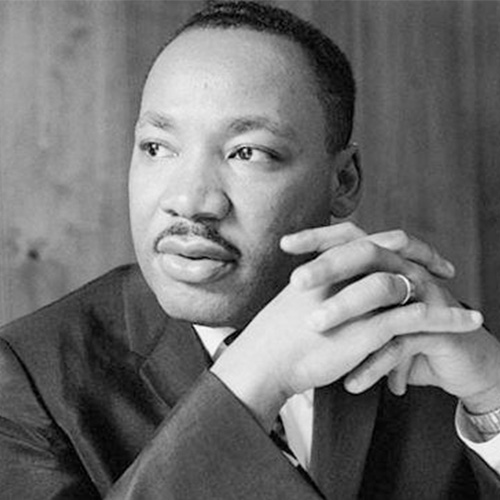
One of my grandsons is reading Martin Luther King Jr. I Have A Dream: Writings & Speeches That Changed the World edited by James M. Washington. When my daughter requested that I familiarize myself with the text so that my grandson and I might talk about its implications I was more than eager to delve into the heart of the essays. I have long considered Dr. King to be one of the greatest orators and most influential leaders of the twentieth century and indeed the entirety of history. He is a hero of mine, one of the people I would love to meet when I eventually make it to heaven.

I grew up in the era during which Martin Luther King Jr. did his incredible work. In the year I was born Dr. King was ordained a minister following in the footsteps of both his father and grandfather. He had been a child during the Great Depression, growing up in Atlanta, Georgia when segregation was still very much a fact of life for blacks just as it still was for most of my own youth. In 1954, when the Supreme Court ruled in Brown v. Board of Education that racial segregation was unconstitutional Dr. King was the pastor of the Dexter Avenue Church in Montgomery, Alabama and I was about to head to the first grade.

A year later, in 1955, Rosa Parks famously refused to surrender her seat on a Montgomery bus to a white man, an act for which she was arrested. Her brave action led to a boycott and Martin Luther King Jr. was elected president and voice of the efforts to integrate the buses in Montgomery. By then I was joining droves of Baby Boomer children in second grade classrooms that were still mostly segregated in spite of the earlier Supreme Court ruling. I would overhear rumblings of discussions from my father and grandfather who believed in those days that children should be sent from the room when politics were the subject of conversations. I was a nosy child who would hide behind a wall listening to their voices as they spoke of the coming changes.

In 1957, President Eisenhower federalized the Arkansas National Guard to allow nine black children to enter a previously all white school in Little Rock. I did not watch or witness the historic moment on television back then, but I vividly recall the many times that my dad and granddad talked about it when we visited my grandparents’ farm in Arkansas. That year Martin Luther King Jr. was elected as president of the Southern Christian Leadership Conference and  the reach of his crusade for justice widened. I would enter the third grade at the same time that those little children so bravely struck a blow for freedom in Arkansas. I was not totally unaware of the importance of that school year in the struggle to end segregation but I would not be affected by it in the little bubble that was my neighborhood.

The work to break the hold of Jim Crow laws and segregational policies continued throughout my elementary and middle school years. By the time I entered high school the Civil Rights movement was in full force and Dr. King had become one of its most admired voices. The concept of non-violent passive resistance was being used to integrate restaurants and universities and to expand the voting power of black citizens. Just before I entered my second year of high school the famous march on Washington D.C. captured my attention and I listened to Martin Luther King’s I Have a Dream speech with rapt admiration. I was hooked by its message and forevermore there would be no turning back to the ugliness and injustice of segregation for me. I was a devoted disciple of Dr. King and would hang on his every word and action. His influence over me would be enormous.

Just before I entered my senior year of high school President Lyndon Johnson signed the 1965 Voting Rights Act. Sadly the arc of justice was still far from complete. In college I would become more and more passionate about causes of equality and fairness. My generation was literally taking to the streets to protest all signs of legally condoned injustice. The laws of separate but equal were no more, but the seeds of racism still grew like weeds and I was eager to pluck them wherever they grew.

In the spring of 1968, I was planning my wedding when I heard the news that Martin Luther King Jr. had been assassinated in Memphis, Tennessee. I had been washing dishes when the word came and I remember slumping onto the floor in front of the sink where I sobbed uncontrollably. I was devastated beyond words and wondered how our country would be without the conscience and profound thoughts of this great man. His insights stay with me and guide me for the next fifty years of my life.

I am a seventy year old woman now. Martin Luther King Jr.’s words and influence have been a defining force for me even to this day. Reading his speeches and essays once again has brought me to tears and helped me to consider both the progress and the difficulties that remain in the long fight for justice. We have yet to achieve his dream, and of late we seem even to have slid back into a kind of ugliness that he had hoped to one day eradicate.

If Dr. King were still alive today he would be a very old man. I wonder what he might say about the state of our union. There are certainly things of which to be proud, but the work is not done. Would we be farther along in our progress if we still had his voice of reason and love, or would he be discouraged that we still have remnants of violence and hate? Whatever the case, reading his words has enlivened my own spirit and told me that the road to making his dream a reality is a worthy albeit difficult pathway.

As I write this I am gratified in knowing that my grandson is unfamiliar with concepts of segregation. I love that he innocently sees no color in his friends. The fact that I have to explain the evils that Dr. Martin Luther King Jr. spoke of indicates to me that we have indeed moved the arc of history ever closer to the ideals of agape which Martin Luther King so eloquently explained as “an overflowing love which seeks nothing in return…when we rise to love on the agape level we love men not because we like them, not because their attitudes and ways appeal to us, but because God loves us. Here we rise to the position of loving the person who does the evil deed while hating the deed that the person does. With this type of love and understanding good will we will be able to stand amid the radiant glow of the new age with dignity and discipline. Yes, the new age is coming”      (Dr. Martin Luther King, Jr. Facing the Challenge of a New Age, 1957)

I needed this reminder!

When Just Enough Is Just Enough

close up of human hand
Photo by Pixabay on Pexels.com

I suppose that I have always been a perfectionist. At times my compulsion has served me well. On the whole, however, it has often lead to more stress than I actually needed to have. I not sure where or when or how I picked up such tendencies, but they seem to have been part of my nature for as long as I can recall. My mother never really pushed me, but she was certainly proud when I did my best. Nonetheless I can’t say that she was responsible for my obsessive need to strive for the ideal. I sometimes wonder if my tendency to continually refine the quality of all that I do is simply a quirk of nature rather than the result of nurture.

When I was still in my early twenties I worked as a teacher in a pre-school program where I had a student who reminded me quite a bit of myself. She was never satisfied with a simple fulfillment of my requests to the students. Instead she endeavored to continuously do just a bit better. She was quite pleasant about her self motivation, but always unwilling to accept anything less than perfection. I eventually asked her mother how she had raised the child to be such a model of hard work and devotion to being her best. The lady, who had five other children, just laughed and shrugged that her little girl was an anomaly who seemed to have been born that way. She noted that her house was home to chaos and a “live and let live” attitude that hardly lent itself to teaching someone to always strive for more. She was not sure at all where her child’s drive originated, but felt that it had certainly not come from any guidance at home.

In my years as an educator I heard many such stories again and again. The family whose son was accepted to Rice University and later became a doctor had no idea from whence his intellect and his perfectionist proclivities had come.  They seemed to believe that he was an outlier whose genes somehow came together in a manner unique to the rest of the clan. They saw his proclivities as not less than a freakish combination of all of the best possible traits in the family’s genetic code.

Being a perfectionist certainly has brought a great deal of positive attention to me both as a student and in my career, but it has also been a kind of demon that makes me all too often dissatisfied with myself even when I know I have done my very best. Like most type A personalities I am my own judge and jury, and sadly I often fall short of the demands I make on myself. It can be exhausting being me, even on a seemingly uneventful day. I have had to retrain my brain over time to make allowance for just being ordinary or even subpar, two very normal human conditions. Of late I have been striving to accept that just enough is just enough. It is a state that is both terrifying and freeing at the same time.

I have learned that being perfect all of the time is totally impossible and actually unnecessary. Each of us must pick and choose our battles so to speak. It’s important to differentiate between times when a bit of perfection is in order and those when slacking is a healthier choice. I suppose that I have been greatly inspired by one of my grandsons who appears to have that concept down pat.

He has both the intellect and the will to be the best of the best at whatever he does, but he doesn’t use his talents and skills at every single turn. In high school he considered exactly how much he needed to achieve to reach his goals for acceptance into college. He did that much and then thoroughly enjoyed his teenage years, building memories that will always sustain him while also doing just enough to graduate with honors and gain acceptance to a prestigious program at a good university. Now he is focusing with laser sharp precision on earning the respect of his professors and keeping a GPA that will help him to gain access to the kind of job that he hopes to one have. While he’s working quite hard, he still manages to find ways of balancing perfection with just enough. He’s a really healthy and happy individual because he has already mastered incredible self awareness and an ability to chill when needed.

An engineer designing the navigational system of a space craft must insist on precision, just as a surgeon cannot allow anything less than perfection in the operating room. Doing just enough in less important areas is not only acceptable, but no doubt necessary. None of us is one hundred percent perfect, and attempting to always be so can become destructive.

I’ve known individuals who are so intent on appearing perfect that they rarely invite people into their homes. They continually insist that “when things get settled at the house” they will send out invitations. Others laugh, kick the clothes and toys strewn on the floor out of the way, and brew a cup of coffee for anyone who drops by. They are welcoming and willing to be seen as questionable house keepers because enjoying time with a friend is more important to them than keeping up perfectionist appearances. They have learned, like my grandson, how to walk the fine line between demonstrating pride in important work and knowing when just enough is the right approach.

Perhaps if we are to be truly insightful parents and teachers we will show our children how to achieve such remarkable balance in their lives. Demonstrating how to differentiate our efforts depending on the situation is an invaluable lesson. Letting them know that mistakes are an inevitable part of existence is an attitude that is more important than always being the best. Life is a series of up and downs, praise and criticism, winning and losing. The best adjusted among us know when just enough is just enough, and when giving it all that they’ve got is the ticket. They achieve the joy factor of life, and in truth nothing is quite as wonderful. 

There’s A Place Where I Can Go

white ceramic cup with brown liquid on brown wooden table
Photo by rawpixel.com on Pexels.com

Mornings have become my favorite time of day. It wasn’t always so. When I was working mornings began before the sun announced the dawn. I’d rush around half asleep readying myself for a busy day at work. I’d eat my breakfast on the fly hurrying as quickly as possible to get into my car and hopefully missing the worst of the rush hour traffic. Even with my best efforts a wreck, a stalled car, or a rain storm might land me smack dab in the middle of an immovable jam of traffic. I’d sit in a half asleep stupor wishing that I lived closer to my work so that I would not have to endure the horrors of a long commute in a city with virtually no mass transit. I never felt as though I had any affection whatsoever for the earliest hours of a new day, but that was before I no longer had to leave my home to join the daily rat race.

Now I arise without benefit of an alarm. No longer do I feel as though someone has awakened me with a cattle prod while in the middle of a lovely dream. Instead my body and a hint of sun tells me when it is time to begin the routines of my day. I have no sense of hurry for I am now the mistress of my schedule. I wander into the kitchen to prepare my morning tea and a light breakfast and then repair to my sitting room. It is an area filled with things that have meaning for me, things that make me feel comfort and happiness.

It is a somewhat old fashioned place because it is filled with things that once belonged to people that I have loved. I might tell a thousand and one stories just from glancing at the objects that decorate every inch if the space. It is dominated by an art print that once hung in my mother’s home. She and my dad chose it when I was still a young child and I recall accompanying them on the shopping excursion in which they selected furnishings for the living room in the first home that they had purchased. It is a lovely rendition of magnolias which at the time complimented the colors of the sofa that they had selected. Long after my father had died and the original couch was gone my mom still treasured the piece and it came to represent both her and my father in my mind. It calms me in an almost spiritual way even though it is only an object. Somehow I feel the presence of my parents and remember the happy times that I shared with them whenever I gaze at the lovely work of art.

Ironically I had purchased a floral chair long before my mother gave me her prized picture. The colors in the chair look as though they were produced solely to go with the painting. A dear friend eventually created pillows to place on the couch that pull the entire room together. It is comfortable and quiet in the room and it has become my refuge.

After my mother-in-law died my father-in-law gave us her secretary desk that I had always admired. It stores other treasures that I have either inherited or collected over the years. There is a cookie jar that my brothers and I bought for our mother one Christmas with money that we had saved from all of our little odd jobs around the neighborhood. It also features two little blue teacups that had once belonged to a set of toy china that my mother had as a child. There are lovely ceramic birds from New Orleans that Mike’s Aunt Elsie collected when she lived in that glorious city for a time. My treasured piece of the Berlin wall is nestled in a lovely wooden box from my eldest daughter along side a lovely china container from England. There is also a clock that my brother gave me when I earned my college degree that is still working long after I have left the career that it launched.

Perhaps my favorite piece is an antique vase that once belonged to my great grandmother Christina. My grandmother Minnie Bell gave it to me when I was still a girl, admonishing me to always keep it safe. It meant little to me when I was young, but over the years it has found a special place in my heart as I think of how precious it must have been to Christina as she lived out her hard scrabble life. I have moved it from one home to another with great care. It is a tangible link to my history and to the women who came before me.

There are other wonderful things as well that may mean nothing to others, but everything to me. I have end tables and lamps that belonged to Mike’s grandmother, including an old style Tiffany lamp that also compliments the colors in the room dictated by the picture on the wall. Pewter coasters crafted by the Norwegian uncle of our dear friend Egon hold my morning tea and make me smile as I thing of the friendship that we had with this man who left the earth far too soon. A whimsical frog catches my eye and those of my guests making me think of a sweet colleague named Jane, an extraordinary woman who so enriched my life when I was still a working girl. A shadowbox contains door handles and some of the wooden flooring from the home that Mike’s grandparents built when my mother-in-law was only a child. It is gone now but I can still see it and imagine the dinners and the parties and the ordinary days that they enjoyed there.

My sitting room is a peaceful place, a refuge that I now have so much time to enjoy. It is where I go when I need to think or just relax. It looks a bit old fashioned but I have yet to find anyone who does not feel the same sense of serenity as I do when enjoying its comfort. Best of all is the fact that I am now able to linger there as long as I wish. I feel a sense of joy in recalling the lives of the people represented in the contents of the room and sense that their spirit still resides in me. It is so much more than things. It is a respository that speaks of who I am, where I have been, and where I might one day go. It’s a place where I can go to truly be me.