When Me Too Hits Close To Home

multicolored broken mirror decor
Photo by Sharon McCutcheon on Pexels.com

I have been brave in my writing. I attempt to tell truths that may be uncomfortable to others, and there is much tragedy and grief in my story and those of each human that has the potential to make us squirm. As people we often prefer to avoid reality because it is so difficult to face. Whenever I write or speak about mental illness I feel the discomfort that ensues. I know that my readers want to be uplifted and so I balance such stories with lighthearted tales of puppies and travel. Still, I know that there are times when it is my duty to be honest about challenging topics.

We are presently in the throes of the Me Too Movement. So many women are stepping forward with stories of sexual abuse that it sometimes feels as though there is a kind of hysteria washing over the world. Surely, we think, there must be a certain level of exaggeration when it comes to the numbers of accusations that are suddenly condemning men of all stripes, including priests. We wonder and worry if there is just a kind of mass paranoia that is behind all of the revelations, at least until we hear of a case that is close to home.

Earlier this week a woman who was a year behind me in high school posted a shocking essay on Facebook in which she outlined the horrors of her own encounter with sexual abuse from one of her high school teachers, a priest. It was stunning in its detail and honesty, and I might have simply disregarded it as being too fantastical to be true had it not been for the fact that I knew this priest and had felt oddly uncomfortable around him when I was in high school.

Being a single parent my mom taught me how to be exceedingly careful around men. I thought that she was overly worried that someone might take advantage of me sexually. Her constant lectures on how to comport myself and how to avoid sticky situations seemed paranoid, and in keeping with her mental illness. Her instructions also made me unduly wary of every male that I knew. Nonetheless, there were times when I sensed trouble because of her admonitions and as a result I have sailed through life having had some highly suggestive encounters, but never any actual physical attempts to take advantage of me. I ran like a deer at the first sign of innuendo.

So it was with the very priest that one of my fellow students described as her abuser. He had shown an undue interest in me and often asked me if I was dating. I was still a wall flower of the highest order at that time and I didn’t like discussing my lack of a social life with anyone save for my closest female friends, so I never engaged in his inquisitions. One afternoon at the end of the school day I encountered him in the school hallway and he grabbed me from behind and locked me in a hug in which he held me with my back being held tightly against his chest. My instinct was to kick him and run away, but he  was a priest and one who lifted weights at that. I was a very small girl who was taught to be respectful, but in that moment I was also conflicted as I thought of my mother’s instructions to follow my instincts and run from any situation that felt wrong. I remember willing myself to become as rigid as stone as he held me for what felt like an eternity.

While we stood there he wanted to know if I had been invited to the prom. I had not, and it was a great disappointment to me. I was a senior and as far as I knew virtually every girl in my class was going. I mumbled a quick answer hoping that he would loose his grip, but he persisted in his conversation by telling me that if he were my age and not a priest he would have been proud to take me to the prom. He said that in his mind I was one of the more attractive girls in the school. In fact, he rambled on, he thought that I was a real catch. As my mind raced at what felt oddly inappropriate I did some quick thinking and told him that my mom was waiting for me outside and I had to go. He let me go immediately, and from that point forward I treated him as though he was a carrier of a deadly plague, In other words, heeding my mother’s advice I made certain that I would never again find myself alone with him. I moved on and so did he.

Years passed but I always recalled how uncomfortable he had made me. I vacillated between thinking that he had indeed been targeting me for something unnatural or that I had simply been a school girl with a big imagination. He eventually moved away, left the priesthood and married. I assumed that I had made a mountain out of a molehill in my teenage mind, and then I read the expose from the woman who had borne the full effect of his attentions. With each revelation of the pain that she had endured over a lifetime I felt a pit in my stomach because my own brush with danger felt more real than ever. Her accusations might have been unbelievable given how egregious they were had I not felt so uncomfortable with this same man. Somehow I knew that her sordid tale was true, and I was sickened. 

But for my mother’s admonitions I might have been the person telling a story of deep abuse. I shudder to think how it may have changed my life as it did the woman who so endured the pain and the fear that is almost always associated with such horrors. The priest who abused her is long dead, but what he did to her will live with her forever and those of us who Knew and trusted him. The greater sin in her tragedy is that she eventually came forward with her story and virtually nothing was done to rectify the terror that should never have been inflicted on her. Her abuse was filed away as though it never happened.

It’s time for the Catholic Church to change dramatically and quit protecting bad priests from the full impact of the law. They have to listen to victims and be transparent with parishioners. In the meantime we must instruct our sons and daughters to assert themselves when vile acts are being forced on them and to speak up regardless of who is the perpetrator.We must honor those courageous enough to tell us about these incidents and ferret out those who would take advantage of innocents. I suppose that I will be eternally grateful that my mom took the time to be open and honest about such issues and to make me aware of the evil that lurks in this world. Her wisdom has protected me throughout my life. Not everyone has been so fortunate. 
In the Blink of An Eye

city man person people
Photo by Pixabay on Pexels.com

As I write this post the cold has returned to Houston again. In fact it blew in with a vengeance during the afternoon. I had spent the morning tidying up the yard in my shirtsleeves, but by one o’clock strong winds and a cold rain had overtaken the area. Such is the nature of winter in my part of the country. There are no guarantees that a given day will maintain the same kind of temperatures over a twenty four hour period in my neck of the woods. In fact we have to be ready for pretty much anything until at least mid March. Just when that little groundhog up north predicts an early spring and we get excited about outdoor baseball games and track meets old man winter shows up again and we have to skitter around the house looking for the jackets that we finally hid away.

I actually like the cold so I’m not really complaining, but my knees tend to prefer a nice non humid day that lingers in the seventies. My hair agrees as well, so about the time that I was grumbling because my trip to a doctor’s appointment was marred by a chilly rain I saw a sight that both humbled and saddened me.

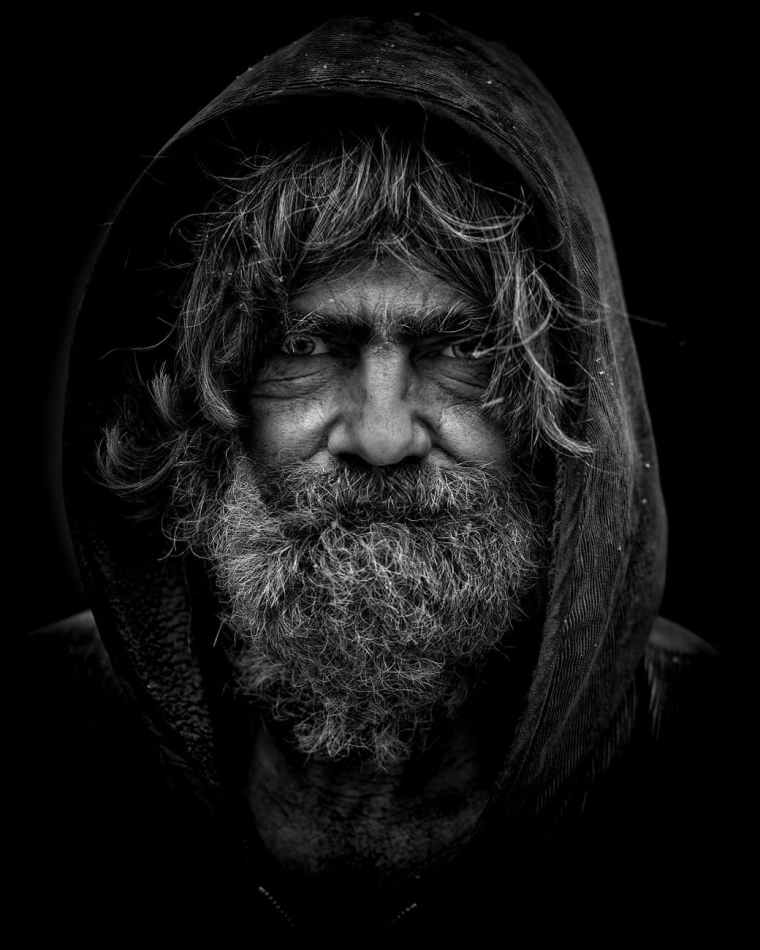
Underneath the cover of a bus stop shelter sat an elderly woman all hunched over as though she was grabbing a quick nap. She was wrapped in a big coat and wore a scarf on her head that only allowed a bit of her stone gray hair to peek through. Her feet were shod in flimsy slippers and she wore white socks that drew attention to her noticeably swollen feet and ankles. I might have thought that she was simply resting while on her way to or from a visit to her own doctor but for the telltale clues that told me that her story was far more complicated. On one side she had a pile of blankets and assorted sleeping supplies. On the other was a large bag neatly filled with clothing, food and other items. It was apparent that this unfortunate soul should was either a runaway or homeless.

Our vehicle was pushed forward by the moving traffic all too quickly. We were in the wrong lane to stop to ask if the lady needed some help. She became a passing vision that buried itself in my mind. I could not help but wonder what her brought her to such a tragic state. I worried about her safety and worried about what she might do when the even colder nighttime arrived. Mostly I tried to understand how her life had spiraled so out of control that she ended up alone on the streets.

There are populations of the homeless virtually everywhere. Many of them are addicted to drugs or alcohol. It is estimated that at least thirty percent of them suffer from mental illness. There are old and young, singles and families who for one reason or another find themselves with no place to go even on a day when the rest of us are scurrying to our offices and homes to keep warm. These people are someone’s sons and daughters, maybe even mothers and fathers. They did not always live this way but something in their lives went terribly wrong.

When I see someone like this old woman my stomach churns and my heart weeps. I find myself thinking about them and worrying about them. I want to know their stories and what tragedy led them to such an horrific fate. I wonder if there are family members somewhere grieving their loss or if they are all alone in the world with nobody to love them or care about them.

I have known truly good people who work with the homeless. They tell me of the joys and the frustrations associated with their jobs. There are places dedicated to providing  shelter and food, but so often the diseases of the mind that stalk the homeless drive them away from any kind of restrictions including walls. They run from structure and prefer the freedom of the streets, at least until the weather turns foul. Then the temporary housing fills to the brim and sometimes there is literally no room at such inns.

Admittedly homeless folk frighten most of us. They are dirty and often bear faraway looks on their faces. We don’t know if they are kind hearted or filled with criminal intent. We worry that if we give them money they will use it for drugs or alcohol rather than food or a place to stay. Surely they need more than stacks of blankets which they all appear to have in abundance. We just don’t know what to do.

Underneath the freeways along the southern corridor of Interstate 45 tent cities have popped up here and there. They are like little communities of urban campers. They huddle closely together and probably provide a small measure of safety to the occupants. I don’t know how they found the means to purchase their makeshift homes or why they are not stolen during the day when the occupants appear to be out and about. I’ve heard that there is a kind of code of ethics that homeless groups follow and that sometimes they even develop their own secret language. They mostly take care of one another and respect the meager possessions of their fellow street folk, at least until some disagreement ensues.

I still worry about them and wonder if being a vagabond is a choice for them or simply a circumstance. I think about that old woman who somehow doesn’t seem to fit into their world even though she appears to have the necessary instincts to survive. There is something remarkable about her even as I grieve for her. She should be in a nice warm home surrounded by children and grandchildren who love her. Has she been forgotten?

We constantly carry on about things that seem to be so unimportant compared to the fate of the homeless who live among us. We hardly pay decent salaries to the blessed individuals who choose to work to help them. Programs and doctors and counselors for those with addictions or mental illnesses are scarce. We barely skim the surface of doing our best to insure that little old ladies like the one I saw will be safe and secure. We look away, or drive past quickly only to forget them in the blink of an eye. Surely we can do better.

The Reckoning

Before I formed you in the womb I knew you, before you were born I set you apart

baby in white onesie
Photo by Daria Shevtsova on Pexels.com

There is a political fire storm raging in our country today over the question of when life begins. In  particular the crux of the argument is whether aborting a baby from the womb is murder or simply a form of birth control, a reasonable choice for women’s health. It has seemingly reached a tipping point in which each side is ferociously secure in its beliefs, certain that the other side is unfair and perhaps almost evil. It has become a bitter fight with so much conflicting rhetoric that it confuses those who heretofore paid little attention to the arguments and the legislation supporting them. At the heart of the furor is the question of the definition of life. It is in that complex consideration that the true meaning of abortion lies, and as of this moment the emotionally charged effect of the differing opinions does little to help us determine the moral path forward for our nation and our world. 

Like many Americans I waffle back and forth between the Pro Life and Pro Choice positions. I feel that I understand the considerations of each side and so I have tended toward the neutral stance of insisting that I would never have had an abortion because I do believe that it is murder, but if someone doesn’t think as I do it would be okay. I have been challenged by both Pro Life and Pro Choice individuals to take a stand, to quit be so wishy washy. Instead I have kept a quiet profile and chosen not to reveal what I truly believe. It has been a bit uncomfortable, but I have done so in the name of keeping the peace. After all, who really wants or needs to know what I think? Why should I rock the point? Whose mind am I going to change?

Suddenly I find myself feeling quite uncomfortable as the issue becomes more and more volatile. I don’t know exactly how to react because it all seems so personal, hinging on questions that can only be resolved in the individual heart. Then I think about certain generalizations that persist in our society, namely that murder is wrong and just because someone is able to justify it does not make it right. I ponder our history of slavery and wonder how many people kept quiet about its practice simply because they felt that it was none of their business and it was, after all, legal. I worry that I’m mostly afraid of being ostracized if I state my true feelings, and my peacemaker personality urges me to remain silent.

Then I recall an incident from my young adult life when a large group of us looked on in horror waiting for the police to arrive while a man was mercilessly beating his wife. His children were screaming for help and yet we were frozen in a kind of fear of doing what we knew to be right. It took a “ good ole gal” from Buffalo, New York to show us what courage really is. She marched past us and forced her way into the apartment to rescue the tiny children and their mother. I still recall the feelings of guilt that I felt for having been such a coward while also being struck with awe over the woman’s courage.

I find myself wondering if the time has come for each of us to step forward to do what we believe to be the right thing. I worry that simply giving voice to our beliefs in the voting booth may not be enough to resolve this issue once and for all. I even consider that perhaps it is far too murky to ever find a clear cut solution. Still, it seems that those of us who are indeed part of the silent majority sitting on the sidelines must at some point come to grips and decide where we stand. Because my own feelings are so complex, I realize that finding the right path is going to be dangerously difficult.

I do believe that life begins at conception. To argue over life in terms of the ability of the fetus to survive without help is a convenient way of denying what I believe to be the truth. So I am one of those who believes that abortion is a form of murder. Nonetheless, I truly understand that as with anything there may be some extraordinary situations that require an abortion to save a mother’s life. Fortunately such incidents are rare, and generally approved by  both doctors and theologians. I learned in my religion classes of long ago that saving a mother is always tantamount to sacrificing her for a child.

I also understand that for whatever reason many very good women have had abortions. I view them with great compassion and understanding. I do not believe that they should be considered pariahs. In fact, I have a dear friend who has quite courageously admitted to having an abortion. She is openly discussing the many conflicting emotions that she felt both at the time and over the ensuing years. She now councils women who have walked in her shoes. She celebrates her own reconciliation and helps others to find theirs. My hesitation to go all in for the Pro Life positions lies in my own feelings for women who for whatever reason have taken this emotion charged step.

The key to the discussion lies not so much in judging decisions of the past but in moving forward into the future and doing the right thing. As with the issue of slavery we need to rid ourselves of a moral wrong, but we must not dwell incessantly on the past. We also need to carefully define those moments when abortion becomes a medical necessity for the safety of the woman. In addition, we have to take into account how to care for any children who are unwanted by being willing to foster or adopt them. We must support and provide forms of birth control that will be available to all women without extraordinary costs or sacrifices.

I do believe that each of us must look into our hearts and decide on this issue one way or another and be willing to stand for our convictions. We need not bring our differences to a warlike state, but instead demonstrate a willingness to understand the genuine feelings involved in the questions. We need to rid ourselves of insulting slogans and posters and silly hats of one sort or another and get down to the business of hearing and considering the merit of each argument. In the end our greatest treasure, our humanity, is at stake. I hope that we find a way to do the right thing. I believe that we may be at a watershed moment of reckoning. We may each find ourselves being called to task. It’s time.

Nothing Is As Simple As It May Seem

sliced of citrus lemons
Photo by rawpixel.com on Pexels.com

Some folks see the glass as half full, others as almost empty. Our views of the world are complex and the product of the totality of our experiences. If people have generally been kind and loving to us we are prone to feel confident that most of the time we will be in the company of goodness. If, on the other hand, our history has been one of physical or mental abuse we will be wary and less inclined to trust. Our thoughts and opinions often reflect the ways in which we have lived.

I’ve seen children who were aggressive or withdrawn with whom it was difficult to form a relationship. Their defenses evolved from hurts that were inflicted upon them. They learned to be wary, more cautious because they were expecting the hammer to fall at any moment. We often see such people as being troublemakers or loners when in truth they are simply protecting themselves.

As an educator I wanted to know why a child was either aggressive or unnaturally frightened. I generally found in each case that there were valid reasons for such behaviors. As my mom often told me, a student who goes home to a private hell is rarely interested in doing homework or studying for tests. They have to deal with far more important issues of safety.

I recall so many stories that still make me cringe when I think of them. I had a student who thought nothing of telling me to  F… off whenever I gave him a directive. I eventually learned that he had witnessed his father killing his mother. After his dad went to prison he was essentially orphaned and angry at the world. When I demonstrated patience and understanding his vulgar language disappeared. By treating him with respect I convinced him to reciprocate. It took a great deal of time and patience to work with him, but it was worth the efforts because he eventually developed into a delightful person. With unconditional love from the aunt who adopted him and concern from his teachers he emerged scarred but no longer filled with rage.

So it is with everyone. If we do not understand a person or his/her point of view it would be well for us to learn more about what has made him/her that way. In almost all cases a person’s background reveals much about them and why they think and act in certain ways. We are indeed complex beings and our reactions are part of a complicated history.

I can still see the faces and recall the stories. The boy who seemed not to care at all actually cared so deeply that he cracked. The girl who was loud and obnoxious was protecting herself from more sexual abuse than she had already endured. The young man who appeared to hate everyone felt that he was unwanted by his parents. The girl whose grades fell precipitously was filled with fears and self loathing because she had constantly been told that she was worthless.

On the other hand those whose lives are filled with love and security tend to be successful barring some mental disease or addiction. They delight their teachers and their friends. They work hard and find success. They are assured that people care about them like the young man who was tempted to follow the lead of gang members but was brought to his senses by his parents and the members of his church. When he saw how much they loved him in spite of his fall from grace he was moved to do the right thing. He ultimately became the very good man that the adults in his life had believed him to be.

We generally respond to love, so I wonder sometimes why we don’t use more of it to solve some of the problems that plague our society. We are too quick to judge and even to condemn without ever learning what is behind actions and beliefs that are contrary to our own. Nobody likes to be judged unfairly, and yet we see it being done all of the time and we rarely speak up when we see it happening.

While I’m not one for creating trouble, I also believe in defending the misunderstood. I’ve often become the voice of someone who is the victim of unjust judgements. I advocate for taking the time to develop understanding and compassion. That does not mean feeling sorry for people or defending evil, but rather walking just long enough in their shoes to learn what is driving them. Sometimes when we take the time to do this, we find, as I have on so many occasions, that their actions follow quite logically from what has been happening to them.

Think of all of the questions that we face in society, and ask yourself why there are so many different reactions and answers. When you begin such exercises you soon realize that very little is as simple as it may at first seem. Then you are ready to work toward find real solutions.

Building Bridges

adventure beautiful boardwalk bridge
Photo by Pixabay on Pexels.com

Our ability to think and to communicate is the great gift of our humanity, but it can also be the source of our most horrific misunderstandings. We are each products of a unique set of circumstances blended together into a complex a stew of heredity and environment. The way we view the world and its people is the product of hundreds of interactions in our personal lifetimes. A single word or statement is interpreted through a lens of DNA and experiences that twists and turns what we believe we are hearing. Two people in the same place at the same time may walk away with entirely different interpretations of the same utterance or idea. Unless we take the time to hear the rationale or emotion behind another’s thinking we may misunderstand them in ways that lead to schisms between us.

We live in a world of almost unending words and talk. At every turn of modern life we see, or hear or read of events and commentaries. We are inundated with facts and opinions. How we interpret them depends on the totality of our life’s journey. How we use and decipher certain words is determined by our individual circumstances. A single utterance may be subject to a multitude of translations in the minds of those who witness it.

Words have power and there are those who have a gift for using them to bring momentous change. Abraham Lincoln and Dr. Martin Luther King, Jr. used such talent for the benefit of humankind. Tyrants like Adolf Hitler used speech to create a nightmarish world. We are continually being tempted with words that reach into our hearts and cause us to hope, but what inspires some is abhorrent to others.

“Make America Great Again” means hundreds of different things depending on who is hearing that phrase. For some it is a reminder of a time when our country fought for the very life of a world overtaken by evil. To others it is a call for a return to injustices wrought upon members of the Black community. There are those who think it means having jobs and security and serenity. Still others insist that it is meant to deny freedoms to those escaping harsh conditions and hoping for better lives. Some even hear it as little more than a slogan designed to entice us, but having little or no actual effect on our realities. In other words like a gigantic game of “telephone” we hear many different versions from the exact same words and then we imprint our own translations onto our judgements of the people around us who are making their own determinations. In fact we are most likely running the risk of grossly misinterpreting what each person’s thinking actually is.

What most people want is quiet. They have little or no desire for debates and discussions and too much information. They prefer to fill their lives with pleasant images and thoughts. They want to hear about happy things. They wish to keep their lives as uncomplicated as possible. They have enough problems on the personal level that they don’t really have the time or the energy to deal with the complexities of the world. They simply want things to run as smoothly as possible.

While there may have been a day and time when people lived and died without feeling the impact of anyone much farther away than a few miles, today’s world is indeed a kind of global village. When a butterfly flaps its wings in the Middle East we hear it and feel it. The oceans that once seemed to insulate the United States from the problems of the rest of the world are no longer effective in keeping us out of the fray. Walls neither real or virtual will ever be able to turn back the clock and provide us with a sense of security because the global genie is out of the bottle. Technology has linked us with words and images and the means of destroying each other. We are being forced more than ever to find ways of communicating our needs and working together for the sake of all of humankind. We may not like that this is so, but it is part of our new inescapable reality. Because of this increasingly our communication with one another will become ever more complex and subject to misinterpretation.

So what can we do if we don’t want to descend into a tower of babble that continually tears us apart? How do we learn to live with our new normal without shattering our relationships? Perhaps the answer is to be found in quieting our minds so that we will be able to finally discern what others are attempting to tell us. Maybe we need to investigate the idea of compromise and understand the power of making deals. Perhaps some of the old platitudes from the past that so abound exist because they actually made sense. If we take away all of the gilt of our progress and listen only to the wind and the beating of our hearts we may find that our desires are not as different from one another as they may at first glance seem. It may remind us of our need to work together and to get along.

There are a few saintly individuals who are so good that they almost seem to be devoid of the imperfections that plague the rest of us. There are evil individuals whose black hearts make us cringe but they are definitely in the minority. For the most part everyone else is about the same regardless of our superficial differences. We may have a variety of ideas about how to make the world a better place, but our intentions are generally aimed for the good. It is only our solutions for problems that may differ. Perhaps its time for us to quit arguing and begin building bridges of understanding starting in our own families and communities and moving ever outward from there.