Sharing

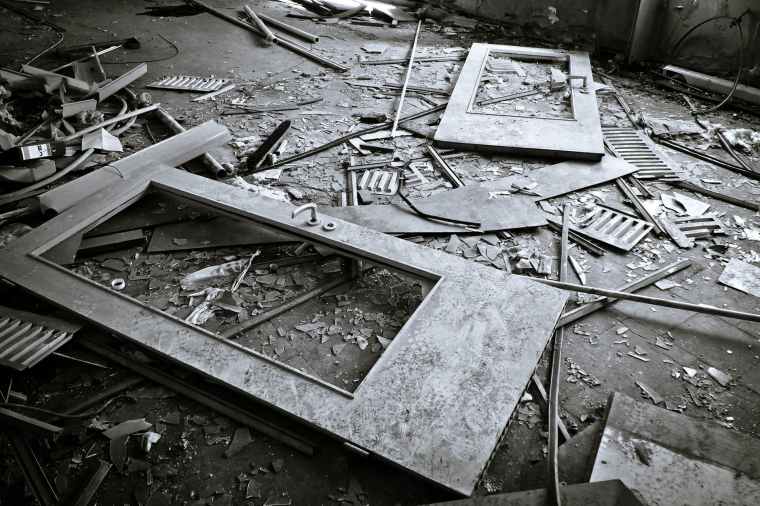
abandoned aged architecture black and white
Photo by Pixabay on Pexels.com

We just paid off our truck. It was exciting to know that we’d have one less expense each month. Then, of course, the air conditioner on it went out. It seems that we needed a new condenser. “Ka-ching, Ka-ching!” There goes a nice chunk of change, but air conditioning is a must in my part of the world. Speaking of which it’s time to replace one of our almost twenty year old air conditioning units in our house. It’s actually had a great run all things being equal. I can’t complain too much about finally having to give in to replace it because we’ve gotten by rather nicely for a long time. Things really do fall apart,  and the twenty year mark seems to be the point as which all of the problems begin to show.

I laugh went I see the repair trucks in my neighborhood. It’s as though everyone is experiencing the same problems all at once. We’ve all had to replace our roofs, paint the exteriors, and call in the air conditioning crews. The people next door had foundation problems which scares the bejabbers out of the rest of us. Their repair was rather quick, but I don’t even want to imagine the cost. We just replaced a whole houseful of leaky faucets, and the jacuzzi on our bathtub decided to quit running. In the spring we got a new hot water heater and a whole lot of new carpet because the hot water heater leaked all over the house. By the time we get everything repaired we may be able to settle down for a very long time because most of the moving parts in our home are once again brand new.

I have to admit that I despise having to spend the money on such things, but I feel blessed that I am able to do so. I often think about a tour that I took in Chicago to see homes built by Frank Lloyd Wright. I remember that one of the ones that we saw was in a dreadful state. The guide explained that it was owned by an old man whose teacher retirement income did not allow him to fix things. He spent most of what he had on exorbitant taxes and the rest on food and medical bills. Our tour host mentioned that there were people who were infuriated that the once majestic home was falling apart, and they had tried unsuccessfully to purchase it from the owner. He was unwilling to sell because a member of his family had lived there since it was built by Mr. Wright. It was a matter of honor to the old guy not to just give it away, no matter how much pressure was being exerted to compel him to do so. I could not help but wonder why some generous group interested in the architectural history of Chicago did not simply volunteer to make the needed repairs in the name of conservation. I also realized how difficult it may sometimes be for the elderly to keep their beloved homes.

My grandfather had to sell his house after my grandmother died. He had exhausted his savings on her medical care. He survived by renting a room from a widow who decided to get a roomer so that she might be able to keep her own home. Together the lady and my grandfather kept her tiny place in good condition. They had found a way of feeling safe and happy by combining talents and resources, but not without sacrifice.

My own mother struggled mightily in her later years as well. She had quite proudly paid for her home and about the time that she thought that she would have some extra cash in her monthly budget all hell broke lose in her house. The oven quit heating. The dishwasher broke down. Her plumbing went haywire. She needed a new roof. Her house required a coat of paint inside and out. The carpet became threadbare. She was so overwhelmed that she essentially gave up. We did our best to help her with things by having painting parties and such, but there was so much to do that she became embarrassed to ask for help and often just hid the problems.

Every city and town has homes that have not been kept up to standard. It’s easy to complain about them as eyesores, but we often miss the point that they have become so because the people who live in them do not have the money or the skills to repair them. I suppose that’s why I so love the Habitat for Humanity program started by former President Jimmy Carter. Really good people volunteer time to help those who can’t help themselves. Often the recipients of the goodwill are older people who simply live with what they have regardless of how inconvenient things become. Providing them with a secure place to live is the least that we can all do as a community.

I recently saw a news story about an elderly woman whose home was inundated during hurricane Harvey. Over a year after the event she is still living with a shell of a home. She has no walls and walks on concrete floors. Even her plumbing is not working properly. She did not understand how to get help from FEMA and has passed the deadline for assistance from them. She plans to make one very small repair at a time until one day everything is back to normal, but it is obviously a very slow and overwhelming process. Hopefully someone who knows how to do such things may offer time or materials to hurry the process. It’s incredibly sad to know that people in our midst are struggling so.

I try to remember not to complain when I’m feeling angered by the continual parade repairs. Sure I have to spent disgustingly enormous amounts of money, but I always find a way of doing so. I do not have the worries of so many who work hard all of their lives only to find themselves struggling in their later years. Not only should I be grateful, but I think I should give regularly to organizations that actually help those who can’t. We have to share our good fortune so that others may live more decently.
In Search of a Better Way

We were racing to an appointment in a driving rain when we spotted him standing by the side of the road. He was one of the far too many souls who spend their days hoping to get donations from passersby. Most of them appear to be mentally ill, alcoholic or strung out on drugs, but he was different. He was young and appeared to be healthy save for the stub that had once been his right arm. It dangled just above the place where his elbow had been. In the brief moment of our passing I wondered what horrific event had left him in this state. Was he a veteran who had been injured in the war? Had a terrible accident of some kind left him this way? Did he have diabetes?

I would never know the story behind this man, but I would find myself thinking about him long after seeing him. I was saddened that we had not had to opportunity to stop and give him a donation. I wondered why he had not been better rehabilitated so that he might find more meaningful work than begging on the street. I thought of the person he was before this happened to him. It seemed quite sad that his life was not better and I wondered why.

In cities all over the world there are souls whose lives have been utterly changed by injuries, addictions and mental illnesses. They sometimes wander aimlessly among us and we often want to look away when we see them. We never know quite what to do to help them. We worry that just handing them money will only insure that their problems will never be fully addressed. We wonder if it is right or wrong to give them a handout. We think that doing so might only feed their addictions or insure that they will remain on the streets. Surely, we think there must be something positive that we might do to help. They haunt us because they seem so very lost, and yet we know that they are sons, daughters, perhaps even mothers or fathers.

Whenever my mom became exceedingly ill with the symptoms of her bipolar disorder my brothers and I always worried about what might happen to her if she were freely driving around. She had been in minor wrecks before. She often became confused and lost. At stores she behaved suspiciously because of her paranoia. She even became so rattled that she forgot that she was holding an item for which she had not paid. We were happiest when she no longer had access to a car, but even then she would ask neighbors to take her places or she would call cabs. On many occasions she became so disoriented inside places of business that people became afraid of her. Luckily they always chose to help her rather than calling the police. They found the phone numbers of me and my brothers and called us to come retrieve her. Still, we were concerned that one day we would not be so fortunate. We imagined her getting lost in a system that actually protected her from our intrusions. We wondered if the time would come when we might find her wandering along the streets.

After one of her most terrible bouts of paranoia she was hospitalized, and our contact with her only came with her permission. She was still in a fragile state when the doctor who was treating her decided to release her without informing me and my brothers. When we asked how she would have gotten home, we were told that the facility would have called a cab. Little did they realize that her home was in a terrible state, without water or gas because she had asked to have those services turned off. There was no food in the house and no way for her to drive to get some. Furthermore, she had no medication. Had we not accidentally found out about her impending move back home, she might have been caught up in a very unsafe situation, and who knows what might have happened. I suspect that many mentally ill individuals end up in homeless camps because of just such an event.

We really need to do a better job of helping the homeless. There are many kind and loving individuals who make it their business to offer aide. Sadly, there are also laws prohibiting how much they can do. For example, in my city providing food is against the rules and carries stiff fines when someone is caught doing so.

We have shelters and places that they might go, but so many of them are not of sound mind and they are frightened by the regulations of such places. They prefer to be free regardless of how dangerous it is to be so. What we can do for them is limited by frustrating laws.

I see the homeless and I feel so powerless. I have to even admit that some of them frighten me because their minds are so muddled. I want to help more but have little idea what to do. It is frustrating and yet I am certain that theirs should be an important cause but we all too often ignore their plight.

Instead of arguing about silly things like whether or not an athlete should take a knee we would do well to ask ourselves what we might do for the individuals among us who have somehow become so lost that they must live under bridges and beg us for enough to make it from one day to the next. Surely there is a better way for them. It’s time we get serious about finding it.

My Hybrid Feminism

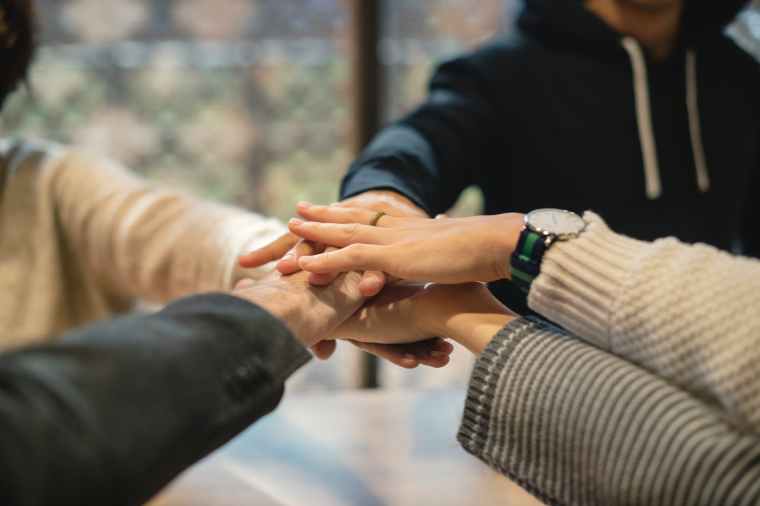
shallow focus photography of five people holding each other hands
Photo by rawpixel.com on Pexels.com

If there is one thing of which I am certain it is that politics have become toxic, and there is no such thing in most cases of a rational conversation about beliefs. While there are multiple points of few, most of them are immoveable. The idea of possibly changing someone’s way of thinking is ridiculous for the most part, and yet so many continue to try. Their posts and rants litter the commentaries of social media essentially for naught other than allowing the world to see where they stand. Those who agree with them rally in support and those who are at odds often condemn them for their ignorance and even ugliness. For those of us caught in the middle it can become a kind of irrational nightmare as we too struggle to enforce a bit of diplomacy which never quite gains traction. Instead we are accused of being without moral compass, cafeteria citizens who pick and choose what we support. We independents are seen as the worst form of persons because we don’t appear to be guided by a philosophy that might describe from whence we form our opinions.

I’m a combination of many different political persuasions. As a woman I am a hybrid feminist, part progressive and part conservative. I grew up in a world when most women stayed home to care for their families. My mother was somewhat unique in our neighborhood in being a single parent due to our father’s death. She was the child of a woman who was unable to either read or write. Mama’s high school diploma was considered a great achievement, and she might have been content with stopping her education there had she not suddenly found herself responsible for supporting a family. She worked hard to hold down a job and earn a college degree, but at the same time she urged me to always put my husband and children first because she believed that nothing was more important.

I grew up surrounded by friends with large families because birth control was still somewhat unreliable. My mother cautioned me to be “ladylike” and to save myself for someone who loved and cherished me. While she emphasized the power of education and urged me to go to college, she also maintained that all of that was secondary to building a strong foundation for the family that I would one day have. Once I was married, she urged me to be respectful of my husband, and sometimes criticized the amount of time that I spent on my job when I would become involved in projects that kept me away from my family far into the night.

I rallied around the feminist movements of the sixties and seventies. I planned my family by carefully using birth control. I earned two degrees and moved up the ranks in my profession. All the while my always enlightened husband supported every single idea that I had for living my life both in conjunction with his, and independently at times. I fulfilled my own wishes while also somehow balancing the many duties of family life. To this day, my husband and I see each other as equal partners, and we confer with one another in all of our decisions. He is as proud of my accomplishments as I am of his. As a woman I have enjoyed the freedom to be the person that I want to be.

Sadly, for the most progressive women, my brand of feminism is not enough to satisfy them. When I note that I struggle with the concept of abortion because in my heart I believe that it is a form of murder, they maintain that I am ignorant and that I obviously don’t care about the plight of women. When I mention that I did not work full time during my daughters’ early years so that I might build a strong foundation for them, I am told that my thinking is old fashioned and quaint. If I suggest that all women should allow each other to form their own opinions, I hear that there is only one way on  “ the right side of history.” If I complain that the rhetoric about men is often too generalized and damning, I am met with derision and disbelief. I am often made to feel that I am not a feminist at all, but an ancient throw back to a time when women were degraded and made to be prisoners of a male dominated society.

I’m not an angry woman. Perhaps I have been lucky in my interactions with men and the world of work. I have found boorish “male chauvinist pigs” to be the exception rather than the rule. I have been supported again and again by amazing people both male and female. I have enjoyed a freedom of mind and action that might have amazed my female ancestors. I don’t want to have to walk in tandem or be dominated by any form of group think. I take each issue individually and after study and contemplation form my own personal opinions. I firmly believe that this is the way feminism is supposed to be. I support my sisters by allowing them to think however they wish, but ask them to respect my philosophies as well. We need not argue because I know that we react to the world based on a lifetime of experiences. We form our conclusions depending on who we are and who we have been.

I suppose that many women are still trying to determine what their places in society should be. To attempt to create a one size fits all way of doing things is ridiculous. Neither do we need to destroy the men who live beside us with insults and slurs that demean them. Ours is not so much a fight as a process of discovery. Each girl child should be encouraged to approach life in a way that feels right. She should understand that men need not be her enemies. There is good and there is bad in both sexes. We must teach our daughters and granddaughters how to discern who is who, and that it is always okay to have personal beliefs and preferences, even when they diverge.

I like being a hybrid. I like being independent. I have had a very happy experience as a woman because the people closest to me have allowed me to be the person that I choose to be. In turn I hope to always honor the choices that my “sisters” decide are best for them. True feminism demands that we understand that there is no one pathway, and our quest is doomed if we demand that it be so. Our journey has to include a wide range of views and the other half of the human race known as men. Our power will come only when we see ourselves as individuals with all of the rights that such and idea implies.

Finding Beauty In the Worst of Times

close up photo of purple petaled flower
Photo by Pixabay on Pexels.com

My grandchildren read The Glass Castle this summer and recommended it to me. It is the memoir of a gifted writer recounting her sometimes harrowing, sometimes enchanting life with parents who at the very least were plagued by major eccentricities and alcoholism, and at worst suffered from bipolar disorder. The children at first saw their family disfunction as somewhat unique and maybe even rather fun. As they matured they began to realize that their situation was dangerous and unhealthy, and they were eventually able to break away from parents never willing to admit that their problems were real. The fairytale of denial can be enchanting for a time, but ultimately each of us encounter problems that me must face without guile if we are to overcome them.

I doubt that there is an individual anywhere on planet earth who has not felt victimized by circumstances at least once in a lifetime. Our existences are plagued by all sorts of wants and needs. We may live in grinding poverty or be afflicted with some terrible illness. We may lose a parent or child or loved one. We may seem to have no luck other than the bad variety. Our hard work may go up in flames. We may feel bullied or disliked because of our race, or religion, or sexual orientation. Each person sometimes feels as though life is cruel and difficult. To a greater or lesser extent we have all had moments of despair, longing, doubt, anger. We learn soon enough that life doesn’t always seem fair.

As we journey through the number of our days we have ups and downs, happy times and sad. We succeed and we fail. How we choose to approach each moment more often determines what our outlook will ultimately be than anything else. Some people learn early on to pick themselves up, dust themselves off and carry on no matter what happens. They understand that the power that they have lies within. They refuse to devolve into a state of despair. They take charge of their destinies by maintaining optimism even in the face of great darkness.

Think of Holocaust survivors. Those who were not killed in the concentration camps still saw great evil, destruction, horror. Few would have blamed any of them for shutting down, refusing to rejoin society. Nonetheless, most of them went on to lead full lives. They learned how to chase the demonic images from their minds. They never forgot, but they allowed themselves to find happiness and to celebrate life. Perhaps because of their experiences they actually achieved a greater appreciation for simple joys than most of us. They understood the importance of love and its ultimate power over evil.

I often think about Jesus dying on the cross. He accepted the fate of dying a horrible and humiliating death because He wanted us to understand that part of the human experience is to endure suffering. None of us can escape sickness, death, disappointments. Unless we are afflicted with a severe mental illness, we can take charge of how to react to the slings and arrows that come our way. Our road my indeed be difficult, but the best among us learn to deal with whatever comes.

I was recently conversing with a friend who was outlining some health issues that her husband is experiencing. She spoke of taking a break from her cares and woes by getting her hair done. She has gone to the same hair dresser for years and the two of them have become confidantes. In the course of the cutting and styling of her tresses my friend learned that the beautician and her husband are dealing with almost unimaginable difficulties that somehow made her own concerns seem less dire. As she noted, we don’t have to go far to find someone whose problems are bigger than ours. In fact, we are all in this crazy thing called life together, and none of us are going to entirely escape hardships.

There are many folks who assume things about certain groups of people these days. We seem to think that some among us are so privileged that they are unable to understand our own travails. I tend to believe that such thinking is cockeyed because even the wealthiest people on earth know sadness, sometimes to a greater extent than the rest of us. They may appear to have everything that the heart desires, but in truth many times they are brokenhearted. Think of the rich and famous who only recently have left this earth by their own hands because the weight of the world became too much for them to bear.

It is true that we do not receive equal shares of good fortune and tragedy. There are indeed some who appear to have more than their fair share. There are no guarantees that we will see justice at every turn. That does not mean that we should despair or grow jealous, or insist that we must take from others to make ourselves feel better. Instead I suggest that we understand that we will encounter pitfalls and even downright unfairness, so it is important to learn ways that help us to move past such things.

Life is a marathon, filled with pain and scars, but also wonders. Sometimes to get past the ugliness we have to find a tiny patch of beauty and hope. The young girl who grew up to write The Glass Castle learned to view her life from the perspective of reality. She and her siblings endured much want, but they also found the joys of simplicity. Their parents were hardly models of responsibility, but they gave the children the gift of finding beauty in any situation. That’s the challenge that we all face.

Atonement

autumn autumn colours autumn leaves background
Photo by Pixabay on Pexels.com

I often joke that I may have to spend some time in purgatory when I die before earning a place in heaven. I note that I can rock along for quite some time doing my best to be a good person and then I do or say something not so nice that cancels some of my kindnesses. Truth be told I’m about average when it comes to my humanity. Like the scores of people who came before me and those who inhabit this earth with me I make mistakes. Such is the inevitability for most of us.

Now and again I see another soul who seems to have achieved a bit more perfection. Both of my grandmothers would fall into that category. They were generous, loving guileless women, but I have often thought that being isolated from most of the ugliness of the world as they were may have helped them not to back slide. Women today spend decades out in an often unforgiving world and the temptation to fight back sometimes leads to anger and invective of the sort that my grandmas never invoked. I believe that I will ultimately be forgiven for my lapses because I also firmly feel that my God is all about redemption. I mean, isn’t that more or less what Jesus told the world as He died on the cross?

I have been reminded of the power of honest contrition by admissions of weakness by heroes of mine like Mother Teresa, Jimmy Carter, and John McCain. All three made it clear in their writings and orations that they sometimes failed to follow their own principles. They spoke of making faulty decisions. In other words they were as human as any of us, which I suspect was also the case of my grandmothers, not withstanding my idealized image of them. As humans we are filled with imperfections and contradictions. When all is said and done the question becomes how we have attempted to live the majority of our days, and whether or not we have been willing to admit our transgressions and attempted to change.

My mother and my teachers all taught me that to sin is human, but to ask forgiveness is divine. They also insisted that once I demonstrated true contrition it was important that I move forward rather than eternally looking backward at my failings. I was schooled in the idea that I should love all of my fellow men, and that my hatred should be aimed at behavior that I found to be egregious, not people. That’s an admittedly difficult formula to follow, but it became a glorious model to use in my work as an educator. I was able to separate the flaws from the person, and deal with behaviors while still caring about the child.

We are in a cycle of judgmental excess, all around. We even take our self righteousness to the extreme of looking back in history and condemning entire civilizations and ways of thinking. We forget the rule of social science that tells us that generalizations are rarely acceptable in assessing humans. We also forget how different the world was from ours even a hundred years ago.

I have been watching the Amazon Prime series Lore and have been taken by the ignorance and superstitions that were prevalent in the world of my ancestors. Scientific and medical knowledge was so antiquated. Philosophies were often based on superstitions. People were generally uneducated much like my two sweet grandmothers who were unable to read or write, much less understand scientific and sociological intricacies. I find it oddly ridiculous that in our modern era there are so many who would overlay our own knowledge and understanding on people who often lived in isolation with little or no education simply because they appear to have behaved badly in a past that was as human as the present.

I also have a problem with pointing fingers of judgement at historical figures who attempted to atone for admitted transgressions and mistakes. It is so easy to insist that none of us would ever have been willing to follow bad leaders, but then we will never know if that is true or not. We cannot possibly put ourselves totally in the shoes of someone from another time and place. We would have to become them in every sense of the word, and of course that is impossible. Instead of looking backwards and admonishing people who lived in times far different from ours it is up to us to look forward. We can do that by learning from the past. Reading and studying with an open mind will teach us how to find the best thoughts and ideas. If we are to be fruitful in our quest for a more equitable society then we must spend more time constructing than tearing down, finding the good and building on that foundation.

I saw a group of students from Harvard who asked a professor what they might do right now to begin to foster positive change in our society. His answer stunned them a bit, but it was brilliant. He suggested that they take full advantage of their educational opportunity by becoming persons who have knowledge and the ability to think critically. He challenged them to acquire the tools that they will one day need to become great leaders, He spurned the idea that they spend their time protesting before they knew enough to come to reasoned decisions.

I also seem to go back to the folksy wisdom of my mother who was indeed a brilliant woman. In her times of clarity she understood human nature as well as any sociologist or psychologist. She often told me that people evolve over time, and that life is a journey through many seasons, all of which make us better people if we are willing to grasp the importance of each. She noted that youth was a time for observing and learning. She spoke of knowing when and how to grasp the reigns of leadership and when to pass them down to the next generation. She felt that a wise person would understand that we are all hoping and dreaming and failing. Each of us is an imperfect being with the potential for greatness. Our journeys in that direction challenge us to be humble and compassionate and forgiving. She always believed that there is an overwhelming goodness to this earth that beats with one heart. If that is our focus we will find happiness and purpose, even as we falter.