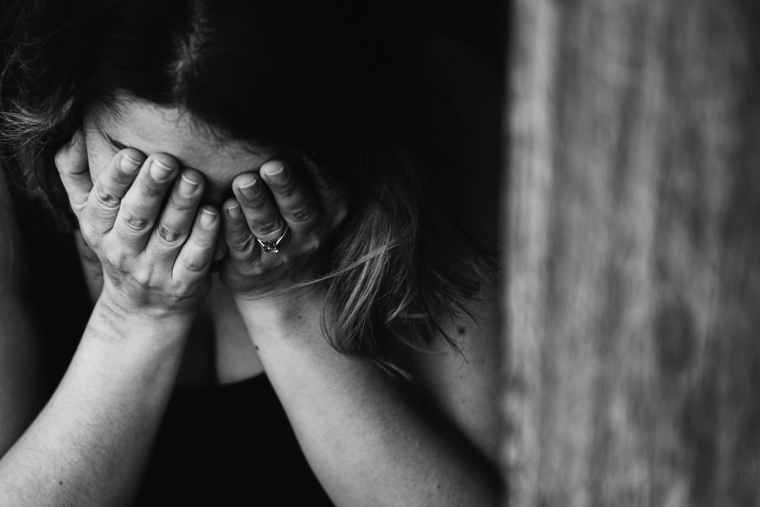
Being Kind To The Unkind

man person face portrait
Photo by Pixabay on Pexels.com

The real test is being kind to unkind people.

I saw this quote on a friend’s Facebook wall and it spoke to me. I believe that it is difficult for any of us to demonstrate courtesy and compassion to someone who is unlikeable in the way in which they treat others. As I considered the idea of being kind to unkind people I thought of a man who lived near my family when I was about six or seven years old. His house was across the street from ours, situated on the corner of the block. The location was such that people constantly passed in front of his home which he meticulously kept in a lovely state. He was particularly proud of his grass which adorned his lawn like a thick green carpet. He was continually fertilizing, trimming, and watering. It appeared to be more than just a hobby. It was an obsession, and his efforts paid off because there was no yard as beautiful as his.

There were many children who lived nearby. Virtually every residence was filled with boisterous and happy kids, but the man had only his wife. For reasons that seemed strange to me they had no offspring, and so the man focused hours and hours of attention on his gardening. Because he was unaccustomed to the habits of youngsters he seemed almost afraid of us as we ran up and down laughing and being a bit louder than we probably should have been. He glared at us whenever we passed his way, and woe be unto us if we took the liberty of trodding on his grass. He would howl dire warnings, yelling and screaming that we should never again desecrate his yard with our dirty feet. We received his message with a combination of fear and loathing, thinking him to be a vile creature. We literally hated him, but were also so scared that we took to walking in the street to get past his place rather than tempting the fates by staying on the sidewalk.

I remember complaining to my mother one day, vowing that my friends and I would find a way to show him what it felt like to be treated so badly. I spoke of our loathing for our neighbor, feeling totally justified in my assessment of the situation. My mom listened patiently and then suggested that perhaps the man had reasons for his behavior that we did not know. She urged me not to be unkind but rather to simply be respectful of his wishes, and to be as friendly and kind as I might have been had he been more pleasant.

It was a difficult assignment and I was unable to convince my friends to join me in overlooking the angry threats that he had hurled at us. I was on my own and it was admittedly a frightening place to be, but I slowly began to be neighborly each time I saw the surly guy. I would wave, smile and shout a hello. I would gingerly walk along the sidewalk making it very clear that I was doing my best to be careful. When he was working on the landscaping I complimented his efforts and told him how nice it felt to live across from such a beautiful expanse. Once I even offered to help, knowing that I would no doubt be turned down.

As time passed the man’s demeanor began to change. He would exchange greetings with me and ask me how I was doing. He began to bring vegetables from his backyard garden to our home when he would talk with my mother and tell her how lovely it was to watch the children in the neighborhood having so much fun. He revealed that he and his wife had been unable to have children, but had always hoped that a miracle would bring a child to them. He had been sad and angry that their prayers had been denied, and he had thrown his energies into creating a kind of garden of eden to make his wife happy.

I learned at that very young age that those who are unkind often have become so because of circumstances that overwhelm them. We never really know what someone is experiencing when they are mean and hateful. While their actions may be aimed at us, they are often symptomatic of some deep seated pain that they don’t know how to heal. They are angry at the world, and maybe even themselves. As their tempers increase, so too does their isolation become ever more intense. They create a vicious cycle that leaves them unloved and lonely. When those around them pay back their surliness with compassion, sometimes they begin to change.

Our society is enduring an era of meanness. We seem to equate anger with toughness. As with a playground brawl we have people trying to outdo one another with insults and even threats. There are those who answer what they see as injustice with rudeness and suggestions of violence. None of those things will do much more than raise the level of heated argument. It is only when we stay calm and offer peaceful resolutions to problems that we stand a chance of making positive changes.

Being kind to unkind people is very hard indeed. Our instinct is to follow the dictates of “an eye for an eye.” We would prefer turning our backs on such people, avoiding them at all cost. It is only when we at least attempt to follow our better natures that we can feel assured that we have done the right thing. If our efforts are spurned, or if the person only becomes worse we most certainly should simply walk away. Never, however, is it right to join in the fray. We only demean ourselves when we go down into the gutter with unpleasant people.

I’m genuinely hoping and praying that the current tendencies toward street fighting among rivals will be a phase that has soon passed. It does little to solve problems and we certainly have our share of those. We can pat ourselves on the back for spending most of our days being kind to people who return the favor, but we should be especially proud whenever we are able to be caring to someone who has been disagreeable to us. We never change minds or personalities with viciousness. That only leads to schisms and sometimes even wars. Our best bet is to smile and reach out a hand of understanding and warmth. Most people will respond and we may learn something new and important in the process.
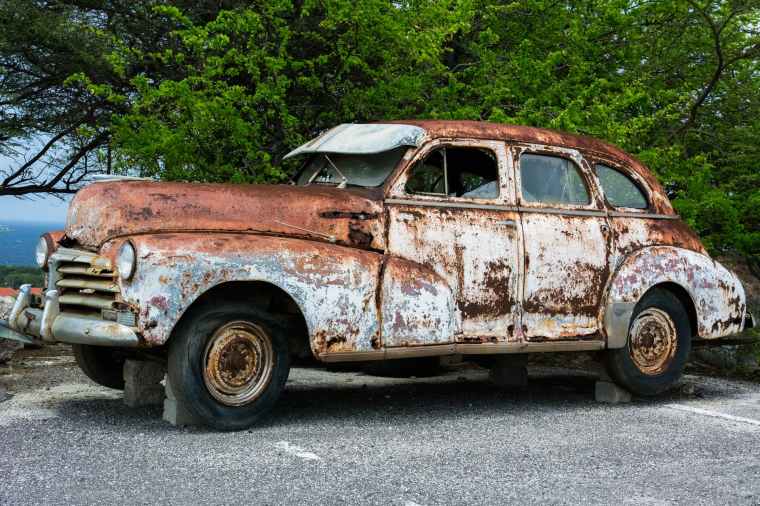

Another Ding, Another Scratch

broken car vehicle vintage
Photo by Skitterphoto on Pexels.com

I saw a woman on television laughing about a dent in her car and philosophically shaking off her concern by exclaiming, “Another ding, another scratch, just another chapter in the story.” I had to laugh along with her because in truth she had summed up life quite brilliantly with that little utterance. It seems as though each of us carries dents and scars on both our bodies and our minds that ultimately contribute to becoming the persons who we are. In spite of our own efforts to take control of things, we are continually blindsided by accidents of nature and disappointments from relationships. As we travel through our individual stories we experience collisions with diseases and toxic people, along with all of the regular intersections and interactions that bring the wear and tear that is a normal part of being human.

Some of the things that happen to us are quite natural. As children we may skin our knees or break a bone or two. We form friendships and experience disappointments. We learn and dream and if we are truly lucky we get through our childhoods without too many traumas or losses and work on embracing adulthood. We search for loving friends and partners and attempt to fulfill the dreams and goals that push us to become better each day. We may choose wrong and have to rethink our plans or accept that someone that we loved has betrayed us or simply grown weary of us. If we are lucky our troubles are average, and our health is good so that we make it to our so-called golden years of retirement. We grow older and feel the aging of our bodies a bit more. We must say goodbye to departed friends and look a bit less toward the future and more at finding contentment in each day. Eventually every single one of us reaches an ending, and if we are lucky we will be able to look back on what we have accomplished and the relationships that we have fostered with a sense of contentment and maybe even a bit of pride.

The truth is that living is a bit more complex than that. We are faced with challenges at times that feel almost unbearable. It becomes difficult to write them off as just another ding or scratch. We feel as though our collision with some horrific force has totaled us out, reduced us to heaps of junk. Unless we are extraordinarily lucky each of us has faced a moment in which we might even ask God where He is because we feel so alone in our pain and suffering. I have had my own share of troubles that threatened to overwhelm me, events so terrible that they rendered me almost useless for a time. In those moments I had to rely heavily on faith, hope and love wherever I was able to find it. I was always humbled in learning who my most loyal angels were, because often they were not the people to whom I had given the biggest chunks of my heart, but instead unexpected souls who miraculously came to my aide. Of course there were also a handful of people so reliable that I was able to call on them time and again to rescue me from many difficult situations.

I recently watched a movie called Hostiles. I had not heard of it before, but it had a good cast with Christian Bale and Rosamund Pike, as well as a very decent Rotten Tomatoes rating. It is a western and thanks to my Uncle Jack I grew up loving those kinds of stories. This one reminded me a bit of the old John Wayne movie The Searchers, but with a more modern and philosophical twist. While there was plenty of adventure, the tale was mainly about people caught up in the kind of accident of life that transforms them and provides them with the answers that they have needed. It speaks to the idea that sometimes in our most tragic times we find the faith, hope and love for which we have been searching.

An event can be so unnerving that it causes us to reassess everything that we have believed about ourselves and the people around us. It rips us apart and threatens to destroy us, but we somehow find what we need to repair ourselves and come out whole again. The process of fixing our very souls can be gut wrenchingly painful and lonely. We may not even want to continue down the road because the darkness does not allow us to see what lies ahead. We may cry out and hear no response, lie down and wish it all to be over. That is when we somehow find the tiniest bit of encouragement as though the hand of God Himself is reaching down to rescue us.

We humans are fragile creatures who are nonetheless stronger than we realize. For centuries we have endured the dings and scratches and wrecks that mar our journeys, but also provide us with the character that makes our stories more real. Still there are those among us whose suffering is so intense that they cannot repair themselves alone. They need someone to help them to restore the faith and hope that they require to continue into the future. Love is the panacea that they seek. We need to be aware of them and be the person who gently demonstrates the compassion for which they have been searching.

We all have a ding here, a scratch there, and sometimes a big gaping hole. Some of our injuries are of our own making, but most come from out of nowhere like a speeding Mack truck driven by a drunken driver. We endure collisions that test us more than we believe that we are capable of handling. That is when we often feel the most alone, but in truth there is always someone who will miraculously help if only we allow them to hear our cries. As humans we have two duties. One is to humble ourselves just enough to ask for assistance, and another is to be ready to provide aide whenever someone calls. If we follow these guidelines we are less likely to wind up forgotten and alone in the junkyard of life. We have the power to rewrite our stories and those of the people around us. When we embrace our dings and scratches they take on a lovely patina that brings out the true beauty of life.

People In Boats

woman in black hoodie in teal canoe in body of water
Photo by Pixabay on Pexels.com

I recently experienced a bout of insomnia that not even a dose of Tylenol PM was able to combat. As I lay tossing and turning I had one of those Roseanne Barr moments in which I began to think about several news items that I had seen and had an overwhelming compulsion to comment on them. Luckily I was a bit too lazy to rise from my bed to do anything destructive with my thoughts other than to use them as a form of sheep counting that eventually led to the slumber I had been seeking. I’d highly recommend the method to Ms. Barr if she ever again has the urge to sleep tweet in the middle of the night. Of course most of the damage has already been done in her case.

There had been several issues on my mind, but the one that I have not been able to simply forget, even in the light of day, is probably of little consequence to most people, but a very big deal to me. It seems that our president was praising the Coast Guard and the wonderful work that they do when he went a bit off topic as he is so often wont to do. His remarks were just fine until he made one of the most ridiculous statements that I have ever heard. “I don’t think the Coast Guard gets enough credit.  And I’ve said it, and I even say it to the Army, Navy, Air Force, Marines. I said, I think this year the Coast Guard, maybe in terms of increased branding — the brand of the Coast Guard has been something incredible what’s happened. Saved 16,000 people, many of them in Texas, for whatever reason that is. People went out in their boats to watch the hurricane. That didn’t work out too well.  That didn’t work out too well.”

My eyes almost started to bleed when I read this commentary. I even checked it to be certain that it was true, and it was! I had to laugh at the sheer ignorance of the assertion. Sure there are gawkers in almost all situations but to imply that Houstonians were pulling out their boats for a little ride to watch the hurricane is too bizarre for words. First of all, those of us in Texas know that one doesn’t go out to watch a hurricane. We hunker down as our county commissioner likes to say. We await the conclusion of the event in the safety of our homes, hopefully with the electricity running and the television guiding us with the most current status of the storm. Nobody here has any idea where the president got such the idea that we were boating around for our own amusement during a very dangerous situation.

I have to admit that I was quite anxious during those many days of unending rain. I felt a bit like Noah and wondered if it would have been a good idea to have built an arc in preparation for the storm. I even wished that I still had the old flat bottom boat that we once used to navigate up and down Caney Creek behind some property that we often visited near Brazoria. I would have felt a great deal safer knowing that I had a way out if my home filled with water as was happening to so many of my friends. Their descriptions of the terror of attempting to flee the rising water were breathtaking and for many of them those people in boats were not sightseers, but heroes who took them to safety.

As far as anyone around here knows the private citizens who spent days and nights rescuing people were as wonderful as the members of the Coast Guard who were also invaluable to our cause. In fact things had become so dire so quickly that many of our elected officials encouraged anyone with boats to come to the aid of the thousands of stranded people in our town. There were simply not enough resources from the usual governmental sources to deal with the unfolding tragedy, and so ordinary people did extraordinary things. I have never been so proud of my city and its residents in all of my days. To insinuate that they were only watching the hurricane is not just ludicrous, it is insulting, and we need to loudly and proudly set the record straight.

President Trump has a rather inventive mind. Perhaps he is so busy that he lacks the time to check his ideas before he utters them, but in the case of his remarks about people watching the hurricane in boats he is dead wrong. His words demonstrate a total lack of understanding of what actually happened here. Perhaps he has been so isolated by the cloak of wealth and privilege throughout his life that he does not actually know what it is like to deal with the realities of daily living. He is simply not in touch with the day to day truth of not just my city’s situation but also those of ordinary citizens around the country. He lacks enough empathy and understanding to see problems through others’ eyes. Everything seems to revolve around his own needs, and so he comes across as an uncaring kind of clown.

Like much of the country and the world President Trump has no idea what Texans and Houstonians in particular are really like, We’ve learned to laugh at the insults and stereotypes that are hurled our way. We know how wonderful it is here and not even the heat or the mosquitoes will drive us away. We understand that being a Texan and a Houstonian is one of God’s greatest blessings. We are part of a great big family of people who will not let us down even in times of great need. They will come with their boats and their big hearts to rescue us and it matters not to them who we are or how we look. People in boats came out last August to save strangers. It actually worked out really well, Mr. President, contrary to whatever you may believe. We will never forget those people and their boats, and we thank God every single day that they were willing to place themselves in danger just out of the goodness of their hearts. You might want to learn from them, President Trump. 

Save the Children

adult alone anxious black and white
Photo by Kat Jayne on Pexels.com

When my mother was only three or four years old her mother had a mental breakdown. The full details of the event are sketchy, but the certainty of what happened to my mom is very clear. The little tyke loved her mama and felt safe with her. When medical personal came to the house, restrained her mother, and then drove away in an ambulance the child that my mother was felt confused and betrayed. This event had a lasting impact on her that was so traumatic that it haunted her the rest of her life. She often spoke of the disdain that she felt for her father whom she held responsible for what she viewed as the imprisonment of her mom. She insisted that her mother had been a good woman who did not deserve the horrific treatment that befell her. Unlike her older siblings she was never able to accept that her mama had been very sick and in need of treatment. She had been so very young when she was torn from her mother’s loving care that it impacted the very essence of her thinking. The scars left by the separation never healed.

My youngest daughter endured a similar situation that was less dramatic but nonetheless frightening to her. When she was not yet three years old my husband contracted a fungal disease that required hospitalization and a long regimen of chemotherapy. Our family was thrown into a kind of chaotic state when we learned that the disease was often fatal. We spent months in a new routine of hospital visits and uncertainty. Years later my girl endured a bought with severe anxiety and depression. Her psychiatrist asked what had occurred at around the age of three that had seemingly caused the her to have an enduring sense of uncertainty and fear. He noted that something had so affected my daughter that she had buried deep seated emotions that were finally coming to the surface and causing her despondency. It was shocking to learn that something that had happened more than a decade earlier that was seemingly resolved had such a profound affect.

Young children see and hear and feel far more than we sometimes know. They are aware of what is happening around them to a larger extent than we imagine, but they do not always have the capacity to interpret the interchanges with their environment, particularly when the security represented by a parent is taken from them. They are unable to fully express the need for the warmth and love of a mother or father that is so essential to their healthy development. It is critical that they have all of their most basic needs addressed, and there is generally no better person to do that for them than a parent who genuinely cares for them. So much of the basic personality is formed during early childhood and every event plays an important role in development. As children we all cling to our parents and look to them to supply our most essential needs. When that relationship is suddenly severed children lose all sense of safety. Unless they are carefully counseled and loved the event will have a lifelong impact.

My father died when I was eight years old. People often marvel that my memories of the days following his death are so crystal clear. I am able to vividly recall people, conversations, the weather, and most of all my own jumbled feelings. I was far more aware of what was happening that the adults around me ever imagined. That being said, without the maturity of adulthood I am certain that I often misinterpreted my situation, and not in a good way. I became a fearful child, someone unwilling to take risks. I was afraid of people and life. It would take me twenty or more years to overcome the shock and awe of the sudden loss of someone that I so loved, and I became a somewhat neurotic and sad little girl. It was only through my study of childhood development and my association with truly caring people that I was able to eventually lay all of the demons that had so haunted me to rest.

For these reasons I am both appalled and concerned for the welfare of immigrant children who are currently being separated from their parents. I realize that we have laws, and the adults who come here illegally are breaking them. In that regard there are many needed discussions regarding the issues, but it seems certain to me that taking children away while their parents are being processed is deeply wrong. The consequences of such inhumane decisions will impact these little ones for decades. The trauma that our government is inflicting on them is morally untenable, as anyone familiar with children understands. In spite of efforts to provide food, beds, education, games and other such amenities to care for them the one thing that the little ones require is missing. They must have their parents to feel secure. What we are doing is so egregious that we simply cannot justify the actions with by quoting laws or even the Bible. We must know that we are bending the truth and God’s word when we attempt to do such things.

I love my country and believe in its innate goodness. It has of late been overtaken by an incivility that is toxic. There seems to be an attitude that winning is more important than being just. The good people in our midst are being pushed aside by bullies, and the ideals of honor and respect are all too often being eschewed by those who insist on all or nothing in their political dealings. As citizens we must join together in the common cause of decency, following the lead of heroes the world over who insist on standing for what is right rather than what will make them popular. We must end the ugliness by demonstrating our best natures. Now is the time for all good men and women to come to the aid of our country. We can no longer allow tactics that so scorch the earth. If we don’t save the children of the world regardless of the circumstances we are doomed to a dark future. Our best hope is in finding our natural goodness again and doing what we know to be right.

Take A Moment Today

art boy colors decoration
Photo by Jessica Lewis on Pexels.com

Let’s take a moment today to do something kind for 1. ourselves, 2. someone we know, 3. someone we have met, 4. someone we don’t know, 5. someone we need to build bridges with. Be and do well. —-Ryann Madden

I slept in just a bit this morning. The sounds of school children gathering for the early morning bus are gone for the summer and so that “alarm” did not alert me that it was time to rise. Things become slower at this time of year for more reasons than just the summer vacation for our little ones. It’s so hot outside that our bodies and brains are somehow programed to take it easier lest we overheat and dehydrate. We’ve become so accustomed to the glories of air conditioning that we become almost more insulated inside our homes and cars at this time of year than we do in the winter, at least here in Texas. It’s the season of relaxation and fun, especially for students and educators. Somehow the seasons of a school year have become so programmed into my brain that I still react to the summer the same way I did when I was working. I allow myself to be just a bit more inclined to take it easy.

I won’t be able to sustain my vacation mode for too long though because I am hardwired with all of the Type A Protestant ethics that push me to be productive and to measure my accomplishments each day. I am committed to making the most of my time and descend into guilt whenever my slacking begins to appear to be a regular life change. I am mentally and emotionally compelled to make good use of my life, even as I age. For that reason I was particularly taken by this post from Ryann Madden, a teacher friend. It spoke to me because I am on a mission to transform my use of my waking hours from concentration of unimportant things to truly making an effort to care for myself and others.

Ryann’s “to do” list seems rather easy on the surface, but in reality it is laden with challenges, particularly with regard to being kind to ourselves and building bridges with someone with whom we have broken our trust. All too often we put ourselves last in the division of a day’s labor, and never quite get around to the self care that we need. We also tend to avoid those situations and people with whom a breach has caused us to lose touch. Our neglect of both ourselves and people with whom we have differed can be toxic, and yet we all too often have an “I’ll think about that tomorrow” attitude about these very important parts of our lives.

A very dear friend who is a counselor posted a wonderful blog about self care recently. In it she detailed her own personal journey to health of body and mind. She spoke of living such a hurried and harried life that she was using food as a kind of medication and she justified her neglect of herself by noting how much she was doing for others. Ultimately she found herself in the middle of a health crisis at a very young age. She knew that she needed to do more than just pop another pill into her mouth and otherwise ignore her own needs. She began to slowly but surely make a complete lifestyle change that began with thirty minutes of aerobic exercise each day and a consultation with a nutritionist. Before long she was thriving and glowing with the radiance that comes from treating our bodies and minds with the same love that we offer to others. She had not forgotten the people around her, she had only taken the time to remember herself as well.

When my husband had a stroke last summer and the two of us embarked on our own journey to living our best lives I found it easy to care for him but much more difficult to remember myself. It was simple to rationalize lapses in my own habits and it took an aggressive demand from my primary care physician for me to realize that I needed to be kind to myself as well. My doctor insisted that I was mistreating my own body and ultimately would be of little use to anyone if I did not change my ways as well. He literally gave me a prescription for five days of exercise each week with no excuses for not meeting this goal. His insistence shocked me into doing what I should have done long ago, and now self care has become an integral part of each day.

Which leaves me to the building bridges aspect of Ryann’s suggestion. It requires a bit of eating crow, approaching someone who has very apparently felt the sting of neglect and lack of respect from me. That is a much tougher situation to face, but in my heart I know it must be done. The person of whom I am thinking is older than I am. She has been isolated by failing health and loss of loved ones. She has become more sensitive and worried. She has taken some of my comments and parsed them until she is certain that I have insulted her. I have been confused and sometimes angered by her reactions, and so I have generally chosen to ignore her. I suspect that instead it is time to reach out to her and plant the seeds of reconciliation. It will cost me nothing to do so, and it may heal a wound that doesn’t need to fester.

Today is a good day to follow Ryann’s sweet suggestions. In fact everyday is a wonderful time to weave care for self and others into our routines. Think of how great we will begin to feel if we do.