The Colony

historic-colony-map-smMy husband still owns a house that his grandfather built in Houston in the nineteen thirties. It is on a tract of land that was part of the original Stephen F. Austin Colony that was deeded to Mike’s family before Texas won its independence from Mexico. The Sharman family traveled to Texas from Georgia in the hopes of starting a new life after experiencing hard times in a south dominated by large landowners. The parcel that they purchased lies just north of what is now downtown Houston and is bordered by Interstate 45 and Cavalcade Road.

When the Sharman’s first came it was wooded and undeveloped. They built a homestead and did some farming, never thinking that one day their place would be located in the fourth largest city in the United States and the second fastest growing metropolitan area. At the time that they arrived Mexico was hoping to develop the large swath of land to the north that was mostly wild and barren. They made a deal with groups like the one to which Austin belonged to provide low cost grants to anyone willing to settle down and develop the land. The Sharman family was willing to risk everything for a new start.

They used to own an area that included the place where the freeway now sits but that was taken by the state when it was deemed to be a good route for a major highway linking Houston to parts north. Mike recalls playing in the woods that lead down to the bayou when he was a young boy but that was before there was a concrete ribbon obscuring the once pastoral view. Later he rode his bicycle on the unfinished ramps while I-45 was being constructed. Sadly the finished roadway changed the feel of the neighborhood forever.

I often laugh whenever I read articles about that part of Houston. Nobody seems to realize the real history of the area. They speak of developments that happened long after my husband’s clan arrived in a time before there was even a Republic of Texas. Over the years much of the property has changed hands but Mike, his grandfather and his mother have kept the family legacy intact against all odds. In fact it was not until the nineteen eighties that one of them did not actually live on the land that has so much historical significance.

My mother-in-law was quite proud of the fact that her ancestors had been among the first settlers in what would eventually become the state of Texas and the city of Houston. She had so many stories of what life had been like for the pioneers. Those tales were handed down to her from her own grandmother who even told of her dealings with the native Americans who lived nearby as neighbors. We still have photos of family members standing in front of log cabins looking like visitors from the wild west. They worked hard and somehow overcame diseases, floods and many obstacles that might have driven away lesser souls. In many ways my mother-in-law became the unofficial historian of their trials and tribulations, a task that she enjoyed enormously. She loved being a Daughter of the Republic of Texas and kept up a membership for her grand daughters as well.

Her father’s home was built shortly after she was born. It is a quaint looking cottage that speaks of a simpler time. It was so well constructed that it will probably last for many more decades. Some of the nearby homes are even older and were the living quarters of her grandmothers, aunts and uncles. It was really a family compound where everyone contributed to the well being of everyone else. Being the only girl back then made my mother-in-law the center of attention and while she was quite spoiled by her adoring relatives, their love made her into a strong, generous and confident woman.

I would have enjoyed meeting her kin but they had all died by the time that I came into the picture. They were a tough lot, particularly the ladies. The Houston area was a harsh environment back then with outbreaks of yellow fever being commonplace due to the rainy weather and swarms of mosquitoes. Somehow the clan tended to stay quite healthy and live long lives in spite of the less than inviting conditions that they had to endure.

The part of north Houston where the family land still lies became downtrodden over time and my mother-in-law eventually moved after she inherited an uncle’s house in the Heights which is a gentrified area that is home to artisans and professionals. It felt safer there than in the home that had always been her residence. Lately however her childhood neighborhood is slowly but surely being beautified once again. It even has a new name that would undoubtedly horrify my mother-in-law with its ordinariness, Northside Village.

A Metro rail line runs only a block or so away from the property and its construction has prompted new interest in a part of town that lies only minutes away from the central business district. There are nearby lots selling for millions of dollars and tiny nineteen twenties houses are inching up in price. For now nothing particularly exciting is happening on the old Sharman tract but there are those who insist that it will one day become high dollar real estate.

I love the house that my husband’s grandfather built and always have. I can almost see myself living there with only a few updates to make it more amenable to twenty first century living. It is almost like a dollhouse in its design and even better in the love and care that went into building it. Right now there is still a great deal of crime in the area and the future of the street is uncertain. It’s difficult to know if it will become yet another rediscovered jewel or be ignored as it has been for the last couple of decades.

My daughter and I dream of rebuilding a kind of family village there. She wants to use some of the land to create a modern home for herself and I would be content with staying next door in the older house. We imagine the two of us riding the rails to shop in downtown or to visit the Medical Center. We think of buying our produce in the open air of the nearby farmer’s market or enjoying the of view of the skyscrapers that loom on the horizon. We envision a rebirth of the place with my mother-in-law serving as our guardian angel. We both know just how much she treasured the legacy that belonged to her and now is owned by her descendants. From the time that I met her she dreamed of the day when her homestead would be loved once again. She died without witnessing a renaissance but insisted that it was near. I’d love to see that happen before I too am gone. There would be something quite special about returning to the land that made her ancestors so very proud. We modern folk are so prone to throwing out the old in favor of the new. How grand it would be to find value in a place that has meant so much to generations of Texans who so proudly called themselves Houstonians.

We Are Our Own Narrators

come-with-me-7-2011_1-1024x671There is a certain irony that my grandson Jack performed in his last musical with the varsity theater group at his school this past weekend and that the play was Into the Woods. The piece was wildly popular on Broadway in the nineteen eighties about the time that Jack’s mother was ending her own days in high school. It is a profound story of relationships and the consequences of the choices that we make. It is a study of the fine line between childhood and becoming a true adult. Nothing is as it really seems or as simple as we would like things to be.

Jack played both the narrator and the mysterious man, a rather fitting dual role whose significance for me he may not fully understand until I explain. I found myself enthralled by the brilliance of his performance and his ability to nuance the subtleties and complexities of the parts. All in all Jack and his co-actors ultimately moved me to both tears and reflection which is as the authors of the play no doubt intended. 

Jack is named for a man that he never met, my father who would have been his great grandfather. The two Jacks are far more alike than almost anyone might suspect. My grandson like his long dead ancestor is a kind of renaissance man, someone who is as comfortable in a world of mathematics and science as in the domain of artistry. Like my father he is a sensitive soul who often finds himself questioning the ways of the world. He has so many talents and interests that he might follow a variety of paths in life just as was the case with his namesake. Both are known for looking at the world from many different angles. At the same time they might both be described as having a kind of innocent boyishness and joy of living that has made them attractive to others.

My father Jack loved to read and he passed that hobby down to me beginning when I was very young. He purchased two volumes of fairytales that he read faithfully to me. Those stories created a secret bond between the two of us and kept his memory alive long after he had died.

At first my thoughts of my father were romantic and childish much like the first act of Into the Woods and the stories that he read to me. I missed him terribly and often found myself having foolish dreams that he would one day return to guide and comfort me. Sadly reality never really works like that as is so profoundly revealed the second act of Into the Woods. There comes a moment when we all realize that we must cross over from the fantasies of our childhood into the world of reality. We learn that each of the choices that we make have consequences not only for ourselves but also for the people around us. We can only rely on our parents for so long and then we must face the fact that as we make our own ways we will undoubtedly make mistakes just as they did.

My grandfather was a kind of narrator, just like Jack was in his school play. Grandpa was the father of my father Jack. He often told stories of his own childhood and related history as he had lived it. He gave me great comfort any time that I was feeling down. He was a living link to my own father. His stories were not as lovely as the fairytales of my youth. He spoke to me with honesty because I was an adult and he understood that I must face even dark stories. He admitted to overcoming alcoholism and enduring profound depression and loneliness before encountering my grandmother and starting a family of his own. Like the songs in Into the Woods he found ways of bringing humor to situations that were actually quite tragic. He had developed a wisdom that allowed him to realize that sometimes we laugh and cry at the same time. Sometimes we are both frightened and curious. He had lived long enough to see that no person or situation is usually all good or all bad. He taught me that life is complex and we can neither run away from it nor tackle it alone. Like the mysterious man that grandson Jack also portrayed in his play, my grandfather had faced up to his own demons and conveyed to me the wisdom that he had learned from those battles.

I suspect that my grandson Jack has little idea how much his musical affected me. I thought of all of the times when I wanted to run away from the very adult responsibility of caring for my mother that was thrust upon me even before I had begun to explore the world. I had believed that she was supposed to be my rock and foundation but instead our roles were often reversed. I found myself making silly wishes with regard to our difficult relationship when she was very sick. Time again I had to rely on the kindness of others to help me through the most trying situations. I learned that I was much stronger than I had ever imagined and that I really didn’t need a narrator to tell me how my story should go.

I want to share my thoughts about his play and his role in it with my grandson Jack. I want to tell him the tale of his family thus far and how we all worked together and with an odd assortment of friends in reaching this day and time. I want him to know that we have seen triumph and tragedy, jubilation and bitter disappointment. Ours has been a very imperfect family but somehow we have managed to keeping traveling in and out of the woods, overcoming giants and wolves. We have been as human as the characters in the musical in which Jack had a starring role.

Hopefully my grandson will have learned more from his acting experience than just his lines and the melodies that he performed. If he reflects carefully he will see that there is an important message for each of us contained in the wittiness of the words and songs that he and his friends executed so very well. I wish for him to reach the depth of wisdom that is to be found in this musical that is not so much for children as for the child that lives inside all adults.

I suspect that Jack does indeed understand. He would not have been as convincing in his acting if he had not realized the power of the message that he was conveying through his expressions and the tenor of his voice. It is a good way for him to step out of the world of children and onto the pathway that will lead him into the adventure that he will one day call his life. I hope he knows now that he and only he is the teller of his story. How it proceeds and where it ultimately ends is up to him. It is an exciting journey that will not be without its misdirection and loss but will also bring him the realization of some of the most wonderful wishes that enter his head in the quiet of night. Along the way he will have unexpected encounters with people who will both help and hinder him. If he has truly learned his lessons well he will be ready for whatever comes. He will realize that all of us have a once upon a time that is only as lovely as we work to make it be. The magic is not in witches or beans or potions but within our own minds.

Tree

tree1024x1024There is a tree in Rockport, Texas that has been growing in the same spot for centuries. Some wise soul thought to save the old oak forever by declaring it an historical treasure and building a fence around it. People travel from all parts of the world just to stand under the shade of the sprawling limbs and to marvel at the girth of the ancient trunk. They snap photos of the wondrous image and try to imagine what the old tree has seen in its time on this earth. If only it could talk we might hear of native people pausing under its branches to rest after a day of hunting and fishing or learn of explorers from Spain who traveled along the Gulf Coast searching for cities of gold. Did the tree once see vast flocks of whooping cranes wintering in the area in their annual journey from Canada? How did it manage to withstand the forces of tropical storms and punishing hurricanes? What is its secret to long life?
We humans have love/hate relationships with trees. We plan trips to Vermont in the fall to marvel at the glorious colors of leaves but also cut down beautiful specimens to make way for factories. We plant trees in the yards of our new homes that once sat in forests that we eliminated to build our suburban communities. We enshrine trees in metaphorical poetry even as we topple them in real life. We use them for our own whims often forgetting that they are helping to provide the very oxygen that we breathe. They cool us and shelter us and we all too often take them for granted. When we flee from natural disasters we abandon them to bear the brunt of wind and water and fire.

Along the Big Thompson Canyon on the road leading from Loveland, Colorado to Estes Park is the dead stump of a once mighty tree. It is bent and gnarled into a contortion created by the power of the river that took homes from their foundations and turned nature’s bounty into piles of rubble. Somehow that tree has become a work of art. Its determination to hold fast to the rocks in which it once grew is a testament to its strength and flexibility. It stands as a sentinel as rugged as the huge boulders along the face of the canyon. It has somehow withstood the onslaught of both nature and humans.

We personify trees. They teach us lessons. We track our human history in their branches. We have a special kinship with trees, especially when we are hot and weary. We sit under their branches cooling ourselves and dreaming of futures that we may never see but they are more likely to enjoy. Trees remind us of ourselves as they travel along with us through the seasons and the years. They are our silent partners in a lifetime journey.

My paternal grandmother was a child of nature. Her father and her grandmother are buried in a national forest in Arkansas where their homestead once resided. It seems fitting that her ancestral home is now protected and allowed to return to a wild and unfettered state. She so loved to walk in the woods under a canopy of trees that sheltered the birds and critters that she enjoyed. When she died my grandfather handpicked a spot in the cemetery that sits under a grove of oaks whose limbs reach gracefully over her final resting place. She would have loved the serenity of the area. In life she marveled at nature’s wonders and seemed almost to be a mischievous sprite as she wandered in the forest behind her farm naming every tree, plant and bird that crossed her path.

Hanging on the wall at the entrance to my home is an image of an enormous tree spreading its limbs across a landscape of green. I have placed it there to welcome my guests and to remind myself of the glories of the natural world. The painting calms me and makes me smile. Gazing at it takes me to my roots. I think of the people whom I never met who had to live in order that I might now exist. Like the tree they once began with a tiny seed and then reached to the heavens with their dreams, becoming ever stronger with each new branch. I know their names but not their stories. I can only imagine what their lives had been based on what I know about the places where they lived. I wonder what they would think of me and the world in which I exist. I suspect that they would be happy that things have turned out as well for me and my extended clan as they have. After all, each of us wants the best for our children and grandchildren. We want to know that they will be safe.

One of my favorite books is Shel Silverstein’s The Giving Tree. I have presented it as a gift many times over. I never tire of its story of unconditional love and sacrifice. I have now travelled through almost seven decades from the time when I was born. I have been the child, the teenager, the young adult, the middle aged individual and now the old person described in the tale. I have known both the exuberance and the drudgery of life, sometimes forgetting the people who have brought me to the place where I now linger. Like all humans I sometimes take my blessings for granted and even abuse the kindnesses that have been shown to me. I forget to be thankful and to simply enjoy the shade and the sound of the wind whispering through the leaves of the tree of life.

Trees keep me optimistic. They remind me that there is a continuity in this world that is bigger than our individual human efforts. We may falter and even become a bit full of ourselves but the ebb and flow of life remains essentially the same. We all benefit from being a bit more like trees. It is important that we “Stay grounded. Connect with our roots. Turn over new leaves. Bend before we break. Enjoy our unique natural beauty and keep growing.” (Joanne Chaptis) If we remember these simple rules we will surely find more of the contentment that we seek, especially in a world as seemingly mad as the one that we now face.

That tree in Rockport has seen more than we might ever imagine and still lives on. There is something rather nice about knowing that it is there and will be even when we are gone. Like the giant sequoias of Yosemite, the groves of Aspen in Rocky Mountain National Park and the countless shady lanes that soften the highways and byways across the land trees are the constant that we all wish to be in the world.

American Memories

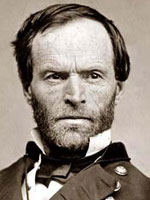
general-sherman-newWhen I was growing up in the south the mere mention of William Tecumseh Sherman’s name ruffled feathers. The stories I heard described him as a despicable general with a drinking problem who swept across the southern landscape burning and pillaging and destroying everything within his line of sight. Because I knew little about my own ancestry I assumed that at least half of my family connections were steadfastly rooted in the old Confederacy because my paternal grandparents had lived in Kentucky, Virginia, North Carolina, Texas and Arkansas for decades. Thus I blindly derided General Sherman for being so cruel to those I believed may have been some of my innocent relatives.
When I finally took a history course in college I came to realize that the reasons for General Sherman’s dramatic sweep were far more complex than I might have imagined. Both the Union and Confederate armies were exhausted and decimated from years of skirmishes that had destroyed the lifeblood of both sides. The country could ill afford to continue the war for much longer. President Lincoln had been searching for a military man willing to make difficult decisions and take risks that would end the conflict once and for all. General Sherman understood the need to break the resolve of the rebels. While his methods were harsh they were no more so than the steadily rising death count that ultimately took more American lives than any other war in its history. The ethics of his tactics have been the stuff of controversy ever since he burned Atlanta and cut his destructive swath across the Confederacy but others applauded his willingness to do what needed to be done.

I would later learn that from a familial stand point I was more closely connected to the Union and William Tecumseh Sherman that I might have believed. My great grandfather was an officer in the Union Army who fought at Corinth and Shilo among other battles. His predecessors had served in the American Revolution. When I finally discovered my family history I realized that I should have been singing the Battle Hymn of the Republic all along when I was foolishly whistling Dixie.

Imagine my even bigger surprise when I learned that my paternal grandfather’s legal guardian and uncle, John Little, was a graduate of West Point who had married General Sherman’s niece. While my official relationship to Sherman is tenuous at best it is still there because if John Little was an uncle to Grandpa then his wife would have been an aunt. The web of family relationships certainly brings surprises and I have had to rethink my own background.

Ironically I have a friend who now lives in a small town in Georgia that once served as the capital of that state. She is descended from German parents so there is little chance that she might have a link to either the north or the south during the Civil War. She is able to view the events of that sad time with more dispassion than most of us who have kin who were alive back then. She is attempting to learn as much about her new home as possible and in that spirit she came across a book about Sherman’s controversial tactics, Through the Heart of Dixie: Sherman’s March and American Memory by Anne Sarah Rubin. The story of his exploits is written from multiple points of view and it demonstrates in striking contrasts how differently we humans may see the exact same incident.

Sadly the majority of the history that we study tends to be taken mostly from the standpoint of the victors. We all too easily forget that without conflicting opinions wars would be unlikely. It is in our differences that our disagreements arise. It is rare that one side is all good and the other is all bad. Generally there are shades of innocence and guilt for everyone involved. When humans lose the ability to empathize and compromise situations usually end badly. So too when we meet with evil that refuses to budge we must at times flex our muscles. Knowing when to hold and when to fold often determines our strategies. Navigating through a dangerous and political world can become a high stakes game that requires hard choices that we would rather not have to make.

I once led my students through a discussion of the beginning of the American Revolution by reading different accounts of that fateful day on the village green when somebody fired the shot heard round the world. We looked at a letter from a British soldier and an affidavit from one of the colonists. There were eyewitness renderings from people who just happened to be present but who had little desire to become part of a rebellious movement. The incident was described by both men and women, political prisoners and historians. It is stunning how different the accounts are. The crux of each description is totally dependent on the beliefs and allegiances of each individual. All of this of course points to the reality that we have unique world views powered by the totality of our experiences. The way we react to or participate in events is rarely as straight forward and simplistic as it may initially appear.

To this very day the majority of Americans herald the Revolution as one of the most amazing moments in history, a glorious cause, but I often wonder how it might have been viewed if the British had ultimately been the victors. Would we hear of patriots or rabble rousers? Would the efforts have been seen as being heroic or foolhardy? Would the Tories now be considered the wise men who understood the folly of fighting the best equipped army in the world? How different would our history be?

I suppose I am reflecting on such ideas because I have lately been watching biographies of many of our twentieth century American presidents. A common theme for each of them is the interplay of the human strengths and weaknesses that drove them. Not one of them was either all good or all bad. Each had fatal flaws as well as remarkable characteristics. Sometimes they were blamed for events over which they truly had no control or heralded for triumphs that they had not actually achieved. The accidents of timing often made them appear strong or weak. Those of us who lived through their tenures regard them based on what did or didn’t happen while they were in office. Our individual circumstances color our thoughts.

The lens of history often attempts to create winners and losers. The truth usually lies somewhere in between. Knowing my family connections with the Union cause has filtered my thinking in new ways and has taught me the valuable lesson of suspending judgements and attempting to instead seek truths. The only way to do that is to be open and honest, something that seems increasingly difficult but not impossible to do in today’s partisan supercharged political atmosphere. I have learned to truly listen to alternative points of view, something that I wish more of the electorate were willing to practice. Once I accepted that each of us is sometimes right and sometimes wrong I have been able to see through the deceits designed to attract blind loyalty. I now rarely agree with anyone on everything. I have learned to consider each proposal and observation separately. It is a truly freeing experience albeit messier than accepting a single point of view. It is the kind of critical thinking that we must teach our children to do. Only then will we as a nation make choices that favor the good of our country rather than victory for our own personal needs.

One Picture, A Thousand Words

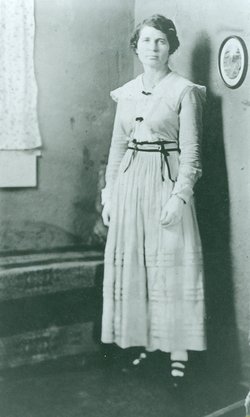
minnie bell85759993_133385194360A former colleague and friend has agreed to help me include photographs in the body of the book that I have written. I’ve spent a great deal of time  to that end sorting through boxes and albums containing images of family members that tell as powerful a story as the one that I have related with phrases, sentences and paragraphs. The old saying is that a picture is worth a thousand words and I have been reminded of the truth of that statement as I study each of the snapshots from my family’s history that have been forever captured in black and white, Kodachrome and pixels.

After my mother died my brothers and I spent many hours inside her home dividing up her few belongings. I was amazed at how many cards, drawings, letters, invitations, programs and photos she had saved. I found pictures that I had never before seen that had long languished inside boxes. It appeared that at some point my mom attempted to identify the people and the places so that we might one day have a clearer understanding of her personal history. The best of the lot were the black and white images from the nineteen forties when she was young and her whole adult life lay before her. Many of those images held commentaries such as “Those Happy Days” or “Such a nice person.” It was as though she wanted us to understand who she had been when the road before her was still based mostly on dreams.

I so enjoyed seeing my mother with her brothers and sisters, mugging for the camera, walking arm in arm down 1940’s Houston streets, and looking so incredibly young and beautiful. There were at least two quite handsome young men whose photos she kept, noting that they had purchased engagement rings for her before she had even met my father. One of them was killed during World War II and the other she turned down even as she noted that he was always a gentleman. I mostly loved seeing the pictures of my grandparents when they were younger than I remembered them, younger than I am now. I lingered over the postcards and panoramas from trips that Mama had taken. I laughed to learn that she traveled alone to San Diego when she was only seventeen to visit with a friend, demonstrating the daring spirit that would always define her.

My favorite photos were the ones that showed my mother and father flirting with one another during their courtship and early days of wedded bliss. It was almost shocking to see how young and in love they were. They mugged and teased in the style of the day. Mama vamped on top of automobiles and Daddy leaned on lamp posts gazing at my mother as though he had just won the lottery. Mama carefully recorded her feelings on so many of those pictures that show them in the first blush of their courtship.

Eventually the chronology of their life together led to photographs of me and my brothers. They took noticeably fewer snapshots of each other once we were born. Their lives appeared to shift focus. Their own visages became more serious. Instead of looking at each other they looked adoringly on us. Nonetheless, one image taken only months before my father’s shocking death shows them holding hands while walking down the streets of Hot Springs, Arkansas. It provides a testimonial of the depth of their feelings for one another. It shows one of those rare moments away from their children when they were relaxed and still so much in love.

The remainder of the memories are the story of our family life without our father. Somehow we managed to hit all of the milestones and find our own special kind of happiness. Of course that was mainly due to our mother’s determination to provide us with the safety and security that we needed at a time when our futures appeared to be so bleak. She did a yeoman’s job and somehow found the inner strength to provide us with a show of optimism in spite of our circumstances. I would find notations and writings that indicated the truth of the struggle that she silently and bravely endured.

My mother remained a pretty lady for all of her days. She possessed a radiance and unselfish spirit that drew people to her. Her albums are filled with memories of celebrations and parties and the people who meant so much to her. Eventually she grew tired and her friends became less energetic themselves. Many of them even died. She spent a great deal of her time alone. She collected readings from the Bible and verses that appealed to her. She wrote about the positive aspects of suffering and how enduring pain and loss had only made her feel closer to Jesus.

I discovered aspects of my mother’s personality and life story that I had never before known. I was able to gaze objectively into her world, not as her child but as a fellow human being. She had kept pieces of her heart hidden away and it felt amazing to get to know her in a whole new way. She became more real to me than she had ever been. I began to understand her on an almost spiritual level and I was awash with gratitude for all of the sacrifices that she had made for me and my brothers. It was a truly humbling experience to take a marathon tour of her memories.

We each travel through the modern world recording our own histories with selfies and images of the people that we know and the places to which we travel. Our faces and expressions tell stories of our passages through time. I wonder how many of our most special memories might one day be tossed away or deleted by distant descendants who don’t even know who we are. Will there be no one left to understand the meaning of our poses and our smiles? 

Whenever I eat at a Cracker Barrel restaurant I find myself looking at the old portraits lining the walls. I wonder who the people are and how their pictures ended up so impersonally decorating a place where nobody knows their names. There is a kind of sadness in knowing that their fate has become being a caricature of an era long past. It seems wrong that their lovely photographs have met such a lonely fate.

I now have a new goal. I plan to organize the thousands of photos that are in my possession. They will be far more meaningful for the next generation and those that come in the years long after I am gone if I take care in identifying their importance. My first step is going to be to include some of them inside the covers of my book so that my readers will have faces to put with the grand story of a little family that did its best to muddle its way through life. I hope that my words will equal the grandeur of how special they really were. Perhaps then the people that mean so much to me will find a way to live on forever.