The Death of Fairytales

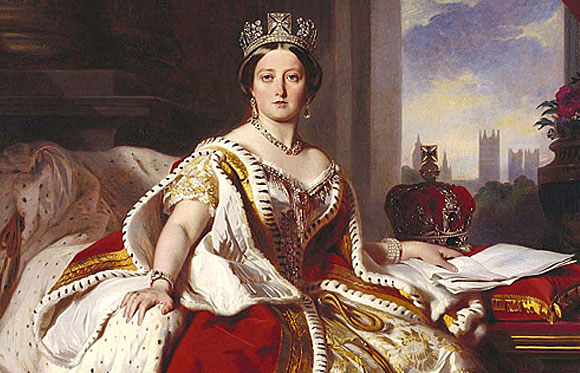
QVcoronationWhen I was a little girl women’s roles were still mostly traditional. Few of the women that I knew worked full time outside of the home. My mother was forced into such a situation when she became a widow, otherwise I doubt that she would have been anything other than a homemaker. I had a couple of aunts who were trailblazers in terms of having careers and some of my neighbors were employed in very interesting jobs. One was a commercial artist who wore exotic clothing and furnished her house with ultra modern furniture. Another was a lawyer who sometimes cried when speaking of her inability to have children but seemed to truly enjoy her work. She often invited me over for tea and to play cards or checkers, all the while encouraging me to do something remarkable with my life just as she had. All in all though not many women were yet ready for the feminist revolution that would eventually off like a rocket when I became a teenager.

As a very young child I dreamed of being a princess or a queen. Fairytales had me convinced that women lucky enough to live in castles and bear titles were the most fortunate maidens on the planet. I recall my disappointment the first time that I realized that I was never going to be discovered at a formal ball by a handsome prince. I was not born of noble blood and therefore would always be deemed unworthy of the notice of a monarch. I would lead the life of an ordinary soul without benefit of riches and fame unless I earned such things myself.

I got over my sadness rather quickly and made my own way in the world. I haven’t been showered with wealth but I have had a great life all in all. I have always found time for my favorite hobby which is reading. Biographies have fascinated me for as long as I can remember and among those that I enjoy learning about are women who became queens. For that reason I have been particularly excited about watching Victoria on PBS and The Crown on Netflix. The stories about Queen Victoria and Queen Elizabeth respectively have been quite fascinating while also convincing me that I am rather lucky not to have to wear their shoes.

Both women spent the majority of their lives locked into responsibilities that were thrust upon them at very young ages. While there were jewels, lovely clothing, expansive gatherings and adventurous trips to keep them entertained, they also had to adhere to rigid traditions and rules that impinged on their freedoms far more than I would ever be willing to endure. They had to be careful of every utterance and action lest they do irreparable harm to the monarchy or the country. They were expected to select their spouses from a very limited field of candidates, most often from a band of royal cousins. They were in the public eye continuously and criticized readily for any perceived missteps. To me the lifestyles that they were forced to accept were akin to living in a cage in a zoo.

Victoria quite unexpectedly ascended to the throne and because she was quite young there were those who felt that their claims to office were far more reasonable than hers, making her first forays into ruling much like walking through a minefield. Nonetheless she did her best to rise to the occasion only to be criticized when she chose to marry her first cousin, Albert, a man of Germanic heritage deemed unworthy of the position. As it happened, Victoria and Albert had quite a love affair and together created a very large family of children whose influence would spread across all of Europe and ultimately lead to a world war. Sadly Victoria was a rather uninvolved but highly critical mother who made life very difficult for her offspring. Albert was the better parent but he died fairly young leaving Victoria in a state of depression that lead to a total breakdown. She would wear her dark widow’s weeds for the rest of her days and for the most part lose interest in both her country and her children. She ultimately became known for her melancholy and nagging nature, hardly the possessor of happiness that I had imagined a queen to be.

Years later on of her descendants, Elizabeth, would be entrusted with the same role that might not have been hers had her uncle Edward not abdicated the throne to marry a twice divorced American woman whom he passionately loved. Elizabeth was barely in her twenties when her father, the king, died from lung cancer. Like Victoria she had also wed a cousin, Phillip, whose lineage was traceable back to the same Victoria from whence she garnered her birthright. She had to learn how to put the crown before all else in her life and as we have all witnessed over the years that role has placed her in difficult situations again and again. Even though she is the monarch she has no say in the politics of her nation and she must be incredibly discreet in both her commentaries and actions.

As the head of the Anglican Church Elizabeth was forced to rule against her sister who wanted to marry a divorced man. The resulting feelings of betrayal and unhappiness that her sibling experienced would blight the two women’s relationship for years to come. A similar scandal played out decades later when Elizabeth’s own children found themselves in unhappy marriages that publicly broke apart. I have often wondered if the idealistic Princess Diana had imagined that her life would be as magical as a fairytale only to find that the reality of royalty is routine, dreary and devoid of the most basic freedoms that the rest of us enjoy. The moment when she felt trapped in a nightmare must have been devastating and her dutifully trained mother-in-law would not have been able to empathize to ease some of her concerns.

The more I learn about being a royal personage, the less I am inclined to want to have anything even remotely resembling such a way of life. I am the one who is fortunate in being able to go wherever I wish without worry that someone is stalking me or judging my every move. The only restrictions on whom I would marry were the qualifications that I had deemed important to a good relationship. I have been able to choose my career pathway and determine how many children to bear. The fact that I had no male heirs matters not at all. I can openly utter my political views and chart my daily course. If I want to disappear for a day or a week, I am free to do so. My anonymity is a grand gift that allows me to be myself.

If I were to rewrite fairytales for modern girls, I would create heroines who spurn the trappings of a princess in lieu of liberty. Snow White would divide the household duties among each of the dwarfs and go to work with them as the forewoman of the mine. Cinderella would create a professional chimney cleaning service with offices worldwide and a reputation for paying her employees well above the minimum wage. Beauty would write a best selling book and marry the Beast as an equal partner. None of these brilliant women would have the goal of becoming a monarch or a regent. They would understand the pitfalls of being trapped in such occupations and create lives of their own.

I put my girlish beliefs away long ago. I no longer envy the lifestyles of royal personages who must become figureheads for a nation. I believe that I have found far greater satisfaction and meaning in the humble life that I have lived. I suspect that there have been times when those who must endure the titles of monarchies may agree with me.

The Colony

historic-colony-map-smMy husband still owns a house that his grandfather built in Houston in the nineteen thirties. It is on a tract of land that was part of the original Stephen F. Austin Colony that was deeded to Mike’s family before Texas won its independence from Mexico. The Sharman family traveled to Texas from Georgia in the hopes of starting a new life after experiencing hard times in a south dominated by large landowners. The parcel that they purchased lies just north of what is now downtown Houston and is bordered by Interstate 45 and Cavalcade Road.

When the Sharman’s first came it was wooded and undeveloped. They built a homestead and did some farming, never thinking that one day their place would be located in the fourth largest city in the United States and the second fastest growing metropolitan area. At the time that they arrived Mexico was hoping to develop the large swath of land to the north that was mostly wild and barren. They made a deal with groups like the one to which Austin belonged to provide low cost grants to anyone willing to settle down and develop the land. The Sharman family was willing to risk everything for a new start.

They used to own an area that included the place where the freeway now sits but that was taken by the state when it was deemed to be a good route for a major highway linking Houston to parts north. Mike recalls playing in the woods that lead down to the bayou when he was a young boy but that was before there was a concrete ribbon obscuring the once pastoral view. Later he rode his bicycle on the unfinished ramps while I-45 was being constructed. Sadly the finished roadway changed the feel of the neighborhood forever.

I often laugh whenever I read articles about that part of Houston. Nobody seems to realize the real history of the area. They speak of developments that happened long after my husband’s clan arrived in a time before there was even a Republic of Texas. Over the years much of the property has changed hands but Mike, his grandfather and his mother have kept the family legacy intact against all odds. In fact it was not until the nineteen eighties that one of them did not actually live on the land that has so much historical significance.

My mother-in-law was quite proud of the fact that her ancestors had been among the first settlers in what would eventually become the state of Texas and the city of Houston. She had so many stories of what life had been like for the pioneers. Those tales were handed down to her from her own grandmother who even told of her dealings with the native Americans who lived nearby as neighbors. We still have photos of family members standing in front of log cabins looking like visitors from the wild west. They worked hard and somehow overcame diseases, floods and many obstacles that might have driven away lesser souls. In many ways my mother-in-law became the unofficial historian of their trials and tribulations, a task that she enjoyed enormously. She loved being a Daughter of the Republic of Texas and kept up a membership for her grand daughters as well.

Her father’s home was built shortly after she was born. It is a quaint looking cottage that speaks of a simpler time. It was so well constructed that it will probably last for many more decades. Some of the nearby homes are even older and were the living quarters of her grandmothers, aunts and uncles. It was really a family compound where everyone contributed to the well being of everyone else. Being the only girl back then made my mother-in-law the center of attention and while she was quite spoiled by her adoring relatives, their love made her into a strong, generous and confident woman.

I would have enjoyed meeting her kin but they had all died by the time that I came into the picture. They were a tough lot, particularly the ladies. The Houston area was a harsh environment back then with outbreaks of yellow fever being commonplace due to the rainy weather and swarms of mosquitoes. Somehow the clan tended to stay quite healthy and live long lives in spite of the less than inviting conditions that they had to endure.

The part of north Houston where the family land still lies became downtrodden over time and my mother-in-law eventually moved after she inherited an uncle’s house in the Heights which is a gentrified area that is home to artisans and professionals. It felt safer there than in the home that had always been her residence. Lately however her childhood neighborhood is slowly but surely being beautified once again. It even has a new name that would undoubtedly horrify my mother-in-law with its ordinariness, Northside Village.

A Metro rail line runs only a block or so away from the property and its construction has prompted new interest in a part of town that lies only minutes away from the central business district. There are nearby lots selling for millions of dollars and tiny nineteen twenties houses are inching up in price. For now nothing particularly exciting is happening on the old Sharman tract but there are those who insist that it will one day become high dollar real estate.

I love the house that my husband’s grandfather built and always have. I can almost see myself living there with only a few updates to make it more amenable to twenty first century living. It is almost like a dollhouse in its design and even better in the love and care that went into building it. Right now there is still a great deal of crime in the area and the future of the street is uncertain. It’s difficult to know if it will become yet another rediscovered jewel or be ignored as it has been for the last couple of decades.

My daughter and I dream of rebuilding a kind of family village there. She wants to use some of the land to create a modern home for herself and I would be content with staying next door in the older house. We imagine the two of us riding the rails to shop in downtown or to visit the Medical Center. We think of buying our produce in the open air of the nearby farmer’s market or enjoying the of view of the skyscrapers that loom on the horizon. We envision a rebirth of the place with my mother-in-law serving as our guardian angel. We both know just how much she treasured the legacy that belonged to her and now is owned by her descendants. From the time that I met her she dreamed of the day when her homestead would be loved once again. She died without witnessing a renaissance but insisted that it was near. I’d love to see that happen before I too am gone. There would be something quite special about returning to the land that made her ancestors so very proud. We modern folk are so prone to throwing out the old in favor of the new. How grand it would be to find value in a place that has meant so much to generations of Texans who so proudly called themselves Houstonians.

Forgiveness

lent-easter-2780As a young Catholic girl I observed lent with earnestness but not much thought. I received ashes on the first Wednesday of the season, abstained from eating meat on Fridays and made the grand sacrifice of giving up sweets of all kinds. In reality it wasn’t that difficult to do because we never had sugary things around our house. Anything like a piece of chocolate or a bag of cookies was a rare treat. The truth was that I simply carried on as usual but gave myself a pat on the back for being good enough to totally insure that no sweets would pass through my lips during the forty days before Easter.

As I matured I learned that a far better exercise during the lenten season was to reflect on the way in which I was leading my life. After all, that is what Jesus did when He traveled into the wilderness. I realized that following His example was a much better way of honoring Him. I spent more time reading spiritual tracts and designing plans for becoming a better person. One of the things that I thought about a great deal is forgiveness. Jesus Himself made the ultimate sacrifice of His life to atone for our sins. Even as He hung on a cross He forgave those who executed Him along with one of the thieves who was crucified next to Him. It’s always been difficult for me to even remotely imagine the betrayal, abuse, brutality and pain that Jesus endured at the time of His death and yet His final act was one of compassion and absolution. In the death of His humanity He taught us how to be more Godlike.

It is so difficult to set aside our anger and hurt in a willingness to completely pardon someone for transgressions against us. We hang on tightly to our negative feelings, nursing them as though they somehow make us stronger. We are scornful of those who in their seeming weakness seek to bind old wounds and provide second chances. Ours is a world that seems to prefer unrelenting warriors over those who offer mercy. Peacemakers are not as much in vogue as crusaders. Diplomacy is trumped by force.

Our politicians only rarely dare to stand for what they personally believe to be right rather than adhering to a prescribed political platform. These days it is odd to see someone going against the groups to which they belong. We can’t seem to find enough understanding to realize that very little that happens in real life can be easily defined by hard and fast rules. We have all too often distorted the messages of the messiahs who created various religious sects. The idea of unconditional forgiveness is sometimes deemed to be hypocrisy, cowardice, a lack of real moral compass. Many among us have become judgmental people with unwaveringly self-righteous indignation. Thus is the root of so much trouble in the world today.

We insist that our republicans and democrats battle with one another rather than unite in common causes. Anyone who even suggests that they might find ways of compromising is cashiered out of the discussions. We prefer a stew of anger, distrust and sometimes outright hatred. We have religious groups who easily condemn and ostracize certain individuals and groups rather than attempting to demonstrate acceptance of differences. They preach a kind of ugliness that seems to counter good faith. Friends and family members turn their backs on one another, unwilling to forgive and forget slights and misunderstandings. They grow apart and turn unkindness into hatred.

All of the rancor and distrust is toxic and in its most extreme form leads to killing an innocent man on a cross for His thoughts or placing people in gas chambers for their religious beliefs. It leads to murder and war. It destroys relationships and rips families apart.

Perhaps the season of Lent was meant more than anything to be a time for forgiveness and mercy, a time when we work to repair rifts that have occurred in our lives. It is so easy to love and embrace those who think like us and agree with us. It is far more difficult to feel a sense of kinship with someone who has been cruel or in opposition and yet our challenge is to reach out to those very people.

Those of us who are Christians believe in our own redemptions, given as a gift to us from our Savior. Somehow we too often see ourselves as being exempt from a need to pardon our fellow men and women as well as ourselves from the imperfections that we all possess. One does not have be religious at all to understand the necessity of working together in the community of mankind. If we accept the complexities of living and admit that everyone makes mistakes we are more likely to demonstrate a willingness to embrace even those who have hurt us in the past.

We don’t have to be naive in attempting to reach out to our transgressors. There are certainly situations in which it is all too apparent that nothing that we do will overcome some evil other than imprisoning or extinguishing it. We had to defeat Adolf Hitler or he would have continued his murderous rage but there is little reason for us to push a former friend out of our lives simply because he or she has disagreed with our philosophies.

I have to admit to feeling unfiltered hate for George Wallace when I was young. He always seemed to be snarling and spewing the ugliest forms of racism. He was as despicable as anyone who ever governed others. I felt no sympathy for him when his wife died of cancer nor did I shed a single tear when he was gunned down in an assassination attempt that left him wheelchair bound for the rest of his days. Somehow I reveled in the karma that seemed to overtake his life with a vengeance. I hoped that he would rot away in pain and suffering but that is not how his story ended.

Wallace was unable to care for himself. That job was left to a black man of great faith and spiritual strength. He catered to the former governor’s every need and he also demonstrated a kindness of spirit that was unlike the ugliness of his boss. Day after day he treated Wallace with dignity and respect and in those interludes the two men began to talk and form an unlikely bond of friendship. Somehow the caretaker transformed the very soul of George Wallace until one day all of the former governor’s hate was stripped away by the love that had been accorded him. In a dramatic turn around Wallace asked his valet to take him to a church to speak with the very people whom he had once derided as being inferior and unworthy of even basic human rights. At that moment he wanted to apologize and so he ultimately did. It was unconditional love that brought about his stunning change of heart and it taught me that mercy often has the power of changing even the most hardened heart.

Goodness has always had more power than evil. In this season of lent rather than giving up something perhaps it is best that each of us make the biggest sacrifice of all, setting aside disagreements and forgiving someone who has heretofore been a source of anger and dislike. Think of how much change would occur in just forty days if every single one of us were to find enough compassion to mend even one relationship. Forgiveness is the sacrifice that we should all seek.

Let Squirrels Be Squirrels

squirrelsI’ve been watching a couple of squirrels terrorize each other as well as the peaceful doves who usually congregate in my backyard. The rascally critters have broken my bird feeder and spread seeds all over the grass. When I commented to my husband that I was angry that they had taken over my usually scenic area, he noted that they were just being what they were born to be.

It’s interesting that we allow members of the animal kingdom to follow their instincts but we so often want to push humans into being someone or something that just doesn’t feel right for them. We have this idea that everyone should go to college but the fact is that there are many wonderful jobs that require some training but not a degree. Someone who is a master electrician or plumber can have a comfortable and enjoyable life but we tend to freak out if our kids suggest that this is something that they would like to do.

I will never forget a long conversation that I had with one my students whose goal in life was to be a welder. His uncle was training him even before he had completed eighth grade. He had no desire to prepare for college. He loved the work that he was already doing.

I’ve known other young people who knew how to build custom wood floors and lay tile like it was going to be featured in the Taj Mahal. They were skilled in carpentry and able to fix cars. They had little desire to major in history of psychology. They wanted to work at refineries or in oil fields. They dreamed of becoming ranchers or farmers. They understood that they would make enough money to live rather well and it irritated them that instead of helping them to learn a viable trade those of us in the education biz were constantly attempting to wedge them into a collegiate box.

The same is true when it comes to choosing majors. There are those who honestly believe that if we just make science, mathematics and engineering seem exciting enough that more and more students will study for jobs in those fields. The truth is that some people simply are not interested in any way whatsoever in pursuing such technical careers just as my brother, the rocket scientist, would have been appalled at the idea of studying literature or poetry. Instead of insisting that every single high school student be required to build a college bound resume maybe it’s time for us to be more realistic and actually take the time to find out where each individual’s interests and talents lie.

One of the best classes that I ever took was one that I initially dreaded. It was a futures course entitled “Careers.” It seemed to be a total waste of time but once I had completed all of its requirements I understood myself so much more. It was far easier to outline work goals and to have an idea of where I might go in life. It identified my altruistic nature and the fact that I needed to feel as though I was making a difference in people’s lives to be truly happy in a job. It noted my creative bent, my diplomatic skills and my need for human interactions. Suddenly I realized that education was the perfect avenue in which I might use my talents. Indeed I found great happiness in my work, if not a fortune in earnings, something that was never that important to me.

Perhaps the gravest mistake that we make with our young is in placing more importance on certain lines of work than others, giving the impression that some occupations are not particularly worthwhile. We groan if our children suggest that they want to be writers and often redirect their interests before they have even had the opportunity to test the waters. I was told over and over again in high school that my desire to be a journalist was a silly pipe dream, a waste of my valuable time. My mentors wanted me to be a doctor, an engineer or a certified public accountant, none of which sounded like something that I wanted to do day in and day out. The adults in my life felt that I had the intellect to enter a career that would bring wealth to me but I was of a different mind. In the end happiness is as important in deciding such things as monetary gain.

I suspect that the entire educational system would greatly improve if we were to spend more time listening to our students and attempting to help them to find out how to use their abilities and interests to build a career. We need to be honest with them in admitting that a college degree alone does not insure a productive and happy life. We need to provide them with more choices than just a STEM or Liberal Arts degree. We need to particularly work with students who may not have any idea of the many possibilities for satisfactory work.

I was one of those kids who was quite limited in my knowledge of the world. My  isolated point of view had little idea of many careers that I might actually have enjoyed. It would have been wonderful to have more guidance from my teachers and counselors than how to fill out a college application. I got lucky when I took that Careers class in college and found my way on my own but not everyone is so fortunate. Far too many young people today graduate with enormous amounts of debt and no idea of how to transform the knowledge that they have gained into a real position that they will enjoy. Many times they fall into majors without much information as to how to use them in real world settings. There is a certain immorality in the ways that we so often mislead our students into believing that any kind of college degree will bring them the success that they seek. It’s time that we begin to rethink the way we help them so that they might find out what they were born to be.

Each of us have special aptitudes, talents and characteristics which if channeled properly lead to incredibly happy and secure lives. It should not be as difficult to find out what those things are as it presently is. We have the tools for unlocking the essence of each person.  We need to use that information more effectively. If we can let squirrels be squirrels then we should be willing to celebrate the incredible variety that is who each of us might be.

The Strangers

lrg1624When my mother was still living in her own home I picked her up every Friday afternoon and the two of us enjoyed a night on the town. Mama’s idea of a really good time was to go out to eat, more often than not at Cracker Barrel, and then do a bit of shopping. If she had not had an opportunity to purchase groceries during the week we would find ourselves at one of the food emporiums but if her pantry was fully stocked she would inavariably request that we go Almeda Mall, a place that she enjoyed because it was near her home and she knew the layout of every store like the back of her hand.

My mother never met a stranger so whenever we entered one of the shops there would be a host of people who came over to talk with her or call her by name as they waved a hello. It seems that she had even formed friendships with some of the frequent customers. I always had to laugh, under my breath of course, at the little old men with whom she coyly flirted. She justified her behavior by noting that it made them feel good to have the attentions of a woman if only for a fleeting moment. She so enjoyed making people happy.

There was one lady in particular with whom Mama always spoke. She was a small shy little creature who wore a worn felt hat and a moth eaten coat regardless of what time of year it was. She sat quietly in the food court wringing her hands and bearing a worried look on her face. She sometimes seemed unaware of her surroundings until my mother acknowledged her and then she would quietly engage in a brief conversation. Mama invariably purchased an ice cream or a cookie for the tiny lady and sat listening to her rambling with intense interest. I sometimes suspected that my mom had chosen to come to the mall just so she might have an encounter with her strange friend.

I learned that the woman was in her early nineties. She lived with her son who dropped her off each morning when he went to work and picked her up in the evening on his way back home. He was afraid to leave her at the house all alone but did not have enough income to pay for nursing care for her. He felt that she would at least be around people who might help her if she were at a public place and so he left her under the care of strangers each day with only enough funds to purchase lunch. She had become a kind of mascot to the regulars who worked and shopped there.

Almeda Mall was only a shell of what it had once been and it rarely attracted large crowds during the week. Many of the employees had worked in their respective jobs for years and were familiar with much of the clientele who were mainly from nearby neighborhoods. My mother explained that people knew of the lady’s situation and instead of reporting her and her son to the police they chose to silently look after her. Mama marveled at the kindnesses that she had seen being exhibited by those who understood the woman’s fate. She was the recipient of tiny gifts of food, drink and little trinkets throughout the day. Mostly the people who worked in and frequented the mall made sure that she was comfortable and safe as she sat alone for hours from Monday through Friday.

I wasn’t sure how I felt about the highly irregular situation. It was apparent to me that the sweet woman was not quite herself. She often appeared to be confused and even a bit frightened until a curtain was raised in her mind and she managed to recognize something about my mother that told her that it was safe to talk with her. Even my mom worried that someone might eventually take advantage of the circumstances and somehow harm her strange acquaintance. I simply went along with the charade given that at least for the moment there appeared to be no harm in allowing the lady to enjoy her freedom. I understood the high cost of home care and even greater expense of a senior living facility and marveled a bit that someone had concocted such an outrageous way of dealing with an elder family member. It seemed both neglectful and ingenious at one and the same time.

Eventually we no longer saw Mama’s “friend” when we visited the mall. My mother inquired about her and learned that she had finally become too ill to make the daily trip anymore. Her son had gone from store to store thanking employees who had been kind to her and told them that he had found some people from a church who had agreed to look after his mom at home at least until she became strong enough to continue her outings again.

She never returned and it worried and saddened my mother. I, on the other hand, was actually relieved because I had wondered how the practice could possibly have been continued without something terrible eventually happening to the old soul. Mama, however, saw it differently. She believed that as long as the lady had been able to dress herself in her hat and coat and have a place to go each day she had a reason for living, something to look forward to. Mama felt that being a shut in would surely lead to her demise.

As one grows older and less able to live independently it falls on loved ones to take responsibility for care and safety. It can be a daunting process, especially if there are no funds for securing the help of professionals. The once sharp minds of the elderly often slip into interludes of confusion and childlike thinking. They are less capable of being left alone than a young school age child. Those who assume the role of caretakers find themselves trapped in a twenty four seven all consuming duty. Even placing seniors in retirement homes does not provide the assurances that everything will be smooth sailing. It requires regular vigilance lest the beloved family member be neglected or abused. There are scores of families struggling to deal with loved ones whose minds and bodies have left them in a terrifying holding pattern that saps the finances and the energies of everyone involved. It is a reality being played out in communities across America that few acknowledge or discuss.

There was a time when extended families lived together on farms. The older members lived out their days under the watchful eyes of dozens of relatives. Someone was always available to see to the person’s needs. In our modern world it is virtually impossible to replicate the old ways and modern medical practices have made it far more likely that people will live longer than ever before. We now have seventy year old children struggling to care for their ninety year old parents with little or no help. It’s up to us to volunteer our efforts whenever and wherever we can.

Our elderly were once hard working people. They need and deserve loving attention in their final years. We need to make it a priority to devise ways of making their days more meaningful so that nobody has to sit in a mall waiting for the kindness of strangers. It’s time that we create programs that will be open to everyone regardless of income and that we all consider finding ways of volunteering to help. Someone in a little hat and coat is just waiting for us to come to the rescue.