At Odds With Ourselves

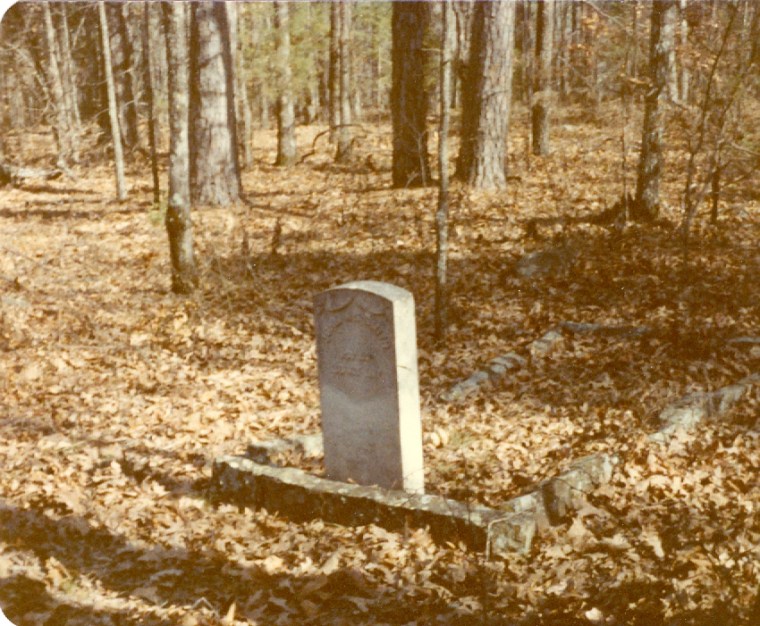
79310435_131963728899I’ve spoken before of my great grandfather John William Seth Smith who served in the Union Army during the Civil War. I know what I do about his service because he died fairly young and his widow, my great grandmother, filed for a pension from the Army based on strong evidence that his health woes began while he was serving in that horrible conflict. In official documents she describes the horrific conditions that he endured that left him with multiple health problems from which he never improved. She furthermore noted the depression that he suffered from the memories of war that weighed heavily on him all the days of his life.

I suspect that many young men from both the north and the south were permanently damaged from what they saw. There is never anything easy about being on a battlefield and the trauma of being a soldier must have been doubly compounded by the reality that the men were sometimes fighting their brothers and neighbors. I can’t even begin to imagine how horrible the four years were during which the very life of our country was under siege. Surely the differences that divided the citizens might have been settled in less extreme ways. In retrospect it is quite clear that the fighting was foolhardy and immensely hurtful to everyone but at the time there were far too many who harbored so much anger that they were unable to engage in rational negotiations. A complete and total severing of relationships appeared to be the only feasible path. Four years later the flower of youth in both north and south had been decimated by the rancor.

I’d like to think that we have learned a powerful lesson from that terrible war, but of late I have begun to worry that perhaps we no longer remember the price that people paid in refusing to settle differences. My grandfather was one of the lucky ones who lived through the battles but his body and his mind were both with riddled pain from what he witnessed. I suspect that if he were able to speak to us today he would warn us to beware of the unwillingness to compromise in our political leanings. In the end he found a modicum of peace only by living a rather isolated existence in the middle of a great forest as far away from any possible conflict as he was able to be.

Civil wars always take an immeasurable human toll. Right now there are so many places on earth where people from the same country are fighting with one another over ideologies, some of which are political and some religious. Innocents who only wish to be left alone have lost their homes, their possessions and their lives. In Iraq ISIS continues its reign of terror but even more terrible is the fact that people are often also victims of the infighting between Kurds and Muslims, Sunis and Shias, everyone and Christians. Nobody trusts anybody. Even watching a family walk innocently down the street is cause for fear lest any one of the members, including women and children, be a suicide bomber. Life has become hell for people in cities like Mosul which has become a place of ruin and fear 

Syria is has its own form of hell that has sent millions fleeing for safety. Sadly even in the refugee camps there is quibbling between are from different religious sects. Christians have had to flee from the sometimes gross mistreatment from their fellow refugees and many of them have been forced to live in the open in the mountains, homeless and frightened. The situations in these war torn areas are so complex that there are not simple answers.It saddens me to think of man’s inhumanity to his fellow man, and I simply cannot understand how things become so inconsolable between people that they feel that hurting one another is the only answer.

There is far too much animosity brewing in the world at this moment and our own country is becoming more and more divided by the day. It is disheartening and frightening. I hear people speaking of riots, violence, coups and martial law. Such mutterings make me wonder if we are dangerously close to another civil war.

Fear all too often leads to anger and unrelenting anger begets hate. I worry that we are whipping ourselves into a frenzy. Even our leaders are boasting that they will never work with one another. It is as though they actually want us to break apart. They almost appear to delight in the battles. Mostly though what bothers me is the behavior that I see among the regular citizens who have become so enraged that they have lost sight of civility. Friends stand at odds with friends. Families are choosing up sides. There is an ever growing tension that is frightening. 

I posted an article on Facebook last week hoping to prompt some discussion of ideas. To say that the resulting commentary was lively is an understatement. I finally ended the back and forth by noting that in spite of the many different schools of thought, some of which were very different from my own, I still love everyone who contributed to the conversation. I find myself asking when we Americans became so loathe to allow differences of opinion. I wonder why we seem no longer able to learn from one another. When did we begin the practice of summarily dismissing anyone who dares to suggest an idea unaligned with our own?

I have observed multiple instances of friends and relatives reaching a point of no return in their relationships over discussions that grew unnecessarily dark and angry. Is this the way a civil rupture begins? Are we seeing the first bubbles in the bottom of a heated argument that will ultimately grow into a rolling boil? Why are we even risking the possibility of tearing our country apart? Why can’t we find a way to get along and why is there nobody willing to take the lead in doing it?

The media isn’t helping. In fact they seem to be almost unable to contain their glee over the excitement that is percolating. Our president isn’t making a move to bring us together. In fact he is stirring the pot, bragging about how great his ideas are and refusing to admit to mistakes or apologize for unfair insults. The democrats are little better in refusing to work with their republican peers and inciting even more anger. Everyone is boasting that they are going to fight. To what desirable end can all of this lead? As far as I can see it is only causing a rent in the fabric of our nation that will be difficult if impossible to mend. We have been this way before in our history and the outcome was not good. What would make any of us think that refusing to work together is going to solve any of the problems? Are our leaders so worried about being elected that they would rather tear our country apart than have the courage to bring it together again?

Yes. I am very worried. We do have many problems and there may even come a time but the ways in which our leaders are approaching them is very destructive. Those of us who are ordinary citizens will ultimately all be hurt and even more so if we turn on one another. I think that we all need to look into our hearts and find the will to be an example for our leaders who seem to have lost their way. They will ultimately bend to our will if enough of us join hands and let them know that we have want a government that strives to work together, not one based on gridlock and anger. We can start a movement by shoring up those relationships with our friends, and neighbors and kin with whom we may have disagreed in the past. We must begin to respect one another again and save our righteous indignation for the truly evil. Hate only leads to more hate. It is in love and forgiveness that we will find the safety and comfort that we all wish to enjoy.

A Beautiful Thing

WomensMarchSF_EC_012117-14.jpgFreedom is a beautiful thing. It allows each of us to decide for ourselves what we believe. Of course there are certain restrictions to our liberties. We agree as a society that it is innately wrong to murder or steal. There are extremes of very bad behavior that virtually all of us abhor. Beyond that there is often room for differences of opinion and for the most part we respect and protect one another’s right to divergent thinking. The bedrock of our free society is based upon the notion that we are entitled to our opinions. We generally have a “to each his own” way of getting along in a highly diverse society.

Now and again we get things wrong and yet we find ways of excusing our egregious decisions. For far too long, for example, we Americans prided ourselves in being a great and just nation while still allowing members of our society to own other human beings as slaves. We found any number of reasons to explain away this barbaric practice but in reality it was always wrong and there were individuals and groups who took a hard line and insisted that we had to rid ourselves of slavery for all time, not in bits and pieces. These people were often viewed as being kooky religious zealots, trouble makers with strange ideas. It took courage for them to voice their complaints publicly and for the most part they were viewed as outcasts and pariahs. Still they believed so strongly in their cause that they would not be stilled. From one generation to the next their message was passed down to an ever growing number of converts until one day the most powerful man in the country joined their ranks and boldly declared the emancipation of all enslaved people even while a civil war divided the country and threatened to tear it apart.

Those individual voices that grew into a collective roar mattered. The people who spoke out against slavery did so with the knowledge that they were fighting an uphill battle but they were willing to bear the consequences nonetheless. They eventually wrought powerful change by following the dictates of their consciences. It is a beautiful thing to watch souls who are willing to fight for the rights of people that they do not even know. We have seen them parading through the streets of our country with their signs and their slogans time and again. There were suffragettes who pointed out the absurdity of denying the right to vote to half of the population of the United States. There were workers who insisted on safe working conditions, fair wages and reasonable work hours. The civil rights movement of the nineteen sixties focused a lens on the plight of fellow Americans who were still segregated from society and denied the most basic of rights for no other reason than the color of their skin. Time again peaceful demonstrations, editorials and declarations have helped our country to move to closer and closer approximations of true justice for all. It is the American way and it is beautiful.

Last weekend millions of women gathered together to voice their own concerns. There were many different points of view, some of which were radical indeed, but mostly the cause was about a growing belief that some among us are still being marginalized. The march highlighted the reality that ours is still an imperfect nation with problems that must be addressed with compassion. It was a beautiful sight to see so many loving and deeply well intentioned women along using their First Amendment right to gather together to shed a light on the issues that disturb them. This is democracy in action and if it bothers us just a bit to hear what they had to say then their march was effective because it caused us to think. Hopefully this demonstration of freedom will move us to begin a dialogue about our commonalities and our differences. Protests are almost always conversation starters that force us to think about the way we do things and make us wonder if an issue is serious enough to bring about change. We should never be afraid of entering the fray of controversial topics but we must also do so with a sense of respect and a willingness to consider every possible idea before closing our minds. Otherwise we will only find ourselves fighting senseless battles with one another.

Hidden inside the barbs being tossed between those who applaud the Women’s March and those who found it to be onerous are a multitude of issues each of which should be considered individually. Some women admittedly went because they were disappointed that Donald Trump is now our president. They abhor his attitudes toward women and wanted to make it very clear that they are insulted that such a man would be allowed to lead our nation. Others were more concerned with specific causes whether it be the environment or the treatment of minority groups and religions. Most walked to demand equity for women in the workplace and with regard to opportunities for advancement. There were of course those who believe that every woman has a right to healthcare and contraception, among which is abortion.

The reality is that we can’t react to the Women’s March as a whole. We must instead unpack each of the issues that were noted on the signs and in the speeches. It is in reality a very complex situation and in all probability even those who were part of that sea of pink will admit that they did not agree with everything that they saw or heard. To fully appreciate the magnitude of this new revolution we must be willing to suspend our generalizations and discuss each issue individually. We also need to commend the participants for their courage which is in keeping with the way that positive change has been wrought in our country time and again. In turn we should ask the ladies to demonstrate a willingness to understand the ways in which some of their fellow citizens may differ from them. If we begin the discussions without breaking out into a state of war as we have done far too many times in the past perhaps we will be able to finally put some of these important issues to rest.

Religious and political beliefs are highly individual and personal. As such they tend to elicit very strong emotions for which people are more than willing to go to battle. I for one am strongly pro life for example but I understand that we have to find ways to balance the needs of our diverse ways of thinking with what seems most right and just. We have to ease the tensions between church and state because herein lie many of our most inflammatory arguments. I have always believed that we must be careful to keep the two institutions very separate particularly when it comes to using government funds.

It is important that we learn to celebrate the liberties that we have. When we see a peaceful protest we should not be angered but rather joyful because that is the embodiment of of the freedoms that we cherish. We should use such occasions to find ways of bridging the gaps that exist between us rather than hurling hateful rhetoric at one another. Of course the tolerance of differences must go both ways if we are to be truly effective. 

Last Saturday night my extended family celebrated the birthday of a delightful little girl who turned six years old. She is an innocent who joyfully reveled in the celebration that was just for her. There was a great deal of love in the room in spite of the fact that we all know that we possess a wide variety of philosophies whether speaking of religion or politics. We are able to voice our beliefs and still fully embrace each other.

I’d like to think that my family is a microcosm of our nation. From the same parents we branched out into many different directions and came to different conclusions about the best way to live. We may argue in support of our particular philosophies but in the end we realize that our differences matter far less than our overriding love. This is where we need to begin as a nation, understanding that it is natural and actually quite good that we have a diversity of ideas. Let us embrace all of the voices without preordained prejudice for among them may be the ideas that will ultimately make us better and stronger. Demonstrating our freedom is a beautiful thing.

We Are Our Own Narrators

come-with-me-7-2011_1-1024x671There is a certain irony that my grandson Jack performed in his last musical with the varsity theater group at his school this past weekend and that the play was Into the Woods. The piece was wildly popular on Broadway in the nineteen eighties about the time that Jack’s mother was ending her own days in high school. It is a profound story of relationships and the consequences of the choices that we make. It is a study of the fine line between childhood and becoming a true adult. Nothing is as it really seems or as simple as we would like things to be.

Jack played both the narrator and the mysterious man, a rather fitting dual role whose significance for me he may not fully understand until I explain. I found myself enthralled by the brilliance of his performance and his ability to nuance the subtleties and complexities of the parts. All in all Jack and his co-actors ultimately moved me to both tears and reflection which is as the authors of the play no doubt intended. 

Jack is named for a man that he never met, my father who would have been his great grandfather. The two Jacks are far more alike than almost anyone might suspect. My grandson like his long dead ancestor is a kind of renaissance man, someone who is as comfortable in a world of mathematics and science as in the domain of artistry. Like my father he is a sensitive soul who often finds himself questioning the ways of the world. He has so many talents and interests that he might follow a variety of paths in life just as was the case with his namesake. Both are known for looking at the world from many different angles. At the same time they might both be described as having a kind of innocent boyishness and joy of living that has made them attractive to others.

My father Jack loved to read and he passed that hobby down to me beginning when I was very young. He purchased two volumes of fairytales that he read faithfully to me. Those stories created a secret bond between the two of us and kept his memory alive long after he had died.

At first my thoughts of my father were romantic and childish much like the first act of Into the Woods and the stories that he read to me. I missed him terribly and often found myself having foolish dreams that he would one day return to guide and comfort me. Sadly reality never really works like that as is so profoundly revealed the second act of Into the Woods. There comes a moment when we all realize that we must cross over from the fantasies of our childhood into the world of reality. We learn that each of the choices that we make have consequences not only for ourselves but also for the people around us. We can only rely on our parents for so long and then we must face the fact that as we make our own ways we will undoubtedly make mistakes just as they did.

My grandfather was a kind of narrator, just like Jack was in his school play. Grandpa was the father of my father Jack. He often told stories of his own childhood and related history as he had lived it. He gave me great comfort any time that I was feeling down. He was a living link to my own father. His stories were not as lovely as the fairytales of my youth. He spoke to me with honesty because I was an adult and he understood that I must face even dark stories. He admitted to overcoming alcoholism and enduring profound depression and loneliness before encountering my grandmother and starting a family of his own. Like the songs in Into the Woods he found ways of bringing humor to situations that were actually quite tragic. He had developed a wisdom that allowed him to realize that sometimes we laugh and cry at the same time. Sometimes we are both frightened and curious. He had lived long enough to see that no person or situation is usually all good or all bad. He taught me that life is complex and we can neither run away from it nor tackle it alone. Like the mysterious man that grandson Jack also portrayed in his play, my grandfather had faced up to his own demons and conveyed to me the wisdom that he had learned from those battles.

I suspect that my grandson Jack has little idea how much his musical affected me. I thought of all of the times when I wanted to run away from the very adult responsibility of caring for my mother that was thrust upon me even before I had begun to explore the world. I had believed that she was supposed to be my rock and foundation but instead our roles were often reversed. I found myself making silly wishes with regard to our difficult relationship when she was very sick. Time again I had to rely on the kindness of others to help me through the most trying situations. I learned that I was much stronger than I had ever imagined and that I really didn’t need a narrator to tell me how my story should go.

I want to share my thoughts about his play and his role in it with my grandson Jack. I want to tell him the tale of his family thus far and how we all worked together and with an odd assortment of friends in reaching this day and time. I want him to know that we have seen triumph and tragedy, jubilation and bitter disappointment. Ours has been a very imperfect family but somehow we have managed to keeping traveling in and out of the woods, overcoming giants and wolves. We have been as human as the characters in the musical in which Jack had a starring role.

Hopefully my grandson will have learned more from his acting experience than just his lines and the melodies that he performed. If he reflects carefully he will see that there is an important message for each of us contained in the wittiness of the words and songs that he and his friends executed so very well. I wish for him to reach the depth of wisdom that is to be found in this musical that is not so much for children as for the child that lives inside all adults.

I suspect that Jack does indeed understand. He would not have been as convincing in his acting if he had not realized the power of the message that he was conveying through his expressions and the tenor of his voice. It is a good way for him to step out of the world of children and onto the pathway that will lead him into the adventure that he will one day call his life. I hope he knows now that he and only he is the teller of his story. How it proceeds and where it ultimately ends is up to him. It is an exciting journey that will not be without its misdirection and loss but will also bring him the realization of some of the most wonderful wishes that enter his head in the quiet of night. Along the way he will have unexpected encounters with people who will both help and hinder him. If he has truly learned his lessons well he will be ready for whatever comes. He will realize that all of us have a once upon a time that is only as lovely as we work to make it be. The magic is not in witches or beans or potions but within our own minds.

A Time for Everything

maxresdefaultI have experienced sixty eight revolutions around the sun. This week I begin the sixty-ninth. I remember most of the yearlong journeys and what I have learned from them is that change is inevitable and that I should never take anything or anyone for granted.

I have witnessed the birth of inventions that most of us now consider to be commonplace but were once deemed miraculous. I have seen a man walking on the moon and been able to write and publish my thoughts on a daily basis because a computer allows me to type and quickly correct the mistakes that my fingers make. I have a vacuum cleaner that operates without my help and a mechanism that follows my voice commands to turn on lights and play music. The temperature in my home is neither too hot nor too cold with adjustments being made regularly to keep me comfortable. I carry a phone in my purse that allows me to talk with friends who live hundreds of miles away and even see them if I wish. I can order virtually anything from the recliner in my bedroom and it will arrive on my doorstep in only a few days, often without postage being required. I have hundreds of shows, movies and books from which to choose for my entertainment and I need not leave my living room to acquire them. I daily inject a medication that is rebuilding my bones. I have had a surgery performed by a doctor guiding a robot that left only four tiny holes in my body. The marvels that have come into my life abound and I have yet to take any of them for granted because I have witnessed the past when such things were only dreams.

Some who once accompanied me on my twelve month adventures have gone. I still long for them and find myself recalling the wonderful times that we shared. I didn’t always appreciate them as much as I should have. In my youth I felt immortal and did not think that I would be touched by death, not even after my father was taken far too soon. I now realize the importance of expressing feelings of love and appreciation at every opportunity. I understand that we must focus on the beautiful moments as they are playing out in our lives and embrace them fully, for the opportunities to do so may never come again. Life is riddled with uncertainties and even though I know that to be true I am surprised again and again.

I have developed traditions that I follow while I can. At the dawn of each new year I celebrate both the past and the future. I try to approach the coming months with optimism and a sense that I have yet another possibility of improving and focusing on the people and labors that will make a positive difference. I prepare split pea soup for luck. I learned how to do so from my mother-in-law who inherited the recipe from her mother. I have never cared much for black eyed peas, my mother’s preferred lucky charm, but I loved split pea soup from the first time that I tasted it. I go to the Airline Farmer’s Market each December specifically to purchase dried yellow split peas because the green ones are not nearly as tasty. I serve a ham on Christmas Day and use its bone to cook the peas. I place them in a heavy pot along with the bone and an onion, covering the ingredients with water. I cook the concoction slowly, adding more water as the peas become thick. Once they have softened and blended with the water I remove the ham bone and begin adding a bit of milk to make the mixture creamy. After several hours my soups is smooth and has a delicious blend of flavors. I always make it on New Year’s Eve and serve it for lunch on the first day of the year. It seems to have done it’s work in bringing me health, prosperity and happiness for I have had a good life in spite of bumps along the way.

I worry a bit as I grow older, a habit that I inherited from my paternal grandmother that haunts me more than it should. I don’t like losing friends or family members but the numbers of those who have passed before me grows with each year. I find myself wondering who among my circle will be afflicted with difficulties and wish that there were some way that I might forestall their problems. I tell myself that instead of spending fruitless moments in a state of anxiety I should instead reach out to my loved ones to let them know how much I care. I know that it is important to cherish every minute of every day.

I grew healthier last year because I worked at being so. I plan to continue with the improved habits that I developed. I am determined to publish my book no matter how much time and effort it takes to get that done. I want to keep my promises to meet with friends that I have not seen for far too long. I will try to be more relaxed about unimportant matters. I am a perfectionist at heart even though life has taught me that being so is ridiculous. I want to hear nature’s music and find joy in the pleasures that I sometimes ignore because I am so busy doing tasks that matter little. I desire to place more of my trust in the Lord without always asking Him why He does things the way He does. I saw from my late cousin how beautiful great faith can be.

I have come a long way and seen many wonders. I look forward to enjoying as many more as I am allowed, taking the glory of each day as it comes without holding on to hurts or fears. The sun rises and sets, the earth travels around the sun creating the seasons of our lives. In some miraculous way I have been part of sixty eight transitions from one year to the next. I have witnessed history, the best and the worst of the human experience and still I travel on with my fellow man. I have learned that the words of Ecclesiastes are so very wise.

There is a time for everything, and a season for every activity under the heavens: a time to be born and a time to die, a time to plant and a time to uproot, a time to kill and a time to heal, a time to tear down and a time to build, a time to weep and a time to laugh, a time to mourn and a time to dance, a time to scatter stones and a time to gather them, a time to embrace and a time to refrain from embracing, a time to search and a time to give up, a time to keep and a time to throw away, a time to tear and a time to mend, a time to be silent and a time to speak, a time to love and a time to hate, a time for war and a time for peace.

Every day is beautiful, even when we are carrying our human burdens. There is nothing better than to be happy and and to do good while we live. That is my ultimate resolution as I set out on another adventurous year.

Our Greatest Gift

bn-fi133_speech_gs_20141031151239I have long been a voracious reader, a willing student of things both old and new. I enjoy considering ideas and long for the days of my youth when academic institutions were places of free discussion, fountains of information from multiple avenues of consideration. I was taught by my academic mentors to be open to points of view different from my own and to listen carefully to even the strangest sounding arguments, for within even the ridiculous there is much to be learned. “Perception often defines individual truth” my professors suggested. Our beliefs are built on the foundations of our unique experiences. Our thinking is the sum total of the knowledge that we have learned and the emotions that we have felt. Our outlooks are slowly programmed as we travel through life. Unless we are willing to understand the totality of what has brought an individual to a particular conviction our arguments for or against will fall on deaf ears.

I loved the frankness of unforgettable discussions from my college days. We were encouraged to feel comfortable with a variety of philosophies. Our reading lists often included the works of thinkers who ran the gamut from the far left to the far right. We were told not to blindly accept any argument but rather to consider both the pros and cons of everything that we encountered. Lemmings and sheep were rarely welcome in the classrooms of my youth. We debated each idea on its merits and everyone felt free to hold a forum. The experience was exciting and it molded me into the open minded person that I have always attempted to be.

In the present days we seem to have adopted a different way of approaching conflicting ideas. The debates of old have evolved into wars of words. Certain ideas are not even allowed to be uttered. We are more often than not forced to choose sides even before we hear the totality of the arguments. Those who suggest that we look for compromise in thinking are thought to be non-thinkers, weaklings unwilling to take a stand. We are told that we must be on the right side of history as though there is a clear and concise way of determining which side that is. Our leaders expect us to be automatons who utter our beliefs in unison and without thoughts or questions. I shutter whenever I hear the same lines being repeated regardless of whether they come from the right or the left. Too many of us have become consumers of propaganda, believers without doing research. We follow the boy who cried wolf rather than the one who pointed out that the emperor has no clothes.

I have had to counsel college students who received failing grades on persuasive papers not because their arguments were not rational and grounded in research but because they did not regurgitate their professors’ points of view. I have spoken with young people who fear making their true beliefs known lest they become ostracized. I have watched friendships dissolve over conflicting philosophies. I wonder when our democratic society began to forget the importance of the liberty imbedded in our right to freedom of speech.

I came of age in turbulent times. My male peers were being sent to a war that many of us questioned and others supported. The dream of full integration for our Black brothers and sisters was yet to be fulfilled. My own religion was being transformed from an archaic Latin based liturgy to one that embraced many languages and tore down barriers between the clergy and the congregation. Women were forging new territory in careers once thought to be the exclusive domain of men. There was an excitement in the conversations that we had with one another. Sometimes we found ourselves in the company of friends whose thoughts were diametrically opposed to ours. We gathered around tables and debated sometimes heatedly but always in the spirit of learning. We almost always walked away with our friendships intact despite our differences.

Open debate is frowned upon today. We politely avoid topics that might bring about conflicts. We no longer know how to enjoy a lively discussion without becoming emotional. We spout sound bites rather than reasoned ideas. We close our minds and leave the room if anyone dares to utter political notions. Our feelings are so easily hurt. It is a sad state of affairs.

I find myself missing my mother-in-law more and more. She and I used to sit at her dining room table enjoying tea and cookies while our husbands watched football on Sunday afternoons. She was a convert to conservatism and I was still in my intensely radical progressivism days. We often spoke about the history of the world and the possibilities of its future. She wanted to know what I thought about the economy, international relations, religion and other subjects that would be taboo in most of today’s polite circles. She always listened with respect and then quietly presented her own reflections. We learned from each other without judgement. She was a brilliant woman who might have been intimidating had she simply closed her mind to what I had to say. Instead she taught me the power of truly open debate among friends. It is difficult to find such enjoyable adversaries like her in the super charged environment as we begin 2017.

I suspect that I am not the only one who is weary of the unofficial civil war that is waging across the globe. I’d like to think that our teachers and professors will one day return to a way of teaching our young that allows for great freedom in the exchange of ideas. I would like to see an end to the rampant use of group think in our institutions. We need more reality television like the thought provoking debates between Gore Vidal and William F. Buckley that were so popular in the late sixties. I want our news reporters to state facts, not opinions. I would rather have them ask questions and then simply listen rather than arguing and attempting to push their own opinions on all of us. I will miss Gwen Ifill because she was one of the few journalists who always remained fair minded

I was impressed by something that Van Jones of CNN recently did. Rather than repeating the idea that those who voted for Donald Trump are mostly deplorable woman hating racists he set out to learn what had really prompted them to give their nod to Trump. He travelled to different parts of the country and sat informally across from Trump voters encouraging them to talk while he listened. What he found was that their main motivation was in wanting to be heard. They felt as though they had been forgotten and somehow Trump had made them believe that they were as important as anyone in America. It was not hatred that drove them to the polls but a sense of longing to be noticed.

In the long history of the world people have time and again asked for the freedom to voice their personal concerns and to state their ideas for solving problems. It has only been when humans have been willing to consider alternative points of view that progress has been made. Our Founding Fathers understood that. They set up a republic rather than a pure democracy because they realized that it was a way to hear the voices of even those in remote corners of the nation rather than only those in our most populated areas. They long ago sat through a hot summer risking their very lives so that we might one day be able to speak our minds without fear of being silenced or imprisoned. They heard the different voices from the colonies and compromised to insure that farmers would have as much power as industrialists. They found consensus between great thinkers as different at John Adams and Thomas Jefferson, those who advocated for a strong federal government and those intent on guarding the rights of the individual states. Their genius, with the help of James Madison, eventually gave us freedom of speech in a Bill of Rights that was unmatched in the history of the world.

Let us think twice before we continue to abridge our right to peaceably assemble or petition the Government for a redress of grievances. Let’s honor our differences rather than recoil from them. There is still room in this country for both the Black Lives Matter Movement and the Tea Party, for socialists and libertarians, for democrats and republicans. We might all want to become better acquainted with the members of each group and open our minds to what they are trying to say. Freedom of speech is perhaps our greatest gift as citizens let us all encourage its unfettered exercise.