A Time for the Young

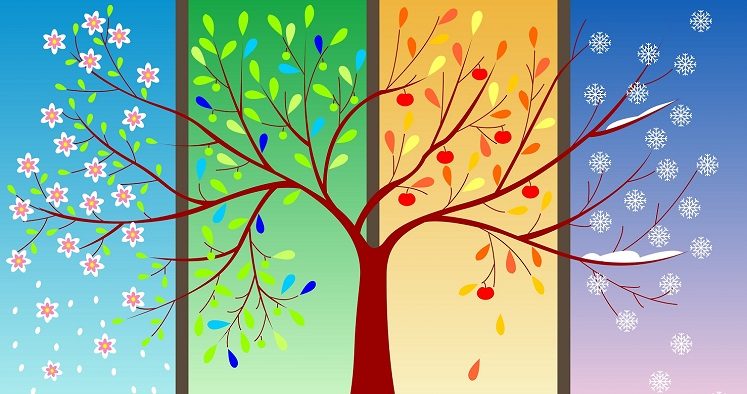
Four-seasons-tree-1r-747x394To every thing there is a season,

and a time to every purpose under the heaven:
A time to be born, a time to die;
a time to plant, and a time to pluck up that which is planted;
A time to kill, and a time to heal;
a time to break down, and a time to build up;
A time to weep, and a time to laugh;
a time to mourn, and a time to dance;
A time to cast away stones, and a time to gather stones together;
a time to embrace, and a time to refrain from embracing;
A time to get, and a time to lose;
a time to keep, and a time to cast away;
A time to rend, and a time to sew;
a time to keep silence, and a time to speak;
A time to love, and a time to hate;
A time of war, and a time of peace.

Upon the advice of our doctors my husband, Mike, and I essentially began self isolation twelve weeks ago. We were a bit earlier than most people in hibernating in our home because Mike was going to have a heart procedure done on March 13, and the doctors felt that it would be wise for us to distance ourselves from the potential of running afoul of the virus which was yet to become so rampant in the United States. When we did arrive at the Walter Tower of Houston Methodist Hospital on the day of his surgery lockdown procedures were already well underway. Each patient was only allowed to have one person accompany him/her and everyone entering the building had to undergo an interview and screening at a checkpoint. Because I admitted to sometimes having a sore throat I was required to wear a mask.

The experience at the hospital was both encouraging and frightening. I realized that the medical community was taking extreme precautions to keep the patients safe as well as to prevent an outbreak of illness among their own. The atmosphere was strangely reassuring and it marked the moment when I too began to really take the virus seriously.

When I went to get my six month injection of Prolia five days later I felt a bit strange wearing a mask and gloves but my doctor had advised me to do so and I have always valued his instructions. He has kept me quite well over the years and so there I was all decked out in protective gear long before our city of Houston had even closed down. I got a few stares and soon realized that people were somewhat afraid of me, wondering why I felt the need to be so precautious. As I climbed the stairs to the infusion center I noted that there was a screening table at the entrance to my doctor’s office where patients were being checked before being allowed to enter the waiting room. That was on March 23, about three weeks from the time that I had first begun staying at home and limiting my contact with others.

From that point forward my husband Mike, and I have had little occasion to leave our home. We meet with family and friends via Zoom or FaceTime, procure our groceries from Instacart, order other necessities online and “go to mass” via YouTube. Once in a great while we venture out for rides around town just to remind ourselves of what the world looks like. Our only real human contact has been with my father-in-law and mother-in-law who are in their nineties and feeling a bit overwhelmed by what is happening. We mainly go to visit to ease their anxieties and to help keep their technology running. Mike regularly orders food for them on Instacart. We even managed to send a cake and some ice cream to my father-in-law on his birthday. When the sweet delivery woman realized that this was for a celebration she included a balloon with the order.

Mike and I are both in our seventies and to a large extent our lives have slowed considerably from the days when when worked ten and twelve hours a day. We have a much smaller income but we planned for that and at least for now it arrives regularly each month. It has not been a great sacrifice to stay at home and we are confident that we have planned well enough to stay put for as long as needed. I don’t think of my current status as being frightening or tyrannically beset upon as much as having the luxury to help with the cause. Namely, Mike and I are doing our parts to attempt to stay healthy so that our medical community will be able to care for those who may unfortunately become ill in the process of attempting to return to work.

I hear so much about those in my age group being the most vulnerable and I suppose that is true in the strictest sense of the virus’ effects but in many ways it is the young adults and their children who are bearing the brunt of the harm that Covid-19 has done to the world. They have had to keep the food supply chains moving and have done their best to keep the heartbeat of the economy tenuously alive. They have been the teachers of the children and the brave souls who have attempted to provide the rest of us with a semblance of normalcy in an upside down world.

I sometimes hear grumpy old people referring to today’s youth as “snowflakes” but I think that we have all seen proof that they know how to carry on in an emergency with grace. I have been greatly impressed by the college students who completed their semesters online. I have watched the youngsters in my neighborhood working inside their homes during regular school hours and then frolicking in their yards in the late afternoon. Like me they have not gone anywhere or done anything special for weeks and yet they are not complaining. Instead they are adjusting to their new world and doing whatever they need to do to. I’ve seen how creative and generous they are and it has warmed my heart.

However this all ends it will fall upon the young to move the world forward. I have every confidence that they will succeed. I believe that they have proven their mettle in spite of the naysayers who have been predicting that they don’t have the right stuff to carry the weight of responsibility. I know more than ever before that those of us in the twilight years should be quite eager to hear what they have to say and how they wish for the world order to proceed. Even the Bible tells us that there is a season for everything. Now is the time to trust the young for this is their world as much as it is ours. They are the ones who will be reopening the cities and towns and states and nations in the coming months. We need to support them as they carve out a world that suits their desires and needs. This is a time for the young.
The Numbers

numbers_3-wallpaper-1920x1080

I’ve spent my life teaching young people about numbers. I enjoy demystifying mathematical processes and watching my students grow in confidence when faced with numerical challenges. I don’t believe that there are really individuals who are bad at math. I think instead that some folks just never encountered the right person to help them find an understanding of the logic and processes of math that underpin the workings of nature and the modern world.

Of late we’ve been bombarded with charts and graphs and statistical data of all sorts regarding Covid-19. We hear discussions regarding death rates of the virus and comparisons of this disease with others. It can become confusing and even a bit overwhelming but a few strokes on a calculator reveal some rather interesting information about the effect of the pandemic on our country.

Last week, using the latest information from the Johns Hopkins Covid-19 site along with a few references from Google I decided to do a bit of investigating of my own. I began by determining what percent of the world’s population resides in the United States. There are approximately 7,994,000,000 humans living across the globe. Of those about 382,200,000 are in the United States of America. A little bit of division showed me that our nation is home to about 5% of the people on this earth.

Next I noted that there have been 4,400,688 recorded cases of Covid-19 throughout the world. Of those 1,400,500 have been here in the USA. Another quick bit of division revealed that we have about 32% of the known cases of the virus. I was confounded by the fact that a nation with only 5% of the total population would have almost a third of the cases but I suspect that there are any number of logical explanations for that astounding number. We tend to be a rather mobile population that travels to all parts of the world and is continually on the move within our states and cities. Additionally we have a very modern medical system and in spite of its problems it is generally known for its capability to quickly and accurately diagnose disease. Nonetheless our rate of infection compared to the rest of the world is abnormally high and yet we still have people who are underplaying the effect of Covid-19 on our population.

Perhaps it is because the general story making the rounds is that this novel coronavirus is not any more deadly than the seasonal flu. With that in mind I ran the numbers and found that if I divided the number of US deaths from the virus (84,985) by the number of cases (1,400,500) I got a stunning 6% mortality rate. That is a number far larger than the under one percent figure that many claim is the average fatality rate for this virus. Furthermore the figures that I am using have been recorded in only two or three months as compared with an entire year of flu. We have now lost more citizens to Covid-19 since the beginning of 2020 than we did in all of the Vietnam War. Our percent of deaths does not fare too well when compared with the rest of the world either. In fact our figures represent 28% of all deaths from Covid-19 so far.

I find my calculations to be interesting because they appear to put a lie to a number of claims by individuals and groups who seem to think that what our country is enduring is little more than a grand hoax designed to make our president look bad in an election year. Somehow the numbers tell me that the truth of the matter is that the danger is very real and for some reason our country is not faring as well as we might hope. To believe that anybody would be capable of creating a deception so complexly horrific is incomprehensible.

The numbers regarding the destruction of our economy are just as appalling and maybe even more so, but the fact is that if we don’t very carefully consider the consequences of both dealing with the virus and keeping our country working we will surely face an even bleaker future. We indeed must be willing to talk about the facts without cover up or  recriminations The only undeniable truth in all of this is that we will have to work together, not just with each other here in this country but with our fellow humans across the globe.

Every nation is wounded and hurting. This is hardly the time to boast about our own country’s accomplishments or to isolate ourselves from the great thinking and solutions that are occurring in different corners of the globe. Our battle to save our country and our world is not a matter of who is best or first. Our leaders will have to make difficult decisions that should be based on what is right for the common good rather than what may garner votes in the coming election. All of us must be willing to sacrifice and endure privations and changes for which we are not accustomed. In the end it will not matter who was wrong or who was right in predicting the future, but what will be of paramount importance is how well and willing we are to respond to any new emergencies that arise.

People tell me that they are weary of talk of Covid-19. They want to go back to work, to shopping, to eating out, to going to church, to having parties. They want the coming school year to be business as usual and they look forward to a fall that includes football games and Halloween celebrations. They hope to soon have all of the broken pieces of our lives neatly put back together so that we can bid adieu to all of the suffering and chaos. It’s a dream that we all harbor and with God’s grace Covid-19 will leave us as mysteriously as it came into our midst. Unfortunately based on the numbers it is doubtful that things will be quite that easy.

He Was Essential

meat

In this time of Covid-19 I have found myself thinking of my paternal grandfather, Paul Ulrich, more and more often. He came to the United States on a steamer from Germany around 1912. I never got to meet him because he died at a rather young age a few months before I was born. What little I know of him is garnered from stories from my mother and a cousin who was old enough to have actually met him. I have always wanted to know more about him and painting a picture of him is almost akin to putting together an all red jigsaw puzzle. I’ve had to infer a great deal but I’ve also found documents and scraps of evidence that tell the truth of the kind of person he was.

According the family memories much of the work that he did was typical of immigrants even to this very day. He spent time working on a big farm near what is now the Houston Ship Channel and doing lumbering work in the Beaumont area. Eventually he got a job at the Houston Meat Packing Company that operated on Navigation Street just east of downtown Houston. His job was to clean the area where the butchering of the carcasses took place. It was backbreaking work that bore heavily on his health. My mother often spoke of how her father’s legs were riddled with varicose veins so painful that he had to wrapped them in bandages before going to his job each day. In spite of the hardships his children always boasted that he never missed a single day of work until he suffered a cerebral hemorrhage that ultimately lead to his death at the age of sixty five.

I have been reading a great deal about the outbreaks of the coronavirus in meat packing plants across the United States. The essential workers there are on the front line of keeping the supply chain of meat products moving to supermarkets across the country. Sadly conditions in those places have lead to contagion on a massive scale. It is as though the environment of a typical meat packing production line is the perfect place to incubate a virus. The process requires workers to perform their duties without benefit of social distancing in very cold temperatures. Without proper protective gear such places have become like petri dishes for growing Covid-19, making the carrying out the duties one of the single most dangerous jobs in terms of contracting the virus.

As I have heard about the numbers of illnesses and deaths associated with meat packing and Covid-19 I have thought back to my own grandfather who was so much like the people who today work in such places. It is a job that has brutal effects on the body even in good times. During a pandemic it is dangerous, and yet we expect to see our grocery stores filled with our favorite cuts of meat without much thought of the people who are responsible for processing the products. They are all too often simply faceless persons, numbers on a data sheet that mean little to us. I suppose that because my grandfather was once one of them I find myself wondering who they are and how they are doing. My guess is that missing work is out of the question for them just as it was for my grandfather. They not only lose income whenever they are absent but in all probability they will be replaced if they choose not the be present too often.

We take so many of our remarkable resources for granted until they are not available and then we fret and complain, rarely thinking of the people who have been delivering our goods to us. We want whatever we want even as we shelter safely in our homes. The inconveniences bother us and we tend not to associate the hardships of others with our own personal needs. It’s natural to take things for granted when they have always seemed to be there. Ours is a land of plenty that is often the marvel of people the world over. Suddenly the smooth functioning of our systems is struggling to keep up with demands and it is as novel and frightening as the virus itself.

I don’t think that we always fully understand or appreciate the contributions of every person involved in the supply chain of goods and services in our world. We don’t see the long process that brings what we desire to our homes. We don’t think of the slaughter houses or the assembly lines or the person who cleans up the leftover entrails and blood. It’s difficult to imagine how grueling such jobs would become after performing them day after day. Many like my grandfather spend their entire adult lifetimes engaged in what must be terribly unsatisfying and difficult labor.

My grandfather was a collector of books. Each Friday after being paid his wages he would visit a bookstore where he purchased a new volume that he would read in the evenings. His interests were in science, mathematics, agriculture. I learned from perusing a box of old paperwork that he had once purchased land in Richmond, Texas. He told one of my cousins that he hoped to retire and create a farm there. The deed for the property was among the receipts but somewhere along the way, no doubt from necessity, he had to sell the acreage and along with it his dream.

My grandfather was not particularly respected in his neighborhood. He was an immigrant who spoke English with an accent. He had eight children crowded into a tiny house and he never made much money. Some people assumed that they knew him. They even went so far as to say that he and his family were dirty and uneducated and low status. They did not see that he was a man who worked dutifully every single day. He paid his bills, owned his home and died without a single debt in the world. His house was lined with the bookshelves filled with volumes that he had read. He was so much more than just someone who cleaned up a sickening mess over and over again. He was an essential worker in our society, and now because of Covid-19 we should all understand how important he was.

An Introvert’s Covid 19 Story

funny-introvert-comics-64-57443ca53453c__700

I’m a bonafide ninety ninth percentile introvert according to a test I once took. I didn’t argue with the results or the explanation because the comments appeared to be right on target when they came to describing me. The analysis made a point of explaining that my introversion has nothing to do with a dislike of people but rather a preference for how to recharge my emotions. In other words I’m a people person who sometimes needs to retreat from human contact for a time just to ease the stresses of living. When times get tough I prefer a quiet weekend inside the comfort and privacy of my home, alone with my thoughts rather than sharing them in a large group in public. Our tendencies toward introversion or extraversion are mostly determined by the extent to which we feel better in a serene understated setting or one that is filled with people and excitement. In my case I unwind best with a walk alone in an empty forest or snuggled in a blanket on my couch with a good book.

Once we introverts are feeling calm once again, which rarely takes more that a few hours or days to accomplish, we are fully able to return to the crowds and the noise and actually enjoy our interactions with the world. Our feelings for the people around us are often even stronger than those of our seemingly differently wired extrovert friends who find so much joy and comfort in raucous gatherings after a long week of work. Perhaps it is our intensely deep feelings for the humans around us that are at the root of our need to step back into our little cocoons now and again. We are often empathetic to a fault. We notice those who are hurting with little more than a glance at the pain in their eyes and then worry about them until we are assured that they will be okay.

As an introvert I tend to be content with little more than observing the birds in my backyard or time spent writing in my front room where I can hear the children playing in my neighborhood. So when we were asked to isolate ourselves in our homes for a time to prevent the spread of Covid-19 I believed that I had been preparing for such an eventuality for my entire life. It seemed as though being confined to my quarters would be an intensely pleasurable experience and one that would lead me to a kind of self healing of the soul that would feel luxurious. Sadly I did not count on the longings for purpose and social interaction that have always defined me. I did not seem to understand that my introversion is a healing mechanism, not a lifestyle.

At first I felt rather joyful staying home. After all I have virtually anything a person might want to keep myself busy and entertained. My husband Mike is my very best friend and I enjoy my conversations with him. We have food in our pantry, books on our shelves, flowers in our garden and interests to keep us occupied. I’m not someone who cares much about food so I honestly don’t miss eating out. I suppose I could go the rest of my life without entering a restaurant and be just fine. I used to enjoy shopping as a kind of sport but it does not give me the thrill that it once did. I can enjoy a movie as much and perhaps even more in my living room than at a theater. I politely put up with sports but don’t really miss them now that they are gone.

Nonetheless after many weeks of staying home I find myself longing to get back out into the swim of things while hearing people say that I am part of a group that should continue to maintain my now self imposed isolation. I sense that my patience with this situation is wearing thin and in that realization I see more and more clearly the true meaning of my introversion because what I long for most are intimate gatherings with my family and friends. I can see them on Zoom conferences or with a FaceTime call but I really want to hug them and see their faces. Just sitting next to them without saying a word would be glorious.

If things were still normal and Covid-19 had not entered my life I would have been as busy as the bees that flit around my yard. By now I would have spent time in the mountains of Colorado with my brothers and sisters-in-law. I would have celebrated with my grandsons on Aggie ring day and attended parties for a number of young people who are graduating from high school or college or medical school. I’d be packing and preparing for a grand tour of Scotland with a Rice professor as my guide. I’d be excited about taking our trailer out for camping trips and counting the days until the Elton John concert for which I snared tickets back in November of 2019. I would have gone to see my aunt on her one hundred first birthday and I’d get to spend time chatting for hours over lunch or dinner with friends. I would get to be with my mathematics students when I teach them the fundamentals of arithmetic and Algebra. I would sit inside my church again smiling and embracing the lovely people that I are there each Sunday. I would be out and about in my bustling city grumbling about the traffic but secretly enjoying that I live in a place so vibrant and filled with life.

I miss all of that so very much and I wonder when I will be able to feel safe enough again to join the world around me without a mask or gloves or hand sanitizer or disinfectant wipes. I have grown weary of feeling a profound sense of worry about the physical and economic health of the world. I sense an almost tectonic shift in the routine ways of doing things that is shaking all of us to our very core. I long for normal even as I fear that I will have to redefine what that means. I want to believe that we will be able to come together to make positive changes that will make the world an even better version of itself than it was before Covid-19.

On some days I am filled with optimism and on others I grieve. Perhaps my introverted tendencies are too much with me. I am overthinking and instead of comforting me, those thoughts sometimes lead me to conclusions that are terrifying. I see us humans attempting to avoid truths by showering ourselves with superficialities, but thankfully I also see instances of profound compassion and sacrifice. My hope lies in the prayer that we will ultimately make our way through all of this but this time we will watch and learn how to build a better world.

When the dust settles I will cast aside my self imposed shackles and literally dance back into the flow of life. I will be everywhere with everyone. I’ll still be an introvert at heart but I will grab the world with everything that I’ve got.

What Will We Choose?

virusMy husband and I check on the maintenance of our home and our truck on a regular basis, much as we do with our health. We look for minor repairs and get them done well before they become a major expense. Sometimes, of course, we miss something but for the most part our vigilance has kept our lives running smoothly over the years.

We try to do the same thing with our income. We have sacrificed many times in the past because our funds were running low or we encountered an unexpected expense. When my husband developed an infectious disease that required three months of chemotherapy and time away from work it was a huge struggle to keep our household running but by adopting an extremely frugal way of living we made it through that crisis very early in our married life.

When I think of the times when we had to live on the financial edge it makes me shudder but we both had grown up in families that stuck to strict budgets that rarely included luxuries like going out to eat or regular visits to hair salons. Our parents taught us how to live simply from day to day and how to survive the unexpected. We just naturally did what we had seen them do and didn’t see our own skills for riding the ups and downs of life as anything special.

I have been quite understanding of the financial pain that the Covid 19 pandemic has imposed on so many people. I am particularly concerned with those who have lost their jobs because unlike normal times the competition for employment will be fierce. Businesses are still essentially closed or working at less than half of their capacity. The owners of small businesses depend on a regular cash flow to pay their employees, mortgages, utilities and such. Our country and those of the world have been hit hard by the interruption of commerce.

I’m not an economist or finance major. My accounting skills are limited to balancing a checking account and filling out an income tax return. I’ve created budgets for a mathematics department in a school and distributed funds from grants and federal programs. I do not consider myself an expert in business anymore than those who are questioning the veracity of the medical community are better informed than the rest of us regarding viruses. Still, I sense that our current situation has uncovered a terrible symptom of our economic rot.

What I am observing is that far too many people appear to have been living way too close to financial ruin. I hear stories of individuals who are within one hundred fifty dollars of being totally broke and I wonder how such a thing can happen in only four weeks. I see this as a big problem and one that is almost unimaginable to me. I find it confusing that so many people appear not to have planned ahead for financial emergencies even as I feel great compassion for them and believe that we must help them. Still, I think that each of us must reflect on our habits of the past and ask ourselves if we have all been a bit too profligate in our lifestyles.

I hear the complaining of people who long for dining out, a pleasure that used to be something reserved for special occasions rather than routine expectations. I find myself considering that perhaps we have all been a bit spoiled in our ways when I see angry women bemoaning the fact that they have not had manicures or pedicures for weeks. I recall that I was well into my sixties before I ever visited a nail salon and I didn’t feel as though I had missed something that was essential in my life. I laugh at my own hair that is overgrown and revealing little specks of gray but I do not feel a sense of panic that something must soon be done about it. In fact, my locks seem to be enjoying the holiday from all of the products that I usually slather on them.

I’ve had long sincere conversations with my grandchildren in which they have questioned the wisdom of our consumption centered society. I have actually suggested to them that they are far too idealistic and that one day they will become more practical and change their ways. Now I find myself considering their ideas more and more seriously. I see that they are not that far off the mark. I remember when I was young and critical of the world as it was. I saw possibilities then with the unsullied eyes of youth. I suddenly remember my own causes and how important they were to me. The pandemic and the resulting political chaos it has engendered has loosened the scales that have been covering my eyes and I now understand what my grandchildren have been saying. I believe that there is a better way of living that provides us with what we truly need while caring for all of the people of this world along with our beautiful planet. It will take some sacrifices to achieve but it’s time we began the process or we may one day find our entire planet on the brink.

We can learn from this experience and build for a better tomorrow or we can just fall back into our old routines without consideration of the bigger picture. Life is not just a day to day process but one in which we really do need to consider the long haul and the symbiotic consequences of even our smallest actions. It’s time for each of us to set aside fears and rancor and discuss the way forward. Let’s keep our slower pace going. Let’s focus on relationships. Let’s cherish the bluer clearer skies that are reminding us to keep our planet healthy. Let’s ask ourselves what we truly need and avoid the waste or our resources. Let’s listen to our young for they are unafraid to dream. It’s up to us to choose how to proceed.