Gazing At the World

window-2

So this was on Facebook from Frank Swain@SciencePunk:

Study 3 years for degree.

Study 3 more for PhD.

Join lab, start working.

Spend years studying problems.

Form hypothesis, gather evidence.

Test hypothesis, form conclusions.

Report findings, clear peer review.

Findings published, reported in press.

Guy on internet: “Bullshit.”

This post didn’t just make me laugh hysterically, it summed up my feelings about all of the disagreements regarding Covid-19 and whether or not it is a dangerous virus. The members of the medical community and numbers of scientists and researchers are all telling us that we must be wary of underestimating the potential of the virus to continue to impact our lives. At the same time there is so much noise from individuals and groups whose only qualifications for understanding and discussing infectious disease are their gut instincts. I ask myself why they are so intent on not only ignoring the cautions from those with the most knowledge about such things, but also on insisting that the rest of us bow to their right to gamble with innocent lives.

Their answer appears to be to make fun of those of us who want to stay put in our homes. They mention our fearfulness and puff up with a kind of bravado as they boast that they are not worried. They taunt us by saying that we can just stay home as long as we wish as long as we leave them alone, give them their freedoms. They act as though we are the ignorant tyrants, the sheep who have fallen for perhaps the biggest hoax of all time. Even as I write this they are flocking to beaches and malls and gathering in large groups without masks or distancing as though to thumb their noses at those of us who are gravely concerned that their behavior will make our own isolation last even longer.

Right now all of the neighbors in my cul-de-sac are having a kind of celebration across the street. They are wonderful people and I would like more than anything to join them. Under any other circumstances I would already be there, but I observe that they are not wearing masks and they are seated too closely together. They seem to believe that there is no danger even though only a few days ago nine people from a nearby nursing home tested positive for Covid-19. They act as though they are unaware that our suburban area is among those with the highest number of cases from around Houston. They are young and mostly healthy so I suppose that they are feeling the urge to get on with life and just  allow me to hide away as I must surely seem to be doing.

What is my game? Why am I so wary? Perhaps it is because I will be seventy two in November and my husband will celebrate his seventy third birthday in September. He has heart disease and only recently underwent surgery to place stents in his heart. He has been told by his doctors to avoid going out or being in crowds. They don’t even want him to come to their offices. The teleconference with him instead. Even the local Cardinal of our church has asked that we not attend Sunday services now that they have resumed at twenty five percent capacity.

Maybe I am careful because I have a ninety one year old father-in-law who depends on me and my husband to help him. He’s looks exceptionally good to most people who see him but we know that he has a number of health issues and that he is slowing down considerably. We help him to get food and supplies and my husband keeps him updated on the technology that allows him to take care of business without leaving his home. We can neither afford to catch the virus nor accidentally infect him. It seems logical that we need to stay inside.

I have friends and relatives who are members of the medical community. They have not yet let down their caution and they urge me to be as vigilant as they are. They continue to worry that we are not yet in a safe place. I defer to their expertise because they have been correct about every other medical issue that I have presented to them. They are privy to information that most of us do not have. When they tell me to continue to take precautions I listen.

I have a grandson with asthma and I worry about him. I worry about other members of my family who have various and sundry issues. I know that I can’t allow my anxieties to overtake me and ordinarily I do not. This is different. We have been warned what may happen if we act to resume normalcy too soon and yet so many choose to ignore the very people who are most likely to have the answers. I suppose that some among us may actually have the luxury of risky behavior, but if I am to be responsible I have to face the fact that I cannot take the chances in which they are indulging.

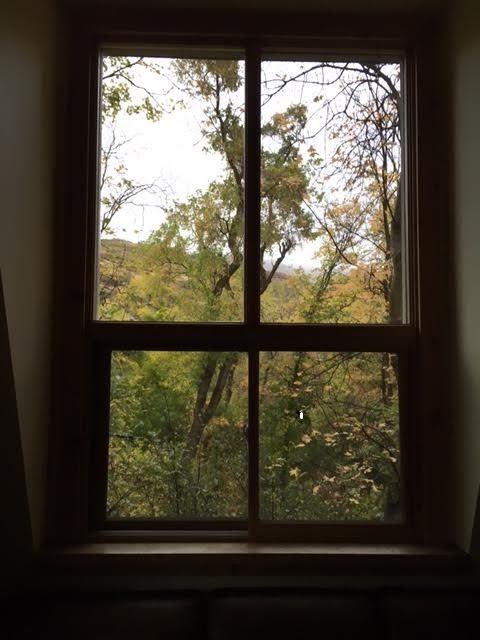
So I sit dreaming as much as anyone else to leave the confines of isolation. I want to visit my one hundred one year old aunt who is all alone in her nursing home. I long to be back at church. I’d love nothing more than to go camping in my trailer or to travel to the Texas hill country to see my children and grandchildren. I want to teach my math students in person and have lunch with my grandson at his university. I’d love to walk through the mall and have dinner with friends. I want anyone who thinks that I am just silly or unduly afraid to understand that if I only had myself to consider I would already be out and about. What I know is that my careless actions may adversely affect many others. Therefore I stay inside. I wear my mask. I don my gloves and religiously wash my hands. I gaze longingly at the world that is moving outside. Maybe the ones celebrating their freedom are right and the experts on whom my decisions rely are all wrong. That’s not a chance that I am willing to take.

I will keep gazing at the world through a window. I hope that I won’t have to do this for very long, but my experts tell me that I am in for a long period of isolation. If I save even one person from the dangers of Covid-19 it will not have been in vain. 
Revealing a Truth

clean-and-maintain-usb-microscope

Before my father died visits to our family doctor were a regular thing. Because one of my brothers had asthma and allergies he was often sick and the doctor would even make house calls to check on him. I remember helping my mother to prepare our formica topped kitchen table to serve as an examination area. The doctor would come with his black bag and carefully check my brother’s temperature, ears, nasal passages and then listen for abnormalities in his lungs. I got to know our doctor rather well from those times and years later I would work as a summer receptionist in his clinic.

After my father died our visits to the doctor became almost nonexistent. Our only encounter with anything medical came when we spent what seemed like entire days at a Harris County clinic on Canal Street waiting to get our school inoculations for free. It never occurred to me back then that my mom could not afford to use the doctor’s office anymore unless someone had a major emergency or injury. I just assumed that we were a generally healthy bunch which may or may not have been true. It was only as an adult that I realized that my mother’s financial situation may have been the real reason that we only visited the doctor once in a blue moon. I doubt she had health insurance and I know that her income was ridiculously low, so she probably cut corners anyway possible, and that meant keeping medical expenses to a minimum.

When I was well into my fifties and one of my doctors began testing me for osteoporosis he wondered why my quite distinct scoliosis was never treated when I was a child. I suspect that the reason was that I never went to the doctor often enough for anyone to pick up on the fact that my spine was curving as I grew. My mother would not have known about such things and because I have had few other health problems in my life we were not alerted to treatments that might otherwise have straightened my back. Thus is the reality of those who have economic hardships.

I have been saddened to read reports that indicate that all across the United States it is the poor who are most likely to contract and suffer grave consequences from Covid-19. Due to the nature of their work which requires them to show up or lose pay they have been on the front lines of essential work duties often without proper protective face masks or gloves. In addition I suspect that, like my family, they do not often visit doctors for preventive care that might uncover health problems early enough to either fix or control them. They do not enjoy the luxuries of healthy diets either. Fresh fruit and vegetables tend to be more expensive than these individuals have the income to purchase. In totality their economic status limits what they can do to stay safe and healthy in normal conditions. That factor is only exacerbated by a worldwide pandemic.

Throughout history it has been the poor among us who have suffered most in difficult times. Right now the zip codes outlining the areas with the most Covid-19 cases in Houston are all in places that we know to be inhabited by our most economically vulnerable. We might argue that they in all probability have welfare, Medicaid, CHIPS and other programs that should be enough to help them but I know from my own mother that it is easy to slip through the cracks and become ineligible for such programs. On the day of her death my mom had a total income of $1100 a month which meant that she missed being able to get state or federal benefits by $100 a month. With her stunning abilities to budget with whatever she had and a bit of help from me and my brothers she was able to make it, but many people in a situation like hers do not have a source of additional assistance.

I almost cried when I looked at the zip codes where the most cases of Covid-19 are occurring because they represented the neighborhoods of so many of the students that I have taught in the past. I knew the parents of my pupils to be upstanding individuals who worked hard mostly in low paying jobs making just enough to get from one paycheck to the next. Medical care was a luxury for them just as it was for my mother. I was thrilled when a nurse at one of the schools where I worked spearheaded an effort to build a clinic on campus property where members of the community were able to come for vaccinations, tests, general health exams, and such. Donors and volunteers created a welcoming place where nobody had to feel belittled or concerned about how to pay. I have often wondered why there are not more such efforts being made all over town, and Covid-19 has made me feel the need for such homegrown medical centers more than ever.

If we were to take anything seriously starting with the health of our citizens should be right at the top of our priorities. The reality is that we will always have unfortunate souls among us whose incomes are too low to prioritize preventive care. They often can’t even afford to take the time off for such visits because every hour of their work days are devoted to being on the job. If they are not present, they do not get paid. We should find creative ways to fix that.

Covid-19 has shone a light on problems that the vast majority of us rarely experience. I suspect that I might never have noticed the inequities were it not for my own history as the child of a single parent whose circumstances caused her to lived on the edge of poverty for most of her life. It’s time we all became more aware and then like that nurse at my school lead meaningful drives to help fix the problems. 

Lord Have Mercy

Great Plague of 1665

In 1665, a terrible plague began in London. By the end of the epidemic an estimated 100,000 of the 460,000 living there had died. Sadly the vast majority of them were the poor. The wealthier citizens like lawyers, businessmen and even doctors fled from the contagion into country homes much like King Charles II who left London for Hampton Court. Even Parliament suspended meetings within the city, choosing to only gather one time in Oxford.

Once an individual became sick all members of the family were quarantined by law in their home. The doors of such houses were marked with a foot long red cross with the words, “Lord, have mercy upon us” written above or below the marking. Armed watchmen then patrolled outside the home twenty four hours a day with orders to kill anyone who attempted to force his/her way either inside or outside. Burials in mass graves took place in the early morning and late afternoon hours as the disease raged through the late spring, summer and fall of 1665 and then burned itself out in the spring of 1666.

It is believed that the illness was carried by fleas on rats and dogs so efforts were made to eradicate any stray creatures. Unfortunately the crowded and unsanitary conditions in the poorer sections of town made the people in those areas more susceptible to becoming ill. The incubation period once an individual was infected was only a matter of days and the likelihood of it spreading to anyone who had been in close contact was great.

I have been reading accounts of this plague by Daniel Defoe who is better known for his story of Robinson Crusoe. In the flowery English of the era A Journal of the Plague Year provides a vivid account of the horror and fears of the people, the attempts to limit the spread of the illness by authorities, and the civil disruptions that occurred as more and more unfortunate souls became ill. In another time I might have found his memories to be quaintly interesting but given our present situation I instead find myself identifying with the concerns and confusion that the epidemic produced. It was as though the world of the citizens of London had been turned upside down as they watched death and privation overwhelm them.

I thought of my own grandfather’s accounts of a smallpox outbreak in his town at the end of the nineteenth century when he was in his teens. His father and stepmother both became ill and he was charged with their care. Guards patrolled the property to insure that nobody save the local doctor went inside the house or came out. The incident had such a profound effect on my grandfather that he told the story of his time in quarantine over and over again. In his usual style he added a bit of dark humor to his recitation that demonstrated his preferred way of coping with the isolation and concerns for his family.

Humankind has been here before. People have faced pandemics that were ultimately quite terrible and they did so without the resources that we enjoy. Nobody was driving for take out dinners but my grandfather did admit that he ordered some moonshine to be delivered for his dad. He figured that the poor man was going to die anyway so a bit of whiskey might make his father more comfortable. Other than that it was just a lonely time for my grandpa and one in which he might possibly have contracted the disease himself. Somehow that never happened but as my grandfather noted it did not mean that the contagion was not as bad as people thought.

We have a far better understanding of infectious diseases than ever before in history. We are able to unlock the DNA and RNA of the viruses and bacteria that live invisibly around us. We have modern hospitals and sanitation methods that we heretofore believed would protect us in ways that our ancestors did not have. I suppose that we have in many ways assumed that we might never be touched by the kinds of epidemics that have historically rocked civilizations We have had a kind of false pride in our modernity and accomplishments, believing that we were somehow immune from the kind of disruptions that have occurred in the past. Now we see that in many ways we were wrong.

Covid-19 has shown us the cracks in the foundations of our public health services, our economy and even our relationships with one another. If we are to find a positive take- away from this horrific situation we will need to learn from our mistakes. That will require a level of honesty that has been slowly eroding in our politically charged world. We don’t want to hide difficulties but rather find ways to expose and attack them.

We are better educated and more knowledgeable than the unfortunate souls who suffered in the past but if our hubris prevents us from taking the necessary steps to prevent pandemics from happening on such a scale again there will most definitely be consequences. The eventual outcomes should not be about who is best or first. This should not be a competition but a convening of the best minds and ideas from all over the world. We can’t afford to turn our backs like they did in the past and leave the most vulnerable alone to deal with the problems.


Gazing Into the Future

dt_150811_caduceus_computer_stethoscope_800x600

I spent my last years working full time as Dean of Faculty in a KIPP charter high school. One of our mathematics teachers was an extraordinary educator who was originally from Nigeria. He once told us a story of his youth and how he wanted to become an engineer from a rather young age. His village provided him with enough education to be rather literate but not enough to gain admittance to a university. For that he needed an advanced course in Calculus but there was only one person that he knew about with the credentials to help him, and that person lived in the next village over from his.

My colleague was determined to earn a spot at the university and so he visited the teacher who held the knowledge that he needed and offered to help him with his farm in exchange for Calculus lessons. For a year the determined young man walked several miles after the regular school day to meet with his teacher. Ultimately my friend indeed earned a degree in engineering.

I was reminded of the many people across the globe who do not have instant access to education when I attended a little seminar at Rice University last year. The special guest was Salmon Khan, who is best known for Khan Academy an online educational platform.  Khan spoke of the power of the internet in bringing instructional opportunities to individuals who might otherwise not have them. He told stories of young women in Afghanistan who have used distance learning to earn college degrees in fields that might otherwise have been closed to them. Today’s world is filled with ever more opportunities for advancement because of individuals like Khan who offer lessons in multiple subjects.

We’ve seen the power of online education in recent days as millions of children have learned their lessons in the safety of their bedrooms. We know of workers who are continuing to do their jobs from their dining room tables. As doctors and nurses are on the frontline of the battle against Covid-19 telemedicine is being used more and more.

My husband was supposed to have a follow up visit with his cardiologist later this month. It will still happen but this time it will take place via computer. When possible this method is being used more and more often during the pandemic and I suspect that it will become a commonplace way of providing general medical care in the future. I can see how it will be an important way of bringing world class medical care to rural areas and parts of the world experiencing a shortage of qualified doctors.

Of course this brave new world of computerized education, work life and medicine will require internet infrastructure but already internet cafes are cropping up all over the world. These are places where anyone may come and pay a fee to use networks for all sorts of reasons. Some cities like Tulsa, Oklahoma are actually leading the movement toward creating centers for online access. I can envision countries creating such places for the population just as we once built the interstate highway system after World War II. What a boon it would be to anyone living in a remote area to have a way to learn or work or get medical care or just to become more a part of the global community!

I remember watching a program about Arthur C. Clarke many decades ago. He was a futurist in every sense of the word. He lived on a Pacific island but was very much connected to the world. Of course he was wealthy enough to have satellites and computer power in an era when few people had access to such things. Nonetheless he predicted that it would one day be possible for anyone to live virtually anywhere and still experience modern conveniences. The computer era is proving him right on so many levels.

I suspect that as we move out of pandemic mode we may want to continue with some of the practices that we have been using and expand on them. While the economy may be battered I predict that new opportunities will arise as clever young people learn from observing what was essential and how we solved various problems during our time of isolation. We are experiencing lessons in supply chains, risk management, education, public health, computer power. Our teachers will be the geniuses among us who paved the road to linking the far corners of the world through online communication. We may be on the verge of a great civilizational shift much like the Renaissance or the Industrial Revolution. In fact it may have already started.

Sometimes great good comes from tragedy. Let us hope that the lessons we learn will lead us to ever brighter days ahead and a willingness to try new ways of doing things. I suspect that the greatest minds among us are already making plans.

Plan B

charity-report-pic

There is plenty to cause people to be afraid these days. We are bombarded twenty four hours a day with stories presented more to earn readers and viewers than to just present the news. The more titillating the piece the more likely it is to increase ratings, the holy grail of journalism in today’s super charged environment. Add to the mix hackers who foment terror with propaganda and it can sometimes be difficult to discern the difference between truth and fact. Rumors abound to add to the inflammatory atmosphere. Uncertainty provokes anxiety that grows faster than a pandemic.

Everyone has real personal concerns that are enough to keep them worrying. They may be financial or health related, social or physical. I can’t think of anyone who is not grappling with some private tragedy that saps energy and brings on insomnia. The added furor over issues that may or may not be as dire as they are presented only adds to the pressures of existence. Our natural instincts to react when signs of danger appear have been stressed again and again by predictions of terrorism, murder, pandemic, natural disasters. We don’t want to be ruled by panic or illogical thinking, but we also don’t want to get caught unprepared. We find ourselves wondering whether to just laugh and continue our routines or take warnings seriously and make changes to our lives. When the information that we gather becomes contradictory we don’t know who to believe and our concerns only grow.

I remember a long ago day in October when I arrived at school to find fewer of my fellow students in attendance. My teacher appeared to be unusually tense and ultimately she spoke to us about the Cuban missile crisis that was unfolding. It was honestly the first time that I had heard of such a thing. If my mother knew of it, she never mentioned it to me and my brothers. I remember being somewhat amused by my teacher’s concerns and advice for what we should do if an attack on our city occurred. Because my mother appeared to be so nonplussed by the event I took her cue and simply ignored the whole thing which ultimately turned out just fine. It would be years later before I realized the extent to which our country had been on the brink of nuclear disaster. When I learned the truth I was unable to decide if my ignorance had been best or if I should have been more serious and prepared for a dangerous eventuality.

I worry enough without additional input from muckrakers. I’m generally not so much fearful of what may happen to me but rather how to protect my loved ones from harm. My guess is that I take after my mother in that regard. When I lie awake at night it is never out of anxiety for myself but always from fear that one of my family members or friends my be in trouble. When I am frightened I try to take control of the situation. I become like a mama bird preparing and guarding her nest. I maintain an appearance of calm and quietly go about my days as routinely as possible while also gathering whatever I may need to overcome the demands of an emergency.

Fear is the most normal of human reactions and one that may actually help us to avoid danger. It also has the power of driving us inside our own minds, crippling our ability to lead normal productive lives. I watched mental illness turn my mother into a sad paranoid shell of herself. She hid behind heavy curtains in the darkness of her mind. Hers was a medical problem that righted itself only when she took medications designed to balance the chemicals of her brain. Most of us will never know the terror that her bipolar disorder created in her thoughts. Still if we let our anxieties overtake us we lose the joy that we need to get the most from each moment of our days.

I suppose that I have learned to keep my fears at bay by taking constructive actions that may or may not be of any consequence but nonetheless allow me to feel more optimistic. I insure my home against disaster knowing that I may not escape devastation but at least will have a means of rebuilding if the worst case scenario unfolds. I take care of myself with healthy habits of both body and mind understanding that there are no guarantees that I will not be struck with a difficult illness. I can only hope that my routines will at least provide me with a reservoir of strength in any eventuality. I avoid dangerous situations as I go about my business and drive with care knowing that none of my cautions are foolproof. I have a store of provisions in case of some unexpected disruption in the normal flow of the world. Like a Girl Scout I plan ahead just as I always have.

I suppose that the events of my lifetime have taught me to never say never. If someone had predicted my future when I was a child I would have scoffed at the very idea of things that ultimately happened. Perhaps I may have also been very afraid. Instead I went about my life being a bit cautious just in case. There have been times when my careful planning served me well but I have admittedly spent sleepless nights wondering and worrying needlessly. Life has taught me that dreams come true through hard work but nightmares sneak up on us when we least expect them. Having a Plan B and staying calm has helped me through such situations time again.