And So It Begins Again

six woman standing and siting inside the room
Photo by Christina Morillo on Pexels.com

Old habits die hard. I still find myself living by the school year calendar even though I have now been retired for seven years. It seems as though summer vacation gets shorter and shorter for my friends who are still giving it their all in classrooms. Their time off gets squeezed into little more than five or six weeks when training sessions and voluntary prep time are considered. Somehow in spite of the low pay, lack of respect and physically and emotionally draining environment of their jobs, they return August after August filled with hope, altruism and optimism. As they troop back to their stations I find myself empathizing with them, understanding just how demanding their occupations actually are. At this time of year my body reverts to a mode of insomnia, peppered with concern for my fellow teachers and the battles that they will face in the coming months. My thoughts are focused on sending them good vibrations in the hopes that all will go well for them and for their students. Even knowing how challenging their days will be, I still find myself quietly envying them for the wondrous feelings of accomplishment that they will no doubt feel as they educate yet another group of young people.

I laugh as I read comments from my teacher buddies as they sit through those first days of seemingly useless inservice sessions that keep them from doing what they really want to do. Their thoughts are on planning lessons and preparing their classrooms, not reinventing the educational wheel or climbing ropes to build relationships with their colleagues. For the most part they find most of the mandatory sessions to have little value in preparing them for what they are about to encounter. They feel anxious and care little about what is being said.

Ironically I spent the last several years of my career being that person charged with designing the district required meetings that every teacher was compelled to attend. I did my best to make them interesting and a bit fun even though I knew in my heart that I had a captive audience that would have rather been free to ready themselves for the exhausting road that lay ahead. It often felt like performing at a comedy club with a tough audience that refused to laugh at even my best jokes. I read the body language that was ever so polite, but far from being engaged. What they rarely knew was that I mostly agreed with them that those first days back at work needed to be spent tackling the nitty gritty of working inside their own classrooms, not considering recycled education theories. It was simply neither the time nor the place for such things.

When I think back on my forty odd years of returning to work each August I remember only a handful of inservice moments that somehow struck my fancy. All of the others were akin to the vacuous sound of the teacher in a Peanuts cartoon. Mostly they were lessons in how not to inspire, and reiterations of theories that came and went. Because so little time was allowed for the things that we actually had to accomplish before the students came the following week, most of us worked long after being dismissed from the sessions, often returning on the weekend just before the opening day of school. Generally we were exhausted before the first bell had even rung.

One year I heard a vivacious women speak. She was a true story teller and her remarks were both touching and funny. What I recall the most about her talk was her admonition that we understand that there never has been nor ever will be one best way of teaching. Because each person is unique she advised us to adapt to the individual needs of our students, and sometimes that meant stripping down our efforts to the most basic and primitive methods, requiring only a stick and a plot of wet sand. Mostly, she advised us, it meant connecting with our students in truly meaningful ways, understanding what they needed to feel confident and successful.

On another occasion we began the academic year by taking a brief personality test, eating a glorious breakfast, and then being set free to take care of the business of preparing for the arrival of our students. It was such a magnificent experience to be trusted by our superiors to do the right thing. Everyone worked hard and there was more team building that year than I ever before or since experienced. At the end of the week when the entire school was gleaming and fabulous lesson plans were in the books, we gathered once again to enjoy a deliciously catered lunch and to learn the results of our personality tests. The gifted principal used the occasion to stress that the faculty with its differing individuals was a microcosm of our own classrooms. She emphasized that each type of person brought particular talents to the table just as our pupils would.  She ended by insisting that we leave early and reserve the weekend for some final relaxation. She gave each of us a basket filled with supplies, snacks, coupons, and even a little bonus check. Somehow I still remember that school year as the best ever, and I suspect that it was mostly because of its glorious start.

Teachers do indeed sacrifice a great deal for their students. It is a ridiculous myth that they are mostly individuals who are not suited for better pursuits. Those without talent and intellect are lucky to last for a year. The ones who return again and again are generally the best of our society. They come because they are truly dedicated to a breathtaking cause. They will work for peanuts for twelve or more hours a day from August until June. They will spend their weekends planning and grading and worrying about their students. They are known for generously spending hundreds and even thousands of their own dollars to keep their classrooms stocked with supplies.They will develop weak bladders and problems with their feet, backs and knees from the abuse that comes from being on constant alert for the welfare of their charges. They will learn to ignore the never ending insults that are hurled at them from a public that has no idea how difficult their jobs actually are. They will soldier on because deep in their hearts that know how important their work is to our society. They are building the foundation upon which everything else depends, and accomplishing it without much respect or help.

So, yes, I think of all the teachers at this time each year. I feel the sense of anticipation, the worries, and the wish that just once our world might truly acknowledge the massive contributions of that all of these wonderful individuals give so freely. Perhaps one day we will learn how to treat them the way that they deserve.
Only Time Will Tell

33750316_1843978448978317_6669086996591280128_nThere was a time when I believed that the first twenty years of the twentieth century were boring, a bit of a snooze. I have since become wildly fascinated with that time in history because it was responsible for perpetuating so many changes and problems that are affecting us even to this very day. Learning more about my grandparents has also enlivened my interest in this particular time because it ultimately had such a profound influence on me.

As children all four of my grandparents grew up in homes without plumbing or electricity. Neither of my grandmothers had enough education to know how to either read or write. At the dawn of the twentieth century they were both still wearing long dresses that modestly covered their legs, and women in the United States did not yet have the right to vote.

My European grandparents were subject to the rule of the Austro-Hungarian Empire, a conglomerate so vast and diverse that ruling it was unwieldy, leading to laws that prohibited the use of their native tongue and culture. Life in Slovakia was difficult but moving to the United Sates of America brought the promise of possibilities. Thus my grandfather bought a one way ticket to Galveston, Texas on a steamer that he boarded in Hamburg, Germany only a couple of years before the outbreak of World War II. What an adventure that must have been!

After working on all sorts of odd jobs, scrimping and saving every penny, and living all alone in a boarding house near present day Minute Maid Park in downtown Houston he was able to send for my grandmother. The two of them worked in the fields of a farm near the Houston Ship Channel and in the wooded forests near Beaumont just as oil was being discovered.

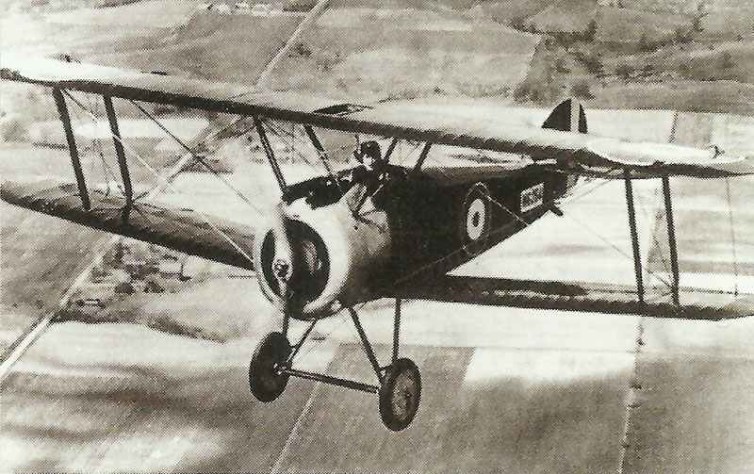
The little country of the United States that was still somewhat of a joke to the powers in Europe was on the move with an industrial revolution and an inventive spirit that thrust the United States into the modern era. Towns were being lit by Mr. Edison’s marvel known as electricity and two brothers had flown a plane for the first time in North Carolina. Mr. Ford was making cars affordable for the common man and people were marveling at having running water and working toilets inside their homes. It was an exciting time when the sleepy giant known as America was waking up and stretching its limbs.

My paternal grandparents were both working in Oklahoma where oil and almost free land was luring people from all parts. They would meet each other in a boarding house crowded with people seeking a living and, if lucky, even riches. Wild and crazy places like Tulsa and Houston were booming at a time when everyone seemed to be on the move in search of something.

Back in Europe the winds of war and revolution were blowing ominously in ways that would ultimately change the face of not just that country but places as far away as the Middle East and Africa as well. By 1914, everyone was honoring alliances and choosing sides in a battle that was supposed to end all battles once and for all. Modern warfare reared its ugly head producing weapons more terrible than anything ever before seen.

In the middle of it all the Communist revolution unseated the Czar of Russia and locked the world into an idealogical and political battle between Communism and Capitalism that continues to this day. My Slovakian grandfather was said to have been eternally grateful to be safe in Texas rather than locked into a lifestyle that would have limited his options and those of his children had he stayed in his native country. 

In 1918, the world experienced one of the worst outbreaks of influenza in history. Research into the disease did not lead to a cure in time to save the millions who died, but would create a better understanding of how such diseases are spread and lead to the discovery of antibiotics that would help to stem the tide of future outbreaks.

By 1920, women in the United States finally had gained the right to vote. Along with this victory came short skirts and other once unimaginable freedoms. Their homes began to fill with modern conveniences and appliances that made daily routines easier to perform. Radios provided instant news from the world and travel became available to even the common man and woman thanks to Mr. Ford.

In the meantime the treaty agreed upon at the end of World War I created unresolved problems across the globe that still echo in places like Afghanistan, Iraq and Iran, not to mention much of Europe. The United States was seen as less of a backwater nation and more of a possible partner in world affairs, and the spirit of innovation accelerated along with an emphasis on more universal education for both men and women.

The stage was being set in motion for my parents to be born and to live far more prosperous lives than their parents had ever known. The city of Houston continued to attract men and women with a pioneering spirit and a willingness to take audacious risks. It was not the boring and quaint time that I once imagined it to be, but in fact was exciting and bursting with some of the most important changes that humankind had ever known.

We often hear the men and women of the World War II era being called “the greatest generation” but there is great evidence that those who navigated the first two decades of the twentieth century like my grandparents may well have been even better. They were members of the transitional forces that led the way to modernity, unafraid to enter brave new worlds.

My Grandpa Little often spoke of experiencing the wonders of that era firsthand. He recalls seeing a city lit up with lights for the very first time. He remembers the first radio broadcast that he ever heard. He brags that he went from a tiny home with no plumbing and no electricity to using a television in the comfort of his home to view a man walking  on the moon. He did this all in a single lifetime. 

I sometimes wonder if the first twenty years of the present century will bring the same sense of awe to future generations. What is happening now that will still have an impact on the world in a hundred years and will we be remembered for being creative and courageous? Sometimes I fear that we are guided more by a tendency to cling to the past than a willingness to imagine the future. Only time will tell if we possess the same can do spirit that so defined the first years of the modern age .

When Two Beautiful Hearts Become One

37125721_10212650429280251_3292675091942342656_oThey were a cute couple, high school sweethearts who fell in love. Paul was a football hero, an all state lineman who was a beast on the gridiron, but a teddy bear off the field. It is little wonder that he was attracted to Shirley who was a real beauty with a warm and inviting smile. They found each other when they were still young kids, but they both understood that somehow their relationship was meant to last for the duration, and so they married fifty years ago.

Our world is overrun with problems these days. Divorce is on the rise, almost commonplace. Families are often torn apart by differences, disloyalty, and neglect. All too often relationships fizzle out before they have even begun to take hold. Single parent families are on the rise. Young people are wary of making promises to one another. Not so with Paul and Shirley. They not only pledged to honor and cherish one another till death, but they made good on their oaths to one another as their lives unfolded in one decade after another.

I knew Paul from a time when he and I were a young children. I met Shirley in high school. I was in awe of both of them even back then because they each appeared to be so genuinely kind and humble. Shirley was a particularly sweet person who rarely thought of herself, but always did her best to make those around her feel welcome. She was the kind of person who went out of her way to notice the one individual who was feeling uncomfortable or ignored. With her ever present calmness and inviting smile she took the time to say a hello or just to inquire about how someone was doing. I loved and admired her so, thinking myself quite fortunate to know her.

Paul was so handsome and gifted in his athletic prowess. I on the other hand was so awkward that he scared me just a bit, but like Shirley he had a million dollar smile and a way of being so open and friendly that I somehow felt okay around him. His innate sweetness was both charming and refreshing, and when he and Shirley began dating I thought that they were indeed a most perfect couple that somehow the angels had put together.

High school graduation came and I lost track of many of my classmates, just as always seems to happen. I went my way and Shirley and Paul went theirs. It would be almost five decades before I saw them once again and I learned that they had enjoyed a beautiful life together. As always both of them spent more time listening to the tales of others than boasting about their own accomplishments. They were as sweet as they had ever been, and it did my heart good to know that with a few ups and downs, they had mostly enjoyed the years.

Shirley was even more beautiful than ever, and her iconic smile still radiated the same loveliness that lit up her eyes and revealed the inner beauty of her heart. Paul was like a rock, one of those incredibly kind men who is unafraid to show just how much he cares about people. Together they had created  a loving family and worked to cement the relationship with each other that they had built so long ago.

Just about a year ago Shirley and Paul’s home flooded from the rains of Hurricane Harvey. Instead of complaining about the slowness of the recovery, the pain of losing so much, they instead smiled as they always seem to do, and worried about how everyone else was doing. In the midst of their own troubles they took the time to send me a lovely card expressing their hopes that my husband would fully recover from his stroke. I suppose that they never really knew just how much their thoughtfulness meant to me in that moment, but it was so typical of them to be selfless.

Anyone who has ever met Shirley and Paul Jauma knows just how much they love one another. Theirs is a union grounded in a deep faith that God is a partner in all that they do and endure. They have taken their vows to a spiritual level that is not often seen and have made good on the promises that they exchanged with each other on their wedding day. Their fifty years together have inspired the people who know them as evidenced in the many tributes that have come their way.  We find ourselves feeling so happy for them, and fortunate to number them among the people that we have known.

Shirley and Paul are quiet people who laugh at any suggestions that they are somehow icons, but I know differently. They represent the best of humanity with traits that are all too infrequently seen. I suspect that if there were more people like them in the world, we would be a much happier lot. They have much to teach all of us about love and what it really means to honor and cherish another person for a lifetime.

I’m quite delighted for Shirley and Paul Jauma, and I pray that they will be blessed with many more years together. We all need to witness their model of a loving couple, and I thank them for sharing the goodness of their hearts.

First Women

black and grey leica camera on pink background
Photo by Markus Spiske freeforcommercialuse.net on Pexels.com

My mom was a very confidant woman who did her best to boost my own sense of self esteem. Sadly it took many years for me to overcome the shyness and self doubts that I carried in my heart. I eventually reached a level of comfort in just being myself, but it was not without a great deal of effort and study of human nature. I can now honestly say that I truly believe one of my mother’s favorite mantras which was that even the most outstanding people among us are in the end just as human as we are. Once I fully understood and believed that concept I was a different person, ready to think not so much about the impressions that I was making, but more about how the individuals around me were feeling. It became my goal to focus on helping others to find their inner spirit, and doing so has made all the difference in how I greet life and its challenges.

I was reminded of just how alike we all are in our need for acceptance and love as I read a book called First Women: The Grace and Power of America’s Modern First Ladies by Kate Anderson Brower. One of my cousin’s had inadvertently left the volume at my home after one of her visits. Since she would not be returning for some time she suggested that I keep it and enjoy reading it if I felt so inclined. For some time I was too busy to pay it much mind, but it kept taunting me as it lay unopened on by bedside table. Recently I decided to give it a try and I have found it to be quite delightful.

The author begins with First Lady Jacqueline Kennedy and ends with Michelle Obama. The chapters discuss what it is like to be a political wife, the sisterhood of this uncommon sorority, the courage that is often demanded of these women, the trials of motherhood while in the political eye, the roles of being wives and supporting actors to powerful men, the bad blood that sometimes spills over from one first lady to another and the general duties required of these women. It is an informative text that provides a rare portrait of each woman and the ways in which they approached a job that some of them never even wanted to have.

I found myself feeling very close to some of these women, and identifying with the joys and heartaches that come from their roles. I was surprised by stories of misunderstandings between them as well as unlikely alliances that evolved over time. Of course developed favorites, some of whom surprised me just a bit. Most of all I learned how truly human each woman was and in some cases still is.

Jackie Kennedy was perhaps the most tragic figure among all of the women. She was truly in love with her husband and she overcame her almost paralyzing shyness to help him in his quest. She totally believed in him and his ability to change the world for the better, but she was not naive about his many dalliances. Nonetheless she forgave him again and again, and upon his assassination she was utterly crushed. She was a beautiful and delicate woman who somehow mustered unbelievable courage when she most needed it, and was admired by all of the first ladies who followed her.

After reading about each of the women I had my favorites. Among them were Ladybird Johnson, Betty Ford, Laura Bush and Michelle Obama. Interestingly Ladybird and Betty became great friends as have Laura and Michelle. All four were bright and gracious women who demonstrated courage under fire during their time in the White House with a dash of kindness. These four seemed to understand better than others just how important it is to be honest, but also to be helpful and kind. The portrait that the author draws of them makes me think that I would truly enjoy a conversation over lunch with any of them.

Pat Nixon was another sad figure. Her life was punctuated with one challenge after another, and during her time in Washington D.C. she was terribly misunderstood. She had a strength that few of us ever noticed. She wanted to be loved by the American people, but that kind of feeling was never really accorded to her. Instead she quietly endured opinions that were often unfounded.

There were little tidbits of information included in the book that were new to me. I had not realized that the Carters did not care for the Clintons and in particular they were unwilling to support Hillary in her bid for higher office. In fact the bad feelings between to two families still run rather deep. The Carters were dedicated to making a better world for the common people and felt that the Clintons were simply in pursuit of power.

Nancy Reagan was so utterly devoted to Ronnie that it seems as though she never really became close to any of the other ladies. Everything in her world was about her man and her protectiveness for him was all consuming. She put up a wall that none of the other ladies in the sisterhood were ever able to breach.

Barbara Bush was one of a kind, a woman who more often than not spoke her no nonsense piece of mind without filters. Everyone liked her and she was perhaps the most popular first lady with the permanent White House staff. Still, she often felt hurt by the kind of political barbs that are so often hurled at the president and his family. On many occasions she asserted that her husband George was a saint, and she despised personal attack on him or members of her family.

What I learned from the book is that being First Lady is a much more difficult job that we might imagine. Every single thing that the spouse of the president says or does is being constantly judged. There is very little privacy or freedom, and yet each woman ultimately fought for her husband to find the respect and love of the people. These women gave up much of their own identifies in a supporting role that few of us would ever wish to endure. Most of all, they were as human as any of us might be in the circumstances and truly worthy of admiration.

First Women is a good, easy and interesting read, a page turner that helps us realize the sacrifices that these our first ladies make in the belief that their spouses are the individuals needed to make our country a fair and just place to be. It’s a great book to carry on a summer journey, to the beach, or just to peruse on a hot humid day.

The Good, The Bad, and The Ugly

backlit-clouds-dusk-853168On any given day the headlines of any publication include the good, the bad and the ugly. That trend pretty much sums up the nature of humanity and history itself. As people it’s actually easier to find the good among and about us, but more often than not we focus on the bad or the ugly. I suppose that is because horrific things are actually more unusual than generosity and compassion. We are fascinated with the bad and the ugly even as we abhor such occurrences. 

I scan the headlines each morning as I eat my breakfast. Last week the front page announced the bad news that a six figure income just over one hundred thousand dollars a year in San Francisco qualifies a family to be considered low income and possibly in need of government assistance to provide the basics of food and shelter in that city. It was shocking to realize that such a fine sum of money is insufficient in a town where the median price of a home is over a million dollars. It is a beautiful city that has become almost inaccessible to anyone but the very wealthy. In fact, it suffers from one of the most tragic homeless problems in the nation, and residents complain that the plight of individuals with no place to go is growing exponentially. I find myself wondering how it is so that a city that prides itself in being advanced in so many ways has become more and more segregated by economics.

Yet another quite ugly story from out of California told of an elderly man from Mexico who was severely beaten by a woman in Los Angeles who shouted that he should go back from where he came as she pummeled him with a brick. It’s more than difficult for me to imagine how someone might possibly become angry enough to inflict suchg harm on a stranger. Had she taken the time to determine his story she would have found that he was simply visiting his very legal family as he has done countless times. His vacation turned into a needless nightmare because someone jumped to conclusions that weren’t even accurate. Even if he had been attempting to come to this country without proper paperwork, the violence that he endured was terribly wrong. I suspect that it would not even have warranted mention in the newspaper were it not so unusual, but I worry that there is a kind of growing contagion that encourages more and more people to demonstrate their prejudices with this form of extreme ugliness.

We certainly do in fact have very real problems, and of late we don’t appear to be inclined to work together to solve them, but sometimes something quite extraordinary happens and we see the goodness of our better natures in all of its glory. Thus it was with the rescue to the soccer team and coach from Thailand. For many days the entire world seemed to be holding its collective breath and praying in unison for the young men trapped inside a cave in a very dangerous situation. Help came from around the globe, and models of courage and sacrifice kept people from far corners holding their breaths in the hope that all would turn out right. In the end the entire crew was rescued in a daring operation that sadly took the life of one man who perished while helping with the endeavor.

There was no preening here. No requests for glory or paybacks. The faces of the those who worked tirelessly mostly remain anonymous. They had a cause that was gloriously important and nothing else seemed to matter. People worked together to solve a grave problem and succeeded just as mankind always has whenever people have been willing to set aside differences for a common good. When the entire group was finally safe we all heaved a collective sigh of relief and shed tears of genuine joy. We realized in that moment how incredible we humans are when we use our potential for something good. The rescue represented the best of who we are as people, and it felt so wonderful to experience such pure elation without the recriminations or critiques that split us apart more often than we desire.

I just wish that we would think of all that is happening to us on any given day and emphasize the truly good things that take place, relegating the bad and the ugly to the back pages where they belong. We give far too much attention to evil and violence, and not nearly enough to our grand accomplishments. We need not ignore problems, but we would do well to put them into perspective. Most of the time the truly ugly stories are judged to be so because they are indeed the exception rather than the rule. The bad ones generally mean that we need to put our heads together to find solutions. The good ones show us just how much capacity we have to create a better world for everyone.

I remain a cockeyed optimist because I truly believe that when all is said and done we time and again grow weary of the bad and the ugly and decide that it’s time to do what we know to be right. It’s just too bad that we don’t hear a bit more about such instances because every single day there are wondrous and heroic actions taking place. Even now someone is saving the life of another human being. Somewhere a great new discovery is taking place. Children are learning the foundations of a just society in many corners of our world. Some person is quietly helping another. Such unsung acts of goodness are the true nature of the world. Sometimes we actually get to know about them and it feels fabulous.