For the Love

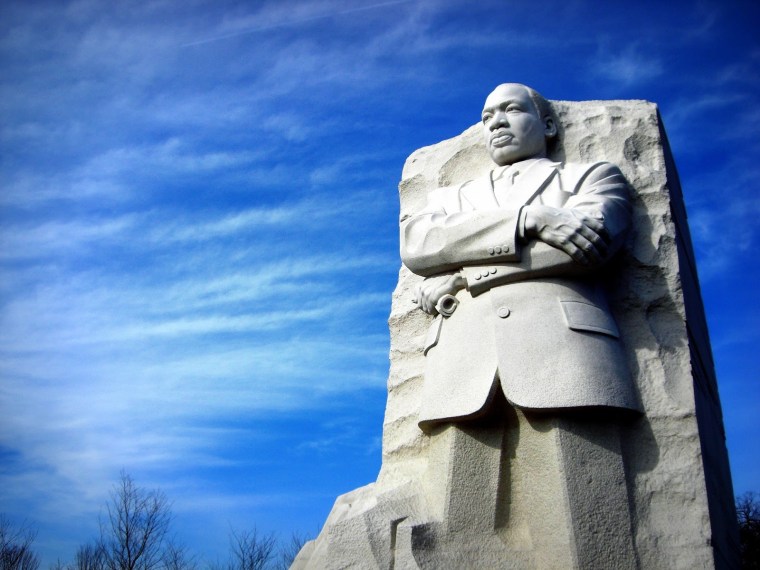
mlk8We hear a great deal about patriotism these days but what is it really? Is it only about displaying outward signs of allegiance to this great nation of ours, or is it something deeper, more visceral? I happen to believe that it is all about loving the United States of America so much that one is always concerned about it’s welfare. Sometimes that means having to do difficult things to ensure that democracy remains robust and available for each of us. That might mean serving in the military to protect freedoms, one of the noblest sacrifices that a citizen may make. It may also mean that an individual has to take a stand for what is right and just that is uncomfortable and maybe even misunderstood. Both of these behaviors are necessary at times in order for our country to sustain the principles upon which it was founded, and those which needed to be part of the compact made for the people of this land but were unfortunately omitted from the original declaration of rights. It is not only those who sing anthems and place their hands on their hearts who demonstrate patriotism, but also those who urge us to consider problems that need to be addressed to create an ever more perfect union.

I love this country in a very emotional way. I am filled with gratitude that I may call this glorious land my home, but I am not so prideful to believe that we are without our problems. We all know that there are certain difficulties that have plagued us from the very beginnings of our most remarkable government. It surely must give us pause to realize that we began this great democratic journey with slavery legitimized by law. How can we read the documents that counted enslaved people as two thirds of a person without feeling sorrow? Certainly we eventually had the moral courage to do what was right, but it should never have taken as long as it did. It is the main reason that I sob each time I stand inside the Lincoln Memorial and think upon the courage and patriotism that Abraham Lincoln possessed even to the point of being murdered for his beliefs. Thank God that he so loved this country that he was willing to endure great sorrow and the slings and arrows of criticism to finally set it on the right course. That was patriotism at its very best.

Most of our black neighbors are the descendants of slaves, people who came to this country in chains. A visit to an historic plantation is a painful experience. Walking through the splendor of the antebellum homes of slave owners and then seeing the horrific conditions in which their slaves lived is humbling and causes me to experience great sorrow. It doesn’t take much imagination upon seeing the implements by which the slaves were kept in line to realize how horrible their existence was. It is a blot on our history which we will only eliminate when we are all willing to accept that what happened to those who were treated as property was very wrong.

If we had simply moved forward once slavery was outlawed perhaps we would now be living as brothers and sisters. Instead we spent another hundred years segregating the blacks from our lives. I vividly remember what that looked like and it was ugly. Blacks lived in neighborhoods far from the rest of us. Their children were often housed in inferior schools, although there were incredible efforts made by their own people to overcome all of the educational handicaps that were thrown at them that even included barring black children from libraries. I remember the signs that kept our black neighbors from using our water fountains or bathrooms. We so cavalierly embarrassed our fellow citizens again and again. Sometimes there were even those who terrorized them with fiery crosses. I shudder when I think of a symbol of Jesus Himself being used in such a hateful way.

I could go on and on about what I witnessed, inhumane treatment that seemed unfair even to the child that I was. It was with great elation that I saw heroes like Dr. Martin Luther King, Jr. challenge our country to correct the inequalities that were legitimized with laws that were unjust. Without violence he led a movement that would eventually overturn many of the inequities, but not until he and his cause had endured great strife and violence. He is to this very day another of my heroes, equal in stature to Abraham Lincoln. Dr. King is in my mind one of the great patriots of American history who raised our consciousness and challenged us make our country a better place.

Many seem to believe that the equitable evolution of the United States of America is finished. Sadly there is still work to be done, questions to be considered. As long as we still have situations in which certain classes of people are considered less eligible for our God given rights and freedoms, we must continue to insist that we have the moral fortitude to continue the discussions and take the needed measures to perfect our system of government. Those who wish to make America better are the true patriots, and it up to all of us to acknowledge rather than condemn their efforts.

We tend to view violence and riots as nonproductive ways of fighting for rights. We don’t really listen to people who would burn and destroy. It somehow seems counter to their arguments for justice. So we should be open to hearing the grievances of those who choose more peaceful means of highlighting their causes. What are people to do when we reject both methods? What are they to think? How frustrated they must be when we turn out backs without attempting to understand their frustrations. Thus it is with our current situation. Our history with the people whose ancestors we treated with so much disrespect are merely asking that we try harder to show them that we no longer view them as somehow being lesser citizens than we are. We insult them when we only react to their pleas with anger or when we ignore them altogether and wrap ourselves in our flags of patriotism as if we are somehow better Americans. One who truly loves this country would want to pause long enough to consider why people would subject themselves to our ire. If things felt okay and wonderful to them surely they would not risk so much to stand up for what they believe to be right and just. Why then can we not at least take the time to listen and dialogue rather than indicting them and accusing them of being unAmerican? Isn’t that a dramatic step backward? Can’t we see the irony in suggesting that they go away if they don’t like what is happening to them?

My heart is filled with nothing but love and appreciation for this country, but I also understand that it is not yet perfect and maybe never will be, but I am enough of a patriot to want it to be. I truly believe the the greatest patriots that this nation has known have been those who stood for something so important and so real that they were literally willing to make every imaginable sacrifice for the good of their fellow citizens. I stand with Abraham Lincoln, Dr. Martin Luther King, Jr, and the men and women who fight for all of our freedoms in foreign lands. I also stand with those who have an important message for us to really hear. I will still get goosebumps when I hear the national anthem. I will feel a sense of relief when I return to my country from foreign soul. I will pledge my allegiance with all of my heart, but I will never turn my back on anyone who simply wants to improve this great land. Like a parent who guides a child and builds his/her character, so too are those who alert us to the things that we are doing imperfectly the true patriots among us. 


Resilience

21766401_1868966163120008_6720605651907966418_nI’ve written a great deal about the massive floods that inundated the city of Houston a month ago. The national media has featured multiple stories from varying points of view about the tragedy that befell my town. We will be working to rebuild for years and debating how best to prevent such destruction in the future for an even longer time. To say that all of us who live in Houston and surrounding areas have been deeply affected by what happened is an understatement. What has struck me most is the courage and resilience of the people with whom I share my part of the world as well as the outpouring of support and love that has been showered on us. I thought that I had written about most of the main themes regarding this event and its impact on human nature until I saw a photo from one of my Facebook friends that moved me so strongly that I have not been able to erase that image from my mind.
I still think of the woman who posted the picture as the little girl who lived across the street from me many years ago. She spent so many hours inside my house playing with my two daughters. She was always a very sweet child and I never minded having her around. She seemed to be smiling even in her sleep and she possessed a pleasant optimism about life that just felt so good. Her name is Priscilla and I never really forgot how much I liked her as the years marched by and we lost touch.

Eventually through the power of social media we found each other on Facebook and became friends again. I learned that she was happily married and had a handsome son of whom she was understandably proud. She lives in the same part of town that I do, and so one Christmas season I met up with her and my two daughters at a local restaurant. We celebrated our reunion with hours of conversation and recollections of happy memories. Now and again I encounter Priscilla at stores and eateries, but mostly I keep track of her via the Internet, and I enjoy hearing of her adventures with her family.

Not too long ago Priscilla made a move to her dream home in Pearland, a suburb of Houston. She excitedly kept her friends apprised of the decorating and landscaping that she and her husband undertook to make their house special. I was excited for her and enjoyed seeing all of the updates. So it was with a very heavy heart that I learned that Priscilla’s home was among those flooded by hurricane Harvey. In fact, the place took on water on the first day of the massive rains. It broke my heart to think of the sadness and fear that she must have been feeling.

I had forgotten that Priscilla is one of those people who is a survivor by nature. In almost no time she had managed to find a safe hotel in which to ride out the rest of the storm. She did her best to remain upbeat even in the face of so much uncertainty. It was as though she was more concerned about easing the fears of the rest of us than concentrating on her own fate. She kept us posted so that we would know that she and her family were secure and she exuded a confident belief that ultimately all would end well for them.

Almost as soon as the storms had moved from our area she was back at her house doing the work of cleaning out all of the muck that had found its way inside. She continued to send communications showing the progress that she and her family were making, somehow finding ways to joke about the pile of debris that grew and grew on their lawn. She always managed to allay our anxieties with photos of the cleaned out rooms now devoid of half of the sheetrock and all of the flooring. In essence she and her family had taken the place down to the studs, at least on the bottom half of the rooms.

I laughed at images of Priscilla’s garage which now housed a big screen television, a few lawn chairs, a barbecue smoker and a toilet. Priscilla had noted with a hint of sarcasm that the scene was about as redneck as one might ever get. She remained upbeat, at least publicly, and it was among the few times that I smiled rather than cried over what I witnessed after the storm.

Last week Priscilla posted an image that seemed to capture her spirit and that of my hometown. She and her family had moved back into their house even though there was still much work to be done. With a great deal of imagination she and her husband had created a makeshift kitchen that was a true sight to behold. The bottom cabinets were gone as was the flooring and even the sink. Only the sheetrock had been replaced. Instead of the normal amenities there were long folding tables serving as countertops, clear plastic bins providing cabinet storage, a camping sink acting as a station for washing dishes, and a new stainless steel stove gleaming like a beacon of hope. That photo spoke of Priscilla’s fighting spirit and resilience and at the moment that I saw it, she became for me the symbol of all that is good in our town. Hers was the story that I knew I needed to tell.

There is no doubt that Priscilla and so many others have suffered in ways that should not have happened. We all understand that we must address concerns about climate change, shoring up of levees around neighborhoods, improvements to dams, aggressive building in flood plains, increased attention to drainage systems and so forth. In our quest to reflect on what happened we cannot forget to applaud the human spirit that Priscilla so embodies. Rather than complaining or waiting for someone else to help, she and her family did indeed pull themselves up by their bootstraps. They tackled the hard work and found ways to make do until their world is rebuilt once again. They are models of how to react with positivity and inspiration in hard times.

I wish that Priscilla’s story and photos would be shared until they become viral because hers is a lesson that we all should strive to follow. Life is a series of events both wonderful and sometimes even horrific. We have little ability to control many things, but we always are in charge of how we react. Priscilla has chosen faith and joy and hope. We are all the better for seeing her example, and we somehow know that she will find a way to be just fine. We’d all do well to emulate her spirit. I’m thankful that she has been willing to share her journey. I know that I am humbled by what I have seen and I vow to attempt to be as resilient as she most assuredly is.

In the Course of Human Events

bm

Back when I was teaching in South Houston I had unusually large numbers of students who were Seventh Day Adventists. They were particularly sweet, hardworking and respectful pupils who made my job so much easier. I always appreciated that their parents had taught them values that included being thoughtful and compliant with regard to my classroom rules and routines. Mixed in with them were a number of hardcore gang members who seemed ready by their very natures to challenge me and thus divert my time and attention from the task of conveying and facilitating knowledge to all of my young charges. The gang members stood out with their swagger and their stealth ways of showing their allegiances. The children devoted to their particular religious tenets made themselves known in another way that we teachers accepted not as defiance but as their right with regard to certain features of the Bill of Rights. Namely, they sat quietly in their seats each morning while the rest of us stood to recite the Pledge of Allegiance.

It was a given that their unobtrusive gesture of belief was something to be respected and perhaps even admired, and so nobody ever questioned their right or even their intent. There were no discussions, nor judgements. Instead we simply did our thing each morning and they did theirs. For me there was something quite beautiful about the freedom of it all, and the fact that we honored their freedom without making a big deal out of it. None of those kids had to have any form of proof of their religious belief on file. They might just as well have simply been frauds who took advantage of our largesse. We understood that it was really none of our business to question their views one way or another. It simply was what it was and it all passed quickly and without incident every single morning.

Over time I worked in many different schools and there was always the accepted actuality that we would not force our own religious or political or social beliefs on our students. We were to be respectful of individual thinking one way or another, and for the most part all of my colleagues defended the freedoms of the students, mostly without fanfare or drawing embarrassing attention to students who required special dispensations. We understood the importance of being fair and impartial.

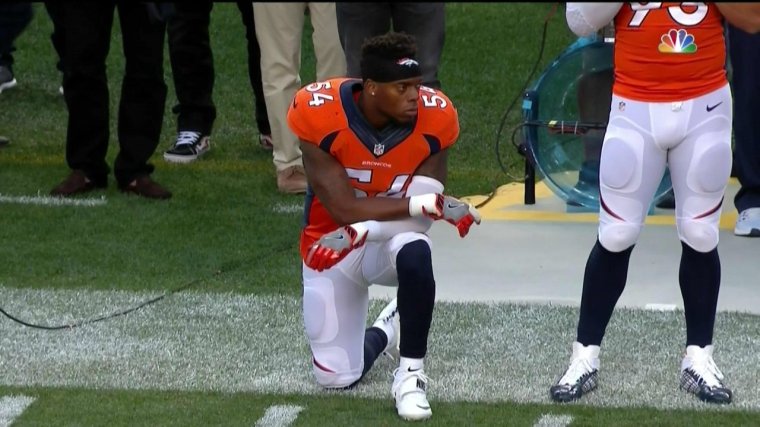
Now a huge brouhaha has been dusted up over some rather inappropriate comments from the President of the United States of all people regarding players in the NFL and other sports who choose to take a knee rather than stand for the National Anthem. It is unfortunate that our leader appears to have neglected to thoroughly read and understand the full contents of the Bill of Rights, for it is rather clear that those athletes have as much right to make a political point by refusing to stand as my students did. The President may not agree with them or even like what they are doing, but to call them “sons of bitches” and suggest that they be fired is way out of line, and all Americans should call him out for doing so, regardless of their feelings about the players’ methods or intent. The fact is that the athletes have a right as Americans to express their discontent, and instead of mocking them our leaders should be proud that the Constitution with its Bill of Rights is still working as it was intended to do.

Of course the owners of the teams also retain the ability to employ whomever they wish. Players are regularly sent packing for a host of reasons, most of which deal with their abilities to perform their duties well. In truth if one of the owners wished to require their employees to stand during the opening ceremonies of each game he/she would be well within the guidelines of employment, but they need not respond to the whims of the President in making such determinations. It was wrong of President Trump to intimidate the owners with his remarks and his tweets which were undoubtedly made to garner political capital.

The question of how best to define patriotism has been argued since the very beginnings of the United States of America. There are those whose ideas are more narrow and confining. They insist that we will work best as a republic if we all agree to always honor our country and our leaders. Others feel that what is best about America is the ability to voice concerns without retribution. They see symbolic resistance as the highest form of patriotism, for it harks back to the Founding Father’s insistence that no authoritarian government has the right to tread on the rights of the individual. Our country began with revolution against a tyrannical government. The writers of the Constitution were determined to make certain that no one individual or group would have the power to insist that we think in lockstep. In this regard President Trump has overstepped his bounds. While he too has the right to disagree with the athletes who are mounting a protest, he surely is wrong when he disparages them for exercising their rights as citizens. Furthermore, his bullying tactics with regard to the team owners are both embarrassing and questionable. He would do well to retake a Civics course before mouthing off so publicly. He might also consider reacting the way we did when I was teaching whenever we encountered individuals whose beliefs were different from ours. We always understood that it was their right to question conventional thinking, and that our duty was to provide them with a safe space for doing so.

We will each react a bit differently to the protests among our professional athletes. The Constitution provides us with the protections to do so. We may turn off the games if we feel strongly enough. We may join them in taking a knee. We may even just choose to quietly ignore the whole incident and celebrate the wondrous idea that we have the power to make our own choices regarding such things in this country. It does not defile our national honor whenever any citizen exercises his or her rights. In fact it dramatically demonstrates that we are a truly free people.

Our military has fought for liberty from the time that those first shots were fired at Lexington and Concorde. We haven’t always created a perfect form of government, but we have worked hard to make it better. We haven’t always chosen the right sides, but we have somehow been able to recover from our mistakes and improve our ways of doing things. We will never reach the goals of a more perfect union if we are unwilling to pause now and again to question the way we do things and to discuss methods for being certain that every man, woman and child has a voice and a sense of security.

Our Founding Fathers were radicals in the world in which they lived. Their ideas were audacious for the time. I suspect that if they were around to comment they would insist that the players be allowed to have their moment to shed a light on issues that worry them. They would also encourage President Trump to be less domineering and pejorative, and far more willing to stop his tirades long enough to find out why these men feel so strongly about their concerns that they are willing to endure the wrath of their fans and the leader of the nation. It’s time for all Americans to insist that our president work for the good of all, not just the few that form his base of voters. That is what our founders intended, and that is the way it should work.

Frankly I am weary and I know that most of my fellow Americans are as well. I agree with Senator John McCain that it is well past time to dispense with all of the quibbling and attempt to remember what this country is supposed to be about. It’s a watershed moment in which we must set aside our hatefulness and invective and begin again to consider the diversity of needs that we have. Most of all it should be the duty of all to protect our First Amendment rights regardless of our own beliefs, for they are far more important than pledges or anthems or routines. Sometimes in the course of human events it becomes necessary to speak out.


Embrace the World

people-helping-people

The world may seem like a fairly ugly place right now if one only looks at the headlines. We’ve got President Trump railing about “Rocket Man” at the United Nations, and in return North Korea threatens to attack our country. There are riots in cities and on university campuses, and the mere mention of political topics tends to elicit hate filled arguments. We speak of building walls to keep people out, and watch helplessly as violence appears to be routine. Civility seems to be a thing of the past, and some might argue that it never really existed. There is much talk about how horrid our ancestors were and how much of the population is following in their footsteps. It’s enough to make one believe that we are going to hell in a hand basket, and in fact there are those who predict that the end of the world as we know it will be coming very soon.

Somehow I manage to hang on to the belief that we humans are not nearly as bad as some would have us think. I see far more signs of goodness than hate. I recently learned of a story about high school students who donated thousands of gift cards to their arch rivals at a football game last Friday. The kids had heard that their opponents had suffered more than most in the recent floods in the Houston area, and they decided to do their part to provide them with a bit of relief. What started as a minor effort turned into a very big deal, and it’s not the only instance of service and good works that I have seen of late. In fact, I have been impressed in particular by the efforts of young people in attempting to help their fellow Houstonians during a difficult time.

I have been watching the ongoing story of rescue efforts in Mexico after the horrific earthquake that has claimed so many lives. The heroic efforts to save those buried under the rubble of fallen buildings has kept me holding my breath and praying for both the victims and those who spent days without rest in a race to find as many survivors as possible. It has been touching to see the crowds signaling for silence so that the teams would be able to hear the sounds of cries for help.

In Puerto Rico the destruction from the recent hurricane has been frightening and without power and instant aide it has fallen to ordinary citizens to begin the process of bringing the island back to life. The people have been moving downed trees, picking up rubble and rescuing people trapped by floods. Rather than complaining, they assert that they are ready to do whatever is needed to help their friends and neighbors. Their spirit is something quite wonderful to see.

I hear so many people claiming that we have been overtaken by negativity and hatred, but what I witness day after day is just the opposite. On a regular basis I see teachers working extra hours and spending huge chunks of their paychecks to help their students. In turn I witness students volunteering to care for the elderly, visit the sick or help with animals that have been abused. Complete strangers have come from as far away as Australia and Norway to assist my city after the devastation of hurricane Harvey. Sure there have been a couple of incidents of looting and thievery, but on the whole the response has been good and generous.

I enjoyed the movie Wonder Woman because its theme was one of hope and faith that mankind even with so many imperfections is ultimately a loving species. I believe that to be quite true. My experience has always been that there will be people who provide and that nobody is ever completely alone. It is in our natures to want to be generous. We listen for those cries of help and we respond.

It would be quite easy to be cynical and to close ourselves off from perceived threats, but I choose instead to embrace the world with optimism. We may have some rough times, but ultimately our goodness as humans always seems to find a way of winning the day. We definitely won’t have a chance at happiness if we immerse ourselves in negativity. We have to be willing to trust that our fellowmen and women will mostly be good people with the same kind of dreams that we have.

One set of beliefs insists that we are all born sinful and that we have to be saved. I prefer to think that each of us comes into this world as innocent as can be and that we have the opportunity to become even better as long as we keep trying. There are few people who are lost causes, and most of them are either mentally defective or have been so abused that they have only learned to hate. We need to deal with people on an individual basis rather than making assumptions that they are representative of entire groups or populations.

We have many problems that will only be solved if we learn how to talk with one another again and begin to trust that we each have good intentions but different solutions. If we are able to dialog and work together we will learn how to live with a variety of ideas and actually like them. We have to think of how to keep our nation safe without being unjust. There must be ways to have a fair and controlled immigration system without building walls. We have to consider alternative points of view and ask ourselves how we will meet the costs of programs that we find to be important. All issues are complex and we must be willing to admit that no one of us has all of the answers. Sometimes the best solutions come from the diversity of our opinions.

We might start by taking the time to look at the state of our world without so much hyperbole. The truth is that our goals are much more alike than they are different. We somehow find ways to solve the most difficult of problems when disasters strike. Perhaps we might consider what it is about our instant responses that makes us more cooperative and willing to set aside differences. Maybe it is the simple fact that we don’t overthink when we must react quickly. We just do what seems most needed and important at the moment, and don’t fret over what the consequences will be. Maybe our instincts to be helpful and unselfish are the ones that we should be following most of the time. Let’s have a bit more trust in human nature. I think we may find that we really can count on our fellowman more often than not. We people are actually rather kind. I like knowing that.

Bearing the Sins of Our Fathers

140618093314-08-iconic-vietnam-war-restricted-horizontal-large-gallery

I’m a bonafide Baby Boomer. I was born at the beginning of the Baby Boomer years. People in my age group were affected, and maybe even traumatized, by certain events that defined a great deal of how we see the world. Many of us were raised according to the recommendations of Dr. Spock. I know that I was. My mother often mentioned how he would suggest dealing with particular situations. We all remember crouching under our desks every Friday at noon in a drill designed to keep us safe in the event of a nuclear attack by the Russians. We remember Nikita Khrushchev taking off his shoe and banging it on a table at the United Nations and promising to destroy our country from within. The way we learned in school was reimagined after the Russians launched Sputnik. We are all able to vividly recall exactly where we were and what we were doing when John Kennedy was assassinated. The sound of the cadence of the drums at his funeral march still ring eerily in our heads. We saw the Civil Rights movement changing our country for the better and wished that we had been old enough to travel to Alabama to take part in marches of civil disobedience. Perhaps more than any other event, however, we were forever marked by the Vietnam War, a conflict that somehow both defines and divides us to this very day.

My generation paid little attention to what was happening in Southeast Asia up until I was in high school. We had been much more enthralled with the space program and the progress that we were making in journeying from our planet into the universe. Suddenly, in spite of our former ignorance, we began to hear more about a civil war in a faraway land and a supposed fight against Communism. We learned about the Domino Theory, a belief that if one country in Asia fell under the domination of communism others would follow and the boogie man of communism would be banging on our own doors. None of it had particular meaning for us until President Johnson began increasing our involvement in that conflict, and because there was a draft system all of the young men my age had to register for the possibility of involuntary involvement in the military.

By the time I was a senior in high school there were hundreds of thousands of US troops fighting in Vietnam. Some of the members of classes ahead of mine had already gone to war and a few of them had died. It was as though the world had suddenly blown up and anti-war fervor began to overtake the land. Some saw those who did everything possible to avoid the war as traitors and instigators. Others called soldiers who served in Vietnam baby killers. The evening news brought scenes of violence and bloodshed into our homes each evening. It was impossible not to have an opinion regarding the volatile political situation, and it was my generation that was caught in the big middle of a war being run by old men using young boys as canon fodder.

Of course that war did not end well. The United States eventually had to leave Vietnam without victory, an outcome that the French and British had predicted, possibly because they had endured similar situations in the past. North Vietnam took over the governing of the entire country. Dominoes did not begin to fall all over Asia. The world eventually settled down and forgot most of what had happened back then, but those of us who were intimately part of that history have never forgotten. We were all changed in one way or another by the Vietnam debacle. We have been unfairly judged on both sides of the debate by our elders and our children. We were teenagers and young twenty somethings who were asked to sacrifice for a cause that we now know even the Secretary of Defense did not believe would end well.

We began as advisors to the government of South Vietnam, a political machine that was at best riddled with problems and at worst was filled with graft. The conflict was a civil war among people attempting to decide their own fate. Our interference was never taken well and the anger over our involvement only grew when we appeared to be invading the country rather than just offering suggestions. The United States was so fearful of Communism that it allowed itself to become more and more entrenched until it ultimately appeared to be an actual war between North Vietnam and the United States. The truth was that the more we bombed and threw napalm, the greater became the distrust and dislike of our country. Sadly, the young soldiers who were the same age as I was became victims not just of the horrors of war, but also a backlash against them from their own fellow citizens. They were caught in a controversial middle ground that was quite unfair.

At the same time those who protested the war were accused of being disrespectful and traitorous, but in truth they were not unpatriotic. In fact they demonstrated love for their country in voicing their concerns, most of which have been shown to have been correct in retrospect. Private correspondence between Secretary of Defense Robert McNamara and President Lyndon Johnson has revealed that there was indeed great worry that the war was being fought in vain and that our youth were being wasted on the battlefield. How awful to think that so many died when they needn’t have. How terrible to realize that the divisions that tore open a national wound should never have happened. It is detestable that the war continued mostly because nobody wanted to admit that they had been so wrong.

I was recently listening to an elder statesman who participated in both World War II and Vietnam. He felt that the most unfair outcome of Vietnam was the idea that the generation that fought against Germany and Japan was somehow more noble than those who went to Vietnam or their counterparts who stayed home and mounted resistance. He noted that we attempted to fight the two wars in the same manner when it was obvious that they required different tactics. He also defended the soldiers of Vietnam in noting that they were as good and courageous as their forebears had ever been. The only difference was that the leaders of World War II set up plans that worked, while the leaders of the Vietnam War made one mistake after another. He insisted that it is totally unfair to look upon the Baby Boomers as somehow less patriotic than their parents were because the circumstances were so very different.

We Baby Boomers were never the same after that war. It defined us in uncomplimentary ways. It was used to turn us against one another. We were pawns who have never quite been understood by either our elders or our children. It was run by a man who had been a systems analyst and who believed that it would be possible to create battle plans based on data such as tallying the numbers of those who died on each side. He neglected to take into account aspects of human nature until it was far too late. The entire rationale was built upon a false premise that left our country damaged. We are still attempting to reconcile the differences that tore us apart back then. As for the Baby Boomers, we have become symbols of failure and lack of character when we were not the ones in charge. We were simply the group that was used so that politicians would not lose face or power.

If there is one dream that I have it is not so much that we Baby Boomers will one day be vindicated, but that no other generation will be put through such a horrible introduction to adulthood ever again. Those who wield authority must always be conscious of the human cost of their decisions, and have enough moral character to be certain that no group will be so badly abused. If we are one day able to admit openly to past mistakes and reflect on how to avoid them in the future, then the sacrifices of so many Baby Boomers will not have been totally in vain.