
Why We Gotta Be So Mean?

troubled-teens-bully.jpgI truly believe that we humans are mostly good. Still I see far more signs of bullying and ugliness these days than ever before. A friend confided that her son was being mistreated by the girls in his class. He is a very sweet, almost naive soul who can’t quite understand what he may have done to deserve their ire. An acquaintance who is generally a very kind and sensitive person recently took the bait of societal anger and posted an article poking fun at a female political figure. It was quite negative in tone, and unnecessarily so. It’s only purpose was to be cruel and so it stunned me to see this normally good hearted individual becoming part of the negative crowd. It seems as though just living in the world today can quickly devolve into a blood sport.

There is a certain anonymity that comes with the impersonal nature of social media. Being part of a group that initiates callousness feels safe and without consequence. Bandying about words seems a harmless joke given the old saw that sticks and stones can break our bones, but words will never hurt us. Besides, don’t some of our leaders get by with verbal attacks with impunity? What does it really matter to vent our feelings? Shouldn’t people be mature enough to handle our truths?

Thus we find posts on Facebook that create confrontations and tweets on Twitter that seem to revel in their use of cleverly noxious words. There are those among us who have lost their sense of propriety and are even celebrated for their ability to get a rise from some unsuspecting soul. When such attacks occur frequently enough the inflicted pain can become unbearable and then depression and fear follow quite naturally.

We have tried to instruct our children in how to handle the barbs that may come their way. We teach youngsters to curb any tendencies to be bullies and to help those who are victims. Somehow none of our efforts ever completely take hold. No matter how hard we try the ugliness persists and at times even appears to grow, making life quite difficult for those who are the butt of mean spirited behaviors.

There are celebrities like Lady Gaga who pour themselves into the task of helping to reduce bullying. She has created a brigade of young folks who are trained to encourage and celebrate acts of kindness. The hope is that focusing on the positive natures of humans just might mitigate the more negative aspects of the way we treat one another. It’s a glorious idea and bears watching. God knows that we have nothing to lose by actively trying to improve the ways that we interact. Those who demonstrate concern should become our winners, our heroes, not those whose overbearing remarks and actions wound and leave scars.

I read about a school where the students are encouraged to look for anyone who is seemingly alone and welcome that person into a warm and friendly circle. The young people who have adopted this attitude are finding that they are learning as much about themselves as they are about their classmates. They report that everyone feels safer and better understood.

A little boy in a small town heard about a police officer who was killed in the line of duty. The newscasters spoke of how devastated the fellow officers were, so the child decided to donate his Wii to the station. He remarked that playing the games usually made him feel better even when he was sad and he hoped that the bereaved men and women would find solace in the activities that they would be able to share together.

There are good people everywhere who do the most remarkable things without ever expecting credit or even thanks for their efforts. I still recall a young woman who helped me to feel welcome on my first day of teaching in a new school. I can envision her beautiful smile and hear her encouraging words. Somehow she sensed my nervousness and did her best to assuage my fears. Her thoughtfulness made a discernible difference.

I can only imagine how much more wonderful the world would become if we all tried very hard to turn our temptations to be angry or insulting into opportunities to be caring. It takes so little to be nice but it really does turn the tables. Instead of answering anger with anger we might try showing patience and understanding. Love should always trump hate or as someone has said, “When they go low, we go high.”

I suppose that the most difficult situations are those in which we find ourselves facing someone who is blatantly obnoxious. We might simply ignore that person, especially if we sense that attempting to change him/her is impossible. Walking away is not cowardice. Sometimes it’s the bravest thing we might do.

We should also consider answering unpleasantness with warmth. Sometimes it is possible to disarm the negativity by countering it with understanding. I was involved in an incident in which a parent was loudly upbraiding a colleague at one of my schools. When I asked her to calm down she cursed me and told me to mind my own business. I quietly left the scene and came back with cold drinks, snacks and an invitation to come to the comfort of my office. The lady seemed stunned by my calmness and my small gesture of hospitality. Her demeanor became more relaxed as I told her that as a mother I understood her passionate concern for her child. I suggested that together we might be able to devise a plan that would help. Before long we were all partners in an effort to set things right. The ill feeling had disappeared on all sides.

It is doubtful that we will ever eliminate all of the cruelty that exists but we can make focused efforts to do our own parts to approach our daily lives with a sensitivity to the needs of those with whom we interact. We should strive to consciously compliment rather than criticize, smile rather than frown, find common ground rather than dwell on differences. We really don’t have to be so mean. We can change someone’s state of mind simply by remembering to be kind.   
Murder and Adventure

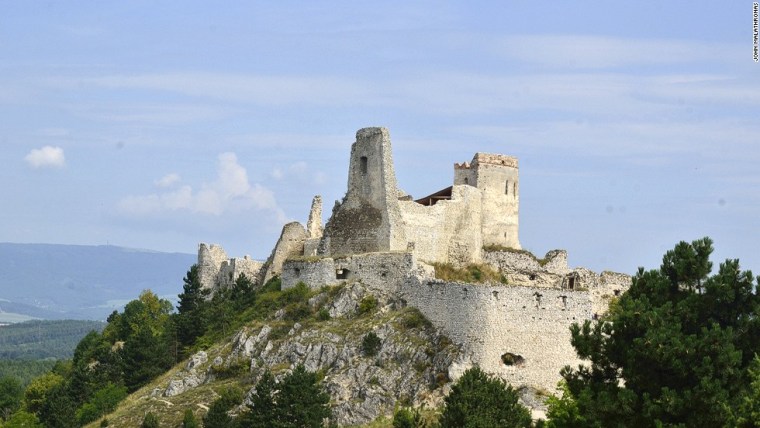
140812163037-blood-countess-slovakia-castle-horizontal-large-galleryMy grandson Jack is quite active in theater arts in high school, so much so that his senior superlative award deemed him the most likely to win an Academy Award. Ironically his life plan is to become a computer specialist and his intent is to put his acting days to rest while attending Texas A&M University, so the probability that he will fulfill the prediction regarding his thespian abilities appears to be slim to none, unless he uses his computer skills at Pixar one day.

Jack’s final role will be in an original one act play written by his teacher about a Slovakian, Countess Elizabeth Bathory, believed to have been one of the most prolific serial killers in history. In a twist of irony she lived in the very town, Cachtice Slovakia, where my grandfather, Pavel Uhrik, was born. As was common in that part of the world well into the twentieth century, the ruling class held sway over the peasants to such an extent that the common folk lived in dire want and virtual obscurity. If a woman living in a castle hired one of them to work for her and then that laborer disappeared few would have thought much of the incident, especially in medieval days. Life for the vast majority of Slovakians was a dreary affair with the quest for work and food always the main concern well into the twentieth century. Little wonder that my grandfather Pavel Uhrik ultimately chose to immigrate to America just before the outbreak of World War I.

When I study the history of Slovakia I begin to better understand Pavel and why he chose to live his life the way he did. He came from a highly stratified political culture in which landowners held sway over the majority of the population. While the wealthy owned vast areas of land, their workers were tenants subject to the whims of their masters who all but owned them. They often lived in small cramped huts without running water or electricity. Hunger stalked them like a marauder. Few had the time or the means to pursue education beyond the fifth grade so among them there was an exceedingly high rate of illiteracy. The very conditions that made their lives so miserable also made them targets of prejudice. Without opportunities for change they either resigned themselves to the hopelessness of their lives, or found a way to leave their dreary situations behind by becoming immigrants to places like the United States.

I never met my grandfather but I heard countless conflicting stories about him. He was proud to be Slovakian but even prouder to be an American. His children knew little about his past life because he tended to be secretive which is true of many immigrants. In retrospect it seems likely that his former life had been so harsh that he found little to boast about. He was a practical man who believed in moving forward rather than looking back. He would have had little reason to speak of a time when he lived in miserable and perhaps even humiliating conditions.

Pavel was also an exceedingly stoic man. He worked hard everyday to provide for his family and almost furiously rejected even acts of charity. Perhaps accepting gifts or money that he had not earned made him feel too much like owing something to another and he fiercely insisted on maintaining the freedom that he had secured in his new country. He paid cash for every item that he purchased and carefully saved from his small salary so that he might build a home for his family. He purchased land and livestock and boasted that in America he was a man of substance, something that might have been impossible to achieve in his old country.   

He filled his home with books, a grand luxury and sign of his personal success. He insisted that his children take full advantage of the educational opportunities that were afforded them. On Sundays he often read to them from the many volumes that he collected. He insisted that their futures were to be found in learning and hard work. He noted that he was the master of his own destiny as they were as well, and that nobody makes it anywhere without effort.

He was not always treated well by his fellow Americans nor were his children. They endured taunts and were victimized by misunderstandings caused by their cultural and physical differences. He counseled his children to ignore the slights and to prove themselves with positive accomplishments. There would be no whining or self pity allowed in his home. They were to hold their heads high and be satisfied that they had a safe, if very small home, and food on the table every single day. While he never alluded to want in his native land, there was an understanding among his children that they were quite fortunate in the grand scheme of things.

All of the aspects of having made it that most probably had been missing in Pavel’s early life were found in his great adventure in America. He was eternally grateful to the country that had made his existence and that of his children so much better, even when its treatment of him lacked hospitality. He knew all too well how horrible the alternative would have been and so he counted his blessings rather than focusing on the imperfections. His children would follow his lead in this regard, urging all of us from the third generation of Americans to appreciate our good fortune and to abstain from comparing ourselves to others.

Our own children and grandchildren are now so distant from the realities of Pavel Uhrik that they are hardly able to imagine their great great grandparent’s worldview. The extended family has become so successful and so Americanized that few would think that a little over a hundred years ago the founder had sailed away from a life without prospects to one with ill defined but exciting promise. He had moved from a town in which a wealthy woman was free to murder almost six hundred innocent souls simply because nobody had enough energy to check on the nameless peasants whose lives had so little value that they easily faded into obscurity.

Now Pavel’s great great grandson Jack will play the part of a man determined to change the fate of the unwashed souls who were being so horrifically tossed aside in his ancestor’s old land, someone who stood up to a system that was so unfair. Because Pavel took a courageous risk, Jack is well on his way to fulfilling his own dreams. He has both benefited from and taken advantage of the opportunities that were a gift handed down through the generations from Pavel. In a twist of fate the circle of life begun so long ago has returned to it’s beginning and provided an opportunity for all the sons and daughters of Pavel to give thanks that we are exactly where he might have dreamed that we would one day be.

The Colony

historic-colony-map-smMy husband still owns a house that his grandfather built in Houston in the nineteen thirties. It is on a tract of land that was part of the original Stephen F. Austin Colony that was deeded to Mike’s family before Texas won its independence from Mexico. The Sharman family traveled to Texas from Georgia in the hopes of starting a new life after experiencing hard times in a south dominated by large landowners. The parcel that they purchased lies just north of what is now downtown Houston and is bordered by Interstate 45 and Cavalcade Road.

When the Sharman’s first came it was wooded and undeveloped. They built a homestead and did some farming, never thinking that one day their place would be located in the fourth largest city in the United States and the second fastest growing metropolitan area. At the time that they arrived Mexico was hoping to develop the large swath of land to the north that was mostly wild and barren. They made a deal with groups like the one to which Austin belonged to provide low cost grants to anyone willing to settle down and develop the land. The Sharman family was willing to risk everything for a new start.

They used to own an area that included the place where the freeway now sits but that was taken by the state when it was deemed to be a good route for a major highway linking Houston to parts north. Mike recalls playing in the woods that lead down to the bayou when he was a young boy but that was before there was a concrete ribbon obscuring the once pastoral view. Later he rode his bicycle on the unfinished ramps while I-45 was being constructed. Sadly the finished roadway changed the feel of the neighborhood forever.

I often laugh whenever I read articles about that part of Houston. Nobody seems to realize the real history of the area. They speak of developments that happened long after my husband’s clan arrived in a time before there was even a Republic of Texas. Over the years much of the property has changed hands but Mike, his grandfather and his mother have kept the family legacy intact against all odds. In fact it was not until the nineteen eighties that one of them did not actually live on the land that has so much historical significance.

My mother-in-law was quite proud of the fact that her ancestors had been among the first settlers in what would eventually become the state of Texas and the city of Houston. She had so many stories of what life had been like for the pioneers. Those tales were handed down to her from her own grandmother who even told of her dealings with the native Americans who lived nearby as neighbors. We still have photos of family members standing in front of log cabins looking like visitors from the wild west. They worked hard and somehow overcame diseases, floods and many obstacles that might have driven away lesser souls. In many ways my mother-in-law became the unofficial historian of their trials and tribulations, a task that she enjoyed enormously. She loved being a Daughter of the Republic of Texas and kept up a membership for her grand daughters as well.

Her father’s home was built shortly after she was born. It is a quaint looking cottage that speaks of a simpler time. It was so well constructed that it will probably last for many more decades. Some of the nearby homes are even older and were the living quarters of her grandmothers, aunts and uncles. It was really a family compound where everyone contributed to the well being of everyone else. Being the only girl back then made my mother-in-law the center of attention and while she was quite spoiled by her adoring relatives, their love made her into a strong, generous and confident woman.

I would have enjoyed meeting her kin but they had all died by the time that I came into the picture. They were a tough lot, particularly the ladies. The Houston area was a harsh environment back then with outbreaks of yellow fever being commonplace due to the rainy weather and swarms of mosquitoes. Somehow the clan tended to stay quite healthy and live long lives in spite of the less than inviting conditions that they had to endure.

The part of north Houston where the family land still lies became downtrodden over time and my mother-in-law eventually moved after she inherited an uncle’s house in the Heights which is a gentrified area that is home to artisans and professionals. It felt safer there than in the home that had always been her residence. Lately however her childhood neighborhood is slowly but surely being beautified once again. It even has a new name that would undoubtedly horrify my mother-in-law with its ordinariness, Northside Village.

A Metro rail line runs only a block or so away from the property and its construction has prompted new interest in a part of town that lies only minutes away from the central business district. There are nearby lots selling for millions of dollars and tiny nineteen twenties houses are inching up in price. For now nothing particularly exciting is happening on the old Sharman tract but there are those who insist that it will one day become high dollar real estate.

I love the house that my husband’s grandfather built and always have. I can almost see myself living there with only a few updates to make it more amenable to twenty first century living. It is almost like a dollhouse in its design and even better in the love and care that went into building it. Right now there is still a great deal of crime in the area and the future of the street is uncertain. It’s difficult to know if it will become yet another rediscovered jewel or be ignored as it has been for the last couple of decades.

My daughter and I dream of rebuilding a kind of family village there. She wants to use some of the land to create a modern home for herself and I would be content with staying next door in the older house. We imagine the two of us riding the rails to shop in downtown or to visit the Medical Center. We think of buying our produce in the open air of the nearby farmer’s market or enjoying the of view of the skyscrapers that loom on the horizon. We envision a rebirth of the place with my mother-in-law serving as our guardian angel. We both know just how much she treasured the legacy that belonged to her and now is owned by her descendants. From the time that I met her she dreamed of the day when her homestead would be loved once again. She died without witnessing a renaissance but insisted that it was near. I’d love to see that happen before I too am gone. There would be something quite special about returning to the land that made her ancestors so very proud. We modern folk are so prone to throwing out the old in favor of the new. How grand it would be to find value in a place that has meant so much to generations of Texans who so proudly called themselves Houstonians.

Forgiveness

lent-easter-2780As a young Catholic girl I observed lent with earnestness but not much thought. I received ashes on the first Wednesday of the season, abstained from eating meat on Fridays and made the grand sacrifice of giving up sweets of all kinds. In reality it wasn’t that difficult to do because we never had sugary things around our house. Anything like a piece of chocolate or a bag of cookies was a rare treat. The truth was that I simply carried on as usual but gave myself a pat on the back for being good enough to totally insure that no sweets would pass through my lips during the forty days before Easter.

As I matured I learned that a far better exercise during the lenten season was to reflect on the way in which I was leading my life. After all, that is what Jesus did when He traveled into the wilderness. I realized that following His example was a much better way of honoring Him. I spent more time reading spiritual tracts and designing plans for becoming a better person. One of the things that I thought about a great deal is forgiveness. Jesus Himself made the ultimate sacrifice of His life to atone for our sins. Even as He hung on a cross He forgave those who executed Him along with one of the thieves who was crucified next to Him. It’s always been difficult for me to even remotely imagine the betrayal, abuse, brutality and pain that Jesus endured at the time of His death and yet His final act was one of compassion and absolution. In the death of His humanity He taught us how to be more Godlike.

It is so difficult to set aside our anger and hurt in a willingness to completely pardon someone for transgressions against us. We hang on tightly to our negative feelings, nursing them as though they somehow make us stronger. We are scornful of those who in their seeming weakness seek to bind old wounds and provide second chances. Ours is a world that seems to prefer unrelenting warriors over those who offer mercy. Peacemakers are not as much in vogue as crusaders. Diplomacy is trumped by force.

Our politicians only rarely dare to stand for what they personally believe to be right rather than adhering to a prescribed political platform. These days it is odd to see someone going against the groups to which they belong. We can’t seem to find enough understanding to realize that very little that happens in real life can be easily defined by hard and fast rules. We have all too often distorted the messages of the messiahs who created various religious sects. The idea of unconditional forgiveness is sometimes deemed to be hypocrisy, cowardice, a lack of real moral compass. Many among us have become judgmental people with unwaveringly self-righteous indignation. Thus is the root of so much trouble in the world today.

We insist that our republicans and democrats battle with one another rather than unite in common causes. Anyone who even suggests that they might find ways of compromising is cashiered out of the discussions. We prefer a stew of anger, distrust and sometimes outright hatred. We have religious groups who easily condemn and ostracize certain individuals and groups rather than attempting to demonstrate acceptance of differences. They preach a kind of ugliness that seems to counter good faith. Friends and family members turn their backs on one another, unwilling to forgive and forget slights and misunderstandings. They grow apart and turn unkindness into hatred.

All of the rancor and distrust is toxic and in its most extreme form leads to killing an innocent man on a cross for His thoughts or placing people in gas chambers for their religious beliefs. It leads to murder and war. It destroys relationships and rips families apart.

Perhaps the season of Lent was meant more than anything to be a time for forgiveness and mercy, a time when we work to repair rifts that have occurred in our lives. It is so easy to love and embrace those who think like us and agree with us. It is far more difficult to feel a sense of kinship with someone who has been cruel or in opposition and yet our challenge is to reach out to those very people.

Those of us who are Christians believe in our own redemptions, given as a gift to us from our Savior. Somehow we too often see ourselves as being exempt from a need to pardon our fellow men and women as well as ourselves from the imperfections that we all possess. One does not have be religious at all to understand the necessity of working together in the community of mankind. If we accept the complexities of living and admit that everyone makes mistakes we are more likely to demonstrate a willingness to embrace even those who have hurt us in the past.

We don’t have to be naive in attempting to reach out to our transgressors. There are certainly situations in which it is all too apparent that nothing that we do will overcome some evil other than imprisoning or extinguishing it. We had to defeat Adolf Hitler or he would have continued his murderous rage but there is little reason for us to push a former friend out of our lives simply because he or she has disagreed with our philosophies.

I have to admit to feeling unfiltered hate for George Wallace when I was young. He always seemed to be snarling and spewing the ugliest forms of racism. He was as despicable as anyone who ever governed others. I felt no sympathy for him when his wife died of cancer nor did I shed a single tear when he was gunned down in an assassination attempt that left him wheelchair bound for the rest of his days. Somehow I reveled in the karma that seemed to overtake his life with a vengeance. I hoped that he would rot away in pain and suffering but that is not how his story ended.

Wallace was unable to care for himself. That job was left to a black man of great faith and spiritual strength. He catered to the former governor’s every need and he also demonstrated a kindness of spirit that was unlike the ugliness of his boss. Day after day he treated Wallace with dignity and respect and in those interludes the two men began to talk and form an unlikely bond of friendship. Somehow the caretaker transformed the very soul of George Wallace until one day all of the former governor’s hate was stripped away by the love that had been accorded him. In a dramatic turn around Wallace asked his valet to take him to a church to speak with the very people whom he had once derided as being inferior and unworthy of even basic human rights. At that moment he wanted to apologize and so he ultimately did. It was unconditional love that brought about his stunning change of heart and it taught me that mercy often has the power of changing even the most hardened heart.

Goodness has always had more power than evil. In this season of lent rather than giving up something perhaps it is best that each of us make the biggest sacrifice of all, setting aside disagreements and forgiving someone who has heretofore been a source of anger and dislike. Think of how much change would occur in just forty days if every single one of us were to find enough compassion to mend even one relationship. Forgiveness is the sacrifice that we should all seek.

A World At War

usa-la_-nola_-wwiimuseumIt’s difficult for most of us to even imagine what the world was like in 1941. The United States was not thought to be a powerful force. In fact it was ranked eighteenth in the terms of military might. The country was only beginning to recover from the effects of the Great Depression. Most of the country was rural and there were still a majority of homes without electricity or indoor plumbing. The mood was isolationist as the populace here watched events unfolding in Europe with horror but an intense belief that our nation needed to stay out of the fray. My mother was fifteen and my father eighteen as December began that year. They were yet to meet one another and naively unaware that life for every American citizen was about to change dramatically.

My mother often spoke of December 9, 1941 when the Japanese bombed the American fleet in Pearl Harbor. It was a fearful and shocking moment. She along with her countrymen listened to President Roosevelt as he reassured the nation. She remembered how quickly people answered his call for all Americans to participate in the coming war effort. She saw her brothers enlisting in various branches of the Armed Forces one by one, and saw high school friends leaving the classroom as soon as they were old enough to lend their help to the cause.

World War II was like no other engagement in history. Its influence stretched across the globe, affecting people on virtually every continent. Here at home citizens of every age contributed in one way or another. Women who had traditionally kept the home fires burning took over manufacturing jobs. Industries were cranking out planes and ships and munitions at a fevered pace. Everyone rationed their use of critical materials, including paper. My mother-in-law often showed me the yearbook from her senior year of high school. It was thinner than a monthly magazine, made only of the cheapest quality pulp. It mirrored the reality of the time with row after row of photos of mostly young girls. The boys had dropped out of school and to join the fight.

When our troops first went to faraway places like northern Africa and the Pacific they were ill prepared to battle the well trained and experienced Germans and Japanese. They often found themselves overwhelmed and in retreat in the earliest forays. They learned on the job and became just a bit better as they slowly understood the demands of the new ways of fighting. I have often wondered how those of us living in today’s world might react to news of battlefield losses and situations requiring our troops to run for safety. Would we have the heart to continue the fighting or would we give up quickly? Luckily the generation who fought World War II was made of stern stuff. They were determined to do whatever it took to free Europe from the grip of Nazi Germany and the Pacific from the Japanese.

There was much at stake and the American people understood that they could not be deterred from seeking total victory. In that regard both Japan and Germany had greatly underestimated the will of our country. There are those who wonder if the world might indeed look very different today had the United States not allied with Great Britain and Russia in that great fight against fascism and tyranny.

The World War II Museum in New Orleans, Louisiana is a repository of the remarkable history of that era. It is filled with the stories of both the leaders and the common people who worked together to defeat the enemies and free the world from their dominance. With hundreds of photographs, artifacts, videos and research texts it leads visitors from the beginnings of the conflict to its horrifying end with the explosions of atomic bombs over Hiroshima and Nagasaki. It is a touching and personal journey that is honestly and beautifully told.

The city of New Orleans was chosen as the site of the museum because it was the birthplace of the the inventor of the Higgins boat which was used to bring troops ashore at Normandy on D Day. Mr. Higgins was already making shallow draft boats for fishing in the bayous and swamps when the military expressed a need for a military version of such craft. He was ready to design a larger boat capable of transporting troops. The Higgins boats that were manufactured in New Orleans have often been credited with helping to win the war in Europe.

It’s been seventy five years since our nation entered World War II. By the end of the conflict the United States was viewed as a major political power. With an infrastructure unharmed by the devastation of the war we were poised to enjoy an economy exploding with innovation and production. The soldiers returned to an exciting time that included creating a new generation of children that would become known as the Boomers. The United States was slowly but surely transformed by the building of a system of interstate highways that made travel from one ocean to the other quicker and more open to all people. The same spirit that drove the success in the war continued its inventiveness all the way to the moon and back.

Those of us who were the children of the men and women who endured the uncertainties of war would inherit the fears of the atomic age. We would wear dog tags for a time to identify us in case of a nuclear attack from the Soviet Union. We practiced air raid drills each Friday afternoon, crouching under our desks in wonder and confusion. Our generation would be drafted into a new and different war in Vietnam that somehow never made as much sense as the one our parents had fought. We would march for the civil rights of our Black neighbors and those of us who are females would blaze new trails in education and work.

World War II was never just a long ago historic event to us. We saw those photos of our dads and uncles in their uniforms. We heard the stories of life under siege. We watched the old black and white movies that celebrated the accomplishments of our generals and troops. We saw the sadness in the eyes of those who lost loved ones in places so far away that nobody had even known that they existed before the battles. We were the link between the past and the present, the generation that watched the world change at such a rapid pace that it was sometimes difficult to keep up. We truly appreciated what the brave men and women of the world endured to secure a time of promise and opportunity for us.

Few people in 1941 might have imagined a nation so filled with the bounty that we now have. Ordinary citizens enjoy lifestyles that once belonged only to the wealthy. We live in modern homes and watch our big screen televisions that bring the world into our living rooms. We travel the world and study at universities at a rate that our parents never saw. We have much for which to be thankful and most of it resulted from the brave and unselfish acts of a generation that chose to defeat the forces of pure evil. Their story is on full view seven days a week at the World War II Museum in New Orleans. Every one of us should take the time to absorb the importance of the stories that are told there and to thank the veterans of that war and those who serve today to protect us.