
You Just Came Later

past-future-750828

I don’t think that I have ever watched one of Bill Mahr’s shows. I know about him mostly from hearsay, and in that regard I often find my thinking at odds with his. Nonetheless he sometimes hits the mark with his commentaries, and recently I found myself mentally applauding his commentary on one of his shows. It were as follows:

 “People need to stop pretending that if they were alive back when, they wouldn’t have been the same asshole as everyone else. You would have driven without seatbelts and drank when you were pregnant… Because woke-sight is not 20/20, and you don’t have ESPCP: extrasensory politically correct perception. If you were around in the 1980s, you would have worn those horrible colors and the big shoulder pads. You just would have. You’re not Nostradamus. And if you were around in the 1780s, and you were rich and white, you likely would have had slaves. … Stop being surprised we used to be dumber than we are now. The humans of tomorrow will be horrified by us…Do you really think future generations will look at what you’re doing…and say, ‘That was the moment civilization peaked. We can add nothing more?’ You’re not morally better than your grandparents, you just came later.”

The truth is that we humans are imperfect now, always have been, and always will be. We are influenced by the time and place in which we live. We learn from the people around us and evolve over time. Over the course of my seventy decades on earth I have changed the way I think and live multiple times. My beliefs have been influenced by new information and innovations, which is the way it has always been for mankind.

I am from the generation that was the first to grow up with television. It’s reach into hearts and minds is incalculable but certain. As a teen I watched the walls of racial segregation being kicked down. As a young woman I witnessed the landing on the moon and more equal opportunities for women. It was my generation that halted the boom of babies with birth control. Life has become ever more comfortable for larger and larger numbers of people during my lifetime. I have things in my home that were the stuff of dreams when I was born. Polio and other dread diseases have been all but wiped out over my seventy decades. I’d like to think that we have rid ourselves of injustices that were once quietly tolerated. Nonetheless we have made mistakes, just as our parents and grandparents did. Ours is an imperfect rendering of the world and I’d like to think that future generations will not judge us too harshly but will instead be willing to balance our offenses with the good things that we have done.

Our children and their children are nudging progress forward much as every generation has, but they are also no doubt doing things that may one day be questioned by people of the future. Mankind’s journey is one of incremental progress which is more often than not somewhat imperfect. All we can hope for is that the miscalculations that we make will not be so disastrous that they set humanity back.

In the long history of civilization there have been moments of renaissance and those which have been a blotch on our progress as people. On the whole the arc has lifted us upward toward wiser and more thoughtful ways of meeting the challenges that we face. It does us little good to waste our efforts on indicting our ancestors when we will never truly understand what their world was actually like.

I’ve searched fruitlessly for information on my paternal grandfather. All that I know about him comes from things that he told me. He always said that he was Scots Irish, a term that I never really comprehended. Only recently have I learned about the journey of people from Scotland who were encouraged to leave their homeland to settle in northern Ireland where their culture and characteristics became a blend of English, Scottish, and Irish thinking. They tended to be independent souls who were speaking of liberty and freedom long before such ideas came to fruition in the new world known as America. They were often buffeted by circumstances of poverty and political clashes that lead them to wander from one place to another in search of a modicum of peace. My grandfather’s people found their way to Appalachia.

Grandpa often spoke of growing up in an isolated area devoid of any sort of modern conveniences. It was hot in the summer and cold in the winter but he and the grandmother who raised him learned to adapt to their situation. The world of his boyhood was nothing like the luxury that he would eventually enjoy by the end of his one hundred eight year lifetime. He was a living witness to the history and evolution of mankind over the course of a hundred years. He marveled at what humanity had accomplished and focused more on success than failure, because the evidence convinced him that we the people may falter, but we eventually find a way to make things better. That slow progress made him a relentless optimist.

We all know the problems that we face. We all see things that we would like to correct. Grandpa and Bill Maher are correct in believing that we need to understand that we are but workers in the job of moving the world forward. We will have great victories and we will make great blunders. In eschewing self righteousness we are more likely to help forge a future that will move us closer to the perfection that we may never realize, but that we nonetheless dream of achieving. We are no better or worse. We just came later.

Don’t “Love” Things

man in bus
Photo by Pixabay on Pexels.com

We are in one of those cycles where everything we own is breaking down. In just the last few weeks we’ve had a repairman out to replace the heating element in our oven and even as I write this we are replacing our nineteen year old air conditioning system. What’s truly funny is that most of the houses on my block were built in the same year and now I watch the various trucks bringing specialists to repair or replace items similar to those with which we have also had problems. All things wear out. It is inevitable.

I went to Catholic schools and I recall the nuns telling us that we should not love inanimate objects. It was supposedly bad grammar to imply that we felt an emotional attachment to stuff. Instead we were instructed to simply say that we liked things or enjoyed owning them. I don’t know why I’ve always remembered that admonition. It causes me to think a bit more intently about becoming attached to possessions. In the final analysis they do not define who we are and we most certainly can’t bring any of them with us when we die unless we choose to build burial chambers like the ancient Egyptians. Even then none of our belongings do anything other than just sit until some archeologist digs them up. Perhaps the nuns were right to correct our thinking by requiring us to use words indicative of giving objects less value than people.

During a recent trip to the Texas Hill Country I walked through a number of antique shops with my daughter and grandchildren. We enjoy perusing the aisles of things that once belonged to strangers. I often find myself wondering what their stories were and why they eventually ended up being sold rather than treasured. Perhaps there was just too much left behind when some soul died. Now they sit in dusty warehouses bearing price tags and waiting for someone to find enough interest in them to take them to a new home. There is something a bit dreary about that, and yet I also see folks smiling with delight if they find an item that tickles them. I suppose that recycling yesterday’s treasures can be a good thing.

My own home is filled with objects that once belonged to a departed family member. I have become a kind of curator for the history of the family. I inherited that task from my mother-in-law who was able to tell a story about most of the items that she owned. Now I am the keeper of the tales. My grandchildren have suggested that I take photos and attach comments or create a video that will alert them to the personal value of the various items that fill my rooms. I suppose that means that they too would like to keep some of the more special things, not so much for value but as reminders of the journey of our family over time. With my two daughters and seven grandchildren I would like to think that the most important of the pieces will find a new resting place once I am gone. Perhaps my nieces and nephews might enjoy a trinket or two as well.

The things are not the people, but they nonetheless tell a story of them. Through the various objects I get a glimpse of the times in which they lived and the colors and styles that they liked. I can run my fingers over a table top or hold a dish and feel a connection to the past in knowing that my ancestors once used them. I find a kind of spirituality in the scratches and wear and tear. It is as though a tiny part of the people who used them lingers.

I now have the oak table on which my mother-in-law served me tea on so many Sundays. She imparted her loving wisdom over steaming cups of Earl Grey. She taught me so many valuable life lessons as we sat together. She outlined the history of her life and that of her family, a group that was adventurous and hardy. Her aunt had owned the table before her, and prior to that it had belonged to a lady who sold her house and all of its furniture so that she might go live with her daughter. That table has had a great run and even now I use it for big family gatherings and my own little tea parties. It is so much more than just a hunk of wood.

My mother and father were married at a little church in College Station, Texas near the campus of Texas A&M University. They had no guests or receptions. It was just the two of them pledging their love to one another. They moved into an upstairs bedroom that they rented from one of the professors and began their lives together with little more than a wing and a prayer. My father began to purchase silver place settings for my mother one piece at a time according to what he was able to afford. He chose a pattern called “First Love” for her and little by little presented her with enough to use for a nice gathering. The very last thing that he bought for my mother before he died was a set of ice tea spoons that he was going to present to her on their eleventh wedding anniversary. I remember that my mom and I both cried when she opened the lovely box wrapped in silver paper. To me that silver speaks volumes of my father’s love for my mother and the thoughtfulness that was so much a part of his character. The set is one of my most precious treasures and it gives me great joy to share it at special dinners with family and friends.

I have a small collection of enamel ware that came from my Slovakian grandmother. She used the bowls each Christmas Eve to hold oranges and nuts for our annual party at her house. When she died my mother and her siblings allowed me to choose a few items from her home. I took a couple of books that had belonged to my grandfather and those enamel bowls and coffee cups that will forever remind me of her.

So while I agree that we should not love things, I also know that some of them are incredible keepsakes that have far more meaning than might be apparent. I genuinely hope that the most wonderful among them will never be relegated to a dreary antique store waiting to be enjoyed once again. I’d like to believe that their stories will live on in the homes of my children, grandchildren and maybe even my great grandchildren. They were once rather profoundly used in moments of great love by the people who came before me, and that is what makes them pricelessly meaningful. 

The Old West

virginia-city-940x624

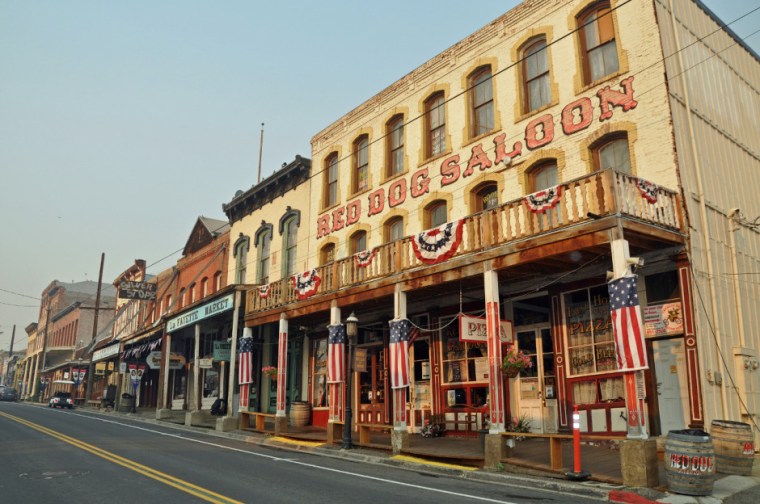
I grew up watching westerns with my Uncle Jack. I loved all of those shows about the old west but perhaps my favorite was Bonanza with its stories about the Cartwright family. Hoss and Adam and Little Joe were heroes to me and I loved the tales of their adventures. On many an episode they wandered into Virginia City to take care of business or meet up with friends. I was fascinated by the lifestyle of those long ago towns where folks endured hardship in search of gold or silver or some better way of life. Imagine my delight when our recent travels took us to the real historic Virginia City in Nevada just outside of that state’s capitol, Carson City.

This was once the site of a booming gold rush town. The decaying remnants of the old mines still litter the hillsides in a haunting way. They serve as a reminder of the ebb and flow of booms and busts in the story of mankind. Once they were alive with frantic activity designed to pull riches out of the earth. Now there is little more left than worthless mine trailings and rusty tin walls.

The road into Virginia City climbs through the hills along a paved highway that was no doubt a muddy dirt trail that people from across the globe traveled in the latter half of the nineteenth century in search of opportunity. Most of the buildings in the town date back to the glory days after the 1849 discovery of gold. An old school house tells of the families that came and a saloon is evidence of a different way to create wealth through a more insidious form of entertainment. The buildings are alive with history and seem to be whispering that if one only tarry for a time the secrets that are buried there might be revealed.

As we drove along the main street of Virginia City I found myself feeling the spirit of its settlers of old, people hoping against all hope of finding the mother lode or earning enough to survive by providing services of one kind or another. “Who were the folks who traveled here?” I wondered. What motivated them to leave everything they had ever known to travel to this desert like place where there were no guarantees that their efforts might be rewarded? What dangers lurked? How many if them left broke or forever changed?

We like to romanticize the old west but it was truly a harsh existence. There were many dangers not the least of which was being broken by the challenges. Somehow the folks who came here never thought that perhaps the land they were invading might already belong to Native Americans whose roots were hundreds of years old. They somehow assumed that they had a right to make claims of ownership without compensating those that they displaced. I truly wonder how they could not have known that there was something a bit wrong with their thinking, but then I wasn’t there. Humankind’s journey has been fraught with battles between opposing groups claiming ownership of land since the beginning of time.

Virginia City is a place where time seems to have stopped. It is a tangible piece of history that tells us a story of folks desperate to make something more of their lives. Fortunes were made and lost there. Lives were treated to elation and great disappointment. We have romanticized those tales and made them part of the tradition of the hero’s journey when perhaps they were little more than ordinary efforts to survive. Maybe back then it took great courage just to eke out a living from one day to the next, but there was probably very little glamor in any corner of places like Virginia City.

My paternal ancestors never ventured very far from the land east of the Mississippi River. It was my maternal grandparents eventually found their way to Houston, Texas from Austria Hungary. They had heard stories of a new kind of black gold, oil. While they never engaged in the search for the goo that gushed from the earth they understood that other kinds of services might be needed and they were willing to work long hours cleaning other people’s messes to provide a decent living for themselves. I suspect that their story is mirrored in the lives of those who set out to tackle the old west. Many never became rich but they found ways to work and enjoy a better lifestyle than they might otherwise have had. I suppose this is what people everywhere have always done.

We now debate whether or not this decision or that choice of our ancestors was right and just without ever knowing what peoples’ real motivations were. It is in reality a kind of self righteous judgement on our parts for we will never be able to truly understand what life was like or how the thinking of the past influenced people. Until we are able to walk in a person’s shoes we are only conjecturing as to their thinking and there is something rather presumptuous about that.

I am fascinated by the old west and all of history. Our human imperfections are in full view in the chronicles of the human story. The people who came before us made mistakes just as each of us does even now no matter how well intentioned we might be. We can never judge the actions of others without demonstrating some of our own imperfections. Perhaps it is best just to learn from them and to change our own ways rather than judging whether are not they were worthy of our respect. What happened happened in a world far different from our own. For now it’s just fun to visit the places where people once did their best to make life just a bit better for themselves and their families. It’s really cool to see vestiges of how they lived and to realize the scope of human efforts through the evolution of time.

It’s Nice to Remember

El PatioLike many big cities much has changed in Houston since I left my childhood home fifty years ago. My family moved a time or two until my father died and then we stayed in one place until my brothers and I were grown and finally gone.
The first place I remember was on Kingsbury Street just a few houses from South Park Blvd. which is now known as Martin Luther King Boulevard. Ours was a quiet and modern neighborhood that echoed the growth of Houston and other American cities after World War II. Our neighbors were young like my parents save for a couple of older folks here and there. There were a slew of kids with whom I played, and we were free to roam around all by ourselves even though some of us were not yet old enough to attend school.

The area began with little more than our subdivision and a U Totem convenience store where a man named Shorty regaled all of us with his humor and friendliness. Eventually one of the first ever shopping centers, Palm Center, was built just within walking distance of our house. It was like a wonder of the world to us and we spent many an hour wandering through the stores or just walking around gazing into the shop windows.

My father was doing well with his engineering career and he grew weary of driving a rather long distance to his job near the refineries along the Houston Ship Channel. His coworkers told him about a brand new area just a bit farther into the suburbs that was booming with progress and attracting great schools and a quieter form of life. Best of all it was only about ten minutes away from the plant where he worked.

Before long we were moving into Overbrook and an all brick home that my father and a builder had custom designed. Our place on Northdale sat close to a wooded area along Sims Bayou clustered among homes so new that they still smelled of fresh paint and just sawed wood. I was sad to leave behind my friends on Kingsbury Street but in no time I was riding my bicycle through the streets and playing with other children who would literally become friends for life. Ours was a kind of kid heaven that seemingly had no restrictions as we explored the Bayou and trudged through the woods.

The neighborhood was filled with young families just like mine and every house was teeming with life and possibilities. A bridge linked Overbrook with Garden Villas, an older area with huge lots and pecan trees around homes many of which had been built in the 1930s. Together the children from each subdivision filled the schools and sent up the joyful sounds of playtime that echoed happily into the open windows of homes not yet fitted with air conditioning.

My father was as changing as the city of Houston itself and before long we were following him to California and even bigger dreams. For reasons that I will never know things didn’t work out for him and within months we were back in Houston again looking at even newer and bigger properties. His untimely death changed all of our family plans, and my mother decided to move us back to Overbrook for the sake of continuity. There we would be able to reunite with friends and make new ones on Belmark Street.

Ours was a very happy place to be back in the nineteen fifties and sixties. We had little need to venture far from the confines of our neighborhood. All of the conveniences we needed were close. Eating out was still a kind of luxury, and even when we splurged now and again we had local favorites that we visited. Our mother took us to the Piccadilly Cafeteria at the city’s newest shopping mall, Gulfgate, where we were admonished to only order one meat and two vegetables or one meat, one vegetable and dessert. We usually chose the later.

I suppose our favorite place was El Patio Mexican Restaurant on Telephone Road. As kids we thought that their dishes were gourmet delights, especially the cheesy enchiladas. Since our mom was devoted to cooking healthy food for us, getting to deviate from vegetables was a treat.

I suppose that if I had to pick one food that I would be willing to eat over and over again it would be a hamburger, and back then I thought that the very best came from Chuc Wagun. There was no indoor dining there. Instead a clerk and a cook worked inside a tiny building designed to look like a covered wagon. The beefy guy who made the delightful sandwiches was gruff and married to his work. He grilled beef patties by the hundreds and chopped his onions and tomatoes like a Ninja warrior. The resulting burgers were pure heaven.

We bought all of our cakes at the Kolache Shoppe on Telephone Road. My mom loved the lemon ones and even years after we had all moved I would sometimes return to that spot to get her one for her birthday. The kolaches were rather good as well.

My brothers and I spent many a Saturday morning at the Fun Club inside the Santa Rosa movie theater. Our mom would drop us off with a quarter each which was enough to purchase a ticket and a candy sucker that lasted for the duration of the double features. The event included games with great prizes and films suitable for kids. It was a wonderland for us and a great break for our parents.

Most of the places that were so delightful back then are either gone or very different from what they once were. The neighborhood itself has a worn look and nobody would dare allow their children to roam freely anymore. It would be considered too dangerous. The Disney like atmosphere that defined my youth is now just another memory from my past. When I take my grandchildren to see the places where I played and grew, they have little understanding of the lifestyle that I describe. Theirs has been a more structured way of doing things, a routine of play dates and adult monitored activities. I suppose that my stories of southeast Houston don’t ring true to them as they see fifty years of change that have transformed the places where I lived.

My friends and I all agree that ours was a glorious time to be young. We were innocent and unafraid as we roamed together finding adventure. By the time we were young adults we learned about hardships and injustices that were unfamiliar to us. We revolted as a group against the signs of racism and unfairness that we finally saw. Our city grew i and grew and grew in the name of progress consuming much of what we had experienced in our youth. Now and again we like to look back to a time when we didn’t have a care in the world. Its nice to remember.

I Needed This Reminder

MLK_500x500

One of the best aspects of being retired is that I now have time to ponder more than I did when work required me to adhere to a strict schedule. I am able to read more and even to indulge in moments of sitting in silence with my thoughts for long stretches of time. I still serve my many grandchildren with my educational expertise whenever they require a bit of guidance or encouragement with their studies. Each summer I read the same books that they are assigned for their pre-advanced placement and advanced placement classes, so that I might help them to analyze and discuss the works when they return to school in August.

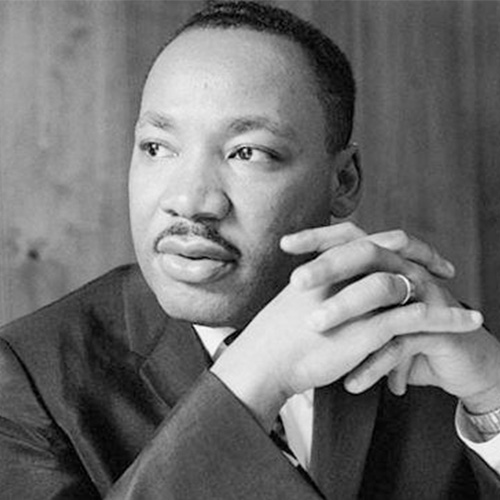
One of my grandsons is reading Martin Luther King Jr. I Have A Dream: Writings & Speeches That Changed the World edited by James M. Washington. When my daughter requested that I familiarize myself with the text so that my grandson and I might talk about its implications I was more than eager to delve into the heart of the essays. I have long considered Dr. King to be one of the greatest orators and most influential leaders of the twentieth century and indeed the entirety of history. He is a hero of mine, one of the people I would love to meet when I eventually make it to heaven.

I grew up in the era during which Martin Luther King Jr. did his incredible work. In the year I was born Dr. King was ordained a minister following in the footsteps of both his father and grandfather. He had been a child during the Great Depression, growing up in Atlanta, Georgia when segregation was still very much a fact of life for blacks just as it still was for most of my own youth. In 1954, when the Supreme Court ruled in Brown v. Board of Education that racial segregation was unconstitutional Dr. King was the pastor of the Dexter Avenue Church in Montgomery, Alabama and I was about to head to the first grade.

A year later, in 1955, Rosa Parks famously refused to surrender her seat on a Montgomery bus to a white man, an act for which she was arrested. Her brave action led to a boycott and Martin Luther King Jr. was elected president and voice of the efforts to integrate the buses in Montgomery. By then I was joining droves of Baby Boomer children in second grade classrooms that were still mostly segregated in spite of the earlier Supreme Court ruling. I would overhear rumblings of discussions from my father and grandfather who believed in those days that children should be sent from the room when politics were the subject of conversations. I was a nosy child who would hide behind a wall listening to their voices as they spoke of the coming changes.

In 1957, President Eisenhower federalized the Arkansas National Guard to allow nine black children to enter a previously all white school in Little Rock. I did not watch or witness the historic moment on television back then, but I vividly recall the many times that my dad and granddad talked about it when we visited my grandparents’ farm in Arkansas. That year Martin Luther King Jr. was elected as president of the Southern Christian Leadership Conference and  the reach of his crusade for justice widened. I would enter the third grade at the same time that those little children so bravely struck a blow for freedom in Arkansas. I was not totally unaware of the importance of that school year in the struggle to end segregation but I would not be affected by it in the little bubble that was my neighborhood.

The work to break the hold of Jim Crow laws and segregational policies continued throughout my elementary and middle school years. By the time I entered high school the Civil Rights movement was in full force and Dr. King had become one of its most admired voices. The concept of non-violent passive resistance was being used to integrate restaurants and universities and to expand the voting power of black citizens. Just before I entered my second year of high school the famous march on Washington D.C. captured my attention and I listened to Martin Luther King’s I Have a Dream speech with rapt admiration. I was hooked by its message and forevermore there would be no turning back to the ugliness and injustice of segregation for me. I was a devoted disciple of Dr. King and would hang on his every word and action. His influence over me would be enormous.

Just before I entered my senior year of high school President Lyndon Johnson signed the 1965 Voting Rights Act. Sadly the arc of justice was still far from complete. In college I would become more and more passionate about causes of equality and fairness. My generation was literally taking to the streets to protest all signs of legally condoned injustice. The laws of separate but equal were no more, but the seeds of racism still grew like weeds and I was eager to pluck them wherever they grew.

In the spring of 1968, I was planning my wedding when I heard the news that Martin Luther King Jr. had been assassinated in Memphis, Tennessee. I had been washing dishes when the word came and I remember slumping onto the floor in front of the sink where I sobbed uncontrollably. I was devastated beyond words and wondered how our country would be without the conscience and profound thoughts of this great man. His insights stay with me and guide me for the next fifty years of my life.

I am a seventy year old woman now. Martin Luther King Jr.’s words and influence have been a defining force for me even to this day. Reading his speeches and essays once again has brought me to tears and helped me to consider both the progress and the difficulties that remain in the long fight for justice. We have yet to achieve his dream, and of late we seem even to have slid back into a kind of ugliness that he had hoped to one day eradicate.

If Dr. King were still alive today he would be a very old man. I wonder what he might say about the state of our union. There are certainly things of which to be proud, but the work is not done. Would we be farther along in our progress if we still had his voice of reason and love, or would he be discouraged that we still have remnants of violence and hate? Whatever the case, reading his words has enlivened my own spirit and told me that the road to making his dream a reality is a worthy albeit difficult pathway.

As I write this I am gratified in knowing that my grandson is unfamiliar with concepts of segregation. I love that he innocently sees no color in his friends. The fact that I have to explain the evils that Dr. Martin Luther King Jr. spoke of indicates to me that we have indeed moved the arc of history ever closer to the ideals of agape which Martin Luther King so eloquently explained as “an overflowing love which seeks nothing in return…when we rise to love on the agape level we love men not because we like them, not because their attitudes and ways appeal to us, but because God loves us. Here we rise to the position of loving the person who does the evil deed while hating the deed that the person does. With this type of love and understanding good will we will be able to stand amid the radiant glow of the new age with dignity and discipline. Yes, the new age is coming”      (Dr. Martin Luther King, Jr. Facing the Challenge of a New Age, 1957)

I needed this reminder!