
They Shall Not Grow Old

They Shall Not

For the Fallen

BY LAURENCE BINYON

With proud thanksgiving, a mother for her children, 

England mourns for her dead across the sea. 

Flesh of her flesh they were, spirit of her spirit, 

Fallen in the cause of the free.

Solemn the drums thrill; Death august and royal 

Sings sorrow up into immortal spheres, 

There is music in the midst of desolation 

And a glory that shines upon our tears.

They went with songs to the battle, they were young, 

Straight of limb, true of eye, steady and aglow. 

They were staunch to the end against odds uncounted; 

They fell with their faces to the foe.

They shall grow not old, as we that are left grow old: 

Age shall not weary them, nor the years condemn. 

At the going down of the sun and in the morning 

We will remember them.

They mingle not with their laughing comrades again; 

They sit no more at familiar tables of home; 

They have no lot in our labour of the day-time; 

They sleep beyond England’s foam.

But where our desires are and our hopes profound, 

Felt as a well-spring that is hidden from sight, 

To the innermost heart of their own land they are known 

As the stars are known to the Night;

As the stars that shall be bright when we are dust, 

Moving in marches upon the heavenly plain; 

As the stars that are starry in the time of our darkness, 

To the end, to the end, they remain.

Source: The London Times (1914)

Peter Jackson, perhaps best known for his brilliant work on The Lord of the Rings, has produced a stunning documentary using remastered film from World War I. He was given privy to hundreds and hundreds of hours of old films from that era along with a mandate to create something stunning, different. His final product, They Young Shall Not Grow Old, is a moving homage to the young men who so gallantly volunteered to fight in a war that they so little understood. It boldly demonstrates their bravery and their innocence in heartbreaking scenes that remind us of the treasures that are lost when we send our youth off to war.

Jackson had to first create a unified story from the millions of images that he found in the archives of the Imperial War Museum. He chose to focus on the stories from British men who had told of their personal experiences during World War I in an oral history project created in the nineteen sixties. Using only their voices and actual footage from the time of the war Jackson paints a portrait of bravery and fear as we follow the young men who began as naive innocents in support of their country only to learn how horrific battle can actually be.

Jackson’s challenge was to make the old footage more modern and easy to watch. Most of the film was in terrible shape, almost unusable in many instances. It was too dark or too light, blotchy and prone to appear jumpy. Using modern techniques Jackson and his team were able to adjust the speed, add appropriate colors and even create sound. The result was a stunning portrait of real individuals who brought the feelings associated with that war to life.

Jackson’s own grandfather participated in World War I and so his film was a labor of love for a man who in many ways became broken as a result of his participation in that awful chapter of history. The documentary demonstrates the humanity of the ordeal in the faces and voices of real people. Many of the men appear to be barely within reach of adulthood and yet they were to endure unbelievable horror in days spent in the trenches and the battles. Jackson pictures one group staring at the camera with obvious fear in their eyes and later notes that virtually all of them would die. It would be the last image of them alive.

Jackson brilliantly brings both the glory and the brutal reality of war to life in a way that no amount of acting is able to do. It is a stunning feat that will not soon leave my mind. Sadly the documentary will only be shown twice in December, at least at this point in time. I believe that it is such an important work that it will eventually become available to a wider audience. It is a film that every one of us should view.
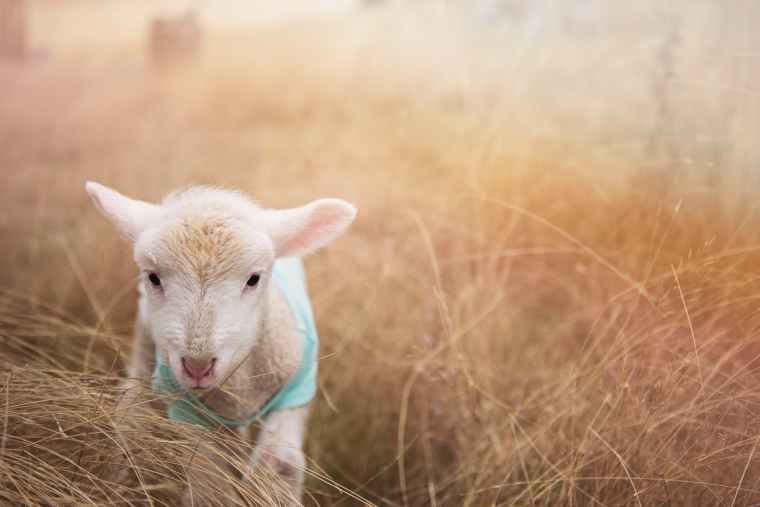

Peace On Earth

adorable agriculture animal animal photography
Photo by Kat Jayne on Pexels.com

We have a human longing for peace on earth, goodwill toward all people. Somehow it feels as though such sentiments are little more than an ideal, a dream, and yet we are driven to at least try to make the world a better place. Ironically much of the rancor that occurs as we do our best to create harmony arises from our differing interpretations as to how to achieve such a lofty goal. We are only too aware of limited resources and the role that they play in our everyday relationships. We desire to be fair, but we also have tendencies that drive us to protect ourselves and those that we love. The tension between wanting to be magnanimous and satisfying our need to feel safe has been the enigmatic force that pushes and pulls us, and often leaves us quibbling rather than working toward a common good.

History has demonstrated time and again that there are indeed very good people sacrificing themselves in the service of others, but there are also evil doers who care little for anyone but themselves. Somehow we have to be astute enough to identify who is who lest we fall for propaganda and promises that rely on our fears and our darker sides. At the same time we cannot be naive about the ways of the world lest we become martyrs to noble causes without the grit to overcome the darkest aspects of human nature. Progress toward the peace that we so desire sometimes requires defensive measures that invoke violence. Thus is the conundrum of human history.

Watching the news these days makes it very difficult to believe that we will ever again find a measure of calm. There are hot spots all over the planet, and they have nothing to do with climate but rather everything to do with our grievances. We have battles between rich and poor, this religion and that, the powerful and the powerless, male and female, the educated and laborers, one nation and another. It’s difficult to find a place anywhere on earth that is immune to the disagreements that result from our diversity of opinions. It can be quite disheartening to watch the rancor playing out even as we pray for love and kindness to be the order of the day. We wonder and worry about the future and what it may bring.

Then we witness the death of a very good person like George H.W. Bush. We have the opportunity to see the entirety of his life. We hear his philosophies and mull over his words. We realize that there is indeed reason for optimism. We see that in spite of sharing our own tendencies to make mistakes and wrong choices he managed to live a life mostly comprised of forgiveness, compassion and a willingness to adjust his course when he needed to rethink his ways of meeting the world. We realize that qualities like honor, service, devotion to family never really go out of style. We see that true courage is not brash or insulting, but rather quietly committed to a cause. We learn from a man like President Bush that being a leader means cherishing those that we lead. We find that embracing defeat makes us champions. Somehow in viewing the life of such a man we find the hope that we have been seeking.

I doubt that we will change overnight simply because we have been reminded of how to bring out our better natures, but somehow I suspect that we will pause long enough to rethink the course of our nation and our world. We will begin to remember what is most important and we may even learn to get along again. We will search for the good rather than focusing on grievances. We will ask not what others can do for us, but what we can do for them. Then we will be back on the path to peace.

Somehow we humans keep repeating the same choruses over and over. We fight for a time and then grow weary. We work together for a time and then grow jealous. We forget those who struggle and then remember to work as hard for them as we do for ourselves. The patterns seem to repeat themselves with regularity, but we don’t have to be caught in a wheel of fortune over which we have no control. We can become more peaceful bit by tiny bit, but it will require a willingness to open our minds and to be more forgiving,

I read a profoundly wise article recently that spoke to the idea that it is often our self righteousness that leads to the battles between differing factions. We fail to see the reasons why people believe as they do. Instead we condemn them for what we see as faulty thinking. We spew epithets at them and posture as though we are somehow better. The anger between each side only grows. Sometimes the most difficult stance that we may ever take is simply to be nice even when we are being misunderstood.

I think that this is the essence of the message left to us by Jesus Christ, and whether or not we believe that He was indeed a savior and the son of God His example shows us exactly how to behave toward one another. In this season that celebrates His birth we should learn about and think about His life because it was a model of what is best in each of us. If we do nothing more than celebrate Him as a great historical figure we should still emulate His way of life, for it was profoundly wise. He demonstrated how to find peace on earth good will toward men by embracing and forgiving even those who have wronged us. It’s a difficult task, but one that will lead us closer to the world we desire.

What’s In A Word?

blank business communication composition
Photo by Pixabay on Pexels.com

I get a big kick out of looking at all of the cute t-shirts in tourist spots like Estes Park, Colorado. Some of them are quite hilarious. On my most recent visit there I saw a shirt that made me roar with laughter. It featured two bears gazing down at a human camper who was unknowingly the subject of the bears’ conversation. One remark was, “Let’s eat. Bob.” The other was “Let’s eat Bob.” Thus noting the importance of punctuation.

Of course I chuckled over that one and would have instantly purchased the shirt but for the fact that it came in a putrid green color that made me look as though I had some kind of serious disease. Nonetheless, it made me think about how easily our words can be misinterpreted, especially in these days in which misunderstandings are so commonplace. One unfortunate word choice or misplaced comma can make a world of difference in how people view remarks. When dealing with the written word from times past it can become even more unsettling. We have a tendency to view commentaries from our own perspectives rather than taking the time to consider that there have been different ways of expressing ideas in different places and eras. What may seem just fine in a certain place or time, my appear to be rude or out of style in today’s world.

I’ve been reading all sorts of ridiculous claims from people who are finding offense in the strangest places. In one instance a national news and editorial outlet noted what they saw as blatant racism in the old Charlie Brown Thanksgiving special. The source of the angst was that Franklin, the little Black child, was sitting all by himself on one side of the table. I suppose that one might draw some conclusions about that, but the fact is that the character was introduced into the Peanuts family by Charles Shultz in honor of Dr. Martin Luther King, Jr. The intent of the cartoonist was to demonstrate that we are all one big family, not to discriminate. I feel relatively certain that Mr. Shultz would be appalled to think that his always loving cartoon might have offended someone.

I’ve also heard of people becoming upset with some of the classic Christmas stories and songs. Rudolph the Red Nosed Reindeer has come under particular fire for featuring bullies and because Rudolph’s father was ashamed of him. Those who complain about it miss the point that Rudolph eventually became a hero, demonstrating that differences are powerful, not something of which to be embarrassed. Even a small child seems to understand the moral of the story, but some adults are fretting over ideas that I don’t think there are really there. What I would suggest is that those who don’t like the story or the song simply choose not to watch.

I saw a number of comments on Facebook about how virtually every well known Christmas carol might be misinterpreted depending on one’s point of view. Santa Claus Is Coming To Town might actually show Santa to be a peeping and a stalker according to one way of viewing the song. I even read a story about someone who thought that White Christmas is a homage to far right extremists. Maybe those who think such things should watch the movie with Bing Crosby and Danny Kay to set the record straight. And so it goes,,,Deck the Halls insults gays, I Saw Mommy Kissing Santa Claus is too suggestive for children, Santa Baby is about gold diggers. It’s enough to make one run screaming from the room.

It all makes me wonder how often I have unwittingly insulted someone. I write lots of word all the time. It seems certain that I have probably made people angry when my intent has never been to do so. We live in very sensitive times.

I appreciate the classes that I took as part of my college studies. Most of my professors in English, History and Psychology classes emphasized the necessity of learning more about the lives of the people in particular places and times. Without that important background information we have no context for their actions and remarks. The world has definitely changed from one decade to another and with those evolutions have come different ways of understanding the exact same words and ideas. Grass used to refer on to the green stuff that grows on lawns. By the twentieth century it was commonly used to speak of marijuana as well was the term “pot.” The word gay once only meant a form of happiness, now it is used to refer to a group of people and their sexual orientation. We add words and meanings to our dictionaries constantly, but we too often ignore the original ways that people spoke. We forget history and react as though we are the first and only generation to inhabit the earth.

I suggest that people take a chill pill unless utterances are egregiously vile and meant to be that way. When I don’t like something I simply choose to eliminate it from my world, abut I also attempt to be understanding. It doesn’t bother me that some people do not believe in the same meaning of Christmas that is mine. I’m all for wishing people Happy Holidays, Happy Kwanza, Happy Hanukkah or whatever works best for them. Diversity is a beautiful thing, but so is a “live and let live” attitude. Let’s just spread love during this holiday and everything will be so much better.

The Stops and Starts of History

planet earth close up photo
Photo by Pixabay on Pexels.com

I suppose that I view the world a bit differently than the younger folk do. My seventy years on this planet give me a different sort of perspective. I am less anxious about the state of the planet than I once was, and I see time as a long continuum in which a few years here and there are simply time for the continual corrections that we humans make to our environment. Real change takes time, and often we never actually see the final product of our efforts. History teaches us that nonetheless we have a way of righting ourselves even after momentous upheavals.

I was reading that the sixth century might have been one of the most horrific in humankind’s timeline. It seems that a volcanic eruption and earthquakes around the world created a cloud that enshrouded the earth. During that time people in the Northern hemisphere lived in a frigid climate and literally endured dark days. Crops failed and there was widespread famine. To make things worse an outbreak of bubonic plague spread like wildfire during the same era decimating the population even more. Nonetheless people persisted and managed to rise from the ashes. It is a story that repeats itself in one form or another throughout the course of history.

With all of our flaws and imperfections we move forward, jolt backward, make mistakes and accomplish wondrous things. For the most part our intentions are good even when our decisions are bad. We sometimes get fooled by evil, but almost always crush the darkness that festers in our midst. We slowly find ways to be better, to do better.

My husband watches all of those programs on Netflix about the two world wars that threatened all of humanity during the twentieth century. One of them featured the stories of pilots in World War II who dropped bombs on German targets. For the most part their goal was to destroy military bases and industrial plants that produced arms. Toward the end of the conflict it had become more and more apparent that the only way to finally stop the Nazis was to hit them hard in the heart of their government in Berlin. There was much wringing of hands and gnashing of teeth before the Allies finally agreed to bomb the city. Everyone understood that civilians would be affected along with high ranking government installations. It was with grave doubts about the ethics of such a maneuver that the campaign began. While it was ultimately effective in ending the war and the slaughter, there were those who wondered if we humans had crossed a line over which we might no longer claim the high road.

I suppose that we might debate the pros and cons of almost anything that people have chosen to do. Ultimately the merits of our decisions lie in future outcomes. President Lincoln understood that ending the Civil War required a more committed military offense that would most certainly affect many lives badly. This very kind man had to use great force to insist on peace. The irony of such realities is illustrative of how difficult it is for each of us to know what to do in difficult times.

Our world faces many problems, but it isn’t the first time that this has been the case, nor will it be the last. I am confident that we will work our way toward solutions one way or another, only to discover new concerns as we progress. It is doubtful that we will ever achieve perfection or even come close to pleasing everyone, but we will certainly try our best to reach a kind of consensus. We may quibble and accuse one another of evil motives along the way, but eventually we will realize that our strength lies in using our differences to compromise and effect ever closer approximations to the perfection that we seek but rarely achieve.

There is a kind of hysteria that is breeding in our midst. I see evidence of it in the emails that somehow find their way into my account. If I were to take their messages to heart I would be a nervous wreck because they are designed to incite my anger and worry. What I know from experience is that we do not need or want to throw all caution to the winds and make hasty decisions and laws that are not grounded in consideration of many points of view. I have learned that it is almost always dangerous to follow a single way of thinking with the exception of certain principles such as the idea that murder is wrong. Even in that regard I have learned to ask questions such as, “Would it have been wrong to kill Adolf Hitler to stop his murderous rampage?” In other words even the most clearcut beliefs are wrought with exceptions. Thus it is to our advantage to consider the concerns of those who would express reluctance to follow a particular path. Ultimately, however, we have to choose some kind of resolution and that is when the imperfections become the most clear. We have to weigh the good against the bad, and often accept that not every aspect of what we hope to achieve will be perfect. It is likely that we ill need to go back at some time in the future to remedy the flaws.

Thus it is with life. Whether in the microcosm of a family or the reach of a government we humans attempt to bring order to the chaos that seems to stalk us. Just when we resolve one problem another arises. We must learn to have patience with ourselves and with each other. Most of all it is to our benefit to be understanding and willing to consider ideas that don’t fit exactly into our personal ways of viewing the world. Things will shift and change and work their way toward our mutual happiness. History has many stops and starts but we humans invariably move forward just a little bit more.

An Encyclopedia of Knowledge

books education knowledge encyclopedias
Photo by Pixabay on Pexels.com

Discovering something brand new is quite exhilarating, and with the Internet it is far easier to do ever before. There was a time when a family set of encyclopedias often formed the basis of new learning, and many a curious person spent large amounts of time scanning the pages of those glorious collections of facts and ideas. Even the old volumes that were somewhat outdated still offered a cornucopia of information about the world in a time when the only other alternative for vicarious exploring was the library. Many a child lucky enough to live in a house with a set of Encyclopedia Brittanica held a world of excitement from “A to Z” at the fingertips.

Of course those old collections of Wikipedia like information have gone the way of the dinosaurs making it less and less necessary for young children to learn how to spell “encyclopedia” from Disney character, Jiminy Cricket. The Internet has taken the place of those rows of volumes that grandly announced that certain homes were purveyors and supporters of knowledge, and the extravagant investment in companies like Britannica or Compton or World Book was physical proof of dedication to learning.

There were often installment plans for encyclopedias back in the day. Patrons would purchase one volume at a time on a monthly payment plan. Each beautifully bound book would arrive along with a bill. My own father being consumed with a devotion to knowledge, books, and libraries had signed on for a set of Compton encyclopedias that were of dubious age by the time my brothers and I had learned to read. Nonetheless, most of the historical information was sound, and they became a kind of centerpiece in our family library that was lovingly stored in bookcases that lined our hallway. When my dad died, purchasing books became a luxury replaced by regular visits to the library. The encyclopedias became cracked and the pages began to rot. At some point my mother must have decided to divest herself of them because I don’t know what eventually happened to them.

Now the Worldwide Web is my go to source of quick research. As with the old books that I used, I have to be a bit wary of what I see, and I must check data against multiple sites. I find that there is always at least one address that contains quite accurate and up to date facts. It’s like living inside the great library that once graced Alexandria. I can lounge in my pajamas and munch on my breakfast while traveling through a virtual universe. Nothing is beyond my scope, and I revel in the excitement of it all.

I often think of my father and how intrigued he might have been by the technology that makes it so easy and affordable to discover faraway worlds and cultures. A good laptop provides more data at a far lower price than even the best encyclopedia. I can almost picture my dad surfing from one topic to another and enjoying all of the latest innovations with the same glee that he demonstrated for his prized books. He was a futurist who enjoyed reading about travels to the moon in an era in which such thoughts seemed to be the purview of dreamers. He had a wanderlust that he satisfied with his vacations and subscriptions to The National Geographic Society. He devoured literature and history, and never seemed to be able to find enough reading material to satisfy his voracious appetite. Having so much available with a few strokes of his fingers on a keyboard would have no doubt made him as giddy as a child on Christmas day.

Like my father I am perennially searching for interesting new ideas, and my trusty laptop is one of my most valued possessions. It takes me to places both sought out and unexpected. Each day I find that I am surprised by the new learning that it brings my way. I am admittedly as addicted to its power to transport me as my dad was to the books and the libraries that satisfied his academic thirst.

A good example of how the Internet sates my curiosity occurred recently when I was reading an article and an image popped up in a corner of my screen that distracted me for its color. As soon as I had finished the essay I clicked on the photo. It was the first in a series of slides about human towers. It seems that each year in Catalonia thousands of people converge to enjoy the tradition of watching organized groups take turns building a “castell.” These castles  are formed by creating a foundational base called a “pinya” upon which two additional bases are built before people then climb as high as nine to twelve feet into the air to form a tower of humans. Each group wears white pants and a solid colored shirt of a single color. Around their waists are sashes that also serve as a means of climbing. The process involves arranging the strongest and sturdiest of the members on the bottom level and then slowly moving upward until the lightest and most acrobatic form the summit. Then the process is reversed, all in a smooth flowing and systematic manner.

The photos that I saw were stunning in their beauty and so tickled my curiosity that I did additional research and learned about the history and terminology of this traditional event. I became quite intrigued by the difficulty of creating this human work of art, and wondered why I had never before heard of it. I suppose that next I will find some videos that show the process from start to finish.

We often complain that all of the technology that surrounds us is taking too much of our time or invading our privacy. We don’t stop to realize just how wonderful it has been in helping us to quickly and conveniently learn about the world in which we live. While the Internet has the power to drive us apart, it also might be the very thing that ultimately brings us together. We now have the capacity to see how true it is that we humans are amazing and to understand how much alike in our dreams we really are. Those dusty encyclopedias were once our bridges to understanding, but the new peddlers of information found at the stroke of a few keys are far more glorious.