Filed Away Into Oblivion

1024x1024.jpg

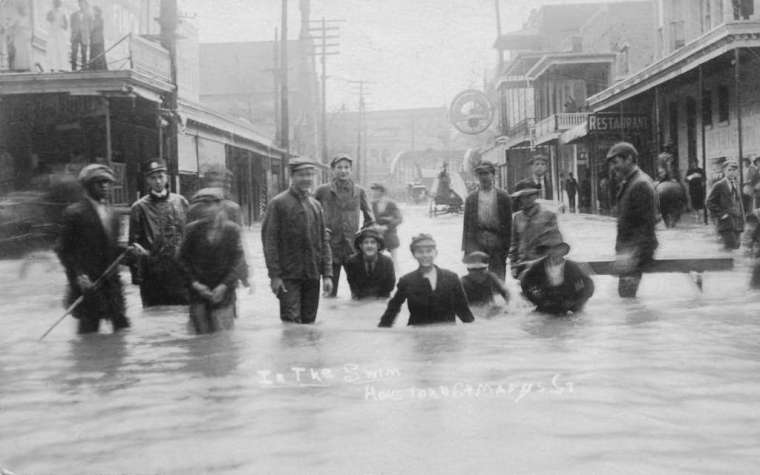
All across the Gulf Coast of southeast Texas from Corpus Christi to Beaumont/Port Arthur the devastation from hurricane Harvey has left a trail of destruction, tears and questions. Weary citizens have spent days upon days mucking out houses, washing flood soaked laundry, cleaning the everyday items that were once the fixtures of their households. Neighbors have helped neighbors. Family has embraced family. Strangers have opened their hearts and their wallets. The restoration has begun in earnest even as some areas still lie in the clutches of high water with no sign of when their residents may return.

It doesn’t seem to matter which part of Harvey’s path one might choose to explore. Virtually everywhere that the beastly storm chose to go there are entire neighborhoods or unlucky blocks where the evidence of its heartlessness is horrifyingly present in the endless piles of debris that rise several feet from the ground and on the vacant faces of those affected. Seeing the wreckage is mind numbing and heartbreaking. Witnessing the people who are attempting to deal with the unthinkable is unbearable. While there is a determination to rise from the waters, there is also a kind of pall over the landscape and wonder if the things that we took so for granted will ever be quite the same again.

It is estimated that only twenty percent of those whose homes and property was damaged had purchased flood insurance. Many of the affected areas had never before been inundated and there was little reason to compel homeowners to buy the policies. It will be up to the federal government and FEMA to help the families to rebuild, and the cost will no doubt be staggering. More disturbing will be the loss of a sense of security that even those who were spared are now feeling. We fret and worry over what will eventually become of all of us who endured the tornadoes and days of relentless downpours that poured fifty one inches of rain over our rooftops. The memories of one weather warning after another and all night watches over the water creeping toward our doors are still so fresh and terrifying. The sights and smells of the destruction seem to follow us even as we close our eyes and attempt to shower the grime from our bodies. The fear that we all experienced stalks us now that we attempt to go back to work and our usual routines.

As the sun shines once again in our part of the world, a monster hurricane threatens Florida and the east coast. Others have formed in the ocean. Fires burn in Montana, California and Oregon. It seems as if Mother Nature is unleashing her fury, and we begin to ask ourselves questions and consider what we may have done to be accomplices in the creation of such events. Are there proactive steps that we might take to change the course or the magnitude of climatic events in the future? These are the thoughts that fill our brains and none of the answers are easy or certain.

My husband likes to call himself a belt and suspenders kind of guy. In other words he is a very cautious sort. As such we expend large amounts of our income on various kinds of insurance policies and fraud protection systems. When the federal government first began selling flood insurance he signed up immediately even though we had never experienced water seeping inside any of our homes. We have continued to renew the policy year after year in spite the increasing cost and lack of use. Our thought as native Houstonians has been that we never quite know what strange occurrences my happen, and we want to be ready for the unexpected. I suspect that after Harvey the premium for our policy will go through the roof, but we will continue to purchase the safety net just in case, and I would recommend that everyone else do so as well. So many of those affected by the damage would be sleeping so much better with that little piece of added security in their pockets

The bigger questions involve infrastructure and building practices that may or may not have helped to prevent much of the damage. It has come to light for example that engineers from the Harris County Flood Control District outlined a plan to improve the drainage system of the Addicks and Barker dams all the way back in 1996. They presented their concerns and suggestions to the Army Corps of Engineers and nothing happened. The report was filed away. Today the tragedy that the study predicted in very clear terms has come to pass. The belief is that it might have been prevented at a cost of under ten million dollars rather than the billions it will take to rebuild the neighborhoods that sit under water today.

When we are cautious in the way we do things we sometimes never know if our efforts actually have some sort of effect or not. If wisdom had ruled the day and the money had been found and spent to improve the dams’ drainage capabilities there would be no flooding in the affected areas and we would wonder if we had really needed to expend all of the effort. That is the way of proactive measures. Often the occasion to use them never arises, but when it does we pat ourselves on the back for being so prescient.

We might argue forever about topics like climate change, building practices, drainage systems, and insurance, but our question becomes why we would ever want to take unnecessary chances. It is a fact that hurricane Harvey created an unprecedented event with its fifty one inches of rain. It is true that homes that have been high and dry for decades only flooded because the storm dumped an amount of water that no form of planning might have overcome, but I find myself wondering why we would want to just walk away from this experience without considering important changes that might actually help if and, God forbid, when we have to experience such an event again.

Our ancestors were more often than not a bit more inclined toward precautions than we were. The Addicks and Barker dams were built in the 1940s because of major flooding incidents in the city of Houston in 1929 and 1935. My mother and mother-in-law often spoke of those events and how they impacted the people who had endured them. The dams themselves were eventually located on land far from the center of the city and most of the population. Adjacent tracts were purchased to insure that there would be no habitation in the path of water. Sadly, as the city grew and sprawled across the landscape developers purchased plots next to the city owned land and built suburban neighborhoods without thought of what might happen if those dams were ever overrun with water in the kind of scenarios that experts had foreseen.

Back in the old days people avoided building too near the bayous and creeks. They elevated their homes on pillars. They terraced the lawns and built houses considerably higher than the level of the streets. Most of the neighborhoods and homes built by our parents and grandparents weathered the deluge just as they have done for decades. They were constructed in ways mindful of the presence of the network of bayous and creeks and rivers that crisscross the geography. Perhaps it would behoove us to consider such things just as they once did. There really should be an appropriate way of building for specific parts of the country that takes the possibilities of nature’s whimsy into consideration.

Of course there is the lurking question of the part that climate change plays in wreaking havoc across the globe. I suggest that instead of wasting our time arguing over whether or not it is true, we simply begin to change our ways just in case. What would it hurt to become more considerate of the world in which we live? Why can’t we all become more conscious of the ways that we use and waste the earth’s resources? Simple gestures multiplied millions of times will indeed make at least a small impact, and every little bit will help. We can be more like our parents who only allowed the television to run for so many hours a day. They scurried about the house turning off lights and appliances. They created compost heaps and recycled bottles. They were mostly being frugal, but their habits certainly helped to reduce waste and emissions of carbon dioxide.

I would never want to be accused of being one of those people who smugly suggest that somehow all of us who live in Harvey’s path are somehow responsible for what happened. Ours is a tragedy wrought by a storm that would have inundated any city or town regardless of what protective measure had been taken. Still, I believe in reflecting on tragedies and asking ourselves hard questions about what measures we may take in the future to alleviate at least some of the suffering. It is something that we must do. We have to insist that reports that predict disaster will never again be simply filed away into oblivion. 

Truly Madly Deeply

shutterstock158350295

One of the most fascinating books that I have ever read is Isaac’s Storm by Eric Larson, a story that details the horrific events of the 1900 hurricane that virtually decimated Galveston, Texas. I have always found the randomness of the destruction that took place in that epic event to be rather profound. With no rhyme or reason some structures were totally destroyed while others that stood right next to them exist even to this very day. Thus it seems to be when nature’s fury strikes. The fact that I still have my home in the midst of all of the misery caused by Hurricane Harvey is little more than the luck of the draw because not more than a mile away there are homes that filled with water.

In the aftermath of a storm that will surely go down in history as one for the ages, I am pensive as I listen to the sounds of life slowly coming back into the world that has been my home since my birth. This time of year the school buses should be stopping at my corner to take children to and fro. I enjoy the  laughter and the excitement of the voices that filter through my window each morning and afternoon. For now there is only the wind blowing through my trees and the hum of a generator in the distance. It’s good to hear the rumble of cars moving down the road, and now again there is a siren breaking the silence with a scream. I worry what might be happening to someone, but I also smile that it is once again possible for aid to reach whomever is in need without moving precariously through a wall of water. Even as the natural routine of things has been set askew, there is the tiniest whisper of hope assuring me that in spite of the enormity of the challenges that lie ahead, we will eventually heal and recover.

I rejoice at the messages of good news coming from friends and family about whom I had worried during the deluges that fell over my city. So many, like me, seem to have weathered the storm relatively unscathed. Given the extent of the damage to Houston it is almost impossible to believe that we indeed have a foundation of intact homes from which we might reach out to the others who were not as fortunate. As I number the dozens who will soon be assessing the damage to their houses and possessions I am truly humbled. But for chance it might just as easily been among them.

I have expressed my love for my city so many times. She is a tough girl with a heart of pure gold. She is hurting now and I know we must all show her our love by being very good to one another. She would expect nothing less from us. In the past few days we have demonstrated just how good we are at doing that. There have been so many favors performed both large and small, all designed to ease the fear and the pain that our neighbors are experiencing. We are not strangers in Houston. We are family. We understand that now more than ever.

The heat here can be brutal and the landscape is as flat as a pancake, but the real beauty of this place has always been in its people. It has historically been a town where souls come to find new opportunities just as my grandfather did when he traveled from Austria Hungary more than a hundred years ago or like my husband’s great grandfather who arrived from Georgia penniless. Houston has always been filled with promises from which individuals with little more than the clothes on their backs might find the kind of lives that would not be possible anywhere else. It is a warm hearted and forgiving place as was so dramatically demonstrated in countless ways during the last few days.

We have watched our hometown newscasters dissolve into tears as they reported the human stories that have been so difficult to hear. We have seen ordinary people brave the waters with boats and trucks so that people they have never met might be saved from the raging waters. Our mayor has stood toe to toe with all of us to keep us safe and to calm our fears. Our neighbors have walked hand in hand never even noticing any of the diverse demographics that seem to be so dividing the rest of our country. We have jumped into the task of saving ourselves and saving our city without worrying about what anyone else might eventually do for us. We understand that there is no time to wait for outside help. We are Houstonians. We take care of our own. Still we are gracious and thankful for the help that is offered because we understand that this task will surely be more than we might handle alone.

I feel a sense of pride when my grandchildren and former students check on my welfare and weather the storm to bring me items that I needed to be comfortable during the long wait for the rains to end. I smile as I see them taking charge in the aftermath by immediately volunteering at shelters and gathering truckloads of donations and supplies. How wonderful they have turned out to be. I hear that little whisper that tells me we will survive when I see how considerate and generous they are. They are the face of the future of Houston. They assure me that tomorrow will be sunny and bright.

I can’t wait to hear the incessant singing of the cicadas at night. I don’t think I will mind at all when the sun is so bright that sweat rolls down my neck. i want to see the Friday night lights of high school football and watch my grandson march with his band. I long to cheer for the Texans, and Astros and Rockets and Houston Cougars once again. I want to laugh at the antics of the Rice MOB. I long for the time when I might drive on water free roads to the Farmer’s Market on Airline or to the shops in Highland Village on Westheimer. I want to have dinner at Gringo’s or Niko Niko’s and stand in line for barbecue at Killen’s. I dream of walking the aisles of HEB and munching on a burger from Whatburger or a donut from Shipley’s. I look forward to the Nutcracker Market and Thanksgiving at my brother’s house. I can’t wait to see the Christmas lights in December and the azaleas in March. I pray with all of my heart that together we Houstonians will have the means to keep our traditions alive, because they will be more important than ever as we work our way out of the pain and the loss that is all around us. 

We are not completely out of danger just yet. As the rivers rise there may be more flooding in places that have done fairly well up to now. More heartache may ensue. More need will arise. We will be tested as a city again and again. Our marathon will be long and difficult, but I know that we have the grit that we need to see the process through.

I have cried and cried for my beautiful often misunderstood city and its people. The tragedy of it all has sometimes been almost too much to bear, but I know in my heart that we live in one of the most special places on earth. I have understood this for all of my life. I am truly, madly, deeply in love with Houston, Texas and I promise not to let her down in her hour of need

Total Eclipse of the Sun

eclipse

This happened for a few hours on August 21, 2017. Much of the United States of America was profoundly united by the majesty and mystery of a total eclipse of the sun. I wasn’t lucky enough to be in the path of totality, but the images of a 66% eclipse that I saw in the sky were breathtaking nonetheless. Somehow I was reminded of how infinite and mind-blowing our universe truly is, and how small we are when we consider its expanse. Still, the fact that we have unlocked so many secrets of the cosmos with our mathematics and science is humbling to realize. We were all ready to witness this historic event because astronomers have mastered the tools to make such predictions. We saw images streamed from NASA and wore glasses that allowed us to look heavenward without doing damage to our retinas. Later we shared our experiences with people in distant places using technology that is as amazing as nature itself. Somehow this incredible moment left me in awe of not only the heavens, but also the intellect of mankind.

One of my favorite all time books is The Ascent of Man by Abraham Bronowski. It is a chronicle of the leaps of human knowledge that have brought us to the advances that we often take for granted today. The miracles of farming, construction, astronomy, physics medicine and technology that we enjoy are abundant, and provide us with a standard of living unimagined even two generations ago. Nonetheless we must be careful of relying on our hubris. Just as gazing at the sun during an eclipse without protective eyewear may cause us to go blind, so too will thinking that we unequivocally have all of the answers cause our downfall. We would do well to consider that our place in the universe is but a tiny speck. There is so much that we have yet to learn, but happily there are minds of geniuses working to continue to expand our knowledge just as they always have. I marvel at the thought of what is yet to come.

I sometimes like to consider what developments I would like to see. It would be so wonderful to be able to eliminate mental illnesses, or at least control them effectively. How nice would it be to have an injection or a pill to eliminate addictions to drugs, alcohol or food? I dream of a time when we are able to produce forms of energy that do no harm to our environment and are readily available to anyone anywhere. I’d love to see advances in food production that would eliminate hunger in all corners of the world. The possibilities are endless, and often the most humble sounding discoveries are the ones that have the greatest impact on society.

We still have so much to do with regard to bringing peace and synergy to our world. I often feel that the best possible human advances may one day come in the way we live together in harmony. We still have so much work to do in that arena, but if we can come together to watch the moon blot out the sun, then maybe the potential for humanity to ascend to a higher level of integration is truly there. I’d like to believe that this is not just an idealistic pipe dream.

At the moment in which the eclipse in my town reached its apogee I felt a kinship with the universe and its people. After all it seemed as though we are all more alike than we are different. I viewed the event in a park surrounded by hundreds of fellow amateur astronomers. Everyone on that day in that place was smiling. Somehow there was no room for jealousies or comparisons of one another. There was a definite feeling of unity and a spirit of cooperation. Everyone cheered the passing of the moon in front of the sun and declared that it was a remarkable sight that they will never forget.

We all agreed that we can’t wait for the next big event that will take place in the USA in 2024. That time the totality will happen right in my home state, and I plan to watch it with my children and grandchildren, By then they will be either in college or all grown up  with jobs and maybe even families of their own. The sun will have risen in the east, the moon will have illuminated the nighttime sky and the earth will have rotated on its axis for over two thousand days. So many changes will have taken place, but our fascination with the sun and the moon and the stars will not have waned. Somehow those celestial bodies still rule over our hearts and our minds. We are as fascinated by them as primitive man was. In their presence we realize both our potential and our limitations. We long to totally understand them and we marvel at their power, or at least we should.

Our planet is but one infinitesimal part of a universe so vast that we cannot truly imagine it. We measure our history with the rising and falling of the sun.

Everything

Turns,

Rotates,

Spins,

Circles,

Loops,

Resonates,

And

Repeats.

Circles

Of life,

Born from

Pulses

Of light,

Vibrate

To

Breathe,

While

Spiraling

Outwards

For Infinity

Through

The lens

Of time,

And into

A sea

Of stars

and Lucid

Dreams.

—- A poem from Suzy Kassem

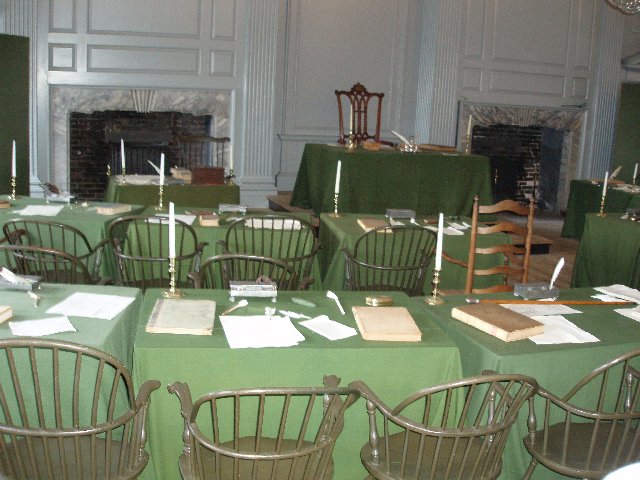
When In The Course

228935-room-where-the-declaration-of-independence-was-signed-at-independence-hall-in-philadelphia-pa-philadelphia-united-states

It always amazes me how we humans generally follow the rules. On any given day millions of people adhere to speed limits, stop at red lights even if there is nobody around, stay inside their designated lanes. There is always an implied threat of being caught and given a citation for breaking the law, but mostly people do what they are supposed to do because they realize that the statutes have been set in place for safety and the common good. We innately understand the value of working together for the benefit of all even if it is sometimes a bit inconvenient.

There are thousands of examples of how most of us know, understand and appreciate conformity to the directives that keep our society running smoothly. Now and again, however, we encounter situations in which it becomes uncomfortable to simply sit back and adhere to the status quo. In those moments we feel a grip in our stomaches and ask ourselves what our role should be. Do we sit back and quietly watch or do we rise up to voice our concerns? When is it best to avoid the fray, and when must we say something lest we no longer be able to gaze at ourselves in the mirror? How do we decide which aspect of a complex disagreement is the most right and just?

Since I am a huge fan of history I tend to be a documentary fangirl. Netflix is all too aware of my viewing preferences, and they continuously alert me to any new features that are available for my viewing pleasure. Recently they suggested that I might enjoy a program about Winston Churchill and his role during World War II. The story began at a time when much of the world was doing its best to ignore the warning signs that Adolf Hitler was a maniacal and dangerous dictator. Churchill was one of the few who consistently voiced concerns about the direction in which Germany was heading, in part because he was so vocal, Churchill’s views were initially thought to be a bit kooky. Nobody wanted to engage in controversy, and doing so was thought to be risky. Thus most of the world donned rose colored glasses and went about their routines hoping that the shenanigans in Germany would at worst be little more than an annoyance. Of course we know that such was not the case and Churchill was proven to be the right voice at the right time. His analysis of Adolf Hitler was insightful and he never quelled his criticisms of the dangers that he saw unfolding in Europe. If not for his steadfast diligence, Britain might have endured the same fate as Czechoslovakia, Poland and France.

Churchill somehow sensed that quietly accepting Adolf Hitler and hoping that he would simply fade away was an untenable stance. He raised his voice at a moment in time when it was unpopular to do so. People were tired. They had lost much in World War I. They worried that becoming divisive might shatter the peace that was precarious at best. it felt better to just ignore the craziness, keep the boat from rocking. Eventually the entire world would be forced to take a stand, choose a side, something that most had hoped to avoid. The question that lingers to this day is what people might have done from the very beginning to prevent the carnage that ensued. How different would that phase of history have been if Hitler had been defied not just by other nations, but by the German people from the moment that his ideas began to appear unhinged? 

The problem with such wishful thinking is that it is utterly useless after the fact. It is only in the moment that each of us has an opportunity to be heard and to do what we believe to be right. The trick is in unravelling the complexities of a situation and reaching the heart of the matter. To be willing to stand on a mountain top warning our fellow human beings of danger, we must first believe with all of our hearts that we will not be viewed as just another boy crying wolf. We must sense that what we have to say is so important that to secret it away in our hearts would be morally wrong. In such instances we sense that we must bend or even fracture the mores and rules that confine us so that our warnings might be heard.

My Facebook wall has been filled with impassioned pleas for love and understanding of late. Mothers worry about the contentious world in which their children must grow into adults. It feels as though hate is festering in the most unexpected places. We can’t even get a sense of well being from listening to our president, because he is more concerned with defending himself than being a beacon of hope. It feels as though we are being torn apart as a nation and within our relationships. So many are choosing to lock themselves away from it all. Only a few brave souls are willing to take the heat of criticism by voicing their concerns. The rest try to pretend that the unrest will soon all just go away, but even recent history has shown us all too clearly that the issues that trouble us only become more and more complex when we ignore them. Furthermore, they are rarely resolved when we are unable to find ways of working together.

I truly believe that the evil of this world represents a small minority, but it is nonetheless up to all good people to keep it in check. The hate that we see must always be called out for what it is. There can be no excuses, no watering down of our contempt. We cannot just look the other way when we see it, for it is when the good people join forces that they transform into an immovable power. They cannot be stopped until the depravity is eradicated. This truth has been demonstrated time and time again, so I wonder why we are so often reluctant to use it.

The fact is that there are groups of people in our country today who advocate the most detestable ideas possible. Under the guise of protecting an object, a statue, such groups held an abhorrent rally in Charlottesville that ultimately resulted in the death of an innocent young woman and the injury of others. Their only intent was to spread their poisonous ideas, not to somehow save the history of the south. They travel from venue to venue hoping to gain attention and new followers. They besmirch the legacy of the generation who defeated Hitler and all for which he stood when they parade through towns imitating the one of the most vile regimes that the world has seen. They are petty and lost souls who fester in anger, blaming imagined  slights for their own inconsequential lives. Any good thinking person should shun them and their despicable ideas, not find excuses for their behavior and thereby fuel their momentum. In other words, this is a watershed moment in which decent people must stand together to let such groups know that we will not accept their torches, their Nazi salutes, or their philosophies of hate. We will not allow them to enlist us in their misdirected causes. We will not find ways to mitigate their responsibility for spreading a disease of prejudice. We will make them the pariahs that they deserve to be.

Don’t turn away. Don’t tune out. Sometimes we have to make noise. Sometimes we have to demonstrate our courage. Our children are watching. Let’s show them what to do when in the course of human events we have no other choice than to stand firmly, proudly and publicly for what is right.

Let It Go

12-_00168v

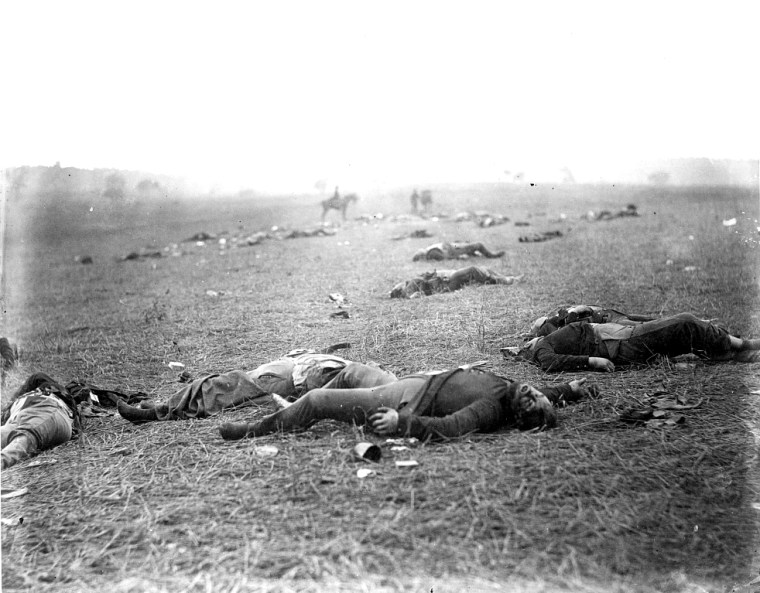
I grew up in Houston, Texas in the south. As a child I remember hearing Dixie being played and sung now and again. When I was young I actually believed that I had descended from Confederate Rebels and it was only later that I found out how wrong I had been. Of course my mom’s ancestors were busy chafing under the rule of Hungarians while the Civil War raged here. It was from my father’s side that I assumed that I had come from bonafide Johnny Reb stock. Imagine my shock, and maybe even a bit of relief, when my genealogical searches revealed that my great grandfather, John William Seth Smith, was a Lieutenant in the Kentucky Volunteers and that he fought for the Union. In fact, he participated in a number of crucial battles and was around to bury the dead at Shiloh. It ends up that the inclement weather and horror of that event badly affected his health in later years and after the war he seemed rather intent on putting his days of fighting behind him. I suppose that those of us who are still arguing over the aftermath of that terrible conflict might be wise to follow his lead.

I’ve always had a fascination for history and so I have read a number of biographies and historical texts. Robert E. Lee was someone about whom I wanted to know more. In so many ways he was an enigma. He graduated from West Point and for a time was one of the most highly respected generals in the Army of the United States. He sometimes questioned the morality of slavery, but nonetheless held the odd belief that it served a purpose in helping the enslaved humans to learn the necessary skills to be full fledged members of society. He loved his country but felt a higher allegiance to his state. He saw secession as treason, but agreed to join the Confederate cause nonetheless. In other words he was a highly conflicted man who wanted to be honorable but often demonstrated profound confusion about how one should live. In the end he actually felt that the long war should never have happened, and he spent much of his later years attempting to free his soul from guilt. 

The aftermath of most wars becomes a time for trying and punishing those guilty of crimes or treason, while the rest of the population goes on to live ordinary and quiet lives like my grandfather. The days after the Civil War were different. Both Abraham Lincoln and Ulysses S. Grant felt that no purpose would be served in meting out vengeance against their fellow countrymen who had gone astray. There were no trials in which Robert E. Lee and other Confederate leaders were held accountable or punished. Instead they were allowed to live with only their own self reflection to determine the final chronicle of what they had done. For Robert E. Lee it was a bitter pill to ruminate on the utter folly of the war and its impact on the entire country. He must have asked himself time and again why he had gone against his own beliefs that secession would be a fools errand.

Time has a way of glossing over the ugly realities of history. As the years passed people from the south often found ways to excuse the actions of their ancestors who had believed that destroying the country was actually the only way to deal with political conflicts. They saw the war as being noble and courageous, but the truth is that it was a horror that need never have happened. To celebrate those who led their fellowmen into the very jaws of hell seems to be a rather ridiculous idea, and yet that is what happened in cities and towns all across the south where monuments and statues were erected to honor men who in many ways had been fools. Perhaps it was a way of ignoring the truth of how incredibly wrong the entire conflict had been.

It would be one thing to mourn the lost souls who died in those terrible battles that pitted American brother against American brother, but it is quite another to glorify those who had took the common people so far astray. It would be akin to building monuments in honor of Adolf Hitler all over Germany. We would surely see the inappropriateness of such memorials, but somehow we fail to realize how ludicrous it is to honor men who literally performed treasonous acts against the United States when they chose to go to war against the government. Perhaps Robert E. Lee said it best. “I think it wiser not to keep open the sores of war, but to follow the example of nations who endeavored to obliterate the marks of civil strife and to commit to oblivion the feelings it engendered.”

We have harbored the feelings of separation and divisiveness far too long. Walking through the Shiloh battlefield I felt no glory, but only a deep sadness that people were unable to find ways to settle their differences through any means other than fighting and killing. There is no magnificence at Gettysburg, only despair that man’s anger overwhelmed his ability to find common solutions. War is always hell. Slavery was wrong. We all know in our hearts that these are truths. Why then do we continue to quibble over hunks of stone and metal that remind us of a past that was horrific by anyone’s standards? We can remember all of those who lost their lives with compassion, but we need not attempt to honor those who were responsible for the carnage. Taking down the troublesome statues does not erase the history, for we can never forget how terrible it was. Instead it focuses on understanding and a willingness to move on and let go of feelings that seem to have festered long after they should have been set aside.

I suspect that if Robert E. Lee were to hear of the battles that now ensue over the appropriateness of monuments to in his honor he would remind us of his own words and respectfully ask us to take the monoliths down. We should do so not out of a sense of political correctness, but because it is time for healing that will never fully happen until we are willing to admit to the wrongness of that terrible chapter of our history. We can place those images on battlefields or inside museums where the story of that time might be told, but it is no longer necessary to glorify the mistakes of our past. We must move ever forward and remember the words of another contemporary of Robert E. Lee.

As the war neared its end and President Abraham Lincoln delivered his second inaugural address his mood was melancholy and compassionate. He pointed to the horrific waste of the war but also its necessity in bringing justice to our land. Still he wanted all of us to come together as brothers “with malice toward none, with charity for all, with firmness in the right as God gives us to see the right, let us strive on to finish the work we are in, to bind up the nation’s wounds, to care for him who shall have born the battle and for his widow and his orphan, to do all which may achieve and cherish a just and lasting peace among ourselves and all nations.”

This is our challenge as the American people. In the name of all 600,000 men who lost their lives as well as those who were forever altered, it is time for us to heed the words of our great president who himself became a martyr to his noble dedication to the proposition that all men are created equal. It is far past time to stop the fighting and to let it go.