Karma and Lessons From History

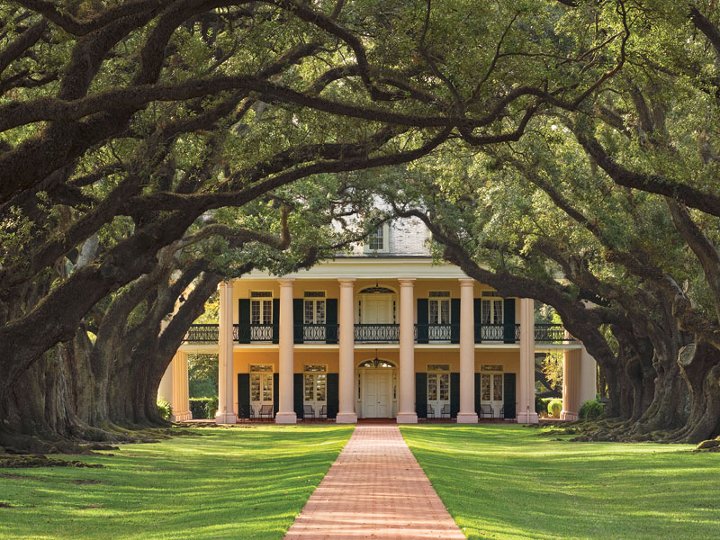
gallery-121Way back in the 1700’s someone planted two rows of oak trees in land facing the Mississippi River. More than a hundred years later Jacque Roman, a wealthy French Creole, saw the avenue created by those trees and purchased the land to build a mansion for his wife and a plantation as a business. The estate that he created would one day become known as Oak Alley and it stands today as a reminder of a controversial time in our nation’s history.

Jacque Roman was a handsome, wealthy and well educated fellow who grew up in the French Quarter of New Orleans. He was considered a promising catch for some fortunate young lady. He thought that he had found the woman of his dreams when he saw Celine, a high spirited soul who lit up drawing rooms and parties wherever she went. Jacque was as shy as Celine was outgoing, but he impressed her with his gentlemanly devotion to her. They married and he promised to one day create a magnificent home for her. Thus he knew that he had found just the place when he saw those elegant oaks.

Jacque started his sugarcane business first. He added more than a hundred fifty slaves to those who came with the land. He paid top dollar for some of them and even sent one to France to train as a chef for the time when Jacque would bring Celine to his dream house. He thought of every little detail that might make her happy and indeed when she first set eyes on the place she was overwhelmed. Sadly her joy was not long lived. She birthed six children in seven years. She had to watch three of them die from diseases like yellow fever and tuberculosis that were the norm for plantation life. It was a sad lifestyle for a social butterfly like Celine. The only people around for miles and miles were Jacque’s relatives with whom she had little in common. Her dislike for them only grew to total disdain as the tedium overtook her once delightful personality. She came more and more to hate the plantation and the dreary routine that her husband had created for her.

When news came that Celine’s mother had died and that her father needed help raising her younger siblings she jumped at the opportunity to leave the plantation. She took her remaining children with her to New Orleans and her visits to her husband grew farther and farther apart until she was no longer even pretending to want to go back to what had been a home built just for her. She made one final visit when Jacque was dying from tuberculosis. After that she attempted to run the plantation from afar racking up huge debts from her profligate spending habits. By the time that her eldest son took over the plantation was mostly in ruins and the Civil War would sound its death knell.

Celine and Jacque’s three children abandoned the family estate. One of the girls lost her left leg in a terrible accident and with no prospects of marriage after becoming disabled she entered a Carmelite convent. The other daughter lead a rather mundane life with a husband and four children. The son was a successful businessman but had to sell the plantation at a huge loss which barely covered the family’s debts.

The house itself languished in ruins until the nineteen twenties. By then the roof had caved in and animals roamed freely through the once elegant rooms. The Italian marble floors were broken and it seemed as though the old place was destined to be destroyed but for a woman from south Texas who had met and married a wealthy New Orleans businessman by the name of Stewart who had promised her that when he retired he would purchase a farm or ranch for her. When the time came Mrs. Stewart became enchanted with the idea of resurrecting the old structure. With an investment double the price of the property the house was renovated and made more modern. Mrs. Stewart brought cattle and horses to the land. She lived happily in the house until the nineteen seventies. She had no children and fearing that her heirs might neglect the estate, Mrs. Stewart created a foundation to care for the antebellum home in perpetuity. Today it stands as a reminder of a time long ago, open to visitors seven days a week.

The story of Jacque and Celine was touching but my feelings for them were offset when I walked to the area that would have once held the slave quarters. The names of the people who built and cared for the house and the land are listed on a wall. They are souls with only first names whose dignity and freedom were stripped from them without regard to their humanity. There were implements of punishment and torture on view. Chains and shackles that were used to hold and torture them. There were copies of letters in which Jacque gave his overseer instructions on how to imprison and punish disobedient slaves. Somehow those very clear words erased the pity that I had felt for this man who was making millions of dollars off of the free labor of two hundred souls. I imagined them living in cramped quarters without heat. I thought of how oppressive it must have been for them in the summer when the humidity was at one hundred percent and the mosquitoes were swarming. The contrast with the way that they were forced to live versus the members of the Roman family was heartbreaking.

One of the things that most struck me was the irony that Jacque thought enough to have his slaves baptized in the Catholic church but he did not see the immorality of his actions toward them. On the one hand he saw them as God’s people but on the other hand he considered them his possessions. He carefully recorded their names and the prices that he paid for them in a ledger. His handwriting was neat and precise and without feeling of any sort. They were simply part of the inventory of his possessions. While they served his every need, he was inside his elegant mansion with ice transported in barrels from the north to the tune of three hundred pounds each week. Somehow I began to feel that his estrangement from his wife and his family’s ultimate downfall was a kind of karma.

I realize that it was a different time. Slavery was legal and very much the rule in both the north and the south. The slaves were the human engines who drove the economic machines. Somehow the vast majority of people had convinced themselves that what they were doing was just, but the fact is that the abolitionists were already quite active when Jacque first decided to build his plantation. He would have heard their calls for emancipation but obviously ignored their arguments. It would take many more years for a war to break out between the states that would ultimately become a means of freeing the slaves. Sadly amidst all of the splendor of the remarkable home there is a stain that somehow can never be erased. Perhaps touring this place should remind us of our own duties to speak up for the rights of those who have no voices for themselves. We will all ultimately be judged by history. Let us hope that we will be on the right side.

A World At War

usa-la_-nola_-wwiimuseumIt’s difficult for most of us to even imagine what the world was like in 1941. The United States was not thought to be a powerful force. In fact it was ranked eighteenth in the terms of military might. The country was only beginning to recover from the effects of the Great Depression. Most of the country was rural and there were still a majority of homes without electricity or indoor plumbing. The mood was isolationist as the populace here watched events unfolding in Europe with horror but an intense belief that our nation needed to stay out of the fray. My mother was fifteen and my father eighteen as December began that year. They were yet to meet one another and naively unaware that life for every American citizen was about to change dramatically.
My mother often spoke of December 9, 1941 when the Japanese bombed the American fleet in Pearl Harbor. It was a fearful and shocking moment. She along with her countrymen listened to President Roosevelt as he reassured the nation. She remembered how quickly people answered his call for all Americans to participate in the coming war effort. She saw her brothers enlisting in various branches of the Armed Forces one by one, and saw high school friends leaving the classroom as soon as they were old enough to lend their help to the cause.

World War II was like no other engagement in history. Its influence stretched across the globe, affecting people on virtually every continent. Here at home citizens of every age contributed in one way or another. Women who had traditionally kept the home fires burning took over manufacturing jobs. Industries were cranking out planes and ships and munitions at a fevered pace. Everyone rationed their use of critical materials, including paper. My mother-in-law often showed me the yearbook from her senior year of high school. It was thinner than a monthly magazine, made only of the cheapest quality pulp. It mirrored the reality of the time with row after row of photos of mostly young girls. The boys had dropped out of school and to join the fight.

When our troops first went to faraway places like northern Africa and the Pacific they were ill prepared to battle the well trained and experienced Germans and Japanese. They often found themselves overwhelmed and in retreat in the earliest forays. They learned on the job and became just a bit better as they slowly understood the demands of the new ways of fighting. I have often wondered how those of us living in today’s world might react to news of battlefield losses and situations requiring our troops to run for safety. Would we have the heart to continue the fighting or would we give up quickly? Luckily the generation who fought World War II was made of stern stuff. They were determined to do whatever it took to free Europe from the grip of Nazi Germany and the Pacific from the Japanese.

There was much at stake and the American people understood that they could not be deterred from seeking total victory. In that regard both Japan and Germany had greatly underestimated the will of our country. There are those who wonder if the world might indeed look very different today had the United States not allied with Great Britain and Russia in that great fight against fascism and tyranny.

The World War II Museum in New Orleans, Louisiana is a repository of the remarkable history of that era. It is filled with the stories of both the leaders and the common people who worked together to defeat the enemies and free the world from their dominance. With hundreds of photographs, artifacts, videos and research texts it leads visitors from the beginnings of the conflict to its horrifying end with the explosions of atomic bombs over Hiroshima and Nagasaki. It is a touching and personal journey that is honestly and beautifully told.

The city of New Orleans was chosen as the site of the museum because it was the birthplace of the the inventor of the Higgins boat which was used to bring troops ashore at Normandy on D Day. Mr. Higgins was already making shallow draft boats for fishing in the bayous and swamps when the military expressed a need for a military version of such craft. He was ready to design a larger boat capable of transporting troops. The Higgins boats that were manufactured in New Orleans have often been credited with helping to win the war in Europe.

It’s been seventy five years since our nation entered World War II. By the end of the conflict the United States was viewed as a major political power. With an infrastructure unharmed by the devastation of the war we were poised to enjoy an economy exploding with innovation and production. The soldiers returned to an exciting time that included creating a new generation of children that would become known as the Boomers. The United States was slowly but surely transformed by the building of a system of interstate highways that made travel from one ocean to the other quicker and more open to all people. The same spirit that drove the success in the war continued its inventiveness all the way to the moon and back.

Those of us who were the children of the men and women who endured the uncertainties of war would inherit the fears of the atomic age. We would wear dog tags for a time to identify us in case of a nuclear attack from the Soviet Union. We practiced air raid drills each Friday afternoon, crouching under our desks in wonder and confusion. Our generation would be drafted into a new and different war in Vietnam that somehow never made as much sense as the one our parents had fought. We would march for the civil rights of our Black neighbors and those of us who are females would blaze new trails in education and work.

World War II was never just a long ago historic event to us. We saw those photos of our dads and uncles in their uniforms. We heard the stories of life under siege. We watched the old black and white movies that celebrated the accomplishments of our generals and troops. We saw the sadness in the eyes of those who lost loved ones in places so far away that nobody had even known that they existed before the battles. We were the link between the past and the present, the generation that watched the world change at such a rapid pace that it was sometimes difficult to keep up. We truly appreciated what the brave men and women of the world endured to secure a time of promise and opportunity for us.

Few people in 1941 might have imagined a nation so filled with the bounty that we now have. Ordinary citizens enjoy lifestyles that once belonged only to the wealthy. We live in modern homes and watch our big screen televisions that bring the world into our living rooms. We travel the world and study at universities at a rate that our parents never saw. We have much for which to be thankful and most of it resulted from the brave and unselfish acts of a generation that chose to defeat the forces of pure evil. Their story is on full view seven days a week at the World War II Museum in New Orleans. Every one of us should take the time to absorb the importance of the stories that are told there and to thank the veterans of that war and those who serve today to protect us. 

Memories of Another Time

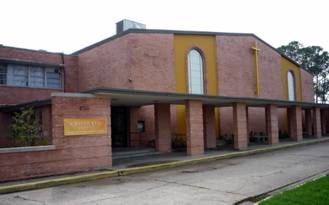
cristoreyhoustonI return to the neighborhood where I grew up at least once a week to tutor high school students in math. The area has changed more than a bit since I once walked the short blocks from my home to the high school that I attended. I suspect that only a few if any of the people who once lived there are still around. It was a working middle class suburb back in the day with a mix of blue collar types and professionals. The entire subdivision centered on the Catholic Church and school that most of us attended. There were other denominations and public institutions as well but Mt. Carmel was the main attraction. Everybody knew everybody and the community spirit was probably the best aspect of living there. It’s not an exaggeration to boast that it was heaven on earth for kids.
Our parents were quite active in providing us with a faith filled life, a great education and lots of after school activities. There was always something wonderful happening and the whole neighborhood felt like a combination of “Leave It To Beaver” land and an episode of “The Wonder Years.” My mother was quite wise to find us a home there after my father died. Our little place provided us with a sense of stability as we were growing up as well as hours of fun.

Of course things never seem to stay the same. Once I was grown and gone the whole area began to change as the old timers moved to newer homes in newer parts of town or to land they had purchased for retirement. It was just never quite the same. The new folks who moved in stayed mostly to themselves and my mother lost her sense of security. Her home was burglarized so many times that on the last break-in the thieves left without taking anything. We joked that we were surprised that they didn’t feel sorry for her and leave something behind. All of her valuables were long gone. Because she was alone and no longer had old friends on whom to depend nearby she became more and more frightened. Each time that she came home to discover an invasion of her property she was less and less willing to stay in the place where we had all shared so many memories. She decided to sell.

It was truly a shame because she had managed to pay for the house in full. She enjoyed having the extra income to make repairs and purchase a luxury now and again.  Because the area had generally deteriorated, at least on our street, she was unable to get a good price for the place. Essentially she had to start all over again making payments on a home that was little better but at least felt more safe. It stretched her already small income to the breaking point but she was always optimistic, believing that the good Lord would work things out, and somehow He always did.

I don’t think that Mama ever went back to see how our old homestead was doing which was actually for the best. The people who bought it did little to keep it in good condition. By the time that I finally drove by a few years back it was a sad broken down property. The roof was sagging and it looked as though it hadn’t been painted since the last time that Mama and me and my brothers had put a fresh coat on it. Mama had always taken pride in having a nice garden and had planted trees, bushes and flowers over the years. Literally all of that was gone. There wasn’t even much grass growing in the yard. It was stark and ugly in the saddest imaginable way. It literally hurt to see it like that. I couldn’t decide whether to be angry or just to cry.

I haven’t dared to go back again. I really don’t even like to think about how battered and neglected the house looks. I drive to my tutoring sessions from a direction that doesn’t take me near the old place. That way I keep only the positive memories of my youth that were so delightful. I picture our home at its best when it represented love and safety.

On sunny days when the temperature isn’t too hot there is a certain kind of breeze in the neighborhood that gives me a strong sense of deja vu. I can close my eyes and listen to the planes flying overhead as they approach nearby Hobby Airport and feel transported back to a time when the subdivision and the school were among the best in town. The sounds of the birds are just like they were when I was a kid and I can almost hear all of the old neighbors laughing and living inside their homes at a time when people still left their windows open and their doors unlocked. For a moment I find myself believing that they are all still there and that I might go see them after finishing my tutoring, but then something always stirs me back to reality and I remember.

The school where I was once a student has a new name now. It used to be Mt. Carmel but the Carmelites and the School Sisters of Notre Dame left and over time there wasn’t enough interest or financial help to keep things afloat. The school began to operate in the red without enough students or help from the diocese and finally was forced to close its doors. It was threatened with destruction until the Jesuits purchased the property and renovated the inside, creating a whole new high school called Cristo Rey. They brought in wealthy individuals willing to help support the education of students who might not otherwise have the privilege of an exceptional private school education. I now tutor some of those same kids and I have to admit that I am quite impressed with how well the hard working teachers and administrators have revitalized things for them.

It sometimes feels quite strange to be back in my old school fifty years after graduating. I tell my tutees about my own adventures there and they stare back at me as though I have two heads. I suspect that it is difficult for them to imagine an old lady like me as a young person with all of the same hopes and dreams that they have. I somehow feel that I am supposed to be there helping them. I have a deep connection and respect for the history of all of the wonderful things that happened inside those walls over the years. So many lives have changed for the better in the classrooms and the laboratories. I feel the spirit of all of us who launched our own lives there with the knowledge and confidence that we developed under the guidance of teachers and parents who truly cared about us.

As I walk through the hallways toward the library where I once devoured the words from books that opened whole new worlds to me I see the newest students experiencing the same emotions of joy and fear and discovery that were once mine. I know that we are somehow brethren. Some things like the freedom and wisdom and growth that come with knowledge never change. Whether they realize it or not those young men and women are part of the same long red thread of learning that wove through my mind so many years ago. We are bound together and no matter how different the world may become that red brick edifice will always represent the everlasting power and beauty of education.

At Odds With Ourselves

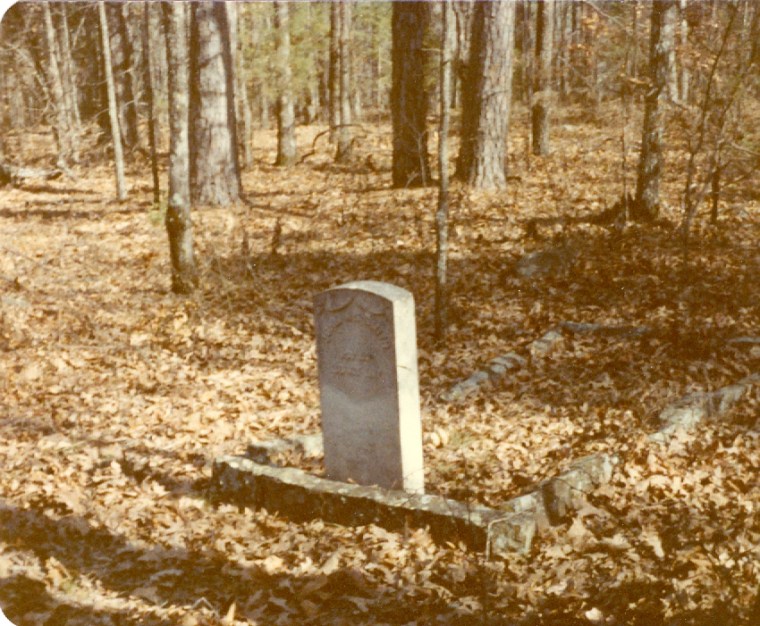
79310435_131963728899I’ve spoken before of my great grandfather John William Seth Smith who served in the Union Army during the Civil War. I know what I do about his service because he died fairly young and his widow, my great grandmother, filed for a pension from the Army based on strong evidence that his health woes began while he was serving in that horrible conflict. In official documents she describes the horrific conditions that he endured that left him with multiple health problems from which he never improved. She furthermore noted the depression that he suffered from the memories of war that weighed heavily on him all the days of his life.
I suspect that many young men from both the north and the south were permanently damaged from what they saw. There is never anything easy about being on a battlefield and the trauma of being a soldier must have been doubly compounded by the reality that the men were sometimes fighting their brothers and neighbors. I can’t even begin to imagine how horrible the four years were during which the very life of our country was under siege. Surely the differences that divided the citizens might have been settled in less extreme ways. In retrospect it is quite clear that the fighting was foolhardy and immensely hurtful to everyone but at the time there were far too many who harbored so much anger that they were unable to engage in rational negotiations. A complete and total severing of relationships appeared to be the only feasible path. Four years later the flower of youth in both north and south had been decimated by the rancor.

I’d like to think that we have learned a powerful lesson from that terrible war, but of late I have begun to worry that perhaps we no longer remember the price that people paid in refusing to settle differences. My grandfather was one of the lucky ones who lived through the battles but his body and his mind were both with riddled pain from what he witnessed. I suspect that if he were able to speak to us today he would warn us to beware of the unwillingness to compromise in our political leanings. In the end he found a modicum of peace only by living a rather isolated existence in the middle of a great forest as far away from any possible conflict as he was able to be.

Civil wars always take an immeasurable human toll. Right now there are so many places on earth where people from the same country are fighting with one another over ideologies, some of which are political and some religious. Innocents who only wish to be left alone have lost their homes, their possessions and their lives. In Iraq ISIS continues its reign of terror but even more terrible is the fact that people are often also victims of the infighting between Kurds and Muslims, Sunis and Shias, everyone and Christians. Nobody trusts anybody. Even watching a family walk innocently down the street is cause for fear lest any one of the members, including women and children, be a suicide bomber. Life has become hell for people in cities like Mosul which has become a place of ruin and fear 

Syria is has its own form of hell that has sent millions fleeing for safety. Sadly even in the refugee camps there is quibbling between are from different religious sects. Christians have had to flee from the sometimes gross mistreatment from their fellow refugees and many of them have been forced to live in the open in the mountains, homeless and frightened. The situations in these war torn areas are so complex that there are not simple answers.It saddens me to think of man’s inhumanity to his fellow man, and I simply cannot understand how things become so inconsolable between people that they feel that hurting one another is the only answer.

There is far too much animosity brewing in the world at this moment and our own country is becoming more and more divided by the day. It is disheartening and frightening. I hear people speaking of riots, violence, coups and martial law. Such mutterings make me wonder if we are dangerously close to another civil war.

Fear all too often leads to anger and unrelenting anger begets hate. I worry that we are whipping ourselves into a frenzy. Even our leaders are boasting that they will never work with one another. It is as though they actually want us to break apart. They almost appear to delight in the battles. Mostly though what bothers me is the behavior that I see among the regular citizens who have become so enraged that they have lost sight of civility. Friends stand at odds with friends. Families are choosing up sides. There is an ever growing tension that is frightening. 

I posted an article on Facebook last week hoping to prompt some discussion of ideas. To say that the resulting commentary was lively is an understatement. I finally ended the back and forth by noting that in spite of the many different schools of thought, some of which were very different from my own, I still love everyone who contributed to the conversation. I find myself asking when we Americans became so loathe to allow differences of opinion. I wonder why we seem no longer able to learn from one another. When did we begin the practice of summarily dismissing anyone who dares to suggest an idea unaligned with our own?

I have observed multiple instances of friends and relatives reaching a point of no return in their relationships over discussions that grew unnecessarily dark and angry. Is this the way a civil rupture begins? Are we seeing the first bubbles in the bottom of a heated argument that will ultimately grow into a rolling boil? Why are we even risking the possibility of tearing our country apart? Why can’t we find a way to get along and why is there nobody willing to take the lead in doing it?

The media isn’t helping. In fact they seem to be almost unable to contain their glee over the excitement that is percolating. Our president isn’t making a move to bring us together. In fact he is stirring the pot, bragging about how great his ideas are and refusing to admit to mistakes or apologize for unfair insults. The democrats are little better in refusing to work with their republican peers and inciting even more anger. Everyone is boasting that they are going to fight. To what desirable end can all of this lead? As far as I can see it is only causing a rent in the fabric of our nation that will be difficult if impossible to mend. We have been this way before in our history and the outcome was not good. What would make any of us think that refusing to work together is going to solve any of the problems? Are our leaders so worried about being elected that they would rather tear our country apart than have the courage to bring it together again?

Yes. I am very worried. We do have many problems and there may even come a time but the ways in which our leaders are approaching them is very destructive. Those of us who are ordinary citizens will ultimately all be hurt and even more so if we turn on one another. I think that we all need to look into our hearts and find the will to be an example for our leaders who seem to have lost their way. They will ultimately bend to our will if enough of us join hands and let them know that we have want a government that strives to work together, not one based on gridlock and anger. We can start a movement by shoring up those relationships with our friends, and neighbors and kin with whom we may have disagreed in the past. We must begin to respect one another again and save our righteous indignation for the truly evil. Hate only leads to more hate. It is in love and forgiveness that we will find the safety and comfort that we all wish to enjoy.

We Are Better Than We Have Been

220px-old_north_church_boston_1882I really really don’t want to write about politics. I would much prefer composing lyrical blogs that describe the beautiful beaches that I saw on my most recent camping trip. I enjoy extolling the virtues of my grandchildren and former students. I am essentially a happy and positive person who prefers to concentrate on uplifting topics that leave my readers feeling good about life. I believe that political discussions are mostly fruitless, only meaningful to those who share the same beliefs. Attempting to persuade someone to change course in basic philosophy is akin to turning a cruise ship around in a pond. It is very unlikely to be successful and may even cause more harm than good. So why, you may ask, do I keep coming back to the topic of our current president and his travails? I suppose that it is because I have been concerned about his fitness for the office from the first moment that he entered the political scene and I find that every time I grow silent and complacent he does something outrageous.

I am one who is always more than willing to give everyone the benefit of the doubt. I am a true believer in the power of redemption. While I have harbored the gravest of fears about the reality of a President Trump I have argued in his favor, suggesting that we need to wait to see how things work out before jumping to premature conclusions. I had hoped that his bravado and bullish behavior would mellow into a more presidential stature. The gravity of the office has generally brought a modicum of humility to most who have held it. Seemingly this is not to be so with President Trump who continues to operate with a brashness that taints the dignity of the executive. He continues to be so full of himself that he is unwilling to accept even provable facts, instead insisting with a straight face that the most ridiculous statements are true. God forbid that he might actually be wrong. That is something that he refuses to accept. His temperament is that of the class bully, both annoying and frightening given the tremendous power that is in his hands.

The way that he treats people who disagree with him should have been grounds for ignoring him as a feasible candidate but somehow his narcissistic behavior was interpreted as the sign of a strong leader by enough people to propel him into office. For well over a year now I have misread the mood of the nation, believing that his malicious and immature personality would defeat him. Now his is the face of our country and quite frankly that frightens me more than I care to admit. Still I have reiterated again and again the advice that we remain calm. When I cautioned against freaking out too quickly I did not honestly believe that within a single week he would so blithely sign one executive order after another with little or no thought as to the consequences of his actions. I had also thought that there would be voices from his own Republican party who would speak out when he went too far and somehow there has been mostly silence with the exception of a few brave souls like John McCain and Linsey Graham who will probably be voted out of office for being bright beacons in a dark and tempestuous sea.

Here is what I see as the most basic problem with almost every solution that President Trump is proposing, they are all too simplistic. For example, aside from becoming a terrible eyesore on the land, a wall between the United States and Mexico will do little or nothing to address our immigration issues. There are hundreds of miles where it will be literally impossible to build any kind of structure due to the terrain and the fact that the border is determined by a river for a considerable length. People who are desperate enough will find ways to either climb over the walls or dig under them. A physical barrier does not address the reasons that people leave their native countries. It only makes their journeys a bit more difficult. The other aspect of his so called brilliant idea is to deport those who are here illegally. Again the impracticality of that idea is all too obvious, not to mention the inhumanity of tearing families apart. There are better ways but for some reason we have not yet had the stomach to tackle the hard work involved in creating a more reasonable and lasting solution. That will take compromise and for now we seem more inclined to squabble than to find common ground. I will be the first to admit that both of our political parties are quite guilty of this.

Our educational system is not without its problems but thinking that just giving every student a voucher to use in any school of choice is as ridiculous as the idea of a wall. Few private schools cost less than eight to ten thousand dollars per year and the vouchers won’t even come close to providing that kind of money. Besides most of exclusive schools have tough entrance exams that exclude even those with the income to pay. In addition there are only so many spots in the most desirable public schools and those will go quickly, especially if preference is given to those who live and pay taxes in the area. Ultimately the students who have had to attend the worst performing schools will end up right back in the same desolate places and the system that we have built will be in a shambles without ever addressing the real problems. The quick fix isn’t going to work.

Admittedly the Affordable Care Act is far from perfect. There is fairly good proof that it is about to collapse under its own weight. That being said, it provided a much needed safety net to people who in an earlier time might have been bankrupted by a serious illness. To think that it is possible to repeal the law without giving any real thought to what will replace it verges on immorality. Doing that will create chaos in the care of all of us as insurance companies, doctors and hospitals struggle to make sense of what will come next. There will be far too many people hurt unless a carefully thought out plan considers those with preexisting conditions and those who are unable to afford typical health insurance policies. So far we do not have any reassuring examples of President Trump thinking before acting as is all too apparent in the way that he handled the issue of immigration and travel of people from dangerous parts of the world this past weekend. Additionally there is far too much fear and anger impeding any form of progress.

I have grown weary of politicians who march to the drumbeat of a so called base rather than to the voices of all of the people. I am going to scream if I hear one more soundbite from either side and that goes for the voters as well. The rancor that exists is appalling. Instead I want to see individuals who think for themselves and consider each issue based on its merits and flaws rather than on what they think they are supposed to say and do. I am seriously afraid that if we continue with the same old rhetoric and platitudes that we are in for a world of hurt. One of my cousins is becoming increasingly convinced that our day of reckoning as a nation is drawing near and that it will only be when we have endured great pain and tragedy that we will finally come to our senses and begin to work together again as a nation. I truly hope that she is wrong but for some time now I have been thinking exactly the same thing.

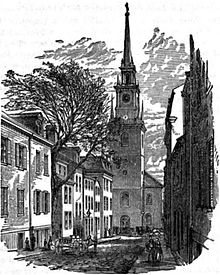
I am in my sunset years. At the age of sixty eight I know that my time will be limited. At this point in my life I am more concerned about the future of my children and grandchildren and former students than for myself. This is why I keep writing because if I am able to convince even one more person of the value of working toward a common good then my efforts will not have been in vain. I am but a tiny voice that will not be heard in the halls of power unless it is joined by others who share my concerns. Together we may be able to sound the same bell of freedom that rang in the old North Church on that night when our ancestors made a strike against the tyranny of a king who had gone mad with his own power. We are better than we have been for a while now. This I truly believe. That is why I write.