American Memories

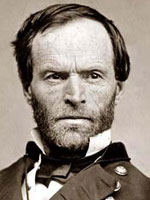
general-sherman-newWhen I was growing up in the south the mere mention of William Tecumseh Sherman’s name ruffled feathers. The stories I heard described him as a despicable general with a drinking problem who swept across the southern landscape burning and pillaging and destroying everything within his line of sight. Because I knew little about my own ancestry I assumed that at least half of my family connections were steadfastly rooted in the old Confederacy because my paternal grandparents had lived in Kentucky, Virginia, North Carolina, Texas and Arkansas for decades. Thus I blindly derided General Sherman for being so cruel to those I believed may have been some of my innocent relatives.

When I finally took a history course in college I came to realize that the reasons for General Sherman’s dramatic sweep were far more complex than I might have imagined. Both the Union and Confederate armies were exhausted and decimated from years of skirmishes that had destroyed the lifeblood of both sides. The country could ill afford to continue the war for much longer. President Lincoln had been searching for a military man willing to make difficult decisions and take risks that would end the conflict once and for all. General Sherman understood the need to break the resolve of the rebels. While his methods were harsh they were no more so than the steadily rising death count that ultimately took more American lives than any other war in its history. The ethics of his tactics have been the stuff of controversy ever since he burned Atlanta and cut his destructive swath across the Confederacy but others applauded his willingness to do what needed to be done.

I would later learn that from a familial stand point I was more closely connected to the Union and William Tecumseh Sherman that I might have believed. My great grandfather was an officer in the Union Army who fought at Corinth and Shilo among other battles. His predecessors had served in the American Revolution. When I finally discovered my family history I realized that I should have been singing the Battle Hymn of the Republic all along when I was foolishly whistling Dixie.

Imagine my even bigger surprise when I learned that my paternal grandfather’s legal guardian and uncle, John Little, was a graduate of West Point who had married General Sherman’s niece. While my official relationship to Sherman is tenuous at best it is still there because if John Little was an uncle to Grandpa then his wife would have been an aunt. The web of family relationships certainly brings surprises and I have had to rethink my own background.

Ironically I have a friend who now lives in a small town in Georgia that once served as the capital of that state. She is descended from German parents so there is little chance that she might have a link to either the north or the south during the Civil War. She is able to view the events of that sad time with more dispassion than most of us who have kin who were alive back then. She is attempting to learn as much about her new home as possible and in that spirit she came across a book about Sherman’s controversial tactics, Through the Heart of Dixie: Sherman’s March and American Memory by Anne Sarah Rubin. The story of his exploits is written from multiple points of view and it demonstrates in striking contrasts how differently we humans may see the exact same incident.

Sadly the majority of the history that we study tends to be taken mostly from the standpoint of the victors. We all too easily forget that without conflicting opinions wars would be unlikely. It is in our differences that our disagreements arise. It is rare that one side is all good and the other is all bad. Generally there are shades of innocence and guilt for everyone involved. When humans lose the ability to empathize and compromise situations usually end badly. So too when we meet with evil that refuses to budge we must at times flex our muscles. Knowing when to hold and when to fold often determines our strategies. Navigating through a dangerous and political world can become a high stakes game that requires hard choices that we would rather not have to make.

I once led my students through a discussion of the beginning of the American Revolution by reading different accounts of that fateful day on the village green when somebody fired the shot heard round the world. We looked at a letter from a British soldier and an affidavit from one of the colonists. There were eyewitness renderings from people who just happened to be present but who had little desire to become part of a rebellious movement. The incident was described by both men and women, political prisoners and historians. It is stunning how different the accounts are. The crux of each description is totally dependent on the beliefs and allegiances of each individual. All of this of course points to the reality that we have unique world views powered by the totality of our experiences. The way we react to or participate in events is rarely as straight forward and simplistic as it may initially appear.

To this very day the majority of Americans herald the Revolution as one of the most amazing moments in history, a glorious cause, but I often wonder how it might have been viewed if the British had ultimately been the victors. Would we hear of patriots or rabble rousers? Would the efforts have been seen as being heroic or foolhardy? Would the Tories now be considered the wise men who understood the folly of fighting the best equipped army in the world? How different would our history be?

I suppose I am reflecting on such ideas because I have lately been watching biographies of many of our twentieth century American presidents. A common theme for each of them is the interplay of the human strengths and weaknesses that drove them. Not one of them was either all good or all bad. Each had fatal flaws as well as remarkable characteristics. Sometimes they were blamed for events over which they truly had no control or heralded for triumphs that they had not actually achieved. The accidents of timing often made them appear strong or weak. Those of us who lived through their tenures regard them based on what did or didn’t happen while they were in office. Our individual circumstances color our thoughts.

The lens of history often attempts to create winners and losers. The truth usually lies somewhere in between. Knowing my family connections with the Union cause has filtered my thinking in new ways and has taught me the valuable lesson of suspending judgements and attempting to instead seek truths. The only way to do that is to be open and honest, something that seems increasingly difficult but not impossible to do in today’s partisan supercharged political atmosphere. I have learned to truly listen to alternative points of view, something that I wish more of the electorate were willing to practice. Once I accepted that each of us is sometimes right and sometimes wrong I have been able to see through the deceits designed to attract blind loyalty. I now rarely agree with anyone on everything. I have learned to consider each proposal and observation separately. It is a truly freeing experience albeit messier than accepting a single point of view. It is the kind of critical thinking that we must teach our children to do. Only then will we as a nation make choices that favor the good of our country rather than victory for our own personal needs.

The Simones

simone-biles-simone-manuel_mq9r77ikg0jq1jtwm8xlwuccrThe Houston Metropolitan area sprawls over more than five hundred square miles. It’s as flat as a pancake making its resemblance to a patchwork quilt rather striking. It is home to the most diverse population in the United States partially because of its proximity to a busy port but mostly due to an abundance of jobs and moderate housing prices. Even with its humid sub tropical climate, air conditioning makes it a great location for living and working so that people from all parts of the world have chosen it as a place to raise their families.

On any given weekend Houston area parents are out in force watching their little ones participate in sporting events. The sound of cheering resonates from soccer fields to baseball diamonds, natatoriums to gymnasiums. As a grandmother and godmother to very active children I have traveled from the Houston suburbs of Sugarland to Magnolia to watch the youngsters compete. I’ve watched them race around a track and get their noses crushed into the dirt of a football field. I’ve sat through days long swim meets and on occasion carted them to and fro from practices. I’ve watched them grow and mature into the sports of their choosing as they specialize and become more and more adept.

I have two grandsons, Benjamin and Eli, who have excelled at every athletic effort they have tried. They have been outstanding swimmers since they were barely five years old. Early on they were members of the Greatwood Gators summer swim team in Sugarland along with their older brothers who taught them all of the strokes and the secrets to diving into the pool. The two boys showed such promise that they decided to join the First Colony USA swim team where they now practice at least five days a week rain or shine, hot or cold. Their calendars are full as they participate in meets and camps across the region and the state along with the friends and role models that they have made along the way. It was in this way that they met another swimmer who was like a big sister to them. Her name is Simone Manuel and she has at times both helped and inspired them as they have slowly risen through the ranks of competitive swimming.

Benjamin and Eli understand as well as anyone how much dedication and hard work is needed to become a champion. They strive continually for the possibility of shaving hundredths of a second off of a race time. They compete not so much with others as with themselves. They are individuals and members of a team that encourages one another and celebrates victories together. Last night one of their own swam in the Olympics in Rio. They and their whole family and all of Sugarland and the Houston area were cheering Simone Manuel as she won the gold with an Olympic record, becoming the first African American woman to medal in swimming. I can only imagine how breathtaking and motivational this moment was for them. Simone had shown them that a hometown girl can become the best in the world. 

It was an exceptionally emotional moment for Simone and the rest of us weren’t that far removed from her feelings. Many of us cried along with her. We knew full well how much courage and effort it had taken for her to reach this pinnacle. We understood how much sacrifice she and her family have made. We also knew that she was a champion for our city as well, representing the true spirit of our town. It was a stunning victory that lit up Facebook and Twitter all across the city of Houston.

Simone Manuel’s feat of daring might have been reason enough to celebrate had she been the lone winner from the Houston area but on the very same day another Simone  was also in contention for a medal. Simone Biles lives in Spring, a northern suburb of Greater Houston, with her mom and dad. She is a tiny five foot eight ball of strength and delight. Since she was a small child she has been tumbling and honing the skills of a gymnast. She demonstrated a natural talent early on but it was her fierce dedication to the sport that made her a standout. Slowly but surely she rose through the national and then the world rankings until she had become known as perhaps the greatest gymnast of all time. Yesterday she proved once and for all that she is indeed the best of the best. She easily clinched the gold to be named the best all around women’s gymnast in the world.

Just as with Simone Manuel, all of the Houston area was cheering unabashedly for Simone Biles. We marveled at her athleticism and the sheer poetry of her skills. She seems to fly higher than any of her competitors. She is a whirling dervish who is able to leap and spin and twist and turn as easily as the rest of us walk from one spot to another. She is a miracle in our midst, a tiny but mighty young woman who seemingly defies gravity and all the rules of physics. Mostly though she makes us all so very proud to be Houstonians and Americans.

Simone Biles and Simone Manuel, the two Simones, represent the very best of who we are as people. We certainly need them at this stage of history. Of late it has been all too easy to become cynical and discouraged about the future of our country. When we witness two such remarkable individuals we recall all that is so very good and important about our nation. We are reminded by them of the work ethic that makes us all great. We realize the love and support from their parents that helped them to reach the pinnacle of their endeavors. Yesterday we witnessed irrefutable evidence that the future of our city and our country is still in very good hands in little corners all across the land. We celebrate with the two Simones not only because they are indeed great but also because they have restored our faith at the very time that we may have needed it most.

Last night’s Olympic games were “must see t.v.” I can’t think of another time when I have felt so elated by a sporting event. I cried with Simone Manuel as she won and as she stood on a pedestal while the national anthem played and our flag was so proudly flew. I cried again with Simone Biles when she realized the dream of a lifetime. I cried for the happiness that spread like wildfire through my hometown. Greater Houston was on the map and bigger than ever last night as two of its most remarkable citizens showed the world what the people here are really like.

I have always maintained that Houston is perhaps the very best place to live in all of the United States. What it lacks in scenery and good weather it makes up for in its people who all in all are a grand bunch of loving and hard working individuals. We live and work together here. We are focused on our children and our neighbors. Ours is a big city with a little town feel. Now we have two heroines to make us even prouder of this crazy wonderful place we call home.   

Remains of the Days

Mission_Concepcion_San_AntonioSan Antonio is a well known tourist destination. It attracts visitors from around the country and the world with the Riverwalk, Six Flags, Fiesta Texas, Seaworld, friendly citizens and a dedication to showing guests a good time. Virtually everyone who comes to the city takes an inspiring walk through the premier Texas shrine, the Alamo, but far too few realize that this sacred battleground was once part of a network of five missions that were built along the San Antonio River in the early eighteenth century. All of them remain standing even to this day and are easily found just south of downtown. They are a treasure that all too often goes unnoticed but one rife with history.

The missions were the work of Franciscan priests who travelled from the centers of power and commerce in Mexico to the northern reaches of the country to spread the Catholic faith and secure the land for Spain. The missions resembled Spanish villages in Europe, centering life around the church. The priests encouraged the local native people, who had traditionally been hunters and gatherers, to settle down with the offer of food and lodging. Because living off of the land was wrought with difficulties not the least of which were attacks from other tribes, many were attracted to the seeming generosity of the padres.

Of course the real intent of the priests was to convert and change the people. They considered it God’s work to baptize those who were willing to accept their religious beliefs, learn the Spanish language, and be trained to perform various jobs. Much of the labor that built the churches, buildings and walls around the missions was done by the local people whose culture quickly changed under the tutelage of the priests. They learned how to plant and grow crops. They helped to create aqueducts that directed water from the river to the village. They herded cattle and sheep and even became experts at making cloth. They became stonemasons and artisans. In fact the people of each mission were generally so self sufficient that they even had excess supplies of food that they often traded for goods from Mexico City.

Mission Concepcion is perhaps the best preserved of all of the San Antonio historical landmarks and is the closest to the present day center of downtown. Its church is much like it was back when it was an active center of daily living. Even the wall decorations are just as they were back then. The church boasts the Moorish influence seen in many Spanish edifices. It sits along an intersection of busy streets where passersby are moving so quickly that they seem not to even notice this jewel that shares its space with a seemingly forgotten neighborhood. At one time the St. John’s Seminary was next door to the mission but it was abandoned at the end of the twentieth century and is now a spooky mix of rotting buildings scarred with graffiti and neglect. Somehow the entire area is a mix of incongruous contrasts but Mission Concepcion remains gloriously beautiful in spite of the brutal passage of time.

Further down the mission road, which is actually Roosevelt Boulevard, is Mission San Jose which is a massive property that includes the official Visitor Center for all of the missions. It provides a glimpse into what the daily routine might have been for the priests, nuns, military and native people who once lived there. The remains of the wall that surrounded it as well as many of the original buildings are still intact. The church is active to this very day with priests living at the site and providing daily masses and other services for the parishioners.

Next is Mission San Juan located near a present day airport but still somewhat hidden from the view of modernity. It is a quiet place where the spirit of what happened in the long ago feels much more real. It is easy to imagine the gathering of people carrying out their routines of salvation and existence. The work must have been hard and relentless under the hot San Antonio sun. Everyone including the children had jobs to do. Sometimes there were raids on the food supplies and livestock from the Comanche who refused to join the white men who came to the land wearing strange robes and preaching of a God so unlike their own. Here there is a graveyard where many of the people were buried when they lost their lives to disease, violence and old age. It is a sacred place that lies quietly under trees that might have once shaded the very same people when they were alive.

The most rural of the missions is Mission Espada. It stands in a more remote field than any of the others. It was the farthest outpost and the only one that features bricks in its architecture. Like the other missions its purpose was to bring a measure of spiritual and political civilization to an untamed area of Mexico. The efforts were supported by both the government in Mexico and the king in Spain. As the European world colonized north and south America the Spanish government had claimed more land than any other country and missionaries were always part of the efforts to bring the Spanish culture and beliefs to the native people in what was then known as New Spain.

Texas eventually saw an influx of settlers who had come with the promise of a new start in life. When they believed that the Mexican government had reneged on those guarantees they fought for and gained independence from Mexico. The missions lost their importance and faded into history. Somehow in spite of progress all around them they remained as reminders of a forgotten time. They were saved from total destruction by the National Park Service which now serves as the protector of this amazing collection of history. 

It takes most of a day to explore all five of the San Antonio missions but it is time well spent. They provide a glimpse into an era long before there was a Texas or a United States of America. They are monuments that remind us both of our human strengths as well as our failings. Visiting them is much like going on a spiritual journey back through time. They should be at the top of the “things to see” list for anyone who chooses to travel to San Antonio.

We learn much about ourselves by studying history. Discovering how those who came before us did things reveals mankind’s mistakes and complexities. The Spanish missions were part religious, part political, part business much as most things are today. We might debate whether they helped the native people or hurt them. Perhaps it is impossible to ever really know the full ramifications of what happened so long ago. The only reality is that the missionaries came and we are lucky enough to be able to view the remains of their days in places like San Antonio. It is a gift to us to be able to glimpse the past, a destination that we all should seek.

Finding the Gold Within

Olympic-Rings-large_trans++X9gqeEfKXQcqd954t2rXzvTSL8SM4yNVj_ZSDGesqAMEvery four years we become divisive and we also come together. The coincidence of our Presidential election and the games of the summer Olympics creates a kind of love/hate situation in living rooms, at dinner tables and in neighborhoods across our nation. On the one had we speak of issues that divide us into camps and on the other we join together in cheering the best among us. There is a kind of irony in the magnitude of our difference and our sameness that fights for dominance over who we are as a people.   

The Greeks were one of the first nations to experiment with democracy. Theirs was a far cry from the present day government of the United States but the basic elements were there, at least for a handful of the citizens. Women were excluded as were many from lower economic classes and those believed to be outsiders. There were no representatives. Instead it was a system based on one vote for each eligible person with a simple majority determining the fate of any proposal. It was democracy in its purest form. It was the start of a grand experiment that would evolve over time and undergo many iterations. It would be hundreds of years before the grand idea of democracy morphed into a less chaotic and inclusive way of running a more just and fair system.

The Greeks were innovative people who instituted the Olympic games to celebrate the power and beauty of the human body and to bring the people together in harmonious competition. Back then the games were rather simple and the participants performed their athletic feats in the nude. Citizens gathered to watch the events and to cheer for their favorite contestants. The games provided a nice distraction from the hardships of daily life and the continuous discussions and battles that were an inevitable by-product of human attempts to live in harmony. 

The modern day Olympic games attract challengers from over two hundred countries and feature a variety of sporting events that the Greeks of old would not recognize. The athletes come with an array of coaches and specialized equipment. They train for years and rise through the ranks to become contenders for gold medals in their specialties. Just as in days of old there are national heroes among them as well as those deemed so extraordinary in their abilities that they are cheered as heroes by everyone.

The road to the Olympics begins in ordinary ways. A young child joins a neighborhood swim team or runs across a field with the speed of a deer. Somewhere an adult notices the talent and suggests that perhaps a bit of training may help the individual to improve. The most gifted youngsters demonstrate not just natural aptitude but a willingness to devote inordinate amounts of time and money to both learning and competition. Everyone can see that there is indeed something quite special that differentiates the best athletes from their peers. They and the adults who guide them are willing to work long and hard. They do not allow challenges to defeat them. Their quest for excellence becomes a focus for them and their families. Everyone sacrifices. Eventually they excel in the neighborhood, in the city, in the state, in the country and the world.

Few of us have the talent, the inclination, the support or the resources to embark on a journey to the Olympic games. It takes a very special set of circumstances indeed to be among the best in the world and yet every four years we are fascinated by the variety of stories that each of the participants bring to the games. From them all of us become inspired to achieve just a bit more in our own lives. The heroes of the Olympic games are the stuff of legends, human iterations of the gods of old.

My fascination with the Olympics began when I was still in elementary school. I watched an old black and white movie about Jim Thorpe and I was hooked. It told the tale of a native American who seemed able to perform any sort of athletic feat more ably than any of his peers. He came from poverty and want but on the field of competition he was glorious, winning at seemingly anything that he tried. Eventually he found glory and gold at the Olympic games. Sadly, different rules of the day and his own ignorance of them eventually resulted in a decision to strip him of all of his medals simply because he had once played on a semi-professional team to support himself. I remember feeling crushed by the unfairness of what happened to him but still regarding him as amazing.

Perhaps the greatest Olympic story of all is that of Jesse Owens who dominated the games in Munich at a time when Adolf Hitler was intent on spreading the myth of a super race of white men so perfect that they would be able to dominate the entire world. It visibly angered the dictator to watch a black man disprove his theories and served as a reminder to everyone that there is potential greatness in all of us regardless of background or race. The Olympic games have served time and again as the great equalizer that disregards the often faulty thinking of mankind.

During the next couple of weeks we have so many opportunities to watch the most remarkable men and women doing their best not just to represent their respective countries but to demonstrate the power of the human spirit. It is a time when we might teach our young that no worthy goal ever comes easily but with determination we all have the potential to realize our dreams. The games demonstrate, as one of the relentless commercials says, that all of us have gold inside our veins. We were born with abilities just waiting to be released and it is up to each of us to find out what those skills are and how we might use them to better ourselves and the world around us.

I watch the swim competitions and think of hot summer afternoons when I witnessed my grandsons earning multi-colored ribbons in the neighborhood pool. I see the track stars and recall cheering the same boys as they ran in weather so cold that all of the spectators were covered in coats and heavy blankets. I think of the young people dunking basketball after basketball at our local park. I see the bicycle riders struggling up mountain roads. I know that none of the competitors reached the pinnacle in their respective sports without a work ethic that would shame all of us and I applaud each and every person who showed up again and again and again.

I’m not much of an athlete. I grew up at a time when girls were rarely encouraged to pursue sports, especially in my particular family. I never had the kind of coordination needed to work with a ball of any kind. I mostly ran and rode my bicycle and twirled my baton. I practiced tricks on roller skates and learned to swim only enough to save myself if needed. I focused my time and attention on academic pursuits, a worthy cause but one that left me sometimes feeling incomplete. I have come to believe that we humans should develop both body and mind to be whole. I suspect that this is what the ancient Greeks were thinking when they offered their citizens philosophies, innovative political systems, art, literature, mathematics and athleticism. They understood that we are incredible creatures most especially when we strive to use all of our capabilities.

Genius of mind or body is found even in the farthest corners of the world. There is potential for greatness everywhere. Each of us needs to spend more time becoming our personal best and less criticizing those who look or feel or act differently. We are all part of the same team, the human race. When we face our own challenges and embrace everyone around us we all become better. We all find the gold.

Heroes

Wizarding-World-of-Harry-PotterThe love of reading seems to be embedded in my DNA. For as long as I can remember books have played an integral part in my life. They bring me pleasure and contentment. I enjoy a multiplicity of genres and always have. I like fiction as much as nonfiction, poetry as much as prose. The truly great writers capture the essence of the human experience. They introduce us to heroes, real or imagined. They ask us to think and consider alternatives. They transport us to new worlds and ideas. Reading is by far mankind’s most magical experience.

When I was in high school I had the same English teacher for all four years. He required us to read a new book each week and then write a general critique of it. At the beginning of my freshman year he gave us a list of all of the books in our school library and suggested that we enjoy as many of them as possible during our time as students. He not only encouraged but required that we select a variety of authors and topics to gain exposure to many different philosophies and ways of expressing thoughts. It was at times difficult to find the time to meet his demands while balancing all of the other tasks that were part of my life but admittedly I was the most content whenever I was lost inside the pages of a new book.

I came to know many heroes and anti-heroes. I learned that even the most remarkable individuals in fact and fiction had moments of failure in their journeys as well as triumph. I lionized the people who stood for purposes greater than their own. Perhaps my quest to find the goodness in mankind had begun with the fairytales that my father had once read to me. At the time that I sat next to him as he related the stories of triumph over tragedy I had little idea that I would one day embark on my own hero’s journey. When he was gone I became addicted to stories of saints hoping to find a pattern in their sacrifices and the secret to living a good and decent life. It was not until high school that I finally realized that heroism is far more complex than I had once thought. As human beings even the greatest among us often falter. There is never perfection.

There are particular authors who seem to understand our human strengths and frailties. John F. Kennedy’s Profiles in Courage describes unique situations in which individuals had the choice of standing for their convictions or mingling with the crowd. None of the people whose stories he told had particularly demonstrated the characteristics of a hero until the defining moments in their lives when they decided to do what they believed was right and just. In some cases it cost them dearly. In others it elevated their status. In every example their actions took great courage.

Sometimes we seem to have a dearth of heroes. We shouldn’t have to watch a Jason Bourne movie to experience greatness. It is doubtful that we will find true bravery inside the pages of a Marvel comic book. We want to see the real thing and most often find that it is hiding in plain sight in the most unlikely places.

My grandfather traveled across an ocean to a new world and worked from early in the morning until late at night to earn the resources to buy land and build a home for his family. He toiled in a meat packing plant cleaning carcasses and bloody floors. He was wracked with pain in his legs that he stoically endured. He and his children were taunted for being foreigners with unfamiliar ways. He maintained his dignity and his pride in spite of the difficulties that plagued him. He taught his children to work hard, remain optimistic and take full advantage of life’s possibilities. He insisted that they ignore insults and remain strong and confident. He was a hero albeit with his own feet of clay.

The new installment of the Harry Potter saga comes in the form of a stage play. It is almost Shakespearean in its theme. As the story unfolds we see Harry as a middle aged man, married with three children. His days of adventure are seemingly behind him but his reputation marks him as surely as the scar that reminds everyone of his story. Like many fathers he struggles to communicate his feelings to his children. He is a victim of the inevitable gap that separates one generation from another. As a grownup his heroism takes a new and less romantic form. J.K. Rowling wisely notes that even the greatest wizard has imperfections that make life difficult.

Perhaps we are all guilty of expecting too much from those who would be the heroes among us. We cringe when they make mistakes or say the wrong things. We seem to take joy in noticing their missteps. We magnify not only their accomplishments but also their failures. We place someone like Tiger Woods on a pedestal when he appears to be perfect but joyfully knock him down when he proves to be as flawed as the rest of us. There is something that is not quite right about our hero worship. It is filled with unrealistic expectations that no human being will ever be able to meet. With the media lurking around every dark corner it is almost certain that even the most generous and outstanding individual on earth will ultimately be accused of being a fraud. 

We have a terrible habit in this day and age of confusing heroism with a willingness to agree with us. We tend to disdain anyone who suggests that perhaps there is a different way of viewing things or solving the world’s problems. It is easy to bend and sway with the wind. It is far more difficult to adhere to integrity and endure the boos of the crowd. Sometimes it is that lone voice urging us to realize that the emperor has no clothes that holds the truths that we need to hear. Heroes are not always the most popular or the ones who make us feel good. Often they express truths that challenge our comfort and ask us to suspend our preconceived notions.

The history of the world demonstrates over and over again that we seem to get our heroes just when we need them most. They bravely guide us to be our own best selves.  They may do so quietly and without fanfare or with great flourish. They may live next door to us or in the halls of power. We never quite know when we will encounter them but we recognize them when we see them. They show us how to muster our hopes and dreams into a better reality if only for a brief moment in time. They are Mother Theresa and the woman who brings a casserole to the sick. They are Martin Luther King, Jr. and the man who helps a stranded motorist to change a tire. They can be the child who stands up to a bully or a senator who refuses to endorse a questionable political candidate. Our heroes are not just found between the pages of a good book. They are all around us and in the end they almost always set the world aright.