The Making of a President

Mount RushmoreI have often wondered what convinces an individual to believe that he or she is worthy of being President of the United States. I’ve read stories about former presidents like Lyndon Baines Johnson that tell of mothers or grandmothers predicting greatness at the time of birth. I just finished a biography of Bill Clinton which suggested that he had wanted to be President from the time that he was young and that he had convinced his friends and family that it would happen long before he was even old enough to run for office. Others, like George Washington, appear to have reluctantly taken on the job more from a sense of duty than a desire for power. Regardless of what motivates the individuals who have sought the presidency, I have to ask what makes them feel that leading our powerful nation is within the realm of their skill sets.

Most recently the Republican party fielded seventeen potential candidates. Several among them, including the eventual nominee, were seemingly ludicrous, reaching far beyond their abilities and yet each firmly believed that he/she was ready to handle the demands. The Democrats only had two choices, mostly out of deference to the woman that they felt needed to be given her due, despite the fact that her track record in public life is not nearly as outstanding as the party would like us to believe. The level of confidence that I see among political candidates is stunning and as an educator, mother and grandmother I would love to know how to inculcate such qualities of self worth in the many truly outstanding young people that I know. 

I found a hint as to what differentiates those who win the ultimate prize and those who fall by the wayside in a biography of Bill Clinton that I recently read. During his high school years young Bill was often bested by a young man who seemed more likely to be destined for greatness. In contest after contest he beat Bill and was well on his way to a political career long before Bill had won a single office. Along the way this man decided to drop out of contention. He quite simply disliked the price that he and his family would have to pay to rise through the ranks. He abhorred the loss of privacy and the compromising of his principles that seemed to be required in the political world. He left politics and instead rose to prominence in the private sector. Bill on the other hand molded his entire existence around an unwavering desire to one day be President. Virtually every choice that he made in life was predicated on the effect that it might have on his political career.

Right now it’s quite popular in educational circles to speak of the importance of grit in determining success in any endeavor. The people who eventually reach their goals are those so determined to make it that they are unwilling to allow any obstacles to get in their way. Perhaps it is resolve that is the ultimate factor in whether or not someone makes it to the top. If so, how might those of us who work with children teach them how to work hard and stay focused on the tasks that will help them to achieve? Are such skills innate or is it possible to cultivate them? For that matter do we even want to create hard driven adults or is it best to only encourage our young to follow their hearts wherever they may lead?

My father was somewhat of a perfectionist. I often believe that I inherited my own tendencies in that regard from him. I am admittedly a high energy, competitive individual. I want to be the best that I might possibly be at everything that I try. I am more than willing to put in the heavy lifting to get where I want to be. I once spent an entire summer perfecting a baton twirling routine with bumps and lumps on my head as proof of my work ethic. I am one of those people who will get somewhere early and be the last to leave to prove my mettle. Still when the higher ranks of the educational world were within my grasp I flinched. My school district selected me to be one of their leaders and was even willing to pay for the education and certifications that I needed. I ultimately chose a different path because much like the young man who had been Bill Clinton’s early nemesis I decided that I did not feel comfortable at the top. It felt too distant from the heart of schools, too removed from the students. I continued in a role that better suited my disposition, that of a facilitator, a right hand assistant.

One of my all time favorite professors taught a Public Administration course that I took when earning my Masters degree. He had spent years working on important projects on the Beltway in Washington D.C. He insisted that most of the policies that affect us are created by unknown people who work in the shadows of the many agencies that dominate our nation’s capitol. They are lifetime bureaucrats who are never elected and rarely leave even when a new party takes over. They know more about how things work in our government than those for whom we vote. They are the unseen drones who wield power over us without our ever realizing that they even exist.

Since first hearing about the worker bees who do the heavy lifting to keep our nation running I have found myself wondering if it is possible that they are indeed the most powerful, the Rasputins among us, the handlers who create the public faces of our leaders. If that is the case then maybe those who run for the highest offices have learned along the way that all they really need is a crew of smart and trusted associates to help them. They understand that they need not stand all alone in running a country or a state or a business. They do not become candidates for President because they believe that they have all of the answers but because they know which people will help them to gather the information that they need. That is a very different skill set indeed than the one that we often imagine is needed. It requires the mind of a manager, someone who has a knack for seeing the big picture and all of its working parts, someone who knows how to motivate people and stay on top of things. When viewed from this angle, it becomes apparent that the ingredients for the making of a president are far more complex than a few simple character traits.

The truth is that very few of us ever aspire to the job of leading a country. For those who do, the requirements seem to begin with a certain level of desire and confidence. Unswerving grit helps but matters little without intellect and managerial skills. Quite frankly someone without at least a touch of charisma may never achieve the loyal following of supporters needed to rise to the top. Finally the person must be willing to pay the high cost of public exposure which always exacts its incredible price. I suspect that in the end few of us would want such a life either for ourselves or for our children. Still there is nothing wrong with knowing how to encourage those very special youngsters who somehow have the strength of mind and body to endure the rigors of taking their exceptional abilities all the way to the top. A good parent or teacher sees the potential of greatness and shows the child how to develop it to the utmost. We never really know from whence the next Abraham Lincoln may come. He or she may be crawling across a room right now in preparation for one day leading us into the future.
  

You Just Might Get What You Need

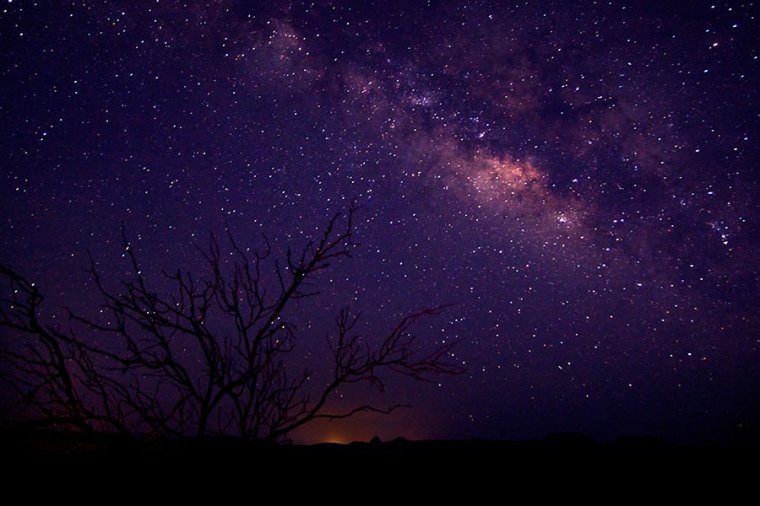
davis-mountains-night-skyFort Davis, Texas is a tiny town nestled in the shadow of the Guadelupe Mountains in the far western reaches of the state. It is a place with so little human footprint that it is home to the MacDonald Observatory and the annual gathering of the Texas Star Party. Here the stars at night truly are big and bright. Without the lights of more populous areas it is possible to see the nighttime sky the way it was once viewed by our ancestors. It is a place where it becomes easy to sense our place in the universe and in turn to shed the baggage of stressful times. In Fort Davis, particularly when the day is done, the stars, the planets and the creatures of the night remind us that we are part of a vast expanse of history that has come before us and is still yet to happen. It is a humbling and healing experience to be there.

Fort Davis came to be in the middle of the nineteenth century when the California gold rush led to an unprecedented western movement. The journey was long and treacherous, moving through deserts and land belonging to Native Americans who were becoming increasingly more concerned about settlers claiming property as their own. The fort was not just a way station for travelers but also a means of protection for safe passage. It was home to officers and their families as well as the famous Buffalo Soldiers, Black recruits so named by the Comanches who were fascinated by the dark skinned men. It was a rough and tumble society on the outer edges of civilization where everyone had to work together to keep things from falling apart.

The fort and its purpose lasted only a brief time. When the Civil War broke out it was used as a western outpost for the Union Army until the Confederates defeated the troops there and used it for their own purposes. After the war it once again became useful but not for long. It was abandoned late in the nineteenth century and sat that way for decades. Luckily there weren’t many people in that part of the world and so the buildings were never completely destroyed. They simply sat waiting for someone to notice their historical significance and to restore them to their former glory.

Today they are a living record of an era when many citizens of our country were seeking futures for themselves and their children. It takes little imagination to understand the difficulties of their journeys. The post is four hundred miles from San Antonio which now as then was the only major city in any direction. At a rate of five miles per hour, the wagons that carried the families were excruciatingly slow. Travel took more than ten times longer than it does today and that was if all other conditions along the route were perfect. I thought of how long it had taken us to pull our trailer from San Antonio to Los Angeles on our vacation and began to understand the sacrifices that the travelers had to make. I thought of the heat and the uncertainty of the road ahead and marveled that anyone might have felt adventurous or desperate enough to consider such a daunting expedition.

There is a hospital in the fort that holds records from the doctors who worked there. The stories tell of horrors such as the family that lost seven children in two weeks to diphtheria. The primitive nature of the treatments are as frightening as the injuries and diseases that found their way so far from the rest of humanity and yet the daily lives of the people who came here were often as routine as anywhere. They wrote to friends and family back home and celebrated the coming and going of the seasons. They drilled on the parade ground and periodically defended themselves against cattle rustlers and thieves. They watched the comings and goings of the pioneer families and no doubt observed the same stars at night that continue to brighten the skies. When they were gone they seemed to have been forgotten for a time but today thanks to the National Park Service they are remembered by people like me who walk in the shadows of their history with a kind of awe.

Fort Davis is now mostly a destination for tourists and astronomers. Those seeking refuge from the hurly burly of our modern times like to sit on the porches of the inns on the main street of town and listen to the silence. An old time drug store offers a daily menu of breakfast, lunch and dinner along with a soda fountain featuring banana splits and root beer floats. Fort Davis State Park has tent sites and full hookups for campers. The Prude Ranch which hosts the Texas Star Party offers horse back riding and a vicarious ranching experience. The MacDonald Observatory is a scientific wonder that hosts tours and star gazing opportunities for the public even while it studies the heavens and learns more and more about our universe.

There are things to do in and near Fort Davis for those who like to keep busy but it is also the consummate location for simply relaxing. We spent an entire evening just gazing at the stars which were so plentiful that it was breathtaking. Some people actually sleep during the day and stay awake all night long to watch the changing spectacle in the sky as the earth spins on its axis.

Being in Fort Davis is a priceless experience that puts life so clearly into focus. Somehow out where mankind has such a small footprint it is easier to understand that our days and our nights will continue in much the same way that they have for eternity and none of our worries will change that. It reminds us of the beauty of nature and the cosmos and urges us to realize that we owe it to ourselves and to the future to honor the miraculous magic of our world. It tells us to learn from both the courage and mistakes of our past. It challenges us to become protectors of humans and nature lest we lose what is most important.

We know more about how things work than at any other time in history but I suspect that just as our ancestors, we still have much to learn. We need not berate ourselves for the ignorance of those who came before us but instead should celebrate the knowledge that has allowed us to become better. Somehow both our history and our future converge in Fort Davis in a way that makes our path as the human race seem so much clearer. It is difficult to visit this place without changing just a bit. It is both spiritual and scientific, reaching into the head and the heart. You won’t find raucous and artificial excitement here but you just might find what you need.

Life In Color

5172363-joseph-and-his-coat-of-many-colors_331590I’ve read somewhere that dreaming in color is indicative of a creative mind. Not only have I never seen night time images in Kodachrome, but of late I don’t even dream much anymore which is probably related to the fact that as I age I don’t sleep for long stretches of time anymore. I am growing older and I come from a time far different than today. I was a small child when television was in its infancy. The programs that we watched on those tiny screens inside wooden boxes were in lovely shades of black, white and gray. We couldn’t even imagine that there would one day be an NBC peacock. We were as content to tune in to those colorless shows as we were to see images of ourselves in mostly black and white photographs. We were still a very long way from so many of the advances that now seem to be par for the course. The progress that we have made is good, as it should be. Those of us in our senior years are nostalgic but our reverie should not include a desire to return to outmoded ways of doing things.

I remember the great anticipation that ensued when the television series Bonanza became one of the first programs to feature living color. It was an exciting time even for those of us who did not yet own color televisions. Just knowing that someone, somewhere was seeing the green trees and blue skies of the Ponderosa was thrilling. We had entered a whole new world that would only become more and more brilliantly hued over the ensuing years.

It is all too appropriate that our modern day images be filled with a spectrum of reds and yellows and blues mixed together to create greens and purples and oranges. Life is a magnificent rainbow that includes the glorious variety of nature and mankind. There is a beauty in diversity that is never found in the dull sameness of black and white. We are all part of a colorful world that we should embrace but sometimes neglect or even refuse to do.

Just as we didn’t have color photographs or television back when I was very young we humans had a tendency to isolate ourselves from those whose skin appeared different from ours. We convinced ourselves that our ways were normal but in reality we must have known that it was not right to judge anyone without ever getting to know them. Eventually we allowed ourselves to be neighbors and friends with individuals of many different colors. We learned that we had been missing so much and that life was more vibrant and lovely than we had ever before imagined.

When I was just a girl I thought that I would never know anyone who was gay or a lesbian, but I was wrong. As those with differing sexual preferences began to bravely reveal themselves I learned that some of my friends and relatives alike belonged to a world that had once seemed so confusing to me but now seems so perfectly normal. The rainbow flag of the LGBT community is a beautiful thing that represents love. I wonder how we ever could have believed that caring relationships between any two people was anything other than beautiful.

With inventiveness and acceptance we have entered a brighter world filled with possibilities that seemed not to exist when I was young. We have shown that blending hues together is interesting and inclusive. The days of our ignorance should be gone but sadly they are not. Just as it would seem ludicrous to find someone still watching television from a small box with only shades of gray, it should be just as ridiculous to continue to harbor outdated thinking that is cruel, unforgiving and without reason.

As a Christian I was always taught that God makes each of us in His own image and likeness. If we reflect on that idea we realize that God is telling us that every one of His creations is wondrous and perfect. He loves us without conditions and wants us to feel the same. He sent His son to teach us how to behave. Unfortunately some of us never really understood the messages that Jesus made so clear. Not once did He preach that we should spurn those who are not like us. He often went out of His way to embrace those who were outcasts of society. I interpret His actions as meaning that the rules are very simple. We must love everyone, even those who appear to be or think differently. It’s not really that difficult to do. It doesn’t even take much practice. It just requires suspending all restrictions and coloring outside of the lines. We have to break the old rules to follow the new rules which are far more right and just.

Once we experience the colors of the world there is no turning back. We burst out of the boxes that have constricted us and see the watercolors that make life so much more enjoyable. We begin to realize that we only see different hues because of the way our eyes are processing the light. Being able to see the true appeal of all of the world is a gift that makes us feel more joyful. Without the great big box of crayons life would indeed be dull.

Winter has always been symbolic of death. With its withering and limited palette of variations in light it has a certain beauty but none as breathtaking as the riotous colors of spring, a time of life and renewal. We can choose the end of the seasons or the hopeful beginning. It us up to each of us to see the full spectrum of life and rejoice in it.

I am often saddened in knowing that we still have many people who are unwilling to change but I’d like to believe that they are more and more often becoming the minority among us. Slowly but surely we are shining the light on a more beautiful way of living. Because our young have always been more willing to take risks and embrace adventure, they are leading the way to more colorful tomorrows and that is good. Perhaps one day the pallid world of old will be housed in an ancient junkyard and all of us will view life in color. 

Dream Vacation

Amboy, Kalifornien, USA, Hist. Route 66By this time tomorrow Mike and I will begin a twenty one day junket to California in our travel trailer along with two of our grandchildren. We are either excitingly adventurous or stunningly crazy. The potential for problems when pulling a tiny home thousands of miles behind a truck in abnormally hot weather is high. We’ve already experienced a number of unexpected kinks in our plans on short hops in the past. We’ve practiced our camping skills time and again. We have overcome violent thunderstorms, excruciatingly long roadwork delays, appliances that failed to work properly, attacks by tiny insects and a host of other difficulties that shall remain unspoken. Now comes the greatest test of all. We will either demonstrate our mettle or fail miserably.

Mike and I both have ancestors who braved the unknown to travel to a new world. The earliest among his arrived on the Mayflower. Mine were latecomers to Jamestown. Over decades and then centuries our family trees grew more and more complex and the branches took our people from Massachusetts to Nebraska, Virginia to Texas. The hardy souls who were our third, fourth and fifth great grandparents sailed across oceans in cramped quarters that make our trailer seem like a grand palace. They pulled wagons into dense forests and over mountainous roads. They lived without electricity or running water and somehow survived. They learned how to adapt to the environment and willed themselves to overcome hardship and disease. I suspect that we still bear some of their traits and thus will be just fine in our full hookup campsites with wifi, swimming pools, laundries and grocery stores.

Our plan is to pick up our youngest grandson William in San Antonio tomorrow along with his sister Abigail. Our first stop will be at South Llano River State Park for a good night’s rest before navigating through west Texas to Carlsbad Caverns. We plan to spend an entire day inside the magnificent cave that is truly one of the world’s wonders. From there our journey will take us to Santa Fe. In a stroke of luck we will be in that cultural mecca during the International Art Festival that occurs only once a year. We hope to venture to the Anasazi ruins of Chaco Canyon while we are nearby area as well. After three days and nights we will continue moving west to Sedona, a place that is reputed to be so beautiful that we may be tempted to forego the rest of our trip so that we might enjoy the scenery and the welcoming environment for a longer time than one evening. If our timing is perfect we may even go north for the afternoon to catch the sunset over the Grand Canyon, a sight that we have already experienced but which can never be seen too often. Continuing on we will spend a night in Needles, California within striking distance of our ultimate goal, Los Angeles. For the next seven days we will enjoy the multitude of scenery and entertainment in both LA and San Diego. The return trip will take us rather quickly down I-10 through Arizona and New Mexico until we reach Fort Davis where we will tarry for a time before returning to South Llano River in Junction and then back to San Antonio to drop off the kids before returning home. It will either be a dream vacation or a horrible nightmare. It all depends on the vagaries of nature and the unexpected behaviors of our fellow human beings, not to mention the multitude of possible problems that may occur with our mechanical equipment.

I laugh when I think of how soft we modern souls have become compared to our forefathers. On this day I often think of them and the incredible sacrifices that they made in the hopes of improving their lives. Passage across the ocean involved traveling thousands of miles with only scant knowledge of what lay ahead. It meant never seeing family and friends again. Every moment of every day was fraught with problems and no luxuries as we think of them today. Even the old homestead of my great grandparents spoke of the hardship and depravation that was their reality only one hundred years ago. We have advanced to an extent that truly boggles the mind. The pioneers who stretched out across this continent so long ago would be stunned to see us going from Texas to California and back in only twenty one days. They would think it amazing to learn that we can watch movies inside our “iron buggies” as we move rapidly down a concrete road and that we are rarely far from conveniences that they never considered even in their dreams.

The first colonists in the United States of America came to a rugged and dangerous land. So many of them died before they even took their steps off of the ships that brought them. Some grew and prospered and others merely subsisted. After two hundred years generations of people had lived here under the auspices of a king and a country that they had never seen. Being ruled from afar by a government that little understood their unique situations became untenable and they rebelled. Theirs was a revolution against one of the most powerful countries in the world and on July 4, 1776 they brashly declared their independence and intent to form a new kind of government. It was a moment that was viewed with skepticism in the halls of power around the world and yet somehow almost two hundred fifty years later our nation stretches from sea to sea across a continent that still seems to be working out the kinks of determining its identity.

We were guided by humans to this very moment in history when all the world looks to us either with profound admiration or seething hate. We understand our flaws and continue to strive to correct them. We are desirous of being a kind nation but wary of being too soft. We struggle to strike a balance between love of country and understanding of our role in a global community. The old questions and disagreements that plagued our founders stalk us even today. Still we are remarkable and I suspect that our ancestors would be quite proud of our accomplishments. They would no doubt caution us to proceed into the future with an eye to preserving the foundations upon which this nation was built while adapting to the realities of a time that they might never have imagined.

Somehow it seems fitting that Mike and I will be taking our grandchildren to see the wonders of this glorious country of ours during the month that sparked our independence. Wish us godspeed as we travel and help us to find McDonald’s for our breakfast, Walmart for our provisions and Starbucks to quench our thirst and keep us alert. We are venturing into a modern day version of the wild. Let us hope that when we think of our trip in the years to come we will remember it as our dream vacation.


A Season of Bounty

Swinging-Bridge-at-Caddo-Gap-1I was six years old in the summer of 1956. It was a very good time in my life. Our family lived in a beautiful home within walking distance of my school. My best friend, Lynda, lived right across the street and from the time that we awoke each morning we rode our bicycles and played in the woods at the edges of our neighborhood. That summer my family traveled to Arkansas to visit my grandparents’ farm. It was a season of plenty in which all of my childhood dreams were beautiful. I had little idea that storms were brewing for me and that life was already difficult for others that I did not know. I reveled in the gloriousness of that time while ignoring the signs that something was not quite right.

Life with my grandparents was deliciously fun. We helped my grandfather milk his cow each morning and I vividly remember how velvety the warm milk looked as it filled the tin bucket with a foamy white mixture. I recall the feel of the cow’s utter and my amazement that my brother’s favorite drink didn’t actually come from the glass bottles that the milkman delivered to our doorstep each week. I can still smell the sweetness of the hay in the barn and hear the chickens raising a ruckus in their pen as the rooster strutted from hen to hen crowing for attention. How I loved being part of that scene and watching my grandpa’s strong hands do his work while he puffed on a pipe that hung from his lips and sent a lovely aroma into the air.

My grandmother took us on tours of her gardens and into the hills on their property wearing overalls, rubber boots, a long sleeved shirt and a huge wide brimmed hat. I thought it strange that she covered her skin in ninety degree weather but back then I did not yet know about skin cancer or the fact that her folk knowledge was so wise. She taught me and my brothers about the birds that we saw along our trek and instructed us on the kind of rocks that were strewn along our path. She demonstrated how to pick berries while checking for the presence snakes and showed us the proper way to drink the cooling waters from the creek. We learned about the land and how to protect it for future generations.

My brothers and I picked peaches alongside my grandparents, ignoring their warnings that we should protect ourselves with clothing that covered our arms and legs. We soon enough learned why our shorts and sandals were insufficient protection from the furry texture of the fruit that made our limbs itch as though we had been attacked by a thousand mosquitoes. At night we caught fireflies in jars with holes in the lids that Grandma had prepared. Our glass containers became nature’s flashlights until we freed the insects at the end of our play. Our grandmother created butterfly nets out of coat hangers and cloth. She taught us how to surprise the lovely winged creatures and catch them so that we might better observe them. Always she insisted that we let them fly free once we had watched them for a few minutes.

Grandpa took us into town to check his mail each day. We rode on the leather seats of his Plymouth which smelled of his tobacco and soap. He always wore a clean white shirt, polished black boots, suspenders and a big straw hat. He visited with his neighbors at the post office and bragged about us as grandfathers have been doing for generations. If we were especially good he took us to the grocery store and bought us each a cold soda that we selected from a big metal box filled with chunks of ice. I always noticed how much the townspeople respected him and I felt so proud and happy with him.

I had little idea back then how much the world was already changing. I overheard the discussions between my father and grandfather as they wondered what the governor of Arkansas was going to do about the order to integrate the schools in the coming fall. I didn’t totally understand what they were saying but their serious demeanors told me that it was something important. I didn’t know then that my family would soon embark on a nomadic adventure that would take us to California and back or that my father would be dead in less than a year. I had little warning that I would begin to see things happening in our country that somehow felt wrong even to my innocent and childish mind. On those hot summer days in Arkansas I saw only the bounty of the season. I felt as though I had landed in a kind of paradise.

All hell would break lose in the coming months when Governor Faubus would vow to never allow black children to integrate the Arkansas schools. My father would announce that we were moving to San Jose, California and I would grudgingly leave my extended family and my friends. I would watch as civil unrest took hold across the country and I would observe racism with naive confusion. I began to formulate a belief system that was far more generous than that of most of the adults that I observed. For the first time in my life I began to question their behavior as I realized that the bounty that I enjoyed was not shared equally by everyone. I was pushed by events into an early onset of maturity that felt uncomfortable and challenged the status quo.

Sixty years later I look back on that summer with mixed emotions. It was a joyful time that somehow masked the realities that were looming all around me. In a year I would feel like a different person but my lovely memories of that time with my grandparents would keep the light of optimism alive inside my soul. I would forever love the simplicity and honesty of nature while understanding the complex nature of human beings. I would see that I had been blessed by the random act of my birth. But for luck I might have been one of those nine students who had to endure violence just to go to school in Little Rock, Arkansas. I would watch as death, wars, assassinations and violence served as a backdrop for the years of my coming of age. I would witness the contradictions and hardships of the human experience always understanding how many blessings invariably came my way.

I still remember that wonderful summer of 1956 and cherish my recollections with all of my heart. I would ultimately find my way after the death of my father and learn how to find the bounty of even the most difficult seasons of my life. I had realized in that time just how soothing Mother nature may be. I had realized the depth of my grandparents’ love for me. I understood that I have always been part of something much bigger than myself and that I have never really been alone in my struggles. I found strength before I even knew that I possessed it. That summer would serve me well to this very day. I would find the bounty in life again and again and work to extend it to those who had not always shared it with me. Life has been good.