
 The vast majority of the earth’s people are good men and women, with honorable intentions. What confounds most of us is the fact that we are so divided as to what constitutes the best way of doing things. Each side proclaims itself the harbinger of all that is right and just. We are often forced to select between one philosophy or another, often with great difficulty. There was a time when we mostly kept our thoughts to ourselves and managed to get along quite well even with those whose ideas were diametrically opposed to ours. Now there is a tendency to “out people” and then defile them if they dare to contradict our own thinking. The great divide that exists across the entire planet has made it more and more difficult for those of us intent on keeping the peace to navigate among the differing points of view.
Social media is a wonderful place for seeing photos of our friends and family. We are able to vacation vicariously with the individuals that we know. We watch babies grow into lovely children and youngsters grow into young men and women. As long as things stay apolitical we seem to do quite well. It is whenever someone wants to express a thought that is important to them that we feel uncomfortable, sometimes to the point of avoiding those who have once been our friends. We don’t want to hear things that bother us. We want to keep the world more like Disneyworld. Sadly we have recently learned that even the land of Mickey and Minnie may be home to dangerous creatures who surprise us with their deadly actions. The truth is that we can’t close our eyes and hope for the best any more than we will ever be able to convince everyone to believe exactly as we do.
Lately I have noticed a number of people declaring their disgust with others. One of my former students participated in Houston’s Gay Pride Parade and heard shouts of hate being directed at him and the other participants. He was hurt and confused that anyone had the audacity to suggest that he was going to hell. A former colleague posted his supportive reaction to Brexit and endured negative backlash from people who had supposedly been his friends. In the present state of the world there are far too many among us who seem to believe that we must all adopt their points of view and abandon our own or run the risk of losing their acceptance of us.
It is always easy to open our hearts to those with whom we identify. There is nothing particularly magnanimous about embracing the people who are most like ourselves. In fact it always feels quite wonderful to have a sympathetic ear. We feel free to safely express ourselves with our philosophical twins. It is far more difficult to make an effort to understand people who totally disagree with us. We too often feel the need to either change their minds or turn our backs on them, neither of which is a particularly productive way to exist in a diverse world.
The American Civil War was a terrible time for our country. Over 600,000 men died in a conflict that need never have occurred. Abraham Lincoln was determined to bring us back together to preserve our union. The interesting thing about him is that to the very end of his life he never expressed hatred for those who had rebelled. Instead he attempted to understand their frustrations and was willing to forgive them once the battles had ended even as he fought with everything in his power to bring the two sides together once again. He strongly believed that he was on the right side of history but he also steered clear of insinuating that the members of the Confederacy were somehow less important or more evil than the those who had fought for the United States. He understood that the need for healing and forgiveness required that he open his heart to members of a group that sometimes hated him. Upon President Lincoln’s untimely death the forces that wanted to punish the South persisted. I think it possible that with a an approach more in keeping with that of Lincoln the divisions that still exist in our country might have been mitigated.
History is replete with examples of individuals who punished their detractors and those who somehow found the grace to listen to the cries of even their enemies. It might have been easy to punish the German people for perpetuity after World War II but a more understanding approach actually hastened their renouncement of the evils that had caused their country to descend into unspeakable horrors. Today Germany is a world leader in democratic ideals. I wonder if it would be so if we had instead brokered hardcore retribution at the end of the war.
There are indeed moments when we cannot and should not embrace those who would do us harm. When we encounter abusive individuals we need not accept their corrosive behaviors. Those who would kill or hurt us likewise need to be cast aside. For the most part though we should be more open to the people whose ideas are far different from our own. I believe that the rise of populist uprisings across the world is in part due to the fact that we have often been tone deaf to the needs of vast swaths of society. When we continuously ridicule and debase those whose fears are genuine they become even more determined to fight. When we place entire groups into a bucket of our own prejudices we run the risk of angering many among them. Sadly our tendencies of late have been to do just that. We are not willing to open our hearts to those that we don’t understand. We join groups that are like ourselves and build walls designed to keep differing points of view and lifestyles from entering our sphere of influence.
If we were to rationally discuss virtually any issue that concerns our country and our world we might find that only a small proportion of the people engaged in a particular way of thinking actually have evil intent. Most of us sincerely want to improve our environments. We simply desire different means of doing so.
As an inexperienced teacher I tended to discipline an entire class rather than seeking out those who were the real trouble makers. I soon learned that in subjecting my students to such mass punishments I only angered the innocent and turned those who might have helped me against my cause. Once I became more adept at classroom management I learned how to counsel with those who were actually responsible for the offending behaviors. Even at that point I often learned that they had somewhat legitimate reasons for defying my demands. By brokering mutual understanding my classroom settled into a reasoned peace. My students sensed that I was a just person, not authoritarian or patronizing. I once had one young man explain that he saw me as a fair, strict person, the perfect combination.
I try to react in a similar way to everyone that I encounter. When I heard a friend recently railing against guns, conservatives, whites, seniors and Christians I did not take offense even though I belong to at least three of those categories. Instead I simply let him know that I had heard his cries of frustration and understood the depth of his feelings. When I told him that I loved him he immediately softened his tone and apologized in the off chance that he had somehow insulted me. We both left feeling okay with one another. It happened because I was willing to open my heart to a situation that might otherwise have resulted in the loss of a good friend.
Continue to love those who are close to you but don’t be so quick to condemn those who choose different paths than your own. Keep your heart open. Demonstrate your willingness to love even those who seem to contradict everything that you believe. You may soon find yourself feeling much more optimistic about the world. It really is a good place and in the end most of us want exactly the same things.
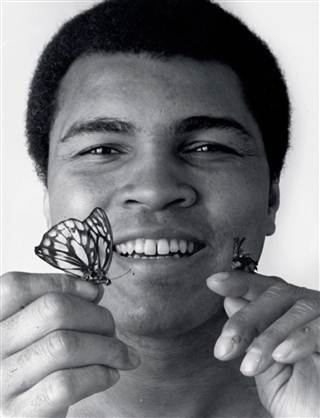 My early years at the University of Houston were marked by a highly charged political atmosphere. I was there during the height of the Vietnam War when young men the same age as I was had to register for the draft. Attending college gave them a temporary deferment as long as they were full time students, and made passing grades that allowed them to continue to progress toward a degree within a reasonable timeline. Back then the intensity and stress normally associated with the college experience was exacerbated by the threat of losing that deferment and being called to serve in the army. For many avoiding the draft was simply a matter of not wanting to be forced to serve. For others it was a matter of principle, namely that they did not want to participate in a war that they thought to be unwarranted and unjust. Others were strict pacifists who would not have wanted to fight under any circumstances.
  Normally I am a pluviophilia, someone who loves rain. I enjoy the mornings when the house is dark and all is quiet outside. With little fear that a random visitor will come knocking on my door I lounge in my pajamas and leisurely eat my breakfast while watching the precipitation fall on my garden. I feel safe and warm and think of how often my mother reminded us to be thankful for the roof over our heads whenever the weather turned frightful. Now that I no longer have to travel to work on inclement days I especially enjoy the roll of the distant thunder and the pitter pat of the raindrops on my roof.
  Memorial Day on the last day in May has come to represent the beginning of summer even though the laws of astronomy give that designation to a different date. It is a three day weekend holiday designated by Congress. There are few better times to buy mattresses or large home appliances. People flock to the beach on this day and gather around swimming pools and barbecue pits. American flags fly from the porches of homes all across the land. For many the true intent of Memorial Day has become lost in a haze of celebration having little to do with what this national holiday was originally intended to be.
 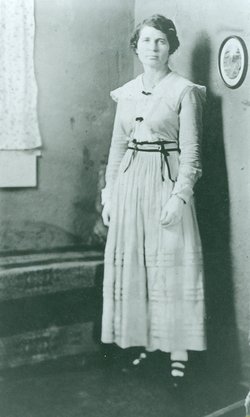 A former colleague and friend has agreed to help me include photographs in the body of the book that I have written. I’ve spent a great deal of time to that end sorting through boxes and albums containing images of family members that tell as powerful a story as the one that I have related with phrases, sentences and paragraphs. The old saying is that a picture is worth a thousand words and I have been reminded of the truth of that statement as I study each of the snapshots from my family’s history that have been forever captured in black and white, Kodachrome and pixels.
  All It Takes Is A Little Love