Unrest

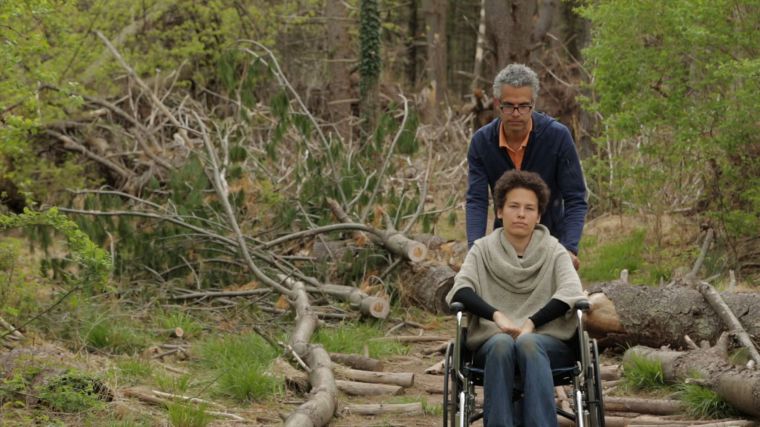
omar-jen-wheelchair-woodsShe is incredibly bright and beautiful, a graduate of Harvard who was about to complete her doctorate at Princeton. She was in love with a brilliant man and the two of them travelled the world together. They made plans to marry, have a family, build their stunning careers together, and then she caught the flu. It was a particularly harsh case with fevers of one hundred four degrees. When she was well once again she felt debilitated, but thought little of the residual effects. She had after all been very ill. She told herself that it would simply take time to regain her energy, but something was very wrong because instead of growing stronger she began to feel more and more weak. There were even times when her mind did not seem to work properly. She was unable to find the proper words to express herself. It was all so frightening.

Eventually her symptoms became so concerning that she sought the expertise of a medical doctor. He insinuated that it was all in her head, diagnosing her with what used to be known as hysteria. He suggested that she was reacting to some deep seated trauma that she most likely was unable to remember. He sent her home with no real explanation for what was happening, and she began to wonder if she was indeed going crazy. That’s when she got an idea.

The next time her symptoms became so severe that she literally collapsed in pain, unable to move or express herself, she asked her husband to film the incident. She took the video to a neurologist who was stunned by what he saw. He eventually told her that she had ME. Myalgic Encephalomyelitis, a strange disease that is thought to afflict ten to fifteen million people worldwide. There is no definitive test for the illness and no cure. The diagnosis is made based on symptoms alone which include excessive fatigue after mental or physical activity, intolerance to exercise, joint and/or muscle pain, memory problems, difficulty walking, sore throats, headaches, flu-like symptoms, sleep disturbance, bowel problems and mood swings.

The disease is also known as chronic fatigue syndrome and affects those who have it along a spectrum from individuals who endure a mild attack and then recover fully, to those who become completely homebound and bed ridden. There is no known cause but the disease appears to follow otherwise fairly typical and minor illnesses like the flu. Some believe that the roots of the problems lie in hormonal or allergy issues, but none of the research has proven any of the theories. It is a greatly misunderstood disease that sometimes results in psychiatric diagnoses rather than physical ones.

The woman whose life was so impacted by ME is Jennifer Brea, and she has a debilitating case of the disease that has radically altered the trajectory of her life. In a fashion keeping with her personality she decided to film her journey along with that of four other victims so that she might shed light on a mostly misunderstood illness. In conjunction with Sundance Films she created the documentary. Unrest, that chronicles her experiences as well those of the four others whose lives have been so radically changed after contracting ME. The film debuted on the PBS program Independent Lens this January and its power to visually explain what happens to those who have ME is emotionally visceral.

Jennifer Brea holds back nothing in her depiction of what ME has done to her and the relationship that she shares with her husband. She honestly expresses the fears and disappointments that plague her as much as the symptoms. She presents a compelling argument for more research by noting that those who are stricken often become like missing persons as they are forced to be hostages to their illness. She tells a compelling story of families broken apart and individuals losing their identities all while the rest of the world remains mostly ignorant of the horrors of this strange condition.

Her own story is one of the love that she and her husband share in spite of the problems that have so changed the way that they once thought they might live. She wants to be able to give him the kind of relationship that she had thought they would have, but instead is continually thwarted by recurrences of the most trying symptoms. Her husband has nobly stood by her, but even his patience is often tried by the confusing nature of his wife’s illness.

Ms. Brea shows a family in Sweden whose child was institutionalized in a psychiatric facility because doctors there were unwilling to accept a diagnosis of ME for her. Brea also introduces us to a woman who had been a happy wife and mother, one who had no idea that she would eventually be confined to bed with her own husband believing that she was just insane rather than physically ill. Her marriage deteriorated and she struggled to survive. When one of her daughters came down with the same disease her world unraveled even more.

The film is so personal, so real that those of us viewing the stories become involved with the characters, particularly Jennifer Brea herself. We watch her gaining strength and find ourselves hoping as much as she and her husband do that she will somehow miraculously improve. We cry with empathy as we become all too familiar with the struggles associated with ME.

Unrest is a touching and important documentary and quite worthy of the accolades that it has received. Hopefully it will also become the impetus for more research into the mysterious illness that it depicts with so much unflinching insight and compassion. At the present time very little is being done to learn how and why this illness affects certain people. There is only a smattering of interest in finding something that will cure those afflicted with its devastating symptoms. It is a grand mystery that shows no signs of being solved while real people suffer from the misunderstandings and lack of knowledge surrounding it. Hopefully Jennifer Brea has opened a door of awareness that will ultimately lead to the studies that will eradicate it or at least lead to more hopeful treatments. Perhaps just by spreading information about ME Unrest will at the very least bring more compassion to those who deal with its tragic effects.

Yesterday Today and Tomorrow

default-1464355425-834-scientists-believe-they-have-explained-the-great-flu-outbreak-of-1918A hundred years ago in the fall of 1918, there were many who seriously wondered if the world was coming to an end.  A great war was still raging in Europe and decimating the young male population. Across the globe there was unrest and a general feeling that life would never be quite the same again. The worst surprise of that autumn was to come in the form of a tiny virus not yet visible to the human eye with the microscopes of the day. It would lead to an outbreak of influenza that eventually killed as many as five million people worldwide and hundreds of thousands in the United States. One sneeze from an infected person had the potential to infect ten thousand, and for a time nobody knew what to do.

It appears to have begun at a military base in Kansas where it was first thought to be little more than the typical seasonal outbreak of illness. It soon became apparent that the new strain was unlike anything doctors and biologists had ever before seen. It started with coughing and a fever that quickly grew ever more severe. It filled the lungs of the ill with so much fluid that they literally drowned. Before long there were not enough beds or doctors for the affected, and not enough coffins for those who died. During the months of September and October of that year the disease spread like wildfire, sparking dire accusations that the Germans had somehow planted germs in the bodies of soldiers fighting in the trenches. The fact that German troops were just as susceptible to the sickness did not allay the fears of those who were losing loved ones and friends so rapidly that it felt as though there was nothing that was going to stop the rampage of death.

More American citizens died during those weeks than in all of the wars of the twentieth century, and yet there was no cure, no idea of what the cause might be. For some reason the virus was more likely to spare the very young and old, but was most deadly for strong and healthy adults in their twenties and thirties. It would be years later before researchers found the virus that had wreaked such havoc on the population, and began to understand that the sickness had burned itself out when those who survived became immune without any form of medical assistance. Our understanding of such diseases grew over time, but always there continues to be a silent fear that something similar may one day return to infect humanity like a plague.

I had never heard about the horrific influenza of 1918, until I read a book shared by my daughter. She is a nurse and science teacher who has a great deal of interest in such things, and she thought that I might find the topic interesting as well. I was stunned to learn about the horrific events and to realize that none of the older people I had known who would have been young adults during that period had ever mentioned the event. I was particularly surprised that my grandfather who was well known for his vivid stories of the past had not brought up the topic. Since I was unaware of that part of history I had not known to quiz him about what he remembered regarding that sad chapter, and so I was not privy to his eye witness account.

Historians conjecture that this particular episode must have been so personally horrific that those who had endured it did not want to speak of it again. Perhaps it was the impetus for the roaring liveliness of the twenties when people appeared to throw all caution to the wind. Living through such tragedy must have caused people to view the world much differently than they otherwise might have. Most certainly they would have wanted to blunt the memories that must have been quite horrific. When the next decade of frivolity was followed by a worldwide depression and eventually another war, the personal stories of illness and death might have seemed trivial to them by comparison. In truth, they would have been right to wonder if the bad news would ever stop, and when it finally did they most probably decided never to speak of it again.

My father-in-law served in Korea during the war there. He has only mentioned what he saw there once in all of the years that I have known him. His eyes filled with tears as he recounted his experience and his voice was shaky. It was much too painful a memory for him to think about for very long. I have noticed that my uncles who fought during World War II were just as reluctant to share stories of their adventures as were my peers who fought in Vietnam. I suppose that there are events that are so horrible that we prefer to bury the thoughts of them deep within our psyches. It is simply too much to dwell on them for very long. 

I suspect that those who were witness to the 1918 influenza epidemic simply did not want to speak of the unspeakable. They lost loved ones and friends in a matter of days and weeks. They worried that the horror might return at any moment. To dwell on their heartbreak and fears would have been unbearable and so they did not include mention of the outbreak in their tales of living. The story languished until curious souls began to ferret out the details and bring them to light once again. What is a curiosity for those of us removed by a hundred years was all too real for those who were there when it happened.

Each generation has its share of tragedy. For those of us who grew up just after World War II the events etched permanently inside our brains include the good, the bad and the ugly. We recall with clarity exactly where we were when John F. Kennedy was assassinated. It pains us to think of the deaths of Martin Luther King, Jr. and Robert Kennedy that made is wonder if anarchy was going to rule the day. Many of have personal tragedies that affected us as well, the death of a father or hearing that a friend was killed in Vietnam. We smile when when we think of the first man to walk on the moon, and recoil at the vision of the twin towers in New York City falling like toy constructions before our eyes. These things affect us and change us and our ways of viewing the world, but we don’t often speak of them because the thoughts associated with them are too powerful and emotional. I suppose that the reality is that no matter how conversant we are there are no words sufficient to describe such things, and so we are silent just as my grandparents were about so much of the history that affected them.

Today we have new worries, but mostly go about our business hoping and praying that none of our biggest concerns will ever take place. Our natures compel us to be optimistic and to carry on even when situations seem dire. Like Scarlett O’Hara we believe that tomorrow will be a better day and we concentrate our thinking on the future rather than the past and the present. It’s how we survive. Still, there is something so fascinating about events like the influenza epidemic of 1918, that we can’t avert our gaze. We have to look if only for a moment so that we might remember that we are not immune to the same kinds of heartbreaking situations that plagued our ancestors. We are as human as they were, and we can only hope that when faced with tragedy we will respond well and not be judged too harshly for any mistakes that we make.

It’s all too easy to form opinions of what might have or should have happened. but we will never know what we might actually have done if we had faced similar hardships. It must have been a dark time, but somehow those who came before us found a way to keep moving forward without focusing too much on a past that they could not change. Perhaps we might learn from them and embrace each new day as an opportunity rather than dwelling on the heartache of the past. Yesterday is gone, today is an opportunity, and tomorrow allows us to repair any mistakes we have made. It’s the cycle that keeps the story of humanity alive. 

The Best Gift Ever

24910097_1677760535622078_6615890065848693126_nI’ve always had my own ideas about religion and politics. I’m an independent renegade when it comes to both, but I still believe in those institutions even though I am quick to critique them whenever I see problems. Thus it was a great surprise to me when I was asked to head the religious education program for pre-schoolers and elementary students at my church many years ago. It was to be the first time that lay people would fill such positions because the sweet nuns who were beloved by the parish were moving away and there were no religious replacements.

Since I am loathe to shy away from challenges I accepted the job and learned that my partner in the endeavor was as feisty as I was. Ours was a collaboration made in heaven if you will. A staff of assistants already existed and the two of them agreed to stay to help us after the good sisters had left. Judy Maskel would be our secretary and all around font of knowledge. Much as it is with outstanding office personnel she had been essentially running the place for several years, and she would prove to be a strong foundation on which we would build a new way of doing things. It didn’t take us long to realize that without Judy we would have been running for cover within weeks. Instead she was an unflinching ally to our cause who somehow managed to very quietly gloss over our mistakes and help us to feel competent even when we were struggling with the task. Over time Judy became far more than someone who kept us from appearing to be fools. She became a good friend, a person whom we loved for her unending patience and sincerely sweet demeanor.

Judy was a beautiful woman with a shock of ginger colored hair and the fair complexion of someone of Scandinavian decent. Nothing was quite as important to her as her faith in God and her beautiful family. She was devoted to her husband and her lovely children and they returned her love. It seemed as though Judy had discovered the secret to balancing life’s demands so seamlessly that she maintained a kind of calmness and perfection in everything that she did. Being around her was an exercise in relaxation. She had a way of soothing even the most tempestuous situation and I grew to truly adore her.

Eventually our parishioners accepted the reality that we would never again have nuns to educate the children in the tenets of our faith. The transition was successful in no small part due to the support of wonderful people like Judy Maskel. She was so admired by those who knew her that folks began to feel that if she liked us, then perhaps they should as well. We pioneered a change that would not have gone so well without Judy.

In the meantime I had finally finished my degree and earned my certification as a teacher. Although I had loved my work at the church I wanted to move into the next phase of my career as an educator, and so I left for a position teaching mathematics. Nonetheless, I had grown so attached to Judy and the others who had been my daily companions in our endeavors that I was determined to continue our relationship.

As so often happens life took hold of all of us. We were busy with our jobs and our families and getting together proved to be more difficult than we had expected, so I began the tradition of gathering with the group at Christmas time each year. In the beginning there were five of us who met on an evening in December to sample goodies and talk for hours about our children and the events that had occupied us since our last rendezvous. It was always a glorious time and I began to laughingly refer to our little group as “the church ladies.” At some point we decided to bring little gifts for one another and it was always fun to exchange the goodies that we had either created or purchased. One of our members made homemade jams and breads that were always the hit of the season. Judy liked to bake little cookies and such now and again depending on how crazy her own schedule had been. Always she came with her smile and a laugh that looked at life from a vantage point of unadulterated happiness and optimism.

The years seemed to go by so quickly. Our children grew into adults and we rejoiced in becoming grandmothers. One by one we began to retire from jobs that had occupied us for decades. Judy had faithfully continued working at the church, watching over the children and the teachers and the directors with the same compassion that she gave so generously and effortlessly. Somehow she always felt like an anchor to everything that is most important in this world, so the annual celebrations with her had a very uplifting effect on me. Whenever December rolled around I simply could not wait for the day when I would get to see the ladies who had meant so much to me, and to enjoy that twinkle of mischievousness in Judy’s bright blue eyes that always brought a smile to my own face.

As we grew older our conversations began to be punctuated with stories of health problems that we were experiencing. One of our members developed cancer and ultimately lost her battle with that disease. Somehow her spirit always seemed to continue to be with us whenever we met, even as the years began to mount along with our own troubles.

Judy had been diagnosed with a rare disease that runs in the DNA of Scandinavians. At first her symptoms came in small doses and she was able to come to our gatherings with her old hopefulness and sense of humor. Over time the illness progressed, and even though she complained very little we were able to see her decline. She became quite thin and there were signs of worry in her blue eyes that twinkled less and less. She seemed preoccupied with her thoughts and her pain, but she was determined to hang in with us and to show us a brave front.

Last year she spent time in a rehabilitation facility. When two of us went to visit her she was struggling with her fate. It was apparent that the disease was overtaking her in spite of her courage and determination. She wanted to reassure us, but she no longer had the energy to protect us from the truth of what was happening. When she recuperated and returned home we were overjoyed and hopeful that she would somehow overcome what had seemed to be her ultimate demise. Even when she was unable to be with us at our luncheon we all managed to laugh and rejoice in what appeared to be her recovery.

As we began to plan for this year’s reunion we learned that Judy was in a nursing home in League City. A kind of pall came over those of us left in the group when we realized that she had become so sick. We were planning to visit her when we learned that she had died. Somehow it was shocking even though she had often explained the ultimate effects of the disease that had overtaken her. In a strange twist I found myself experiencing the same calmness that she had always provided me even as I felt the pangs of sadness. I smiled at the thought that she had truly become an angel in heaven.

That same night our city filled with a lovely dusting of snow. Our first sight upon awakening the next morning was heavenly and peaceful, and I immediately thought of Judy Maskel. It would have been so like her to find a way to ease our sadness. I wondered if perhaps she had been somehow responsible for requesting that God send us a little gift to make us smile. It’s certainly something that she might have done. She was always so thoughtful and giving like that.

There are only three of us left from our original group. We have plans to meet later this month. We will miss Judy because she represented the very best of us. Hers was a beautiful soul that always lit up the room with her unconditional love and patience. She quietly impacted everyone who ever knew her. She was a helpmate and a font of wisdom. The most remarkable gift that she gave us was herself, and that was the best gift ever.

She’s A Good Woman

betterdays

She’s a good woman with a very difficult life. She doesn’t complain, but it is apparent that she is tired. The stress in her life only seems to grow in spite of her efforts to keep things running smoothly. She makes the best of a bad situation. It wasn’t supposed to be this way. She’s adventurous and thought she would be having fun at this moment in her story. Instead life dealt her an unexpected curve to which she has responded with her usual aplomb. She’s a good woman, but one who has been pushed to the limit.

She saw an opportunity to really enjoy life with her man and they decided to grab the possibilities with gusto. They found a way to live out their retirement years in the mountains of Panama. They were healthy and hearty and would be around other expatriates, all for little or no cost compared to what they were paying in the states. They sold their house, their car, all but the most basic of their belongings and they were on their way to an exciting future with the well wishes of friends who understood that they were not ordinary souls.

They found a lovely place to live that came with a caretaker and a housekeeper who visited once a week as part of the rent. Their property was filled with exotic plants and animals and colors of every hue. They enjoyed the fruit that they were able to pick fresh from the trees and vines. They took long walks enjoying the vistas and the rarely changing mild temperatures that kept them feeling comfortable without a need for either air conditioning or heat. They enrolled in Spanish immersion classes even though most of the people around them spoke English. They wanted to totally experience the culture of their new home. It was all as wonderful as they had hoped. They had found paradise.

They met others like themselves, retirees who wanted to experience something a bit different from what they had known all of their lives. They would join their new friends for dinners and parties and game nights. They were an interesting lot with stories to tell of lives spent doing wondrous things. It seemed as though they had all found a tiny slice of heaven on earth and it was so good, at least until the unthinkable happened.

One day only six months into the move he had a stroke. It left him with difficulties that gravely limited his ability to do the things that they had so enjoyed. She immediately set to work helping him to recuperate because it is in her nature to do such things. She’s after all a good woman. Before long he was moving around the property with a walker. His appetite returned and she created healthy foods for him to eat. She worked with him to exercise his limbs and made the best of the unexpected situation. She kept his mind from drifting to dark places. She was devoted to his care and he was growing stronger by the day.

In spite of her efforts to save the remnants of the new and glorious lifestyle that they had created together it became apparent that he needed to be closer to his doctors. The long journeys into to town were tiring and took far too much time. She worried that another emergency might arise. They both agreed that it would be best to return to the states, and so they began to plan again. This time they wanted to try a small town instead of a big city like the one that they had initially left. Their research lead them to a college town in Georgia, the original capitol of the state. It appeared to have everything they might need. There would be doctors and a hospital nearby, an interesting history, a slow pace, and a reasonable cost of living. Perhaps he would even regain most of his health and they would be able to travel again, make new friends. It would be fun.

They packed their things taking mostly memories this time along with their clothing and the boxes of Christmas decorations that always followed them even when they left other items behind. They were excited about the prospects for the future as they boarded the plane but once again their hopes and dreams turned out differently than they had imagined. He had another stroke that left him more incapacitated than ever. For a time she spent most of her days with him in a hospital, preparing their new home in the evenings. He was bedridden, an invalid unable to even feed himself at times, but she’s a good woman and became more determined than ever to provide him with comfort and love. She took him home and has cared for him day after challenging day.

The weeks went by and then the months and the years. Her life is centered on his needs. She prepares the foods that he likes, changes his diapers, gives him his medications. She sleeps in another room but never soundly. She listens for his voice or signs of trouble. The home healthcare workers who come several times each week provide her with brief interludes during which she shops for groceries and sometimes even does something for herself. Now and again one of them becomes a friend.

She’s a good woman, but her life has become ever more difficult. She is far away from family and old friends. She finds new acquaintances at the grocery store or the resale shop where she finds gently used household items for her home. Now and again she meets someone at the apartment project where she lives, but they almost always eventually move away, and she has to start over again and again. She recently fell and broke her hip. It was one of the few times that her optimism began to falter. He had to go to a nursing home until she had recovered enough to care for him, but she was back on her feet in record time. She felt that she had to ignore her own needs because she saw him deteriorating at a rapid pace without her. She needed to get him home where she might shower him with her comfort and love. She worked hard at rehabilitating herself and sooner than anyone expected he was back with her again.

He’s very sick these days. He is plagued by infections. She is too weak to lift him as she once did. She feeds him and changes him and talks with him even though he is no longer able to communicate with her as in times of old when they talked long into the night. She makes the best of a very tough situation.

A few people from nearby churches try to help her. She celebrated Thanksgiving with one of the caretakers who comes each week to work with her husband. She calls old friends to have a lifeline outside of her tiny world of routines. She tries to stay positive but there is a hint of resignation in her voice. She is weary and worried, and every new challenge makes her a bit less steady in her resolve. Those of us who know her silently wonder how much more she will be able to handle. We know that she has always been a tower of strength, a survivor, and a very good woman. Still we want more than anything for her to finally get a break. God knows that she deserves it so.

She’s a good woman who has taught those of us who are her friends how to be so. She has shown us what sacrifice and dedication look like in action. We admire her, but also want to see her enjoying life without so many challenges. She’s a good woman who has certainly earned her angel wings, but we pray that she may also enjoy better times here on earth as well. If ever there was someone who deserves a run of good fortune it is this woman. My prayer is that better times are coming her way.

Celebrating a Life

celebrate-life-header

Many years ago an acquaintance of mine asked me to watch her mother while she ran an errand. I was somewhat surprised by the request because up until that moment I had not realized that my friend was the sole caretaker of an invalid parent. Still I agreed to help her, and so I travelled the few short blocks to her house. There I found a home that had been reconfigured to meet the needs of a wheelchair bound individual. A homemade ramp led to the front door and much of the furniture inside had been moved to the perimeters of the rooms to allow enough space for the chair to move freely. There was a station that contained medical supplies at the ready and a bottle of oxygen stood in the corner of the living area. One of the bedrooms housed a hospital bed and the bathtub had been converted to a walk-in model with handrails and a permanent seat bolted to the floor.

I was stunned to see the extent to which my friend had redone her home to accommodate her mother’s needs. After sitting with ailing mother for a couple of hours I also realized just how much my neighbor’s role as a caretaker dominated her life. I realized that watching an invalid as ill as the old lady was akin to looking after a baby. I had not even a minute to myself, and I was exhausted and more than ready to leave by the time my friend returned.

I developed a new admiration for my friend on that day. She had been responsible for her mother for many years, but up until then I had not understood how isolated her duties had made her, nor how much time and patience she had devoted to her mom. I marveled at how upbeat and positive she was as well. Never once had I heard her complain about her responsibilities. In fact, she always indicated that she viewed her job as a privilege, an opportunity to repay her mother for a lifetime of sacrifices.

My friend’s mother died not long after I my brief time of watching her. It was then that I learned what a vibrant woman the elder woman had been in her prime. I suspected that she had passed down her energy and optimism to her daughter, a bright light in our circle who was known throughout the neighborhood for her generosity. I had to admit that I would not have been as willing to completely reconstruct my life the way that my buddy had done for her parent. I always stood in awe of her but never got around to voicing the deep respect that I had for her. Eventually our lives took us in different directions and I lost track of her, but she has been one of the most inspirational individuals that I have known to this very day.

I often wonder why we humans are so reluctant to voice our compliments for one another. We tend to get so caught up in our daily routines that we never quite get around to saying the things that we are thinking. Time passes. Things happen, and before we know it our opportunities are gone. It makes me wonder how many people never receive the praise that is due them simply because we humans tend not to prioritize expressing our feelings.

I remember once seeing a comedy in which friends of a dying cancer victim staged a surprise party in which they one by one expressed the thoughts that they might otherwise have reserved for comments at her funeral. I felt that it was a grand idea and have wondered why we don’t do such things more often. Perhaps we worry that it will seem macabre or that it will take away the hope of someone who is fighting to stay alive. Perhaps we are just a bit superstitious about doing such things. At any rate  we always seem to wait until the person who should be the object of our appreciation is no longer around.

My brothers and I decided to give our mother a surprise party on her eightieth birthday. One of my daughters had the idea of getting everyone write letters in which they told Mama how they felt about her. It was a glorious celebration and one that I’m so happy that we decided to do. While we had thought that our mom would live well into her nineties, she actually died fours years later. I have often reflected on how sad it would have been if she had never read all the accolades that people sent to her. She kept the letters in a beautiful album and she read them over and over again. It was a fitting tribute for a great woman that might not have occurred had we not been in a party mood and used her birthday as an excuse to celebrate.

We have roasts for celebrities and special events to honor the famous, but we rarely do the same for those unsung heroes who work so hard but rarely receive praise. We should take more time to bring a bit of joy and recognition to special people that we know. It doesn’t have to be extravagant. We might invite a few good friends or family members to a potluck dinner and then surprise the individual whom we are honoring. Think of how wonderful such events might be. I suspect that it would make everyone involved feel good.

One of my cousins recently died. The outpouring of love and respect for him at his funeral was amazing. I’m certain that he saw what was happening from his heavenly perch, but I also think of how much more wonderful it might have been if we had all gathered to tell him goodby and to make those same speeches while he lay dying. He had told us that his time was almost gone. We knew what his fate would be, and yet so many of us held back our stories and the true extent of our love for him until he was gone. While I suppose that our comments at his wake helped his family, I know that he would have enjoyed hearing them for himself. Who wouldn’t want to know how much people care?

We need not limit our praise parties for those who are ill, or dying, or old. We can just agree that someone that is quite special deserves to be an honoree. Our fetes might be large or intimate. It doesn’t matter how spectacular are efforts are as long as we get those feelings out in the open where they belong rather than hidden away in our hearts. So get busy now and begin the process of sharing your admiration and gratitude. Even if it is only a phone call, a note or a card your words of tribute need to be heard. Someone who is special to you is just waiting to learn what you have to say.