Free to Pursue the Truth

america ancient architecture art
Photo by Pixabay on Pexels.com

The truth is found when men are free to pursue it.” —-Franklin Roosevelt

So we have a football player objecting to all sorts of American flags and many conservatives objecting to him. We have baristas at Starbucks asking law enforcement officials to leave because they are triggering other patrons. This person bothers that person and before long we are removing books from libraries, taking down crosses and monuments, refusing to shop or eat in certain places. How about just calming down and allowing each individual the right to his/her own thoughts, occupations, and choices? As long as nobody is being hurt why do so many of us come unglued? The thought patrol is making it feel dangerous to express ourselves publicly, because even the most benign ideas have the potential of being misunderstood, misinterpreted, and considered offensive. The mere choice of a wrong word may unintentionally cause pandemonium.

The quote that I chose to use at the beginning of this post might be construed to be sexist because it applies the word “men” to all humans. The idea of freedom to pursue the truth in today’s world often involves narrowing the parameters of what and who a person may choose to study. Unlike the days of my youth when I was encouraged to consider multiple points of view including before drawing conclusions, these days it has become risky to admit to actively searching out the merit of diverse ideas. Now there is a kind of closed mindedness requiring each of us to choose a particular side and then eschew all others. It flies in the face of all that I was taught to view as the pathway to wisdom.

I’ve learned over the years that there is rarely perfection in any person, organization, nation. As humans we make mistakes. Judging anyone or any group or any idea with a snapshot of only one moment is a ludicrous act. Instead we have to consider the totality to truly understand the nature, the character of all human pursuits. Each of us grows and evolves and changes over time as do even organizations. It matters less what someone did or said as an adolescent than how that individual eventually chose to live. Few of us would pass muster if the only yardstick for determining our morality were to view a few random moments from our youth. So t0o it often is with people who have spent decades in the public view. Our question should always be how they have changed to become better versions of themselves, not how they once were. The same is true of our country.

What I have always loved the most about being a citizen of the United States is my right to express myself without fear of being incarcerated or ruined. I have always understood that I had to follow certain guidelines with regard to my job because when I spoke, even in the private sector, I was still representing my employer. Nonetheless I always felt comfortable in supporting causes that I believed to be important. Mostly nobody really cared one way or another if I differed with them. Of late, however, it suddenly feels very different. People seem compelled to argue with me and tell me that they are disappointed whenever my views differ from theirs. Complete strangers come unglued by the mere mention of certain hot topics, even when I point out that I am attempting to hear the voices of as many different philosophies as possible before drawing conclusions.

It has become fair game to be close minded. Even in our universities where free thinking was once the norm, we shut down alternative discussions in the name of making everyone feel unsafe. Our debates are no longer ways to display differing ideas, but rather showcases for solidarity. Nobody wants to stray from the party line lest they be derided for abandoning the mutual cause. The result is a kind of stagnation of thought that is preventing solutions to very real problems and causing fear among those who genuinely wish to carry on lively discourse to find the truth.

I become wary whenever I hear the same phrases being mindlessly repeated again and again. I know that I am in the midst of propaganda rather than receiving facts. I have to explore different sources on my own, hoping that there will be people who have been willing to speak rationally about various topics even as they worry that their words may land them in a world of trouble.

We still have liberty in our country, but it does not feel as comfortable as it once did. The thought police are everywhere making it feel a dangerous game to engage in meaningful dialogue. As a nation we are far too busy pontificating rather than asking questions and then really listening to the answers. Sloganeering has become the fashion and in the process it is eroding the very freedoms that the grand experiment begun by the founders of this nation had hoped to achieve. So far we have yet to completely cross the line into tyranny, but our freedoms are threatened from both the far right and the far left. It’s time we demonstrate the courage to protect our precious liberties by letting those who would constrain our thoughts know that we are not so easily intimidated or bribed into submission. We are thinking people who want facts and information, not politicized propaganda.

Our process for selecting leaders has become as silly as a high school popularity contest or a beauty pageant. We don’t need clever soundbites, or demonstrations of insulting behavior. We need concrete ideas that are likely to actually become solutions to looming problems. We also need leaders who will accept our many differences and then use well thought out judgement to work for all the people, not just a small slice of supporters. It’s time for each of us to once again feel free to pursue the truth.

The Backbone of Society

pencils in stainless steel bucket
Photo by Pixabay on Pexels.com

It’s that time of year when the sun bears down hotter than ever and we feel as though we are in the true grip of summer, which means it must be nearing the end of July and the time to purchase those school supplies. I still work with a handful of kids so I usually head for the stores about now to replace my Expo markers, pencils, spiral notebooks and such. The prices are just too good to ignore, and come January not only will everything cost more but it will be difficult to find.

Lots of big box stores are offering discounts to teachers which is a grand idea because every educator that I ever knew spent a good portion of the first paycheck of the school year readying the classroom. I kept mountains of lined paper, sharpened pencils, and pens in my cupboard for those students who came in without supplies. I never minded helping out even those who carelessly came to class without the things they needed. I had no patience with lecturing them about being responsible during the short time allotted to me for teaching them mathematical concepts. It was far easier to just wordlessly point them to the table where I always had some necessary items waiting for anyone in need. The remarkable thing is that the students often rewarded my generosity by repaying me with even more than they had initially taken, so I rarely ran out of my little offerings for them.

I wanted to have an inviting classroom so I was one of those teachers who joined the crowd at the teacher supply store that used to be a big draw in southeast Houston. It was like Christmas in July as my fellow educators filled the parking lot and jammed the aisles with carts filled with all of the items that might make the classroom environment more exciting for the kids. I got tired of the crank pencil sharpener breaking down at an inopportune moment, so I invested in a heavy duty electric one that cost almost a hundred dollars. It was quite an extravagance but it lasted until the day I retired at which time I passed it on to my nephew along with the mathematical manipulatives, and algebraic thinking books that I used for problem solving sessions.

I’d be at the school readying my classrooms days before the official return date. I learned over the years that administrators provide very little time for the actual process of putting a classroom in working order in the frantic week before the students arrive. Somehow principals always seem to think that the lovely environments created by the staff just miraculously pop up like mushrooms over night. Luckily I learned the tricks of the trade over time from real pros who had stayed the course and demonstrated their dedication to the ideals of teaching.

The teachers in Texas will receive a raise of some kind this year depending on how each school district decides to dole out the funds provided by the state legislature. It isn’t a great deal of money, but every little bit counts. No doubt much of it will be poured right back into the classrooms by educators eager to make a difference to their students. Altruism runs deeply in the hearts of most of the teachers I have known. Those who are less concerned about the welfare of their students usually burn out in a few years and head for more lucrative and less stressful careers.

Society spends a great deal of time discussing the pros and cons of the worth of teachers. What they rarely discuss is how exceedingly devoted the vast majority of them are. Theirs is a difficult job beyond measure. The rewards rarely come in the form of pay or bonuses. Instead they receive intangible feelings of great purpose, a sense of doing something special for thousands of individuals, many of whom rarely stop to realize how much teachers are responsible for the successes that they ultimately achieve.

I was listening to a discussion of how various occupations are valued. Most of the time the highest paying professions are the ones that return most monetary compensation to a company. Invariably such analyses point out that teachers do not generate income therefore they are more of a drain on resources. Such thinking contributes to the lower salaries that educators have historically made. In truth each teacher ultimately provides vast amounts of capital to the economy. It does not happen directly, but over time the students that educators have prepared will enter the workforce and contribute mightily to the coffers. Teachers are the foundation of the economic system, helping to mold future doctors, lawyers, inventors, and entrepreneurs. Bill Gates certainly has a level of natural genius, but along the way there were teachers who helped him to become the person that he is today. Educators are the silent force that keeps our world moving forward, and they do it without a great deal of fanfare or recompense.

I applaud any efforts to recognize our nation’s teachers. In reality we should be celebrating them even more than we presently do. They are the backbone of any nation, in many ways the most important people in society. You may soon see them in a Target or Walmart near you. They will be the ones filling their carts with extra supplies to make life better for your children. The least you might do is to thank them. 

First Do No Harm

grayscale photo of man woman and child
Photo by Kristin De Soto on Pexels.com

I live in Texas along the Gulf coast. My father spent his teenage years in Corpus Christi, Texas, a place where he met his best friends and from hence he learned his love of fishing. He longed to return there to live one day, but he was never able to find a job, so Houston was the next best thing for him.

I grew up visiting Corpus Christi often and hearing my dad’s stories of how wonderful the place was. On top of having it’s own unique culture and feel, it is only a hop, a skip, and a jump from Laredo, a border town with Mexico. As a kid and then as a young adult a trip to Corpus Christi sometimes was the gateway to a quick jaunt to the other side of the Rio Grande. Things were quieter and safer then, so families traveled back and forth between the United States and Mexico with little or no fanfare.

I was raised in a Catholic family which meant attending Catholic school. Back in the day our Catholic parents believed that it was their duty to send us to the nuns and priests for our education. We not only learned the three Rs, but also studied the foundations of our faith, which included discussions of the Ten Commandments and sin.

I sat in classrooms with many of the same kids for years. We became like brothers and sisters. I never noticed that our last names read like a roll call of the United Nations. I did not even think to classify my classmates as Italians, Hispanics, Czechs, Germans or such. We were all just peers seeing each other at school Monday through Friday and then again at church on Sunday. I was probably in my sixties before it fully occurred to me that names like Luna and Villagomez indicated Hispanic heritage of some sort. I seriously just saw people as people because of my upbringing.

My mom and her siblings were first generation Americans who were often taunted not just for their ancestry from Slovakia, but also for their religious beliefs. Nonetheless they eventually melted into the great big pot known as the United States of America, and followed both the customs of both their country and their religion quite earnestly. My brothers, and cousins and I were taught to love our nation and our church as well. Mostly we were cautioned to view life as beautiful and sacred. My mom always asserted that people are people and our differences are usually only skin deep. She believed that inside our hearts we are all pining for the same things.

I’ve been rocking along for my seventy years living the way I was raised with a devotion and gratitude for my country, my state, my church, my family, my friends, and all people. For most of my life I enjoyed a career as a teacher, and many of my students were recent immigrants just as my mother had been. Most of them had come from countries in Central and South America. They struggled with many of the same issues that my mom had faced, and so I felt a particular impetus to help them to feel welcome and beloved in their new home. I also realized that some faced the additional challenge of being so called illegals. They had been brought to Texas as children without any of  the proper papers. They grew up in a state of fear that they might one day be forced to return to a place that had become foreign to them. They were the “Dreamers.”

Of late politics have pushed two issues to front and center, namely immigration and abortion. Ironically those topics are at odds with the way I was taught to think, which is to value human life above all else. On the one hand, I worry about the people fleeing to our borders in attempts to escape hopeless lives, and on the other hand I am increasingly appalled by the almost blasé attitude of the murder of unborn children. The irony for me is that quite often those who are concerned about the immigrant issues think of abortion as simply a matter of choice rather than violence, while those who are adamantly opposed to the influx of immigrants without limits are often deeply saddened by abortion. Somehow I see the two has having much in common, and find it difficult to understand the inconsistencies in current thinking.

I was therefore rather excited to learn that there is a group of pro-life women known as the New Wave Feminists who are demonstrating their genuine concerns for all people and all life by raising funds to bring the immigrants now being held at the border the kind of supplies that they so desperately need. In other words, they are putting their beliefs into action rather than simply complaining about the situations. Their spokesperson, Herndon De la Rosa has expressed their thinking quite beautifully, “We are pro-life because we care about the inherit human dignity of every living person, inside the womb and out,” Herndon-De La Rosa says. She feels a heightened responsibility to not look away from people at the border because “as a Texan . . . it’s happening in my backyard,” she notes. “All are vulnerable and all are human beings.” (National Review, July 8, 2019)

We have too many politicians these days who seem to believe that being bipartisan or using consensus to solve problems is a sign of weakness. They think that there is only one possible way of seeing issues, and anything less than total victory for their causes is unacceptable. As  a result, much of the humanity that I was taught to treasure is being hurt while the fights between ideas rage on. We are indeed all human beings and all vulnerable. Our instinct should be to first do no harm, and then find a way to hammer out a way of dealing with our differences in a manner that considers the value of all humans.

I am not so naive as to think that any of our problems will be easily solved or that our solutions will be perfect, but the reality is that both the living and the unborn are suffering even as we rant and rave with one another. Surely it is time to consider that we will ultimately be stronger by remembering to love while we determine how to honor the inherent dignity of all persons both living and unborn. Long ago we got it wrong when we allowed slavery to continue as we began our country. Perhaps it’s time that we learn from our mistakes of the past and move forward together. 

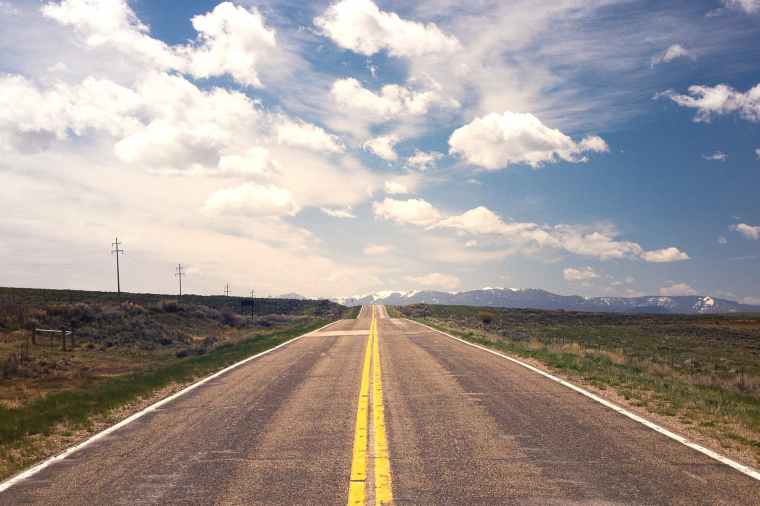
I Am the Median

road sky clouds cloudy
Photo by Gratisography on Pexels.com

From a statistical point of view my life has hovered around the median. I represent continuity and moderation and a mix of conservative and progressive points of view. While my life was tragically made a bit unusual for the times in which I lived by my father’s early death, that anomaly was mediated by the environment in which I grew into an adult. I am a product of a small and insular neighborhood in a time when my native city of Houston was still more of a town than a city. My life was guided by routines and traditions that rarely varied. There was an entire village of people both familial and unrelated by blood who watched over me. I grew strong and happy and so loved that I was ready to tackle any challenges that came my way. As an adult I was so busy attempting to reconstruct my own sweet world for my children that I barely noticed how much the times were actually changing.

When I was seven years old I was uprooted from everything and everyone that I had ever known to accompany my family on a journey west where a quiet revolution of opportunity and change was overtaking people like a fever. My days there were painful because I had lost the anchor of extended family and friends that always made me feel so secure. I was among people who were so busy building dreams that they had little time to welcome us. I went to school each day feeling nameless and misunderstood. Ironically my father felt the same way at his work. None of us ever fit in to the race for something unknown that so dominated life in the part of California that would one day be the epicenter of Silicon Valley. Before long we all just wanted to be back home in Texas.

With little more than a wing and a prayer we slowly made our way back to what we had known. Along the way my father searched for a job. His efforts to find work lead us all the way back to Houston, and for the very first time in a long time I recall feeling quite relieved even though we had not yet settled into a permanent home. My father’s deadly car accident left my mother bereft and scrambling to create a sense of continuity for all of us. Luckily we had returned to the people for whom we had longed when we were far away and they gathered in unison to help us every step of the way. Oh, how I loved them and still do!

My mother wisely returned us to the very neighborhood from whence we had moved only months before. We were welcomed like the Prodigal Son. Our life began its constant revolution around church, school, family and friendships. There was a lovely sense of calm about the way we lived. We stayed in the same house until all of us were grown and on our own. We had the same neighbors for years. It was rare for anyone to move away back then. When we went to church each Sunday we saw the familiar faces of people who smiled and greeted us by name. We attended the same school with the same kids who are friends with us even fifty years later. Each Friday evening we visited my maternal grandmother in a gathering that included all of my aunts and uncles and cousins. In the summer we traveled to visit with my paternal grandparents on their farm.

We constantly heard stories from our elders about the history of who we were that carried little nuggets of expectation without being overbearing. At church we learned about the comfort that is always available from God and the ways of compassion and love that Jesus taught the world. Our teachers and our parents spoke openly to us about both the greatness and the imperfections of our country, urging us to always remember our responsibility to maintain a healthy democracy.

We were always a bit behind the fads and movements along the two coasts of the country. We were more inclined to study how things went there before jumping into the idea of adopting radical change without much thought. Our lives were slow and steady like the tortoise. We knew that we would eventually get to our desired destinations, but we did not want to lose sight of more important things like family and friends along the way.

Suddenly it seemed as though both the innovations and the cautions that were brewing along the two poles of our nation roared up around us, forcing us to see the world through different eyes. The titans of media and advertisement from the east coast were burrowing into our brains with television. The movie moguls influenced us with films. Finally the masters of Silicon Valley invaded our lives with computers and smart phones and a burgeoning social media. People began moving around and moving up. Extended families had less and less time for each other and friends were often on the go. We woke up one morning and the city of Houston had become the fourth largest metropolitan area in the country.

Some of what happened while we were sleeping was very good. There were breakthroughs in civil rights that were imperfect, but steps in the direction of equality. Women were provided more opportunities than ever and their voices began to be heard. We acknowledged that love is love regardless of whether the people who express it for one another are man and woman or man and man, woman and woman. Medicine and science made our lives easier and our affluence grew.

At the same time we have lost many things as well. Our neighborhoods flux and flow to the point that the relationships that we form there are constantly changing as people move from one place to another. Our extended families are in far flung places and gathering our relations together becomes more and more complex. Our churches and our beliefs are continually challenged. We fear for our children to play outside alone. We argue and rankle with one another and wonder if how far we change is enough or too much. We feel as though we are being ruled by extremes, either far too cautious or far too willing to upend all that we have known. We have lost our sense of history and our willingness to accept that none of us, not even ourselves, are free from the taint of bad decisions or hurtful behaviors. We judge and decry those who do not share our own philosophies. We honor those who boast and demean while turning our backs on the people who live with quiet dignity and respect. It feels as though we are somehow being manipulated by some unseen hand as though we are merely robots. None of it feels good, and some of us long for the good old days not because we are unaware of the problems that some people faced while we were comfortable, but because we need to bring the village of diverse people who loved us back together once more. We need to feel that sense of chest bursting pride in our families and friendships and churches and cities and states and our country that might have once brought us to a sense of belonging to something special.

We have many folks attempting to understand our thinking and our motivations and I suspect that they are getting us all wrong. They tend to make assumptions about us based on their own backgrounds rather than ours. Suddenly I find myself feeling untethered much as I did when I was seven years old in an environment so different from what I had always known. I understand how it must have been to be my father daring to dream, but realizing that he did not quite fit into a way of life so unlike his own. I am the median, an average person with a big heart and a dream of embracing the people to both the right and the left of me in a hug that says,  “You might want to know how folks like me really feel rather than foisting your ideas on everyone. Your constituency reaches from sea to shining sea and there is a great deal in the middle that you are yet to understand. Maybe it’s time for you to learn.”

When Our Days Were Magic

pexels-photo-1148998.jpeg
Photo by Sharon McCutcheon on Pexels.com


It sometimes seems to me that we spend far too much time planning ahead, and far too little time just enjoying the moment. I see evidence of that tendency in all of my daily travels. For example, it’s barely the beginning of July and already the stores are filling with school supplies, uniforms, and fall clothing. It’s bad enough that we push our children back into the classroom before Labor Day, but now we begin eagerly preparing for that moment six weeks in advance. Why can’t we just give our children a break and allow them to enjoy unadulterated fun for a time rather than loading them down with mathematics packets, required summer reading, long essays to complete? We hardly ever give our youngsters time to think for themselves, to decide how to spend their hours. We seem determined to fill every waking hour with activities that we think will help them to achieve more in the future.

Many young folk don’t know the joys of waking up on a warm July day with no plans and no place to go. They have not had the wonderful experience of using their own creativity to make life more adventurous. I rarely see the children in my neighborhood gathering by themselves to play. There are no sounds of games or fort building or any of the many activities that filled my vacations as a child.

I can still feel the exhileration of waking up on those summer morns with the knowledge that we kids had total freedom to face down the day. I can’t recall ever feeling bored, but rather torn between so many ideas for having fun. We often spent the earliest hours of the day in outdoor pursuits because it was still a bit cooler then. We’d ride our bicycles pretending to perform stunts by standing up on the seats or letting go of the handlebars for a few seconds. We travelled to the woods down by the bayou and explored the area with the determination of Lewis and Clark. We’d listen for the calls of the birds and watch for specimens of nature that we’d claim for the cigar box collections that we prized.

Once the sun had climbed high into the sky, and the temperature soared we’d shift gears and begin playing board and card games. There was always at least one mom like mine who gladly offered the kitchen table for a gathering place. We’d have tournaments that lasted for days and pitted us good-naturedly against each other. There was nothing grander than using our skills and a bit of luck to become champions.

We dabbled in the creative as well. We produced plays, performed musicals, and wrote neighborhood newspapers. I remember reading a biography of Truman Capote that told of how he and his neighborhood friend, Harper Lee, used an old typewriter to compose stories about the people that they knew. We did that as well where I lived. None of us ever became famous, but I am certain that my love of writing began way back then.

Sometimes we’d ask our mom to take us to the library, or instead we would ride our bikes to the mobile library that stood by Garden Villas Park. We’d load up with as many titles as allowed, and lie in front of the open windows with the fan blowing on us, enraptured by the stories inside those pages. I was into mysteries back then. I could not seem to get enough of them, and it always thrilled me to unravel the twists and turns of the plots before the big reveal at the end.

Of course there was swimming at one of the city parks. Back then we had an hour to bask in the cool water and then we had to leave for the next group of kids waiting in along line for their turn to enjoy the pool. We’d walk through showers before we were allowed to get into the water and then we’d play Marco Polo and stand on our hands so that our bodies were under the cooling blue waves. It’s remarkable how quickly the time went by, so we celebrated if the life guard decided that the crowd was small enough to allow us an extra hour.

I don’t ever recall our television being on during the day either in the summer or when school was in session. We simply didn’t waste our time on such activities. We had way too many other ideas for amusement. It seemed that there was never enough time to fit our bounty of ideas into those lovely three months when we were our own masters.

It saddens me a bit that so few children today are able to enjoy the kind of childhood that was so commonplace in my youth. I realize that times are a bit more dangerous than those years when we slept with our windows open and rarely locked our doors during the daytime hours. Parents have to be more watchful than our moms and dads were back then. I also understand that taking classes or participating in sports can be meaningful life lessons, but sometimes it’s just as important to provide children with time to figure out things on their own. I suppose that I learned how to think critically, problem solve, and work in cooperative groups during those days of hanging with the kids from the neighborhood without parents organizing us. My free time prepared me for the future in immeasurable ways.

I wish that our children today might know the joy that we did. It was in the summer that I learned to cook or how to earn a little money by doing odd jobs or selling lemonade. I honed my negotiation skills toe to toe with my peers. It was a glorious time, when being a kid meant learning how to navigate and explore. Nothing was rushed. It was summer and each day was magic.