

“It’s ten o’clock. Do you know where your children are?” If you grew up or were a parent in the 1960s, 1970s or 1980s you heard this question every night before the late newscast came on. It was a public service announcement that made sense then, but may be a bit confusing in today’s world. Back in those decades most children were what we now call “free range kids.” They played outside for hours at a time, often with little or no supervision other than a quick glance outside a window from a parent. They wandered away from home to visit with neighborhood friends, not always bothering to check in with parents before doing so. It wasn’t unusual at all for children to return outdoors after dinner to play in the dark under a street light or on someone’s front porch. It was a time of innocence when parents and kids both rarely worried about being harmed. Everyone knew everyone else and watched over one another. Perhaps the freedom that little ones enjoyed back then was fueled by naivety, but it was highly unusual for someone to be lost or harmed, there was little reason to worry.
The closest thing to a dangerous experience that I recall came when my youngest brother was playing a game of football in his bare feet in an overgrown field of grass. Hidden in the tall weeds was a broken bottle with its ragged edge pointing upward. When he stepped back to catch a pass he placed his unprotected foot on the shard of glass which immediately severed his achilles tendon. He bled profusely, but my mom and I miraculously got him to the doctor’s office in time to get it stitched back in place. I remember my mother instructing me in how to apply pressure to the wound to keep the bleeding to a minimum while she drove the car. I was quite frightened but didn’t let my mom see my fears. Of course at that time none of us were wearing a seatbelt and my mother did not carry health insurance either. The former was not yet invented and the latter was too expensive. The doctor did all of the surgery in his office proclaiming again and again that it was a miracle that my sibling didn’t bleed to death on the way over. I suspect that our final bill was little more than around twenty dollars and that even included pain medication that the doc threw in for good measure.
Needless to say times have changed so very much. Parents who allow their children to roam freely today run the risk of being reported to CPS. Few doctors would meet a patient at the office and take care of such a serious situation, especially if the family was uninsured. The world often feels far more dangerous than it ever did back then. Most of the time there are very few children playing outside for hours, and never all alone. They are busy with more carefully planned activities. Play dates have become the norm rather than random knocks at the door from friends seeking adventure. Children spend hours involved with computer games and surfing online. The real dangers lie in encounters with child predators masquerading in anonymity. Bullying either online or with texts has become epidemic. It’s no longer a matter of wondering where your kids are, but of whom they may be encountering on the worldwide web. The simplicity and innocence that marked my childhood and that of my own children seems to be a relic of the past. Parents have to be more careful than ever, even as they hover nervously.
I’m not certain when everything began to change. Perhaps my experiences come from living in a city that had fewer than a million people when I was young and then somehow became a behemoth of over four million in a short period of time. Being in a place that large certainly makes a huge difference in how willing parents are to allow their children the freedom to interact without their watchful eyes. The dangers seem to grow exponentially in a major urban area. Still it just seems that over the years we have become more worried as a whole society. Maybe our twenty four hour news cycle has made us more aware of what might happen if we ride a bicycle without a helmet or drink from a water hose. I still wonder nonetheless why we no longer see children roller skating down the sidewalk or climbing the tree in the front yard even when their parents are around to guard them. Where are the street basketball games? When did our kids stop playing hop scotch on the driveway? Are they missing something wonderful, or is their world actually just an improved version of ours?
Children today certainly appear to be happy enough. I’ve always known youngsters to be quite adaptable. They tend to accept whatever reality is theirs. They don’t feel that they are missing something that they have never experienced. The child who lives in a high rise building in New York City learns to play in different ways from a counterpart growing up on a farm in Iowa. Both of them will tend to be perfectly happy as long as they are nurtured and loved. Perhaps the nostalgia that old folks like me have is thought to be quaint or even strange by the children of today. They would think it unwise, perhaps even crazy to ride down a highway in the bed of a pickup truck. They might easily bore of lying on their backs staring up at clouds searching for shapes of animals.
Sometimes it’s difficult to tell if things are getting better or if we have lost something special that we once had. I suppose that the reality is that we will always move ever forward, and while it may feel pleasant to lose ourselves in memories we are better served by joining in the forward progress. We have surely learned a great deal about how to be healthier and safer than ever before. We understand what smoking will do to our overall health. We realize that wearing seat belts and engineering safer cars has truly saved lives. We have used our common sense and our inventiveness to prevent harm and injuries to our most vulnerable. I suppose that it is a very good thing that we no longer have to ask where are children are when the clock strikes ten.
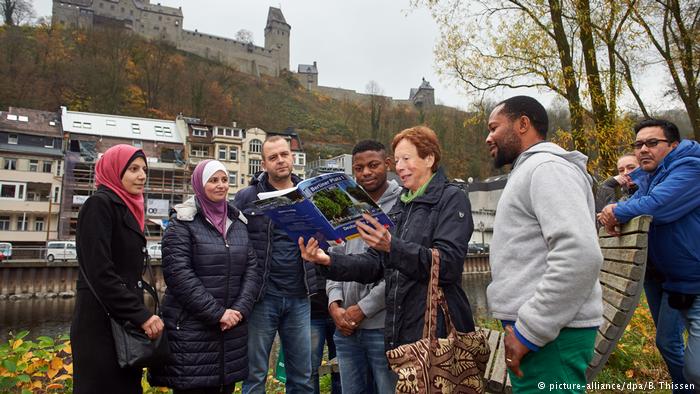 They were a sweet family with a good home, and best of all they were happy. But then came war, unsafe conditions. Bombs went off continually so close by that they could hear the falling rubble created from the blasts. They were on the wrong side of the fight. Sooner or later the invaders were bound to get to their street, their house. Sleep began to elude them. Their small children continually cried. They knew that they had to leave no matter how much they wanted to stay. They became refugees, members of a wandering group of people from war torn parts of the world searching for a safe place to live. They are unwanted in many places, thought to be pariahs, criminals, maybe even terrorists. All that they seek is safety, a new start, a place to call home.
 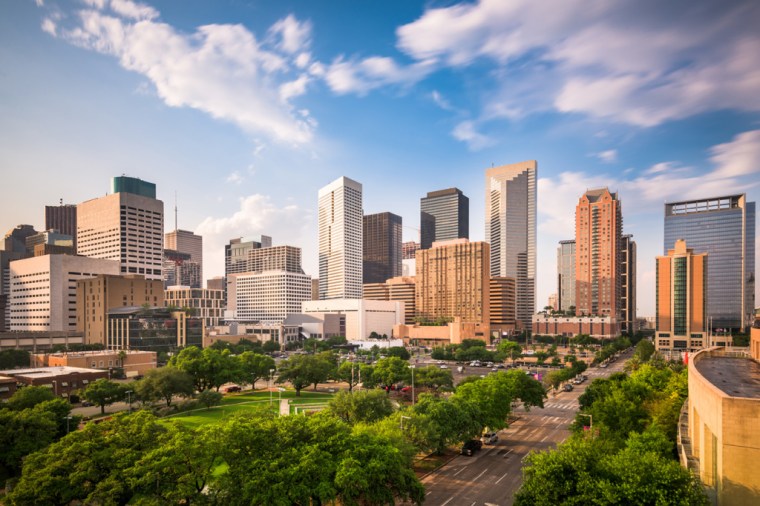 It was a sunny day in Houston, Texas on a January afternoon. The streets and highways were filled with people enjoying the break in the cold weather. It somehow seemed impossible that only five or six months ago those same roads were filled with flood water from hurricane Harvey, creating unbelievable images of devastation. Everything appeared to be so normal, and it felt as though the recovery and healing of our scarred city had gone smoothly and far more quickly than anyone might have ever imagined. We had even begun to believe that we might have a good chance of winning the big Amazon prize that would bring thousands of jobs to our area along with millions of dollars to boost our economy. Perhaps it is in our Houston DNA to be upbeat and unwilling to be counted out. We’d done the impossible so many times before that those of us native to this flat featureless plain see our city with different eyes than those of outsiders.
 A meme caught my eye and I found myself thinking about its message: Really had my heart set on waking up rich today. Of course the idea of being wealthy is relative despite demographic brackets that provide numerical outlines to help us determine who is affluent and who is not. How we feel about our circumstances is often a better determinant of our financial value than our bank statements. We all know someone who has very little but is content, and others who should be comfortable who are never quite happy. The reality is that virtually everyone in the United States is richer than most of the people in other less prosperous places of the world, and as a matter of fact here in our country most of us enjoy existences that would have impressed even the very prosperous of bygone eras.
 I didn’t know Edi Cruz as well as I might have liked, but what I do know is that he was a KIPPster and I was a Big KIPPster and that makes us family. I recall seeing Edi in the hallways at KIPP Houston High School and what I noted about him was his always pleasant demeanor. His smile was of the legendary sort, and just spotting him made me beam inside. I wish I’d taken more time to get to know Edi better because from what I can gather he was greatly loved for being a truly genuine and caring person. Edi was slated to graduate in a few months from The University of Texas Permian Basin, but his dreams and those of all who knew him were tragically cut short when he was recently killed in a terrible car accident. All too soon a wonderful young person has left us all wondering why such horrific things happen to such good people.
 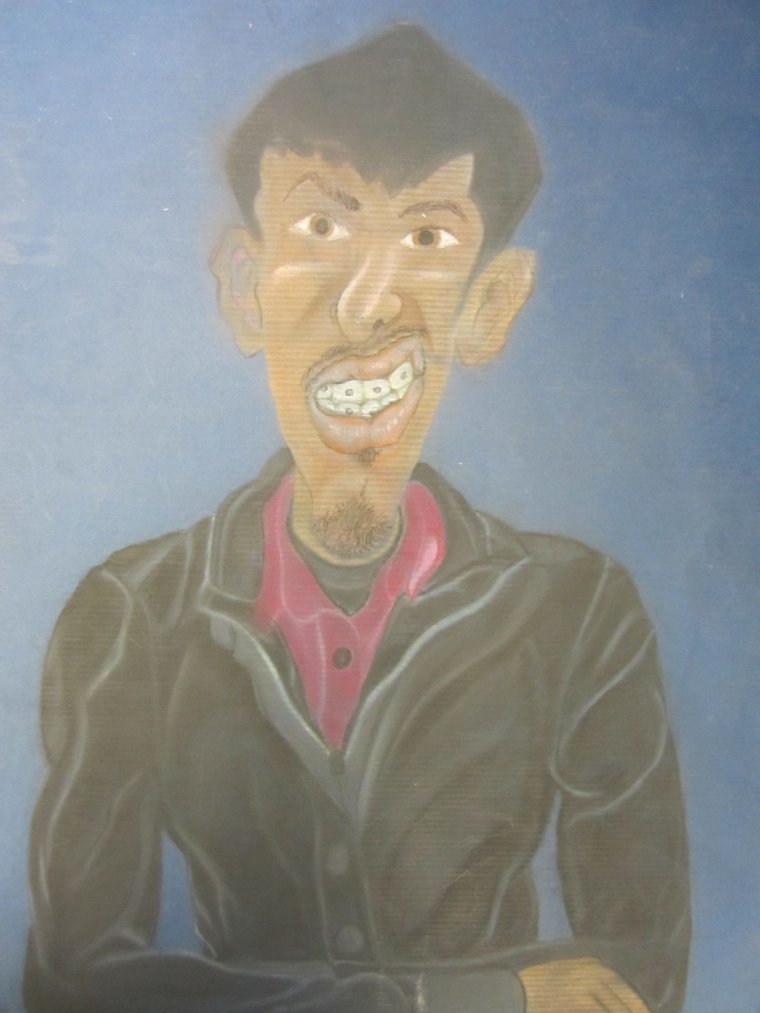 There is a great feeling of sadness in losing someone of his moral stature, particularly at such a young age. In our humanity we can’t quite comprehend why such a terrible thing would happen, even as we console ourselves in knowing that he had lived a glorious life while he was here. Somehow thinking about Edi Cruz reminded me of a poem by an unknown author that I once read.
 All It Takes Is A Little Love