We Must Not Forget

I went to church and there was a table filled with little white cards on which names were printed in a lovely black font. I had no idea why they sat quietly in the entryway, but they caught my attention enough to wonder about them until the commencement of the mass shifted my thoughts back to the reason why I was there. It was not until the service had almost ended that I learned the secret of those lovely little name plates. All of them represented someone who had died in the mass shootings in El Paso and Dayton and we were asked to take one name and then pray for that person.

I randomly chose both a female and a male without really knowing who they were other than someone whose life had ended in tragedy. I carefully placed the cards inside my purse and went about my very busy day until I found a moment to remember them. That’s when I Googled each name hoping to find out a bit more about the persons that I had promised to recall in my conversations with God.

One of my souls was Logan Turner who had been killed in Dayton, Ohio. According to his mom he had turned thirty only days before his death and was out celebrating with friends. His grieving mother spoke of her boy with high regard insisting that he was indeed “the world’s best son.” She noted that he was both sweet and smart, the kind of person who worked hard and lived life well. He had earned a degree in engineering and had a good job and a promising future but for fatefully encountering a madman on the Saturday night which was supposed to just be fun times. Now his mother has been robbed of her pride and joy, and his wonderful life has been cut short.

Without knowing Logan I somehow felt that I understood the kind of person that he was. I have known young men like Logan in my career as a teacher. They are kind and bright and full of dreams. They love their friends and their moms. They work hard but like to have fun. I felt Logan’s spirit moving inside my soul, and I knew that I would indeed think of him and pray for him and those who lost him in the coming days. I felt a great sadness that he was taken from our world all too soon. I promised not to forget him even though we had never met.

The other card that I had chosen bore the name of Teresa Sanchez who I learned was an eighty two year woman who lived with one of her sisters. She and two family members were innocently shopping in the Walmart when the shooter began his assault.  I have found very little information about her or her life. Only one source that I found had a photo that I was unable to copy. It was a black and white print that showed her lined face with a serious expression. As I gazed at her countenance I imagined that she was perhaps someone’s grandmother, a feisty woman who still maintained her independence. I thought of her routinely visiting the Walmart to accomplish her errands which reminded me of my own mother.

I remembered what joy my Mama found when we were shopping together on so many Saturdays. One of her favorite things to do with me was to spend literally hours perusing the aisles in the Walmart near her home. It never occurred to either of us that we might be in danger simply by pursuing a rather commonplace experience. As I recalled my own sweet mother I felt a wave of grief thinking that what should have been a fun time for Teresa and her sisters had turned into such a tragic loss. There were no doubt people waiting for her return who would never get to see her alive again. 

We each go about our daily lives with little thought that the unthinkable might happen. We follow our routines or take little vacations or sojourns from our work. It is so incongruous that we might be struck down without warning in the midst of doing something that is supposed to be fun. There is a double kind of insult when such things happen without warning. There is no time to say goodbye or to remind our family and our friends how much we love them. Instead those who knew Logan and Teresa are left forever with a sense that there is something unfinished in their lives.

I have been praying for Logan and Teresa just as I promised that I would. I find them coming into my thoughts in different moments of the day. They have somehow burrowed into my heart. I see them as martyrs cut down by ignorance and hate and I believe that they are now resting peacefully with God, but we should not be complacent about what has happened to them. They have left behind people who knew them and loved them and will never again be quite the same. I feel compelled to offer prayers for them as well. I want them to somehow find a semblance of comfort amid all of the rancorous debates that somehow miss the humanity of the loss that they feel. While we argue about guns and immigration and who is right and who is wrong, they are suffering and a part of them always will regardless of how we as a society finally decide how to address the issues that have brought them so much grief. 

I pray for you, Logan and Teresa. I pray for those whom you loved. I pray that we will have the fortitude to set things right in our country. I pray that we might still the voices of anger and hate. I pray that we will not forget you or the hurt that your loved ones feel. May we all learn and grow and take positive measures to better insure the safety of anyone who leaves home to have an enjoyable time. May you rest in peace with the angels and may we work hard in your name to stop the kind of terror that you had to endure. 


Rest In Peace

ashes-01

Back when Mike and I were newlyweds he was working toward an advanced degree and serving as a teaching assistant at the University of Houston. He had already been the best of friends with a fellow from Germany named Egon and the two of them were selected for the honor of working with undergraduates along with a few other students. Among them was a bright and lovely young woman from the University of St. Thomas, whose name was Marita. She hailed from a big Irish family in Chicago and it wasn’t long before the three of them became inseparable at the university.

Marita liked to joke that she was looking for a relationship at that point in her life, and that she first set her sights on Mike until she noticed the gold band that he wore on his left hand. Being a good Catholic girl she quickly shifted gears and began a flirtation with Egon who was flattered by the attention from a cute girl with the mischievous twinkle in her eyes. Soon enough they were a steady couple who often joined Mike and I for fun on weekends. It didn’t surprise us at all when they announced their engagement and impending wedding. It was to be an elegant affair with their families from Chicago and Germany coming to Houston to attend. Mike and I were honored to be members of the wedding party where we met their relatives and celebrated with joy.

Mike and Egon were both only children who became like brothers rather quickly. Mike’s mom would joke that she was happy to have two sons. We spent countless evenings laughing and talking with both Egon and Marita until late in the night. They were both intellectual giants whose conversations were always interesting and fun. Ours was a glorious friendship that seemed certain to extend well into our old ages. Somehow we were simply perfect together.

Egon and Marita were unable to have children of their own in spite of many valiant efforts so they more or less “adopted” our two girls. Both of their families lived so far away that they became bonafide members of ours. They were fixtures at every party, celebration or gathering that we had. They watched our children grow into adults and in the interim they became incredibly successful in their jobs. Egon worked as a sales representative for an international company and he was consistently one of their top earners. Marita used her talents to become a lawyer, graduating with honors and scoring high on the Texas Bar exam. She was hired by one of the premiere law firms in the city. We celebrated each milestone in our individual lives and found such great joy in being able to take for granted that these two remarkable people would always be by our side.

Life has a way of throwing challenges at us when we least expect it. Egon’s parents both died in Germany rather suddenly and unexpectedly. Shortly thereafter he was diagnosed with a number of very serious diseases including diabetes and heart problems. Marita’s father had died when she was young but her mother too died while all of this was transpiring. I suppose that they were reeling from the constant ponding of bad news and they turned to terrible and unhealthy habits to still their demons. Their lifestyle affected their performance at work and before long both of them had lost their jobs, something that was almost unthinkable given their talents and their intellects. They became more and more depressed, more unhealthy and more isolated. We saw less and less of them and we worried.

I urged them to visit their doctor and follow his instructions to the letter. They had made an appointment and assured me that they were not only going to pull themselves together, but also come to visit us on my upcoming birthday. Sadly they were never able to fulfill either promise. Shortly before their meeting with the doctor Marita became so ill that she had to be rushed to the hospital in an ambulance. Her prognosis at the time was dire and so our concern focused on Egon who was not handling the situation well.

One afternoon I had a bout of foreboding and called Egon to tell him that I was coming to check on him once the school day was over. He insisted that he was fine and asked me to just go home and visit him at another time. I reluctantly agreed but had such a strong sense that something was amiss that I called my daughter, the nurse, to get some reassurance that I was doing the right thing.

At approximately the time that I might have arrived at Egon’s home had I gone there that day he died of a heart attack. It appeared that he had checked his blood sugar and his blood pressure just as I had urged him to do because the instruments that he used for those things were sitting on a table right next to his phone. It broke my heart to think that he died alone although I realized that I would not have known what to do had I been there other than call 911. Still I felt very guilty for a long time.

Miraculously Marita recovered from her own illness and worked successfully for several more years but two separate strokes left her unable to endure the rigors of a job. She instead required help at home and slowly but surely became worse. She became a shell of her former self who was almost unrecognizable as the once powerful woman that she had been. When her best friend from college died she seemed to lose her willingness to fight. By then she was quite alone save for visits from me and Mike. She was too far away from Chicago for family there to check on her regularly and she and her brother had not been close for some time. It was a dreary and sad situation.

Marita died about fourteen years after Egon left this world. Only the staunchest of her friends attended her funeral. I gave a halting eulogy and some of my dear friends and family were there to honor Marita and support me. I felt empty and sad.

Both Egon and Marita were cremated and Mike and I kept their ashes in our home hoping that one day we might determine their ultimate fate. On several occasions they had spoken of wanting to be spread in the fjords of Norway where they had spent many happy times with Egon’s relatives from his mother’s side of the family. Now most of them were also gone and we had no idea how to fulfill their wishes. We considered taking the two of them to Galveston Bay because they had often camped on the beach there. They loved the ocean and had many happy times together in their pop up camper. Still, we just never felt that our idea was completely right.

Recently Marita’s brother who lives in Chicago with the rest of her clan contacted me. He had begun to worry that he had done nothing to provide his sister with a final resting place. He asked if I still had the ashes and wondered if I would be willing to send them to him. Of course I  understood that he had more right to them than I did. I was also happy that he had overcome whatever feelings had kept him at bay for so long. I let him know that I not only had Marita’s ashes but Egon’s as well. I asked if he wanted them both and he eagerly replied in the affirmative. We both believed that they would have wanted to stay together no matter where that may be. Soon they will find a place with Marita’s family where they will be honored and loved by nephews and cousins who like us remember how gloriously wonderful they were.

Sending them away is somewhat bittersweet, but it feels right. I have a sense of relief in knowing that their fate will be resolved. It is time for them both to rest in peace. I hope they will also know how much they were loved.

The Happy Place

The road

When summer days get so hot that hardly anyone is stirring outside I often think of the trips that we took to visit my grandparents in Arkansas when I was still a young child. Grandma and Grandpa fulfilled a long held dream by purchasing a little farm in a tiny town called Caddo Gap. My grandmother had spent time growing up not far from there and she still had siblings in the area. Her mother, father, grandmother were buried nearby on land that was once their homestead and is now part of a national forest.  She had fond memories of life in the country and while she never learned to read and write, her head was filled with knowledge of how of nature. She was a master gardener whose thumb was so green that it sparkled brighter than an emerald.

My grandfather spent his boyhood somewhere in a nameless place in view of the hills of Virginia. He too loved the quiet and serenity of being far away from the noise of the city, and so it should have been of little surprise to us that he and his best buddy, my grandmother, one day pulled up stakes from Houston and began an adventure that would bring them some of the happiest days of their lives.

My grandpa was a rambling man without roots or obligations until he met my grandmother when he was in his forties. He had been searching for something that he couldn’t find at the bottom of a bottle of booze or in the countless boarding houses where he lived while following opportunities to work. By his own admission he often felt abandoned. His mother had died when he was born and he was taken to live with his grandmother who passed when he was barely in his teens. The guardian that he chose to tend to his affairs died unexpectedly from typhus not long after Grandpa reached an age at which he became an independent adult. His life was untethered and dreary. Then one day he met a lovely woman, a widow who cooked in a boarding house in Oklahoma where my grandfather had landed while in search of a job. The rest would be one of the world’s great love stories as Grandpa fell head over heels for the tiny lady who would prove to be his savior.

They had two children together and continued to move from place to place until my grandfather grew old and retired from working. At first they settled in a house in the Houston Heights but the city was already growing faster than they wished. They longed for quiet and a rendezvous with nature. It surprised us all when they announced their plan to move away to begin a new kind of life when they were in their late seventies. With great anticipation they packed up all of their belongings and made the journey to their new home.

Theirs was a busy but idyllic life. They awoke before dawn each day to tend to the cow and the chickens. By the time the sun rose they had already completed hours of labor and they would continue their toil until late into the night. They grew a variety of crops using the knowledge that was stored in my grandmother’s head. They carefully tended each plant and when it was time to harvest and preserve their bounty they existed on only a few hours of sleep each night. Their cellar was filled with racks of canned corn, tomatoes, squash, green beans, pickles, peppers and other varieties of fruit and vegetables. Their huge freezer held fish that they had caught, deer meat for which  they had hunted, and even delicacies like squirrel that my grandmother turned into a delightful fricassee. They lived off of the land and became one with it. They were happier than they had ever been. 

We spent our summers visiting them and grew to love their way of life as much as they did. We always felt so much anticipation as we left from our home early in the morning and drove all day long to reach the road that carried us over the Caddo River and wound into the hills toward their house. The path was a narrow gravel affair that only allowed for one car at a time in some spots, so our parents had to honk the horn when they reached a blind spot to warn anyone coming from the other side that we were on our way. When we finally reached our destination we were always greeted by Grandma’s collie, Lady, who barked a greeting while wagging her tail. Soon enough my grandparents would emerge from their screened porch with smiles and open arms ready to hug us until we could hardly breathe.

Our days would be filled with milking the cow, gathering peaches from the big trees that shaded the driveway, exploring the hills behind the farm, visiting with neighbors, and learning new skills from both of the grandparents. Grandma showed us how to make biscuits and pasteurize milk. She demonstrated how to capture lightning bugs and put them in a jar so that they became a home made flashlight. She designed nets from old t-shirts with which we might capture a butterfly when the morning came. Always she cautioned us to free our captives when we were done.

Grandpa taught us how to milk a cow and catch a fish. He let us watch while he repaired things, explaining what he was doing as he worked. He proudly took us with him on his daily journeys into town where he introduced us to his friends and bought us sodas from huge chests filled with ice.

At night we sat on the screened porch and chatted about this and that. Grandpa always spoke of things he had read in The Saturday Evening Post or The Reader’s Digest and Grandma showed us how to embroider and crochet. We laughed and talked about a hundred different things. We had no electronic games or cell phones to distract us, so all of our attention was focused on the grandparents as was theirs on us. Once in a great while we might adjourn to the living room to watch a favorite television program but that was mostly rare.

We went to bed in a house without air conditioning. Instead it was cooled by the breezes that came through the open windows that were designed to keep the air moving with cross currents. It was still in the dark with only the sounds of animals breaking the silence. There might be a moo or a bark or the howl of some kind of wild cat. It was magical.

My grandparents lived on the farm for only about ten years. My grandmother began to lose her energy and realized that something was wrong. A local country doctor diagnosed her with cancer so she and Grandpa decided to move back to Houston for more advanced treatment. By the time they sold their place and found a new home in Texas her situation was dire. There was little more that the doctors could do than keep her comfortable until she died.

We would all remember those halcyon days in the country with the greatest of pleasure. Grandpa would get a dreamy look in his eyes whenever he spoke of them. We would think of them as the highpoint of our childhood, and even many decades later I can still see the road that led us to our happy place. It is as vivid as if I were there once again.

Tiny Gestures

It’s been a very difficult summer for many of my family members and friends. I have watched as they experienced health problems, deaths, emotional and financial struggles, and even the loss of trust. It’s always difficult to know what to say or do in such situations. I find myself searching for wisdom and feeling uncomfortable in my feeble efforts to make them feel better when I truthfully know that they need time to heal in either body or mind. All I can offer is a hug, a shoulder to cry on, perhaps a card or some flowers. All of these gestures help to demonstrate that someone cares, but the journey needed to heal the scars is often far longer than we might hope. Because of that those of us who truly care must be willing to stay with the wounded for the long haul.

I know a man who lost his adult son several years ago. It was a devastating blow to him from which he has yet to recover. Somehow I was foolishly believing that there should be a kind of time limit on his grief after which he should be able to proclaim to all of us that he is fine and ready to move forward. I mentioned this to a childhood friend with whom I was reuniting after more than fifty years. She smiled patiently at me and then explained that she too had lost a son, a tragedy that still left a hole in her heart that has never quite healed. She told me just to accept that the man about whom I was worried is reacting in the most normal of ways.

I don’t know why I expected more of the grief stricken father than I do of myself. In truth I still have moments when I cry for my father who died over sixty years ago. So many things remind me of him and I feel a deep longing in my heart just to see and hear and touch him one more  time. On Friday evenings I think of my mother and how we used to spend the launch of the weekend laughing and enjoying good food and adventure together. Even things that used to mildly annoy me about her now seem so wonderful. I’d love to have her come to my house unannounced honking her horn to tell me that she has come to tempt me to accompany her on some silly adventure. So it is with countless people who were once so important in my life but are now gone.

Our humanity is grounded in our emotions. When we open our hearts to truly love someone it is painful beyond measure to lose them. We push ourselves to carry on as we must, but in the deep recesses of our minds it feels as though a little piece of us has been stolen. We never again feel quite the same.

So too it is when we have to face a devastating illness. I remember one of my neighbors speaking of his loss of confidence when he had to live from day to day with the specter of being incapacitated. He said that his pain and his fears sometimes dominated his every thought. He sometimes felt as though people were avoiding him because they felt uncomfortable seeing him as a shell of his former self. The best of his friends were those able to just accept his new reality and still enjoy his company.

People who are in the depths of depression are quite possibly the most difficult to console. Their darkness of mind is frightening both to them and to anyone who loves them. It is tempting to just shake them and insist that they snap out of their melancholy, but in truth such tactics never work. Instead we can remind them of their worth and of how much we love them while also urging them to get professional help to still the terrors that threaten to destroy their minds, but we can’t ask them to just will themselves to get better.

I have an aunt who is one hundred years old. She called my mom every single day and lovingly modeled the kind of comfort that anyone in a crisis needs. When my father died she was the first to come to our house just to be with my mother. She gave no advice, but simply was there with her loving heart. Over the years as my mom had episode after episode of depression and mania it was my aunt who listened to her paranoid ravings in the middle of the night, sometimes for hours. She was my mother’s crisis hotline, open twenty four hours a day offering love and comfort.

We might all take a cue from my aunt. Just being that one person that someone can take for granted is the greatest form of solace that we might ever offer. Heartbreaks and grief that last a lifetime are a normal part of our humanity. We can’t really fix those things, but we can be a refuge whenever the pain becomes too intense.

Think of someone you know who is struggling in one way or another. Give them a call. Drop them a note. Send them some flowers. Each tiny gesture tells them that someone understands.

Don’t “Love” Things

man in bus
Photo by Pixabay on Pexels.com

We are in one of those cycles where everything we own is breaking down. In just the last few weeks we’ve had a repairman out to replace the heating element in our oven and even as I write this we are replacing our nineteen year old air conditioning system. What’s truly funny is that most of the houses on my block were built in the same year and now I watch the various trucks bringing specialists to repair or replace items similar to those with which we have also had problems. All things wear out. It is inevitable.

I went to Catholic schools and I recall the nuns telling us that we should not love inanimate objects. It was supposedly bad grammar to imply that we felt an emotional attachment to stuff. Instead we were instructed to simply say that we liked things or enjoyed owning them. I don’t know why I’ve always remembered that admonition. It causes me to think a bit more intently about becoming attached to possessions. In the final analysis they do not define who we are and we most certainly can’t bring any of them with us when we die unless we choose to build burial chambers like the ancient Egyptians. Even then none of our belongings do anything other than just sit until some archeologist digs them up. Perhaps the nuns were right to correct our thinking by requiring us to use words indicative of giving objects less value than people.

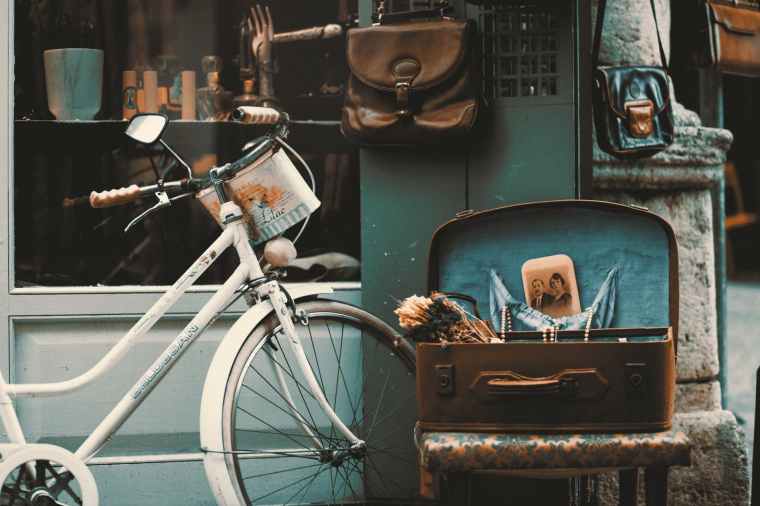
During a recent trip to the Texas Hill Country I walked through a number of antique shops with my daughter and grandchildren. We enjoy perusing the aisles of things that once belonged to strangers. I often find myself wondering what their stories were and why they eventually ended up being sold rather than treasured. Perhaps there was just too much left behind when some soul died. Now they sit in dusty warehouses bearing price tags and waiting for someone to find enough interest in them to take them to a new home. There is something a bit dreary about that, and yet I also see folks smiling with delight if they find an item that tickles them. I suppose that recycling yesterday’s treasures can be a good thing.

My own home is filled with objects that once belonged to a departed family member. I have become a kind of curator for the history of the family. I inherited that task from my mother-in-law who was able to tell a story about most of the items that she owned. Now I am the keeper of the tales. My grandchildren have suggested that I take photos and attach comments or create a video that will alert them to the personal value of the various items that fill my rooms. I suppose that means that they too would like to keep some of the more special things, not so much for value but as reminders of the journey of our family over time. With my two daughters and seven grandchildren I would like to think that the most important of the pieces will find a new resting place once I am gone. Perhaps my nieces and nephews might enjoy a trinket or two as well.

The things are not the people, but they nonetheless tell a story of them. Through the various objects I get a glimpse of the times in which they lived and the colors and styles that they liked. I can run my fingers over a table top or hold a dish and feel a connection to the past in knowing that my ancestors once used them. I find a kind of spirituality in the scratches and wear and tear. It is as though a tiny part of the people who used them lingers.

I now have the oak table on which my mother-in-law served me tea on so many Sundays. She imparted her loving wisdom over steaming cups of Earl Grey. She taught me so many valuable life lessons as we sat together. She outlined the history of her life and that of her family, a group that was adventurous and hardy. Her aunt had owned the table before her, and prior to that it had belonged to a lady who sold her house and all of its furniture so that she might go live with her daughter. That table has had a great run and even now I use it for big family gatherings and my own little tea parties. It is so much more than just a hunk of wood.

My mother and father were married at a little church in College Station, Texas near the campus of Texas A&M University. They had no guests or receptions. It was just the two of them pledging their love to one another. They moved into an upstairs bedroom that they rented from one of the professors and began their lives together with little more than a wing and a prayer. My father began to purchase silver place settings for my mother one piece at a time according to what he was able to afford. He chose a pattern called “First Love” for her and little by little presented her with enough to use for a nice gathering. The very last thing that he bought for my mother before he died was a set of ice tea spoons that he was going to present to her on their eleventh wedding anniversary. I remember that my mom and I both cried when she opened the lovely box wrapped in silver paper. To me that silver speaks volumes of my father’s love for my mother and the thoughtfulness that was so much a part of his character. The set is one of my most precious treasures and it gives me great joy to share it at special dinners with family and friends.

I have a small collection of enamel ware that came from my Slovakian grandmother. She used the bowls each Christmas Eve to hold oranges and nuts for our annual party at her house. When she died my mother and her siblings allowed me to choose a few items from her home. I took a couple of books that had belonged to my grandfather and those enamel bowls and coffee cups that will forever remind me of her.

So while I agree that we should not love things, I also know that some of them are incredible keepsakes that have far more meaning than might be apparent. I genuinely hope that the most wonderful among them will never be relegated to a dreary antique store waiting to be enjoyed once again. I’d like to believe that their stories will live on in the homes of my children, grandchildren and maybe even my great grandchildren. They were once rather profoundly used in moments of great love by the people who came before me, and that is what makes them pricelessly meaningful.