The Content of Our Hearts

tenn_fireWhen my daughters were still children our family traveled to Smoky Mountain National Park. I have to admit that we didn’t find it to be as breathtaking as the Rocky Mountains or other scenic destinations that we have visited and yet there was something almost primally inviting about the place. I found myself wondering if the wilderness that I saw on our hikes resembled the world of my grandfather. He had grown up in the shadow of the area before the dawn of the twentieth century, describing his boyhood home as being quite primitive but lovely beyond the limits of words. He spoke of seeing the mountains in the distance and longing to travel there. Eventually he made it like we did and he thought them to be as enchanting as he had imagined.

I’ve been quite sad to hear of the destruction in Gatlinburg and Pigeon Forge, two towns that have struggled economically over the years but found a way to survive by catering to the tourists who have been flocking to the mountains for decades. Most of the businesses in those places are owned by local residents who operate candy stores, eateries and ice cream emporiums as a way of earning a living. There are hotels, mini golf courses and amusements for virtually every taste. I admittedly found the place to be a bit over the top and didn’t want to stay long but I know people who visit every single year and are absolutely convinced that it is a kind of heaven on earth. I tend to prefer natural beauty to manmade sights and sadly the raging wildfires are destroying both human structures and ancient forests.

The photos coming from that location are heartbreaking. Some of the townspeople are calling it Armageddon. Having a rather primitive fear of fire makes me especially sympathetic to those who have lost their homes, businesses and possessions, not to mention the unfortunate souls who have died. Today I looked at photos of exhausted firefighters literally collapsing onto the pavement after hours of fighting desperately to control the blaze. The look of defeat on their faces said more than any descriptions of what is happening there.

One of my aunts lost her home in a fire a few years back. She was happily decorating her yard for Christmas when she saw flames coming from her roof. She did her best to save a few treasures but the burning accelerated even before the firefighters arrived. Her house with everything in it burned to the ground, so many memories gone forever. She has never really moved on from the tragedy of losing so much of what she had accumulated over a lifetime. All of her home movies melted into celluloid balls. The family Bible that had been handed down for generations was a heap of ash. Nothing was spared but her life and that of her husband.

They moved to a senior living facility where they have found a semblance of peace but there has been a sadness about her that was never before there. She was ninety years old when it happened, far too old to think of starting over again. She is, of course, happy to still be alive and she realizes better than anyone that everything that burned was nothing compared to a human life and yet in each of our homes there are priceless items that we enjoy and that seem to define us in some ways.

I recall learning in English class that we have the power to “love” people but we should only “like” things. It is an important distinction that we should all observe because in the long history of humanity there have been many instances in which people lost everything but the clothes on their backs. They had to begin anew, start fresh. I think of the victims of the Holocaust whose very humanity was threatened for a time. I consider the citizens of New Orleans whose homes were swept away by punishing waters. I wonder how it must have felt to watch the tsunami instantly destroying a modern city in Japan. Earthquakes, volcanic eruptions, wars have stolen the humble belongings of countless people and time and again they have risen like phoenixes. It is in our human DNA to pick ourselves up and try again.

Still such events leave a scar on those who must endure them. I know people from New Orleans who lost their homes to hurricane Katrina. They become fearful when heavy rains pour from the sky. My daughter won’t light a candle in her house because she was once the victim of a fire started by an unattended candle in the apartment building where she lived. Just as I shutter when I hear of car accidents because such an event caused my father’s death, so too do those who have had horrific experiences relive them in certain circumstances.

My heart is heavy for the people who have had to flee their homes in the Smokey Mountains. It will be decades before the lovely beauty that they have enjoyed returns. Nature will eventually come back to life and they may rebuild but the precious sense of security that they may have felt is gone for a time, if it ever even returns.

I look around the home that I so enjoy and think of how horrible it would be to suddenly lose it. I remember a time when a priest asked us to imagine how we might feel if every thing that we owned were taken away and we were left standing naked but with our family and friends intact. He urged us to look into our hearts and decide what is truly important, hinting that what we own is never where our focus should be.

In this season of Christmas we should think of the young couple who traveled to Bethlehem so long ago, staying in a cold manger on the night of their child’s birth. Their earthly possessions were few and yet they had brought a savior into the world whose influence would live right into our present century. He would teach us that there is nothing that we ever do that is as important as loving ourselves and our neighbors. It is a difficult command that we do not always follow as well as we might. We become distracted by the pursuit of wealth, power and things that in the end turn to dust. It is only in how we truly live according to God’s word that we find the peace and contentment that we seek.

We should all look within especially when we see the constant reminders of how fragile our lives are. As terrible as those fires are they should send the message that what truly matters is the content of our hearts.

Tree

tree1024x1024There is a tree in Rockport, Texas that has been growing in the same spot for centuries. Some wise soul thought to save the old oak forever by declaring it an historical treasure and building a fence around it. People travel from all parts of the world just to stand under the shade of the sprawling limbs and to marvel at the girth of the ancient trunk. They snap photos of the wondrous image and try to imagine what the old tree has seen in its time on this earth. If only it could talk we might hear of native people pausing under its branches to rest after a day of hunting and fishing or learn of explorers from Spain who traveled along the Gulf Coast searching for cities of gold. Did the tree once see vast flocks of whooping cranes wintering in the area in their annual journey from Canada? How did it manage to withstand the forces of tropical storms and punishing hurricanes? What is its secret to long life?

We humans have love/hate relationships with trees. We plan trips to Vermont in the fall to marvel at the glorious colors of leaves but also cut down beautiful specimens to make way for factories. We plant trees in the yards of our new homes that once sat in forests that we eliminated to build our suburban communities. We enshrine trees in metaphorical poetry even as we topple them in real life. We use them for our own whims often forgetting that they are helping to provide the very oxygen that we breathe. They cool us and shelter us and we all too often take them for granted. When we flee from natural disasters we abandon them to bear the brunt of wind and water and fire.

Along the Big Thompson Canyon on the road leading from Loveland, Colorado to Estes Park is the dead stump of a once mighty tree. It is bent and gnarled into a contortion created by the power of the river that took homes from their foundations and turned nature’s bounty into piles of rubble. Somehow that tree has become a work of art. Its determination to hold fast to the rocks in which it once grew is a testament to its strength and flexibility. It stands as a sentinel as rugged as the huge boulders along the face of the canyon. It has somehow withstood the onslaught of both nature and humans.

We personify trees. They teach us lessons. We track our human history in their branches. We have a special kinship with trees, especially when we are hot and weary. We sit under their branches cooling ourselves and dreaming of futures that we may never see but they are more likely to enjoy. Trees remind us of ourselves as they travel along with us through the seasons and the years. They are our silent partners in a lifetime journey.

My paternal grandmother was a child of nature. Her father and her grandmother are buried in a national forest in Arkansas where their homestead once resided. It seems fitting that her ancestral home is now protected and allowed to return to a wild and unfettered state. She so loved to walk in the woods under a canopy of trees that sheltered the birds and critters that she enjoyed. When she died my grandfather handpicked a spot in the cemetery that sits under a grove of oaks whose limbs reach gracefully over her final resting place. She would have loved the serenity of the area. In life she marveled at nature’s wonders and seemed almost to be a mischievous sprite as she wandered in the forest behind her farm naming every tree, plant and bird that crossed her path.

Hanging on the wall at the entrance to my home is an image of an enormous tree spreading its limbs across a landscape of green. I have placed it there to welcome my guests and to remind myself of the glories of the natural world. The painting calms me and makes me smile. Gazing at it takes me to my roots. I think of the people whom I never met who had to live in order that I might now exist. Like the tree they once began with a tiny seed and then reached to the heavens with their dreams, becoming ever stronger with each new branch. I know their names but not their stories. I can only imagine what their lives had been based on what I know about the places where they lived. I wonder what they would think of me and the world in which I exist. I suspect that they would be happy that things have turned out as well for me and my extended clan as they have. After all, each of us wants the best for our children and grandchildren. We want to know that they will be safe.

One of my favorite books is Shel Silverstein’s The Giving Tree. I have presented it as a gift many times over. I never tire of its story of unconditional love and sacrifice. I have now travelled through almost seven decades from the time when I was born. I have been the child, the teenager, the young adult, the middle aged individual and now the old person described in the tale. I have known both the exuberance and the drudgery of life, sometimes forgetting the people who have brought me to the place where I now linger. Like all humans I sometimes take my blessings for granted and even abuse the kindnesses that have been shown to me. I forget to be thankful and to simply enjoy the shade and the sound of the wind whispering through the leaves of the tree of life.

Trees keep me optimistic. They remind me that there is a continuity in this world that is bigger than our individual human efforts. We may falter and even become a bit full of ourselves but the ebb and flow of life remains essentially the same. We all benefit from being a bit more like trees. It is important that we “Stay grounded. Connect with our roots. Turn over new leaves. Bend before we break. Enjoy our unique natural beauty and keep growing.” (Joanne Chaptis) If we remember these simple rules we will surely find more of the contentment that we seek, especially in a world as seemingly mad as the one that we now face.

That tree in Rockport has seen more than we might ever imagine and still lives on. There is something rather nice about knowing that it is there and will be even when we are gone. Like the giant sequoias of Yosemite, the groves of Aspen in Rocky Mountain National Park and the countless shady lanes that soften the highways and byways across the land trees are the constant that we all wish to be in the world.

An Awakening

deadbigfootwoundedkneeThe ultimate beauty of being retired is that life is no longer ruled by a calendar. Week days are generally no different than weekends. Responsibilities are minor. It is acceptable to run away on a whim. Thus it was on that summer day as we left Drake, Colorado intending to return home. Having no pressing obligations, at the junction that would have led us south we instead chose to head north in search of Mount Rushmore, a national treasure that we had never before seen. It was only three hundred miles out of our way, a mere five hour journey.

We drove quickly across the northern planes and into the wide open spaces of South Dakota. Our plan was to visit the monument in the afternoon, catch the nighttime presentation there, sleep in a local hotel and then make the return trip home. Of course as is often the case our best laid plans indeed went awry. A sudden storm brought a driving rain, hail, and threats of tornadoes, dashing our hopes of a quick side trip. Instead we decided to spend two nights and another day in the area, learning about a part of our country that we had never before explored.

The imprint of the native Americans who once roamed freely across the land is everywhere in South Dakota. It takes little imagination to visualize the great Sioux tribes following the buffalo and taming the wild expanses in the ways of their ancestors. The geography seems ill suited for modernity. It is wild and unpredictable, best left to those who understand its whimsy. It is also strangely beautiful and even spiritual. With the very small footprint that I left I at times felt like a trespasser. It somehow didn’t seem right to be gawking at the places that were once ruled by great chiefs like Sitting Bull.

We visited a refuge for the animals that had been the mainstay of life for the people who lived in South Dakota long before settlers came in search of new homes. We enjoyed viewing the Sitting Bull monument that is still a work in progress. Our time at Mount Rushmore was more breathtaking than I had imagined. Still something about our presence seemed wrong and I understood my nagging feelings when we drove through the Pine Ridge Indian Reservation and found ourselves at the site of Wounded Knee.

Following the American Civil War there was a great push to move the nation ever westward. Our military became engaged in what would eventually become known as the Indian Wars. Soldiers were sent to outposts far from Washington D.C. to insure that the ever growing numbers of citizens and immigrants moving west would be protected from tribes of native peoples who became increasingly concerned about the encroachment on land that had once been theirs to roam freely. The influx of people and the tragic encounters led to horrific misunderstandings and battles, particularly in places like South Dakota.

After the Battle of Little Big Horn efforts were made to broker peace with the native people. They were promised a huge reservation in South Dakota in exchange for acceptance of certain conditions. Many of the leaders were weary of the fighting and agreed to the terms but Sitting Bull refused to abide and instead moved further north with his people. Sadly when gold was discovered in the Black Hills the American government reneged on the contract, drastically reducing the available land for the tribes.

After a difficult winter in which his people suffered the ravages of hunger and disease Sitting Bull was forced to return to the land that had been his home and submit to the terms of the Americans. He was informed that he must accept a Biblical name, learn English, wear westernized clothing and farm the land on which he lived. The agents and teachers who worked in the area sincerely believed that it was only in assimilating to modern ways that the native Americans would ultimately be successful in transitioning to a new kind of life. It was a demeaning defeat for a once great warrior.

There was great tension in the area as Congress attempted to strike a final deal with the members of the tribes. They offered each man one hundred sixty acres of land and a paltry sum of money for the area around the Black Hills that had been so egregiously taken away. Sitting Bull wisely noted that as families grew the amount of land would not be enough to sustain life and refused to sign the agreement.

In the meantime a shaman had a vision that the Sioux tribes would rise to power once again. He told the people that if they performed the ghost dance in their traditional regalia their ancestors would make them immune to the bullets of the white men. Feeling desperate and with nothing to lose they began the rituals which frightened and angered one of the Indian agents who called for military reinforcements in the region. When the same man decided to arrest Sitting Bull for inciting insurrection one of the great tragedies of our nation ensued.

The inexperienced and frightened soldiers tasked with procuring Sitting Bull shot and killed the great chief and members of his families. When word spread many of the already angry members of the tribe rebelled and the troops reacted with heavy fire. Even women and children fleeing from the melee were mowed down as they attempted to escape by crossing the Wounded Knee River. The encounter marked the end of the Indian Wars and served as a black stain on American history as both sides argued as to whether it had been a battle or a massacre. Much later the United States Supreme Court would rule that the entire affair was one of the most horrific examples of greed and outright theft in the history of our nation.

I was stunned when I saw the simple painted wooden sign marking the site of Wounded Knee. Somehow I had thought that it would have had a beautiful monument designating the site of such an important moment of history. Perhaps the lack of pretense in marking this place was intentional because it struck me far more deeply in its humble reality. The land was as wild as it had been over a hundred years ago. It was rocky and dry, hardly the kind of place amenable to growing enough crops to keep a family alive. It exuded a poverty of spirit. I understood as I looked at that bleak area just how our government had murdered a whole way of life.

I was overwhelmed with sadness and a sense of guilt after visiting Wounded Knee in the Pine Ridge Reservation. The area was dotted with alcohol and drug rehabilitation centers. The signs of poverty were unmistakable. I wondered at what our ancestors had done.

We stopped for gasoline before beginning our journey back home. I stood in line to purchase a few snacks for the road. The mostly native American people who surrounded me were affable but there seemed to be so many who were not working on a day when they should have had jobs. They wore defeated expressions as they languished at tables attempting to fill the hours. I wanted to announce my apologies but knew that I would seem crazy in doing so. I simply paid for my wares and drove away forever touched by the knowledge of the unfairness with which their ancestors had been treated. I left a piece of my own heart at Wounded Knee.   

Meh!

02062013_govworkers_articleAnother Labor Day has come and gone and I find myself once again going, “Meh!” I’ve never liked Labor Day. Like Pavlov’s dog I instinctively react negatively to the mere mention of it. I’ve always thought that it is misplaced on the annual calendar, coming as it does at the end of the summer. Instead of invoking a sense of celebration like other national holidays it seems to be an ill advised attempt to simply throw in one more long weekend before the days grow short and the nights long. I’ve always thought that it might be more appreciated if it were scheduled for March or April when there is often a dearth of downtime for those who work. Since I’ve been ruled by the school calendar for the majority of my life Labor Day signals an end to fun in my mind, not a reason to be happy.
Back when I was a kid the Labor Day holiday was a trigger warning that school was about to start. It was our last big day of freedom before returning to the grind of rising early, stuffing our bare feet into tight shoes and bringing home mountains of homework each evening. It told us that the lazy days of summer were over and it was time to get serious again. I always felt as though I was attending a wake when I gathered with our extended family for a final day at the beach. There would be no time for such frivolities in the coming weeks. We would all be busy with our over filled schedules and it would be many weeks before we got to rest again. Not even the promise of Halloween, Thanksgiving and Christmas assuaged the angst that I always felt on Labor Day.

As an adult I chose teaching as a career and the academic year usually commenced for me during the first weeks of August. Labor Day should have been a welcome respite from the rush of beginning my work anew but somehow it only seemed to interrupt the flow of the routine that I was attempting to establish in my classroom. I always felt that I would have appreciated a day off a bit farther down the line rather than so soon after my students had arrived.

Labor Day also marked a moment when a change of attire was in order. Thankfully the world of fashion is a bit less dictatorial than it used to be but there was a time when the arrival of Labor Day meant that white slacks and dresses had to be stored away with other summer gear. Sandals and shorts were frowned upon unless they were worn only inside the home. For those of us living in the hot humid conditions of the south the traditional fall fashions that debuted after the working man’s holiday were far too dark and heavy. Luckily we managed to come to our senses and now nobody seems to notice if we are still sporting our flip flops and capris deep into December. Today even school bands often have two sets of uniforms that include warm weather styles along with the more traditional looks.

For so long Jerry Lewis was to Labor Day as Santa Claus was to Christmas. His marathon for Muscular Dystrophy was bigger than the blitz of football games that now dominate the weekend. I never failed to get emotionally involved with the men, women and children struck down by that terrible disease and I opened my pocket to the kids who came to my door seeking donations as well as the firefighters who held out their boots at traffic lights. I was mesmerized by the tote board that registered ever higher donations as the hours wore on and Jerry Lewis appeared as though he was about to collapse from fatigue. The whole country was focused on securing a cure for Jerry’s Kids and we all hoped and prayed that it would be found in our lifetime. Eventually Jerry got old, the miracles that we expected didn’t happen and we all seemed to lose interest in spending hours watching celebrities doing little more than talk. Slowly but surely the annual program faded into nothing more than a memory, replaced by wall to wall football games and marathons of popular television series.

We definitely need to honor our working men and women but somehow the intent of the Labor Day holiday seems to have become lost in translation. It is just another way to have a long weekend filled with exciting sales on everything from washing machines to cars. There is something a bit empty about it these days. There are no special events that are designed to showcase the contributions of the men and women who leave their homes each morning to fuel the engine of our economy. We rarely stop to consider the many facets of work that keep most of us enjoying fairly comfortable lives. In our country we have rarely had to face a situation in which things fall completely apart because the jobs or the people who do them are gone. We tend not to take much note of places in the world where a sense of security has been shattered because few are able to find employment.

We often grumble when we are involved in the daily grind of work but deep in our hearts we understand that the alternative of being without a means of supporting ourselves and our families is frightening. Sadly many of the traditional sources of work are going the way of the dinosaurs. As I have traveled around the country I have noticed so many manufacturing plants that are shuttered and empty. In my own hometown there are people who worked for the oil industry who have been unemployed for well over a year. They seek jobs but are rebuffed at every turn. Coal miners and steel workers are becoming forgotten souls in the modern economy. Even college graduates are finding it difficult to move into professions in which they once might have been heavily recruited. They find themselves settling for work unrelated to their majors that pay barely enough to get by much less reduce the debt of their student loans. These are frightening and confusing times for many who want to be part of the workforce but can’t seem to find a niche.

I worked quite hard for a very long time and earned every hour of my retirement but I understand that my own security in the coming years depends heavily on the success of the young. If they can’t find decent work the whole system begins to collapse and we all go down with them. As independent as each of us may sometimes feel the truth is that we are all in this world together. What happens to one affects another.

The numbers of elk in Yellowstone National Park have been greatly reduced all because someone introduced lake trout into the spawning ground of a smaller type of fish. The more aggressive lake trout eat their mild mannered neighbors at a rate so alarming that the little ones have almost become extinct inside the lake. The bears who used to eat the tiny fish after hibernating each year have had to satisfy their dietary needs with baby elk now that their usual source of protein is no longer as available. Thus the herds of elk are greatly diminished which has a domino effect on other aspects of nature. Much like the symbiosis in nature, there is also a chain of events that occur whenever people lose their livelihood.

I’d love to see us take the Labor Day holiday more seriously. We all need to know more about the history of work in our country and the world. We need to be truthfully informed about employment trends. Our children require good information to be able to make decisions about their futures. If we did Labor Day right it might become an educational holiday that allows us to gain more understanding of how things really are in different parts of our country and the world. I suspect that ignorance of reality is rather dangerous in the modern era and it is far too rampant. Lest we one day awake to find ourselves scrambling for food in empty grocery stores like the people of Venezuela it’s time that we learned more about our own workforce so that we might continue to provide jobs for everyone who needs one. We all depend on filling our economy with worker bees each day. Maybe it’s time that we take a second look at Labor Day. It just may be the most important commemoration that we have.

The Best Gift Ever

Th050609-056.

There are moments in life that are forever etched in memory, so vivid that even thirty years later they evoke powerful emotions. I have many such recollections. Among them is an evening on Trail Ridge Road in Rocky Mountain National Park. It was late spring, a time when days grow warm and new life is sprouting here in my Houston home. My husband was attending a conference in Denver and he invited me to come along. The hotel room after all was already secured. I only needed to purchase a plane ticket, find someone to watch our daughters in our absence and take a couple of days off from work. It seemed an audaciously frivolous thing to do which made me reluctant. I not only had children who relied on me at home but also at the school where I worked. Additionally I was taking a class and it was nearing the end of the semester. Papers were due; tests were coming. Nonetheless some force inside my soul told me that the brief retreat might be fun.

While Mike was attending the seminars and functions associated with his work I stayed in my hotel room reading from my textbooks, writing essays and studying for an exam that was coming within days. The quiet atmosphere complete with room service was perfect for the work that I had to do. I seemed to accomplish five times as much as I would have at home but it still felt silly to have flown hundreds of miles just to hole up inside four walls. I had to wonder what I had been thinking when I agreed to Mike’s plan.

When Mike’s business day ended much earlier than he had anticipated he appeared in our room with a mischievous grin. He announced that we were going to take a drive to Estes Park to see the mountains up close. I quickly gathered my purse and put on my shoes and we were soon heading toward an adventure that would make my trip worthwhile. The mountains loomed ever larger in our view as we drove out of Denver and through Boulder. Soon we were on a highway cut through a national forest which was dotted with mountain streams and incredible vistas at each curve in the road. Before long we were navigating the streets of Estes Park with its quaint shops and restaurants on our quest to ride along Trail Ridge Road inside Rocky Mountain National Park. 

The ranger who greeted us at the entrance of the park told us that we were fortunate because the road had only recently opened but he urged us to be careful because it was growing dark and the weather report indicated that it would be foggy on our trail. We were not dissuaded by his warnings. The mountains beckoned us with a primal urge and we preceded with a growing excitement.

The path was easy at first. We drove along the side of a mountain sheltered by groves of trees that obscured the view. It grew unseasonably cold and we had come dressed for Houston, not the wintry temperatures that surrounded us, so we turned on the heater in our rented car. Here and there were gaps in the pines that showed us that we were indeed going higher and higher. The valley below receded and the air grew thinner. Before long we were driving above the tree line observing ancient glaciers on the tundra. Just as the ranger had predicted a wall of fog and clouds darkened our view. There were no signs of life, just a white blanket of snow and ice on the majestic peaks.

We spoke very little. Somehow chatter seemed to defame the glorious sight that lay all around us. We were alone in God’s country, viewing His majestic architecture, the cathedrals born from His hand. When we reached a point that overlooked the massive peaks through which we were traveling Mike parked the car and we exited so that we might stand in silence observing the breathtaking scene before us. The wind was howling, the temperature was freezing and neither of us had thought to bring coats but we cared little at that moment. Somehow we felt immune to the punishing weather. We were sharing a timeless vision. It felt as though we were the only human beings on the planet, an Adam and Eve discovering the world for the very first time. I wondered at that moment how many intrepid individuals had trekked into the mountains before there were roads or trails only to reach such a place and gaze into infinity just as we were doing. Did they feel close to God and to the core of their souls as I did?

Our faces had grown red from the harshness of the wind. Our fingers were becoming numb from the cold. Shivering we saw our own grins reflected in each other’s expressions. We needed no words to share what we were experiencing. We hesitated to leave but our more rational natures told us that it would soon be dark and a light snow was beginning to fall. We had seen something so spiritual that it would forever bind us with a love for Rocky Mountain National Park and each other. 

We would return to that spot many more times over the years. We would never tire of seeing the wonders of the mountains in different seasons. We would bring our daughters and they would become as spellbound as we were. We would travel to the park with my brothers and their families. We celebrated our fortieth anniversary in those very same mountains along with good friends. We came back with our grandchildren. The lure of Rocky Mountain National Park never seems to grow old and we plan to return once again in a few weeks.

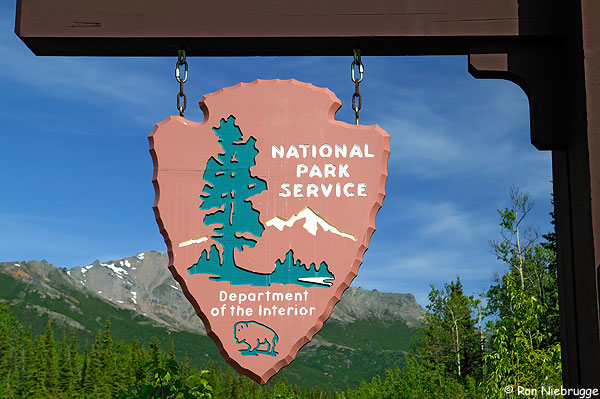
A hundred years ago the idea of preserving our national wonders in a system of parks and monuments that might be shared by all Americans came to be. Today our National Park System cares for our nation’s treasures from north to south, the Atlantic to the Pacific. Over the years Mike and I have marveled at Yosemite, Yellowstone, Glacier, Zion, Mesa Verde, the Grand Canyon, Carlsbad Caverns, the Smokey Mountains, the Missions in San Antonio, Shilo, The Washington and Lincoln Memorials and so many others that it would take pages to list and describe them. We now have a senior pass that allows us to enter any of them without even paying a fee. It would be impossible to justly describe the joy that visiting these places has brought to us again and again.

Our national parks represent the best of our country and who we are as people. They belong to all of us. The idea of preserving them forever was inspired. It came at a time when the entire world was weary from a war that had ultimately seemed so useless. We had paid a heavy price for peace and little knew the horrors that still lay ahead. Our national parks would become havens for even the common man as we grappled with the uglier sides of humanity during the decades that followed.

Our nation’s problems seem to persist but we the people mostly agree the we got it right when we chose to protect our glorious heritage through the national parks. They are a gift to everyone of us and inside their borders we are reminded again and again of what really matters.

Happy Birthday to our National Park System! May the next hundred years be even more glorious.