Never Let Go

43BCB02600000578-4839470-Dozens_of_interstate_drivers_formed_a_human_chain_to_save_a_stri-a-3_1504179333233

So much has been said about the examples of heroism and unconditional love that were exhibited in Houston, Texas both during and in the aftermath of hurricane Harvey. Suddenly the entire world is beginning to understand what it is that we love about this place that is as flat as a pancake, a perfect breeding ground for mosquitos, and has very little in the way of scenic views other than a downtown skyline that is quite beautiful on an autumn day. For years I have tried to explain our town to those who have never been here, and I suppose that I never truly made my point that this city is all about people. The view of who we are has suddenly changed as Houston has become the symbol of what is right with the human spirit.

Sure we have some basic problems with flood control and such, but what the attraction to Houston comes down to, is to be found in the generosity and determination of its citizens. As I travel from place to place I see so many wondrous sights and I find that the people that I encounter are generally welcoming, but nowhere do I feel as accepted for who I am than right here where I live. I always find myself feeling a sense of relief whenever I reenter the city limits. The outpouring of courage and unity and pure love that we have witnessed in the past few weeks has proven my lifetime contention that there are many great places to visit, but Houston is one of the best places to live.

I’d like to think that if any real good comes from this disaster that has so horrifically impacted so many in Houston, it will be the reminder that when all is said and done we are all brothers and sisters aiming for the same comfort and security in life. In the middle of the night during a storm when floodwaters forced a family onto the roof of their house the background of the savior who drove up in a boat to retrieve them from danger mattered not a wit. The reactions that we have when we don’t have time to think are often the purest and most perfect. The reality is that nobody who endured the terrifying days when fifty one inches of rain filled our streets even thought to consider differences. We were all just human beings lashed together in an horrific situation. Our only goal was to survive and to help others to make it to safety with us.

I suppose that politics raged on as usual during those days, but we weren’t even aware of the day or the time much less who was arguing with whom. My neighborhood received a bit more than forty three inches of rain. My only worry was whether or not the drainage system for my street would continue to operate. I silently prayed that my husband would not have another stroke because I suspected that we would not be able to reach the hospital that is only five minutes away if he did. I constantly checked to be certain that my neighbors, family members and friends were okay. When I heard of people who had flood waters entering their homes I was not able to rest until I knew that they had reached a safe and secure refuge. Mine was a scene that was taking place a million times over throughout the area, and we were all hoping for the best for one another. 

I’m not known as a fan of Donald Trump, but I was happy when he came to survey the damage and worked to speed the funding for the recovery of our city. He seemed sincere in his concern, and somehow my animosity toward him didn’t feel appropriate given the situation in which we found ourselves. I am thankful that he seems to understand our plight and that he is willing to do something about it. I have no criticism of his willingness to help.

I have been moved to tears by the outpouring of love from all parts of the country and the world. Our brothers and sisters in Louisiana were some of the first to render aide. The people of New York City understood our pain. Again and again I have heard of volunteers from Israel, Saudi Arabia and countries that may not have heretofore even thought of Houston, Texas. It has been simply amazing to me how wonderful we humans truly are and my faith in mankind has been bolstered.

I watched the Hand in Hand telethon earlier this week and when I saw the genuine concern of the arts community hoping to help us in some way I found myself shedding tears once again. There was Oprah Winfrey manning a telephone line. Tom Hanks and George Clooney and Leo DiCaprio  were there to help the people of my city. Usher and Blake Shelton sang so beautifully. Matthew McConaughey spoke eloquently of the road forward for the citizens of our city. Dennis Quaid wore his Bellaire High School shirt. George Strait led some of the best country artists in a beautiful rendition of Texas. I don’t think that I will ever again see any of the many people who gathered together for this cause without wanting to hug them in thanksgiving. They became as one with my city and they earned the key to my heart.

Beyonce, a native Houstonian, said it best when she noted that we have seen far too much violence and hatred of late. Houston has shown the world that love still exists. Houston has demonstrated that race and politics and social standing don’t matter as much as a willingness to stand toe to toe with one another in an hour of need. In our darkest and most frightening days it was the best of humanity that rose to the occasion. Let us pray that we will not let go of that ideal now that it has come to the fore. We need to join hands all across the world and never again let go.


More Love Than Water

hurricane-harvey-nursing-home170829103402-nursing-home-patients-social-large-169

Early during Harvey’s rampage across Texas a photo of elderly residents of a nursing home went viral. It showed them sitting in waist deep water waiting to be rescued. It was a vivid image of just how horrific the effects of that storm actually were. A second picture eventually made the rounds showing the same individuals safe and sound in a new location. They were nicely attired and smiling, and it made us all feel better about their fate. The sad thing is that even as we begin the recovery process, the toll that this disaster is taking on our oldest citizens is almost silently brutal. So many of our quite vulnerable elderly population were frightened and confused by a situation that they were too often not able to understand, and in far too many cases the consequences for them have been as devastating as the floods themselves.

I’ll be sixty nine in November and my husband’s birthday will be his seventieth later this month, but I’m not so much talking about people like us as those who are fifteen or so years older than we are. Many of them suffer from Alzheimer’s or dementia and found themselves in foreign situations that made it difficult for them to adapt. One friend’s mother had to be constantly reminded of why she was not in her home, and why she would not be allowed to go back there until the rains ceased. She wanted to know who Harvey was, insisting that she knew no one by that name. It was an exceedingly stressful many days even for those caring for her, because they worried about her delicate condition.

Yet another person with whom I worked for years lost her mother. The woman’s death will not be counted among the victims of the storm, but she most certainly died because of the effects of the deluge. She lived in an assisted living facility because she too had Alzheimers. During the rains the home where she stayed flooded, and the patients were rescued and taken to a shelter. Sadly the sweet lady awoke during the middle of the night and was shaken when she did not know where she was. In her bewildered state of mind she began to wander in the dark, and in the process she fell and broke multiple bones in her fragile body. She was sent to a hospital where it was deemed necessary to operate, but first precautions had to be taken because she was on blood thinners. Unfortunately the poor soul did not make it and her funeral was this past Friday. Her family is heartbroken and, those of us who grieve with them wonder if but for the storm their beloved family member might still be alive.

This past week two of the ninety something year old mothers of high school friends of mine have also passed. I can’t help but think of how much the change in their routines must have affected them. They were such kind and loving women who had at one time been so strong that they would have tackled the beast called Harvey head on. This time they were too old and weak to adjust to the terrible demands that all of the devastation has placed on our city. I keep seeing such incidents being repeated over and over again, and it is beyond heartbreaking.

There are kidney patients who missed their dialysis appointments and then had to wait all day long, sitting on the floor for their turns to receive the life saving treatments that they needed. Surgeries had to be cancelled and chemo-therapies were missed. Some people lost all of their medications and had to go without them for days, risking lethal side effects in the process. It was and remains an incredibly trying time around here that none of us will soon forget.

The sun has been out for days. The temperature is cooler than it generally is in the Houston area. We spend our time attempting to help as many as we can, but sometimes we have to back off just a bit and rest lest we run out of steam before the job is done. In the meantime our elderly are dealing with so many after effects, not the least of which is a desire to be able to do more to help than they are physically able. In my own case I have received phone calls and messages from loving friends cautioning me to take it easy and get some rest. Somehow thus far I have been able to draw upon reserves of energy that I did not know that I had, but I can feel the weariness of the city setting in among even the youngest.

Everything looks and feels so different and we have had to learn how to relax again and return to routines that somehow don’t feel as important as they once did. As our children go back to school we worry about how they will be. How will they do homework and study without the comfort of their homes? What nightmares are they hiding from us? Are they as muddled as the oldest members of our hometown have sometimes been? How can we be assured that they are as well taken care of as they need to be?

I drove through an area of South Houston near the intermediate school where I spent the bulk of my career teaching. I found myself sobbing convulsively as I drove down one street after another in which every single home had been affected. The piles of debris made the scene appear to be a war zone. I know that most of these poor souls have never had much in the way of wealth other than hard working attitudes and pride in knowing that they have places of their own. I truly found myself feeling the pain of their suffering and then I saw a most amazing sight. At a local elementary school the children and their families were playing on inflatables. They were smiling and having a good time if only for a few moments. There were tents where people were serving food and handing out information on how to find help. I felt a bittersweet sense of hope in this glorious vision among the most horrific ruin.

I later worked at a school on Friday where a pantry had been set up for those who needed the most basic of necessities. The number of volunteers and the outpouring of donations were incredible, causing me to think of something that one of the victims of the torrential rains stated as he was rescued from his flooded home, “There is more love in this city than water.” Indeed that is the case, but we cannot be too quick to change the subject and simply move on. This has been a natural disaster that even a talented screen writer might never have imagined. Together with generous individuals from all across the globe we have tackled the initial challenges of our devastation, but there is still so much to do. I find myself praying that we do not just become the cause of the week, for even as things appear to be more and more normal the misery continues. There will be those so severely weakened both physically and psychologically that they will suffer for days and weeks and maybe even months to come. We have to remember them. We have to be ready to help them in every possible way. We have to prove that there really is more love here than there was water.

Filed Away Into Oblivion

1024x1024.jpg

All across the Gulf Coast of southeast Texas from Corpus Christi to Beaumont/Port Arthur the devastation from hurricane Harvey has left a trail of destruction, tears and questions. Weary citizens have spent days upon days mucking out houses, washing flood soaked laundry, cleaning the everyday items that were once the fixtures of their households. Neighbors have helped neighbors. Family has embraced family. Strangers have opened their hearts and their wallets. The restoration has begun in earnest even as some areas still lie in the clutches of high water with no sign of when their residents may return.

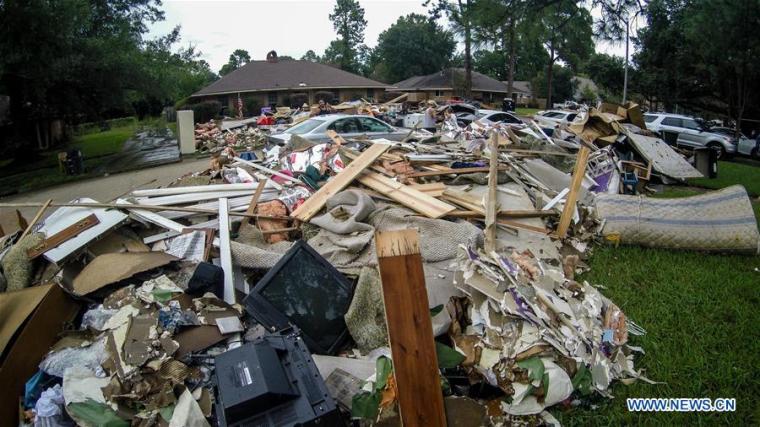
It doesn’t seem to matter which part of Harvey’s path one might choose to explore. Virtually everywhere that the beastly storm chose to go there are entire neighborhoods or unlucky blocks where the evidence of its heartlessness is horrifyingly present in the endless piles of debris that rise several feet from the ground and on the vacant faces of those affected. Seeing the wreckage is mind numbing and heartbreaking. Witnessing the people who are attempting to deal with the unthinkable is unbearable. While there is a determination to rise from the waters, there is also a kind of pall over the landscape and wonder if the things that we took so for granted will ever be quite the same again.

It is estimated that only twenty percent of those whose homes and property was damaged had purchased flood insurance. Many of the affected areas had never before been inundated and there was little reason to compel homeowners to buy the policies. It will be up to the federal government and FEMA to help the families to rebuild, and the cost will no doubt be staggering. More disturbing will be the loss of a sense of security that even those who were spared are now feeling. We fret and worry over what will eventually become of all of us who endured the tornadoes and days of relentless downpours that poured fifty one inches of rain over our rooftops. The memories of one weather warning after another and all night watches over the water creeping toward our doors are still so fresh and terrifying. The sights and smells of the destruction seem to follow us even as we close our eyes and attempt to shower the grime from our bodies. The fear that we all experienced stalks us now that we attempt to go back to work and our usual routines.

As the sun shines once again in our part of the world, a monster hurricane threatens Florida and the east coast. Others have formed in the ocean. Fires burn in Montana, California and Oregon. It seems as if Mother Nature is unleashing her fury, and we begin to ask ourselves questions and consider what we may have done to be accomplices in the creation of such events. Are there proactive steps that we might take to change the course or the magnitude of climatic events in the future? These are the thoughts that fill our brains and none of the answers are easy or certain.

My husband likes to call himself a belt and suspenders kind of guy. In other words he is a very cautious sort. As such we expend large amounts of our income on various kinds of insurance policies and fraud protection systems. When the federal government first began selling flood insurance he signed up immediately even though we had never experienced water seeping inside any of our homes. We have continued to renew the policy year after year in spite the increasing cost and lack of use. Our thought as native Houstonians has been that we never quite know what strange occurrences my happen, and we want to be ready for the unexpected. I suspect that after Harvey the premium for our policy will go through the roof, but we will continue to purchase the safety net just in case, and I would recommend that everyone else do so as well. So many of those affected by the damage would be sleeping so much better with that little piece of added security in their pockets

The bigger questions involve infrastructure and building practices that may or may not have helped to prevent much of the damage. It has come to light for example that engineers from the Harris County Flood Control District outlined a plan to improve the drainage system of the Addicks and Barker dams all the way back in 1996. They presented their concerns and suggestions to the Army Corps of Engineers and nothing happened. The report was filed away. Today the tragedy that the study predicted in very clear terms has come to pass. The belief is that it might have been prevented at a cost of under ten million dollars rather than the billions it will take to rebuild the neighborhoods that sit under water today.

When we are cautious in the way we do things we sometimes never know if our efforts actually have some sort of effect or not. If wisdom had ruled the day and the money had been found and spent to improve the dams’ drainage capabilities there would be no flooding in the affected areas and we would wonder if we had really needed to expend all of the effort. That is the way of proactive measures. Often the occasion to use them never arises, but when it does we pat ourselves on the back for being so prescient.

We might argue forever about topics like climate change, building practices, drainage systems, and insurance, but our question becomes why we would ever want to take unnecessary chances. It is a fact that hurricane Harvey created an unprecedented event with its fifty one inches of rain. It is true that homes that have been high and dry for decades only flooded because the storm dumped an amount of water that no form of planning might have overcome, but I find myself wondering why we would want to just walk away from this experience without considering important changes that might actually help if and, God forbid, when we have to experience such an event again.

Our ancestors were more often than not a bit more inclined toward precautions than we were. The Addicks and Barker dams were built in the 1940s because of major flooding incidents in the city of Houston in 1929 and 1935. My mother and mother-in-law often spoke of those events and how they impacted the people who had endured them. The dams themselves were eventually located on land far from the center of the city and most of the population. Adjacent tracts were purchased to insure that there would be no habitation in the path of water. Sadly, as the city grew and sprawled across the landscape developers purchased plots next to the city owned land and built suburban neighborhoods without thought of what might happen if those dams were ever overrun with water in the kind of scenarios that experts had foreseen.

Back in the old days people avoided building too near the bayous and creeks. They elevated their homes on pillars. They terraced the lawns and built houses considerably higher than the level of the streets. Most of the neighborhoods and homes built by our parents and grandparents weathered the deluge just as they have done for decades. They were constructed in ways mindful of the presence of the network of bayous and creeks and rivers that crisscross the geography. Perhaps it would behoove us to consider such things just as they once did. There really should be an appropriate way of building for specific parts of the country that takes the possibilities of nature’s whimsy into consideration.

Of course there is the lurking question of the part that climate change plays in wreaking havoc across the globe. I suggest that instead of wasting our time arguing over whether or not it is true, we simply begin to change our ways just in case. What would it hurt to become more considerate of the world in which we live? Why can’t we all become more conscious of the ways that we use and waste the earth’s resources? Simple gestures multiplied millions of times will indeed make at least a small impact, and every little bit will help. We can be more like our parents who only allowed the television to run for so many hours a day. They scurried about the house turning off lights and appliances. They created compost heaps and recycled bottles. They were mostly being frugal, but their habits certainly helped to reduce waste and emissions of carbon dioxide.

I would never want to be accused of being one of those people who smugly suggest that somehow all of us who live in Harvey’s path are somehow responsible for what happened. Ours is a tragedy wrought by a storm that would have inundated any city or town regardless of what protective measure had been taken. Still, I believe in reflecting on tragedies and asking ourselves hard questions about what measures we may take in the future to alleviate at least some of the suffering. It is something that we must do. We have to insist that reports that predict disaster will never again be simply filed away into oblivion. 

End the Pain

daca-740x347

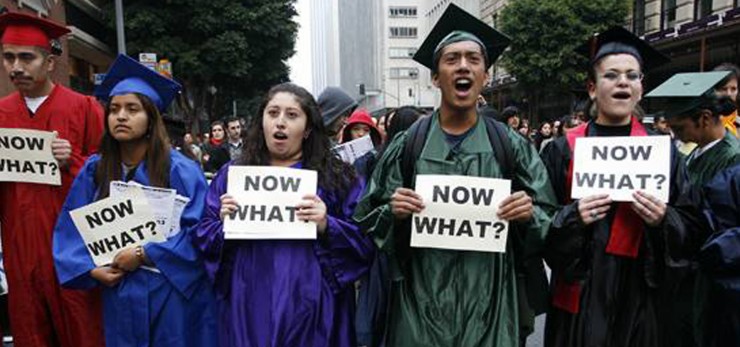
Most of the students whom I have taught over the years were Hispanic. They have been delightful, hard working and determined to make the most of their lives. Many of them were the first in their families to graduate from high school and then they went on to earn degrees from colleges or become certified to perform certain trades. They epitomize the kind of individuals that we hope will take the reins of leadership in the future. I have been profoundly honored over the years to teach and serve them and their families.

Now and again I encountered a gang member or someone intent on causing trouble but those kinds of kids were the rare exception and I have grown to love the gentle and giving natures that my kids have brought from countries south of our border. I never bothered to find out who was here legally and who was not, but when I was the testing coordinator it became all too apparent who was not a citizen because they did not have Social Security numbers. So many of the students in that category were incredibly talented and hard working. I worried about their immigration status constantly. I watched some of my proteges crying and greatly distressed when they received acceptances and scholarships from prestigious universities because they feared that leaving the state of Texas might reveal their status and place them in danger of being deported, so they often stayed within the boundaries of home rather than taking risking travel.

The most heart crushing aspect of their situations was that the vast majority knew little or nothing about the countries from which they had come. They were brought here by their parents when they were far too young to remember the worlds of their births. They grew up in the United States of America speaking both English and Spanish, but they were bonafide Americans through and through. Being here is what they know, and while they were children they had little idea of the danger they were in. It was only as they grew older that they began to realize the uncertainty of their situation. It might be argued that they need to be sent back because their parents’ broke the law, but I would posit that it is ludicrous to punish them for something that they did not do. We were lax and lazy and unwilling to reform our immigration laws. We allowed time to elapse to the point where it really is too late to do anything other than make them all legal.

There were bipartisan attempts to pass laws that would have permanently reformed immigration, but they were defeated and resulted in some Congressmen like John McCain and Marco Rubio who sponsored the bill being treated like pariahs. The truth is that they were the true heroes along with the other six lawmakers who had the good sense to understand that we could not continue ignoring the problem.

I worried when President Obama created DACA for the Dreamers by executive action. He had to know as I did that all it would take to eliminate the safety net was to get someone in office whose political philosophies did not mesh with his. It was apparent that the plan might one day be rescinded because it was not a law. It was wrong to mislead so many and have them believe that they were finally safe. In fact I watched an episode of the program Nightline in which it was noted that President Obama actually jumped the gun with DACA because Congress was literally on the verge of passing a law that would have protected the Dreamers. When Obama grew fearful that it might not go through he issued his executive order and essentially killed the idea of actually passing a law. So in some ways everyone has a bit of guilt with regard to this issue and that includes those of us who vote because we became complacent.

I suspect that President Obama wrongly assumed that Hillary Clinton would follow him into the presidency and give the Dreamers more time and protection. Now the issue has come to a head, and it’s time for all lawmakers and voters to face the music and devise a bipartisan plan that is fair and just and that takes a good hard look at all of the issues. This will require political compromise, not rancor. It is time to settle this once and for all and admit that these young people did not break the law and that they are simply victims of legislative laziness and lack of foresight.

We the People must challenge both Republicans and Democrats to work this out. Reforming immigration laws to help the Dreamers should not be a political football. It must take into  consideration of the needs of a group of young people who are presently terrified. All grandstanding has to be set aside, and that includes blistering commentaries from those who want to make political hay. Such harangues will not get things done the way they need to be approached. Instead all of us who understand the realities of the situation in which so many young people now find themselves must exert political pressure on all lawmakers to do whatever it takes to resolve the issues and produce a reform plan that is both realistic and sympathetic.

I have never believed in punishing young people for the sins of their fathers or grandfathers. If we were to adhere to such a way of operating few of us would be accepted by society. Instead we must consider what will happen to young men and women if they are suddenly ushered out of the country that has been their home for decades. Put yourself in their shoes and consider how you would feel if you were abruptly told that you were brought here illegally when you were still a child. Would you be happy about being sent to live in Slovakia or Italy or France or any foreign place from whence your parents might have come? Of course you would not. It would be a most disturbing prospect. We need to reassure the Dreamers that we have no intention of allowing such a thing to happen. It would be a travesty of the highest order.

I happened to watch a program about the division of India the other evening. Fourteen million people were displaced as a result of an order that suddenly created Pakistan and independent India. Those of Muslim descent who had lived for their entire lives in territory belonging to India felt the need to move and vice versa. Lives were totally wrecked and the death toll from the partioning was inexcusable. We have to use our common sense and not be tied to black and white arguments, but must take into account shades of grey. As both a parent and a teacher I found again and again that sometimes rules must  be changed to make any sense whatsoever. This is one of those times, and this is the moment when we must make the protections ironclad by creating a law that forever eliminates the fear that has stalked these young people for far too long.

In the name of humanity this we must do. We here in Houston have learned the value of every single life in the last couple of weeks. One of our own was a Dreamer who actually died while attempting to rescue others. He was extraordinarily heroic, but he was also not so different from the other young people who were brought illegally into this country before they were old enough to even realize what was happening. They are good solid citizens, the kind of people who will always help in an emergency. We need them here. We want them here, so please members of Congress put the animosities aside and create the law that you should have passed long ago. End the pain now!

The Kindness of Strangers

135625464_14719069605411nMy cousin and his family were alone, wandering around their yard with dazed expressions on their faces. They had just returned home from an evacuation to the Dallas area because their home had begun to take on water during the heavy rains from hurricane Harvey. When it threatened to reach the electrical outlets they knew that they had to flee. They quickly grabbed a few articles of clothing from upstairs, turned off the power, and drove away while they still had a chance to at least save their cars and their lives. Now they were estimating the damage and attempting to make sense of what had happened. The looks on their faces told their stories without explanation. They were dazed, weary, worried, devastated.

They moved slowly in our direction and hugged us when they saw us walking up the drive way. They had little to say because there were no words to adequately describe what they had encountered. They had lived in this house for forty years. It had been the place where all of their joys and sorrows, ups and downs had played out over a lifetime. They still vividly remembered the feeling of elation they had experienced when they chose the lot and the elevation for their home and watched their dream becoming a reality. They had brought their baby girl to this home and lovingly witnessed her growing into a lovely young woman. The place had never flooded in all of those years, even when there had been heavy rains brought by other storms and hurricanes. They felt safe and sound inside those walls and would not have believed that they would find themselves in such a predicament, but it was Harvey who had come to visit, a beast of a storm that dumped fifty one inches of rain on the city. This time was different, historical, and the creek that usually meandered nearby became a raging river that first filled their yard and then the rooms that were so familiar to them. Now they would have to clean out the waterlogged mess and somehow find the grit and energy to begin again. Still they wondered how they would find the wherewithal to accomplish such a daunting task. They were older now. This was supposed to be a time to retire and enjoy the fruits of their labors, not a moment of beginning the most difficult work of their lives.

We had come to help and to map out a plan of action. We had called on our children and grandchildren to converge on their home the following day. We were determined to set them aright again no matter how challenging that might be, but a tour of the damage shocked us. Somehow we felt defeated before we had even begun. We worried that our crew of mostly older folk was not going to be up to the task, but we said nothing to my cousin. There was no need to further discourage him, so we simply set to work removing debris that blocked the doors and passage ways one item at a time until we had filled one garbage bag after another. It was a start, but the hours felt like days and we left for the night feeling exhausted even though we had hardly made a dent in what needed to be done.

I used to be very a private person. I hid the fact that my family struggled after my father died when I was still a small child. I rarely spoke of my mother’s mental illness, thinking that nobody would want to know about such a thing. Because I was keeping so many emotions locked inside my heart I began to feel anxious and barely able to cope. I finally allowed other people to see my imperfections and my concerns. I found them to be loving and compassionate rather than judgmental. I realized that people are mostly kind, and so I turned to them once again in this moment when I knew that we needed more people to help my cousin to reclaim his home. I put a post on Facebook asking for ideas and my wall was flooded with suggestions and offers of assistance. I gave the task of contacting the many groups to my husband. He had endured a stroke only two months ago, and I realized that it was dangerous for him to be part of the work crew. His job was to find someone, anyone who would be able to provide us with the energy and strong backs that we needed.

I drove back to the injured home on Sunday. My cousin and his family were already there, and they were still struggling to internalize what had happened. I hoped that a cavalry would be on its way, but I had little hope at that moment. When one of my brothers arrived, he and I continued the task of creating pathways so that we would somehow be able to get the largest pieces of furniture outside into the pile of debris that was already beginning to grow even with our feeble efforts. Then my phone began to ring again and again. A group from West Road Church of Later Day Saints and St. Maximillian Catholic Church was coming in thirty minutes with twelve young people eager to work with us. Then came a response from Lakewood Methodist Church members who promised to arrive in the afternoon. Friends of my cousins came one by one as did the members of my family and two dear friends from my childhood. Everyone donned gloves and masks and set to work with abandon.

We set up places to rest under the shade of trees that my cousins had planted years ago. We had tables of food and ice chests filled with drinks. Strangers stopped to give us extra gloves and masks to wear. The work continued and the numbers of people contributing to the cause grew and grew and grew. Young people brought us hamburgers and hot dogs that tasted so good at that moment. Others came with bags of fruit and water. We did not know any of these Good Samaritans. They smiled and blessed us and did their best to provide us with succor and hope. More people called to find out how we were doing and to let us know that they were sending checks for food and supplies. The mountains of ruined clothing that I had removed the day before disappeared as loving volunteers filled bags and took them home to wash. Boxes of dishes and pots and pans were taken away with promises that they would be renewed and cared for. A miracle was unfolding right before our eyes and all of us were so moved that we struggled to maintain our composure. Mostly we gave in to the tears of gratitude that flowed from our hearts and our eyes.

By the end of a very long ten hour day close to fifty souls had worked on the house. The fouled sheetrock and insulation lay inside a mountain of garbage bags along with the family possessions that were hopelessly ruined. It was difficult to even see the front of the home because the yard had become a graveyard for furniture and appliances, but the good news was that the house was on its way to healing. The seemingly impossible had been accomplished. The foul waters had been removed and somehow even as we saw the visible evidence of the destruction that had befallen the house we sensed that it would become a home once again. A ray of hope shown down and renewed our energy and our optimism.

There is still much to be done before my cousins, will feel whole and secure again. The shock of what they are experiencing is being repeated hundreds of thousands of times all over the Houston area. It is almost impossible to imagine how horrific the damage actually is until seeing it in person. There are millions of individual stories associated with this disaster that will never be forgotten even as we all begin the journey back to our daily routines a sense of normalcy. The Houston area now houses two distinct groups of people, those who were lucky enough to dodge the destruction and those whose lives have been so horrifically turned upside down. Sadly the rest of the world is often fickle. They will move on to the next big story and forget the tragedy that has befallen so many souls, but those of us who have seen the unseeable will never forget. We have experienced the kindness of strangers in a very dark hour and these selfless people have forever changed our lives and our outlooks. Nothing will ever be quite the same again.

If you want to help someone who has lost so much in this tragic event here are some wonderful ideas:

  1. Volunteer to do some laundry or wash some dishes for someone whose home was flooded. There are a number of good recipes for how to do this properly online.
  2. Babysit the young children of families who have to work on their houses.
  3. Bring food, water, snacks, gloves, masks and cleaning supplies for the workers.
  4. Make a phone call or send a message of encouragement.
  5. Have someone who was affected over to your house for dinner or just an enjoyable evening.
  6. Don’t wait for those who have lost so much to reach out to you. Many of them are in such a state of shock that they don’t even know how to proceed. Take the initiative and suggest what you would like to do.

So many wonderful people are working to make Houston and its people whole again, but we have to remember that we are all in this for the long haul.