We Are Real!

Harvey_28701.jpg-bc3e5_c0-0-3000-1749_s885x516

Back in the days before computers and the Internet were as commonplace as they are now, I used to provide my students with instructions regarding the safe use of the then fairly new medium. I reminded them that not all sources are reliable or even true, and that they should check the veracity of statements before believing them. We tend to take the wide world web a bit more for granted that we did when we were still in awe of the information highway, and because of that we have become easier prey to charlatans who would fool us with stories and even photographs that are manufactured. We have also become victims of a constant barrage of opinions that may or may not be based on fact. In spite of my own warnings to beware, I sometimes fall for the shenanigans of imposters myself.

The recent tragedy wrought by hurricane Harvey has created a minefield of outright fabrications, and among them was a fake tweet that supposedly came from President Trump in which he displayed a cavalier attitude toward the victims of the storm. Someone with a creative mind had spliced together ideas from actual Trump tweets to make it appear that our Commander in Chief was almost giddy about the prospect of seeing such an historic tragedy and even more excited about a rally in Maryland afterward. I was incensed upon reading it and posted it on my Facebook wall with a snarky comment. When a couple of my friends insisted that the tweet was not from Trump I did the research that I should have already completed and learned that it was indeed a counterfeit. I deleted the post sheepishly knowing that I had already done damage.

There are far too many folks writing today who tell us what their followers want to hear without taking time to gather the facts before setting their words on paper. The current sport for some is to rain down their wrath on my city of Houston which is suffering mightily. They have written columns that range from insisting that our courage and kindness in this dark hour is a fleeting anomaly to the even more horrendous idea that karma has finally punished us for our political sins. I truly can’t imagine how anyone would think it appropriate to be so cruel, but I am coming to realize that fanaticism of any sort knows no bounds.

Because I was born and raised in Houston, Texas I think I know it as well as anyone. I’ve spent very close to sixty nine years watching it grow and change. I remember seeing the headline announcing that the population had risen to one million. Now there are over six and a half million souls in the metropolitan area. There was a time when the now booming suburbs that extend miles away from the center of town were sleepy farm villages. In the decades during which I followed my life dreams, raised a family and retired to a slower paced lifestyle I have witnessed remarkable changes. Among them is the amazing diversity of our population. We have welcomed people from all over the world. We work and play with them and hardly notice our differences, if anything we celebrate them. We have traveled a long way from being a sleepy segregated town.

My cul-de-sac in the suburb of Pearland which is part of the big metroplex is the perfect example of how culturally mature we have become. We have whites, blacks, Hispanics and Asians all living happily together and watching out for one another. Our neighborhood was quite fortunate not to have any damage during the storm, but we still gathered during the small breaks in rain to be certain that everyone was doing well and to see if anyone needed anything. The little girls next door made cookies for everyone. The man across the street texted important news. We are a family in every sense of the word.

Most people do not understand the enormity of the Houston metropolitan area. It is literally the size of some states. It encompasses at least five counties and a host of smaller towns that are far too many to list. Suggesting for example that the floods were caused by a lack of zoning by the Houston city government is a bit ridiculous because the vast majority of the flooded areas lie within the jurisdiction of other municipalities, all of which think of themselves as being independent but also satellites of the big city of Houston. Most of us live in areas that are a short drive to downtown Houston but which have nothing to do with the government of the city. I, for example, live in Pearland which lies about thirty minutes south of downtown Houston. I am in Brazoria County rather than Harris County, but my area was still heavily featured in television coverage because everyone in the metropolitan region understands that we are an integral part of the bigger picture. Still, we do our own thing here as fare as government, and thus it is in the many places that ring the actual Houston city limits.

The most hateful comments about Houston have alluded to our politics. The irony is that even the satirists at “Charlie Hebdo” created a cover that was shocking both for its outright cruelty and its total lack of factual evidence. The cartoon featured drowning bodies and floating Nazi flags with the headline, “God Exists. He drowned all the neo-Nazis of Texas.” While I’m as willing as anyone to enjoy satire, I’d like to explain to whomever created this cartoon the reality of the situation. The facts may shock them.

There are most certainly a few white supremacists and Nazis in the Houston area. We have people of every other stripe, so it stands to reason that we also have some bigots, but these fringe groups do not in any way represent the vast majority. Houston has a black mayor, an Hispanic police chief and an Hispanic fire chief. It is a city that leans left and votes democrat. In the last presidential election it went overwhelmingly for Hillary Clinton. Admittedly some of the suburban areas are more Republican, but again we are talking about a diversity of philosophies and cultures that are not easily described by generalities. I think of a photo of my eldest grandson in kindergarten that explains the true nature of the Houston area better than satire. He and his buddies are arm in arm with huge grins on their faces. Among them is a boy from Pakistan, a Black, a Chinese, and my little white grandchild. That crew of young men has grown up together in this place that is so misunderstood and thought to be a haven for racial animus. As they attend college and turn twenty one years of age they are still as strongly bonded with one another as they were back when they were five or six years old.

As for questions of whether or not we Houstonians are really courageous and generous in spirit or if our good actions are only a passing phenomenon, my only comment regarding that is that the impression that is playing out on the screen for all the world to see is one hundred percent real. If you don’t believe it, just come live here for a time. You will fall in love with this city and its people. Our kindness is not a fleeting thing. It is our way of life. We are exactly what we appear to be, a loving and giving group of people. Houston is strong and compassionate not just in its darkest days but 24/7, 365 days a year. We are the real deal! That is a fact!
When In The Course

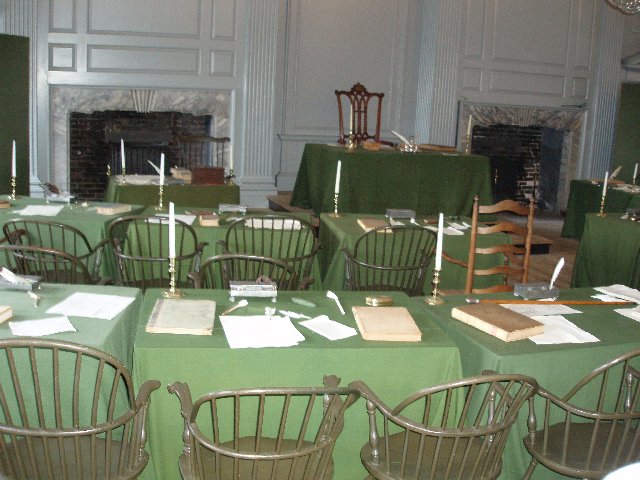
228935-room-where-the-declaration-of-independence-was-signed-at-independence-hall-in-philadelphia-pa-philadelphia-united-states

It always amazes me how we humans generally follow the rules. On any given day millions of people adhere to speed limits, stop at red lights even if there is nobody around, stay inside their designated lanes. There is always an implied threat of being caught and given a citation for breaking the law, but mostly people do what they are supposed to do because they realize that the statutes have been set in place for safety and the common good. We innately understand the value of working together for the benefit of all even if it is sometimes a bit inconvenient.

There are thousands of examples of how most of us know, understand and appreciate conformity to the directives that keep our society running smoothly. Now and again, however, we encounter situations in which it becomes uncomfortable to simply sit back and adhere to the status quo. In those moments we feel a grip in our stomaches and ask ourselves what our role should be. Do we sit back and quietly watch or do we rise up to voice our concerns? When is it best to avoid the fray, and when must we say something lest we no longer be able to gaze at ourselves in the mirror? How do we decide which aspect of a complex disagreement is the most right and just?

Since I am a huge fan of history I tend to be a documentary fangirl. Netflix is all too aware of my viewing preferences, and they continuously alert me to any new features that are available for my viewing pleasure. Recently they suggested that I might enjoy a program about Winston Churchill and his role during World War II. The story began at a time when much of the world was doing its best to ignore the warning signs that Adolf Hitler was a maniacal and dangerous dictator. Churchill was one of the few who consistently voiced concerns about the direction in which Germany was heading, in part because he was so vocal, Churchill’s views were initially thought to be a bit kooky. Nobody wanted to engage in controversy, and doing so was thought to be risky. Thus most of the world donned rose colored glasses and went about their routines hoping that the shenanigans in Germany would at worst be little more than an annoyance. Of course we know that such was not the case and Churchill was proven to be the right voice at the right time. His analysis of Adolf Hitler was insightful and he never quelled his criticisms of the dangers that he saw unfolding in Europe. If not for his steadfast diligence, Britain might have endured the same fate as Czechoslovakia, Poland and France.

Churchill somehow sensed that quietly accepting Adolf Hitler and hoping that he would simply fade away was an untenable stance. He raised his voice at a moment in time when it was unpopular to do so. People were tired. They had lost much in World War I. They worried that becoming divisive might shatter the peace that was precarious at best. it felt better to just ignore the craziness, keep the boat from rocking. Eventually the entire world would be forced to take a stand, choose a side, something that most had hoped to avoid. The question that lingers to this day is what people might have done from the very beginning to prevent the carnage that ensued. How different would that phase of history have been if Hitler had been defied not just by other nations, but by the German people from the moment that his ideas began to appear unhinged? 

The problem with such wishful thinking is that it is utterly useless after the fact. It is only in the moment that each of us has an opportunity to be heard and to do what we believe to be right. The trick is in unravelling the complexities of a situation and reaching the heart of the matter. To be willing to stand on a mountain top warning our fellow human beings of danger, we must first believe with all of our hearts that we will not be viewed as just another boy crying wolf. We must sense that what we have to say is so important that to secret it away in our hearts would be morally wrong. In such instances we sense that we must bend or even fracture the mores and rules that confine us so that our warnings might be heard.

My Facebook wall has been filled with impassioned pleas for love and understanding of late. Mothers worry about the contentious world in which their children must grow into adults. It feels as though hate is festering in the most unexpected places. We can’t even get a sense of well being from listening to our president, because he is more concerned with defending himself than being a beacon of hope. It feels as though we are being torn apart as a nation and within our relationships. So many are choosing to lock themselves away from it all. Only a few brave souls are willing to take the heat of criticism by voicing their concerns. The rest try to pretend that the unrest will soon all just go away, but even recent history has shown us all too clearly that the issues that trouble us only become more and more complex when we ignore them. Furthermore, they are rarely resolved when we are unable to find ways of working together.

I truly believe that the evil of this world represents a small minority, but it is nonetheless up to all good people to keep it in check. The hate that we see must always be called out for what it is. There can be no excuses, no watering down of our contempt. We cannot just look the other way when we see it, for it is when the good people join forces that they transform into an immovable power. They cannot be stopped until the depravity is eradicated. This truth has been demonstrated time and time again, so I wonder why we are so often reluctant to use it.

The fact is that there are groups of people in our country today who advocate the most detestable ideas possible. Under the guise of protecting an object, a statue, such groups held an abhorrent rally in Charlottesville that ultimately resulted in the death of an innocent young woman and the injury of others. Their only intent was to spread their poisonous ideas, not to somehow save the history of the south. They travel from venue to venue hoping to gain attention and new followers. They besmirch the legacy of the generation who defeated Hitler and all for which he stood when they parade through towns imitating the one of the most vile regimes that the world has seen. They are petty and lost souls who fester in anger, blaming imagined  slights for their own inconsequential lives. Any good thinking person should shun them and their despicable ideas, not find excuses for their behavior and thereby fuel their momentum. In other words, this is a watershed moment in which decent people must stand together to let such groups know that we will not accept their torches, their Nazi salutes, or their philosophies of hate. We will not allow them to enlist us in their misdirected causes. We will not find ways to mitigate their responsibility for spreading a disease of prejudice. We will make them the pariahs that they deserve to be.

Don’t turn away. Don’t tune out. Sometimes we have to make noise. Sometimes we have to demonstrate our courage. Our children are watching. Let’s show them what to do when in the course of human events we have no other choice than to stand firmly, proudly and publicly for what is right.

Let It Go

12-_00168v

I grew up in Houston, Texas in the south. As a child I remember hearing Dixie being played and sung now and again. When I was young I actually believed that I had descended from Confederate Rebels and it was only later that I found out how wrong I had been. Of course my mom’s ancestors were busy chafing under the rule of Hungarians while the Civil War raged here. It was from my father’s side that I assumed that I had come from bonafide Johnny Reb stock. Imagine my shock, and maybe even a bit of relief, when my genealogical searches revealed that my great grandfather, John William Seth Smith, was a Lieutenant in the Kentucky Volunteers and that he fought for the Union. In fact, he participated in a number of crucial battles and was around to bury the dead at Shiloh. It ends up that the inclement weather and horror of that event badly affected his health in later years and after the war he seemed rather intent on putting his days of fighting behind him. I suppose that those of us who are still arguing over the aftermath of that terrible conflict might be wise to follow his lead.

I’ve always had a fascination for history and so I have read a number of biographies and historical texts. Robert E. Lee was someone about whom I wanted to know more. In so many ways he was an enigma. He graduated from West Point and for a time was one of the most highly respected generals in the Army of the United States. He sometimes questioned the morality of slavery, but nonetheless held the odd belief that it served a purpose in helping the enslaved humans to learn the necessary skills to be full fledged members of society. He loved his country but felt a higher allegiance to his state. He saw secession as treason, but agreed to join the Confederate cause nonetheless. In other words he was a highly conflicted man who wanted to be honorable but often demonstrated profound confusion about how one should live. In the end he actually felt that the long war should never have happened, and he spent much of his later years attempting to free his soul from guilt. 

The aftermath of most wars becomes a time for trying and punishing those guilty of crimes or treason, while the rest of the population goes on to live ordinary and quiet lives like my grandfather. The days after the Civil War were different. Both Abraham Lincoln and Ulysses S. Grant felt that no purpose would be served in meting out vengeance against their fellow countrymen who had gone astray. There were no trials in which Robert E. Lee and other Confederate leaders were held accountable or punished. Instead they were allowed to live with only their own self reflection to determine the final chronicle of what they had done. For Robert E. Lee it was a bitter pill to ruminate on the utter folly of the war and its impact on the entire country. He must have asked himself time and again why he had gone against his own beliefs that secession would be a fools errand.

Time has a way of glossing over the ugly realities of history. As the years passed people from the south often found ways to excuse the actions of their ancestors who had believed that destroying the country was actually the only way to deal with political conflicts. They saw the war as being noble and courageous, but the truth is that it was a horror that need never have happened. To celebrate those who led their fellowmen into the very jaws of hell seems to be a rather ridiculous idea, and yet that is what happened in cities and towns all across the south where monuments and statues were erected to honor men who in many ways had been fools. Perhaps it was a way of ignoring the truth of how incredibly wrong the entire conflict had been.

It would be one thing to mourn the lost souls who died in those terrible battles that pitted American brother against American brother, but it is quite another to glorify those who had took the common people so far astray. It would be akin to building monuments in honor of Adolf Hitler all over Germany. We would surely see the inappropriateness of such memorials, but somehow we fail to realize how ludicrous it is to honor men who literally performed treasonous acts against the United States when they chose to go to war against the government. Perhaps Robert E. Lee said it best. “I think it wiser not to keep open the sores of war, but to follow the example of nations who endeavored to obliterate the marks of civil strife and to commit to oblivion the feelings it engendered.”

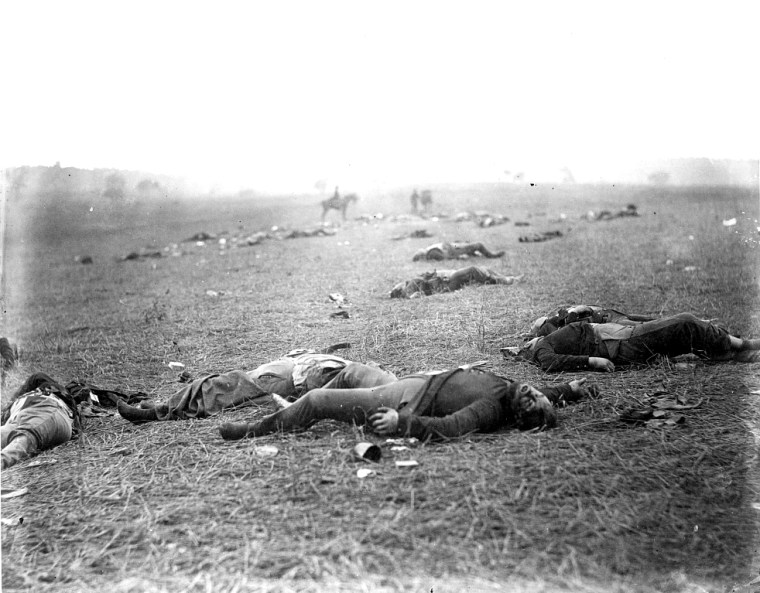
We have harbored the feelings of separation and divisiveness far too long. Walking through the Shiloh battlefield I felt no glory, but only a deep sadness that people were unable to find ways to settle their differences through any means other than fighting and killing. There is no magnificence at Gettysburg, only despair that man’s anger overwhelmed his ability to find common solutions. War is always hell. Slavery was wrong. We all know in our hearts that these are truths. Why then do we continue to quibble over hunks of stone and metal that remind us of a past that was horrific by anyone’s standards? We can remember all of those who lost their lives with compassion, but we need not attempt to honor those who were responsible for the carnage. Taking down the troublesome statues does not erase the history, for we can never forget how terrible it was. Instead it focuses on understanding and a willingness to move on and let go of feelings that seem to have festered long after they should have been set aside.

I suspect that if Robert E. Lee were to hear of the battles that now ensue over the appropriateness of monuments to in his honor he would remind us of his own words and respectfully ask us to take the monoliths down. We should do so not out of a sense of political correctness, but because it is time for healing that will never fully happen until we are willing to admit to the wrongness of that terrible chapter of our history. We can place those images on battlefields or inside museums where the story of that time might be told, but it is no longer necessary to glorify the mistakes of our past. We must move ever forward and remember the words of another contemporary of Robert E. Lee.

As the war neared its end and President Abraham Lincoln delivered his second inaugural address his mood was melancholy and compassionate. He pointed to the horrific waste of the war but also its necessity in bringing justice to our land. Still he wanted all of us to come together as brothers “with malice toward none, with charity for all, with firmness in the right as God gives us to see the right, let us strive on to finish the work we are in, to bind up the nation’s wounds, to care for him who shall have born the battle and for his widow and his orphan, to do all which may achieve and cherish a just and lasting peace among ourselves and all nations.”

This is our challenge as the American people. In the name of all 600,000 men who lost their lives as well as those who were forever altered, it is time for us to heed the words of our great president who himself became a martyr to his noble dedication to the proposition that all men are created equal. It is far past time to stop the fighting and to let it go.

Unleashing Horror

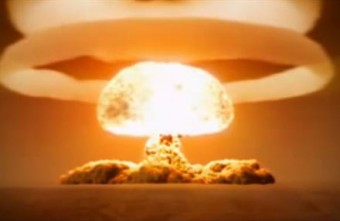
tsar-bomba1I am a child of the Cold War. I grew up hearing an air raid siren every Friday at noon. I practiced crouching under my desk along with my classmates in readiness for a possible nuclear attack. I watched movies that featured apocalyptic scenarios and creatures that had grown out of proportion from exposure to radiation. I saw reports of individuals building bomb shelters and observed adults worrying about the Cuban Missile Crisis. The threat of attack from Russia seemed to be a fixture of my childhood and teen years. Somehow the danger was so insistent that I and most of my peers actually began to ignore it. Of greater importance to us were the young men being drafted to fight and sometimes die or be injured in Vietnam. Violence was featured on the nightly news programs that entered our living rooms each evening, but we never became immune to the horrific images that we saw. Instead we grew weary of the constant hints that one day our world might explode. More than a few of us became peaceniks ready to do whatever it took to keep our country and our young men and women out of harm’s way.

For a time things settled down into an illusory peace. It felt as though the whole world agreed that we all loved our children too much to keep fighting. Unfortunately the lull in the militarism was brief and once again we have a generation of young people who have literally spent their entire lives hearing of wars, terrorism and the threat of nuclear annihilation. It is a horrible place for them to be. It takes great mastery to shelter our kids from the worry of horrors. Even with our best efforts they will no doubt hear of the realities of the world just as I did, and it will worry them.

There is great saber rattling taking place between the United States and North Korea that is frankly far too reminiscent of the fear mongering that forced me and my classmates to endure those drills underneath our desks. The power of nuclear warfare that was unleashed at the end of World War II has been a specter that won’t quite go away. The arms race has placed dangerous weapons in the hands of tyrants capable of doing very unexpected things. This makes for great tension and requires great diplomacy and skill in reading the minds of those who would harm us. We are presently engaged in a nuclear chess game with potential consequences that are almost unbearable to consider.

It would have been impossible for my generation to spend all of our time concerned that one day our civilization as we know it might be wiped out with the push of a button. We had to believe that our leaders and the leaders of other nations would take their responsibilities for the safety of their people seriously. John Kennedy and the men and women that he had assembled in his cabinet proved to be more than worthy of the task. They averted what might have been a disaster of Biblical proportions. The true story of the thirteen days in October in which they stared down the Russians is one of courage and rationality. I think that after that particular occasion most of us continued to live our lives confident that we would never have to actually witness another nuclear attack like the one that was rained down on Japan. We grew more and more aware that with great power comes even more responsibility. Our leaders seemed up to the task.

I hate to admit this but many of my old childhood fears have come back to haunt me since President Trump has decided to take such a belligerent stance in reaction to learning that North Korea has the capability of attacking the United States. The game that he and Kim Jong Un are playing is high stakes, and we can only hope that it will remain in the realm of schoolyard taunting. The leader of North Korea is young and notoriously unstable. He may have little real appreciation for the consequences of launching a nuclear attack, but President Trump is of my generation and he should know full well that even thinking about such a thing is worrisome. His words may be designed to scare Kim Jong Un, but I wonder if they also might push the dictator to demonstrate that he is not afraid. Dealing with someone known for being unpredictable takes great finesse and I am not convinced that remarks about destroying a country are the best way to prevent the ultimate tragedy.

I find myself holding my breath just a bit but also trying to grasp why we humans would ever have put ourselves into such a precarious position. Surely we have evolved enough to realize that the horror of war never ends well for anyone, and yet here we are again dealing with evil in its worst forms, all so that a few may keep or seize power.

I would feel far more comfortable if the men and women that we have elected to lead us would show signs of coming together in such dangerous times. Now is not the moment to argue with one another, but rather a moment for uniting to find ways to keep the world safe. The idea that one individual is allowed to voice his opinions without counsel or a filter is appalling to me. Where are the profiles in courage that we so desperately need?

Innocents of Hiroshima and Nagasaki were killed and injured because their leaders boasted that they would never surrender if it meant losing every man, woman and child. Even when it was apparent that the war had been lost the Japanese kept fighting, and so the decision was made to put an end to the conflict in the most terrible possible way. I shudder each time I think of what happened. A door was opened to unspeakable horrors that have threatened mankind ever since. Our goal should be to insure by hook or crook that nobody ever again has to endure such terror. Instead we seem intent on building our own arsenals even as we dare others to invest in their own. We appear to be at a standoff which is good, but what happens if someone finally decides to test the fates?

In the past when we still remembered how truly terrible a nuclear strike can be we asked ourselves who we wanted as our protector in the event of a possible nuclear holocaust. We have tended to neglect such thoughts of late. Perhaps it is time that we assert ourselves once again and be certain that there will be a steady hand at the helm. If that person is indeed President Trump, then more power to him, but if it is not then I urge the members of Congress to speak up now. We are all depending on cool heads to prevail. Let us pray that this crisis too will pass. God help us all if anyone makes a mistake. God help us to find the kind of men and women who have brought us safely through danger in the past. I want to believe that we will rise to the challenge. Our children are depending on it.

A Nation of Knowledge

Portrait-608x730.jpg

There are many national treasures in the United States, a number of them gifts from nature. The Grand Canyon is a breathtaking spectacle. The mighty redwood forests are haunting. The Rocky Mountains are the marrow of the country. We sometimes forget our manmade creations that seem to pale in comparison to the ancient edifices and wonders that lie in other parts of the world, but one that stands out as a true gift is the system of Smithsonian museums in Washington D.C. that span so many facets of human enterprise. Surprisingly the beginnings of that incredible institution came from a man who had never even been to the United States.

James Smithson was a wealthy Brit who possessed an intense curiosity about science and the world. From a young age he dabbled in research and his studies and findings enabled him to accumulate a rather tidy sum of money for the time. When he died his will stipulated that his fortune would go to his nephew, but if that nephew died without heirs then it would revert to “the United States of America, to found at Washington, under the name of the Smithsonian Institution, an Establishment for the increase and diffusion of knowledge.”  As fate would have it Smithson’s nephew indeed died without children and so a plan was devised to send the five hundred thousand dollar estate to the U.S.

After a flurry of debate over how best to spend the windfall Congress decided to create “a museum, a library, and a program of research, publication, and collection in the sciences, arts, and history.” In August of 1846, President Polk signed the bill into law and of course the rest is history. Today there are nineteen different museums in the Smithsonian family and countless visitors from around the world enjoy the exhibits and benefit from the research that happens all because of the largesse of one man who never actually explained why he had chosen to donate his wealth to the fledgling country. This generous act has indeed increased and diffused knowledge to countless ordinary people over the ensuing decades and has become one of the most popular destinations in the world.

I suspect that during his time Mr. Smithson saw the United States as a rather wild place with little history of which it might boast. The country was still struggling to define itself and to keep afloat in the early nineteenth century. Much of the world sat back waiting for the whole experiment that had been unleashed by the Founding Fathers to implode. It was easy to see that there were still many problems that needed addressing when Mr. Smithson died in 1829. He must have been considered rather eccentric to even consider leaving his fortune to a nation that had yet to prove itself, but in retrospect it was a brilliant idea. What better way to insure progress than to promote education? It is indeed in opening our minds to the knowledge that has come before us and the ideas of the future that we as people become stronger. The foundation of success lies in learning and uncovering truths. The Smithsonian Institution has dedicated itself to being a repository of information that is open to all people.

We are presently engaged in heated discussions about how to move forward in a world that is very different than the one that James Smithson inhabited, and yet his essential understanding of the importance of knowledge holds the key to unlocking our full potential. If the Smithsonian Museums that grace Washington D. C. have taught us anything it is that the power of mankind is unleashed at its best when we work together as people to provide win/win situations for all parties.

What worries me most about the environment that I observe today is that people are taking sides and demanding that their points of view be accepted without quarter. In other words there is an atmosphere of extreme partisanship that virtually insures that half of the population will be angry one way or another. Little effort is being made to consider alternatives or to engage in healthy research and discussion of issues. Much of the population is ignoring the knowledge that we have accumulated over time that might help in unravelling the challenges that we face. I find that few people even possess a fundamental understanding of our Constitution and why it was created the way it was. Even our presidents are sometimes guilty of believing that they have powers that do not belong to that branch of government. We seem to promote freedom of speech only as long as it aligns with our way of thinking and the entire political spectrum is quite guilty of intellectual laziness.

The Smithsonian Institution and all for which it stands should be more than just a vacation destination for Americans. It is not Disneyland, but rather a treasure trove of information and ideas about which we should be eager to learn and discuss while eschewing our preconceived notions. Ours is supposed to be a nation of “we, the people” not “you people” and yet so often I hear taunts that divide us into camps as though there is no possibility of ever coming together.

Propaganda is bombarding us every minute of every day. It is up to each of us to take the time to unravel fact from fiction, lies from truth. It should not be them against us, but rather all of us searching together for the truths that are evident and that may be found in the unfolding history of mankind much of which is housed in the Smithsonian Institution. Our goals should not be to defeat those who think differently from ourselves but to find ways of managing our beautiful diversity so that everyone feels a sense of belonging and power. Our journey to such ideals should begin with educating ourselves and our children.

As we begin yet another school year we would be wise to be inspired by James Smithson’s generosity and wisdom. Somehow he understood that all nations need to learn from the knowledge that mankind has assembled over time. It is in using our rationality that we better the lives of everyone and those who have come before us have demonstrated time and again that struggles for power are not the answer. All of the lessons are right in front of our eyes. It’s time that we buckle down and take them to heart.