Embracing Grief

01-mother-and-child

I have a memory of being very young and quite frightened as I sit on my mother’s lap. We are on a boat of some kind and I can feel the rocking of the craft on the waves. My mother comforts me as I cling ever closer to her chest. There are many people around and all of them are chattering and unwittingly making me feel quite nervous. The sea breeze is brisk and I don’t like the way that it stings my face, so I bury my head in my mother’s gentle caress. Suddenly everyone is moving toward the railing of the ship, even my mother who appears to be happy and excited as she carries me toward the crowd that is cheering and pointing at something that is confusing to me. Whatever it is seems gigantic and I don’t want to look at it, but my mother’s soothing voice convinces me that I am safe. I quickly glance just long enough to see a huge object seemingly floating in the water. Then the imagery of that long ago recollection instantly stops in my mind.

I have often wondered where I might have been on that day. My mother seemed to think that we were on a vacation trip to New York City. My vague description of my recurring vision led her to believe that I had somehow remembered going out into the harbor to view the Statue of Liberty. Still she had her doubts because I was well under two years old when we took that trip together, so she often mused that perhaps I was recreating an image from a movie that I had seen and attributing it to my own life. Somehow I believe that the incident was absolutely real and so scary to me that I was able to relive the scene even decades after it had occurred. Mostly my thoughts of that day are reminders of how safe and protected I felt in my mother’s arms, a feeling that never changed in all of the years that I have journeyed in this world.

Mothers have been on my mind of late. Three of my friends have recently lost their moms. Another is agonizing over the anniversary of her mother’s death a year ago. Her grief was renewed as the date that her mother left this world approached. In her honesty about her sadness and her descriptions of the wonderful things that she and her mother shared, I have found myself realizing that a mother’s love is unique in its intensity. A mom is eternally connected to her children in a spiritual way that transcends even death. I know that I have felt my mother’s enduring presence in my heart again and again in the six years since she has been gone. I find that I actually understand her more in her absence than I ever did when I was rushing around and taking her for granted. It is not difficult at all for me to identify with the men and women that I know who are filled with a mixture of sadness and joy as they are reminded of the unconditional love that their moms showered on them.

It’s funny how we find ourselves thinking of small moments that meant so much to us whenever we begin to think back on the influence that our mothers had on our lives. I always return to a cold February when I was nine years old and bedridden with a high fever and a measles induced rash. I felt weak and my head pounded incessantly. My mother kept me warm under quilts that my grandmother had made. She constantly checked on me and brought me cool drinks and homemade soup to keep me sustained at a time when I had no desire for anything other than sleep. Best of all she hugged and caressed me and softly assured me that I would soon be well again. Even in the middle of the night as I tossed and turned uncomfortably she was there watching over me. I needed her so, and she was my guardian angel.

Thinking back I realize that this happened only months after my father had died. Mama had somehow managed to create a safe environment for me and my brothers in such a short time. She had set aside her own tears and worries, at least on the surface, so that we might feel confident that all would be well. She must have felt overwhelmed by the responsibilities that had so suddenly fallen upon her, and yet she never let on that she was even remotely concerned. She threw herself into the task of parenting all alone, never even hinting that it might be quite difficult. All I knew back then is how much I loved her and how good she always made me feel.

Mothers can be such imperfect beings but somehow those of us who are their children ultimately see only the perfection of their love. They are our mentors, our muses, our cheerleaders, our rocks, our security. No matter how many mistakes that we make their love endures. They see us without the criticisms that others may heap upon us. They believe in us and want all that is best for us, but mostly they just want us to know that they will never leave us, so I always understand the profound sense of loss that occurs when someone’s mother dies.

Sometimes it is the other way around. A mother loses a child, an unnatural event that is capable of tearing a woman’s heart from her soul. I often think of my grandmother Minnie when my father died and the startling pain that remained etched on her face from that day forward. I thought of her when my friend Tien lost her baby boy Jhett. I sense that there are few greater tragedies than the untimely death of a child, and even though I have witnessed the great courage of those who have endured such misfortune, I also have seen their quiet desperation and undying love for the children who might have been.

It is important that we acknowledge the feelings of children who have lost their mothers, or mom’s who have lost their children. The mother/child relationship never really dies and so the emotions that surround the memories are raw and real. Our role as friends is to simply be supportive and willing to embrace the feelings that they have, no matter how deeply sad they may seem to be. In many ways the person who is willing to admit to their overwhelming emotions is actually just being honest. Our society tends to look away from grief and want people to pretend that they are stronger than they really are. Being able to admit to feeling crushed by loss is actually a healthy way of dealing with reality.

My mother was always the stoic, the person who gave the impression that all was well. I suspect that she did this to shield me and my brothers from the many worries that stalked her. When her mother died she finally decided to let all of the world see her true state of mind. She sobbed openly and spoke of her mom incessantly, so much so that one of her brothers cautioned her to get a grip on herself. By that time in her life she had been treated for bipolar disorder for many years. She went to her psychiatrist concerned about the intensity of her grief. He assured her that she was finally reacting in an incredibly healthy and normal manner and he congratulated her for learning how to deal realistically with the feelings that are so much a part of being human.

Yes, our mothers are such special people. They are our first teachers and the people who like us just the way we are. It is indeed perfectly natural for us to miss them when they are gone and to want to remember them, sometimes even with tears in our eyes. Be kind to those who have those moments of remembering how much they miss that relationship. It is something to honor and embrace. Be the person who allows them to express themselves. Be the person who understands. Help them to embrace their grief.

A Wedding, Two Funerals, and A Hurricane

Heaven-newearth_333_250_90

This summer has left me forever changed in ways more dramatic than I might ever have imagined. It began innocently enough with a visit to New Orleans with grandson Ian. He saw my favorite city with a new set of eyes that were innocent and inquisitive. It was the history of the place that fascinated him more than even the food and entertainment. He was particularly entranced with the World War II Museum which filled him with wonder and so many questions. I suppose that in many ways the day that we spent reliving the drama and importance of that era when was the beginning of a circle of life that left me profoundly different by the end of my journey through the warm lazy days that have heretofore represented fun and frolic to me, but would no longer be so simple to consider.

After our sojourn in New Orleans we travelled to Cancun for the wedding of two of our favorite friends, Tim and Dickie. We learned just how powerful love can be and that how it cannot be narrowly defined. We also went on a journey back in history to study the Mayan people and their glorious civilization that had been quite advanced in its time. It humbled us to learn of the ingenuity of mankind, but also to understand that the upheavals of life and how we humans react to them have the power to take down or raise up even nations.

We had scheduled so many more amazing travels for July and August when our world was shaken to its very foundation. My husband Mike had a stroke on July 3, and it was as though the earth itself had stood still. Nothing really mattered to me other than Mike’s health and I was thankful that he was still alive and that I would have more time to convey my feelings for him. I suppose that from that exact moment forward I quit taking anything for granted. I became more attuned to the colors and sounds and people all around me. I rejoiced each day when both Mike and I arose. I reveled in even the smallest bits of joy that came our way. Somehow I found myself caring little for things and greatly appreciative of relationships and love.

Mike and I shared a viewing of a partial eclipse of the sun rather than than the total one that we had planned to witness. I suppose that I should have been disappointed that we were not able to travel to Wyoming for the event, but having the pleasure of sitting with Mike in a park watching the little piece of wonder that we were given was more than ample for me. I felt that our day together was truly glorious just because we had the gift of being together. Whenever I thought of what might have been, I felt frightened but mostly grateful for my blessings. Each new day was glorious, but I had little idea that an even greater test of my endurance lay ahead.

As the summer drew to a close my two eldest grandsons readied to go off to college. We celebrated at our favorite Cuban restaurant, El Meson, in the Village area of Houston near Rice University and the Medical Center. It was a beautiful night in which we enjoyed knowing what fine young men our Andrew and Jack had become. It was yet another reason to be thankful and our hearts were filled with joy.

Later we had the privilege of having our twin grandsons Ben and Eli at our home while their parents helped their older brother to check into his dorm at Texas A&M. I was charged with helping the two boys to complete a project for their English class and we worked quite hard for an entire Saturday. I woke them up early on Sunday so that we might finish and still have time for some fun before their parents returned. Just as I had hoped we found ourselves with enough free hours that we were able to go bowling at the Main Event. Later that evening we played a rousing game of Scrabble with no holds barred, and Eli literally blew us all away with a remarkable score. We laughed and felt so good that I once again found myself silently saying prayers of thanks for such precious moments.

Then came the threat of hurricane Harvey. It seemed that because the eye of the storm would be so far away we would be in little danger. There were predictions of massive rainfall but somehow that didn’t seem to be much of a problem, and so we decided to stay in our home. On the first day after the hurricane made landfall we spoke of the hysteria of the forecasters because their promises of floods appeared to have been premature. We were much more saddened by images of the devastation in Rockport, Texas, one of our all time favorite camping spots. It was not until the evening that the rains began and kept going and going and going for three solid days leaving forty three inches in our neighborhood alone.

We began to hear dire reports of friends and family members whose homes were taking on water. The television stations showed us live pictures of familiar places that looked like ocean front property. More and more people that we knew were evacuating, sometimes in the middle of the night. Suddenly I became fearful because it was apparent that if my husband had another stroke there would be little that we might do to get the help that he would need. Those three days became a kind of terror for me. I watched the rain and the street in front and the yard in the back, ever vigilant and unable to sleep lest I might need to get Mike to a medical facility. I cared not about any of the things in my home, but only about my husband and his safety. I realized that I was going to do whatever it took to get him through.

When the rain finally stopped and moved away from our city after dumping fifty one inches across a one hundred mile wide area I was emotionally drained and filled with conflicting emotions. I cried for all of the souls whose worlds had been turned upside down. I sobbed for those who had lost their lives and their homes. I felt lucky that Mike had made it through the days and nights in good condition. I laughed that we had stayed home from camping trips and the eclipse lest he be in a situation in which he might not be able to receive immediate medical care, and ironically for three days we had essentially been trapped on a kind of island with so much happening all around us that we were actually quite alone. I had to praise God for caring for us and for giving me the strength and the calm that I had needed to weather the storm.

Last week our city began to attempt a return to normalcy in earnest. Children returned to school. Adults went back to work. There were actually days that felt so much like the glorious beginning of fall that has always made Houston a kind of Chamber of Commerce postcard. Only rides around town reminded us of the horror of what had happened. Still we had to be happy that we were able to meet with great friends for a brunch on Sunday. We were grateful that we got to visit Mike’s father on Monday and see that he was doing well. Then our week was punctuated with the sorrow and celebration of the lives of two incredible women who had died. I think that perhaps more than any other event their funerals impacted me with a realization of what is truly most important as we live out our days.

Both of these beautiful souls had lived through those harrowing events of World War II that we had studied in New Orleans with Ian. One of them had resided in England. She met her soulmate during that conflict, an American GI. The two of them fell in love and he took her back to his home in Texas where they had seven children that they raised in a home filled with love and goodness and faith in God. The other woman had been born in Italy but eventually immigrated to New Orleans where she too met the love of her life. They also wound up in Houston in the same neighborhood where I grew up. They had four children who would become dear friends of mine. Both women were devoted to their families and required very little in the way of possessions or wealth to be happy. They sacrificed for family and felt honored to do so. In the end they were in turn loved and adored by their children and their friends.

When I attended the two funerals I was accompanied by people that I had known since I was quite young. We had each accumulated a lifetime of stories and memories, but somehow we knew that those women had demonstrated to us how to truly get the most out of life. I felt a sense of peace and a feeling of understanding that has all too often eluded me as I have fought to accomplish rather than to relate. I saw that these women had always realized that titles and bank accounts and possessions were not the things that define a life well lived, but rather the moments when we touch hearts. Somehow I understood that in spite of the topsy turvy nature of this summer, it had been magnificent because it had opened my eyes to how I need to embrace each moment that I have. Somehow I am all the better for what I have learned from that wedding, the hurricane and those two funerals.

When Children Lose Hope

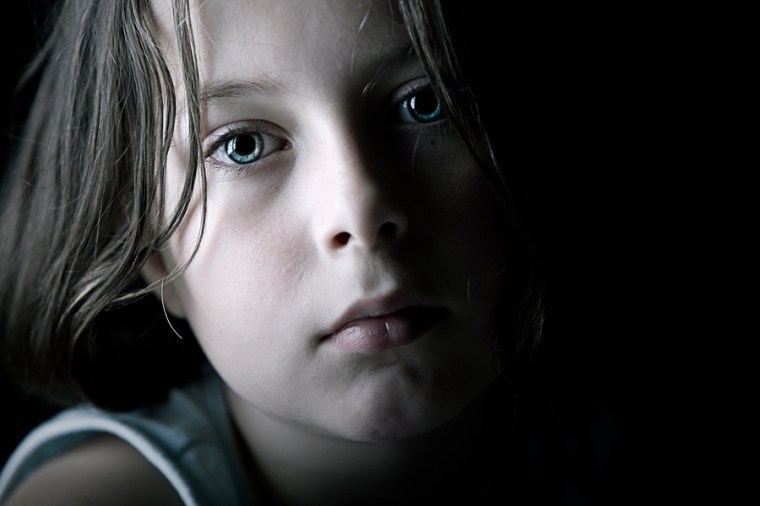
Sad ChildA recent study reported that for the first time ever more middle school students are dying from suicide than from car crashes. Not only that, but the number of suicides among children as young as eight, nine or ten years old is also increasing. Researchers are only guessing as to why so many of our children and teenagers are ending their lives in such record numbers. The trend has become an epidemic that is rarely mentioned and far too many parents are unaware of the signs that there is trouble.

There are a number of possibilities suggested as to why suicide has become such a problem. Young people today increasingly see the world as being a dangerous and violent place. News stories often make them feel as though they are living under constant threat of harm. In addition there has been a breakdown of healthy relationships in many families leading children to feel insecure and sometimes even unloved. Ours is a fast paced world that stresses hard work and excellence. Some kids feel unrelenting pressures to excel in every aspect of their lives. Television and movies all too often depict suicide as a good way to end problems. Of course there is also the specter of social media which sometimes serves as a catalyst for bullying and the creation of unrealistic expectations of beauty, luxury and unending happiness. There is also a problem with adults, particularly parents failing to acknowledge the signs of depression and its power to lead their children to suicide.

There have always been young people who decided to take their lives, but never in the numbers that are being recorded today. When I was young virtually everyone sat down together with members of the family to share dinner. We took that opportunity to talk about the days’ events and to reinforce the idea that we cared for one another. All too often today the tradition of gathering around the table has been replaced with meals quickly consumed in front of the television or on the go. Members of the family are often moving in so many different directions that opportunities to actually talk with one another are brief or rare, especially once children become teenagers.

Latch key kids are abundant and they spend their afternoons unsupervised. They may become isolated by hours of playing video games or may even find inappropriate television programs to watch. They spend hours texting friends with their parents rarely being privy to what kind of messages are being exchanged. They may be engaged in dangerous situations for which they do not have the maturity to react in a healthy manner. In a sense they often lead secret and disturbing lives apart from their parents without anyone knowing the extent of the treacherous paths down which they are travelling.

There are ways that adults should more closely monitor their children rather than just assuming that all is well. When my own daughters were teenagers a very good friend advised me to find out as much about what they were doing as possible. I did so in both overt and covert ways. I talked with my girls constantly and observed their behaviors, watching for even subtle changes. I also listened to their friends and the parents of their friends to find out more information about their habits. I enlisted the help of an army of caring people to make sure that all was well. Even then I missed cues now and again.

My youngest daughter suffers from depression just as my mother did. She began to exhibit more and more isolated behavior and seemed to be in a continual state of tears when she was in high school. I remember the night when I found her sitting in the dark in her bedroom rocking back and forth while crying. I sat on the floor with her and held her in my arms as though she was a toddler, coaxing her to tell me about her feelings and what was driving them until she finally admitted that she felt lost and confused. I made an appointment for her to see a doctor the next day and began to engage in more and more frank conversations with her. She made it past that valley of despair, but she often told me that ultimately it was her profound belief in God and the sanctity of life that had prevented her from harming herself. Ironically my mother had often told me the same thing about her own moments of mental distress. Needless to say I rejoiced in knowing that by providing my child with a religious foundation I may have saved her life.

If parents see dramatic changes in their children it is dangerous to simply assume that the new behaviors are hormonal or typical. Warning signs come in the form of falling grades, difficulties sleeping, headaches or other physical manifestations. Children who lose interest in hobbies or friends are sending signals that something is very wrong. Changes in personality are another clue. Frequent tears, outbursts of anger, long periods of isolation inside a darkened room may all be pointing to problems that must be addressed. While teenagers are infamous for their constant texting, if this habit also appears to be associated with aggression or a lack of self esteem there may be a need for getting to the bottom of what kind of information is being exchanged.

We’ve always had bullies but never to the twenty four seven extent that some kids now endure. Social media all too often becomes a minefield for attacking youngsters. Sometimes those participating in the emotional assaults don’t even know the people that they are intimidating. For them it is just a sick game, but for the teenager who is the butt of their commentaries it can become unbearable. There is nowhere to hide, no way to stop the misery. They all too often hide what is happening out of a feeling of shame. Being so alone bears heavily on them. They need help but don’t know how to find it. It is up to adults to be conscious of such situations and work to assist the victims in retrieving their sense of security and self respect.

It’s become popular for some adults to refer to youth who struggle to adjust to the many challenges that they face as “snowflakes” as though they are simply so delicate that they cannot adjust to the realities of life. This is akin to the people who would urge my mother to get control of herself when she was in the midst of a psychotic episode as part of her bipolar disorder. At the time the chemistry of her brain was so askew that she did not possess the power to stop the madness that engulfed her. She needed the help of caring family members, friends and medical professionals to get her life back on track. The lack of understanding that she continually faced made her challenges even more difficult than they needed to be. Such it is for youngsters who are in crisis. Shaming them for falling victim to depression so debilitating that they have suicidal thoughts is not an answer. Instead we all must be vigilant in assisting anyone whose ideation becomes dark and worrisome.

Teachers are often the first to notice problems with a young person. Instead of ignoring such concerns it is paramount that they contact the school counselor, the nurse, the parents or all of the above. Sometimes kids are so good at hiding their pain that their families are the last to know that there are difficulties. Honest conversations have to take place, always punctuated with love and concern. At the same time we should teach our kids to be good friends who are willing to let us know if someone is struggling more than normal. We must then either contact the school or the parents to alert them to what is happening. Those are difficult conversations, but they may save lives. 

Rescuing our children from thoughts of suicide should be of paramount concern to all of us. We need to spend more time talking with them and helping them to feel safe in confessing their problems. We need to watch for the warning signs and take aggressive and loving action before the worst happens. It is up to all of us to bring down the distressing suicide statistics among the youngest in our society. We need to begin some difficult discussions with ourselves, each other and our children. Nothing else that we do is more important. 

The Long Run

120601_SN_runnersEX.jpg.CROP.rectangle3-largeWe live in a society of almost instant gratification. If we want a pizza we only have to make a phone call, send a text, or pull one out of the freezer. There are hundreds of television channels at our fingertips offering virtually any kind of viewing pleasure that we may seek. We receive almost instantaneous new alerts on our phones and have the power of capturing memories in photos with the click of those same technological wonders. While we accomplish other tasks we have machines that wash and dry our clothes, vacuum our floors and water our lawns. If we live in a smart home we don’t even have to walk to a light switch to illuminate our rooms, adjust the temperatures or show us who is knocking at our doors. Waiting is becoming more and more of a lost art in our daily lives and yet there are still remnants of frustratingly slow processes and situations that demand our patience.

I have to confess that I have never been particularly good at waiting. I possess a bonafide type A personality which makes me a control freak of the ultimate variety. In facing the realities of living I have had to learn how to curb my anxious and perfectionist tendencies and slow down my expectations for myself and others. Life does indeed march at its own pace whether or not I wish to move it along more swiftly. This truth becomes all too apparent in so many situations.

Like most people I was anxious to grow up and get on with life back when I was a young woman. I had a love/hate relationship with school. I actually enjoyed the classes that broadened my knowledge but desperately wanted to reach an endpoint. There were moments when earning a degree seemed so far away. I was exhausted from studying and so desirous of finishing, and yet it felt as though I wasn’t inching any closer than I had been before. I had to force myself to keep my eye on the prize because if I had followed the urges that often crept into my brain I would surely have chucked the whole thing.

The same has been true of so many life events. Illnesses have to run their courses. Finding a life partner is not something to be rushed. Climbing the ranks in a career takes as much patience as persistence. In fact most of our journeys are riddled with stops and detours that force us to slow down and dig deeply into our psyches for the strength to stay focused when we are not making a great deal of progress.

It is said that children who are willing to delay gratification are the most likely to be successful as adults. A famous psychological experiment gave little ones the choice of getting one marshmallow immediately or a whole bag if they were able to wait for an unspecified later time. The children who chose to forego the small treat for the larger one demonstrated the same self possession and fortitude as adults. To this day graduates of Stanford University traditionally toss marshmallows into the air to signify their ability to stay the course of hard work and study in pursuit of a reward far more significant than the temptations that might have drawn them from completing their educations.

It’s not that easy to teach our children how to develop patience but it is worth our efforts to do so. We can begin my modeling the behaviors that will help them whenever opportunities present themselves. We should show them how to set goals, perhaps beginning with those that may be accomplished in a relatively short time, and slowly but surely move the bar higher and higher until they are able to look far into the future and plan for the big dreams that they wish to pursue.

The same should be true of how to use money. I am as guilty as anyone of going for the quick fix of instant satisfaction. Instead we should train both ourselves and our children to create budgets and stay within them. We might help them to create categories for saving and spending and show them how to keep track of the ebb and flow of money. It is a lifeskill that will serve them well if they learn it when they are young. Far too many people enter adulthood without any conception of financial planning. Sadly most individuals end their work years without either savings or investments upon which to draw in emergencies.

I still lose my cool when I’m in a traffic jam even though I know full well that there is nothing I might do to change the situation. I despise the long waits in hospitals and doctors offices, wanting answers now rather than later. I grow weary of waiting for my plants to bloom again after a long and brutal winter. If I don’t lose weight in a week during which I have kept to a healthy diet I am all too tempted to just chuck my efforts and eat a huge piece of chocolate cake. Even as I tell myself that the world reveals all that I need to know at its own pace, my leg moves up and down with impatience. Being calm while carrying on is an art that must be reviewed and practiced again and again. Patience is a glorious virtue that we never seem to value as much as we should. Perhaps now more than ever in a world that sometimes appears to have gone mad it is the one trait that well serve us best of all.

So set your goals, pursue them and then find a quiet place in your soul where you may retreat when your anxieties tempt you to lose focus. Life really is a long run that requires endurance and a willingness to work through stress and pain. Those who learn how to stay in the marathon will ultimately win the race.

We Don’t Have To Be Who We Are

dnadoublehelix2I once took a psychology class that focused on reviewing the history of learning theories. The professor pointed out that our knowledge of the brain and how it works is less complete than say what we know about the heart. This is because for most of history the brain was considered to be an almost sacred vessel, the repository of the mind and the center of spirituality. For this reason it was considered sacrilege to invade the space in which it resides, even in terms of merely discussing it.

At the end of the nineteenth century pioneers in the study of how we think began to posit theories and perform experiments. Many of these men and women were seen as societal pariahs with ghastly and ghoulish ideas. Their work was often marginalized and misunderstood. Luckily they had the courage to continue their research and build a foundation of knowledge upon which much of what we know about the brain today is based.

The brain is perhaps the most interesting aspect of our human bodies. We are still learning how it works. We have yet to become as expert at repairing malfunctions of our brains as well as we do with our other organs. We are hundreds of years behind in our understanding of how it operates, but we have indeed made great strides in unlocking so many of its secrets. Those who spend their days in research and medicine take us closer and closer to the time when we may be able to fix even the most delicate problems.

The twentieth century heralded a kind of scientific renaissance. Not only did we conquer gravity and successfully fly above the ground and into the heavens, but we increased our knowledge about our own bodies and what makes the remarkable machine that resides inside each of us operate. Part of those studies lead to questions of just how much each of us is affected by nature versus nurture.

What we have learned thus far is that each person carries a specific set of DNA that defines much of our physicality and even affects our intelligence. Once we are born with certain traits it is up to first our parents and later ourselves to determine how we will use the basic aspects of our chemical and biological makeup. We can’t change the color of our eyes unless we mask them with colored contacts, but we are able to either enhance or retard other aspects of who we are with our upbringing and the choices that we ultimately make as adults.

We know for example that we may carry a propensity for obesity but if our parents feed us healthy diets and encourage us to exercise regularly we may enter adulthood with a foundation for maintaining a lifestyle that will keep us fit. If on the other hand indulgent parents fill our bellies with sugary treats and allow us to sit in front of gaming units for hours every day it is more likely that the gene that makes us obese will take the lead. In other words we are not necessarily bound to the fate of all aspects of our genetic makeup. There are things that we have the power to control if we are willing.

As we learn more and more about our own personal DNA we have the powerful capability of improving or even overriding certain tendencies that lurk inside our bodies. If we bear a marker that tells us that we may be prone to heart disease we may start early eating a cardiac friendly diet and exercising to make that muscle that is the engine of our bodies stronger. We don’t necessarily have to be victimized by the reality that we carry signs of pending trouble. We can be proactive in preventing the very disease that threatens us.

I am fascinated that DNA is even able to determine which of us are related to one another. I have found a host of cousins that I never knew existed just by testing my own DNA. There is something rather powerful and mysterious about the double helix that is the essence of our lives, but it is also rather liberating to know that we often have the power to change our physical destinies with our own choices and actions.

I don’t think that we use the power of our knowledge nearly enough. We all too often operate as though we are still as ignorant about our makeup as we were hundreds of years ago. We make studies of health and nutrition come across as so dry and boring that our young have little interest in such things when in reality the information is fascinating and has the potential of radically altering their lives for the better. 

One of my mother’s all time favorite high school classes was homemaking. In today’s world such an elective would no doubt be viewed as not only having little value but even as being a bit insulting to women. Ironically my mom was constantly quoting her teacher and speaking of the things that she learned from her. She had a keen sense of nutrition and how to create a healthy and safe environment in our home. She used the information that she had learned in highly practical and useful ways. The class was deemed important by her in guiding her daily life even as she grew into her old age.

We miss the mark with our students today. Our health classes are riddled with definitions and rules that do little to inspire. Perhaps we should instead be showing them how to cook healthy meals and which forms of exercise work best. Our quest for creating more scientists and mathematicians is a worthy one but we would do even better if we were to also emphasize and encourage healthy lifestyles, not with lectures but by demonstrating how to be kind to our bodies. We have sadly regressed in this regard.

I recall watching a program many years ago in which a particular tribe of native Americans were found to have a disproportionately high incidence of diabetes. Groups of researchers descended on the area in hopes of learning why this was happening. What they found was that the people ate enormous amounts of fast food and led sedentary lives. More importantly, the scientists did a study of the history of the tribe. They saw that these were people whose ancestors had been runners who traveled everywhere on foot at rapid speeds. They had even held an annual contest to determine champions able to navigate long distances over rough terrain in record time. Their genetic structures showed that they needed this kind of physical activity to keep from succumbing to the symptoms of diabetes. The scientists built fitness centers for the entire population and sent personal trainers and nutritionists to help the citizens change their habits. Within a year the incidence of diabetes had fallen to levels below the national average in most cases without the use of medications.

We owe it to ourselves to use the remarkable genetic information that is available to us to improve our lives and those of our children. To ignore the warning signs that lie inside our bodies is foolish. It’s time that we all became both aware and active in the care and feeding of the bodies that affect us for good or ill. Let’s choose good.