

I vaguely remember studying heredity in biology when I was a fifteen year old sophomore in high school. I recall learning about the work of Gregor Mendel in which he unlocked the mysteries of producing various traits in peas. The study of genetics was as fascinating to me as it must have been to those who first began to unravel a bit more of how nature works. By the beginning of the twentieth century Charles Darwin had proposed his theory of evolution, Thomas Edison had begun to light up cities and towns, and Alexander Graham Bell was busy bringing a new form of communication to the world. There was great excitement among scientists and inventors as mankind progressed from the mostly rural horse and buggy days into a brave new world of automobiles and an industrial revolution. I suppose that it is only natural that a group of researchers began to consider the possibility of learning how to eliminate the weakest traits of humans by controlling genetic pairings much as Gregor Mendel had done with peas. With the exciting goal of creating stronger and more healthy people Sir Francis Galton describe a whole new science which he called eugenics, meaning “good birth.”
The original motives that propelled eugenics may indeed have been noble, even as they were naive. The driving thought was to prevent the suffering that so often plagues humans by weeding out the weakest traits deemed to be the result of heredity. Thus the eager scientists began to codify the pairings that appeared to create intelligence, beauty, good health, and athleticism while also identifying those that led to “feeble mindedness” and disease. Little consideration was given to the role of environment or to the consequences of classifying individuals as fit or defective. Sadly such practices advanced dangerous ideas like warehousing those with mental illnesses or learning difficulties in asylums away from the public. Some states even willingly passed laws allowing so called experts to determine which people needed to be sterilized for the sake of a “better” society. Invariably certain ethnicities were determined to be more perfect than others which lead to changes in immigration laws.
In retrospect it is easy to see how horrific the eugenics culture that arose actually was, but there was a kind of tunnel vision about the movement that was so enamored with the science that few bothered to consider the ethical consequences of the various studies. Surprisingly many of the theories were enthusiastically embraced even by individuals who were seemingly forward thinking like Theodore Roosevelt, Woodrow Wilson, Margaret Sanger, and Alexander Graham Bell. Eugenics conferences attracted renowned scientists from around the globe and behind the ivy covered walls of universities there was great excitement about the potential for improving the lot of the human race. Few appeared able to see the horror or that the idea of classifying human traits might lead to very dark places.
There were incidents that began to give pause to the excitement, including the case of a young woman who had been sent to an asylum because she was thought to be incapable of caring for herself due to her lack of mental acuity. Her mother had also been deemed unfit and was institutionalized as well. When the girl became pregnant and delivered a child judged to be as “feeble minded” as the other family members authorities decided to sterilize the her rather than risk bringing even more weak children into the world. The girl fought to prevent this atrocity and the case went all the way to the Supreme Court where Justice Oliver Wendall Holmes proclaimed that society had a duty to prevent the continuation of defective families that become a drain on national resources. She was sterilized!
Sadly such events were not isolated as state after state enacted laws that allowed medical personnel to determine which women were flawed enough to warrant sterilization. Individuals were judged by the appearance of traits like mental illness, addiction, ethnicity, and even poverty. Immigrants from places like southern or eastern Europe were thought to be a threat to America with their ignorance and “dirty” ways. Die hard eugenists believed that it was their duty to keep the best traits pure by limiting contact with those who seemed to be damaged.
It was not until a scientist named Hermann Joseph Miller from the University of Texas demonstrated the complexities of human heredity that the eugenics movement began to lose its luster. When news of the horrors of the Nazi concentration camps reached the world, its link with eugenics insured that all thoughts of meddling with human heredity were mostly put to rest. Eugenics became an embarrassment that was secreted away.
I shudder to think of how my own family might have been viewed through the lens of eugenics. My maternal grandparents were from one of the countries thought to be inferior. Had they not arrived in the United States before the immigration laws became more constricted I might not be writing these words today. My maternal grandmother had a mental breakdown as well and spent time in a state hospital in Austin. Luckily Texas was not one of the states allowing involuntary sterilizations or she may have been deemed a candidate for such a procedure. My paternal grandfather spoke honestly about his father’s alcoholism and his own. Until he took control of his addictions he was hardly the kind of person who would have been deemed worthy of fathering children.
My family demonstrates the folly of the so-called scientific judgements of eugenics. In spite of what appeared to be undesirable traits the descendants of my grandparents are some of the most intelligent and productive individuals in society. From those so called defective genes there are now medical doctors, teachers, lawyers, doctors of philosophy, mathematicians, scientists, engineers, business men and women, ministers, athletes. We put the lie to the very essence of eugenic arguments that some groups of people are so inferior that they must not be allowed to produce. Thankfully the scientific community regained its wits and turned away from the ignorance that it was propagating, but not before millions had suffered and even died.
The black mark of eugenics should give us pause. We should always question any ideas that claim legitimacy while admitting that there are still many unknowns. Just because those who are better educated insist on the righteousness of their ideas does not make them so. When our hearts tell us that something feels wrong, we need to listen. Sometimes our instincts are more in tune with reality than those propagating unproven theories. We always have to ask ourselves if generalities can be believed.


 On a typical Sunday last May I had a major panic attack. It was so painful and foreboding that I spoke to no one about it. Instead I went to some of our local stores and walked around hoping to be distracted enough that I would be able to return to a state of calm. Sadly nothing worked, and I ended up retiring to bed later that night still feeling as though something horrific was about to happen either to me or to the world at large. Insomnia kept me from sleeping for hours until my body finally collapsed from exhaustion, leaving in a state of relative comfort. By the next morning I had returned to my more normal cheery self and I set aside the dreadful feelings that had so plagued me the day before. I decided that I was simply having one of my May attacks that have been brought on over the years by remembering the day that my father died when I was eight years old.
 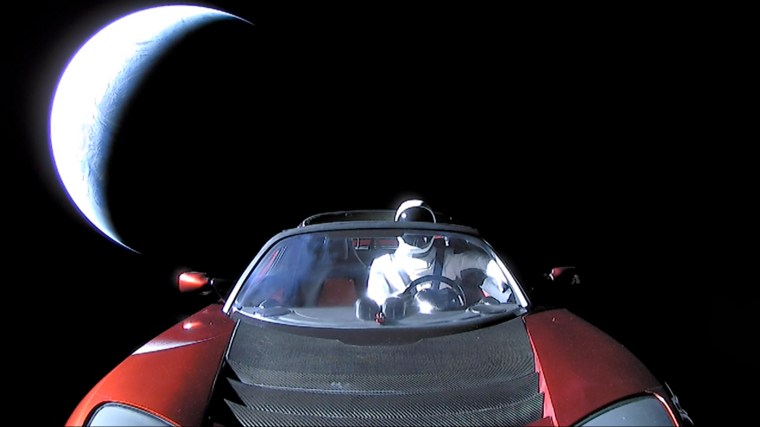 It’s been a very long time since I have felt the rush of excitement that I used to get whenever a new space mission was televised. I grew up in an era of rocketry firsts that literally took my breath away when they were happening. I saw Alan Shepard become the first American to go into space. I watched John Glenn make history with his orbits around the earth. I was tuned in when Neil Armstrong uttered his famous words as he stepped onto the surface of the moon and worried with the rest of world when the crew of Apollo 13 announced to Houston that they had a problem. I marveled at the Space Shuttle and the very idea that there might be a vehicle that could return from a journey to be used again and again. I was watching in horror when the Challenger blew up just after launching. I enjoyed the advances that allowed astronauts to make repairs and live for weeks in a space station. I believed that the most wonderful qualities of humans were encapsulated in the space program and as it all seemed to fade away I felt a sadness that was difficult to explain. Then seemingly from out of nowhere came a most remarkable feat that has reawakened my belief that one day in the future we will be able to journey across the universe.
 All It Takes Is A Little Love