Living With Passion

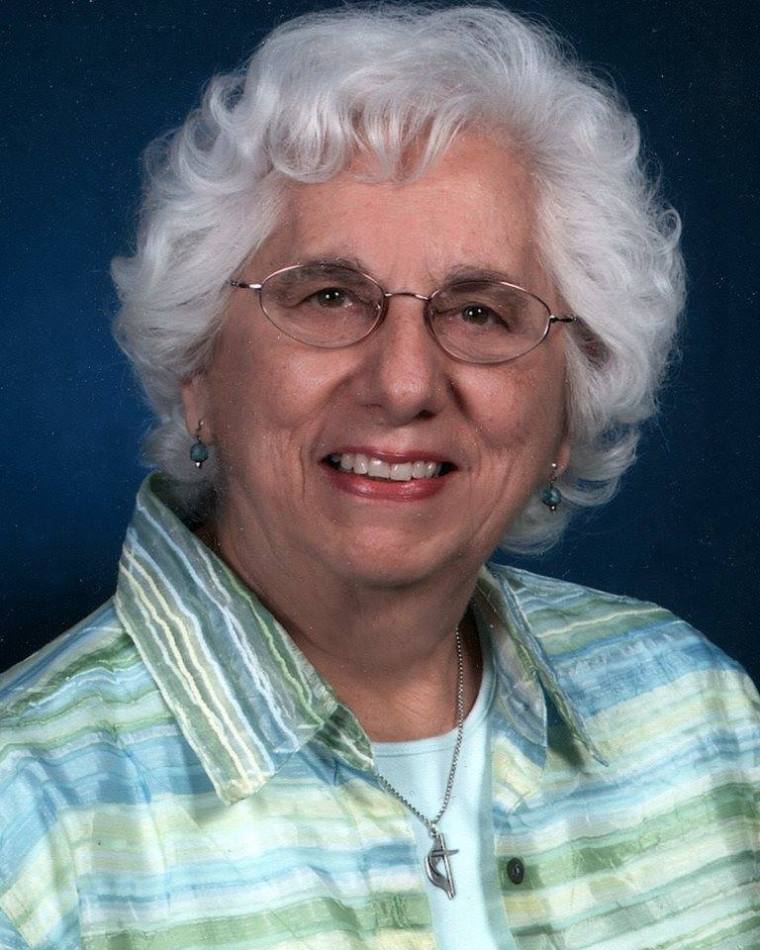
27751901_10214050313705370_7567982830482257335_nI suppose that it is a natural human trait to want to be someone who makes a difference in people’s lives. Sometimes that just means being an exceptional friend, or parent or co-worker. Most of us leave a small but nonetheless meaningful footprint on the earth. Some of us achieve a wider reach. Joann Stringer was a woman who impacted a multitude of lives in an exceptional way.   

I did not know Joann Stringer personally other than through contacts at parent/teacher meeting, and yet I loved her and even modeled my own teaching style after hers. She was a biology teacher at South Houston High School for twenty six years and both of my daughters as well as scores of my former students spent time in her classroom. She had a gift for making what might have been a difficult subject not only understandable, but also fun and exciting. Both of my girls came home from school filled with gleeful stories about the topics that she had introduced to them. They felt that she had opened a whole new and interesting world that had hitherto been unknown to them. Best of all she did so in a gentle and loving way that took into account the needs of each of her students. They never felt stressed or unworthy in Ms. Stringer’s care. There was no time in which they believed that she had been unfair or had not tried hard enough to teach difficult concepts. As a parent I appreciated their anecdotes about a truly caring and passionate teacher. As an educator I quietly filed alway those stories to use in my own classroom, knowing that I was learning from a giant in the profession. 

Even after my own children had left Ms. Stringer’s classroom I continued to hear about her magical abilities. Former students would tell me of how her inspiration had literally changed the courses of their lives. So many of her pupils realized possibilities that they might otherwise have never considered with her encouragement. They became doctors, nurses, researchers and even teachers. They fondly told and retold stories about this incredible woman who had so influenced the trajectories of their lives. I understood what they were telling me because one of my daughters who is presently launching a career as a science teacher often mentions how much she hopes that she will be able to teach as effectively as Ms. Stringer.

Joann Stringer truly dedicated her life to the thousands of students who came to her as freshmen, uncertain about what high school life would be. She reassured them and helped them to find their best selves. She made Biology seem almost easy with her artful explanations and exciting activities. They remember skinning rats, dissecting cats and even being reminded of how to be more mannerly. Ms. Stringer took them on field trips and mentored them as they followed pathways to careers in science. She kept in touch with them, attending their weddings and congratulating them as they reached so many adult milestones. She was in every way an exemplary teacher, the kind that we wish for all of our young people.

Joann Stringer retired in 2011. She pushed herself to keep going long after she might have taken the opportunity to rest. I suspect that she was so devoted to her calling that she was reluctant to leave even as she grew more weary. She suffered from a number of illnesses in her final years but still managed to reach out to her students via Facebook. She always seemed ready and willing to continue to assist them. Last week she died, leaving so many bereft, but also grateful for the imprint that she had made on their lives.

I watched as my Facebook feed filled with one tribute after another for this incredible woman. She indeed lived her life so fully that we would all do well to emulate the best of her qualities. I doubt that she grew rich in a material way, but her spiritual and emotional rewards were surely beyond our ability to count. As we walk through this life each of us has a vocation, a reason to be. Joann Stringer found hers and ran with it like a champion.

I suppose that Joann Stringer is still teaching those of us who knew of her in her own unique way. Her life is a lesson in itself. She showed us that our goal should always be to discover whatever we were meant to do, and then execute our talents unselfishly and with passion. Each of us has something to share, and Ms. Stringer taught us how to do that well. Perhaps it was her ability to help mold young people into happy and productive adults that was after all her greatest contribution to this world. Thousands of her students are paying forward the gifts that she helped them to develop. Her work was of the greatest importance for the future of our society and her impact will be felt for years to come.

I truly hope that Joann Stringer knew how loved and appreciated she was. I will always remember meeting her as a parent and feeling so reassured by her gentle words and her sincere smile. Now she will rest with the angels and we will hopefully carry on her work wherever we may happen to be.
The Least We Can Do

california-mud-slides-2018I watched a great program on black holes not long ago. I did my best to keep up with the theories, but the very ideas behind them are totally mind blowing. The universe is amazing and mysterious and we humans are only slowly learning about it using the mathematics and technology that we presently have. I suspect that we have yet to fully realize the depth of understanding needed to unlock all of the secrets, but there are great minds doing their best to unravel the puzzles. Somehow it is humankind’s nature to ask questions and seek answers. We want to know why things happen the way they do, and our creativity leads us ever forward in our quest. Nonetheless, we often find ourselves in frustratingly unprovable situations where it takes a leap of faith to become a believer.

I think of Galileo and the tragic persecution that he endured simply because a sector of his society was unwilling to accept his assertion that the earth was not at the center of our universe, but merely a kind of satellite coursing around the sun. The full acceptance of his ideas would not come in time to save him from a merciless punishment based on an ignorance that appears so clearly in retrospect, but was a bit more difficult to discern in the moment. We humans not only want to progress, but we want rock solid proof before we are willing to accept theories that are far different from our learned way of thinking. It is in our natures to be wary, just as Thomas the apostle was a doubter.

I find it quite interesting that there is a great divide between those who believe that the earth’s climate is changing and those who deny that this is the case. The premise of climate change is that we humans have a dramatic effect on our environment as we use and sometimes abuse its resources. Our numbers are so great that we literally change the natural world with our habits, and sadly we are accelerating a warming trend that is causing ice to melt in arctic regions and weather to be more erratic. Using data and scientific understanding of air flows and currents, those concerned with climate change urge us all to adopt habits designed to begin to heal our planet before it is too late. They point to droughts across the globe, strong hurricanes, and bone chilling winters as proof of the major changes that are taking place. Most of the scientific community is in agreement with these ideas.

At the other end of the spectrum are climate change deniers who insist that the data used to prove that our world is rapidly deteriorating is flawed. They argue that we have always gone through periods of drought and cold and that killer hurricanes are as old as the sea. They scoff at the idea that humans are somehow responsible for the very natural ways of weather that they believe continues with or without us. They use economic arguments to push for more use of fossil fuels rather than less. They believe that arguments about the climate are mostly political and as such support those who ignore the warnings of scientists. They liken the evidence that is presented in support of a theory of change to magic.

As someone who believes in God, but can’t actually prove that He is a true presence in our lives, I find the deniers to be short sighted. It is purely my faith in the promises of Jesus that guides me to prayer, devotion and a certainty that I will one day be united with my Lord in heaven. I have no rock solid proof that I am correct other than the words in the Bible and the teachings of my church, and yet I find no reason to doubt that I have found the truth. My own religious faith makes me wonder why any of us would be so wary of the much more concrete findings of scientists who have demonstrated with hard data that there are indeed great changes taking place that are associated with our habits of living.

I remember attending the funeral of a man that I knew who was originally from China. He had once been a Buddhist, but eventually accepted the beliefs of Christianity. His wife inserted elements of both Buddhism and his Baptist faith into the ceremony for him, noting with a bit of humor and irony that she didn’t want to take any changes that he might have accidentally made the wrong choice. I’ve often thought of her wisdom in conjunction with climate change, and I find myself wondering why anyone would be willing to risk being wrong by ignoring the warnings that Mother Nature appears to be sending us in greater and greater profusion. It would be far smarter to listen to those who are more educated about such things than to join in the rants of people whose sole purpose is to seek power. Namely, if each and every one of us began to live just a bit differently whether or not we are totally convinced that we in fact have an impact on the world it surely would not hurt us one iota. Like the wife who was unwilling to take a chance that her husband had been wrong, why would we want to hand off a more dangerous future to our children and grandchildren? What would it hurt to at least listen to what the scientists have to say? How could conserving just a bit more of our resources actually hurt us?

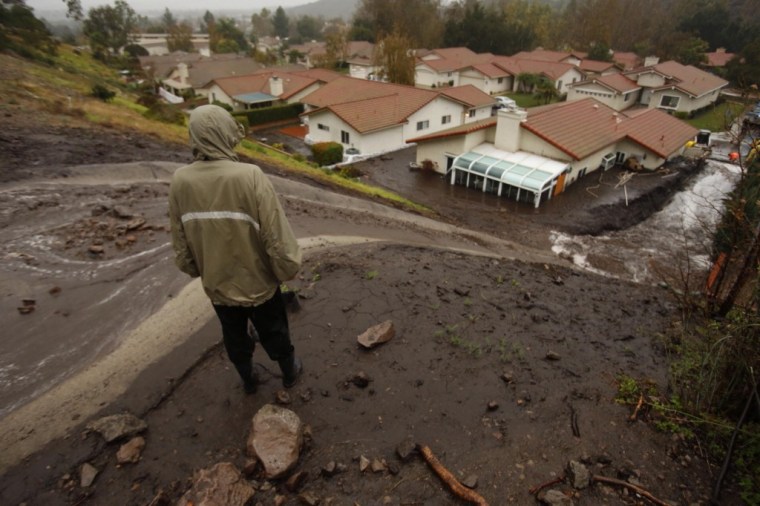
Our world is far more fragile than it appears. I have watched it being scarred of late in the most egregious ways. My city filled with water and so many homes were damaged and destroyed. Those of us who live here still shudder when thunderstorms rage overhead. We spent two days last week battling icy roads and temperatures lower than they had been in decades. All the while we watched homes burning in California and mudslides encasing them when it finally rained. We hear of Puerto Ricans still waiting for power to return months after a hurricane devastated the island. The damage to our earth is happening so often that we are almost becoming numb to its forces. We live in grave fear of terrorists and suggest that becoming more isolated from the rest of the world will keep us safer and at the same time ignore the one area where we have the power to make real change. In other words we can and should admit that we can do better in using the treasures of our planet.

Some things just make sense. Taking care of what we’ve got begins with each one of us. It’s far past time to be so silly about something as serious as the healthy functioning of the land on which we live. It can no longer be denied that our earth is sick and we must all work to bring her back to a better state. If is takes sacrifice, so be it. It’s the least that we all can do.

Yesterday Today and Tomorrow

default-1464355425-834-scientists-believe-they-have-explained-the-great-flu-outbreak-of-1918A hundred years ago in the fall of 1918, there were many who seriously wondered if the world was coming to an end.  A great war was still raging in Europe and decimating the young male population. Across the globe there was unrest and a general feeling that life would never be quite the same again. The worst surprise of that autumn was to come in the form of a tiny virus not yet visible to the human eye with the microscopes of the day. It would lead to an outbreak of influenza that eventually killed as many as five million people worldwide and hundreds of thousands in the United States. One sneeze from an infected person had the potential to infect ten thousand, and for a time nobody knew what to do.
It appears to have begun at a military base in Kansas where it was first thought to be little more than the typical seasonal outbreak of illness. It soon became apparent that the new strain was unlike anything doctors and biologists had ever before seen. It started with coughing and a fever that quickly grew ever more severe. It filled the lungs of the ill with so much fluid that they literally drowned. Before long there were not enough beds or doctors for the affected, and not enough coffins for those who died. During the months of September and October of that year the disease spread like wildfire, sparking dire accusations that the Germans had somehow planted germs in the bodies of soldiers fighting in the trenches. The fact that German troops were just as susceptible to the sickness did not allay the fears of those who were losing loved ones and friends so rapidly that it felt as though there was nothing that was going to stop the rampage of death.

More American citizens died during those weeks than in all of the wars of the twentieth century, and yet there was no cure, no idea of what the cause might be. For some reason the virus was more likely to spare the very young and old, but was most deadly for strong and healthy adults in their twenties and thirties. It would be years later before researchers found the virus that had wreaked such havoc on the population, and began to understand that the sickness had burned itself out when those who survived became immune without any form of medical assistance. Our understanding of such diseases grew over time, but always there continues to be a silent fear that something similar may one day return to infect humanity like a plague.

I had never heard about the horrific influenza of 1918, until I read a book shared by my daughter. She is a nurse and science teacher who has a great deal of interest in such things, and she thought that I might find the topic interesting as well. I was stunned to learn about the horrific events and to realize that none of the older people I had known who would have been young adults during that period had ever mentioned the event. I was particularly surprised that my grandfather who was well known for his vivid stories of the past had not brought up the topic. Since I was unaware of that part of history I had not known to quiz him about what he remembered regarding that sad chapter, and so I was not privy to his eye witness account.

Historians conjecture that this particular episode must have been so personally horrific that those who had endured it did not want to speak of it again. Perhaps it was the impetus for the roaring liveliness of the twenties when people appeared to throw all caution to the wind. Living through such tragedy must have caused people to view the world much differently than they otherwise might have. Most certainly they would have wanted to blunt the memories that must have been quite horrific. When the next decade of frivolity was followed by a worldwide depression and eventually another war, the personal stories of illness and death might have seemed trivial to them by comparison. In truth, they would have been right to wonder if the bad news would ever stop, and when it finally did they most probably decided never to speak of it again.

My father-in-law served in Korea during the war there. He has only mentioned what he saw there once in all of the years that I have known him. His eyes filled with tears as he recounted his experience and his voice was shaky. It was much too painful a memory for him to think about for very long. I have noticed that my uncles who fought during World War II were just as reluctant to share stories of their adventures as were my peers who fought in Vietnam. I suppose that there are events that are so horrible that we prefer to bury the thoughts of them deep within our psyches. It is simply too much to dwell on them for very long. 

I suspect that those who were witness to the 1918 influenza epidemic simply did not want to speak of the unspeakable. They lost loved ones and friends in a matter of days and weeks. They worried that the horror might return at any moment. To dwell on their heartbreak and fears would have been unbearable and so they did not include mention of the outbreak in their tales of living. The story languished until curious souls began to ferret out the details and bring them to light once again. What is a curiosity for those of us removed by a hundred years was all too real for those who were there when it happened.

Each generation has its share of tragedy. For those of us who grew up just after World War II the events etched permanently inside our brains include the good, the bad and the ugly. We recall with clarity exactly where we were when John F. Kennedy was assassinated. It pains us to think of the deaths of Martin Luther King, Jr. and Robert Kennedy that made is wonder if anarchy was going to rule the day. Many of have personal tragedies that affected us as well, the death of a father or hearing that a friend was killed in Vietnam. We smile when when we think of the first man to walk on the moon, and recoil at the vision of the twin towers in New York City falling like toy constructions before our eyes. These things affect us and change us and our ways of viewing the world, but we don’t often speak of them because the thoughts associated with them are too powerful and emotional. I suppose that the reality is that no matter how conversant we are there are no words sufficient to describe such things, and so we are silent just as my grandparents were about so much of the history that affected them.

Today we have new worries, but mostly go about our business hoping and praying that none of our biggest concerns will ever take place. Our natures compel us to be optimistic and to carry on even when situations seem dire. Like Scarlett O’Hara we believe that tomorrow will be a better day and we concentrate our thinking on the future rather than the past and the present. It’s how we survive. Still, there is something so fascinating about events like the influenza epidemic of 1918, that we can’t avert our gaze. We have to look if only for a moment so that we might remember that we are not immune to the same kinds of heartbreaking situations that plagued our ancestors. We are as human as they were, and we can only hope that when faced with tragedy we will respond well and not be judged too harshly for any mistakes that we make.

It’s all too easy to form opinions of what might have or should have happened. but we will never know what we might actually have done if we had faced similar hardships. It must have been a dark time, but somehow those who came before us found a way to keep moving forward without focusing too much on a past that they could not change. Perhaps we might learn from them and embrace each new day as an opportunity rather than dwelling on the heartache of the past. Yesterday is gone, today is an opportunity, and tomorrow allows us to repair any mistakes we have made. It’s the cycle that keeps the story of humanity alive. 

Houston We Still Have A Problem

houston-tx-city-profile-image

I have a friend who is a widow. When she first lost her husband she was showered with attention, but as time went by she became more and more alone. It was almost as though she had simply been forgotten. She and her husband had enjoyed an active social life until he became critically ill. After his death the invitations and visits that she had always so enjoyed became less and less frequent.

I recall the same thing happening to my mother over time until she mostly relied on family to invite her out of the house now and again. She remarked that it was human nature to provide comfort at the beginning of a loss, but that people slowly become preoccupied with daily routines that sap their time and energy making them less likely to stick around. She was quite understanding and nonjudgemental of those who drifted out of her life. She adapted and made do with the help that was offered, and didn’t dwell on the friendships that withered away because her life had become so different with my father’s death.

As the sun shines, schools open and so many people return to a semblance of normalcy after hurricane Harvey I find myself worrying and possibly even panicking for those most impacted by the devastating storms. Most of them have all of their possessions piled in heaps on the curb along with mounds of sheetrock, flooring and carpet. The stench of mildew and rot fills the air around their neighborhoods. They await word from FEMA or insurance adjusters to tell them how much assistance they will receive in rebuilding their lives. They often wear somebody else’s  clothing and shoes. They rely on others for rides because their cars are gone. Their futures are so uncertain that they are numb. They sit in their yards or rented rooms staring absently into the distance. Everything feels so overwhelming, particularly as the interest of others wanes. They have been the disaster of the week, the big news headline, but now it feels as though so many begin to move on to the next big thing.

Even the people who still remember them and appear to understand their plight are being pulled and tugged by the everyday demands of existence. They have to schedule their voluntary hours and assistance now. There is so much pressure to get back to the usual grind and a pervasive feeling that there aren’t enough hours in the day to accomplish all that must be done, but the piles of rubble are still there. The shells of what were once rooms where memories were made await financing that may or may not come. Stressed out homeowners jockey to book overworked contractors to bring their dreams back to life. Word is that it will take months, maybe even years to make all of the needed repairs. What are the injured parties to do while they are waiting? How much debt will they incur? Is there really any way to help them to feel safe and secure once again? Will they eventually be forgotten, or should they expect to be mostly on their own? These are the questions that haunt them in their sleepless nights. These are the worries that fill their thoughts.

Harvey has already been pushed to the back pages of the news. Irma is the new kid in town, the tragedy of the hour. FEMA is moving some rescue efforts from Texas to Florida. There will be competition for limited resources and funds making frustrations even more intense. All the while we have to continue to support our neighbors in the long journey that lies ahead for them even though we too are tired. Still those of us who were lucky understand that we do not have the luxury of simply resuming life as though nothing has happened. Our neighbors are frightened and weary and just as psychologically scarred as their homes are physically.

Every part of town is feeling the impact of this horrific event. Harvey was an equal opportunity storm whose wrath made victims of the rich and the poor and virtually every race and ethnicity. We have rushed to provide stop gap assistance. We provided cleaning products, tools and the labor to clean out houses. We gave food, clothing and shelter to those who have been displaced. We took school supplies to schools and did our best to care for the personal needs of people of all ages. There have been untold heroes who have worked tirelessly and selflessly for days. Now comes the hardest part of all, the moment when we just want to have happy thoughts and forget about all of the pain. Unfortunately to do so would betray all of those whose fate might have been ours but for the randomness of the destruction.

In the coming weeks we must be certain that all of our neighbors get the repairs that they need to make their residences whole again. More than that though, we must insist that measures are taken to make our streets and neighborhoods safer. This may mean purchasing homes that are in harms way and repurposing them as green spaces. We may have to strengthen and build levees, create more retention ponds, get dams up to date, install pumps around town, build houses on higher freeboard elevations, improve drainage. We have the know how, but we also need the vision and the will.

Long ago Houston leaders had a dream of making what was then a small town into a major port even though it was landlocked. They dug a big ditch from the Gulf of Mexico all the way into the city that became known as the Ship Channel. Today it is one of the busiest commercial centers in the world. With a bit of imagination we built the Harvard of the South on the campus of Rice University and created one of the best medical centers anywhere. We need the same kind of willingness to use technologies and knowledge to rebuild a city capable of withstanding even the unthinkable. We showed the world that we are not a population of ordinary people. We Houstonians are quite special and its time that we translate all of our spirit into a victory over tragedy. Houston we have a problem, but we have found answers to other conundrums before. Now let’s see what we might do to unravel the complexities that caused the worst flood that our country has ever seen, and insure that we will be prepared if such an event were ever to occur again.

A Nation of Knowledge

Portrait-608x730.jpg

There are many national treasures in the United States, a number of them gifts from nature. The Grand Canyon is a breathtaking spectacle. The mighty redwood forests are haunting. The Rocky Mountains are the marrow of the country. We sometimes forget our manmade creations that seem to pale in comparison to the ancient edifices and wonders that lie in other parts of the world, but one that stands out as a true gift is the system of Smithsonian museums in Washington D.C. that span so many facets of human enterprise. Surprisingly the beginnings of that incredible institution came from a man who had never even been to the United States.

James Smithson was a wealthy Brit who possessed an intense curiosity about science and the world. From a young age he dabbled in research and his studies and findings enabled him to accumulate a rather tidy sum of money for the time. When he died his will stipulated that his fortune would go to his nephew, but if that nephew died without heirs then it would revert to “the United States of America, to found at Washington, under the name of the Smithsonian Institution, an Establishment for the increase and diffusion of knowledge.”  As fate would have it Smithson’s nephew indeed died without children and so a plan was devised to send the five hundred thousand dollar estate to the U.S.

After a flurry of debate over how best to spend the windfall Congress decided to create “a museum, a library, and a program of research, publication, and collection in the sciences, arts, and history.” In August of 1846, President Polk signed the bill into law and of course the rest is history. Today there are nineteen different museums in the Smithsonian family and countless visitors from around the world enjoy the exhibits and benefit from the research that happens all because of the largesse of one man who never actually explained why he had chosen to donate his wealth to the fledgling country. This generous act has indeed increased and diffused knowledge to countless ordinary people over the ensuing decades and has become one of the most popular destinations in the world.

I suspect that during his time Mr. Smithson saw the United States as a rather wild place with little history of which it might boast. The country was still struggling to define itself and to keep afloat in the early nineteenth century. Much of the world sat back waiting for the whole experiment that had been unleashed by the Founding Fathers to implode. It was easy to see that there were still many problems that needed addressing when Mr. Smithson died in 1829. He must have been considered rather eccentric to even consider leaving his fortune to a nation that had yet to prove itself, but in retrospect it was a brilliant idea. What better way to insure progress than to promote education? It is indeed in opening our minds to the knowledge that has come before us and the ideas of the future that we as people become stronger. The foundation of success lies in learning and uncovering truths. The Smithsonian Institution has dedicated itself to being a repository of information that is open to all people.

We are presently engaged in heated discussions about how to move forward in a world that is very different than the one that James Smithson inhabited, and yet his essential understanding of the importance of knowledge holds the key to unlocking our full potential. If the Smithsonian Museums that grace Washington D. C. have taught us anything it is that the power of mankind is unleashed at its best when we work together as people to provide win/win situations for all parties.

What worries me most about the environment that I observe today is that people are taking sides and demanding that their points of view be accepted without quarter. In other words there is an atmosphere of extreme partisanship that virtually insures that half of the population will be angry one way or another. Little effort is being made to consider alternatives or to engage in healthy research and discussion of issues. Much of the population is ignoring the knowledge that we have accumulated over time that might help in unravelling the challenges that we face. I find that few people even possess a fundamental understanding of our Constitution and why it was created the way it was. Even our presidents are sometimes guilty of believing that they have powers that do not belong to that branch of government. We seem to promote freedom of speech only as long as it aligns with our way of thinking and the entire political spectrum is quite guilty of intellectual laziness.

The Smithsonian Institution and all for which it stands should be more than just a vacation destination for Americans. It is not Disneyland, but rather a treasure trove of information and ideas about which we should be eager to learn and discuss while eschewing our preconceived notions. Ours is supposed to be a nation of “we, the people” not “you people” and yet so often I hear taunts that divide us into camps as though there is no possibility of ever coming together.

Propaganda is bombarding us every minute of every day. It is up to each of us to take the time to unravel fact from fiction, lies from truth. It should not be them against us, but rather all of us searching together for the truths that are evident and that may be found in the unfolding history of mankind much of which is housed in the Smithsonian Institution. Our goals should not be to defeat those who think differently from ourselves but to find ways of managing our beautiful diversity so that everyone feels a sense of belonging and power. Our journey to such ideals should begin with educating ourselves and our children.

As we begin yet another school year we would be wise to be inspired by James Smithson’s generosity and wisdom. Somehow he understood that all nations need to learn from the knowledge that mankind has assembled over time. It is in using our rationality that we better the lives of everyone and those who have come before us have demonstrated time and again that struggles for power are not the answer. All of the lessons are right in front of our eyes. It’s time that we buckle down and take them to heart.