These Are The Good Old Days

il_340x270-1167766621_5l2mBack in the nineteen seventies my mother and one of my brothers took a Sunday afternoon ride to Galveston Island which was about fifty miles away from where I lived. I was recovering from hepatitis and it was meant to be a relaxing excursion. My mama always believed that the ocean air was good for whatever ailments one had. Going down to the sea was one of her most frequent destinations.

We rode along the seawall built by heroic Galveston residents who refused to be chased away by the 1900 storm that killed more than 2000 people in one dark night. It was a lovely early spring day and it felt wonderful to escape from the confinement that I had endured for many weeks. My mother always knew exactly how to nurse me back to health.

Mama wasn’t much for driving on freeways so we took an old highway back home that was less traveled at the time. Along the way her car broke down, a not so uncommon occurrence for her because she tended to keep her autos until the wheels fell off. There was no sign of life anywhere near where we were and of course there were no cell phones back then. We had to rely on our own ingenuity to find a way out of our dilemma.

For quite some time we pushed the car hoping that either it would spontaneously come back to life or that we might encounter a phone booth or service station where we might find help. I soon grew quite weary. I had been instructed by my doctor not to over exert myself and the effort of moving a heavy object down an asphalt runway soon sapped what little energy I had. We decided to simply get the car out of the road and walk until we found signs of life.

It felt as though we had to travel several miles before we finally found a place of business where we were able to call my husband who rescued us quickly after that. He drove us back to Mama’s car and noticed that she had run out of gasoline which he remedied as well. The incident became one of those laughable family moments and a memory of life in times past.

I can’t help but think of how much easier it would have been for us to find the assistance that we needed if only there had been cell phones back then. It is highly likely that at least two of us would have been able to take care of the problem with a few keystrokes. The modern world with its many inventions has made our lives so much easier than it has ever been.

I often see photos of what it was like when I was young on Facebook. My friends sometimes reminisce about the good old days. We even had a politician who won the presidency with the promise to make America great again. The problem that I find with such nostalgia is that going backwards in time is not generally something that we should want to do. I like the progress that we have made and I see little point in turning back the clock. Instead I try to enjoy the days that I have right now.

My grandfather was born in 1878 and did not die until the nineteen eighties. He often laughed when people asked him to tell about the good old days. “These are the good old days,” he would always insist. He easily recalled the hardships of living without refrigeration or electricity. He remembered the first time that he saw a town lit up with lights and the sense of wonder that overcame him. He read the headlines cheering the first flight of an airplane and watched with elation as a human walked on the moon. He remembered how his grandmother treated illnesses with herbs and  what it was like watching people die of terrible infectious diseases that were eventually eradicated by modern medicine. The level of comfort that he experienced in his later life had been unimaginable when he was a child and he appreciated all of the advancements that had made the world a better place to be.

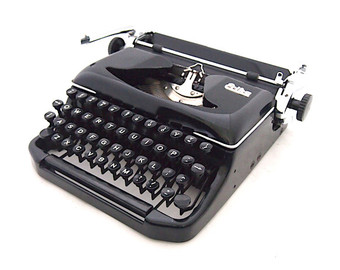
I hark back to the nineteen fifties and sixties, a time of great scientific exploration that changed the way we live and work at rocket speed. I am able to tell horror stories about attempting to type a long research paper without mistakes on an old typewriter with keys that would stick and smear ink on my fine white paper. My efforts were always so homely because I had to cover my errors with blobs of liquid paper that dotted my manuscripts like droplets of snow. If I had to have multiple copies that meant using carbon paper that left purple stains on my fingers and anything else that it touched. Creating documents was a time consuming and onerous task for me that thankfully is a thing of the past.

Like my grandfather I might list hundreds of examples regarding the difficulties that existed simply because the solutions to the various problems had not yet been invented. Any of us who did research of during the nineteen sixties shudder at the thought of spending hours combing through a card catalog in a library only to find that the very book that we needed had already been checked out by someone on a similar mission. Almost everything was in hard copy form back then. Sometimes documents were photographed and stored on little reels that had to be read using a machine that invariably broke in the middle of the process.

If I were to begin to list all of the changes that have occurred in my own lifetime it would require pages and pages. Man’s ingenuity has indeed been an engine that has driven progress inevitably forward and there is little reason for us to wish to turn back the clock which, by the way, we don’t have to wind anymore like we did in the past. The history of mankind is one of advancement with a few hiccups along the way but inevitably we seem to find better and better ways of enjoying life. I suspect that my very wise grandfather had it right all along when he would insist that these are the good old days.

Generations

leadership-generationsWe have a tendency to name and classify entire generations of people. I’m not sure whether this trend was started by social scientists or journalists but at least during the twentieth century and beyond we have created artificial designations meant to describe the general characteristics of groups of people born within certain eras. Thus we have the men and women born and raised during the twenties and thirties who became “the greatest generation” due mostly to the contributions that they made during World War II. Then came my group, often known as the baby boomers, because “the greatest generation” lacked effective birth control methods and had one child after another, creating one of the largest increases in population in the history of the world. Of course modern medicine allowed more of us to stay healthy after we were born as well so we have tended to hang around longer than our ancestors. We boomers have gotten a bad rap for most of our lives. We annoyed our parents with our rebellious spirits and our own children who became Generation X often struggle to understand what makes us tick. Currently we are in the age of the millennials who are vastly different from any group that has come before them. They are idealistic even beyond the dreams of those of us who once ran with the hippies and anti-war crowd.

Of course anyone with an ounce of common sense understands that it is all but impossible to paint an entire generation with a broad stroke and be entirely accurate. Each of us is a product of our genetics, our home environment and the happenings of the wider world. Had there been no World War II “the greatest generation” might never have earned that designation. They were hard working men and women for sure and mostly had good hearts and pure intentions but they were often unconcerned with injustices that did not directly affect them. They tended to go about the business of daily living without much notice of problems with race or poverty. It was the role of their children to challenge their thinking and ask them to consider questions of fairness, race and feminism. Their rowdy kids demanded that they begin to question the status quo.

To be fair my parents’ generation somehow raised me and my contemporaries to be openly critical and defiant. We didn’t just suddenly hatch out of an egg with our revolutionary ideas. Our elders had insisted that we be educated far better than they had been. We were exposed to ideas that demanded creative thinking and it was our parents who encouraged us to take full advantage of the knowledge that we acquired. The result was that we were a bold generation that drew upon the theories of intellectuals and realized that we had voices that deserved to be heard. In some cases our youthful enthusiasm was chaotic but on the whole it began to change the world in ways that were sometimes frightening and confusing to many of the old guard who saw our impertinence as a slap in the face.

Still we did not march in unison as a group. Some among us maintained a more conservative approach to life just as some of our parents were even more liberal than we were. While changes were affected there were still tendencies to pick and choose past traditions that needed to be cherished. Each of us was a bit different while we clung to our individual identities.

I never liked the label of Generation X that was attributed to our children. It seemed so nondescript, as though this group had little to distinguish them other than the dates within which they were born. They enjoyed fairly peaceful childhoods filled with the creation of one innovation after another that we now take for granted. There was a kind of happiness and rainbows feeling during their era. They did not worry about the possibility of being sent to a war. The world appeared to be calm but that was little more than an illusion. Already there were stirrings in the Middle East that would come to haunt all of us. The economy had a tendency to slide up and down at inopportune times that sometimes left them without work. They were a bright and well educated generation, more progressive even than the boomers. They attended church less frequently and had fairly liberal ideas about sexuality and the role of women. Their children became known as the millennials.

Most millennials have little understanding of the impact of events in the twentieth century other than what they have learned in history books. The grainy black and white photos of mid-century America seem ancient and quaint to them. They can’t quite fathom what it was like to watch the civil rights movement unfold or participate in the Cold War with Russia. They have lived with a twenty four hour news cycle that brings stories of war and terrorism into their living rooms on a continual basis. They are one of the best educated groups in history but often have difficulty finding jobs. Unlike the boomers who were usually out on their own by the time they were twenty one years old, the millennials often stay within the family unit well past the middle of their twenties, sometimes out of necessity because they have been unable to secure work. They are less likely to marry at a young age if at all. They earnestly crusade for justice and equality, often spending time working in non-profits for free before launching careers. Many of them are more dedicated to the pursuit of science than religion. They often view the world from a very different vantage point than their grandparents and great grandparents whom they see as being out of touch with the realities of the new age.

The truth is that we tend to progress and change with each new generation mostly in concert with events and inventions that define how we see the world. Our perceptions are determined by the totality of our experiences. We show general characteristics based on the things that we endure as a society and our individuality comes from the less public aspects of our personal relationships. Truth be told it is our very humanity that affects our worldview. Television and social media have the power to impact numbers of us in ways that were unimaginable before the dawn of the twentieth century but we still react to more regional influences as well. Someone born in the nineteen forties in rural Texas will be different from someone who lived in a large eastern city at the same time. It is the amalgam of all that we see and hear and do that ultimately defines each of us, not a particular label. It is the nature of mankind to slowly evolve but often that process is an erratic curve rather than a smooth line.

Perhaps it would be best if we were to engage in conversations between the generations. Our table needs to be round and inclusive and open to a place for everyone. We need to eschew labels and stereotypes and learn to honor and respect the power of the journeys that each of us have taken. We are who we are not so much because we were born in a certain time frame but because we have lived. It is impossible to move from one day to the next over a lifetime without growing and changing in some way. Whether we accept it or not age and group memberships matter less than our common desire to improve our society with each passing generation. Our hope is to leave the world a bit better than it was when we first entered it. That is a worthy goal and one which we all can support.

A Better World With Simple Hacks

Grant's jeans 2.JPGWhen I was first married my mother-in-law gave me a book entitled Hints from Heloise. I learned so much from the pages of that modest text. I don’t know what eventually happened to it. I moved it from one apartment to another and then to my first home where I resided for well over thirty years. I eventually became confident and adept enough at cleaning and repairing things that I no longer needed to refer to the dogeared tome and eventually the Internet provided me with all of the answers that I needed to take care of everyday household problems so I wasn’t too worried when I was unable to find it.
I’m a firm believer in keeping my appliances and purchases in good order so that they last longer. I seriously want to get the last possible dime out of every investment that I make and so I’m always puttering about attempting to prolong the life of all of the items that occupy my home. I learned all of the basics from Heloise but I find that there is always something that I did not know. Luckily I have friends who seem to be experts in the trivia of home maintenance.

I recently purchased one of those shower caddies that hold shampoo, soap and such. It kept falling onto the floor of the stall and I assumed that I had just made a bad purchase. I had used it a few too many weeks to return it but not enough to make it worth the money that I had invested in it. It wasn’t particularly expensive to begin with so I wasn’t too worried about having to purchase a new one, just a bit annoyed. I happened to mention to a friend during a phone conversation that I was irritated at having to find another style that would hang more securely when she suggested that I wrap a rubber band around the shower head to create enough friction to keep the hanging shelf from slipping off. Since I had nothing to lose I tried her idea as soon as I finished our call. It’s been four months now and my shower caddy is still in the exact spot in which I placed it on that day. My problem was so easily solved and I felt as though I had won some kind of lottery by being so clever.

I have often suggested that my friend who provided me with the successful hack should  write a book outlining the many ideas that she has. She is the type of person who is able to take a seeming pile of junk and turn it into useable items. She operates on a strict budget and somehow appears to live like a queen because of her uncanny knowledge about how to use virtually everything in unusual ways. She has shown me how to use lemon juice to get rust out of an antique tablecloth and peanut butter to remove gum from my daughter’s hair. She has memorized hundreds of healthy recipes and is like an encyclopedia when it comes to using everyday items in ways that nobody ever thought of doing. I find her insights to be quite interesting and hope that she one day finds the time to write a blog to share her ideas.

Just after Christmas my automatic ice maker simply quit making ice. I drink lots of cold water during the day and I was gravely missing the convenience of having those lovely cubes proliferating in a bin for my use. I was thinking of calling a repairman but chose instead to enter the world of YouTube videos that seem to run the gamut from music to relationship advice. I found a plethora of guides to troubleshooting an ice maker. Mike and I followed the instructions that I found by first turning off the water supply and unplugging the refrigerator. We then checked the water tubes for signs of blockage. When those appeared to be operating properly we focused on the ice making mechanism. We found frozen ice cubes stuck in the mold. It appeared that the little arm that determines whether or not ice is dropped or not was bent and in the wrong holes. We adjusted it a bit and reset the entire mechanism. I guess we will know in a few hours whether or not we have fixed the problem or need to purchase a new ice maker. Since we now know how easy the installation process is we will come out ahead either way.

I can’t really explain why I get a kick out of knowing how to perform such simple repairs. It gives me a sense of accomplishment and makes me feel as though I am doing my part to keep our planet from becoming a gigantic junkyard. I find that as people we tend to be a throwaway society. We would rather just go get something new than take care of what we already have.

It hasn’t always been that way. People would live in the same house for most of their lives. They would drive their cars until the wheels fell off. Most folks ate dinner at home every night and used every scrap of food for something useful, even creating compost heaps with the less edible parts of food. Which brings me back to my friend who is so creative in her habits. She told me recently that she saves all of the peelings from her vegetables in the freezer until she has a bag full of such items. Then she simmers them in water to make a lovely broth that she uses for making soups. I think we might all learn from her frugal and planet conscious habits. After recycling and using things to the maximum she has very little garbage and less expense that most of us.

Our ancestors made quilts from the fabric of feed sacks and old articles of clothing. Everything was used and reused. Tin cans held nails and screws. Paper bags wrapped gifts, covered books and sometimes even became makeshift suitcases. Cardboard was a special gift that covered windows or lined shoes that had holes in the bottom. Every woman had a grease jar to hold fat from bacon that might be used in recipes. Tea bags were used multiple times. Baking soda was a household miracle cure for a multitude of problems. My friend has studied all such things and created many more ideas for household maintenance from her own experiences.

I think that we all enjoy learning about ways to save money and our planet all at the same time. We really should think twice before simply tossing our refuse on the curb. There are so many ways that we might give our items new life or even new homes. I think that if we were all to consider such saves before rushing out to purchase the next new thing we might soon find that many of our planets’ environmental problems would begin to dwindle. If we think of ways to keep those trash bins as empty as possible we will all be better for the efforts. We might also learn a thing or two about saving our hard earned money in a world that seems to be on the verge of bankruptcy.

Find yourself a copy of Hints from Heloise or locate a friend who is already an expert at such things. You will declutter your life and have fun at the same time. There is nothing quite as rewarding as repairing a problem that may have seemed impossible to fix. We humans like doing that but haven’t been as skilled as we once were. Perhaps its time for all of us to learn how to do such things again.

A Time for Everything

maxresdefaultI have experienced sixty eight revolutions around the sun. This week I begin the sixty-ninth. I remember most of the yearlong journeys and what I have learned from them is that change is inevitable and that I should never take anything or anyone for granted.
I have witnessed the birth of inventions that most of us now consider to be commonplace but were once deemed miraculous. I have seen a man walking on the moon and been able to write and publish my thoughts on a daily basis because a computer allows me to type and quickly correct the mistakes that my fingers make. I have a vacuum cleaner that operates without my help and a mechanism that follows my voice commands to turn on lights and play music. The temperature in my home is neither too hot nor too cold with adjustments being made regularly to keep me comfortable. I carry a phone in my purse that allows me to talk with friends who live hundreds of miles away and even see them if I wish. I can order virtually anything from the recliner in my bedroom and it will arrive on my doorstep in only a few days, often without postage being required. I have hundreds of shows, movies and books from which to choose for my entertainment and I need not leave my living room to acquire them. I daily inject a medication that is rebuilding my bones. I have had a surgery performed by a doctor guiding a robot that left only four tiny holes in my body. The marvels that have come into my life abound and I have yet to take any of them for granted because I have witnessed the past when such things were only dreams.

Some who once accompanied me on my twelve month adventures have gone. I still long for them and find myself recalling the wonderful times that we shared. I didn’t always appreciate them as much as I should have. In my youth I felt immortal and did not think that I would be touched by death, not even after my father was taken far too soon. I now realize the importance of expressing feelings of love and appreciation at every opportunity. I understand that we must focus on the beautiful moments as they are playing out in our lives and embrace them fully, for the opportunities to do so may never come again. Life is riddled with uncertainties and even though I know that to be true I am surprised again and again.

I have developed traditions that I follow while I can. At the dawn of each new year I celebrate both the past and the future. I try to approach the coming months with optimism and a sense that I have yet another possibility of improving and focusing on the people and labors that will make a positive difference. I prepare split pea soup for luck. I learned how to do so from my mother-in-law who inherited the recipe from her mother. I have never cared much for black eyed peas, my mother’s preferred lucky charm, but I loved split pea soup from the first time that I tasted it. I go to the Airline Farmer’s Market each December specifically to purchase dried yellow split peas because the green ones are not nearly as tasty. I serve a ham on Christmas Day and use its bone to cook the peas. I place them in a heavy pot along with the bone and an onion, covering the ingredients with water. I cook the concoction slowly, adding more water as the peas become thick. Once they have softened and blended with the water I remove the ham bone and begin adding a bit of milk to make the mixture creamy. After several hours my soups is smooth and has a delicious blend of flavors. I always make it on New Year’s Eve and serve it for lunch on the first day of the year. It seems to have done it’s work in bringing me health, prosperity and happiness for I have had a good life in spite of bumps along the way.

I worry a bit as I grow older, a habit that I inherited from my paternal grandmother that haunts me more than it should. I don’t like losing friends or family members but the numbers of those who have passed before me grows with each year. I find myself wondering who among my circle will be afflicted with difficulties and wish that there were some way that I might forestall their problems. I tell myself that instead of spending fruitless moments in a state of anxiety I should instead reach out to my loved ones to let them know how much I care. I know that it is important to cherish every minute of every day.

I grew healthier last year because I worked at being so. I plan to continue with the improved habits that I developed. I am determined to publish my book no matter how much time and effort it takes to get that done. I want to keep my promises to meet with friends that I have not seen for far too long. I will try to be more relaxed about unimportant matters. I am a perfectionist at heart even though life has taught me that being so is ridiculous. I want to hear nature’s music and find joy in the pleasures that I sometimes ignore because I am so busy doing tasks that matter little. I desire to place more of my trust in the Lord without always asking Him why He does things the way He does. I saw from my late cousin how beautiful great faith can be.

I have come a long way and seen many wonders. I look forward to enjoying as many more as I am allowed, taking the glory of each day as it comes without holding on to hurts or fears. The sun rises and sets, the earth travels around the sun creating the seasons of our lives. In some miraculous way I have been part of sixty eight transitions from one year to the next. I have witnessed history, the best and the worst of the human experience and still I travel on with my fellow man. I have learned that the words of Ecclesiastes are so very wise.

There is a time for everything, and a season for every activity under the heavens: a time to be born and a time to die, a time to plant and a time to uproot, a time to kill and a time to heal, a time to tear down and a time to build, a time to weep and a time to laugh, a time to mourn and a time to dance, a time to scatter stones and a time to gather them, a time to embrace and a time to refrain from embracing, a time to search and a time to give up, a time to keep and a time to throw away, a time to tear and a time to mend, a time to be silent and a time to speak, a time to love and a time to hate, a time for war and a time for peace.

Every day is beautiful, even when we are carrying our human burdens. There is nothing better than to be happy and and to do good while we live. That is my ultimate resolution as I set out on another adventurous year.

The Weather Outside Is Frightful

A-Stormy-Atlantic.jpgThe weather outside if frightful. No, it’s not snowing. It’s too warm. This is the last day of November and I have yet to wear a sweater or a pair of boots. My grass is stilling growing and in need of a good mowing. I have hibiscus blooms and dozens of roses. While it is a lovely sight I am a creature of habit and it is simply not supposed to be this temperate at this time of year. I’m all in for some cold weather but it doesn’t seem to be anywhere on the horizon.

The stores in my city can barely give away coats. I won’t be surprised if someone is one day standing at the exits passing them out to anyone who wants to take them away. Sweaters are faring no better. The winter season will pass and I will never have removed my flip flops. Usually by now I have switched my winter things to a more prominent position in my closet but this year I have left those things hidden in the dark recesses. I wonder if I will need them at all.

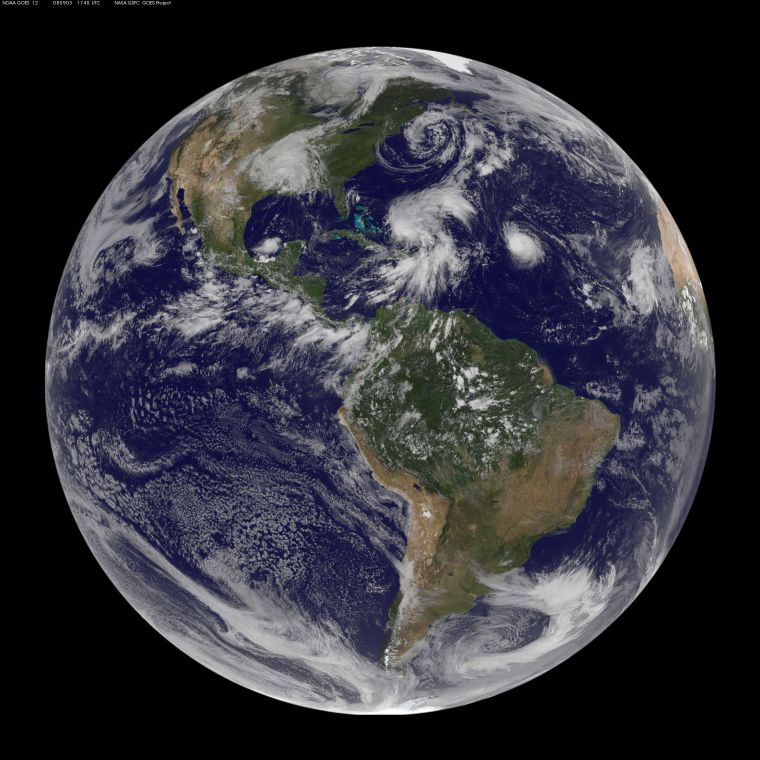
I point all of this out because I can’t imagine how anyone still clings to the false premise that climate change is a myth. It stands to reason that we have a symbiotic relationship with nature. There are photos from space that show the destruction that we have wrought on our planet and our atmosphere. We have already reached a dangerous tipping point and yet there are far too many people who argue that we humans have nothing to do with the changes that are so apparent to those of us who have witnessed many seasons.

A recent article in my local newspaper pointed out that areas of the city are experiencing flooding problems for the first time in their history. An expert noted that when communities are being initially planned the builders generally take drainage into account and grade to insure that run off goes into the gutters. Of late individuals are tearing down older homes and erecting massive houses that disregard the way heavy rains will flow. The result has been devastating in some places. This of course is just one more way in which we humans sometimes ignore the negative effect of our decisions.

We have a world of problems and we have become accustomed to living in relative luxury compared to our ancestors. My children are members of the first generation to spend all of their lives in air conditioned homes. Back in the day we left our windows open in the summer and used fans to stir up a breeze. It was sometimes brutally hot but we learned how to live with it. There weren’t many electronics to run and most families owned a single car regardless of the size of the family. In other words we used far less energy than most people use today. We all too often believe that it would be impossible to live in conditions that were commonplace in the past.

I realize that it would be difficult to revert to the old ways and I don’t necessarily think that we should. What does need to happen is a nationwide investment in finding new and reliable ways of providing energy. When we put concerted effort into reaching the moon we were successful in a very short span of time. We should create the same level of excitement for dealing with climate change. In my day young people dreamed of working at NASA and being part of the space program. The best and the brightest wanted to be part of the action. If we were all to agree that solving the problems that so devastate our planet are just as important we might turn the tide.

My brother was one of those youngsters who walked around with an illustrated book written by Werner von Braun which described a station in space that would house humans. He told people when he was a tiny tot that he was going to work on building such things. He studied hard with the goal of one day achieving something exciting. He has now spent virtually his entire career designing the navigational systems for the International Space Station. What had once been only pictures in his mind became stunning reality.

I feel that it is incumbent upon all of our leaders to accept the facts that scientists around the globe have proven with compelling evidence. My own anecdotal comments about the weather may be false but the data and photographs lead to the same conclusions as mine. I worry when I travel to the western United States and see dangerously dry conditions so unlike what I witnessed in the same places when I was young.

Some people seem to think that climate change is a political football. An entire party appears to embrace the very dangerous idea that it is somehow a made up concept designed to funnel money to particular industries and take it from others. The game that they play is dangerous. It overlooks the possible future of our children and grandchildren. It is a gamble that I don’t wish to make.

A group of Native Americans are waging a battle at Standing Rock. They do not want a pipeline to be built near the Columbia River. They worry about its potential effect on the very water that the people in that area drink. Whether or not their concerns are real or foolish seems to matter little to me. They deserve to have a say over what happens to land that once belonged wholly to their ancestors and was taken away by people who somehow thought their claims were invalid. We have treated our native peoples with gross disregard for far too long. We have ignored their traditions and dishonored the animals and the environment. They have been right more often than not as we blithely altered the landscape. Now it is time to hear them out. Theirs is a voice that we should not ignore on both moral and objective grounds.

We are beginning to understand the error of our human ways but there are still those who have managed to convince themselves that we are entitled to the fruits of our planet without consequence. The time for such thinking should be long past. It is too dry in some places and too wet in others. The extremes that we see in weather should not be reproduced in our political landscape. I long for true leaders who will educate the public rather than pander for votes. Our fate depends whether or not we are able to finally take the necessary steps to save us all.