
A Word To The Wise

happiness & freedomOur new president has only been in office for a couple of days more than a week and he is already proving to be the amateur that I feared he would be. He made a number of promises during his campaign which were often ill considered and the boasts of someone who doesn’t fully understand the job of chief executive of a powerful nation. Sadly former presidents Bush and Obama vastly increased the use of executive actions during their terms and thus opened the door for the kind of wholesale orders that Trump signed this week. Perhaps the most egregious thing that has happened in our recent history is the easing of the system of checks and balances through the backdoor tactic that President Trump used so thoughtlessly last week. We certainly may have issues with some or all of the pronouncements that Trump set into action but we should in reality be more concerned with the trend of unilateral decision making by one person that has become more and more fashionable in the past several years. While we may have agreed with the decisions of our former presidents we should always be wary of putting too much power into the hands of a single individual. Our Founding Fathers understood this all too well and now we are witnessing the problems with the reckless use of the power of the presidential pen. We all should have cringed when President Obama told us that if Congress would not act he would instead use his pen to get his wishes. Now we are facing the prospect of enduring four years of rashly considered executive orders and the ensuing chaos that they may engender.

There is so much to be said about the actions that President Trump took last week but I will focus on his temporary ban on immigration and travel to the United States by individuals from six primarily Muslim countries. It is obvious that the president and some of his close aides authored the pronouncements in haste in order to demonstrate that President Trump is a man of action, someone who doesn’t waste time in getting things done. While this might at first glance sound reasonable enough to his supporters it neglects the very necessary step of considering unforeseen consequences of a decision that must be part and parcel of the process. This takes more than a few hours or even a few days and requires feedback even from those who oppose the move. Their ideas are just as important in fashioning a fair and effective order as those from enthusiastic advocates. All of the questions and difficulties should have been openly addressed long before any type of order was signed.

Another problem with this particular order is that it seems to have been done without properly informing the very people who are taxed with its enforcement, leading to unwarranted confusion. By the end of the weekend it was apparent that multiple mistakes had been made that need never have happened. The roll out should have been delayed long enough to include opportunities for everyone to prepare for its enforcement and to note potential concerns and problems that might occur. To suddenly spring such a dramatic change on even those who already had visas and were in transit to our country is unjust. To realize after the fact that the directive was unclear in how to deal with those who already hold green cards was indicative of a lack of adequate planning. All in all it demonstrated that the president is still very much a rookie.

Perhaps President Trump’s most egregious habit is an inability to admit mistakes. This is a fatal flaw and one that I fear he will not be able to overcome since it appears to be an unshakeable aspect of his character or lack of it. Again and again he insists on lying when the truth is so obvious. This weekend he actually seemed to think that we would buy his argument that the confusion at the nation’s airports was caused not by the impact of his executive order regarding his temporary ban of people from certain countries but a computer problem with Delta Airlines. This type of juvenile behavior is unbecoming to his office and an embarrassment. It calls everything that he does into question. He tells us that he is here to work with all of us but then insults anyone who disagrees with him and asks us to suspend reality with his silly excuses when things don’t go as he had planned.

it may be somewhat true that many of the reactions to President Trump’s latest foray into imposing his beliefs onto the nation may have been somewhat hyperbolic, hysterical and hypocritical but it is easy to understand why they so fear his actions. He has been remiss in demonstrating the calm deliberation that is needed for his office. Frankly he is in fact scarring many people. We need to feel secure that he will not involve us in any actions that will be harmful to our democracy and our freedoms. Sadly he has mostly exhibited a profoundly erratic temperament that is far from being reassuring. While bluster may be appropriate in some situations a true leader needs to know when to curb such tendencies. Thus far he has not given us any indications that he knows how to do that.

On this date in history we were saddened by the explosion of the Challenger as it carried our astronauts into space. Then President Reagan demonstrated how to strike a tone that would resonate with the American people as he spoke so sincerely and eloquently of the tremendous sense of sadness that we were all feeling. Mr. Trump needs to begin to develop a connection with all of us. He should have prefaced this executive order by speaking directly to we the people. He might have quietly and rationally provided us with the reasoning behind his thinking. He had the opportunity to include us in the deliberations by asking for our input before he put the new policy into effect. He might have learned from us and gained our respect if only he had explained the timeline and what his ultimate intentions are. Instead he continued to boast in tweets that his is a great plan that is going well and to ignore the concerns that so many have.

The fact is that Donald Trump is not the first president to create a temporary ban of travel and immigration from specific countries. Jimmy Carter prevented Iranians from coming here during the height of the hostage situation and more recently President Obama instituted a six month ban for Iraqis. Presidents sometimes have to do such things. We might have been more open to this executive order had there been more of a sense of thoughtfulness and less of a feeling that it was going to happen regardless of what we think simply because Trump won.

I would caution President Trump, Congress, the Supreme Court and the American people to curb their rhetoric and tribal instincts and begin to rationally dialogue with one another or our beautiful democracy is in danger of being torn asunder. We have to rediscover who we are as a people. It will take great courage to work out our problems. Now more than ever we need leaders who are less concerned about party lines and reelections and more driven by love of country. We are all watching and hoping for evidence that we still have guardians of democracy in our midst.

Love Is Still The Answer

two-people-holding-hands-connection-love-vulnerability1I was nineteen years old that April when Dr. Martin Luther King, Jr. died. I felt as though I myself had been attacked by a bullet when I heard the news of his assassination. I was shocked, devastated. He was and remains my hero, a larger than life figure who made a lasting imprint on my life when I was only tentatively entering adulthood. That was almost fifty years ago and in the years that followed his murder I have lived through a lifetime and become what society views as an old woman. Still the memories that I have of Dr. King are as fresh and vibrant as if they had occurred only yesterday. I cherish the fact that I was old enough to remember the world as it was before he so courageously sought to change it. For it is in knowing the impact of his influence that I am able to understand why he is perhaps the most important figure of the twentieth century.

I am a child of the south who saw the injustice of segregation. I used to ride a bus to downtown Houston with my mother from our home just a block away from what was then called South Park Boulevard. I enjoyed those adventures on public transportation far more than simply jumping into our car and riding to our favorite shopping spots. My mother had grown up taking a bus into town from her childhood house near Navigation. She regularly jumped aboard the carrier that transported her to shopping, movies and her first paid jobs. It felt natural to her to take a bus to get around the city rather than to fight traffic and so we often waited on the corner until the great big conveyance stopped to let us on.

There were not usually many people on the bus when we first stepped aboard but by the time that we reached our downtown destination it was packed. Back then I was only five or six years old and thought little about the seating arrangements that were literally dictated by law. There was an invisible line of demarcation separating those of us with white skin from our fellow Houstonians with darker complexions. They mostly joined us on our journey as we got closer to downtown, usually around Scott Street, obediently moving to the seats in the back, quietly enduring their humiliation.

As a child I was curious to know why such traditions existed but the way in which my mother would silence my inquiries told me that there was something secret and painful about the situation that I was not deemed old enough to understand. I remember sneaking peeks at my fellow travelers and wondering why we needed to be set apart from one another. I was still an obedient child and dared not question my elders but the whole thing seemed rather silly to me.

Our city was filled with shameful rules that prohibited those same folks who sat at the back of the bus from eating in the restaurants where we enjoyed lunch. There were separate water fountains and bathrooms for them as well. I didn’t understand but I complied with the unjust directions while questions began swirling inside my head even back then. I suppose that I have always been a bit of an old soul and my five year old mind felt the wrongness of what was happening even while the adults around me seemed not to even notice.

I came of age in the nineteen sixties, turbulent times defined by war, violence and open protest and questioning. Television had become a commonplace way of viewing world events on a nightly basis. I was educated by nuns and priests from the north whose points of view were often more radical than those of the southerners who were my neighbors and fellow citizens. I had eagerly watched the civil rights movement unfold from the summer when I took my last vacation with my father before he died. I was seven then and those weeks were punctuated by an awakening within my mind. I had overheard discussions between my father and grandfather about integration efforts in schools in Arkansas. I saw African Americans mingling with whites during our trip to Chicago as though there was nothing more natural. Somehow I realized that the way of doing things in my hometown were wrong and I audaciously announced my feelings to my parents who urged me to be cautious in pronouncing such radical ideas to strangers who might not take so kindly to my thinking.

By the time I was a teenager my sense of justice was full blown and I was no longer afraid to speak my mind. Dr. Martin Luther King, Jr. had become the embodiment of all of the values that I held dear. He was a hero of enormous magnitude in my mind. His was a message of love and tolerance. He was noble and brave and seemed to follow the teachings and example of Jesus Himself. Little did I truly understand the depth of this remarkable man. I worshipped him only superficially without knowing how human he was and how difficult and dangerous it was for him to assume the mantle of leadership in a cause that would ultimately lead him to his death. I would be nearer to the age that he was when he died before I would truly understand his greatness.

I have read many books and stories about Dr. Martin Luther King, Jr. He was thrust into a battle for justice that he did not seek. He was given a gift of oratory that was able to put the frustrations of his brothers and sisters into unforgettable words. Time and again he had to pray for the strength to endure the hatred that followed and threatened him wherever he went. He might have turned away from his destiny but somehow he soldiered on again and again. Always he spoke of unity and tolerance and the power of love. The more I learned about him, the larger his influence loomed in my mind. He was undoubtedly one of the the greatest Americans of all time, deserving of a place in history alongside the likes of George Washington and Abraham Lincoln.

Martin Luther King was struck down before his work was finished but he had accomplished so much. Young people today can’t even begin to imagine the horror of segregation that I witnessed and thankfully didn’t have to endure simply because I was born with white skin. We have truly come a long way from those days but there is still divisiveness in many circles. While it should not make the least bit of difference, there are still those who make judgements about their fellow humans based only on the color of skin or texture of hair. A residue of the kind of hatefulness that prompted the assassination of Dr. King remains even almost fifty years later. When, I wonder, will the ugliness be completely eradicated from our thinking and what will it take to get us to a place where there are no more Dylan Roofs who slaughter innocents peacefully going about their lives at church?

I am almost thirty years older than Dr. King was when he died. He never got the opportunity to see the changes that I have seen. He did not live to witness the first African American President of the United States. He never realized the ultimate power of his legacy. He was instead quite weary on the day that he died. His energy and enthusiasm were severely taxed because there was still so much more work to be done. He experienced profound agony in understanding that man’s inhumanity to man is an evil that must be overcome one person and one situation at a time in an almost endless cycle. Still he held fast to a belief in possibilities, reminding us again and again that “love is the only force capable of transforming an enemy into a friend.” He fully believed those words as do I to this very day.

Our world is in a state of tumult once again. Our young in particular are questioning the way we do things just as our children have throughout history. They look at our society with fresh eyes and wonderment. They are searching for answers to the questions that daunt them and redress to the unfairness that they see. I pray that they too will find a hero as magnificent as mine. Dr. Martin Luther King, Jr. was imperfect like those who founded our country but he rose above his fears and his flaws to lead us in a cause that was far bigger than himself. He did so with grace and sacrifice and showed us what we can accomplish if we put love at the forefront of our lives.

Where Are The Heroes?

john-glenn-6.jpgIt was 1962, and I was in the final semester of eighth grade. When we walked into Mrs. Colby’s science class she had a television perched on top of a tall cart. It’s black and white picture was tuned to one of the three major broadcasting stations. She quickly explained that we were going to have the privilege of seeing history unfold. We were to watch the first man who would orbit the earth, John Glenn. I felt breathlessly excited. My city of Houston was the site of NASA’s Manned Spacecraft Center, a place where the seven original astronauts lived and trained. I knew that I was witnessing something incredible that I would never forget.

John Glenn was encapsulated in a bell shaped vehicle called Liberty 7. He would circle the earth while in space. He had been told of the potential danger of such a feat. The entire world watched nervously as he orbited once, twice, three times. He was to have made seven passes but there was a fear that his capsule was heating up and that he might not make it back alive if the journey continued. He reentered the earth’s atmosphere landing in the ocean and was rescued by crew members of an awaiting ship. When he emerged from his spacecraft he seemed larger than life, a hero for the ages. He would become an iconic American figure and one of my all time favorite people.

John Glenn was a midwesterner through and through. He was born in Ohio in 1921, and proved to be an exemplary student and adventurous spirit. He attended Ohio State University, leaving when World War II broke out. He joined the Marines and became a fighter pilot whose wingman, Ted Williams, would ultimately be one of the best baseball players in the country. He later married his high school sweetheart and decided to follow a career in the military. He became one of the most daring aviators of his era and it only seemed natural to recruit him for the first astronaut corps. He competed with hundreds of applicants to become one of the elite seven who had the right stuff. After his history making flight in 1962, he was one of the most famous and highly regarded of the astronauts and his name would be forever linked with those pioneering days that so inspired me when I was still a very young girl.

John Glenn had retired from the military by 1965. He became a successful businessman and eventually a respected Senator from Ohio. At one point he was even considered as a possible running mate for Jimmy Carter. He made one final foray into space with the intent of determining what the effect of space travel might be on the elderly. He was physically fit and still flew his own plane until 2013. An amazing man even as he entered his ninth decade, he died last week at the age of ninety five.

John Glenn was a true American legend. He was courageous and loyal, dedicated and ethical. In many ways he represented an idealized version of what we hope all Americans to be. He certainly had his imperfections but he strove to overcome them again and again. He was ever faithful to his profession and his family. He showed all of us how to take important risks for the sake of of humanity. There was nothing insignificant about the way that he chose to live his life.

The early years of America’s exploration of space inspired my entire generation. We saw the beginnings of a rapidly changing way of doing things and embraced the future. We had dashing heroes like Glenn and our young President Kennedy. It seemed as though there was nothing that we could not accomplish if only we set our sights on our goals. Ours was known as the golden age of education in America. We were led by teachers like Mrs. Colby who introduced us to the exciting possibilities that lay ahead. She and other educators would open our minds and fill them with new ideas. Learning was an exciting prospect in our brave new world.

We had little idea then of the turmoil that would follow our euphoria. One of the original seven astronauts, Gus Grissom, would die inside his space capsule. John Kennedy would be assassinated. Many of my contemporaries would be sent to a winless war in Vietnam. The world would explode with anger and violence and it would seem as though we were on the verge of apocalypse. Instead of the fantastical world of our imaginations we would face bitter realities that tested our endurance. It would be memories of heroes like John Glenn that would inspire us to do the right thing and be unafraid.

The world unfolded in the most remarkable ways with much of the inventiveness that we now take for granted tracing its roots back to those early days of space explorations. The laptop computer on which I type my blogs is more powerful than the ones used to track John Glenn’s progress around the world. We have robots in our homes and phones that we carry in our purses that connect us to any place on the globe. Private companies now carry people into space and for the most part the journeys are far more safe than ever. We have lost our sense of awe for the accomplishments of our scientists, researchers, and astronauts. They have become commonplace in our eyes. There are no doubt young people who wonder why we care so much about an old astronaut who died. They simply do not understand the breathtaking nature of his feats in those early days when we made our first ventures into the unknown landscape of space.

I often wonder who will have the right stuff to lead us into the future. Who will be the teachers exciting a new generation of students by introducing them to people and ideas that will inspire them? From where will the heroes come and how will they show us the best of ourselves. What inventions will young scientists bring to us? How will the world change before our very eyes? These are questions to consider because there are still young men and women dreaming like I did back in Mrs. Colby’s class. They will be the leaders, the builders, the innovators. One day we will be celebrating them just as we did John Glenn.

John Glenn is gone but he will never be forgotten. His was a life well lived. May he rest in peace.

The Front Porch

240cf7ec5246ce7b0d7688ceecbc3c92I recently drove past my grandparent’s home on Arlington Street in the Heights. My grandfather built the house and as far as I know it is the only stucco edifice in the area. Grandpa did all of the plastering himself. The feature that he most liked was a porch that ran all the way across the front. Back when he and my grandmother lived there it was screened in so that they might spend time relaxing and enjoying their neighbors. They had a glider the size of a couch out there and always kept a big box fan going, especially on hot summer days. Whenever we visited we were more than likely to be on that porch that was always much cooler than the inside because they had no air conditioning back then. 
My grandparents knew all of their neighbors. It wasn’t unusual at all for one or more of them to walk up to chat for a bit. It was great fun to watch the activity up and down the block. I especially enjoyed the smell of leaves burning in the ditches during the fall. Kids rode by on their bicycles and never failed to wave. Women walked with their babies in strollers and my grandparents would hop down the steps and across the yard to see how the little ones were doing. I felt as close to the people who lived there as I did to my friends on my own block. I suppose that I would never have met them had it not been for that front porch that Grandpa insisted on placing at the entrance to his home.

The screens that once kept insects from invading the sitting area are now gone. The porch still stands but I have never seen anyone out there. In fact the whole street is quiet and empty of human activity. The only signs of life come from the lights in the windows and the cars parked on the driveway. In the age of air conditioning it’s probably just too hot for people to sit outside visiting with their neighbors. It’s a lost art that I seldom see anymore.

Most of the older homes in Houston feature front porches. Sitting out front was at one time a way of life. Somewhere in time it became more popular to build patios out back to allow people more privacy. While I indeed enjoy my own little getaway in my backyard I have to admit to missing the joys of a big front porch. Once in a great while my neighbors will congregate on the sidewalk or in someone’s yard to exchange pleasantries but mostly the small town feel that was part of my grandparent’s world is gone. Most of the time I don’t even see children playing in their yards or riding their bicycles along the streets.

I suppose that we now operate from a certain level of fear. Parents worry that their children will be hurt or abducted if they are not safely protected. They prefer having the little ones inside or confined to the safety of the backyard with a fence to keep out trouble. My own house only has a small brick stoop not even large enough for a single chair. I might sit in my yard but I dare say that I would not see anybody for hours on end.

Back in my old neighborhood there were ladies who frequently congregated on lawn chairs in one of the front yards. I’d watch for them to get together and quickly grab my own seat so that I might join in with their daily block party. Our children frolicked within our sight as we shared news, recipes, and parenting tips. I so loved those times when I got to know the people who lived near me as well as if they were relatives. Over the years our acquaintance literally turned to love. As so often happens everything eventually changes and so did our lovely gatherings. People moved. The kids grew up. We met less and less. Eventually even I thought that it was time to leave for new pastures.

I sometimes believe that part of the divisiveness that we seem to be experiencing today comes from the isolation that so many of us feel in our air conditioned castles. Instead of friendly and inviting porches we seem to have built figurative moats designed to keep people at bay. I hear my neighbors talking and laughing in their backyards but I can’t see them. There is no way that I might walk over to ask them how they are doing because our fences block the view. I enjoy knowing that they are there and that they appear to be very nice people but I do miss the easy going feelings that were so much a part of the days of front porches.

There was an openness and innocence in the past that probably wouldn’t work anymore. As a child I slept with my bedroom windows wide open. Only the screens separated me from the outside. Our front door was rarely locked until night had fallen. We had little reason to believe that we were somehow unsafe. It was a different world and I suppose that today in our quest for security it is only natural that we hide behind walls and fences rather than being so open to the world. We put cameras at our front doors and peep through tiny holes when someone rings our doorbells. We worry and fret and close ourselves off.

I sometimes long for the days when we seemed to be a much friendlier society. We didn’t rush around so much and we entertained ourselves with conversations and games. We were trusting and open because there was little danger in being so. Experience has taught us to be wary and in the process we have lost the hometown spirit that once united us. I’m not sure that we will ever have that again but I think that having more front porches might be a step in the right direction, especially if we actually use them to get to know the people who live near us.

I have a nephew who moved his family to a neighborhood filled with young people who have taken the time to get to know each other. I love driving over to visit him because the whole place is literally bursting with activity just as all streets were back when I was a child. There are kids running up and down the sidewalks and adults sharing tools and helping one another with repairs and other tasks. It is like taking a step back in time to a world that hardly exists anymore. Each Christmas they light up entire blocks with arches that seem to shout a welcome to everyone. They take care of one another and celebrate together as though they are one great big happy family. That is how I think it should be all across the land. Perhaps we will learn how to be that way again if only we decide to try. It’s a nice possibility to imagine and something that I think many of us would truly enjoy.

A Bit of Heaven

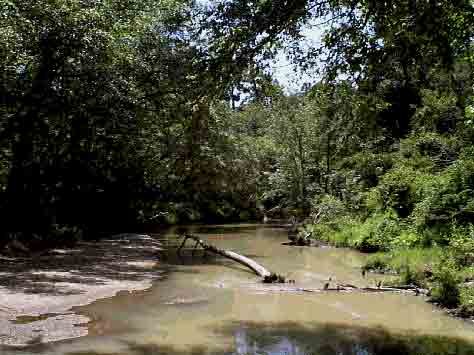
image39aWe used to own some property near Brazoria. It was a lovely place to take our two girls on weekends, a little get away from the big city and work. It sat next to a creek and was shaded by dozens of native pecan trees. A tiny house with two rooms and a bathroom was the only shelter from the heat and mosquitoes that always seemed to be waiting for us. Big ceiling fans kept us reasonably cool in the summer and an old ceramic gas heater warmed us when the weather turned chilly. We had no phone or television there. It was always quiet save for our conversations and laughter and an occasional song from a bird.

The land had once belonged to my husband’s Uncle Bob. He used it mostly for fishing and hunting. He built the tiny house as a concession to his wife who didn’t really care much for the primitive conditions and the work that being there always seemed to entail. Still, she knew how much Bob loved his little piece of heaven and so she was always a good sport about spending time there and often invited other members of the family to gather for barbecues and card parties. My husband spent many a weekend there when he was a boy with his extended family and his uncle’s friends and so he dearly loved being at the place that everyone knew as Bell Bottom.

The little plot of land sits in the heart of an area once inhabited by the first Texans. Just down the road there is an archeological dig unearthing implements, tools and everyday items that the pioneering people who lived there might have used. Stephen F. Austin’s grave is not far away. He was responsible for encouraging settlers from the eastern United States to build a colony in northern Mexico. The Mexican government wanted the wild and unsettled land to be developed and had agreed to give plots to anyone willing to meet their terms. Along the way bitter disagreements between the people who had come and the Mexican government lead to a revolution and ultimately a split that created the Republic of Texas. 

My husband never knew the exact history of the place which he eventually inherited from Uncle Bob. It was bottom land with rich soil made even better by the deposits of sediment that the creek made whenever it flooded over its banks. We enjoyed exploring along the usually shallow waterway in a flat bottom boat that we tied to the hood of our car when we came for visits. It was quite lovely floating along the quiet water under a canopy of trees that arched over our heads like gigantic umbrellas. We saw fish ambling beneath us and snakes skittering to safety. We heard the tap tap tapping of woodpeckers and the screeching of owls. Mostly though it was silent down in that little secret paradise.

Sadly the county flood control district came without our knowledge and scarred the land and the creek in ways that made us cry. Instead of having a gently sloping access to the water there was now a drop off of several feet making it virtually impossible to launch our boat. Much of our land was taken under the guise of helping with flood problems. The deep cuts along the sides of the creek were ugly and many of the beautiful trees were gone as well. The abundance of wildlife was no more. Instead there lay a kind of unsightly shrine to the folly of humans. Our protests fell on deaf ears. It was what it was and had to be done according to government officials. To us it felt like an attack on something precious.

We enjoyed some of our best family memories at Bell Bottom both before the rape of the land and after. Every other November the grounds were littered with pecans. We brought boxes and sat on the grass meticulously moving through every square inch of the property and filling our containers with thousands of nuts filled with tasty meat. Sometimes it was quite cold as we harvested our bounty but we didn’t seem to mind because we knew what deliciousness lay in store.

In the warmer months we had to mow the lawn around the house. We purchased a small tractor from Sears and rode around and around trimming the greenery that seemed to grow even as we were cutting it. I became quite adept at guiding the mower around trees and over gullies and even down the steep slopes. It had been easier to drive the tractor before the “improvements” from the county but I soon enough learned the trick for staying away from the dangerous drop off near the water.

We took walks on summer days and played baseball in the yard. At night we built fires and sat in the glow of the burning embers. Sometimes we stayed up late playing board games or telling stories. I always slept like a log but my daughters tell me that they were often frightened by the tiny mice sneaking through the house after the lights had gone dark. Their imaginations overcame them but they didn’t want to admit to being a bit scared.

Eventually our girls were grown and Mike and I found that we were spending most of our free time after working all week just keeping things clean and repaired down at Bell Bottom. Ours was an incessant routine of working on the land and I for one began to understand why Mike’s aunt had so often expressed a lack of enthusiasm for being there. Somehow it just wasn’t as much fun as it had once been. After considering whether or not we might want to settle there after retirement we realized that we really didn’t want to be that far away from our family and friends on a permanent basis. The land that had once brought us so much was just one more bit of responsibility that was draining our energy. We reluctantly decided to sell it.

A great sadness still envelops me when I think of letting our beloved Bell Bottom go. I wonder if we were a bit too hasty in deciding to end our history there. Now that we are retired we have nothing but time and I suspect that we would have truly enjoyed bringing our grandchildren there. I especially think about the old place when the skies become a bit gray in November and the temperature drops just a bit. I wonder if the pecans have fallen to the ground and if the new owners are collecting them just as we once did.

Not long ago Mike and I drove by to see how things looked at Bell Bottom. We were happy to see that the people who bought the land had built a lovely home and had even dug a little lake. The lawn was beautifully manicured and it was apparent that the new landlords are quite proud of their little bit of heaven. I felt a bit better just seeing the love and care that was on display. Long ago Bell Bottom stole a corner of my heart that will remain on the land but my memories will always be mine.