A Hidden Treasure

hr3331407-31I tutor at a school deep in the heart of southeast Houston. To reach my destination I drive down Telephone Road, a street with a somewhat notorious reputation. Just past Hobby Airport I turn into a neighborhood called Garden Villas and get to the campus where I work by crossing a bridge over Sims Bayou. I know these places well for I grew up very nearby and then lived in the area for well over thirty years after I married. There have been many changes since I was a young girl riding my bicycle under the pecan trees to get to Garden Villas Park so that I might visit the mobile library in search of books to read on hot summer afternoons. These days many of the homes that I used to pass have iron bars on the doors and windows and some of them have been severely neglected. Still there is something quite appealing about the neighborhood that makes me wonder why Garden Villas hasn’t become a mecca for gentrification.

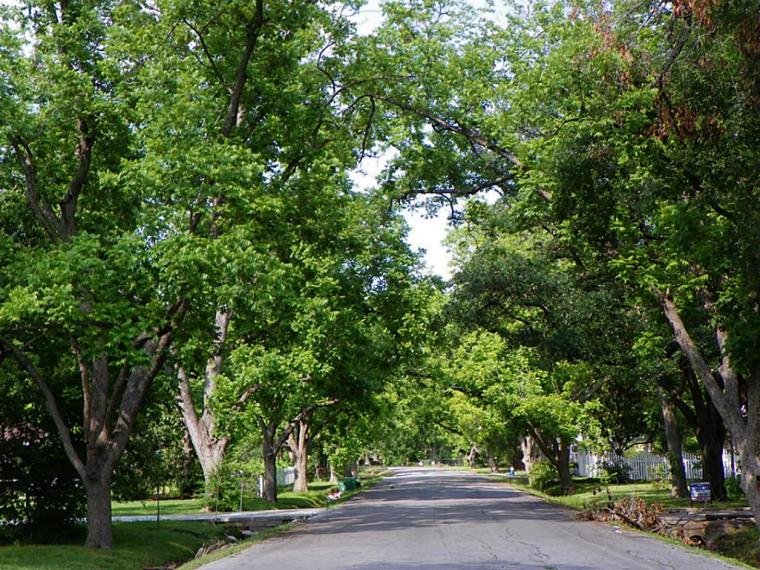
The yards in Garden Villas are enormous, so much so that many people have built more than one structure on the land and still have huge green spaces. There are gigantic trees that have been growing since before I was even born. Most of them bear pecans in the fall so it is not unusual at all to see residents combing through the grass on their hands and knees filling huge bags with nature’s bounty. The canopy that reaches over the road shades those of us passing by creating a delightful path that seems far removed from the hustle and bustle of the city. Ironically the location is so close to downtown Houston, the Medical Center, the University of Houston and other major areas that it takes little or no time to be in the thick of business and commerce with little effort.

I have seen so many sights in Garden Villas that make me smile from ear to ear. Only this week I had to slow down to allow a flock of peacocks and peahens cross the street. I’m not sure where they came from or where they were going but the mere sight of them brightened my day. It’s not unusual at all to see families sauntering along the roads hand in hand forcing everyone to proceed a bit more slowly than they otherwise might. I love the leisurely pace that the area engenders. It literally helps me feel quite calm and often fills me with nostalgia as I think of the times when I once traveled along the same streets in search of childhood adventures.

Many of the homes in Garden Villas date back to the twenties, thirties and forties when the area was mostly farm and ranch country far from the city center. By the fifties and sixties new homes and neighborhoods were going up all around the area. None of them had the big yards and homey feel of Garden Villas. It was like a different place in time, unique to the usual ways of building in the Houston area. Many of the people who lived there came and stayed for all of their lives with some even passing down their homes to their children.

Progress changed most of southeast Houston. The neighborhoods that had been modern just after World War II became cramped, outdated and in many cases almost dilapidated. The home where I grew up is a shell of its former self. Its paint is faded and peeling. The roof is worn. The yard is filled with weeds and signs of neglect. It reminds me of the sad little house overtaken by a growing city in a picture book that I used to love. It pains me to even pass by my old homestead. It doesn’t even seem like the same place where I knew so much happiness with my mom and my brothers. Garden Villas on the other hand still has a spark of dignity and possibility. Somehow it seems to be a place with both a history and a future. People there appear to mostly love the hidden jewel that is their neighborhood.

I’ve never really understood why we so often abandon perfectly good areas in favor of new and shiny places. We hear the siren call of the suburbs and too often forget the pleasures of living in places that were built to last for longer than our short attention spans. The Houston Heights area has become one of the most sought after and prestigious addresses in our city. Time was not so long ago that it too had been mostly forgotten. It took the loving interest of people willing to be pioneers of sort to bring it back to its former glory. There are so many other perfectly good neighborhoods in Houston just waiting to be rediscovered and Garden Villas is one of them.

I sometimes drive to my tutoring sessions feeling a bit tired and out of sorts. I want to stay home and work in my yard or make new revisions to the book that I have written. I have to push myself out of the house. As soon as I make the turn from Telephone Road into the shady heaven of Garden Villas I feel instantly revitalized every single time. It would be worth the drive just to enjoy the tranquility that the area exudes.

Garden Villas is just across the road from Glenbrook Valley, a national historic district of elegant mid century homes. Many people predict that Glenbrook will one day be as sought after as it was back in the late fifties and throughout the sixties. Perhaps if that actually happens there will be enough of a renewed interest in the area that the businesses that once flourished will return and there will be a renaissance that will spread to Garden Villas and maybe even to the place where I lived as a child. In the meantime I will just enjoy my little secret and look forward to the surprises that keep coming each time I go there. Maybe it is actually best that not too many people find this treasure because I would hate to see it change too much. Right now it has a special ambiance that brightens my spirit just the way it is.

The BEST

14882234_10210584184061922_2863139660667446312_oThe excitement was building to a fever pitch. The fans wore their school colors and yelled in unison with the cheerleaders. The bands beat out a foot stomping tempo that seemed to mirror the tension in the final moments of the competition. Surprisingly this was not an athletic contest but a meeting of junior engineers and software designers demonstrating their skills in building robots. Their machines had three minutes to perform their tasks and the stakes were high. The winners would advance to the state meet in December. All eyes were on the young men and women and their remarkable creations that had come to life to mimic human abilities.
The BEST robotics competition of San Antonio took place this past weekend with forty high schools and middle schools representing nearby cities and towns, some as far away as Laredo. The journey to the contest had begun many weeks ago when the students and their adult mentors received the details regarding the tasks which their robots must perform. With a minimum of materials the students went to work obtaining sponsors, building their machines, naming their companies, marketing their work, creating technical journals, designing team shirts, coding the software that would bring their robots to life, simplifying processes, creating displays and bonding in a spirit of team unity.

They burned the midnight oil and worked through weekends executing each of the phases of construction. Every member of the teams played an integral part in the many aspects of the project. Their robots would have to be as capable as farming machinery. They would pick corn, corral pigs, operate valves, harvest tomatoes and lettuce. For each task that they succeeded in performing points would accrue. It may have sounded easy on paper but in reality it took hours of trial and error, all of which had to be faithfully recorded in a scientific notebook filled with research, diagrams and technical explanations. In addition team members were responsible for being able to discuss every aspect of the work in interviews with the judges.

There was no consideration of age in the judging. The middle and high school students were alike in the expectations that they had to meet. It was David and Goliath as public, private and magnet high schools along with a few middle schools vied to be named the best of BEST, an organization dedicated to boosting engineering, science and technology. Each team had eight rounds in which to demonstrate their excellence in designing a robot capable of preforming each of the movements.

Early on one of the schools stood head and shoulders above the rest. The United Engineering and Technology Magnet High School from Laredo had a machine that was a thing of beauty. It maneuvered with ease and the points quickly mounted making the team virtually unstoppable. It was quite a story given that the students hail from a city beset with problems and most of them are economically disadvantaged minorities. All day long their outstanding abilities demonstrated the power of providing young people with opportunities to move beyond the limitations of poverty. Their design was brilliant and they had developed strategies for building points that had not occurred to any other team. In addition, they had brought a huge contingent of students, parents and teachers who cheered them with pride. Nobody was surprised when they took home multiple trophies and scholarships including the top prize of the day. They literally modeled the methods and spirit of winners who are bound to become tomorrow’s leaders.

The stunning victory of the event came in the form of a group of students from Smithson Valley Middle School who resembled children beside the other competitors. They had taken their work quite seriously, learning the computer language needed to program their robot only a few weeks ago. They had met after school and on weekends with their teacher and a number of parents who guided them but essentially left them on their own to either succeed or fail. They were an earnest lot who somehow didn’t seem to understand that they were not supposed to be in the same ranks with the more experienced high school students. Somehow they closed the gap and managed to be the second place team which allows them to move to the state meet along with five other high school groups. The key to their stunning win lay in their scientific research and the professional journal that three of the young women created to chronicle the journey that the team had made from the first day when they began to learn how to create a machine that would ultimately come to life. They also had achieved a commanding lead during the interviews intended to determine how much they really understood about the processes that they had used. It became fully apparent in those meetings that these were young students who had done all of the thinking and the work on their own.

I love that there are events in which young people are just as excited about academic pursuits as sports. We don’t often give enough credit to those who quietly invent the thoughts, processes, and materials that make our world better. We hold pep rallies for our heroes of the gridiron but often ignore the students who pioneer new ways of thinking in medicine, chemistry, physics. We forget to salute the extraordinary writers, actors, dancers and artists. It is not often that we encourage the historian or the child with a penchant for politics. We should be enthusiastically honoring each of the talents that we humans possess, not just the ones that have been the traditional focus of glory. Ours would be a wonderful world indeed if we were to eliminate derogatory terms like nerds, jocks, geeks, dumb blondes and such. Showcasing each student’s skills is a step in the right direction and hosting an event like the BEST robotics competition gets us just a bit closer to the perfection that we hope we may one day achieve. It is in these kinds of practical applications of knowledge that the most powerful learning takes place. We would do well to include more capstone projects and real life adventures in our curriculum. Our youngsters will no doubt surprise us when we do.   

One Fingertip Away

fingertipsInside each of us is the instinct to flee from frightening events. As children we may attempt to fake an illness to avoid an unpleasant situation. As adults we may take a mental health day when our jobs begin to overwhelm. Sometimes our lives become so stressful or unhappy that we dream of running away. Few of us ever choose the easy way out of a sticky situation but such behavior is not unheard of.

When I was in college I landed an internship at one of the local elementary schools. I had a fancy title of some sort but in essence I was a teachers’ aide. I spent my days doing tasks that the real educators did not have enough time to accomplish. Only once in a blue moon did a teacher realize that I might enjoy working with students. Most of the time I was in the copy room running off worksheets and tests. That’s where I met a young woman who was a bonafide teachers’ aide who worked full time at the school and would likely still be there long after I had returned to the university to study. She was quite sweet but undeniably adrift. Her job was unfulfilling, low paying and at times demeaning. Sadly she saw no way out of her dilemma. She needed the income and saw no other possibilities on the horizon. In her mind she was stuck in a deep rut from which there was never going to be a means of escape. Her unhappiness enveloped her so that she was unable to even consider any of the ideas that I suggested as we ran the mimeograph machine, collated and stapled.

One morning she was nowhere to be found as I made my rounds to determine what kind of work was in store for me. Everyone was asking if I had seen her. I assumed that she was caught in traffic or perhaps she was so sick that she was unable to call the school to explain her absence. By mid-morning rumors were spreading through the school. The secretary had called the young woman’s home and her family insisted that she had left for work at the same time that she always did. We were all worried and wondering what might have happened. It was not until the next day that we learned the shocking truth.

It seems that the girl had indeed intended to go to work just as she always had. The mere thought of repeating the dull and never ending tasks made her stomach churn but she was a dutiful person. As she sat in the wall to wall traffic she just happened to glance at the side of the road where a sign noted the distance from that spot to Dallas. At that very moment something primal overcame her usually rational thinking. She knew in her heart that she could not face her job that day. On an impulse she decided to drive to Dallas instead. She went past the exit for the school and just kept traveling north until she saw the skyscrapers of Big D. She had no plan, no idea of what she intended to do next. She only knew that there was no way that she could go back to the life that she had been living and stay sane. She apologized to the principal and tendered her resignation effective immediately.

All of us were stunned by her actions. I wasn’t sure whether I thought that she was crazy or the bravest person that I had ever known. I understood that she had flaunted protocols and demonstrated a profound lack of responsibility, and maybe even maturity, but I somehow admired her willingness to excise the pain she had been experiencing in one fell swoop. Over the years whenever I found myself in situations that were overwhelming I thought of her and felt the temptation to emulate her actions. I wondered how freeing it must have felt to shoot the bird at obligations and fly away, if only for a day. Of course I never followed through on such thoughts because ultimately it was not in my nature. Still there was something fascinating about the idea of simply walking away from conflicts.

A few days ago I watched an ESPN 30 for 30 film about the incredible University of Houston Phi Slamma Jamma basketball team that made history in the early nineteen eighties. The movie was a story within a story as it traced the meteoric rise of one of the greatest teams in the history of college sports and their tragic inability to grab the ultimate prize of a national championship. In one of the most famous games of all time Houston was literally one fingertip and mere seconds away from the title when a player named Bennie Anders just missed his shot.

Things fell apart for the team and for Bennie after that. The glory days were gone as key players left for the NBA. Bennie who was younger stayed on but seemed to be in continual conflict with his coaches and his teammates. He ultimately became embroiled in an altercation with one of them, went to his car, and came back with a loaded gun. He was arrested and expelled from the university. After that he simply seemed to disappear. A young man who had once been thought to have enough talent to earn a place in the NBA was nowhere to be found. Thirty years later his former teammates located him living an ordinary life in Michigan. Bennie insisted that he was happy because he was free.

I am a promise keeper. Once I commit to a job, an event, a relationship I believe in going all the way. I don’t like the idea of letting other people down but I’m not so ready to fault those who understand that they must sever ties quickly and without warning or be eternally trapped. Sometimes I believe that we really do have to flee certain situations when they break us into a million little pieces. We may need a bit of time away from the fury or we may realize that we can never turn back again. I have not been the victim of abuse nor have I ever felt as though I was going to lose my mind but there are those who quite legitimately realize that they are on the verge of disaster and that their only recourse is to run away from something terrifying.

Those of us witnessing such behavior may be stunned but until we know all of the circumstances it is not up to us to judge. The beautiful thing about the Bernie Anders story is that the only question his old friends asked when they found him was whether or not he was happy. They embraced him just as he was and he felt their love, commenting on the powerful impact that it had on him. He was touched by their concern and the fact that they had never forgotten him. They were heroes but so was he.

We have basic human instincts locked inside our DNA designed to protect us from harm. They signal our brains when we are in danger. All too often we ignore the signs until it is too late or we have to make such dramatic moves that they seem to be extreme. We fail to listen for the tiny voices that tell us when our situation is not what it should be. We hide our fears and fail to reach out for the help that almost always is available. We think that we are alone when our emotions overcome us. We falsely believe that our faltering indicates that we are weak when admitting our concerns is actually the bravest thing that we might do.

Life can be unbelievably cruel at times. We make decisions over and over again as we meet the challenges that befall us. We can take the exit to work or keep heading down the highway. We can miss our shot at fame and fortune or choose to lead a quiet life on our own terms. Whatever we decide to do, it should feel good. When it doesn’t we are likely on the wrong track. Life is never about a single game. It is the sum of all that we do. We always have another chance to make the dunk or just walk away. 

Triumph

mt-carmel

On September 1, 1965, the Mt. Carmel High School Class of 1966 began day one of senior year and what a time it would be. We were ready to take charge and end our four years with unparalleled accomplishments. Our student body leaders, Tom King, Terry King, Janice Lowe, and Jeannine Mandola were more than up for the task of celebrating the school’s tenth year of providing educational excellence to the young men and women of Houston. This was our time to shine and we took on the world with confidence and determination.

The Vietnam War was raging and dividing the nation. The editors of the school yearbook, Elke Ahr, Diane Martin, and Monica Krider chose to dedicate the 1966 edition of Zelo to peace. Our school would be touched by the tragedy of the far away war when a member of the Class of 1965, Mike Hoelcher, was killed in the service of our country. It brought home the reality that our days of comfort and youth were drawing to a close. Soon we would be moving into a new phase of life that would demand that we demonstrate the wisdom and grace that our parents and teachers had instilled in us. But at least for the coming months it was our moment to enjoy the fruits of our labors as students.

Our academics had become ever more rigorous. We learned how the world around us works in physics and began to better understand the politics of the United States in civics. Our mathematics ventured into the realm of Pre-Calculus, challenging us ever more. We became more and more proficient in languages like German and Spanish. We spent hours reading and doing research for our senior year English papers, the culmination of all that we had learned before. Our religion classes delved deeper into ethics and questions that have confounded philosophers and saints for centuries. There was no respite from the mountains of school work that never seemed to decline no matter how hard we worked.

Of course there was time for play and development of our extracurricular interests as well. Frank Abegg and Claudia Dean were tapped as editors of the CarmeLight newspaper. I must admit to being disappointed that I did not get the nod. Being the general editor was the one distinction that I had most desired because more and more I wanted to spend time writing. I was instead named the news editor along with Susan McKenna. My dismay was only a temporary setback and I was soon enough working long hours to meet deadlines and keep the news current and interesting. Our Forensics group was doing its own bit to burn the midnight oil in preparation for tournaments that they would win again and again. Paul Colby and Harry Butler continued to dominate in debate.

The Medical Careers Club brought home three awards for excellence that year and continued to grow in size and stature. I was proud to be the president of the organization but had quietly realized that medicine was not in my future. Judy Loisey, Frances Harris and Linda Derks led the Future Teachers club while Kit Lyle and Marjorie Neely were officers of the Mission Club dedicating most of their efforts to sending parcels to Vietnam. We had an active Civil Air Patrol with Mario Zuniga and Carl Eschbach as commanders. Jeannette Mikeska and Linda Daigle chaired the ever popular Dance Committee that stayed busy that year planning twelve special events. Frances Harris and Manuel Manriquez enriched the Spanish culture of our school with a moving Nativity presentation while the senior members of the Texas Association of German Students created a riotously funny skit called “Ich Spion” that featured the guys dancing in fake lederhosen.

Our sports programs brought us honor and winning seasons and even the possibility of beating our biggest foe, St. Thomas High School. The football team gained respect by defeating opponents like Jesuit, Alvin, Kelly, Kirwin and Bishop Byrne. We became the surprise of 2-AAA with a team led by standout players like Leonard Luna. Senior players, Mike Bole, John French, Mike Getz, Mike Villars, James Mushinski, Paul Jauma, Allen Bare, Tom King, Donald Descant, Paul Kasper, Terry King, Tad Trahan, David Sonsel, Ronald Block and Jack Villagomez made Friday nights more exciting than they had ever been even though our ultimate goal of finally winning against St. Thomas never came to pass. The varsity basketball team placed second in the district with Paul Kasper, Joe Madden and Leonard Luna playing key roles. The track team went even farther fielding both district and state championships with Pat Hulin, Leonard Luna, Johnny French, Ronald Block, Chris Nixon and Donald Descant. Not to be outdone, the ladies played hard at volleyball, basketball and swimming with Linda Wilson, Janice Repsdorph, Diane Martin, Ruth Hoesel, Janice Lowe and Jeanette Mikeska representing us with determination and pride. Of course our cheerleaders, Lucille Warchol, Tommy Morrison, Jeanette Mikeska, Johnny McAughan and Patty Balke were ever present to lead the student body in supporting all of our Carmel athletes.

Homecoming that year featured an amazing bonfire with Mary Jo Cipriano reigning as our queen. The football field and the dance that followed was awash with extravagant mums that only Texans understand and a beautiful and sweet court of young ladies who had exhibited their school spirit in a multitude of ways. Janis, Margaret, Stephany, Jeanette, Jeannine and Kit were all smiles and the rest of us would always remember them as Mt. Carmel royalty.

The Cadettes were winners on and off of the field, bringing home a first place trophy for the International Trade and Travel Fair Parade. Officers who had marched rain or shine for three years before earning their stripes were Janis Lowe, Kit Lyle, Ruth Hoesel, Judy Loisey, Jeannine Mandola, Margaret Rae, Karen Wilson, Cindy Cash, Carolyn Snow, Diane Martin, Susan Kelly, Lou Anne Bering and Janet Key. I was asked to be the official announcer during their routines on the football field which was a job that I loved. It also allowed me to attend the Cadette Ball in the spring. I always felt thankful to whomever had come up with the idea of including me in this wonderful organization. 

Of course Mt. Carmel High School was first and foremost about academics. Bill Winn and David Patton were finalists in the National Merit Scholarship competition while Paul Colby and Claudia Dean received letters of commendation. After years of hard work prompted mostly by fear of failing and a need to honor my father I had the number one rank and became the valedictorian with Judy Loisey as the salutatorian. Hard work paid off for those of us who were senior members of the National Honor Society including Mario Zuniga, Mike Petru, John Kurtz, David Patton, Richard Powers, Bill Bailey, Frank Abegg, Judy Loisey, Margaret Rae, Linda Caldwell, Linda Daigle, Claudia Dean and me.

With spring came the Junior Senior prom and the traditional senior trip to Bandera. One hundred forty four of us had made it to the finish line. We played in the sun, danced, rode horses and recalled four years of memories. We followed the traditions of presenting a senior play and crowning the Virgin Mary in May. We received our “Academy Awards” from the juniors and at long last gathered together in the gym on May 22, to receive our diplomas. It was one of those bittersweet days for which we had longed. It was the culmination of our accomplishments and our friendships. We would process into the building as a family and leave to travel in many different directions. There would be many whom we would never see again. Our days as high school students were done. It was time for us to begin to assume the mantle of adults and demonstrate to the world what it really means to be a graduate of Mt. Carmel High School.

Wise Fools

64-yearbookThe school year of 1963-1964 began typically enough for the Class of 1966. We were sophomores, the “wise fools” as the strict Latin translation proclaims. We entered our second year of study with confidence, perhaps not fully understanding how much we did not yet know. It was a year of change and those of us from the female side of the student body were excited about the new uniforms that appeared to be a tiny bit more fashionable than the dull brown pencil skirts that we had worn as freshmen. We arrived all decked out in our brown and white plaid pleated skirts, white blouses, and dark brown blazers. At least for a time we were glad for the opportunity to wear something different.

The Carmelite Fathers were celebrating their one hundredth year of service in America and it seemed fitting that we would rechristen our yearbook with the name, Zelo, alluding to the motto of the Order of Carmelites, Zelo zelatus sum pro Domino Deo exercituum, “With Zeal I have been zealous.” We returned for our second year believing that we had the whole high school experience figured out. Gone were the fears that we might be unable to meet the demands of our teachers. We had formed strong friendships and alliances with one another and we felt ready for anything that might come our way.

We were admittedly a bit less interested in academics than in the social aspects of school but that is rather typical of sophomores. Our teenage years were in full bloom with many preparing to earn driver’s licenses and make the grand leap into more independent lifestyles. We tackled the logic and proofs of Geometry with Mr. Maroney and became ever more proficient in Latin with Sister Wanda. Father Donald led us through the fundamentals of Biology and taught us how to dissect a living breathing frog and keep its heart beating even as we opened its body for observations. I have long suspected that my ultimate reluctance to pursue a career in medicine began inside the Biology lab when I was certain that I was going to faint from the stench of formaldehyde and the sight of that tiny heart fighting for a survival that was doomed.

Once again I had an English class with Father Shane and just as with the previous year it would be the highlight of my day. My biggest surprise came from Speech and Debate. I was then as timid as a little mouse but I somehow discovered the bold nature of my personality when Mrs. Lamping taught us how to use not just our words, but also our voices to communicate with strength and determination. I soared under her direction and soon found myself competing in debates with my partner, Claudia. We would never find the momentum to have a consistently winning season but I would learn so much about people and my interests would begin to take form.

Our handsome and beloved President Kennedy was proving his own mettle in national affairs and becoming ever more popular. He had faced down the Soviets in the Cuban Missile Crisis and gained the respect of even his detractors. He was coming to Texas in the fall of our sophomore year with a short stop in Houston before traveling to Dallas. It was November and I had turned fifteen years old only days before. I remember sitting in English class when Sister Margit came to the door to announce that President Kennedy had been shot. She was always such a jokester that I at first thought that she had gone a bit too far with one of her impish pranks but the look on her ashen face told me that she was not attempting to fool us. Along with my classmates I felt as though someone had just punched me in the stomach. I remember sitting silently for hours waiting for the school day to end and wondering if the world as I had known it would ever be the same. This terrible day would become the defining moment of our sophomore year of high school, a turning point when everything that we had ever known seemed to suddenly change. I suppose that we all grew up just a bit on that day and lost the unfettered innocence that had once been ours.

We eventually carried on just as the country did. We relied on the rituals and routines of school to occupy our minds and our time. The newspaper and yearbook staffs preserved our memories, the sports teams represented us in combats with rival schools. I kept my membership in the Medical Careers Club even though I was beginning to doubt that I was suited for a life in medicine. I religiously attended the Saturday night dances where I enjoyed meeting up with my friends and watching the couples sway on the dance floor. My teachers and my classmates were feeling more and more like family and I found great comfort in being with them day after day.

It officially snowed in February and our teachers allowed us to run outdoors to catch snowflakes on our tongues. It was a rather pathetic but typical version of Houston snowfall but it got us temporarily out of our classes. Our basketball team celebrated its one hundredth victory that same month and I learned that the round ball was my favorite sport. There were spiritual retreats and Bunny Hops and more and more of my classmates driving to school for the very first time.

In the spring we had our annual fundraising drive. Each of us had to sell a case of World’s Finest Chocolate, a feat that was rather difficult given that most of the people in the neighborhood had children with their own cases of candy to sell. This meant that we had to use our salesmanship skills with strangers. My cousin, Ingrid, and I became a team, traveling with our moms to any place where we thought that potential customers might lurk. Our favorite spots were bowling alleys, ice houses, and trailer parks. We were thrown out of many establishments in our quest to sell our wares but usually not before we had managed to deplete our inventory just a bit more. Somehow we always managed to meet our quotas but it was difficult work. Mostly though it taught me that people are generous souls who are inclined to help even when they have little to give.

We ended our sophomore year far more knowledgeable and ready to become role models as upperclassmen. Many of us had moved up in the ranks of the various organizations and had made names for ourselves in academics and sports. We were halfway through our journey through high school but were yet to realize just how quickly time flies. We were anxious to move on and to be at the top of the pecking order. We had earned our places as school leaders and we felt more than ready to conquer the world.