But for the Grace of God

RTX2L1P6

Home is supposed to be a safe place, somewhere to rest, recharge and be free. We select the places where we live according to our means and our preferences. We fill our houses with people and things and memories. Our abodes often hold clues as to who we are and what is most important to us. A home is more than just a structure. It is a backdrop for our experiences, the slate on which we express the inner workings of our very souls. When the places where we live are invaded either by mankind or nature it is grievously wrong. Somehow we all understand the sense of loss when we learn of someone whose home has been destroyed. The feeling is visceral and basic to our natures. When the tragedy is close to our own homes it becomes even more real. “But for the grace of God…” we utter and wonder how we have been so fortunate while others suffer.

Living along or near the Gulf Coast has always been a kind of crap shoot. The land is barely above sea level and storms from the sea are inevitable. Over time the manmade stretches of concrete and buildings make it more and more difficult for the water from the rains that fall to find a way back to the ocean. The land is often swampy, spongy after a deluge. Humans must engineer retention ponds, irrigation systems and levees to overcome nature’s tendencies to flood the land in such areas. As our populations grow we become more daring and build on acreage that has been empty for all time. The developers assure us that we will be fine because there have never been floods in this area. We forget to consider that there have never been people in such places either. We really don’t know for certain what will happen until the rains pound on the land. When we find that we were wrong it is too late to prevent the human misery.

The metropolitan area of Houston is my home. I have lived here for most of my sixty seven years. I know which areas are high enough to withstand heavy rains and which have flooded over the years. I have watched in horror as deluges from the sky have inundated entire neighborhoods. I have been stranded and unable to reach my home when the skies opened up in fury. I both fear and respect the ways of nature because I have witnessed their destructive forces. I have been lucky in that regard but I never feel completely immune from the possibility of one day finding water seeping into the rooms of my house. I have long ago prepared for the worst. I carry insurance for both the winds of hurricanes and floods caused by incessant rain. There is an ax carefully stored inside my attic in case I must create an exit to my roof in order to find refuge from rising water. I have a ladder that will allow me to climb safely from one of my second story windows. I have these things because of images that I have seen again and again. I want to be ready for any eventuality but hope that I never have to use the tools that allow me to sleep more soundly even when the storms are raging over my head.

The state of Louisiana is like a beloved relative to me. The people there are simpatico with those of us from Houston. We share common experiences much like cousins. The same plants that thrive in New Orleans do well in my backyard. The heavy blanket of humidity that marks summers here are found in the cities and towns of our neighboring Gulf Coast state. We are friendly people who embrace life. We face the same dangers from the storms that inevitably come our way.

The recent floods in Baton Rouge have been heartbreaking. This wasn’t supposed to happen there. When Hurricane Katrina threatened New Orleans many of those who fled from its fury sought refuge in the capitol city. It was farther inland and surely a safer way to hunker down until the storm passed. When New Orleans was seemingly destroyed beyond repair eleven years ago there were thousands of people who gave up on the idea of ever living there again. They did not have the emotional strength to risk enduring such an ordeal one more time. They had lost everything and would have to rebuild but they would do so in a more secure place. Some of them chose Baton Rouge or Houston  or San Antonio, anyplace that offered shelter from the horror.

I watched the people from New Orleans pour into my town like refugees with barely the clothes on their backs. They were frightened every time lightning lit up the sky, thunder roared and rain pounded on the roof. Their scars slowly healed and they moved on, leaving entire lifetimes behind. It was gut wrenching to witness and I remember feeling grossly inept in helping them. I also realized that none of us are entirely immune from such tragedy. Be it hurricanes, storms, tornadoes, wildfires, earthquakes or tsunamis we are all potentially in harms way. We never quite know when our circumstances will change. Mother Nature surprises us again and again.

This summer has been especially difficult. Fires still rage in both northern and southern California. Windstorms blow in Arizona. Floods have overtaken cities and towns in a swath that stretches across the country. Among those affected is the city of Baton Rouge, a place that has endured unspeakable manmade and natural tragedies in the space of only weeks. Somehow their sorrow seems all too personal and terrifying.

I listened to an interview with a woman whose home was under water following the rains that unrelentingly fell a couple of weeks ago. She had once lived in New Orleans but when the levees broke eleven years ago the waters swept away every possession that she had ever owned. She found a welcoming kindness when she fled to Baton Rouge and decided to stay. She worked hard to create a new life for herself and her family. She only recently purchased a new home. She was happy and proud of herself. She had been strong and resilient. She was careful. She had asked if her new neighborhood had ever flooded. She wondered if she needed to purchase flood insurance. She was told over and over again that she need not worry about such things. She was safe. She was finally home.

She loved everything about her new house. She didn’t have much to put in it but the place was filled with love. The people around her were friendly and helpful. Her terrible journey seemed to be over. She felt that she might finally rest. When the unthinkable happened and she once again watched the water encroach on her world her resolve wavered. She feels broken but determined. She tries to smile but only tears come from her heart. She wants to believe that she will one day feel safe again but somehow that seems to be an impossible task. When I saw this woman trying so desperately to be optimistic and brave my heart literally burst open in a flood of empathy. I felt her pain.

It is fine to wait for our government to come to the aid of those who are in need. We certainly hope that our President will understand their situation. What matters most is that those of us who have the means find ways to help them through their ordeal. They will need much in the coming days and weeks. There are ways to make a difference. We can give of our time, our talents and our treasure. Every tiny effort is multiplied a thousand fold whenever we work together. New Orleans rose from the dead because love poured into that city from all around the world. So too must we do our part to assist the good people of Baton Rouge. We need to loudly send the message that we will not forget them in their hour of need.

“But for the grace of God…”
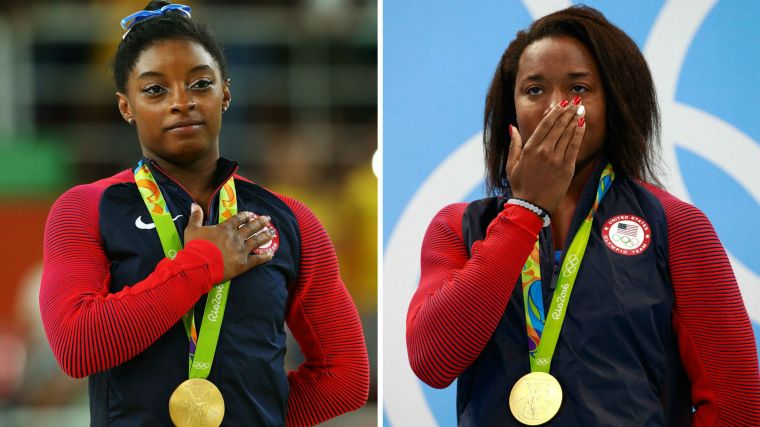
The Simones

simone-biles-simone-manuel_mq9r77ikg0jq1jtwm8xlwuccrThe Houston Metropolitan area sprawls over more than five hundred square miles. It’s as flat as a pancake making its resemblance to a patchwork quilt rather striking. It is home to the most diverse population in the United States partially because of its proximity to a busy port but mostly due to an abundance of jobs and moderate housing prices. Even with its humid sub tropical climate, air conditioning makes it a great location for living and working so that people from all parts of the world have chosen it as a place to raise their families.

On any given weekend Houston area parents are out in force watching their little ones participate in sporting events. The sound of cheering resonates from soccer fields to baseball diamonds, natatoriums to gymnasiums. As a grandmother and godmother to very active children I have traveled from the Houston suburbs of Sugarland to Magnolia to watch the youngsters compete. I’ve watched them race around a track and get their noses crushed into the dirt of a football field. I’ve sat through days long swim meets and on occasion carted them to and fro from practices. I’ve watched them grow and mature into the sports of their choosing as they specialize and become more and more adept.

I have two grandsons, Benjamin and Eli, who have excelled at every athletic effort they have tried. They have been outstanding swimmers since they were barely five years old. Early on they were members of the Greatwood Gators summer swim team in Sugarland along with their older brothers who taught them all of the strokes and the secrets to diving into the pool. The two boys showed such promise that they decided to join the First Colony USA swim team where they now practice at least five days a week rain or shine, hot or cold. Their calendars are full as they participate in meets and camps across the region and the state along with the friends and role models that they have made along the way. It was in this way that they met another swimmer who was like a big sister to them. Her name is Simone Manuel and she has at times both helped and inspired them as they have slowly risen through the ranks of competitive swimming.

Benjamin and Eli understand as well as anyone how much dedication and hard work is needed to become a champion. They strive continually for the possibility of shaving hundredths of a second off of a race time. They compete not so much with others as with themselves. They are individuals and members of a team that encourages one another and celebrates victories together. Last night one of their own swam in the Olympics in Rio. They and their whole family and all of Sugarland and the Houston area were cheering Simone Manuel as she won the gold with an Olympic record, becoming the first African American woman to medal in swimming. I can only imagine how breathtaking and motivational this moment was for them. Simone had shown them that a hometown girl can become the best in the world. 

It was an exceptionally emotional moment for Simone and the rest of us weren’t that far removed from her feelings. Many of us cried along with her. We knew full well how much courage and effort it had taken for her to reach this pinnacle. We understood how much sacrifice she and her family have made. We also knew that she was a champion for our city as well, representing the true spirit of our town. It was a stunning victory that lit up Facebook and Twitter all across the city of Houston.

Simone Manuel’s feat of daring might have been reason enough to celebrate had she been the lone winner from the Houston area but on the very same day another Simone  was also in contention for a medal. Simone Biles lives in Spring, a northern suburb of Greater Houston, with her mom and dad. She is a tiny five foot eight ball of strength and delight. Since she was a small child she has been tumbling and honing the skills of a gymnast. She demonstrated a natural talent early on but it was her fierce dedication to the sport that made her a standout. Slowly but surely she rose through the national and then the world rankings until she had become known as perhaps the greatest gymnast of all time. Yesterday she proved once and for all that she is indeed the best of the best. She easily clinched the gold to be named the best all around women’s gymnast in the world.

Just as with Simone Manuel, all of the Houston area was cheering unabashedly for Simone Biles. We marveled at her athleticism and the sheer poetry of her skills. She seems to fly higher than any of her competitors. She is a whirling dervish who is able to leap and spin and twist and turn as easily as the rest of us walk from one spot to another. She is a miracle in our midst, a tiny but mighty young woman who seemingly defies gravity and all the rules of physics. Mostly though she makes us all so very proud to be Houstonians and Americans.

Simone Biles and Simone Manuel, the two Simones, represent the very best of who we are as people. We certainly need them at this stage of history. Of late it has been all too easy to become cynical and discouraged about the future of our country. When we witness two such remarkable individuals we recall all that is so very good and important about our nation. We are reminded by them of the work ethic that makes us all great. We realize the love and support from their parents that helped them to reach the pinnacle of their endeavors. Yesterday we witnessed irrefutable evidence that the future of our city and our country is still in very good hands in little corners all across the land. We celebrate with the two Simones not only because they are indeed great but also because they have restored our faith at the very time that we may have needed it most.

Last night’s Olympic games were “must see t.v.” I can’t think of another time when I have felt so elated by a sporting event. I cried with Simone Manuel as she won and as she stood on a pedestal while the national anthem played and our flag was so proudly flew. I cried again with Simone Biles when she realized the dream of a lifetime. I cried for the happiness that spread like wildfire through my hometown. Greater Houston was on the map and bigger than ever last night as two of its most remarkable citizens showed the world what the people here are really like.

I have always maintained that Houston is perhaps the very best place to live in all of the United States. What it lacks in scenery and good weather it makes up for in its people who all in all are a grand bunch of loving and hard working individuals. We live and work together here. We are focused on our children and our neighbors. Ours is a big city with a little town feel. Now we have two heroines to make us even prouder of this crazy wonderful place we call home.   

Remains of the Days

Mission_Concepcion_San_AntonioSan Antonio is a well known tourist destination. It attracts visitors from around the country and the world with the Riverwalk, Six Flags, Fiesta Texas, Seaworld, friendly citizens and a dedication to showing guests a good time. Virtually everyone who comes to the city takes an inspiring walk through the premier Texas shrine, the Alamo, but far too few realize that this sacred battleground was once part of a network of five missions that were built along the San Antonio River in the early eighteenth century. All of them remain standing even to this day and are easily found just south of downtown. They are a treasure that all too often goes unnoticed but one rife with history.

The missions were the work of Franciscan priests who travelled from the centers of power and commerce in Mexico to the northern reaches of the country to spread the Catholic faith and secure the land for Spain. The missions resembled Spanish villages in Europe, centering life around the church. The priests encouraged the local native people, who had traditionally been hunters and gatherers, to settle down with the offer of food and lodging. Because living off of the land was wrought with difficulties not the least of which were attacks from other tribes, many were attracted to the seeming generosity of the padres.

Of course the real intent of the priests was to convert and change the people. They considered it God’s work to baptize those who were willing to accept their religious beliefs, learn the Spanish language, and be trained to perform various jobs. Much of the labor that built the churches, buildings and walls around the missions was done by the local people whose culture quickly changed under the tutelage of the priests. They learned how to plant and grow crops. They helped to create aqueducts that directed water from the river to the village. They herded cattle and sheep and even became experts at making cloth. They became stonemasons and artisans. In fact the people of each mission were generally so self sufficient that they even had excess supplies of food that they often traded for goods from Mexico City.

Mission Concepcion is perhaps the best preserved of all of the San Antonio historical landmarks and is the closest to the present day center of downtown. Its church is much like it was back when it was an active center of daily living. Even the wall decorations are just as they were back then. The church boasts the Moorish influence seen in many Spanish edifices. It sits along an intersection of busy streets where passersby are moving so quickly that they seem not to even notice this jewel that shares its space with a seemingly forgotten neighborhood. At one time the St. John’s Seminary was next door to the mission but it was abandoned at the end of the twentieth century and is now a spooky mix of rotting buildings scarred with graffiti and neglect. Somehow the entire area is a mix of incongruous contrasts but Mission Concepcion remains gloriously beautiful in spite of the brutal passage of time.

Further down the mission road, which is actually Roosevelt Boulevard, is Mission San Jose which is a massive property that includes the official Visitor Center for all of the missions. It provides a glimpse into what the daily routine might have been for the priests, nuns, military and native people who once lived there. The remains of the wall that surrounded it as well as many of the original buildings are still intact. The church is active to this very day with priests living at the site and providing daily masses and other services for the parishioners.

Next is Mission San Juan located near a present day airport but still somewhat hidden from the view of modernity. It is a quiet place where the spirit of what happened in the long ago feels much more real. It is easy to imagine the gathering of people carrying out their routines of salvation and existence. The work must have been hard and relentless under the hot San Antonio sun. Everyone including the children had jobs to do. Sometimes there were raids on the food supplies and livestock from the Comanche who refused to join the white men who came to the land wearing strange robes and preaching of a God so unlike their own. Here there is a graveyard where many of the people were buried when they lost their lives to disease, violence and old age. It is a sacred place that lies quietly under trees that might have once shaded the very same people when they were alive.

The most rural of the missions is Mission Espada. It stands in a more remote field than any of the others. It was the farthest outpost and the only one that features bricks in its architecture. Like the other missions its purpose was to bring a measure of spiritual and political civilization to an untamed area of Mexico. The efforts were supported by both the government in Mexico and the king in Spain. As the European world colonized north and south America the Spanish government had claimed more land than any other country and missionaries were always part of the efforts to bring the Spanish culture and beliefs to the native people in what was then known as New Spain.

Texas eventually saw an influx of settlers who had come with the promise of a new start in life. When they believed that the Mexican government had reneged on those guarantees they fought for and gained independence from Mexico. The missions lost their importance and faded into history. Somehow in spite of progress all around them they remained as reminders of a forgotten time. They were saved from total destruction by the National Park Service which now serves as the protector of this amazing collection of history. 

It takes most of a day to explore all five of the San Antonio missions but it is time well spent. They provide a glimpse into an era long before there was a Texas or a United States of America. They are monuments that remind us both of our human strengths as well as our failings. Visiting them is much like going on a spiritual journey back through time. They should be at the top of the “things to see” list for anyone who chooses to travel to San Antonio.

We learn much about ourselves by studying history. Discovering how those who came before us did things reveals mankind’s mistakes and complexities. The Spanish missions were part religious, part political, part business much as most things are today. We might debate whether they helped the native people or hurt them. Perhaps it is impossible to ever really know the full ramifications of what happened so long ago. The only reality is that the missionaries came and we are lucky enough to be able to view the remains of their days in places like San Antonio. It is a gift to us to be able to glimpse the past, a destination that we all should seek.

The Heat of Summer

pc7rKeqXisunThe political scene has heated up with Hillary attacking Trump and Trump attacking Hillary. The Supreme Court seems to be handing down one split decision after another in the wake of Justice Scalia’s death. Members of the House of Representatives are staging a sit-in to force a vote on gun control measures. As a country we seem to be as divided as ever even though the vast majority of us are stuck right in the middle. In the past I might have commented on all of these very important and pressing issues, presenting my ideas for solving them, but I have grown weary of the political battles and now all I want is for each question to be settled in the ballot box in November. I have every confidence in the citizenry. We will ultimately decide the outcome just as we have for more than two hundred years. What appears to be the most terrible time in our country is actually a situation that has repeated itself over and over again just as those our brilliant forefathers thought it might be.
Our Founding Fathers were rebelling against an authoritarian government led by a king who wielded absolute power. They wanted to be certain that no one person or single group would ever be able to force their beliefs on the nation and so they purposely set up a system that would almost insure gridlock from time to time. They believed that changes would be inevitable but that they should occur incrementally so that we never throw the baby out with the bath water so to speak. Right now their ingenious plan is working as it should but slow progress and infighting can be quite discomforting to some among us. I actually find the situation to be a sign that our government is working the way it was intended. I take comfort in the belief that at some point in the future we will work out compromises that will fix things but not create a revolution. It’s what we do in the United States of America and in spite of flaws along the way it continues to work. Some will be satisfied with the results and others will be angry but the point is that our votes are ultimately heard and then determine the course of our history.

I’ve noticed that we Americans tend to get hot headed in the summer months when the heat fries our brains and we just can’t take it anymore, whatever it may be. There are catalysts that spur us into action. We push our representatives to present our differing points of view. In the end one or the other side will win or if there is no clear consensus  it is a draw and nothing is done for the time being until we can rethink the options.

The biggest issues right now involve guns, abortion, sexual preferences and immigration. I actually think that with regard to each of the arguments both sides have valid points of view and both sides are erroneous in some ways. In other words there are good and bad ideas all the way around. If we were willing to consider the interests of both proponents of opposition we would come up with plans that might be deemed satisfactory to the largest number of citizens.

Lyndon Baines Johnson was masterful at creating cooperation among lawmakers from differing sides. Some historians believe that the Civil Rights Act of 1964 might never have passed without his political acumen. Bill Clinton and Ronald Reagan both had great talents in those areas as well. Perhaps that is why we tend to see the eras of their governing as great times for our country. They knew how to bring the differing sides together and make everyone feel as though they had been heard. It’s difficult to imagine our current leaders or those now running for office having the ability to create majorities using members of both parties. We seem to be in the phase of “my way or the highway” politics. When we citizens have had enough we will vote for more moderate individuals who will agree to work together. Until then we’ll just have to sit back and watch the battles.

I have to laugh a bit because the men and women of Congress who are staging the sit-in and creating filibusters are being heralded by the media as great heroes and I tend to agree that that is so. Nonetheless, I seem to recall that when Ted Cruz convinced a cohort to do something similar he were accused of a being treasonous traitor. I guess it all depends on which side of the political fence one sits on but I believe that we need to be fair.

Insofar as most of the issues that arrive on Capitol Hill, I believe that everyone is a little bit right and a little bit wrong. Any thinking person has to admit that there are never quick and tidy fixes for anything. As an administrator I always found it wise to listen to the naysayers before producing school policy. They often saw problems that I had missed. Including them in the discussions and respecting their ideas generally led to buy-in from a greater number of people and a more positive state of morale. It is when managers not only ignore but also demonize their opponents that a kind of civil war ensues.

We have too many people right now craving power, legacies, history-making status. We seem to want what we want when we want it. The world generally has never worked that way. We have to think things through. I see the Middle East as a great example of what happens when a group of people overthrow the power structure without thinking of what to put in its place. Chaos reigns and nobody is happy.

It’s doubtful that we are going to witness a change in the political environment anytime soon. I’ll be patiently waiting for that to happen as I am sure that it will. We have some great men and women on both sides of the aisle and it is only when the majority of us are able to understand that compromise is the answer to our problems that we will once again enter a more serene phase of history. We humans can only take so much excitement before we demand peace.

In the meantime, I’m going to visit the holy grail of Texas politicians today, the Lyndon Baines Johnson Library. He was a President who was loved and loathed but he sure managed to accomplish much of his agenda. I suspect that had he not been saddled with the War in Vietnam he might have gone down in history as one of the greatest of our presidents. Sadly he chose the wrong pathway in handling that conflict which no doubt would have been the fate of anyone tasked with that onerous duty.

It’s going to be a hot summer for sure and the heat will continue all the way into November. God only knows what the outcome will be but each of us should remember that we do indeed have a voice. It might also behoove us to begin the process of healing wounds by respecting the fact that every man and woman has a valid right to his or her opinion. That is the greatness of this country and we need to be certain that we never let it go away. No one should ever be silenced. The most dangerous situation that we might encounter is a government in which we must all agree all of the time and where those in power punish those who dissent. We may want serenity now but we should place more value on rational discussions and efforts to compromise. That is the way our founders intended our government to be.

Beloved of God

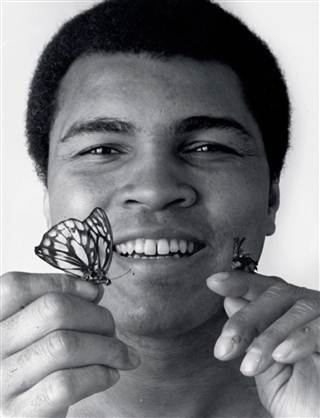
ali1My early years at the University of Houston were marked by a highly charged political atmosphere. I was there during the height of the Vietnam War when young men the same age as I was had to register for the draft. Attending college gave them a temporary deferment as long as they were full time students, and made passing grades that allowed them to continue to progress toward a degree within a reasonable timeline. Back then the intensity and stress normally associated with the college experience was exacerbated by the threat of losing that deferment and being called to serve in the army. For many avoiding the draft was simply a matter of not wanting to be forced to serve. For others it was a matter of principle, namely that they did not want to participate in a war that they thought to be unwarranted and unjust. Others were strict pacifists who would not have wanted to fight under any circumstances.

The university was the site of protests and political speakers on a regular basis and for those of us who were against the war there was ample opportunity to meet with like-minded individuals to voice our concerns. I had analyzed the situation and found little reason for the United States to be involved in the conflict unfolding in Vietnam. It had begun as a civil war between opposing political factions and ideologies and the United States had originally only intended to provide support to the democratic government of the south. By 1968, however, our nation had become hopelessly mired in the fighting with our youth being sent a world away to a war whose purpose few really understood. By the time that I was a college student the country was hopelessly divided over the issue of whether or not we should be sending troops to Vietnam. The divisions would ultimately destroy the reputation of President Lyndon B. Johnson and show its ugliest side in riots at the 1968 Democrat convention in Chicago. 

While my concerns about the political atmosphere of our country often outweighed my interest in my studies, I was only peripherally involved in the student efforts to voice our point of view. I knew many of the key players in the anti-war movement at school but mostly just attended meetings and went to hear speakers who came to our campus. I was particularly excited when I learned that members of the student government had secured a visit from Muhammed Ali and that he would speak at an informal gathering inside the Cougar Den. I knew that I had to be there.

Back then the Cougar Den was little more than a wooden shack nestled under a grove of trees to the left of the Ezekiel Cullen building. It was a dark, noisy, smoke-filled and always crowded room under the best of circumstances. On the day of Muhammad Ali’s visit it was a madhouse as students eagerly jammed inside hoping to get a glance of the greatest boxer in history. When a good friend and I arrived we realized that we would be lucky if we were even able to hear him speak much less actually see him. Fortunately fate intervened on our behalf. My friend was an incredibly beautiful and popular coed and as we were jockeying for a decent place to stand we encountered an officer of the Young Republican Club who had a huge crush on her. He offered to take us both upstairs to the organization’s headquarters where we might stand along the railing and watch the proceedings from a bird’s eye view. We eagerly followed him and the location proved to be perfect.

When Muhammad Ali entered the room a respectful hush fell over all of us. The mere sight of him was mesmerizing. Here was a man who had risked everything by refusing to be inducted into the army. With the famous words, “I got nothing against no Viet Cong” he had refused to step forward when his name was called to be drafted. His actions had resulted in the loss of his boxing title and the inability to fight in many places. He was threatened with five years in prison and had to pay a stiff fine. He would be involved in an appeal for the next many years, citing his Muslim religion as the reason for his pacifism. For some he was seen as a traitor but to those of us who believed that the war was wrong, he was a hero of the highest stature. On the day that I heard him speak he appeared to be godlike and was truly the greatest in my mind.

Muhammad Ali’s appeal would go all the way to the Supreme Court where his conviction would eventually be overturned. He was cleared to resume his boxing career and he went on to have a legendary career that is spoken of with reverence to this very day. His presence, his confidence and his style was unlike anything that the public had ever before seen. Even his detractors had to admit that he was an incredible man. 

I was never a fan of boxing so I can’t say that I followed Muhammad Ali’s career very closely. I had uncles who loved to watch the matches that were broadcast on television but I was never interested. One of those uncles had gone to see George Foreman train here in Houston. I remember his unmitigated excitement when Foreman was slated to fight Ali in Manilla. He was convinced that it would be one of the best contests ever and it indeed became one of those sporting moments that boxing fans would never forget. In the searing heat Muhammad Ali pushed George Foreman to a state of exhaustion and then knocked the giant off of his feet to secure a victory that stunned the world.

I suppose that what I admired most about Muhammad Ali was his integrity. He was a man who lived the principles that were the foundation of his beliefs. He was unafraid to speak even when the truth was difficult. He was a warrior for social justice and a peaceful man. When Parkinson’s disease began to ravage his body he demonstrated courage and grace. I’ll never forget the moment when he carried the torch to light the Olympic flame at the games in Utah. He was already frail but he bravely ran up the ramp as though he were holding the light of the world for all of us. He was as beautiful as he had been when I saw him as a young lion those many years ago.

Muhammad Ali became an example and spokesman for those of us who are nameless. He never varied from his determination to make the world a more tolerant and peaceful place. From his days as Cassius Clay in Louisville, Kentucky to his most triumphant moments the public knew that he was indeed a remarkable man. At a time when a black man dared not speak out lest he be punished, Muhammad Ali refused to still his voice. He held his head high and reminded us that he was beautiful and great. He would proudly boast, “I am Muhammad Ali, a free name – it means beloved of God, and I insist people use it when people speak to me.”

Muhammad Ali was beloved, not just by God but by people the world over. He taught us the importance of faith, family and conviction. Now he may rest in peace. His battered body will hurt him no more. He is with God and moving like a butterfly in his heavenly home.