In Search of Criminal Justice

Angola-prison-in-Louisian-002

People sometimes do very bad things, things so egregious that we do not feel safe having them live among us. We have to find them, try them for their crimes, and if found guilty sentence them to punishments that fit their actions. We have a criminal justice system for that which is struggling on many fronts. At this moment in the United States we have the largest prison population in the world both in actual numbers and percentages. We struggle with ethical questions of what we should do to prevent crimes and how to treat the perpetrators once they have been convicted. We can’t seem to decide whether our system should focus on punishment, rehabilitation, or some effective combination of both. We wonder what we might have done to prevent crimes in the first place thus eliminating the need for so many centers of incarceration.

I’m fascinated by the criminal mind. I have always wondered what drives an individual to the point of committing unlawful acts, especially those that are violent. I’ve been a reader of mysteries from childhood and my favorite television programs and movies have always been those that depict detective work, the law, and the frightening world of prison life. I suppose that I have always believed that if only we were able to unravel the threads of lives gone so bad we might learn as a society what causes them to reach a point of breaking the law. I suppose that such a dream has confounded humans since Cain murdered Abel.

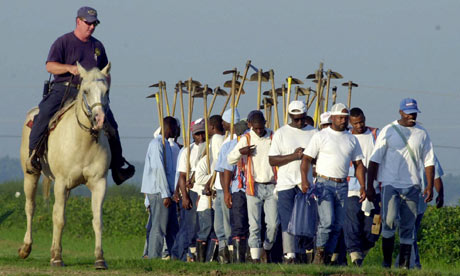
I am a frequent viewer of programs like Dateline, 20/20, and 48 Hours. I watch Oxygen and Investigation Discovery. Recently Dateline featured a hard look at the country’s criminal justice system by way of Angola Prison in Louisiana. The episode focused on the problems of housing large populations of prisoners for long periods of time and asked the burning question, “Should criminal justice focus on punishment or rehabilitation?”

One of the most pressing problems in our country’s prison systems resulted from the hard line of the war on drugs. Because of the no nonsense feature of our efforts to eliminate the drug trade by giving drug users harsh sentences the prison population swelled and many of those found guilty are serving excessively long terms. The medical community has learned through research that illegal drug usage and addiction is in truth a medical problem rather than a criminal one. What most drug addicts need is assistance in beating their habits. Instead we have all too often put them away in jails where they interact with murderers and other violent sorts. The money  that we are spending on warehousing them for decades might have better been spent on sending them to centers for rehabilitation.

Another concern has to do with another outdated trend to try minors accused of violent acts as adults. There are now individuals in their seventies who received life sentences when they were only sixteen or seventeen years old. They have spent their entire adult lives behind bars with no hope for parole until the Supreme Court recently ruled that minors must always be tried in an age appropriate manner and their sentences must reflect the extenuating circumstances of their ages. We now know that the human brain is not fully formed until around the age of twenty five, In particular the centers of the brain that control behaviors are often the last to form, Thus the kinds of risky and inappropriate acts in which teenagers are known to engage appear to be part of development. Courts have ruled that inmates who were convicted and sentenced as adults for crimes committed as minors have the right to parole hearings even when they were sentenced to life without any hope of reconsideration.

The optics of the Dateline program were disturbing. Many of the inmates at Angola work in fields cultivating crops day after day in harsh weather conditions. The vast majority of them are black, begging the question of why this is so. What is so wrong with our society that so many resort to criminal behavior and what might we do to change this trend before such individuals end up in the prison system? These are dire needs that we have yet to fully meet. We have to break the cycles that plague the poor, the undereducated, the hopeless.

President Trump recently signed a bill offering many reforms of the federal criminal justice system, but the vast majority of the prison population are governed by state laws that do not fall under the umbrella of the changes made by the president. There are also still many citizens who sincerely believe that the only correct answer to discourage criminal acts is to follow a hard line. The debate continues while the number of the incarcerated grows.

More and more criminologists are learning that people can and do change if given opportunities to redirect their lives. They know that removing all hope only creates even more violence. Prisons now use more women guards who have the effect of calming the prisoners. Conditions are improving as research teaches more and more about how to rehabilitate the fallen.

There are those whose acts were so horrendous that they should never again walk amongst us, but there are also people who have paid for their mistakes and truly changed. It’s time we consider humane and caring ways of helping them to become contributing members of society.  States should follow the president’s lead in enacting justice and prison reforms. We need programs that understand and support the unique needs of those who are attempting to reenter the world of freedom. We need to focus on education and counseling at the earliest possible ages. It’s not about letting monsters run lose but about providing purpose and direction for those who have genuinely changed. It’s about compassion and forgiveness for those deserving of our consideration. It’s a focus that should be a priority for all good minded people everywhere.

The Dreamers

many cultures

They came to America with little more than a few belongings and hope that somehow their lives might be better than they had been from where they had traveled. They were refugees from a government that wanted to erase their language and their culture. They were hated and accused of being lazy in a place where their family had lived for ages. Perhaps in their new home things might be different, at least that is what they desperately wanted to believe as they settled into a small apartment in the foreign environment of Houston, Texas.

They found jobs that were menial by most standards but they were proud to have work so they didn’t complain. He toiled in the blazing summer sun while she worked over a hot stove cooking for the hired laborers. It was back breaking work that left them aching and exhausted at the end of each day. They struggled with learning English and their dark looks and strange accents gave them away wherever they went. Not everyone was welcoming. In fact some people insulted them without ever attempting to get to know who they were. It was a difficult and lonely life, but it was still better than what they had known. They were free. They were saving money, things that never would have happened back home.

Before long their first child was born, an honest to God official citizen of the United States of America. The man told his wife that their son must speak English and learn everything possible about this great new country. So he did as did his brothers and sisters who numbered eight before the woman was no longer able to bear another child. She had her hands full at home now raising her boys and girls, taking care of the garden and the house that they had built from the fruit of their labors. They paid for each room in full, adding to the square footage bit by bit until it was finally done.

They were not always loved by all of their neighbors. Some of them worried about having strange  people from a strange land in their midst. The children of the man and woman knew nothing of the old country. They were red, white and blue Americans right down to their toes, but still they heard taunts that they did not understand as they walked to school. Sometimes they had to dodge the rocks that hurtled dangerously close to their bodies. They did not understand why they were despised and they complained to their father, but he urged them to hold their heads high and be proud because they were citizens of the greatest country on earth. He assured them that hard work would one day change their fates. He reminded them again and again to love the United States in spite of those who wanted to chase them away.

They grew into a fine lot. They earned diplomas and served in the military. They worked as hard as their parents had taught them to do. Nobody noticed that they were the children of immigrants once they left home. They blended into society as though their ancestors had arrived on the Mayflower. They married and had children of their own. Those children became college graduates and climbed even higher up on the economic and social ladder. Their grandchildren knew nothing of hard times or being shunned. The dream that had sprouted in the hearts of their immigrant ancestors had burst forth in full bloom. It was a beautiful thing, the American way.

Those were my people. A grandmother and grandfather from Slovakia who risked all that they had ever known to find opportunity. Never again did they see their homeland or the people that they had known there. They had mothers and fathers, grandparents, aunts, uncles, cousins, friends whom they left behind. How frightening it must have been. How courageous they were even as they sometimes found prejudice and lack of understanding in their new home. What a precious gift they gave to their children and ultimately to those of us who descended from them.

Surely we owe that man and that woman some kind of payback. Perhaps it should be in welcoming the newest immigrants from foreign lands to America. If we can’t understand the people who are searching for the same freedoms that our grandparents sought, then who will? How can we deny them a new start? Why should we assume that they will not work as hard or be as devoted to the country as our ancestors were? How can we see them as less than the rest of us? Once before it was believed that people like my grandparents would ruin the United States with their ignorance and questionable habits. No such thing occurred. In fact we have contributed to the good of the country in remarkable ways. History demonstrates that in most cases those that we allow to join us enhance our society rather than tearing it down.

Houston, Texas where my grandparents settled before World War I has become the fourth largest city in the nation. It is also the most diverse. No race holds a majority position. We have people of many colors from all over the world. They have made our city vibrant and exciting. We are the future whether the rest of the nation realizes it or not. No wall will erase the fact that we are living in harmony and demonstrating to the entire world what it means to be generous of spirit and talents. Ours is the kind of place that my grandparents wanted for their children when they traveled across the ocean in a steamboat so long ago. Today there are others who are longing for the same chance. Such people have always made this country great. Perhaps it’s time for the children of yesterdays dreamers to extend a hand of welcome to the dreamers of today.

I See You

I See You

I went to a fairly small high school in which we tended to know of everyone of our classmates, but often did not really know details about all of them. Some of my friends from that stage of my life are still very much part of my world, and what I have learned over the decades is that each of us have had to deal with difficulties both when we were young, and when we were adults. None of us have gone untouched by daunting challenges that sometimes took all of our reserves to overcome.

As I have aged I have had opportunities to get to really know some of the people who went to school with me who were once little more than acquaintances or names and faces in a yearbook. Even those that I thought had a golden touch have endured painful experiences, and many of them occurred even as they sauntered through the hallways of our school with smiles on their faces hiding the hurt and fear that was stalking them.

We are in a strange kind of era in which we almost appear to be vying to determine which people among us have been the victims of the most unjust tragedies. Certainly some among us have always had more resources for dealing with difficulties, but none of us have ever been entirely free of troubles. My brothers and I had a heavy dose of sorrow, poverty and exposure to mental illness but we also had more than a generous share of emotional support from our mother, our extended family, our neighbors, the people at our church, our teachers and our friends. We may have been thrown into the maelstrom more than we might have wished, and wondered at times if we would survive, but time and again we learned the very important lesson that we were never alone. That realization was more valuable than money or possessions or influence or privilege. In fact, we were quite young when we knew beyond a doubt that there is always is source of kindness and that often it comes from the most unexpected places.

The one thing that most people desire is to be seen and heard. I recently read a book that my grandson chose for his summer reading that reminded me of our human need to be noticed and honored for being exactly who we are. A Monster Calls is the story of a young man plagued by nightmares in the midst of his beloved mother’s battle with cancer. It is a gorgeous flight of fancy that speaks to our desire to be understood. There is no race or class that does not share the desire to be fully and totally accepted.

Just as the boy in A Monster Calls was filled with anger because he believed that nobody fully understood him, so too are many people in society today filled with rage because they feel misunderstood. They are mad about this or that and don’t want to take it anymore. They seem to be unaware of the fact that we all have been burdened with challenges beyond our control that have made our lives more difficult than we want them to be. They carry on because they want someone to empathize with their plights, some of which appear to be more deserving of our concern than others. In truth it is impossible to discern the difference between rotten apples and moldy oranges. Problems are problems and we all have them. When they pile up and become unbearable, which they tend to do in spite of our efforts, we simply want some compassion and for those around us to acknowledge our sorrows.

When humans feel abandoned they are more likely to lose hope. They lash out or devolve into depression. There is no telling where their thoughts of desperation will lead them. Sometimes they become ugly and violent versions of themselves. I always ponder when I encounter such a person what brought them to such a terrible place. I find myself wondering if someone along the pathway of their lives might have helped them to find positive ways of dealing with tribulations. I contemplate the possibility that they became so invisible that they broke.

I  have been greatly saddened by a tragedy that occurred near where my grandsons live. On a summer afternoon just before the start of school two boys the same age as my grandsons met in a park. One of them shot and killed the other. They were sixteen and my grandsons knew both of them from their high school. The shooter was in the same advisory period as theirs. The victim’s mother was an acquaintance of their mom’s. It hit all of us hard just as it did the teachers at the school. Everyone wondered what might have prevented such an horrific moment. Was there something that might have been said or done? What was the defining event when things began to go so terribly wrong?

We tend to operate as though laws and rules and allegiances are more important than individual lives, and yet there are stories after stories both in literature and history of people who were saved because someone witnessed their pain and did something meaningful to help them. Kindness often does wonders. I know for a fact that it made an enormous difference for me and my brothers when we were growing into adults. Just having someone see us and offer a hand taught us to be optimistic even in the darkest hours. Little acknowledgements were enough to sustain us.

I was reading about Latinas going to college and feeling different and a bit frightened when checking into their dormitories. It reminded me of my own college days. I was unable to live on campus. I went to the university in my city and commuted to and from school each day. I did not have a car but I had two dear friends who offered to get me there and take me back home. They went out of their way to help me.

I would have liked to have been part of college life with a dorm room and all of the activities associated with that experience, but I barely had enough money to cover my tuition which I paid from summer jobs and little bits of work here and there. I instead got something even better, a lifetime relationship with the two wonderful souls who made sure that I got to my classes. They saw me and they listened to me then and all the way into the present. I don’t know what I might have done without them, but I’ll never have to wonder because they were there.

Perhaps instead of growing irritated by those who are shouting about their pain and sorrow, we simply need to let them know that we do see them and we will listen to them. That is the first step in helping someone to find the way to a better life. I had angels who gave me that gift, I pray that other frightened souls will find someone willing to provide for them.

Beautiful Chaos

chaos 1

Chaos is defined as a state of utter confusion. It can be tiring or exhilarating. I’ve had my share of chaotic moments and I’ve witnessed others in their’s. In spite of precision planning a few of my first days of school turned out to be the very definition of chaos with both teachers and students dissolving in tears before the new term even had time to get started. I once went to Epcot on New Year’s Eve not realizing that it was one of the most popular times only to find myself surrounded by a surging crowd of drunken adults with surly attitudes. I wasn’t sure that I would make it out of the park unscathed and realized that I don’t generally do well when faced with that kind of chaos.

Still there are forms of chaos that are actually quite beautiful and even therapeutic. The Friday nights at my Grandma Ulrich’s house were occasions when anything might happen. Thirty or more siblings, spouses and cousins would cram into her tiny living room where the noise level quickly rose to an almost unbearable peak and little ones ran around in a state of unfettered energy. My aunts and uncles were a rowdy bunch who laughed and argued in a space filled with smoke and more love than one might ever measure. Those evenings were surely nothing less than beautiful chaos, unregulated emotional gifts to all of us who participated in them.

My first generation American relatives were indeed a unruly group, viewed by their neighbors as being a bit wild. With ten children coming one year after another my grandmother had become resigned to having a noisy household. She lost two of her little when they were still infants and it had the effect of resigning her to a bit of disorder in the household. She quietly watched over her children’s antics with a loving smile on her face, not worrying about unimportant things. As long as her children were clothed and fed and tucked into their beds at night she was happy and so were they.

Her days became routine rituals of sweeping and mopping dust from the floors, preparing food, doing laundry, watering her plants, and showing her children that she thought each of them was wonderful. She loved them above all else and they in turn adored her. Their chaotic gatherings filled her with joy, and she sat in a corner of her living room just watching them with a contented expression on her face, happy that they returned to be with her each week. If their discussions tended a bit too much toward anger she had a way of stopping them with a quiet mention of their names. They understood that they had crossed a line and corrected their behavior immediately like the good boys and girls she had taught them to be, but they were rarely in a mode calmer than excited frenzy. 

I have in many ways become my grandmother. I enjoy simply observing my children and grandchildren and siblings when we are together. I delight in the chaos of that wonderful crowd. I quietly serve food and drink and then watch. It is a wonderful feeling to see so much love filling our parties in the form of animated conversations, raucous games, energy running freely. There is nothing boring about our gatherings and nothing quiet about them either. We celebrate our loving connections without filters and it is an emotionally glorious experience. Somehow we each realize that it is okay to fully be ourselves, knowing that each person will always be accepted and loved without reservation. That is the kind of beautiful chaos that energizes and brings confidence.

We humans have built societies based on rules and traditions. We grow up learning how we are expected to act in various situations. We must sit quietly and raise our hands in a classroom. We must stop at red lights, and be polite. It can feel very restricting to always follow the mores of the world. Sometimes we need a place where we can feel safe to let down our hair and speak our minds, be who we are. Most often that happens with close family members, but sometimes it is even better with very dear friends. It is in the informal settings that we most often feel the most relaxed and loved. We know that slips of the tongue will be forgiven, faux pas will won’t change our relationships. There is an easiness that we find with certain people that is quite glorious.

My big, crazy extended family has at times been viewed with a bit of consternation. We actually make some folks a nervous with our quirky ways. We are too loud for them, too inclined to raise the roof with our joy in being together. We have to choose our mates carefully lest they run when we expose them to our frivolity without warning. We definitely do not sit in a quiet circle chatting in a manner worthy of an audience with the Queen. More than one soul has cringed at the chaos that our meetings engender. Others have joined in gleefully proclaiming that we are so much fun.

I love our beautiful chaos. Nothing makes me feel better than spending time with the caring people who have allowed me time and again to just be myself with no expectations or demands attached. Our is a joyful acceptance that more often than not erupts into the most beautiful chaos of chatter and laughter and love.

They Were Victims Too

Dayton shooter

I saw a news story along with comments from readers that really bothered me, but not for the reasons that most people would imagine. It was a piece about the parents of the Dayton shooter. They had posted obituaries for both their son, the young man who killed nine people, and their daughter, who was one of the victims. Each obituary was rather commonplace in the ways in which they described the lives of the two individuals. What riled those who read them was that the one for the murderer told his story as though he were some beautiful son that the parents had lost all too soon. People were so upset that the local newspaper pulled the obituary for the shooter and the mother felt compelled to explain herself and apologize.

Most of the comments regarding the obituary were quite vile with little or no respect for the grieving parents. It made me shudder to read them and to realize how vindictive people actually are. Of course there is much anger over what happened, but only one person was compassionate enough to point out that the parents of the perpetrator of the tragedy were suffering a great loss as well. They are wondering how things could have gone so terribly wrong in their son’s thinking. They are remembering the person they thought he was and trying to understand how he became so vile. It must be indeed quite horrific for them, and acknowledging their own grief in no way underscores the tragedy.

As a mom I loved my daughters from the first moments that I felt the changes in my body telling me that I was carrying them in my womb. Over the months I delighted in their kicks and the movements that they made to tell me that they were alive and well. When I first saw their faces after their births I literally cried with joy. I counted their fingers and their toes and felt the creases in their skin. Over the years my heart swelled as I watched them grow into fine young women. Neither of them matured without making mistakes, but we got past them because I loved them always. So it is with almost every mother on earth, even when children disappoint beyond measure.

I once had a student who went haywire in a classroom, cursing and assaulting a teacher. Before he calmed down he threatened several other faculty members and an assistant principal. Eventually he lost steam and sat forlornly in a conference room waiting for his mother to take him home after being expelled. He was one of my favorite students so I was heartbroken over what had happened. I went to talk with him and he immediately began to cry, proclaiming that he knew that I now hated him. I insisted that I would always love him but also hate what he had done. I could forgive him, but not his act of violence. He understood exactly what I meant.

When Jesus was condemned to die on the cross the people who had once celebrated him taunted and jeered with venom. They turned on him completely, and even his apostles hid with shame and fear of having been associated with him. His mother, however, never wavered from loving him. She stood by him until the very end of his life. This is what mothers do.

I am also reminded of a story that my dear sweet Uncle William told me. Here in Houston decades ago there was an horrific story of mass murder. A crazed man enlisted two young teens to bring victims to him. They brought unsuspecting males to a house in Pasadena where they were sexually abused, tortured and then killed. They helped the man dispose of the bodies along the beaches of Galveston and in a storage facility in southwest Houston. The accounts made the national news because they were so horrific.

One of the teens who worked with the murderer was Elmer Wayne Henley. He lived on my Uncle William’s postal route. My uncle regularly saw him and was shocked by developments because Elmer Wayne had always appeared to be such a good boy. He took care of his aging mom and provided her with the extra income that she needed as a single parent. My uncle spoke of how proud Elmer Wayne’s mother had always been of him. Even after the news of his part in the horror became fodder for gossip, Elmer Wayne’s mom spoke of the wonderful son that she knew. Until her death she did not turn away from him. It’s what mothers do.

I wish that we as a society might be able to separate the sins of a son or daughter from the love of a parent.  Perhaps if we were more inclined for compassion in such situations we might have less anger, hate and violence in our society. One of the most touching stories I have ever heard came when Amish school children were killed by a crazed man who had a family of his own. There were threats being made on his wife and children as the anger over what he had done raged. Members of the Amish community made it known that they felt as much compassion for his family as they did for their own. They embraced the woman who was as shocked as they were over what her husband had done. They extended a hand of love and sympathy. They truly understood that there was much grief to go around.

I weep for the victims of the Dayton shooting, but I also cry for the parents of the man who committed the crime. I don’t know how much they ultimately had to do with how their son turned out, but I am certain that they too lost so much on that day. It does not hurt us to allow them a bit of dignity as they grapple with the confusion and sorrow that must surely be relentlessly stalking them. If their comments about their son seemed inappropriate it is most likely because they really don’t know what to think or how to act. Their shock is a great and maybe even greater than ours. It’s time we all begin to choose kindness over revenge when dealing with the families of killers unless it is proven that they were accessories to such crimes. They are victims too.