You Just Came Later

past-future-750828

I don’t think that I have ever watched one of Bill Mahr’s shows. I know about him mostly from hearsay, and in that regard I often find my thinking at odds with his. Nonetheless he sometimes hits the mark with his commentaries, and recently I found myself mentally applauding his commentary on one of his shows. It were as follows:

 “People need to stop pretending that if they were alive back when, they wouldn’t have been the same asshole as everyone else. You would have driven without seatbelts and drank when you were pregnant… Because woke-sight is not 20/20, and you don’t have ESPCP: extrasensory politically correct perception. If you were around in the 1980s, you would have worn those horrible colors and the big shoulder pads. You just would have. You’re not Nostradamus. And if you were around in the 1780s, and you were rich and white, you likely would have had slaves. … Stop being surprised we used to be dumber than we are now. The humans of tomorrow will be horrified by us…Do you really think future generations will look at what you’re doing…and say, ‘That was the moment civilization peaked. We can add nothing more?’ You’re not morally better than your grandparents, you just came later.”

The truth is that we humans are imperfect now, always have been, and always will be. We are influenced by the time and place in which we live. We learn from the people around us and evolve over time. Over the course of my seventy decades on earth I have changed the way I think and live multiple times. My beliefs have been influenced by new information and innovations, which is the way it has always been for mankind.

I am from the generation that was the first to grow up with television. It’s reach into hearts and minds is incalculable but certain. As a teen I watched the walls of racial segregation being kicked down. As a young woman I witnessed the landing on the moon and more equal opportunities for women. It was my generation that halted the boom of babies with birth control. Life has become ever more comfortable for larger and larger numbers of people during my lifetime. I have things in my home that were the stuff of dreams when I was born. Polio and other dread diseases have been all but wiped out over my seventy decades. I’d like to think that we have rid ourselves of injustices that were once quietly tolerated. Nonetheless we have made mistakes, just as our parents and grandparents did. Ours is an imperfect rendering of the world and I’d like to think that future generations will not judge us too harshly but will instead be willing to balance our offenses with the good things that we have done.

Our children and their children are nudging progress forward much as every generation has, but they are also no doubt doing things that may one day be questioned by people of the future. Mankind’s journey is one of incremental progress which is more often than not somewhat imperfect. All we can hope for is that the miscalculations that we make will not be so disastrous that they set humanity back.

In the long history of civilization there have been moments of renaissance and those which have been a blotch on our progress as people. On the whole the arc has lifted us upward toward wiser and more thoughtful ways of meeting the challenges that we face. It does us little good to waste our efforts on indicting our ancestors when we will never truly understand what their world was actually like.

I’ve searched fruitlessly for information on my paternal grandfather. All that I know about him comes from things that he told me. He always said that he was Scots Irish, a term that I never really comprehended. Only recently have I learned about the journey of people from Scotland who were encouraged to leave their homeland to settle in northern Ireland where their culture and characteristics became a blend of English, Scottish, and Irish thinking. They tended to be independent souls who were speaking of liberty and freedom long before such ideas came to fruition in the new world known as America. They were often buffeted by circumstances of poverty and political clashes that lead them to wander from one place to another in search of a modicum of peace. My grandfather’s people found their way to Appalachia.

Grandpa often spoke of growing up in an isolated area devoid of any sort of modern conveniences. It was hot in the summer and cold in the winter but he and the grandmother who raised him learned to adapt to their situation. The world of his boyhood was nothing like the luxury that he would eventually enjoy by the end of his one hundred eight year lifetime. He was a living witness to the history and evolution of mankind over the course of a hundred years. He marveled at what humanity had accomplished and focused more on success than failure, because the evidence convinced him that we the people may falter, but we eventually find a way to make things better. That slow progress made him a relentless optimist.

We all know the problems that we face. We all see things that we would like to correct. Grandpa and Bill Maher are correct in believing that we need to understand that we are but workers in the job of moving the world forward. We will have great victories and we will make great blunders. In eschewing self righteousness we are more likely to help forge a future that will move us closer to the perfection that we may never realize, but that we nonetheless dream of achieving. We are no better or worse. We just came later.

Make America Kind Again

four people wearing blue crew neck t shirts
Photo by rawpixel.com on Pexels.com

I have always believed that my country is built on kindness for the most part. Certainly there have always been mean, evil and violent people, but in truth they have lived on the fringes of society. To a large extent they have been rightly or wrongly ignored up until recently. There have also been unjust policies in the history of our country, but we have always seemed to eventually rid ourselves of them and attempted to be fair. Lately, however, being fair, calm, kind seems almost out of style. We all too often judge someone who is quiet or willing to hear all sides of an argument and even change as someone who is wimpy or without moral compass. Our admiration tends toward the fighters among us, the more belligerent souls who seemingly take delight in tearing people down and hurling insults at those with whom they disagree. Large numbers of the population of the United States see them as people of great strength and more and more often their ways are being emulated by even our young.

My nature is to be quiet and respectful. I am always willing to listen to all aspects of a particular situation. I am quite flexible and open to changes even of myself. I suppose that I may be viewed as someone who is not particularly strong, but I know when I need to be tough and I have exhibited grit whenever life demanded it from me. For the most part I have tried to never be unkind to even those who have hurt me. Instead I honestly attempt to understand why they felt they needed to be ugly. I generally find that such tortured souls are hurting inside, and their taunts are more often than not a disguise in which they hide their own weaknesses.

The most courageous people that I have ever known whether through personal experience or the study of history have been persons who possess what I see as all of the finest human qualities. They have eschewed boastfulness and attempted to be infinitely fair. They are rarely guilty of deliberately hurting another. Often they are quite humble and unwilling to boast of their own accomplishments. I admire them because I see them as being the very sort of people that we might use more of in today’s divisive and insult ridden environment. I believe that the last thing we need are bullies and loud mouths. It’s time that we search for those who honestly strive to be of service to humanity rather than themselves.

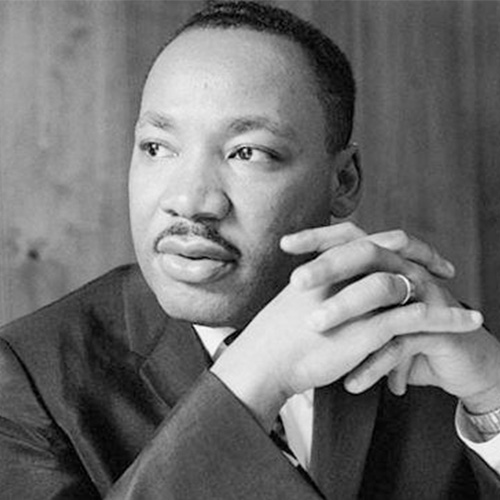
In the final months and weeks of his life Dr. Martin Luther King, Jr. grieved over evidence that there were still so many people who believed that his adherence to nonviolence was a weak way to solve problems. He admitted to his own frustrations but held on to his insistence that it would only be through passive resistance that we would ultimately find a way of living together in unity. His focus was on looking to a future about which he often dreamed. He understood he might never see perfection but he still saw a vision of a promised land and it was not marred by divisions and hatefulness.

One of the most telling aspects of John McCain’s character came when he was running for president against Barack Obama. I’ll never forget when a woman accused President Obama of vile things and McCain immediately corrected her, insisting that Obama was a good man and explaining that he only disagreed with Obama on how to get things done. Some saw that as being wishy washy. I saw it as being akin to the courage that he demonstrated when he was a prisoner of war. Senator McCain became a great man in my eyes at that moment and for the rest of his life he did not disappoint me in that regard even though there where times when I did not agree with his political ideas.

I feel the same about Senator Mitt Romney. People attacked him for his willingness to change his stance on certain issues in the light of changing times and new information. Frankly I think that anyone who is so hard headed that he/she will not budge even when data clearly demonstrates wrong thinking is somewhat irrational. I am wary of such people because I have found over and over again that very little in this life is etched in stone. There are exceptions to virtually every rule or argument and being open to ideas is in fact a sign of strength, not weakness.

In our last presidential election I honestly felt that neither candidate sincerely cared more about the people than themselves. The result of that contest has lead us to a low point in our nation’s history, but I fear that if things had been different it may not have been any better. Now we have a room full of candidates vying to see who can be the most audacious and many of them attack the very principals and characteristics of each other that I find the most genuine. They appear to be taking a page from the playbook of boastful loud mouths and that worries me intensely.

I believe that bullies, mass shooters, racists, and other vile individuals are an aberration. They do not represent our country and yet they are getting the center of the stage, and foolish people seeking power accuse the rest of us of being complicit in creating them. There is a media push to make us believe that the ugliness that we see is commonplace and typical of certain groups of people. The truth is that what the vast majority want is to make America kind again. If we manage to do that then it will also be great. Kindness does not mean allegiance to one political party or another. It means looking for good men and women who respect and understand us without rancor for those with whom they disagree. It means looking for humble and flexible people who are courageous enough to admit when they are wrong. Surely there are many such souls in our ranks. Now is the time to find them. Let’s insist on making America kind again.

The Old West

virginia-city-940x624

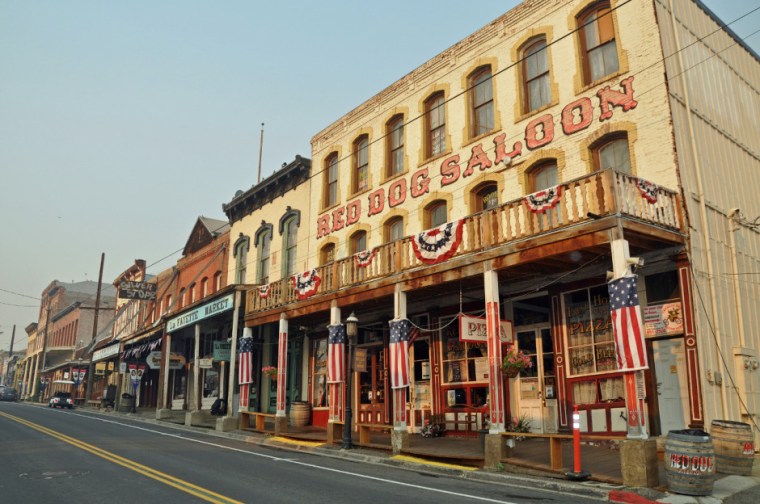
I grew up watching westerns with my Uncle Jack. I loved all of those shows about the old west but perhaps my favorite was Bonanza with its stories about the Cartwright family. Hoss and Adam and Little Joe were heroes to me and I loved the tales of their adventures. On many an episode they wandered into Virginia City to take care of business or meet up with friends. I was fascinated by the lifestyle of those long ago towns where folks endured hardship in search of gold or silver or some better way of life. Imagine my delight when our recent travels took us to the real historic Virginia City in Nevada just outside of that state’s capitol, Carson City.

This was once the site of a booming gold rush town. The decaying remnants of the old mines still litter the hillsides in a haunting way. They serve as a reminder of the ebb and flow of booms and busts in the story of mankind. Once they were alive with frantic activity designed to pull riches out of the earth. Now there is little more left than worthless mine trailings and rusty tin walls.

The road into Virginia City climbs through the hills along a paved highway that was no doubt a muddy dirt trail that people from across the globe traveled in the latter half of the nineteenth century in search of opportunity. Most of the buildings in the town date back to the glory days after the 1849 discovery of gold. An old school house tells of the families that came and a saloon is evidence of a different way to create wealth through a more insidious form of entertainment. The buildings are alive with history and seem to be whispering that if one only tarry for a time the secrets that are buried there might be revealed.

As we drove along the main street of Virginia City I found myself feeling the spirit of its settlers of old, people hoping against all hope of finding the mother lode or earning enough to survive by providing services of one kind or another. “Who were the folks who traveled here?” I wondered. What motivated them to leave everything they had ever known to travel to this desert like place where there were no guarantees that their efforts might be rewarded? What dangers lurked? How many if them left broke or forever changed?

We like to romanticize the old west but it was truly a harsh existence. There were many dangers not the least of which was being broken by the challenges. Somehow the folks who came here never thought that perhaps the land they were invading might already belong to Native Americans whose roots were hundreds of years old. They somehow assumed that they had a right to make claims of ownership without compensating those that they displaced. I truly wonder how they could not have known that there was something a bit wrong with their thinking, but then I wasn’t there. Humankind’s journey has been fraught with battles between opposing groups claiming ownership of land since the beginning of time.

Virginia City is a place where time seems to have stopped. It is a tangible piece of history that tells us a story of folks desperate to make something more of their lives. Fortunes were made and lost there. Lives were treated to elation and great disappointment. We have romanticized those tales and made them part of the tradition of the hero’s journey when perhaps they were little more than ordinary efforts to survive. Maybe back then it took great courage just to eke out a living from one day to the next, but there was probably very little glamor in any corner of places like Virginia City.

My paternal ancestors never ventured very far from the land east of the Mississippi River. It was my maternal grandparents eventually found their way to Houston, Texas from Austria Hungary. They had heard stories of a new kind of black gold, oil. While they never engaged in the search for the goo that gushed from the earth they understood that other kinds of services might be needed and they were willing to work long hours cleaning other people’s messes to provide a decent living for themselves. I suspect that their story is mirrored in the lives of those who set out to tackle the old west. Many never became rich but they found ways to work and enjoy a better lifestyle than they might otherwise have had. I suppose this is what people everywhere have always done.

We now debate whether or not this decision or that choice of our ancestors was right and just without ever knowing what peoples’ real motivations were. It is in reality a kind of self righteous judgement on our parts for we will never be able to truly understand what life was like or how the thinking of the past influenced people. Until we are able to walk in a person’s shoes we are only conjecturing as to their thinking and there is something rather presumptuous about that.

I am fascinated by the old west and all of history. Our human imperfections are in full view in the chronicles of the human story. The people who came before us made mistakes just as each of us does even now no matter how well intentioned we might be. We can never judge the actions of others without demonstrating some of our own imperfections. Perhaps it is best just to learn from them and to change our own ways rather than judging whether are not they were worthy of our respect. What happened happened in a world far different from our own. For now it’s just fun to visit the places where people once did their best to make life just a bit better for themselves and their families. It’s really cool to see vestiges of how they lived and to realize the scope of human efforts through the evolution of time.

I Needed This Reminder

MLK_500x500

One of the best aspects of being retired is that I now have time to ponder more than I did when work required me to adhere to a strict schedule. I am able to read more and even to indulge in moments of sitting in silence with my thoughts for long stretches of time. I still serve my many grandchildren with my educational expertise whenever they require a bit of guidance or encouragement with their studies. Each summer I read the same books that they are assigned for their pre-advanced placement and advanced placement classes, so that I might help them to analyze and discuss the works when they return to school in August.

One of my grandsons is reading Martin Luther King Jr. I Have A Dream: Writings & Speeches That Changed the World edited by James M. Washington. When my daughter requested that I familiarize myself with the text so that my grandson and I might talk about its implications I was more than eager to delve into the heart of the essays. I have long considered Dr. King to be one of the greatest orators and most influential leaders of the twentieth century and indeed the entirety of history. He is a hero of mine, one of the people I would love to meet when I eventually make it to heaven.

I grew up in the era during which Martin Luther King Jr. did his incredible work. In the year I was born Dr. King was ordained a minister following in the footsteps of both his father and grandfather. He had been a child during the Great Depression, growing up in Atlanta, Georgia when segregation was still very much a fact of life for blacks just as it still was for most of my own youth. In 1954, when the Supreme Court ruled in Brown v. Board of Education that racial segregation was unconstitutional Dr. King was the pastor of the Dexter Avenue Church in Montgomery, Alabama and I was about to head to the first grade.

A year later, in 1955, Rosa Parks famously refused to surrender her seat on a Montgomery bus to a white man, an act for which she was arrested. Her brave action led to a boycott and Martin Luther King Jr. was elected president and voice of the efforts to integrate the buses in Montgomery. By then I was joining droves of Baby Boomer children in second grade classrooms that were still mostly segregated in spite of the earlier Supreme Court ruling. I would overhear rumblings of discussions from my father and grandfather who believed in those days that children should be sent from the room when politics were the subject of conversations. I was a nosy child who would hide behind a wall listening to their voices as they spoke of the coming changes.

In 1957, President Eisenhower federalized the Arkansas National Guard to allow nine black children to enter a previously all white school in Little Rock. I did not watch or witness the historic moment on television back then, but I vividly recall the many times that my dad and granddad talked about it when we visited my grandparents’ farm in Arkansas. That year Martin Luther King Jr. was elected as president of the Southern Christian Leadership Conference and  the reach of his crusade for justice widened. I would enter the third grade at the same time that those little children so bravely struck a blow for freedom in Arkansas. I was not totally unaware of the importance of that school year in the struggle to end segregation but I would not be affected by it in the little bubble that was my neighborhood.

The work to break the hold of Jim Crow laws and segregational policies continued throughout my elementary and middle school years. By the time I entered high school the Civil Rights movement was in full force and Dr. King had become one of its most admired voices. The concept of non-violent passive resistance was being used to integrate restaurants and universities and to expand the voting power of black citizens. Just before I entered my second year of high school the famous march on Washington D.C. captured my attention and I listened to Martin Luther King’s I Have a Dream speech with rapt admiration. I was hooked by its message and forevermore there would be no turning back to the ugliness and injustice of segregation for me. I was a devoted disciple of Dr. King and would hang on his every word and action. His influence over me would be enormous.

Just before I entered my senior year of high school President Lyndon Johnson signed the 1965 Voting Rights Act. Sadly the arc of justice was still far from complete. In college I would become more and more passionate about causes of equality and fairness. My generation was literally taking to the streets to protest all signs of legally condoned injustice. The laws of separate but equal were no more, but the seeds of racism still grew like weeds and I was eager to pluck them wherever they grew.

In the spring of 1968, I was planning my wedding when I heard the news that Martin Luther King Jr. had been assassinated in Memphis, Tennessee. I had been washing dishes when the word came and I remember slumping onto the floor in front of the sink where I sobbed uncontrollably. I was devastated beyond words and wondered how our country would be without the conscience and profound thoughts of this great man. His insights stay with me and guide me for the next fifty years of my life.

I am a seventy year old woman now. Martin Luther King Jr.’s words and influence have been a defining force for me even to this day. Reading his speeches and essays once again has brought me to tears and helped me to consider both the progress and the difficulties that remain in the long fight for justice. We have yet to achieve his dream, and of late we seem even to have slid back into a kind of ugliness that he had hoped to one day eradicate.

If Dr. King were still alive today he would be a very old man. I wonder what he might say about the state of our union. There are certainly things of which to be proud, but the work is not done. Would we be farther along in our progress if we still had his voice of reason and love, or would he be discouraged that we still have remnants of violence and hate? Whatever the case, reading his words has enlivened my own spirit and told me that the road to making his dream a reality is a worthy albeit difficult pathway.

As I write this I am gratified in knowing that my grandson is unfamiliar with concepts of segregation. I love that he innocently sees no color in his friends. The fact that I have to explain the evils that Dr. Martin Luther King Jr. spoke of indicates to me that we have indeed moved the arc of history ever closer to the ideals of agape which Martin Luther King so eloquently explained as “an overflowing love which seeks nothing in return…when we rise to love on the agape level we love men not because we like them, not because their attitudes and ways appeal to us, but because God loves us. Here we rise to the position of loving the person who does the evil deed while hating the deed that the person does. With this type of love and understanding good will we will be able to stand amid the radiant glow of the new age with dignity and discipline. Yes, the new age is coming”      (Dr. Martin Luther King, Jr. Facing the Challenge of a New Age, 1957)

I needed this reminder!

That’s Not What I Meant At All

toys letters pay play
Photo by Pixabay on Pexels.com

Words matter. The words we use and how we choose them matters. Even when we are careful the things that we say may appear to be offensive. Communication can be like walking through a minefield. One misstep in how we express ourselves may lead to irreparable misunderstandings. Even the tenor of our voice might be misconstrued. When we write things down the potential for imprecise interpretations of our thoughts becomes even more likely. For that reason it’s generally a good idea to really think before speaking or writing lest the nuances of our communication become twisted into something that we never intended.

The Love Song of J. Alfred Prufrock has always been one of my favorite poems because it encapsulates so much of our fragile humanity succinctly in some of the most clever lines ever written. For some reason I have often thought of the words of the protagonist of that work when he stammers, “That’s not what I meant at all.” Each of us has found ourselves in situations in which we meant one thing, but were thought to have said something completely different. Crawling out of such a hole is both difficult and dangerous because as we attempt to set things rights we often find ourselves falling deeper and deeper into trouble. This is particularly true whenever we speak without much forethought or in the heat of an argument. Our words become muddled, distorted and capable of taking on new life in a manner that we never intended. In the world of education we refer to such situations as having unintended consequences.

I was once participating in an exceedingly heated discussion of school policy that turned nasty when one of the members of the committee verbally attacked another member. Thinking that the moment called for a bit of diplomacy I attempted to forestall the ugly comments by reminding the speaker, who was a black man, of the kinder methods of Dr. Martin Luther King, Jr. The combative nature of the meeting cooled down and we ultimately found solutions without insulting one another, or at least that’s what I thought was happening. I later learned that many members of the faculty who had not even been at the gathering were intensely angry with me for what I had said to the man who was verbally attacking another member of our group. I was befuddled because my intent had only been to find a way to cool the heat of the arguments in a non combative way. I did not see that I had done anything wrong and wondered why the argumentative man was seen as the good guy while I was being viewed as he villain.

I immediately went to the man who had been so outspoken in his criticism of the other faculty member to find out how and why what I had said had been so insulting that it had created a frenzy of anger and mistrust aimed at me. He was not shy about insisting that my mistake had been in using the words of the great Dr. King against a black man when I was a white woman who had no way of truly understanding what they had meant to an entire people who still struggled for their rights. I was so shocked and taken aback that I burst into tears in front of him, something that I rarely do. He was stunned by my stammering, “But I love Dr. King too! He is my hero. I was honoring him, not insulting you.” With my admission our mutual understanding of one another was suddenly complete and we hugged by way of apology.

I’ve thought about that incident for years. I did not understand in the moment in which I chastised the man who was haranguing another that I might as well have stabbed him in the heart. He heard my words as just another attempt by a white person to cut him down. The insult was compounded by my use of the words of someone who, like him, had suffered the indignities of racism. I thought that I was simply defending a colleague, but what actually happened was steeped in a long history of struggle. I had embarrassed this man publicly and in the worst possible way without ever realizing what I had done. Luckily the evidence of my sorrow as witnessed in my tears demonstrated to him that I had not meant to hurt him at all.

My mother repeated the old saw about taking care with how we communicate over and over during my childhood., “If you can’t say something nice. Don’t say anything at all.” We might do well to make that a national goal for a time much like the campaigns against smoking or drugs or drunk driving. We take our freedom of speech so for granted that we have pushed it to a new level of insult and hurtfulness. We bandy about words and phrases without really thinking about how they may sound. It’s just way too easy to tap our fingers on a keyboard and post our grievances in the space of seconds. We react without considering who may be hurt by what we say. Even when we believe that we are protecting some person or some group we may inadvertently be inflaming another. We think ourselves immune from the consequences of our utterances because we have grown to honor the most outspoken among us and thought of those who measure their words out of respect as wimps. Little word bombs go off all around us and we have grown immune to the dangers. Friendships erode. The tension rises.

There is nothing good about verbally attacking someone. We should all agree on this, but it is also wrong to be unwilling to admit and clarify unintended mistakes or misunderstandings. We are not less of a person when we make amends for hurtfulness that we did not expect to happen. It is a sign of courage to be willing to hear and understand differing points of view and to attempt to come together as people with the common goal of bettering the world. The bravest among us think before they speak, and strive to unite rather than to tear apart. Maybe we’d all be in a better place if we were more circumspect when we speak. Words are powerful and we must bear that in mind each time we choose to utter them.