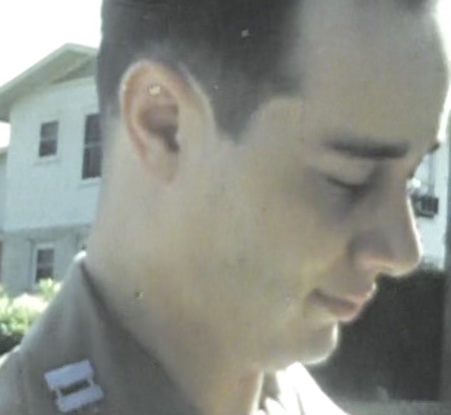
A Life Well Lived

A great man has left us. The world will not be the same without him. Last Thursday Dr. Efrain Garcia took his last breath under the watchful care of his daughters. There is so much to say about this incredible man that words seem inadequate. How does one describe a living saint, a loving husband, father, friend, doctor, educator and humanitarian? Dr. Garcia was one of the most talented and dedicated cardiologists to ever work in the Houston Medical Center. His extraordinary skills brought kings and presidents and people from far and wide seeking his help. His story is the stuff of legends and yet he was a humble man who epitomized the virtuous life. He healed the hearts of those afflicted with disease and brought comfort to them as well . 

Efrain Garcia grew up in the mountains of Puerto Rico in the town of Lares. His was a large and happy family that somehow knew that he would do something special even when he was still a young boy. He was earnest and kind and brilliant. He finished undergraduate studies early and then entered the University of Puerto Rico College of Medicine where he became the youngest person ever to graduate from there with a medical degree. He joined the army to continue his training as a cardiologist, serving in Korea and Japan and working at Fort Sam Houston in San Antonio, Texas where he met his future wife, Rosemary. 

Efrain and Rosemary, a beautiful nurse from Chicago, were married on my husband Mike’s eleventh birthday. Mike attended the celebration with his mother and father, who was Efrain’s “brother” cousin and close friend. He remembers the celebration with great joy because the newlyweds brought out a special cake for him and the wedding guests sang Happy Birthday. It was so like Efrain and Rosemary to think of others even on their special day. Theirs would be a blessed and generous union resulting in the births of five beautiful daughters who were the center of their lives.

I met Efrain Garcia when I was engaged to marry Mike. I was immediately enchanted with him. He was handsome, wise, and charming in a quiet and understated way. I loved listening to him or just sitting beside him and soaking in his calmness and stunning intellect. He was a man who measured his words to be certain that they adequately represented what he wanted to convey. He possessed an unassuming and reassuring strength that made everyone feel protected and loved in his presence. 

Over the years my admiration for our “Uncle” Efrain only grew. I witnessed his brilliance as a renowned cardiologist and his devotion to family. I marveled at his tirelessness in caring for people. Sometimes he would have sleepless nights working in St. Luke’s Hospital ministering to a patient. He would often catch up on his rest with brief naps sitting in a chair while his family bustled about. Somehow in spite of his busy life he managed to balance his ever more time consuming career with time spent with those he most treasured. Mike and I were lucky to be among that group.

Dr. Efrain Garcia worked for Kelsey-Seybold Clinic in the early days of its creation. He was a founding member of the Texas Heart Institute at St. Luke’s Hospital and eventually became its director. Along with Dr. Robert Hall he opened Hall/Garcia Cardiology, one of the most renowned cardiology associations in the nation. He was instrumental in extending the lives of thousands of people including my mother-in-law who had been born with a heart defect that might otherwise have caused her death before she reached the age of thirty. Instead, with his guidance and care she lived to be seventy six years old. 

Dr. Garcia was also the cardiologist for our next door neighbor, Dave Turner, who credited the good doctor with saving has life multiple times. Those who visited with Efrain professionally knew that he was compassionate, honest, and knowledgeable. He was a gifted diagnostician with an uncanny ability to explain what he had found in a kind but frank manner. Even after he had retired Dr. Garcia continued to provide his expertise without remuneration to the indigent patients of San Jose Clinic. 

Once Mike and I had both retired from our own careers Efrain and Rosemary invited us to accompany them to classes at St. Michael’s Catholic Church. Sometimes we would meet early to have dinner before heading for the theological lessons. I loved those moments when Efrain quietly discussed his philosophies about life. This is when I really began to know him as an exceptional human with a heart so expansive that it touched people far and wide. It was a gift just to be in his presence and I often found myself thinking that he had indeed been sent to this world by God to perform his good works, something his family had sensed even when he was a little boy. 

Eventually Efrain’s wife Rosemary became more and more ill. Efrain’s devotion to her was inspiring, The two of them moved to a home for seniors where Mike and I enjoyed visiting them until the pandemic came and we were no longer allowed. Rosemary died in 2022 and it was apparent at her funeral that Efrain was not feeling well. His own heart had begun to fail and he knew all too well what his future would be. He began gently helping those who loved him to understand that he was dying. He did this so bravely and with his usual gentleness. It was as though he was more concerned about how everyone was feeling than about himself. 

There is a gaping void in the world today. Dr. Efrain Garcia has died. He was a giant among us. His spirit resides in the comforting memories that we have of him. His contribution to the human experience is present in the thousands of families that he helped and the countless doctors that he trained. Mostly his influence resides in his daughters, sons-in-law and grandchildren. He was one of the greatest people that anyone who knew him will ever find. His was a life well lived and he shared it with a generous heart.

Make Texas Great Again!

Photo by nagaraju gajula on Pexels.com

I love Texas. I was born and raised in this beautiful state. I have been the recipient of the kindness of the people of Texas many times over. I worked as a public school teacher and administrator in the state of Texas. I earned both of my college degrees at the University of Houston in Texas. Texas is home to me and when I travel I always feel a sense of relief when I pull into my neighborhood. Nonetheless I find myself wondering if it is a good idea to remain in Texas, something that night not have ever occurred to me were it not for events of the past few years.

Texas politics are quite interesting. Most of the people in Texas live inside the cities, which are mostly run by duly elected Democrats, but the rural Texans vote in Republican blocks that keep the state offices firmly in the hands of Republicans. All too often the decisions made in the state legislature do not reflect the beliefs of the city folk and sometimes they even run counter to the kinds of things that we need. Of course that is the way democracy often works, but of late it seems to have become toxic to the very survival of our beautiful state. 

Texas encompasses a vast area of land that represents multiple ecosystems. We have beaches and mountains, swamps and deserts, forests and grassy plains. There really is something for everyone in Texas but years of conservative leaning government have left us vulnerable to the harsh effects of climate change which brought hundred degree temperatures to virtually every part of the state from June and into September. With little or no rain for weeks on end the landscape was shades of brown and water became scarce while the usage of electricity to keep the citizens cool threatened the grid that provides power to collapse. 

All the while far too many of the people who hold positions of power in our state ignore the extreme changes in our weather that are becoming more and more frequent and more and more likely to leave us in a never ending cycle of emergency. Instead they focus too much on culture war issues that have little effect on our quality of life and often are at odds with the needs and beliefs of a rather large swath of the citizens. 

On September 1, many new laws came into effect but none of them had much to do with the dangers that we face from climate change. Some even seemed to fly in the face of the realities of extreme weather events that have plagued us for months. For example, the state overrode the authority of cities to require companies to provide water breaks for workers who are laboring outside on very hot days. The irony of such lack of foresight became even more apparent when those workers were dealing with temperatures as high as one hundred seven degrees. 

In the meantime, the state of Texas took control of the largest school district in the state, Houston ISD, because a couple of schools did not raise their test score as high and as quickly as desired. The new rules that the state appointed superintendent and school board have implemented are so ridiculous that it boggles the mind. Teachers must read scripts for their lessons that will in turn be carefully times with clocks and stopwatches. Even papers will be graded by an aide rather than the teacher. Such measures take much of the humanity and creativity out of the educational process. Additionally no first day welcomes or introductions were allowed this year. Doors have to stay open so that classrooms can be carefully observed without notice.

The schools are being run with military precision and no thought of the feelings of either the teachers or the students inside those classrooms. Libraries are being used as discipline centers so librarians have been released to go to other schools or to perform other duties. Just as with the heat of the summer, the real educational issues are not being addressed. Instead instruction is being glossed over with rules and procedures rather than individualization for both teachers and students who are engaged in the art of learning. 

Universities are not immune to such oversight either, with tenure becoming more difficult to secure and more input as to what can be taught and how it should be taught coming from lawmakers rather than experts in particular fields. The result has been more than usual numbers of professors considering relocating to other states.

All of this kind of legislating is turning off a number of long time Texans who are beginning to wonder if it is time to move to a state that is more friendly to their needs. The irony of all of it is that our state motto is “friendship.” We have historically been a place where people came to find the freedom to be themselves. Somehow along the way too many people in Texas have lost their empathy for refugees from anywhere and so lawmakers seem more intent on legislating what we can or cannot do rather than in implementing ways to be innovative and dynamic. Their fixes tend to be quick, poorly considered and punishing. There is a sense that the elected officials are not working for all of us, but instead are pandering only to those who voted for them. That means that they are out of step without almost half of the citizens and it does not seem to matter to them. 

I am seeing more and more of my former students formulating ways to reestablish themselves in other places. They do not feel that their needs are being met in Texas and in fact actually believe that they will not have much of a future in this state. All of this saddens me. I am a Texans through and through who gets emotional when I drive through the state and marvel at its beauty. I love the people here but have slowly seen us dividing into two camps. I wonder how we have allowed ourselves to be so manipulated.

I long for the days when Texans were legendary for thinking out of the box and working together. Instead I see various groups coming under attack. I see our Attorney General being tried by his Republican peers for mishandling the ethics of his office. There is an angry attempt to undo our reputation as a refuge that welcomes those attempting to escape hardships. I wonder what it will take to make Texas great again. My beautiful state is in trouble and more than anything I want to save it

Don’t Wait To Think About That Tomorrow!

Photo by Nashua Volquez-Young on Pexels.com

I’m not a spring chicken, so I have seen and sometimes even experienced many of the difficulties that plague societies. My mother was a single woman whose income never reached a level that made life easy for her. When she became older my brothers and I realized that she needed to have more assistance with daily living. Since residing in a facility designed for seniors never appealed to her because of cost and what she saw as loss of freedom, we struck a bargain and invited her to take turns living with us in our homes. She was a rather thoughtful guest who made the situation as pleasant as possible for herself and for us, but I knew that there was always a kind of tension that threatened to burst forth and sometimes actually did.

My mother never wanted to sell her home while she was living elsewhere. Somehow she harbored a belief that she might one day return to her more independent life. While we knew that it was more likely that she would become less and less able to live alone, we quietly let her continue to pay taxes and utility bills for her empty house. Sometimes we took her there just to sit among her familiar things for a few hours. All in all we made the situation work, but realized that it was becoming less and less tenable for all of us. Serious discussions about next moves were on the horizon and we kept putting them off.

Now I find myself in a similar situation with my ninety four year old father-in-law. While he is desperately attempting to maintain his independence, we see him becoming less and less able to take care of himself. He certainly can no longer live alone, but like my mother he insists on keeping his home. The stress of continually driving across congested roads to check on his mail and the general condition of the house falls mainly on my husband, whose health is definitely declining so he should be shouldering fewer and fewer responsibilities, not more. Nonetheless we have made the situation work for a bit over a year now and simply respond day by day by to changes in both us and my father-in-law that are inevitable as all three of us age. 

I find myself thinking that our American society has created very few options for the care of older citizens even though we know that we have so many who are struggling in one way or another. Behold the resurrection of an old idea known as the additional dwelling unit or ADU. A trend in many parts of the country is to build a tiny house for older relatives near the family home of younger generations. Where there is enough land and zoning laws are not too restrictive, these places, sometimes called Granny flats, are revolutionizing the ways in which we look after senior citizens who are reluctant are reluctant to check themselves into the old school nursing and assisted living homes. People who have created such spaces boast about how much stress is removed from an often delicate situation when nobody feels that they have lost their independence or privacy.  

I actually teach mathematics to a group of students who live in an expanded version of ADUs. They have a large tract of land that houses the parents, grandparents and even siblings of the young family that hired me to teach their children. It is indeed a compound of many generations in which everyone has a private space while simultaneously being able to look out for one another without much effort. Everyone’s happiness is apparent in the joyfulness that comes from the reduction of worry and stress that they enjoy. It literally reminds me of Amish communities where families create compounds in which everyone enjoys the comfort of knowing that there are always caring relatives nearby. 

Another concept is co-housing, the idea of creating a community of townhomes or small houses around a central courtyard. Such places gather a mixture of young and old people who agree to look after one another while also having their own spaces for privacy. A high school friend of mine has been a leader in establishing such a co-housing project in the Houston area and his enthusiasm for the idea has captured my imagination. 

Even as we have found a steady routine within our now expanded household I am all too aware that our comfortable pace might be interrupted at any moment by any one of us becoming ill, facing a medical emergency. In my own case I worry about what might happen if either I or my husband become temporarily incapacitated while looking after my father-in-law. I also am fully aware that as the clock ticks for him it becomes more and more likely that he will be less and less able to do things for himself and those times will most certainly come. As my husband and I also age the problems will begin to compound themselves and we do not yet have any kind of plan. I

In spite of friends’ comments that I am a saint I know all too well the worries that cause me to panic over what my imagination thinks may lie ahead. My anxieties suck the joy of life more often than I want to admit and I suspect that it is so with anyone dealing with an aging parent. Happily some people have been innovative in dealing with the problem and we might all learn from them.

I don’t know where my own situation will lead. My mother died before things became dire. My father-in-law does his best to blend into our routines. He too worries about what lies ahead. We all try to just think about those things tomorrow while I suspect we would be better served if we were to talk about how we should react to whatever happens before it happens. I plan to start those conversations with my adult children right now. I have learned the hard way how difficult it can be to meet everyone’s needs only when an emergency arises. Better that we broach those topics and find agreement that allows everyone to feel good. It’s time to have a plan so I don’t want to wait to think about that tomorrow.

The Power and Joy of Reading

Photo by Yaroslav Shuraev on Pexels.com

I have always enjoyed reading great novels, stories and poetry and then attempting to string words together to exercise my own feeble abilities at conveying great images. The best writers among us are originators. They have the ability to describe thoughts, people, places and moments with the eye of an artist. They manipulate phrases in unique ways to make statements that speak to every human who reads them. They are verbal dancers twisting and turning seemingly lighter than air itself. I love discovering the nuances of their ideas and being forever changed from the mere act of parsing the prose or poetry that they have set down in combinations and permutations of letters of the alphabet that transform into great thoughts. 

Thanks to my father, a collector of texts of every kind, and my high school English teacher who challenged me to read genres and authors unknown to me, I walk through bookstores noting the hundreds of books that I have read. Seeing them stacked on tables designed to capture the interest of novices who have yet to open their pages, is like encountering old friends. While I may not have been in touch with them lately, they live lovingly in corners of my heart. 

Reading is a sensual experience for me. I want to not only see the pages but also to feel them, to catch a scent of the paper and ink that that captures the essence of our shared human experience. For me it’s not just the bare bones of the story that seizes my attention, but the opportunity to meet and understand new people who leap from the pages. A great book has the power to transport me to other worlds, other universes inhabited by characters both perfect and frail. I want their stories to be fairy tales with happy ever afters while also knowing full well that reality is rarely like that. Nonetheless I love them so much that it crushes me when they fail. 

I find solace inside bookstores and libraries. When my anxieties are driving me to the brink I need only walk among the volumes demonstrating the glorious creativity of the human spirit. There is something soothing about the simple act of being surrounded by the multitude of compositions created by brilliant minds. Those texts unite me with authors who knew a different kind of world centuries ago but somehow shared the same longings that most of us feel today. The universality of our hopes and feelings helps me to realize that even in the darkest hours of my life I have never really been alone. The voices of the ages reach out to me to make me laugh or cry or simply learn. 

I truly believe that each of us should read more, not less. I celebrate the gift of literacy. The fact that I can read and write is no small treasure. It frees me from the bonds of ignorance. It makes me equal in possibilities with the richest and most powerful persons in the world. I am allowed to consider new ideas from people distanced from me by time and place, but not by thought. Reading truly is power. Being able to express my own ideas through writing is even more incredible. 

I have sometimes taken my freedom to read and write without restrictions for granted. I have lived in a time and place that has allowed me to seek knowledge unbound by censors. It has been an exhilerating experience, but of late I see that if I am not diligent things might change. I suppose that there have always been people who believe that we would be better served by policing ideas and topics that make them feel uncomfortable. They want to enforce taboos out of fear that there is something unhealthy about peering into descriptions of thoughts, places, actions, people who challenge the status quo. They fear that too much knowledge of controversial lifestyles and beliefs may infect our hearts and minds to the point of destroying our civilization. If they were better read they might realize that the opposite is true.

Stifling the human spirit, pretending that there should only be one way of thinking has always been the downfall of individuals, organization and nations. Dystopian novels are popular because we understand that humans with too much power and sway over the populace are the problem, not the differences that we inevitably have. Each of us should be able to choose the kind of existence that suits us best and reading provides us with unlimited examples from which to choose. 

There is much ado about nothing in schools these days. Concerned and no doubt loving parents want to monitor the content of lessons and the texts used to convey them. The problem is that all too often they insist on eliminating or banning books and theories that they do not personally like. Instead they would do well to prohibit only their own children, not the progeny of others who have been changed for the better by reading To Kill a Mockingbird or Things Fall Apart. I want those I love to have the same opportunities to browse freely through a library that I had. I am the person I am today because my parents and my teachers taught me to have an open mind, not one who is afraid to read or hear about the dark side of human nature. I have been able to navigate the tragedies of my own story because I have so intimately known the characters portrayed honestly in the books I have read. They prove to me that my personal trials are not unique. They provide me with courage.

My father read his newspaper in the morning before he left for work. He seemed to rarely be without his nose intently aimed inside a book. I saw the joy that he felt whenever he pointed to his collection of volumes that would not doubt have grown had he lived. I suppose that even in his death he left me one of the grandest lessons of all. He showed me the power and the joy of reading. It has served me so well.

What Is DEI and Why Should We Care?

Photo by Matheus Viana on Pexels.com

Diversity, equity and inclusion are three words that are often misunderstood and even feared, especially when they are used in the context of education. Just what are the real meanings and intent of DEI efforts in the worlds of business and academia? Why are they suddenly creating so much furor in politics?

Diversity is often defined as “the practice or quality of including or involving people of different social and ethnic backgrounds and of different genders and sexual orientation.”  It has in many cases become a goal of workplaces, schools and universities to design training and educational opportunities for the communities of workers and students to widen their understandings of people unlike themselves. At times it has also been a reason for recruiting a variety of people from differing backgrounds with the goal of more closely mirroring the reality that there is no one group whose culture and philosophies should dominate any society or institution. Up until recently efforts to become more diverse have rarely been questioned, but presently ultra conservative groups are expressing their concerns through legislation that limits and sometimes outright bans such programs.

Equity is likewise defined as “the quality of being fair and impartial.” Given our past history there have been efforts to right some of the wrongs and defects of our fairness and justice, particularly in our judicial systems. There are now laws that protect groups in the workplace and strive to insure equal opportunities for all without discrimination. Universities have offered courses that focus on our nation’s evolution of fairness and its impact on particular groups. Such offerings were meant to enlighten workers and and students, to teach them about injustices that they may not have known. Equity became an integral effort not just to become more just but to understand why it is necessary to make changes in the way we view people unlike ourselves, to understand their histories and challenges. Such programs are also currently being challenged particularly in schools and universities.

Inclusion is “the act or policy of providing access to opportunity and resources to people or groups who might otherwise be excluded or marginalized.” Inclusion efforts include those with disabilities and minority groups who have often been underrepresented. More recently they have also focused on those with differing gender and sexual preferences.

It’s difficult for me to understand why anyone would think of DEI programs as being dangerous enough to warrant outlawing them in our public educational systems. As I think back on my own lifetime I know all too well that without mandates to encourage diversity, equity and inclusion entire groups of Americans would have little or no access to certain jobs, schools or societal institutions.

I am of a generation that witnessed cruel racial injustice and segregations. I have seen young women being harassed for attempting to prepare for formerly male dominated careers like architecture or engineering. I have lived long enough to know of the cruelty inflicted on those whose sexual preferences were deemed to be somehow evil. I know all too well how isolating and demeaning those former practices often were. It was through the concerted efforts of DEI programs as well as legislation that we became a kinder and more informed society. Through such efforts our worldviews and our institutions were transformed in ways that allowed a beautiful variety of thought and culture to bloom and flourish. 

Democracy for all should be more than just an ideal. It takes hard work and education to make everyone feel respected, understood, part of the great American dream. We are a huge country spanning from one great ocean to another. It is all too easy to simply live in ignorance in our own little bubbles. While it may feel more comfortable not to have our thinking and our beliefs challenged, it is not the way to build a strong and equitable nation. For far too long in our history white Anglo-Saxon Protestant males dominated every aspect of power and opportunity in our country. While that was simply the accepted norm of the times, it created problems for anyone who was excluded from that group. Over time we corrected those errors and it would be a mistake to return to a time when one group was more dominant and valued than others. 

We are a nation of many people with many different histories, cultures, and beliefs. We have slowly and often with great pain become more tolerant of those differences both in our personal lives and our public institutions. Turning back the clock by banning books, disallowing our young to learn about the importance of diversity, equity and inclusion will stifle the progress we have made.

Learning truths can be painful but not nearly as much as hiding either our flaws. Having difficult discussions about our differences builds bridges. Avoiding such topics creates walls. We should never be afraid to introduce our young to an honest rendering of history or current events. As an educator I know full well that they are thirsting for truth from us. My experience is that young people are most upset when they learn that we have been hiding reality from them.

Educators rarely force their thinking on their students. In most case they simply introduce them to differing points of view and then allow them to form their own conclusions. Any time I have witnessed “grooming” it has mostly involved sincerely religious individuals attempting to convert nonbelievers to their faith. Most teachers instead encourage their students to debate ideas, to look for the pros and cons of philosophies. They teach students how to question texts that they read. Teachers actively demonstrate the skills of critical thinking by offering multiple points of view. If this widens the horizons of the students all the better, but only a scant few educators have political agendas which they force on their pupils. If the students have been exposed to the ideals of DEI they spot the propaganda immediately just as my seventh grade teacher taught me to do.

I am saddened that my state has passed laws limiting DEI programs in our public schools and universities. These politicians have created a state of chaos and confusion as teachers and professors worry that their curriculum will somehow land them in trouble. Much of the furor is being directed under the guise of parental rights, but all too often those parents most likely to urge the banning of books or ideas are actually wanting to force their own thinking on all students. It is a sad state of affairs when some of our best and brightest teachers and students are looking to move to other states out of fear that somehow our fine institutions have been forced to move backward rather than forward. We had so much of which to be proud that is slowly being dismantled by fear induced propaganda that is so sadly untrue. 

I suspect that the current state of affairs is just one more chapter in our country’s history. My hope is that we will one day come to our senses and move from the restriction of ideas that is currently being forced upon us. It is the product of fears being stoked by individuals who seek power. By creating culture wars among the populace they hope to gain ascendency. They know that if we teach diversity, equity and inclusion well we will not fall prey to their tactics. I believe that they are enforcing ignorance on our young to keep them in line. My seventh grade teacher who taught me to be aware of such things would be appalled.