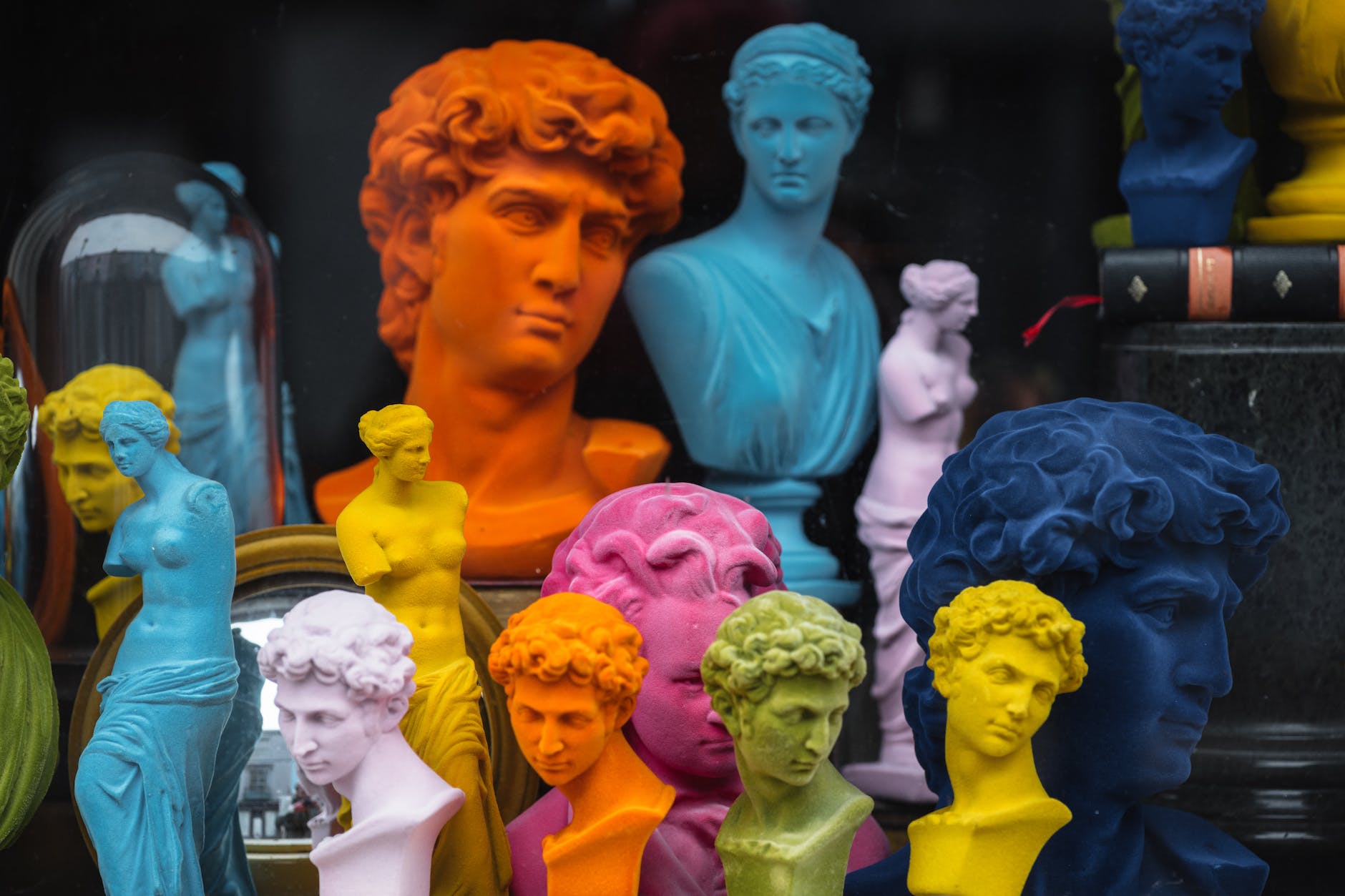
Pioneers

Photo by Jesse Zheng on Pexels.com

As a child I often chose books about pioneer life. I was fascinated by hearty souls who lived off of the land and endured loneliness and hardship while forging a new life far away from family and friends. I was also fascinated by biographies of saints who experienced martyrdom for their religious beliefs. I suppose that what I really enjoyed about these kinds of stories was my own admiration for people who are so dedicated to a particular cause or way of life that they refuse to allow challenges and even death to sway them from their goals. My heroes have always been courageous folks with original thoughts and an unwavering allegiance to ideals. 

There is a common thread that binds me and my role models together starting with my maternal grandparents who fled the oppression of a government intent on erasing their culture and their language by force. They arrived in the United States of America only months before Europe became a senseless tinder box of war between neighboring nations. Like the pioneers of old that had so captured my imagination they headed west on steamships heading for Galveston, Texas where they embarked on new adventures in a place where they only had each other. 

I never met my maternal grandfather, but I often heard stories about him and his hard working spirit and love of freedom. He taught his children the value of education and urged them to fully embrace the country that was not always so welcoming to him. With sadness he watched his homeland of Slovakia struggling to free itself from the power struggles that had prompted him to leave. He did not live to finally see his nation become independent, but it was a dream that never left his thoughts. In the meantime he urged his children to take full advantage of the possibilities afforded them simply from being born American citizens. He understood that in the United States they would enjoy freedoms and safety that had often been denied to him as a Slovakian living in the Austro-Hungarian Empire. He was a pioneer in this land of opportunity. 

My mother understood and heeded her father’s message to his children. She taught me and my brothers to be proud of our country, but also to be willing to point out its flaws and to feel free to work for changes that would help others. She was strong and unafraid because her father had taught her to hold her head up high and to ignore the taunts hurled at her because she was the child of an immigrant. She was a bold defender of her beliefs. Her heroes were individuals like Eleanor Roosevelt. She was infinitely outspoken and unwavering kind, unwilling to look away from problems that others might have simply swept under the rug. She was the first person in her family to earn a college degree, an often uneasy task given her propensity to challenge the status quo even with her professors. 

I most admire those who are willing to endure hardship, sometimes facing violence for their courage. I think of Galileo’s insistence on standing by his scientific discovery that it is the sun, not the earth that is the center of our universe despite the cruel treatment of his inquisitors. I imagine Dr. Martin Luther King Jr. sitting at his kitchen table asking God to help him decide whether or not he should continue the dangerous task of advocating for the civil rights of humankind. I wonder how someone is so incredibly brave and devoted to a cause that he or she is able to stand up to the taunting of bullies and ignorance. 

Of late I have had the highest regard for Dr. Peter Hotez, a professor and researcher at Baylor College of Medicine and Texas Children’s Hospital. Throughout the pandemic he devoted and donated hours of his time speaking to the American people about the Covid virus, noting its trends and explaining how to best deal with it. At the same time he and another doctor were developing a traditional vaccine for the virus that might be used in remote areas of the world where there is no refrigeration. He not only accomplished his goal, but he then offered to give the formula for the vaccine to any country or group who wanted it without cost or any strings attached. 

Since his vaccine was approved and ready for distribution tens of millions of people in places across the globe have been vaccinated. Dr. Hotez has not received a dime of remuneration. Instead, for his efforts, he has almost daily been ridiculed and threatened with violence from ignorant souls who accuse him of nefarious intentions. Somehow he finds the fortitude to continue his work with dedication. He is my newest hero. I am in awe of his energy, his sense of humor and his love of all people everywhere. 

The world is filled with pioneering spirit. The ones I love are not greedy land grabbers but those who want to peacefully exist in concert with their fellow humans and nature. They are the discoverers, inventors, and profiles in courage. They see problems and tackle them. They see injustice and point it out even if it means standing alone like Liz Cheney has done in fighting for the very heart and soul of the country that my grandfather so loved. Her willingness to give up everything that she held so dear in defense of the Constitution and democracy is breathtaking. While I do not always agree with all of her points of view, I stand with her as she puts country before personal gain. She is a modern day pioneer and martyr, someone who has my deepest respect. I suppose that one day a little girl will be reading about her and others like her. I hope that they will be as influenced by such stories as I have been.

We Are Mostly the Same

Photo by James Wheeler on Pexels.com

Sometimes a television show or documentary is transformative. One evening this month my family sat down after dinner and watched a documentary on Netflix called Aftershock: Everest and the Nepal Earthquake. I remembered briefly hearing about the event back in 2015, but I have to admit that it did not really register that much in my mind. I suppose that I assumed that given the location of the disaster it had not affected very many people. I knew about Kathmandu but thought that it was little more than a remote little village. I was wrong in every assumption that I had made. 

The three episode program focuses on the people caught up in nature’s fury on Mt. Everest, in Kathmandu, the capital of Nepal, and in the tiny village of Langtang Valley. All three of those places experienced devastating tragedy that is captured with first hand accounts of survivors and footage taken before, during and after the earthquake. The film challenged my emotions in a way that I did not expect.

Hundreds of people were camped on Mt. Everest just below a dangerous ice flow that had to be traversed with ropes and ladders. Teams of guides helped individuals who had paid upwards of four hundred thousand dollars each for the privilege of attempting to reach the summit of the majestic mountain. The area, known as Base Camp was filled with tents and equipment, including a food hall and a medical area. In the early morning hours many of the climbers had already begun their treacherous ascent, reaching Camp 1 just as the earthquake sent an avalanche of snow and rock down the mountain resulting in deaths and injuries in both of the base and first camps. Those higher up had no way back down because the path that they had followed up was gone.

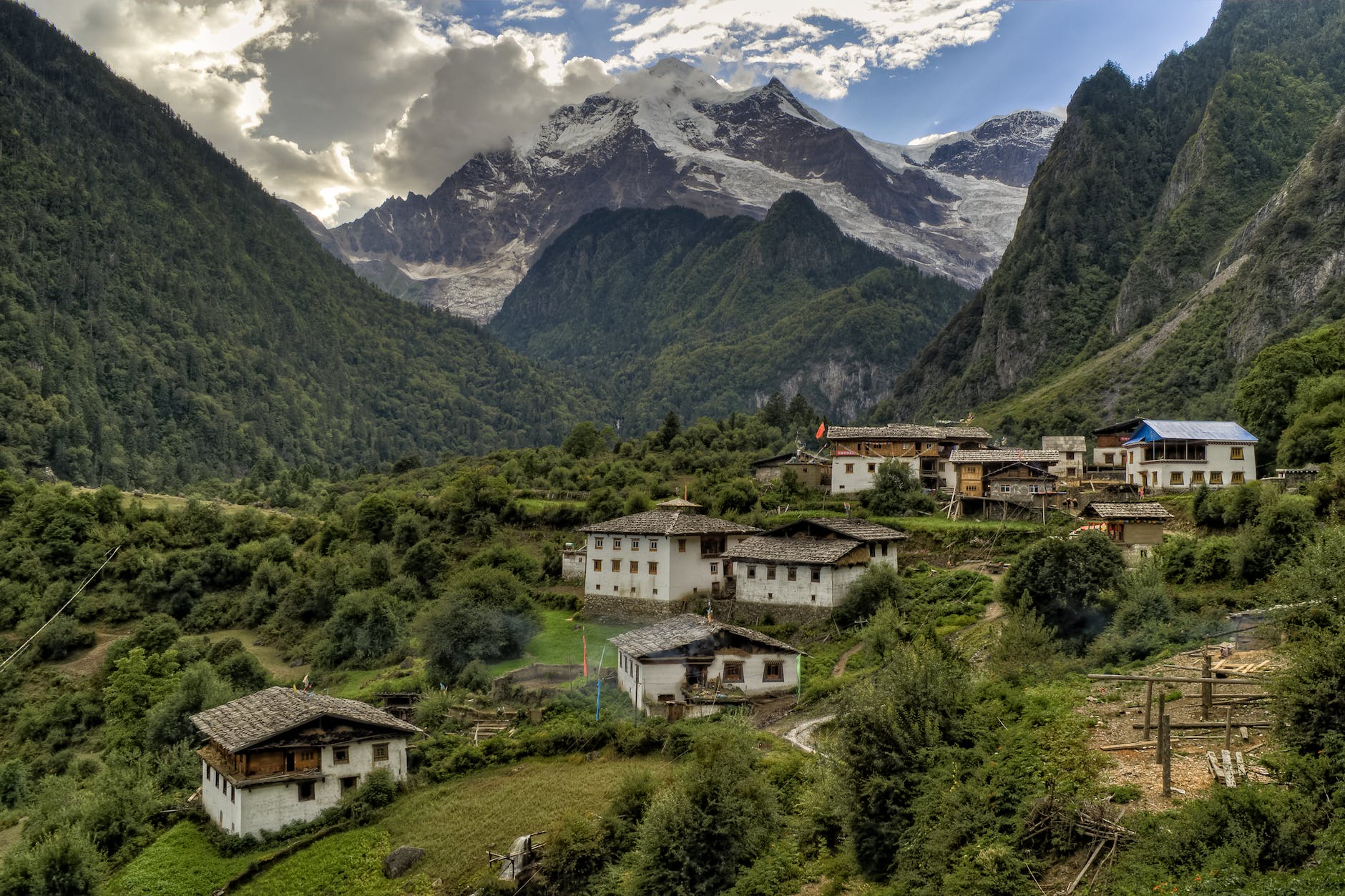
Meanwhile there was a tiny village in the mountains called Langtang Valley. The only way there was a hiking path. It was a picturesque place with spectacular views. A group of Israelis had gone there to see if it was as lovely as it had been described. In fact, it turned out to be better than they had imagined. Being adventurous they decided to continue their journey to the next little town before returning to the foot of Mt. Everest. The earthquake hit while they were a bit higher up than Langtang Valley. When they turned back to take the path that would lead them out of the valley they saw that the village of Langtang was covered in mud, ice, and rock along with all of the people who had lived there. There was literally no sign of civilization and no way out.

I learned that Kathmandu is a large city with millions of people. The quake there took down entire buildings where people were trapped under rubble. The scene was so overwhelming that first responders had no idea how to even begin rescue efforts. 

What struck me most about the documentary was the human element. It reminded me of how we humans are more alike than we are different. We may speak different languages, have different cultures, and come from different income levels, but in an emergency situation we all react in similar ways. We experience fears but also want to help those who are hurt. We grieve more for loved ones and even strangers than for the loss of material goods. We have helpers and we have those who take advantage of the situation. All three areas featured in the film became microcosms of the human experience. 

We too often become so tied up in everyday living that we become isolated in our thinking. We want to protect our own and we see people from other places as outsiders. We tend to assume that we don’t really have any responsibility for them. We eye them suspiciously and only see their differences rather than the ways that they are exactly like us. It often takes a disaster to bring us together and even then, if the tragedy occurs far, away we may have difficulty understanding our duty to help our fellow humans. 

I know that we can’t be all things to all people, but we should be capable of understanding that the trials and tribulations of life happen to each and every one of us regardless of where we live or our economic status. I suppose this is the aspect of the program that burrowed the deepest into my heart. It was a reminder that even in a remote part of the world there are people with the same kind of dreams and feelings that I experience. Perhaps we would do well to view them with more understanding and compassion.

I remember hearing from a friend who had once traveled to Nepal. When the earthquake there occurred he spoke of how loving and kind the people there had been when he visited. He urged us all to pray for them and to do whatever we were able to help to them. His plea did not affect me as much as it should have. I only thought of how nice he was to think of them. I realize now how very ignorant I was in that moment because I truly thought that only a tiny number of people had been affected.

We are all members of the human race. We live and breathe and love and laugh and suffer in our time here. The world would be a much better place if we were to set aside our differences and share the earth and its treasures. When disaster comes the people wealthy enough to spend forty thousand dollars to climb a mountain are no different from the poorest souls trapped under the rubble of a building. They all become brothers and sisters in that moment of tragedy and death. How wonderful it would be if we were able to remember that reality even when the days are mundane. We should make it a daily practice to look around where we live and even far away to see who is suffering and then do something to help. One day it may be our turn to need the kindness of strangers. Hopefully when that happens we will have already done our part to be compassionate when others were seeking refuge. We should daily remind ourselves that no matter where we look in the world we are mostly the same.

Remembering Our Roots

Photo by Benni Fish on Pexels.com

Earlier this month we hitched our trailer to our truck and drove east to Beaver’s Bend State Park in Oklahoma. We parked our home away from home under the shade of enormous pines and just sat around doing a whole lot of nothing for the next four days. We were joined by my brother, sister-in-law and their son and his sweet little family. We had no goals, no plans, no agendas. We simply sat and talked and laughed and listened to the wind blowing through the trees and the crows cackling away. We shared the cooking duty and feasted on arroz con pollo, jambalaya, and beef and noodles. Sometimes we simply soaked in the silence and enjoyed the fact that we had no appointments or schedules pushing us from one task to another. 

We live in a frantic world that is almost always filled with uncertainties and obligations. It’s often difficult to find the time to unwind and consider what is really important, like watching a little baby laugh or sharing stories that allow us to get to know each other better. Our calendars are filled even in retirement as though the idea is to just keep moving to prove that we are alive. It’s not often that we have the unadulterated pleasure of doing absolutely nothing other than being present in a lovely moment, but we did on that weekend in October.

I thought of my grandfather and his stories of working in Oklahoma when he was a young man. I wondered if the places he encountered were as lovely and as wild as our campground. Oklahoma is where he met my grandmother and where my father later went to junior high. I felt that somehow I must surely have a kind of kinship with the place. My family has roots there that Grandpa often spoke of in his stories that always enchanted me. 

My grandfather had traveled from state to state finding work when he stumbled upon a coworker who insisted on introducing him to a nice widow who also happened to be an extraordinary cook. The two men forged a kind of plan for the meeting that included eating in the boarding house where Grandma worked. After enjoying a tasty dinner my grandfather insisted on seeing the person who had created such culinary delights. According to his account when my grandmother came from the kitchen he felt the joy of love at first sight and he told his friend that he was going to marry that lovely woman. Thus my grandparent’s story began. Mine would follow from theirs.

Grandpa would never stop telling stories about Grandma and how she was his best buddy. They had two children together and also cared for my grandmother’s daughter from her first marriage. I’ve often wondered if her deceased husband had died from the Spanish Flu because he died in 1918 when the virus was decimating the world. She never spoke of him and I never thought to ask. Her devotion was to my grandfather and to her children and many grandchildren. She lived in the present, not the past or even the future. Every day was a special adventure for her and her love of simple things was enchanting. 

My father and I have such high cheekbones that I once imagined that we had descended from native Americans, perhaps a tribe from Texas or Arkansas or even Oklahoma. It was a silly thought resulting from a time that we lived in Tulsa, Oklahoma when I was no more than about four or five years old. My father often took us to watch the ceremonies of the people who had once roamed over the plains of Oklahoma and proudly honored the land. Daddy and Grandpa both had so much respect for the native people that I became fascinated and also horrified by the history of those who were the original settlers in the land we call the United States of America. 

Grandpa often spoke of his days working in Oklahoma at the beginning of the twentieth century. He lamented the injustices that he saw perpetrated on the native people. He told us about men who traded car batteries for land that they suspected might be rich with oil or soil for growing crops. It angered him to see such dishonorable things taking place. Even as he neared his one hundredth year of life on this earth he wondered how anyone could have been so very unfair. 

Our camping trip was a lovely success. We got to know each other even better than we already did. We spoke of our shared history and the people who came before us to demonstrate how to live good and honest lives. They had quietly modeled the behaviors of handwork, integrity, and most of all devotion to people and learning rather than riches that became our own goals. Our storytelling grandfather had taught us with his tales whose themes always centered on the glories of being fair and compassionate. We revelled in the memory of his folksy philosophies.

It was with a bit of regret that we left our wooded haven to return to the faster tempo of our lives, but we were refreshed and reminded of who our ancestors wished us to be. They were hearty souls who shouldered both the joys and the challenges that came their way with determination and a sense of joy. Oklahoma had comforted us in the knowledge that we were from good stock and that no matter what might happen in the future we will know how to survive together. We must remember to return again one day. It is good to remember our roots.

Peering Into the Future

Photo by Anete Lusina on Pexels.com

I never had one of those Magic 8 balls as a kid, but I took advantage of the ones owned by my friends. It was delightful to ask a question about the future then watch a promising answer appear in the liquid that seemed to predict my fate. Of course even then I understood that there really is no crystal ball and that no fortune teller is actually able to see into the days and years ahead. What is more likely to indicate what will happen over time is good old mathematical data analysis aided by a computer. 

Actuaries have used the math of statistics for decades to determine rates for insurance and pay outs for pensions. We’ve used science to predict the weather and to measure changes in the climate. Still, we have yet to determine a way to reliably predict the outcomes of our human interactions. The quirks of our personalities make it impossible to know when a violent act will occur or if an underdog will suddenly burst forth in glory. We humans are an interesting bunch, too complex to determine what our future outcomes might be. 

I suppose that even if there were a way to foretell what will happen with individuals, it would be best not to know. Such prophecies might no doubt become self-fulfilling, killing character traits like determination even in the face of defeat. Why bother working hard if one already knows that doing so would be without consequence? How dreary life would be if it felt as though every aspect of who we are and what we become has already been predetermined. It is in the not knowing, the possibilities, that we often become our very best. 

We love heroes and stories of heroes, especially when they feature the underdog. Who would have thought that a former comedian running a small country in Eastern Europe would demonstrate so much courage and leadership in a war against a world power? We daily watch Vladimir Zelensky standing firm and tall in his resolve to defend the freedom of his citizens. Would a crystal ball reading from a wandering psychic have led him to this moment any better than the simple love of his country and its independence? I think not.

Chrystal balls do not show us how to live, but our hearts and our heads often do. When we put them together we can create a mighty force. Using both our senses and our sensibilities is necessary for making important life decisions. Science and math should have a place in our daily lives, but our intuitions also help us to know how to proceed toward our futures. If we have evidence that our actions are destroying the planet, we can adjust the way we use resources and participate in the effort to slow down the rising of the temperature. If we think that we should not worry and that such is the problem of future generations, we may only contribute to creating a mess that will be difficult for our great grandchildren to handle. We have the ability with logic and love to interrupt the inevitability of droughts and mighty storms that destroy the planet.

I once heard that researchers were close to having tests that might determine which babies would grow up to have mental illnesses and other diseases. While this might sound like something rather miraculous, medical ethics have yet to embrace such ideas because of the feeling that it would be devastating to classify a newborn by the genetic structures that may or may not eventually affect his/her health. Imagine parents constantly looking for signs of disease that may never actually materialize. iI would be a terrible way to live. On the other hand, those parents would be better served to provide their child with a well rounded balance of love, healthy eating, exercise and stimulation of the brain. 

There is no certainty in anyone’s life, but there are ways of living that are more fulfilling than others. Teaching children how to be resilient when disappointments and losses come their way is critical in predicting their ability to withstand challenges. Showing our young how to think, how to be determined and how to be kind are skills that most often lead to future well-being. We may not have the power to predict the future, but we in fact know how to nurture our young to make them strong of mind, body and heart. 

Our world is changing before our very eyes. This is as inevitable as the rising and setting of the sun. We cannot be masters over all of the world’s events, but we can respond as helpers and builders rather than victims. We determine our own futures by the ways that we interact in every moment of every single day. We don’t need crystal balls to guide us. 

Stephen King wrote a thriller about a man who was able to walk into the past with his knowledge of the future. He found himself in Dallas, Texas just before the assassination of President John F. Kennedy. He became obsessed with stopping the killing. What he found was that changing the outcome of events also changed the trajectory of every aspect of the world. In the end he learned that it is best just to leave things as things as they were. 

Humans have always been fascinated with the idea of peering into the future when doing so would make our lives so much less exciting and meaningful. In truth we are much the better for just taking on each day with all of the joy and even anxiety that living entails. Life is a journey, an adventure. Best that we enjoy the ups and tackle the downs and just move forward as confidently as we can. Have fun with that Magic 8 ball, but don’t take it too seriously and laugh no matter what is says.

When David Met Goliath

Photo by Olga Lioncat on Pexels.com

One of the most enjoyable moments of my teaching career happened when my principal asked for volunteers to coach a group of students who would participate in an Academic Pentathlon. Unlike the ten event contests in which high school students compete this was a scaled down version of events centering on an historical theme, a particular book, writing, mathematics and science. I joined a team of teachers tasked with training the students and in the process I learned a great deal about myself, my fellow teachers and the kids that we guided through the process. 

Our first year was a bit of a disaster. We were a ragtag group that lacked cohesion and a clear vision of teamwork. The rules demanded that we have an assembly of students who represented a cross section of those earning A, B and C grades. While their enthusiasm was initially high, we learned soon enough that they had very little background information on which they might rely. It was almost like forming a competitive basketball team with athletes who had never even seen the game being played. Our defeats during the initial trials were so brutal that our team wanted to quit and never think about competition again. It took a gathering at a swimming party hosted by one of the coaches to convince the students that we all needed to stick together and push to get better and better. 

The following year we convinced the principal to purchase team shirts for everyone. We insisted that the shirts have collars and included the names of the students embroidered in classic script on the front. We created a dress code for contests that included wearing the shirts with khaki pants, belts and clean shoes. We understood that out kids had previously felt anxious when they encountered students from wealthier schools than ours. They would hang their heads and be overcome by negative feelings as they scanned the groups who appeared to be exuding the kind of confidence that they struggled to find. 

In the meantime we worked harder than ever on preparing the students for the tests of their academic skills that were to come. We realized that we had to shore up the knowledge and skills of our students with practice, practice and more practice. We left no stone unturned, teaching them how to write essays that included their own stories and voices. We played games of trivia and problem solving that helped them to understand the strategies for quickly uncovering the answers to questions. We trained like Olympians and widened their horizons beyond the insular sameness of the community from which they came. 

They were mostly Hispanic boys and girls whose families spoke Spanish at home. They were generally economically disadvantaged and lived in houses devoid of print material or discussions about literature and history. What they did have was grit and pride in who they were. We used those qualities to convince them that no matter how things had turned out the previous year they could be contenders for the prize. 

I remember riding the bus to the final competition on a spring day. The students looked fabulous in their team shirts. They were impeccably groomed by their proud parents. Some even had brand new shoes for the event. All of us were as excited as a football team about to play for the national championship. As the bus took us past beautiful homes the likes of which few of our students had ever seen we could feel their confidence fading.

When we arrived at a school building worthy of a college campus the mood inside the bus was somber. We had to rally our team even before walking into the meeting area were other teams were already assembled. Each coach reiterated how prepared they were and how confident we were they would excel. Then we insisted that they walk inside with their heads held high. We told them to imagine being the team that everyone else would have to beat. We saw the lights in their eyes return.

As we led the team to their assigned gathering place we heard whispers that soon became audible as one group after another wondered aloud who these titans were. “Could they be from a prep school? Were they some elite team that would take them all down?” I felt a smile creeping across my face and when I turned to view my team I saw that they had remained serious and had the look of academic warriors who somehow knew that they were going to win. They were literally staring down their competition with a confident air. 

Soon the games began. Our coaching duties were done and we could only wait while our students participated in the various contests. When they finally returned each of them was excited. They felt victory on the horizon. They had not wavered and they knew that their prospects were good.

While the scores were tallied we enjoyed a celebratory lunch. We congratulated our team on making us proud with their hard work, enthusiasm and discipline. We insisted that they were winners no matter how the scores panned out. We went to the awards ceremony feeling a sense of great accomplishment. 

We listened with bated breath as the winners for each category were announced. We managed to place in the top three in mathematics and science. Our team had been second in the historical competition. Then came the biggest boost of the day as we learned that one of our students had come in second in the writing portion and another had written the first place essay. We went wild with joy. 

We did not win the overall contest but we did place second, a feat that none of us might have imagined only one year before when our ragtag team barely showed in any category. I saw the glow of victory in our teams’ eyes and the realization that together they had accomplished something bigger than any one person. It was my proudest moment as a coach, not just because we had been victorious, but because our students had been profoundly changed. David had met Goliath and been victorious. The moment altered the trajectory of life for us all.