Waste Not, Want Not

Photo by Leonid Danilov on Pexels.com

I grew up around people who had endured war and privation multiple times. My grandfather often spoke of the hardships of a depression that occurred during his boyhood. This was before the dawn of the twenty first century just as the Industrial Revolution was changing the face of America. Grandpa always insisted that while the Great Depression that began at the end of the nineteen twenties was bad, it was nothing compared to the horrors of the economic collapse of his youth. 

Grandpa recalled seeing Coxey’s Army on its march to Washington D.C. and told of how people from his little slice of America joined the rag tag group in the hopes of brining about change in the economic distribution of wealth. He told us stories of people literally starving who were reduced to stealing just to keep their families alive. 

Grandpa was well-versed in how to navigate a depression like the one that took place when he was the head of a family. He talked about how resourceful he and everyone else had to be to keep a roof over their heads and provide food for the table. This might mean traveling to Mexico to purchase fresh produce and then selling it for a small profit along the roadside. Survival was a family project where everyone did his or her part to bring in funds and conserve whatever bounty they might gain.

I once knew a man who was a bit older than my own parents who was hardly able to mention the depression without growing emotional. His family had barely subsisted on a lean diet of beans and cabbage. The experience was so vividly horrible to him that he would never again eat beans. The very thought of them make him nauseous. 

The Great Depression left such a mark on the people who experienced it either as children or adults that they tended to be strict savers for the rest of their lives lest another such moment come along. They were so frugal that they would set aside bacon grease to use instead of bottled oil. They had a universal tendency to reuse things like tin foil which they would wash and then smooth out for as long as it remained intact. They turned out lights that were not necessary, often sitting in the dark if they did not need illumination to read or to walk about the house. A constant commandment from my youth was the admonition to turn off the lights whenever I left a room

I suppose that I was influenced by the older generation that constantly reduced their footprint of consumption on this earth. I was taught to never throw away food, but to recycle it in different kinds of recipes. I used cardboard boxes to store my toys which necessitated only two medium sized containers at most. I grew up without air conditioning and even followed the unspoken rule of turning off the fans and any cooling unit whenever the temperature was amenable to just opening the windows and letting nature do its work. I took for granted that nobody needed more than two pairs of shoes, one for daily use at school and another for dressy occasions. The same went for the wardrobe that hung in my closet. I could rotate through every article that I owned in under a week. 

Of course I became spoiled when I left the tutelage of my mother and set out on my own. Little by little I adopted a more profligate standard of living. First came two cars for the family, a relatively unknown luxury for my parents and grandparents. Then came a bigger variety of shoes and clothing. I found myself filling my refrigerator with delicacies and extravagance. My single television multiplied into viewing spaces more than one room. I began with a small house the size of the one where I grew up and advanced to a home with more rooms that I will ever use in a single day. My air conditioner whirs away without rest all summer long. 

My idea of cutting back when things are a bit expensive would amuse my elders because in their minds I would still be living in a time of unimaginable consumption. Buying a chicken and using it in multiple ways would not negate the fact that I might purchase a steak that they would never have considered putting into their shopping cart. My willingness to forgo expensive cups of coffee or tea from a drive thru would not impress them as sacrifice because they were of the inclination to reuse a tea bag more than once or make their coffee thinner by using fewer grounds to prepare it. They would wonder why I get exactly what I want at the grocery store and then balk at the cost rather than choosing less expensive albeit edible substitutes. They would have stayed at home most of the time instead of griping at how much gasoline costs. They would have made the sacrifice without even thinking because the tendencies to make do and spend less seemed to be baked into their DNA.

Of late I have found myself feeling a bit guilty about the ways that I have abandoned the examples of the adults who taught me how to live a good life without lots of things. I’m attempting to relearn how to conserve money and resources, but my bad habits have endured for so long that it is a bit like trying to lose weight. I take two steps forward and three back on far too many days. I’ve been attempting to find ways to just stick with what I have and be inventive with how I use things. 

I think it is just as crucial to pull back on my expenditures for the purpose of saving money as it is to conserve resources to save the earth. I really don’t need all of the things that I sometimes buy. With looming food shortages in many areas of the world caused by the pandemic and droughts and wars I need to remind myself that I can provide healthy meals without meat or large helpings. I can begin a determined transition back to the deliberate attempts to conserve that my parents and grandparents once followed. 

I think that many of the ills of our current society have derived not so much from particular policies of government as from our own addictions to privileged ways. We take our riches for granted and and seem to think that our destinies should always lead to more money and more possessions. I have been as guilty of that way of thinking as anyone. Now I question the folly of gifting ourselves with luxuries just because we have become accustomed to doing so. Perhaps the current times are reminding us that we have a duty to preserve all of the people of the world and all of its precious resources for those who will come after us. Our legacy must be to stem the tide of conspicuous and profligate consumption that has become our taken for granted way of living. 

There is much to be learned from the past. If our ancestors were willing to navigate hard times with creative sacrifices then surely we can do the same. For now I am going to try. 
Try, Try, Try Again

Photo by andrew shelley on Pexels.com

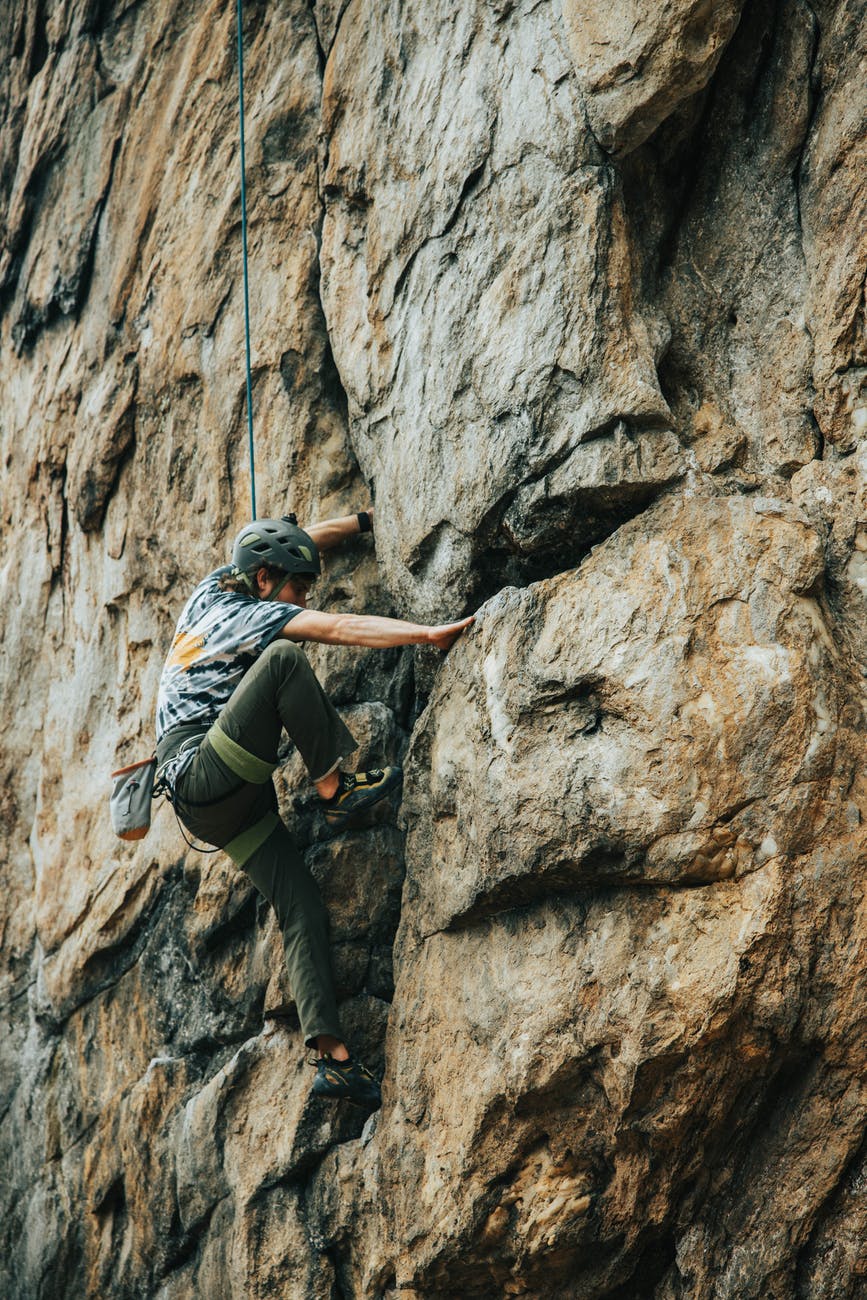
I have always loved stories of people who overcame setbacks. There is something quite inspiring about a person who has been knocked down by life’s challenges and somehow finds the determination to get up and try again. History is replete with tales of seeming losers who became winners. The secret to their eventual success seems to be in having a willingness to keep trying even when things appear to be hopeless. 

Who among us has not had life crushing setbacks? We all know someone who lost a parent as a child or lived in poverty growing up. We’ve heard of the athlete who got a chance to perform in the big leagues and then sustained a career ending injury. We know about people who thought that they had found the love of their lives only to end up emotionally shattered by a failed marriage. We probably also can relate tales s someone who appeared to be lucky in life and on the cusp of realizing amazing dreams only to watch them shatter in an instant due to circumstances beyond their control.

I know a young lady whose life-long goal has been to become a doctor. She is a brilliant woman, but somehow her college experience was more difficult than she had thought it would be. When she applied for medical schools she received rejection after rejection because her grades did not meet their requirements. Not to be discouraged she took a job as a medical scribe in a hospital. She learned medical terminology and impressed the doctors with whom she worked. They encouraged her to attend graduate school and get an advanced degree in Public Health, and so she did.

With maturity and experience added to her bag of talents she stood out as a student and graduated with honors. More work in a hospital caught the eye of doctors and nurses alike. When they heard that she still wanted to become a doctor they urged her to continue her quest and promised to give her outstanding references. To her great delight she was finally accepted into a great university, but fate interceded once again to thwart her plans. The grandmother who had raised her became seriously ill and she felt a responsibility to care for her rather than leave her on her own. 

The disappointed woman reluctantly gave up her spot in the school, explaining that she could not in good conscience leave the person who had devoted her own life to being a loving and encouraging caregiver to her grandchildren. For the next year my friend balanced her job in public health with the task of nursing her dying grandmother. All the while she believed that when the time was right, she would one day get another chance to go to medical school. 

As it happened the university that had accepted her was so impressed by her character and devotion to family that they offered her another opportunity which she readily accepted. This summer at a much more advanced age than the other members of her class, she will begin her studies in medicine. By the time she finishes all of the required steps she will be well past her mid-thirties, but she is unconcerned that her start will be late. She feels certain that she will one day be ministering to the sick and saving lives just as she has always hoped. 

I am in awe of people like this young woman. Instead of lamenting the setbacks that befell her,  she kept her eye on the prize. Like the tortoise in the fable, she understood that greatness does not usually come quickly. It requires patience and hard work. Every time she got pushed down, she got back up and dusted herself off. When some people told her just to accept that her dream would never happen, she refused to listen. She found alternative ways to get what she wanted. 

We often look at a successful person and comment on how lucky he or she is. In truth there is sometimes an element of being in the right place at the right time for some people, but for most it is hard work that gets them where they wish to be. If we watch them in action and analyze how they do things we will no doubt realize that they get to work early, stay late, never stop learning and don’t allow defeats to derail them. They are focused on being their very best, accepting critiques and changing accordingly. They build relationships and work as members of a team, valuing all people. They are often tired but exhilarated by the challenges that they overcome. What may look like luck is more likely good old fashioned determination.

Life’s disappointments and losses are definitely gut wrenching and pretending that they do not leave scars on those who endure them is unrealistic and cruel. Everyone has to heal from traumas and that always takes time, but it does not mean that all of their hopes for happiness are over. New love, new opportunities, new joy can come at any age but we won’t realize them without effort. Each new day gives us one more chance to try again. The climb to the realization of our hopes may be long and treacherous but we will never get there unless we begin again and again.

Doors, Doors, Doors

Photo by RODNAE Productions on Pexels.com

We humans are very complex. We like to think that we have done everything to provide safety and security for our families, friends and neighbors, but invariably we learn of some freakish incident that seemed to bypass all of the fail safe provisions we have made. As a teacher for over four decades I learned to expect the unexpected. At the beginning of each school year as I prepared to meet and greet my new students I developed plans A through Z to deal with the many different scenarios that might occur. Even after thinking I had seen it all, there would invariably be an incident that confounded me. I learned that the best way of dealing with unforeseen disasters was to learn how to be flexible and have a willingness to change course in midstream as needed. 

I have little doubt that the vast majority of us care greatly about our children. We may have different ideas and philosophies about what is best for them, but the things that we do to love and nurture them are mostly chosen with good will. The same is true of educators. They hold differing beliefs but more often than not feel passionate about being a positive influence in the lives of the children who become their second families for nine to ten months of each school year. No educator that I have ever encountered, no matter how inept or even unsuited for the profession he/she might have been, ever wanted to harm the young people waiting to learn from them. 

When horrific things happen to our kids, we all grieve and wonder either aloud or quietly what we might have done to prevent tragedy. It often becomes a futile discussion of “what ifs” and even accusations instead of a proper determination to find reasonable solutions for insuring that such things are more unlikely to ever happen again. We know from history that even our greatest efforts may be flawed, but the innate rule of protection is to try our best and adjust we when find that our decisions were not leading us where we needed to go. That takes cooperative efforts that transcend ideologies, a willingness to step out of our comfort zones and rationally examine facts, a technique that is almost always imperfect unless it begins with the admission that we are indeed conducting a kind of ongoing research project. 

There has been discussion of making schools safer by examining entry ways and the level of easy access that they may provide to intruders. I myself have suggested that this is a proper area for discussion but I do not think that it can be the only solution offered. That being said I have seen different configurations in schools that would be an improvement, but in almost every case would still possibly by hampered by human errors. 

I worked in a school that was surrounded by a high metal fence. A guard determined who got inside the main gate. Sadly that guard was often rather lenient in granting access which was the first problem with the system. The next flaw was that the gate did not surround the entire perimeter of the property, so it was conceivable that someone wanting to come onto the grounds might find a way through the brush and bramble. Another problem was that there had to be multiple entrances and exits to each building because of city legal codes which required us to get the children out as quickly as possible in the event of a fire or even a bomb. Each of the doors locked automatically, but in a discussion of what to do in case of a shooter on campus by students demonstrated how to bypass the locking mechanism with a bit of jiggling. I was stunned by their revelation and felt a bit less safe since my classroom was right next to that door and the lock on my classroom door was defective. While the maintenance crew worked diligently to solve the problem, nothing ever worked one hundred percent of the time, so I was haunted by the idea that someone might one day come crashing into my classroom. My students assured me that we could form a barricade with all of the desks and furniture. I always wondered if we would have that much time. 

I worked in another school that had a man trap at the front entrance that assumed that a shooter would enter from that access point. The other many doors on the sides and back of the building locked automatically and as far as I knew could not be manipulated by jiggles or other means. What those safety measures did not preclude was the possibility of a student innocently letting someone inside who did not belong there. I know that parents and other visitors sometimes came to the back doors and knocked until polite pupils who happened to be in the hallway let them inside and directed them to the rooms that they wanted to visit. Not even active shooter training seemed to impress on our kids that they had to be cautious of everyone. Again I imagined someone storming inside despite efforts to keep them out.

I am not suggesting that schools should not be retrofitted with safety features or that teachers and students should not receive safety training, but I know all too well that human error has a way of creeping into even the best laid plans. What really has to happen to insure that our schools are safe is adopting a combination of many different measures, most especially including making guns much harder to purchase for everyone and restricting ownership of certain types of guns to heavily licensed and trained professionals. The gun industry has made a fortune by frightening us and attempting to make us believe that more guns are the key to protecting us. It’s time we looked at the data and realized that the arsenal of weapons owned by private citizens have only heightened the likelihood that mass shootings and violent crimes will continue to escalate. I wonder when we will finally agree that we have had enough and use our common sense and love of each other to actually make a difference. 

The Colors of Learning

Photo by Pixabay on Pexels.com

I have a brother who is three years younger than I am. He has always been a curious soul who as a toddler got into trouble exploring ant beds and told people that he was going to be a mathematician when he grew up. He was generally easy going and uninterested in the dynamics of sibling rivalries. He operated with a rational way of thinking almost from the moment he was born, rarely exhibiting highly emotional outbursts, so it was a bit disconcerting to our mother when teachers at his school worried that he might be depressed. Of course by then my father would have been dead for a couple of years, so Mama felt certain that if he had been truly sad he would have shown signs of his distress earlier. Nonetheless she agreed to a meeting with one of the teachers and the principal of the school to determine if my brother was in need of counseling.

The evidence that concerned the group turned out to be a series of coloring projects that my brother had completed by quickly scribbling over the images with a black crayon. When the educators showed my mother the sub par art works she was at a loss to explain why her son had chosen to color all of them in shades of black. She suggested that it might be useful to call my brother to the meeting to ask him what his intentions had been. 

A few minutes later my unsuspecting brother arrived with an innocent but wondering look on his face. The teacher laid out the bleak looking papers and gently asked him why he had chosen to scribble over the images with a black crayon. As though he suddenly understood why he was there, he smiled brightly and said, “Because I don’t like to color, so I get it over with as fast as I can.” Not quite satisfied with that response the teacher pushed for more information. “Why do you always use a black crayon?” she inquired. Again my brother spoke with confidence, “Why not? I use whatever color color happens to be around.” 

The confused teacher gently pushed my brother for more information and asked him if he was feeling sad. He thought for a moment and said that he only felt unhappy when he was forced to color. Not to be outdone by a little boy, the woman then wanted to know what kind of things made him happy. His answer was swift, “I like doing math and science and looking at my book about going to the moon.” he beamed with a genuine grin stretching across his face.

My mother was hardly able to stifle the laugh that was threatening to escape from her mouth. Instead she stayed calm while the teacher instructed my brother to go back to the gym where he had been enjoying a P.E. class. She admitted that she was rather surprised to hear that he did not like art time but got a kick out math. She explained that most of the students would do art all day if given the chance, but they usually groaned when she told them it was time for arithmetic. My mother, noticing that the teacher was stammering, quickly thanked her for caring enough about my brother’s well-being to make sure that he was doing alright and then excused herself so that she could rush to her car and chuckle until her sides hurt. That story became a staple in the compendium of our family yore.

My brother went on to graduate number one in his high school class, earn two degrees from Rice University and work as a contractor at NASA ultimately designing the navigational system for the International Space Station. He is also a lifelong optimist who has led a very happy and contented life. I suppose that his coloring fiascos were little more than commentary on the reality that coloring between the lines was not creative or challenging enough for him. 

There’s been talk lately from non-educators that teachers should just stick to facts and right or wrong answers rather than including socio-emotional activities like encouraging student to help each other or finding out how children feel when completing different activities. To eliminate what some call “touchy feely” aspects of learning would miss the point of creating an environment that meets the needs of each individual student. My brother’s teacher learned how to devise projects for him that were more aligned to his interests like creating a diagram of a spaceship or writing about a formula for creating different colors. Additionally, she became assured that he was not suffering from depression resulting from the death of our father. She enlivened his learning experience and opened new pathways for him by discovering what animated him. 

As a mathematics teacher I found students every single year who either needed more challenging work to prevent boredom or who were terrified of even the most simple mathematical processes. It was important for me to know who was who and what each of their needs and interests were. I learned to craft lessons that appealed to different personalities and kept the level of excitement and enjoyment of learning much higher than if I had not taken the time to get to know my students and to understand their hopes and dreams and even fears. 

We each view the world through lenses of our own creation. Some see black and white and just the facts. Others imagine a spectrum of hues rivaling a rainbow. If we teachers don’t bother to learn these things our classrooms become dreary and even frightening. Acknowledging the role that our emotions play in the learning process is crucial to helping each student to be genuinely engaged in the sometimes difficult processes. It’s never just about the facts or the right answers. We have to understand the colors of learning for the process to begin.  

The Marathon

Photo by RUN 4 FFWPU on Pexels.com

I was a tiny child and I did not grow to my adult size until I was almost a senior in high school when I had a growth spurt that made the concept of growing pains feel brutally painful. My diminutive size and late blooming tendencies made me feel inadequate when it came to athletic challenges. I was able to run but my stride was so much shorter than my peers that I rarely kept up with them in competitive situations. I also seemed to be a bit lacking in hand eye coordination so games like volleyball and basketball were unbelievably challenging for me. I learned what it was like to be the last person chosen for a team. I had to endure the groans of the group that got stuck with me during competitions. Mostly I slowly but surely did my best to escape situations that required my athleticism, thinking that I was somehow defective in that regard. The jokes leveled at my lack of prowess from my brothers did little to change my opinion of myself when faced with the prospect of participating in games that required my physical prowess. 

I kept to pursuits that used the talents that came naturally to me. I was able to learn even difficult concepts very quickly. I had a photographic memory. I sometimes joked that when God announced that he was passing out sports abilities I had my head in a book and missed the announcement. I decided to simply accept my deficiencies and move forward with my life. I became the sporting version of the kid who announces, “I’m no good in math” and then fulfills her own prophecy. It would take a gifted educator to convince me of the error of my ways.

I had to enroll several required classes in physical education as part of my college degree plan. I tried golf and was so bad that the teacher promised to give me a passing grade only if I promised never to pick up a set of clubs again and never to tell anyone that he had been my teacher. Tennis was not much better and that coach simply ignored me once she realized that I was hopeless. It would be a man with a PhD in physical education who would demonstrate to me the essence of a masterful educator. 

As part of my coursework for being certified as a teacher I had to endure a college class designed to prepare me for the possibility of having to instruct students in physical education in addition to teaching the so called “three Rs.” The goal of the course was to cycle through every possible kind of athletic game just in case we might ever need such skills. I was miserable and seemingly unable to perform well with any sport. I counted down the days when my torture would be over and vowed to never interview for a job that might somehow place me in a gym or on a field even if only for a few minutes each week. Then, just when I thought that I was going to escape unnoticed, the perceptive professor asked me to stay after class for a conference. 

I dreaded the encounter and felt that I already knew what he was going to say. I expected the usual complaints about how inept I was and a promise to pass me if I simply hung in for the remainder of the semester and promised never to even serve as a substitute teacher in any athletic capacity. I knew the drill, but it was still painful to hear such things. Instead he began asking me what kind of coaching I had received while still in elementary, junior high and high school. He listened intently as I told him that the usual sequence of events was to hand me a ball or an implement of some kind and tell me to begin playing without any formal instruction. I mentioned that I had been a baton twirler and that was the only time that my hands and my eyes seemed to work together. I also indicated that I like to dance and felt comfortable learning new steps without appearing to be a klutz but otherwise I felt like my brain and my body mostly worked at odds with one another. 

He then invited me to stay for a few minutes after each class because he wanted to actually teach me how to do the most fundamental things. Thus began my education in how to sink a basketball in a hoop, how to throw and catch a baseball or football, how to connect a bat with a ball and so forth. I was surprised to learn that there were actually processes and ways of positioning my feet or using my arms. Suddenly I was doing things that I had always thought were beyond my abilities. It felt really good to make progress in an arena that had usually been terrifying for me. It also made me realize that as a teacher I would encounter students who had given up on themselves in some regard and it would be my duty to help them to overcome their fears. It was an amazing revelation for me.

I ended up spending my career teaching mathematics, a subject that had been secondary to my major in English. I had thought that I would be instructing students in the art of dissecting literature, parsing sentences and writing eloquent passages. Instead I became the guide for one of the most dreaded subjects for many many students. I quickly learned that a good number of pupils in each of my classes would be terrified of numbers and mathematical concepts. They would prefer just getting by and getting through the sequence of topics rather than attempting to master them. They were to math as I had been to sports. 

From my own traumatic experience I knew that my duty with my most reluctant students would be to take them back to the fundamentals and build their confidence enough that they would be willing to try more difficult things. I showed them how all of the the basic skills of math came so beautifully together to lift up into an understanding of what all of those formulas and numbers actually do. I gave them my time and my patience and my encouragement until they found the belief in themselves that had been so lacking. 

I never became a jock nor did I run marathons, but I felt better about myself in realizing that I was not just some hopelessly gawky loser who was born without the ability to make my body work like an athlete. I understood that we each have talents that seem to come to us without much effort and difficulties that require extra help. Teaching became my mental and spiritual marathon and my goal was always to be watchful for the souls who had convinced themselves as I once had that they were losers. I would become their coach who stayed with them until they understood that they were not always going to be bad in math or anything else. I saw that real teaching is more than just scoring the points or getting the right answers. It is about reaching both the minds and the hearts. I was not just a purveyor of facts. I became a coach.