Leonardo

Photo by Alina Rossoshanska on Pexels.com

Back in November I watched the newest Ken Burns series about Leonardo da Vinci, an undoubtedly genius and fascinating man. Born out of wedlock, he was not allowed to take the family name of his father, but instead used the place of his birth as his last name. HIs illegitimacy barred him from attending a university, so he relied on observations of nature and the world around him for his education. From his own curiosity he became a lifelong learner who wanted to know how everything works and how he might improve on the efforts of humans to think beyond the obvious. 

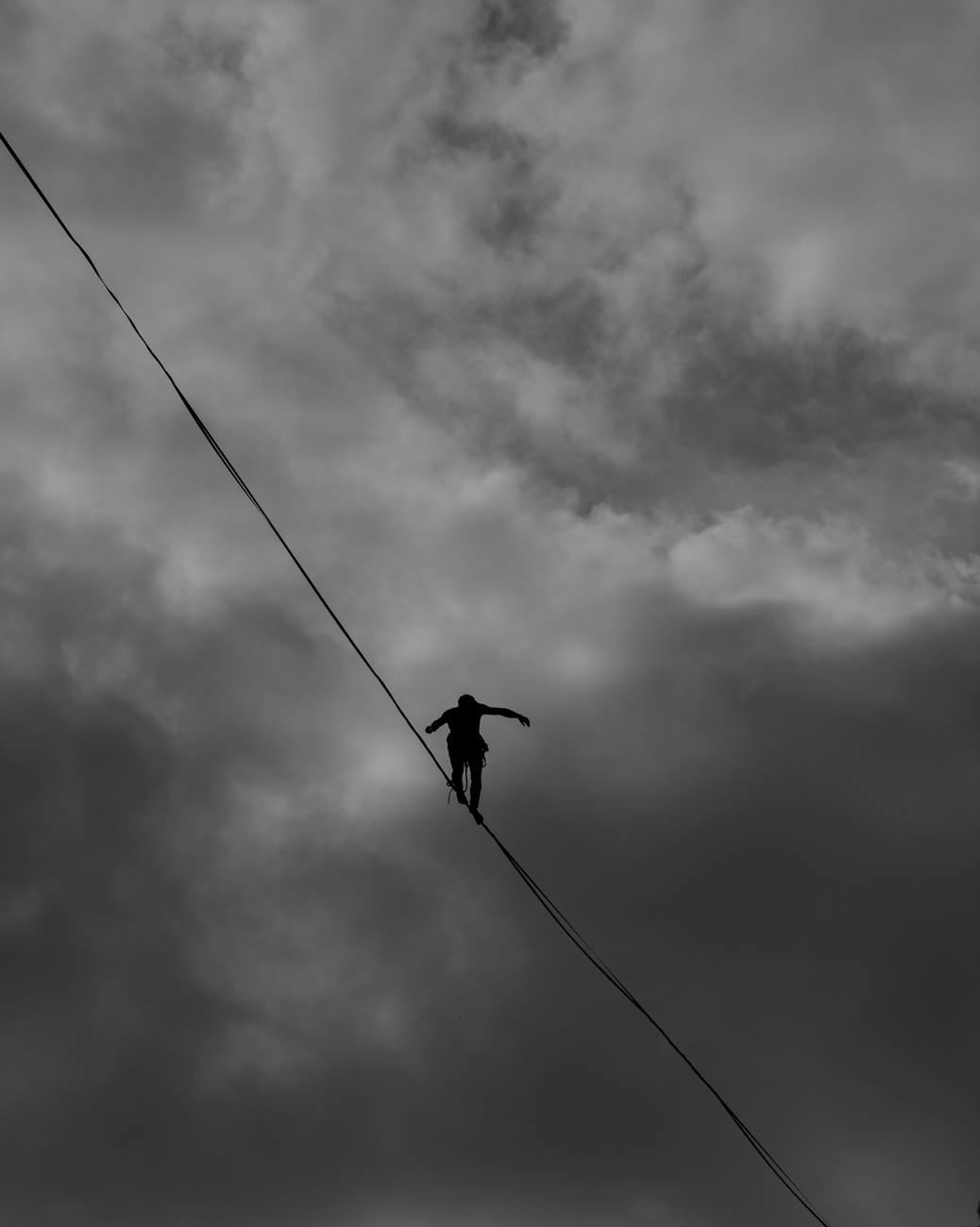
Perhaps because he was already an outcast of sorts Leonardo was always thinking out of the box, pushing the envelope of inventiveness. He revolutionized art, looked to the future with inventions that would only become commonplace centuries after he lived. He foresaw possibilities everywhere he went and was unconventional in the way he lived. He was a man of good spirits and humor in spite of or maybe because of his early rejection by a society cooped up by traditions and beliefs that attempted to confine him in a box built on prejudices and a twisting of religious ideas. In refusing to conform he left an incredible body of work and thinking that has rarely been rivaled. 

Leonardo was most probably gay. When he was only in his twenties he was caught up in a scandal that might have stunted his career save for the fact that one of the other individuals involved in relations with a local homosexual was from a wealthy family that had the means to make the trouble go away. Leonardo would eventually have a long time male partner but never marry. Because he was a giant in the world of art and someone who was actually pleasant and funny people mostly looked away leaving him to live as he chose rather than forcing him to adopt a more traditional way of life. 

Leonard da Vinci was a star in the Renaissance era, a time when nearly every aspect of thinking and creating took a quantum leap forward. Perhaps it was because the worldview of the time and place where he lived was open and inviting to new ideas, new ways of living in the world. He was able to try new things because the people around him were not afraid to break the bonds of old traditions and beliefs that tended to be judgmental and threatening. It was an atmosphere of freedom that provided the room for Leonardo to push the envelope of genius. 

As I watched the story of Leonardo da Vinci unfold I thought of the time that I used his Vitruvian Man to teach the concept of proportion to my Algebra students. I related mathematics to art and nature. it was a good lesson that really helped my students to understand the importance of proportionality. Everyone was engaged and excited as they came to many of the same conclusions that Leonardo had so many centuries ago. 

In today’s atmosphere I am not certain that I would be allowed to plan such a creative and engaging lesson. A trend that is spreading across the educational landscape is to create scripts to which teachers must adhere with exactness of presentation and timing. Teachers are being warned to be careful what books, articles, ideas they choose to teach lest they be accused of being “woke” or too revolutionary. School districts are agreeing to “protect” students by removing anything that seems controversial from library shelves. For that matter even libraries are being closed down as they are deemed to be places where young people might be exposed to ideas that are too far out of the box. At the same time some places are adding prayers and Bible studies to the curriculum leaving less time for exploring topics that might run afoul to norms that seem to discount freedom to think and discuss the world around us.

I wonder if Leonardo would have been able to bloom and develop his genius if he had lived in such a time as ours. Would people first of all questioned the value of his artistry? Would they have condemned his lifestyle? Would they have balked at his discoveries and inventions? Would they have shunned him rather than allowing him to become the incredible person that he was? Are we actually doing more harm to our young people today by limiting what they may see or do or think? Will we end up creating bored automatons rather that geniuses with our scripts and rules and finger wagging? 

I do worry about such things. As an educator I have seen students who were once deemed lost, blossom under the guidance of a gifted teacher who introduced them to worlds and ideas that challenged them. It is not in confining people that greatness arises. It is in being willing to let them spread their wings and fly to their own destinations. I don’t want to live in the atmosphere of the Dark Ages. I prefer the incredible era of the Renaissance. We can continue to grow as humans only if we set our creativity and thinking free. 

A Glorious Achievement

Photo by u0410u043du043du0430 u0420u044bu0436u043au043eu0432u0430 on Pexels.com

Perception is everything. How we see the world determines so many of our thoughts and choices in life. Now that I am four years away from beginning my ninetieth decade on the earth I see my life from a different perspective than I did when I was a little girl of eight who had just learned that her father had died in a car crash. 

Back then I saw my thirty three year old father as a paragon of wisdom and grace. He was perfection in my eyes and my mother would only enhance his mythical status with her own stories of his stature. As I aged from decade to decade I began to realize that there were indeed tiny cracks in my father’s life, flaws that made him as human as anyone. I saw that he was grieving from the loss of his best friend and searching for meaning in his work that he had yet to find. 

What never really crossed my mind was how incredibly young he was when he died. He was my father after all and therefore a wise elder in my mind. Only recently did his youthfulness become real to me when I was sending birthday greetings to one of my former students who was celebrating his thirty third birthday. Suddenly it dawned on me that the man I have idolized for all of my like was still in the adventurous, experimental phase of his life. He was in the first stages of the process of finding satisfaction in his work and family life, a period of time that all of us experience as we attempt to learn the meaning of who we are and what we are supposed to do. 

I was an inquisitive child who took delight in listening to adult conversations even when my elders assumed that I was not hearing what they were saying. I still recall my father speaking about his work as a mechanical engineer and expressing disappointment that it was not more interesting and challenging. His movement from one job to another, our journey to California and back, and the variety of his interests and the books that he read speak of a man who wanted to make a difference in the world. Sadly much of the work he was assigned to do struck him as being mundane. He often commented that perhaps he would have been better suited to electrical engineering but had been drawn to the mechanical because he had always enjoyed building and tinkering with things. 

As I look back on my own career with great satisfaction I realize that I was in my early forties before I hit my stride and felt as though I was actually where I was always meant to be. That feeling of satisfaction that I had found my true vocation made my work seem important and even invigorating. To this day I feel a sense of pride and purpose in what I was able to do as a teacher. When people suggest that I did not fulfill my potential I internally scoff. The happiness that I feel when thinking about my decades as an educator assures me that I may even have exceeded my own expectations.

I am an old woman now but my heart and my thoughts are young. It is difficult for me to imagine my father as an old man but sometimes I like to dream of what he might have been but for that terrible wreck that took his life. I suspect that if he had lived just a bit longer he would have been incredibly excited about NASA coming to our backyard. I see him working at the Space Center and being part of the thrilling days of the first rockets in space, the first orbits around the earth, the first humans on the moon. That is the kind of experience that filled his dreams and I truly believe that he would have made the team of engineers who worked behind the scenes of the space program. 

I laugh when I think of him being the first person on our block to purchase a television. I can still see him eagerly plugging it in and settling down to watch his favorite comedians. I hear his laughs that came from deep down in his belly and it fills me with joy. Somehow I have little doubt that he would have eagerly purchased one of the first computers and rejoiced at the incredible pace of discovery and invention. Of course he was not meant to be secured in a car with seatbelts and air bags that would have saved his life. Instead he became somewhat immortal in my little girl mind. 

I am old enough and wise enough not to dwell on the might have beens. I am satisfied with the image of my father as a very young man. In just over three decades he had already accomplished much. He inspired me to be a lifelong learner. He taught me how to appreciate art and music. He instilled in me the importance of knowing and understanding the implications of history. He showed me how to be generous with my love. His presence in my life notwithstanding how short it was has guided the totality of my life. That alone was a glorious achievement that I suspect he hoped to reach. I hope he knows how well he did.

The Memories Of Old

Photo by Suzy Hazelwood on Pexels.com

Houston, Texas, now the fourth largest city in the United States, was more of a town than a city when I was a child. I grew up in a neighborhood in southeast Houston that was one of the farthest neighborhoods from the center of downtown near what is now Hobby Airport. The road from Houston to Galveston quickly took on the feel of a rural highway and if I met somebody new there was good chance that they knew someone who lived near where my mother grew up as a child just outside of the center of town. 

I remember the newspaper headline touting the city’s entrance into the one million citizens club in the early nineteen sixties. Anyone who left during that timeframe and never came back until the present would be totally shocked by the changes that I hardly even noticed because they happened so incrementally. Now the metropolitan area stretches far out to little towns that once boasted farms and ranches. 

Houston just keeps growing and growing in spite of a tendency to flood and traffic that rivals Chicago and Los Angeles. It is a place that does seem to have followed any kind of plan in setting down roots farther and farther away from downtown. When it needs to expand it tends to tear things down rather than carefully preserving history. Much that once was is long gone in the name of progress. 

The Texas Medical Center has become a behemoth and with hospitals, research centers and medical schools. People come from all over the world for heart procedures and cancer cures. On any given day the place is bustling with activity. Perhaps it is the one place that actually began as a dream that has been very carefully nurtured from city’s earliest days. It’s location adjacent to Rice University is not ab accident. In fact the founder of Rice, William Marsh Rice, had a hand in envisioning and supporting the idea of a world class medical facility. 

The Shamrock Hilton Hotel once sat across from the Medical Center and it was a mecca for celebrities and the city’s movers and shakers. It was iconic in both its style and its history but the need for more space for the many medical facilities trumped any idea of saving it from the bulldozer’s brute force. Like so many Houston sites it had its moment and then quietly went away but those of us old enough to have seen it recall the movie stars and famous people who were regulars there lounging around the olympic sized pool. 

My grandparents’ homes have miraculously survived the “tear it down” attitude of the city’s real estate focus. My father’s family lived in the Houston Heights in a stucco home that my grandfather renovated in the nineteen forties. It still stands on Arlington Street and it warms my heart to see how well the present owners have cared for it. My memories of Sunday dinners there are nothing less than bliss. I can still see the dining room with the mahogany table, the sideboard and the china cabinet that my grandmother kept gleaming with pride. 

My job was always the same. I carefully removed the china from the cabinet and gently placed a plate in front of each chair. Then I opened the beautiful box that held my grandmother’s silver and set the knives and spoons and forks around the plates just as she had shown me how to do. For a little girl setting her lovely table was a highlight of each week. 

After dinner Grandma always gave us a tour of her garden to gaze at whatever happened to be blooming at the time. Her neighbors would wave and shout their hellos just like I imagined it was done in little towns all over the world. Sometimes someone would be burning leaves in the drainage ditch in front of the homes. The smell was so lovely that if I close my eyes and let my mind reimagine those days I am able to catch a whiff of that aroma once again.

My other Grandmother lived east of downtown. Friday nights were the time for the designated visits with her and all of my aunts and uncles and cousins. Back then there were lovely homes on the street which ended at a fenced in gate at the end of the street. Behind the fence there was a warehouse for a local grocery store chain called Weingarten’s. Sometimes I thought I smelled bread being baked over there but I never knew for sure. Just down the way was a coffee plant and on most Friday evenings the lovely scent of fresh coffee beans filled the air. 

We played games in the street and listened to the laughter and music from the bar just across Navigation Street. We were never afraid back then. Everyone seemed to be friendly and if there were mass shooting somewhere we had never heard about them. Life felt as calm and gentle as can be. 

Today my grandmother’s house is the only one left on the street. Businesses have encroached on what was once a quiet neighborhood. The little house looks out of place but the new owners have attempted to make it cheerful with a fresh coat of bright blue paint. It’s the last remnant of my childhood memories there so it delights me to know that it is still there even if nothing else looks the same.

I suppose that progress is a good thing but sometimes I think that I would prefer to see more preservation in my city. I’ve witnessed so much change. I was at the opening of the first shopping mall and later the first mall that was indoors. I’ve watched the oldest buildings in downtown become dwarfed by magnificent skyscrapers and sometimes even removed. The beautiful Sacred Heart Cathedral of my youth is now a parking lot. The Astrodome sits abandoned and waiting for someone to decide whether to tear it down or turn it into something useful. Astroworld where I had so much fun with my children is now a parking lot as well. Life goes on and Houston seems poised to move up a slot in the ranks of population. Sometimes I can’t keep up with all the change but the memories of old never fade and they always make me smile. 

What History Teaches Us

Photo by George on Pexels.com

My husband and I have been watching a series of lectures on the history of the Tudors and Stuarts in England. Forty eight episodes have kept us rather busy each evening at the end of our day. We already knew the gist of what happened with these kings and queens but this series goes into deeper detail than the twelve hour continuing education course that we took a few years back. 

We are learning about the worldview of the people in that era and the strict code of status by which they lived. God was at the top of the heap but the king or queen was not too far behind. There was a belief, at least pushed by the royalty that the pecking order of living was set in stone and ordained by God himself. Sadly the people at the lowest end of the chain of being had generally brutish lives with little or no opportunity to improve their lot. 

Perhaps the most interesting aspect of the course is the discussion of religion. In the beginning England, like most of Europe was Catholic with allegiance to the pope. Of course there were schisms somewhat early on with the Greek Orthodox church going one way and the Roman Catholics another. The Russian Church eventually broke off in their own branch as well. 

When Henry the Eighth ascended the throne England was a Catholic nation. Since few of the people were literate their understanding of the religion depended on whatever the priests in their communities told them. Since even the clerics were not always well educated there were often differences in how the word of God was preached. Back then a priest might have to work for several different towns so the people were not assured of having mass every Sunday. The result was that when Henry became embroiled with the church over annulling his marriage to Catherine of Aragon it was not all that difficult for him to get his subjects to participate in the Protestant Reformation with him. He used his power to make himself the head of the national church and most of the people went along. 

There were so many interesting facets to that moment in history that had been unknown to me such as the idea that the bishops who went with Henry still continued the apostolic succession making their rebellion appear to be a continuation of the church without following the pope. Perhaps that is why my brief visits to services in the Church of England have always felt very familiar to me as a Roman Catholic. 

I have also been fascinated by the fact that Henry was determined to have a male heir lest his families brief stent as the ruling party be questioned as had happened so many times before. He would not have had the knowledge back then that he was the person determining the sex of his children. Nor would he or Catherine of Aragon have understood that many of her problems having children were related to the bad diets and inadequate medical care of the times. 

I love hearing an unfiltered description of people throughout our human history. It’s easy for us to think that somehow people are just people and no doubt thought just like us. Learning about their societal and religious beliefs speaks to the enormous progress that we have made from the beginning of time. Rules and morays that we take for granted today would have been surprising to people of the past. We would be stunned by their difficult living conditions and their prejudicial beliefs. 

It can be shocking to learn that priest were not always celibate in times or old or to realize that the average person in the modern world lives better than the kings and emperors of even a century ago. Those drafty castles were cold and damp. The streets of towns were filled with animals and offal. Water was not always clean as it is today. Plagues were deadly and occurred rather often. 

All of this has caused me to meditate a bit on the current political wave in the United States in which many citizens long for the old days, remembering them as being so much better than the present. I often laugh when I realize that few people would really want to go back even to the time of my youth if they really thought about it. They would find life to be way more limiting and difficult especially for women. 

When I was just a girl few of the people that I new from my family or neighborhood were as highly educated as people today. My father was unusual in having a degree in engineering. My grandfathers never went past about the seventh or eighth grand and my uncles were lucky to have high school diplomas. My grandmothers were both illiterate.

Education is the great liberator. The printing press changed the world for millions and millions of people. The ability to read and learn from the past is a route to freedom so it is gravely important that the stories we hear about our past are truthful in every sense. Hearing about our mistakes and our sins as humans does not make us sorrowful. It makes us much better able to critically think about what we need to do to keep moving forward and providing more and more opportunities for all people. The more that everyone is involved and has a voice, the more likely we are to be free.

Studying history has taught me to beware of anyone or any group whose goal is to hide the truth, monitor people’s thoughts, insist that there is only one good and true way of thinking. Civilizations like that rise again and again and are alway authoritarian and limiting. We’ve worked hard as humans to inch closer and closer to a world in which everyone is valued. We would do well to look back to learn what not to do but then look forward to progress to whatever makes the world better for each of us. Kings are okay but we now know that they are in reality no better than any of us and that how we think about God should always be left to each person. There should be no chain of being. We should all have opportunities to develop into the best versions of ourselves.

My Mother’s Story

Photo by Zachary DeBottis on Pexels.com

I’m certainly not a doctor nor am I well versed in psychology but I have around forty years of gut wrenching experience doing everything possible to keep my mother’s mental illness under control. My long journey began before Mama had her first major breakdown, but I did not take what I saw as her quirkiness and anxiety very seriously in the beginning. 

She and I were both taking college classes at the time at different universities. I was busy learning how to navigate through my freshman year while she was putting in the final hours of a long and determined effort to work and complete a degree at the same time. At first she mainly took classes a few hours here and a few hours there but as she neared the end of her studies she became more and more determined to push harder so that she might finish sooner. 

The result left her working eight to ten hours a day, keeping our family together and studying until the early hours of the morning. She had always been an optimistic and energetic soul so I was convinced that she would be just fine. Slowly, however, she began to show cracks in her endurance that I mostly ignored, thinking that a bit of sleep on the weekend would no doubt cure all of her ills.

In looking back I realize that she was already showing signs of her bipolar disorder but I had never before encountered anyone with that illness so I did not understand that she was growing quite sick without any kind of medical intervention. She would tell me that one of her professors offered to take her and a group of students for a ride in his plane. That sounded like fun to me but she whispered that she was afraid that his intention was to throw her out of the aircraft when he reached a certain height. Instead of taking her seriously I just laughed assuming that she was simply joking. 

Another time she told me that the professors at her school wanted her to date and marry one of the lecturers. She insisted that he was having problems and that his peers knew that he needed a steadying force like her in his life. Nonetheless, she was not interested in a relationship with him and so she wondered what she should do about the pressure being placed on her. 

I was never certain that any of what she told me was just a misunderstanding on her part or a figment of a very vivid imagination. While I thought her comments were weird they did not indicate to me that she was having mental problems. After all, she was maintaining her job, paying our family’s bills and even dating now and then. I tended to brush off her strange comments as nothing more than a bit of silliness. 

Just before I got married I landed a job as a teachers’ aide at a public school. My mother and I drove there together so that I might finalize some paperwork with the principal. During my interlude the principal asked if I knew of anyone who might want to work at the school. She had a fifth grade teaching position open and had been unable to find a qualified person to fill the spot. With school opening in a matter of days she was feeling desperate to find a good teacher for her students. I laughed and told her that my mother had recently finished college and was looking for a full time position as a teacher. I added that she had taught the fifth grade at a private religious school for several years as well. 

Before either of us had time to think about what was happening I had gone to the car to tell my mother that the principal wanted to interview her for a job. Within minutes the school leader was impressed enough that she hired Mama on the spot. We would work together in the same school for several months until after my wedding day. It was fun to see my mother relaxing a bit and enjoying a regular paycheck that seemed like a fortune to her. 

My position as a teachers’ aide was only contractual for a semester, so after Christmas I no longer had contact with my mother and her work. Up until that time everyone boasted that she was a wonderful addition to the faculty and she seemed quite happy there as well. 

I am not certain what happened in the spring semester. Mama and I rarely talked about school or work when I went to visit her. She had seemed happier and more relaxed than I had witnessed in a very long time, but when the end of the school year came she tearfully announced that the principal had not renewed her contract. She created all sorts of incredible stories to explain why her boss had been unhappy with her work. I suspected that she just felt heartbroken because she had always been kind of rockstar when it came to anything she had ever attempted to do. This was a blow to her ego but I believed it would blow over in no time.

I began to feel more and more uncomfortable about my mother’s mental health as July came and she was still stewing over losing her job. When she showed no interest in the first landing of humans on the moon I knew something was totally out of whack. She had watched the space program developing from it beginning with unchecked enthusiasm. 

As July came to a close she broke down totally. She sat in a darkened house with the windows closed and the drapes pulled tightly together. She was crying and looking like a creature being stalked by invisible adversaries. She worried that someone was trying to blame her for a horrendous crime. She peeked outside to watch the cars that drove by her home. She warned me to be careful. This time I knew without a doubt that she was very very sick. 

My mother would spend time with psychiatrists from that moment forward. Her illness was not a one off kind of situation. She was chronically ill and without proper medication her symptoms of depression, paranoia and mania would return again and again. I had to watch her constantly and be able to see the signs that she had abandoned her medications and get her back to her doctors and her medications. It was the most challenging aspect of my life and I spent thousands of hours balancing her wellbeing with that of my husband and children. 

I write about this because we now have a man charged with managing the health agencies of the United States who talks about antidepressants being addictive and suggesting that those who take them might be better served spending time at a well being farm. My refutation to his thinking is that he obviously has little or no medical understanding of what it is like for someone with severe depression. Once the cycle begins inside their brains it only increases so painfully that they are literally unable to pull out of the doldrums without the help of trained doctors. There were specific medications that allowed my mother to work and lead a happy and productive life. Whenever she decided on her own to stop using them her worst symptoms quickly returned. 

I would hope that Robert F. Kennedy Jr. would not attempt to create confusing complications for people with mental illnesses and for the families who care for them. I can’t imagine telling my mom that she was going to a wellness farm when she was in the throes of a major attack. She would have immediately run away thinking that I was going to put her away like they did in times of old when people were called crazy. Even if she had wanted to go to such a place my experience tells me that she would have only become worse, not better with her meds. 

So I say to Mr. Kennedy, please leave it to the doctors with years of experience to help bring the mentally ill to a better place. His job should only be to manage the many departments dedicated to our nation’s health, not to determine the kind of medical care that any of us need. My mother’s story would have been far more tragic but for the kind doctors who always knew how to help her feel good again. I hope that RFK Jr. does not mess up that kind of doctor/patient relationship.