Bonhoeffer

― Dietrich Bonhoeffer

Photo by Markus Spiske on Pexels.com

“We are not to simply bandage the wounds of victims beneath the wheels of injustice, we are to drive a spoke into the wheel itself.” —Dietrich Bonhoeffer

I have always been fascinated by Dietrich Bonhoeffer, an outspoken Lutheran minister and theologian who advocated for the Jewish people during the Nazi reign of terror in Germany. Bonhoeffer was born into a life of affluence and education. His father was a renowned psychologist and neurologist. His mother was a teacher. Bonhoeffer himself developed an early interest in theology traveling to New York City in his twenties to study at a seminary where he developed a friendship with an African American named Albert Fisher. 

Albert introduced Bonhoeffer to Harlem, jazz, and the Abyssinian Baptist Church then pastored by Adam Clayton Powell. There he was awed by the idea of using God’s word in pursuit of social justice for the underserved. He revelled in the spirituals and joy of the Black congregants of the church. It changed the direction of his own spiritual journey as he realized that the real message of Jesus is to serve others, even those that we may not understand. 

The inspired Bonhoeffer returned to a Germany that he did not understand. He saw that the Hitler regime had taken over all aspects of communication, even the messages of ministers in the churches. Politics and religion had become entwined. The Reich had even added two additional commandments to the original ten suggesting that Hitler and his regime had been sent to Germany by God. Additionally, the Jews were being openly harassed and sent away. Bonhoeffer was incensed and he bravely voiced his distaste for Hitler and his support for all people.

Eventually Bonhoeffer was under so much scrutiny that he had to flee to a protected place where a select group of young men were being trained to become ministers. For a time his work there was joyous but the Nazis eventually found out about what was happening there and forced all the the young men into military service. 

As the atmosphere in Germany was becoming more and more dangerous Bonhoeffer was sent to London as a liaison to inform the clergy there of the oppression that the German people and most especially the Jews were facing. He persuaded them to ban together in both revealing and protesting what Hitler was doing.

Bonhoeffer might have stayed safely in England for the duration of Hitler’s reign of terror but he felt that his work had to be done in Germany for the sake of the people there. He returned to an even more dangerous situation than ever and even became involved in a plot to assassinate Hitler. When the attempt failed he and the others knew that they might be found out sooner or later so once again his family and leaders of the church suggested that Bonhoeffer return to New York City to enlist the support of the people he had met there. 

With great reluctance Bonhoeffer agreed but once he arrived in America he knew that his place was back in Germany despite the danger. Rather than embrace the safety of the moment he made his way back to his homeland where he was almost immediately arrested and sent to a concentration camp. There he wrote one of his most famous and widely admired books books. 

After a year and a half of imprisonment Bonhoeffer was set to be put to death by direct order from Hitler. A German guard whom he had befriended over time offered a plan to free him but Bonhoeffer worried that the guard, his family, and others would face retribution. He told the guard that he was ready to see God. 

On the day of his hanging Bonhoeffer held a church service for the other prisoners. He gave the writings that he had composed to the guard. He bravely walked to the gallows and prayed before dying. He was thirty nine years old. Only days later the Allied army defeated the Germans and freed the members of the concentration camp. Hitler committed suicide and the war was over. 

Bonhoeffer was most certainly a martyr and probably even a saint. He wrote numerous texts and books that are still read and studied by theologians and ordinary readers to this very day. There is even a society of people who work to keep his ideas alive. Perhaps his words that have most impacted me are summed up in this passage, “Judging others makes us blind, whereas love is illuminating. By judging others we blind ourselves to our own evil and to the grace which others are just as entitled to as we are.”

Our own times are dangerous and filled with much anger. We might do well to consider the wisdom of Dietrich Bonhoeffer who seemed to truly understand two main lessons from Jesus. The first is that we love our neighbors and the other is that we not judge them. It is up to us to break the wheels of injustice wherever and whenever we see any of our fellow humans being harmed. Each of us has work to do.

The Girls

Photo by Photo By: Kaboompics.com on Pexels.com

I have been thinking about the tale of Peter Pan these days. We all know the story of adventure with the boy who never wanted to grow up. As children we marveled at his ability to fly and his courage in standing up to the villain, Captain Hook. It is a favorite tale of the growing pains of becoming an adult. What we don’t often think about is how strong the women in the story actually are. We have often tended to view them as background characters who provide Peter Pan with the opportunity to be a gallant knight. If we really think about the tale we must surely realize that the ladies are so much more.

Wendy is the most developed character after Peter Pan and Captain Hook. While she is till living in the nursery with her younger brothers she is already quite mature, moving into adult roles without really thinking about it. She is a strong willed and intelligent young woman who assumes the responsibility of mothering the lost boys quite smoothly. Much like most young women she has incredible instincts when it comes to handling the day to day routines and even emergency situations. She is the mature voice in the story, the steady hand that keeps everyone full and happy. As she reads stories to the boys one has to be in awe of her intellectual abilities and her insightfulness in knowing what they need.

Tinkerbell may be a tiny fairy but it is she who saves Peter Pan from being poisoned. Her courage is out-sized as she drinks the foul potion to keep Peter from becoming deathly ill. Her loyalty and concern for Peter is repeated over and over again. She is much stronger and more capable than she at first appears to be.

Tiger Lily is Peter Pan’s pal. She too steadfastly defends her friend with grit and determination. She rescues Peter Pan over and over again, standing up to Captain Hook without thoughts of her own safety.

Even Nana, the dog who watches over Wendy and her brothers, is faithful and protective of her charges. She worries over them and uses her instincts to keep them from harm. She takes her job very seriously.

Societies throughout history have tended to underestimate the courage and intellect of women. For centuries they were mostly relegated to secondary roles, often without benefit of education. They helped with the housework, care of their siblings and eventually bore their own children. They did not get the right to vote in the United States until the twentieth century after fighting incredible battles to get there. Gaining parity with their male counterparts has been an uphill battle that continues to this very day. In some cultures they have even been pushed into regressive situations. Of late groups here in the United States seem intent on forcing them into the old traditional ways of behaving even as they declare that they won’t go back.

I remember being afraid to demonstrate my intelligence in my teen years. I nonetheless worked hard and made good grades because I actually enjoyed learning. I often thought of my father who had encouraged me to read and to explore the world around me. I remembered my Grandma Minnie Bell who regretted her inability to read or write. I wanted to use the gifts I had been given while also wondering if I should hide them. I sensed that some of the young men who were my fellow students found my studiousness to be unattractive. The world was still struggling to accept women as equals to men.

I was in the generation that saw barrier after barrier being torn down by courageous women who carved a pathway for the rest of us. They balanced home and work life and literally led a revolution. Today there are more women graduating from college than men. Women hold executive positions in almost every kind of work. We now can clearly see that women are able handle much more than it was once thought possible.

In spite of this evidence the American people still seem to be unwilling to accept a woman as President. We’ve had worthy candidates along the way but they always just miss gaining the right segment of votes to earn the honor. When they lose there are all kinds of critiques regarding their lack of likability or their inexperience. The same factors are rarely used to assess men.

Hillary Clinton was a star student at her high school, her college, and her law school. Everyone who knew her saw her potential. She stood toe to toe with men throughout her life and yet when she ran for President her resume was judged to be lacking even though she had been a Senator and the Secretary of State. She lost to a millionaire real estate broker and television personality. Somehow his business acumen was judged to be more attuned to a leadership role than hers even though he had backrupted multiple businesses in his rise to fame.

Most recently I heard person after person insist that Kamala Harris did not have enough experience to be the President. They seemed to ignore the fact that she had been a District Attorney, the California Attorney General, a Senator and Vice President of the United States. They instead went with the same man who had defeated Hillary Clinton in spite of his botching of the pandemic response and his attempt to overthrow the legal vote count in the 2020 election. They claimed that Kamala Harris had no platform when she actually did. They would have known this if they had taken to time to listen to her. Instead they bought into the disjointed lies, the fear mongering and strange musings of Donald Trump. Once again the woman lost to an inferior man, most likely because too many Americans are still unable to accept the idea that a woman is capable of doing what was once exclusively a man’s job.

I truly long for the day when such backward thinking is a thing of the past. I have an incredible granddaughter who has the potential to do great things if only she is given the chance to do so. She has already been a featured speaker for her research into minority voting habits. She has worked for a city government, a defense attorney and a district attorney all while making near perfect grades in her college classes. She has even had one of her papers published and will present her findings at an international conference in the spring. She is determined to make a difference in the world and it is my hope that she will not be held back by backward ideas that procalims that she is somehow not equal in abilities to her male peers.

Women will keep moving forward. It’s what we do. One day perhaps we will all understand their incredible powers and we will be excited about welcoming them into executive authority. My wish is that I will live to see it happen. For now I simply refuse to force any woman to go back to the past.

Mind The GAP

Photo by Josh Withers on Pexels.com

Mind the GAP…Great American Pushback—-Jim Acosta

Jim Acosta was a renowned CNN journalist for decades. He was a reporter in the style of Edward R. Morrow and Walter Cronkite. He presented truth and facts as he saw them, not as any politician wanted them to be. With the return of Donald Trump to the presidency and pressure from the upper echelons of CNN wanting a more both sides treatment of the news rather than a recitation of truth, Jim Acosta felt that it was time for him to resign. He was unwilling to provide viewers with a watered down company line rather than the facts on the ground. 

Since his departure from CNN Jim Acosta has joined Substack and continued his reporting with interviews of some to the best political minds of the world. He recently brought attention to the Great American Pushback, a concerted effort by Americans of multiple political beliefs to make their voices heard. In particular this movement is designed to keep Americans aware of the destruction that Trump and Musk are doing to our national institutions. Already there are lawsuits and protests cropping up all across the nation in the hopes of calling a halt to the often illegal damage being inflicted on our national security and important programs that work for the citizenry.

Acosta has suggested that each of us needs to stay fully aware of what is happening and then “Mind the GAP.” He takes this call from the message in the London tube to be careful about accidentally falling into the space between the landing and the safety of the cars. So too should we be aware that GAP is suggesting that if we are wary of the damage being inflicted on our democracy then we must be aware of those damaging spaces into which our freedoms may falll unless we are willing to let our voices be heard. 

it is well known that Donald Trump likes to be loved. He revels in attention and adulation. On the other hand he is ultra sensitive to any form of criticism. Right now he appears to be waffling back and forth with his ideas in response to the stock market and comments from the citizens who are angry about both DOGE and our country’s treatment of Canada, Mexico and Ukraine. He is demonstrating his reluctance to follow through with his initial plans because he is feeling the pushback.

We know that Hitler was able to destroy the democratic government of Germany in only 51 days. it has been about that much time since Trump was inaugurated and began his move fast and break things approach to redefining the way our government works. People have not been silent and so his success has not been as easy as he had believed it would be. There is feuding between his cabinet and DOGE. Lawsuits are mounting. it seems that there is a protest or demonstration every other day. Congressional town halls are filled with unhappy citizens. The White House and Congressional phones are ringing off the wall. The unemployment rate is rising and even Trump is now admitting that the price of eggs will probably not go down and we may have to endure a recession. As the pressure bears down more and more strongly on Trump he may well abandon the worst of his plans. He does after all want the love of his people and it is not being granted as effusively as it once was. 

A couple of weeks ago I was feeling incredibly worried about where all of this will lead. It seemed that the country that I have always loved was becoming almost unrecognizable. It felt stifling and downright authoritarian. It also made us look selfish and silly. I was saddened to a point of just wanting to turn the whole thing off. I believed that I would have to wait for four years to end before there would be any hope of having something left of our nation to rebuild. Happily I now see people from sea to shining sea keeping the fires of freedom alive. 

We Americans take great pride in being the land of the free. We feel best when we are on the pathway of morality, not just for ourselves, but for all people everywhere. We know full well that we have had to overcome imperfections in our history and we don’t mind talking openly about them. We have seen the power of our diversity. We have worked hard to insure equality even to people very unlike ourselves. We strived to include more and more people across the globe in the what is best about democracy. I should have known that we would never allow what we cherish to be destroyed without a word. 

The people of the United States will push back on evil, prejudice, and ignorance every single time. We work hard to be who our founders hoped we would be. We have repaired the cracks in our great experience time and again. We will rise to the challenge of being free once again. We will find courage in the wisdom of people like Jim Acosta, Steve Schmidt, Heather Cox Richardson, Jennifer Rubin, Aaron Parnas and a host of incredible patriots who are leading us on the paths that we must follow. We will indeed mind the GAP. We will save our liberties and restore confidence in our nation again.

Learning From History

Photo by Pixabay on Pexels.com

My husband and I have continued watching the Master Class series of lectures on the Tudors and the Stuarts. We are coming to the end of the forty eight episodes and there are certain ideas that stand out from one king or queen to the next.

The ruling class of England during that time consisted of royalty and Parliament with the two institutions struggling to determine who should be in charge. The kings believed in their divine right to be the head of state but that political philosophy constantly came into question as time went by. The budget and ways of funding dominated much of the concerns of the times. There were continuous attempts to forge alliances with the power brokers of Europe. Finally religion and which brand would be endorsed and supported by the government became a front and center issue. 

As I watched the lectures I found a bit of amusement in noting that everything changes in the world while at heart staying the same. The program might just as well have been describing modern day issues in the United States today. The names of leaders and countries are different but the problems seem to be similar even hundreds of years later. 

In particular the issue of religion became quite bloody during the tenure of the Tudors and Stuarts. The enmity between Catholics and Protestants and even between differing Protestant sects often led to one group or another being burned at the stake. There was a dark irony in the fact that the religious groups seemed to have little or no concern about killing each other to stay in control of the government. Somehow the ideas that Jesus preached did not always comply with what the religious leaders of the time were preaching. 

I can’t help but think that the founders of the United States understood that religion had been  at the heart of civil wars and persecution in England. Thus came their insistence on enshrining freedom of religion in the Constitution. I do not believe that they would be happy about the new efforts to put prayer and the ten commandments in schools and on public display in the halls of government. I suspect that they would know that praying in Congress and suggesting that our president was sent by God creates a dangerous and slippery slope. They, much more than those of us in the present, knew how ugly religious wars could be. 

I am a deeply spiritual person but I do not want my government dictating either my beliefs or anyone else’s as the model for our nation. Faith and how to experience it should not be forced or denied. Each person’s relationship with or without a higher being needs to be respected without judgement. It is in creating an official religion in any country that incredible problems arise. The history of the world is rife with stories of civil wars and wars between nations predicated on religious grounds. 

Furthermore, our founders made it clear, and George Washington reinforced the idea, that we should not have or even want a king. Nor should we be constantly worried about who is going to become our next leader. The English obsession with succession resulted in the kind of intrigue and death that we don’t want to encourage in our own government. We should be quite wary of anyone who seems to believe that they and they alone have all of the answers that we need. History has proven that handing over authority to one person or group leads to autocracies rather than democracies. 

There was purposefulness in the creation of the three branches of our national government. The idea was to be certain that no single person or group would be able to seize all of the power. The idea of checks and balances was important to our founders because they understood all too well how dangerous it was to concentrate power in one person or one group. George Washington eschewed the offer to stay on as president indefinitely. He disliked the idea of political parties vying for their specific ideas rather than understanding that their duties were to serve all of the people. Washington was well aware of the skirmishes between Whigs and Tories in the British Parliament from which the United States had gained its independence. 

Our nation has already endured one civil war. We should be wary of any leaders who constantly encourage angry divisions among us. It should gravely concern us that our current president takes great delight in openly attempting to limit the rights of individuals and groups that he dislikes. Instead of attempting to bring the many differing beliefs together he seems to find great joy in hurting those with whom his own views do not overlap. He has purposely created a schism among our citizens that often comes dangerously close to inciting the kind of political and actual wars that have plagued the world for so long. Our founders and Abraham Lincoln understood the importance of learning how to work together regardless of our individual philosophies. In practice that means making room for everyone to feel comfortable, not creating executive orders to diminish their worth and their rights. 

The freedoms of the United States are a delicate commodity. The are predicated on the idea that we are all equal regardless of our various ways of choosing how to live. We can come togehter in a community of tolerance or hark back to dark times when people insisted on forcing their ways on everyone. History tells us that such thinking has never worked to the satisfaction of the whole society. We would do well to be wary of those who would consolidate power into one person or group and then dominate those who think differently. We should all be very afraid when we see such things happening and in this moment the evidence that our nation is backsliding to a darker time is quite clear.

Lessons From The Past

Photo by Josiah Lewis on Pexels.com

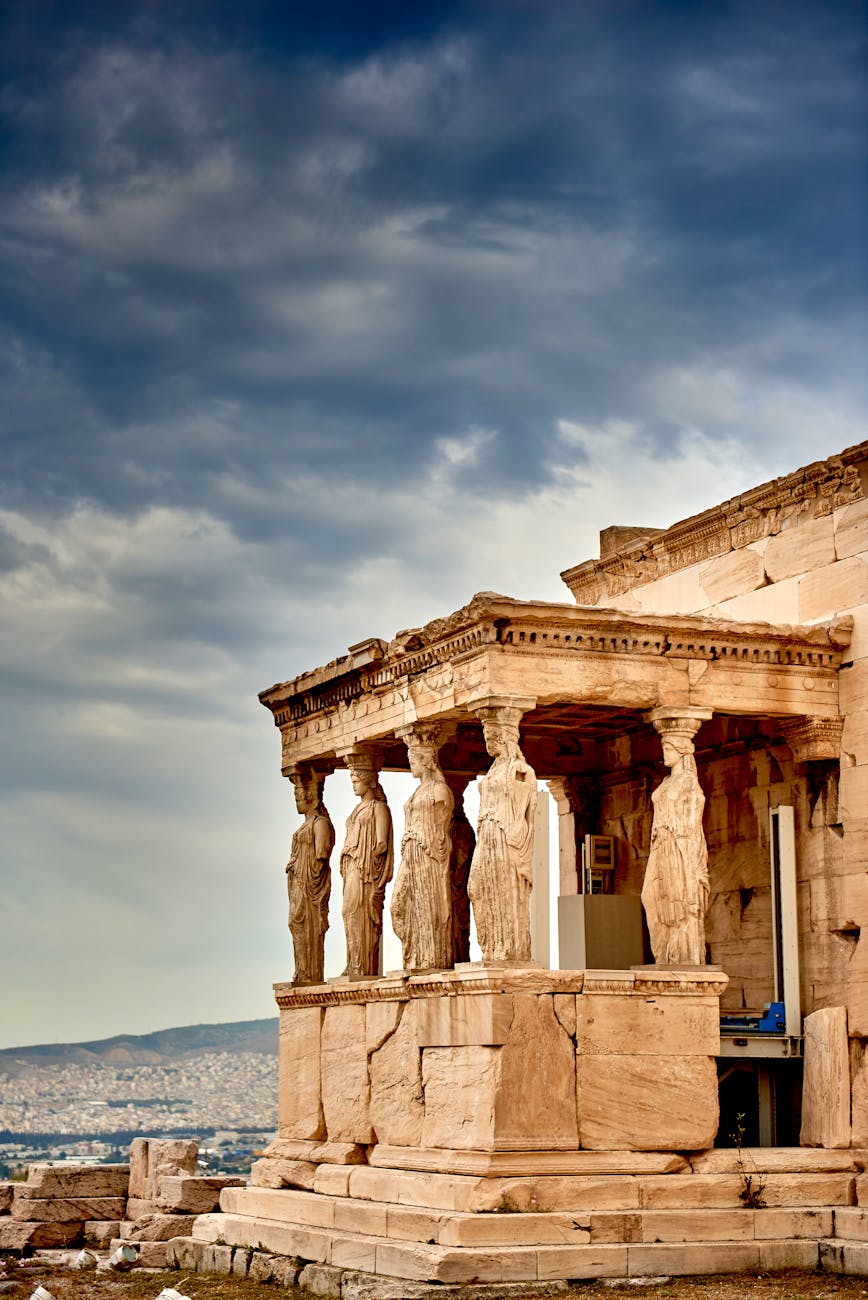
I once read an article from a professor at Harvard University who had created a multi-lesson review of literary classics for working and retired adults. He found great enthusiasm for his seminars from people who admittedly had dreaded reading the works of Homer, Shakespeare and other renowned authors when they were younger students. The more seasoned audience of learners brought the insights and maturity of their own life stories with them and more enthusiastically related to to the tales, poems and characters in the works of authors from hundreds and even thousands of years ago. 

I have always enjoyed reading and thanks to my high school English teacher I voraciously devoured books of poetry, epic adventures, romantic fiction, and spellbinding plays. I became familiar with the best writers of all time and learned how to relate their tales to my own life. I understood how to look for metaphors, irony, allusions in their highly crafted words. I learned about ancient heroes and myths that continue to be celebrated to this very day. I considered myself to be adept at critically analyzing any volume that I opened, and yet as I grow older I find that revisiting my favorite books and some that I once detested has allowed me to reach a higher level of understanding and appreciation for the greatest writers of both the past and the present. 

As a young person I had not suffered much other than the tragic death of my father. Mostly I was an innocent who was not able to relate to the anger of Achilles or the jealously of Othello. I knew of difficulties in people’s lives but was still mostly removed from intimate knowledge of such things. After almost eight decades of life I read the old masters with a new set of eyes and a greater appreciation of how they have used words to paint vivid pictures of all of our human emotions. I am able to see that characters from ancient Greece are not that much different from humans of the modern world. We are still ravaged by conflicting emotions that influence our behavior and sometimes lead to tragedies. 

Somehow my own personal growth has taught me that the classics of literature are more powerful than I ever imagined. They demonstrate both human evolution of thought as well as the sameness of our conflicted natures. We still have heroes with clay feet doing what they believe to be the best for humankind. Nonetheless we are wise enough to see the foreshadowing of danger when broken individuals assume power. We know that the Hectors among us do not always win the day. Sometimes they are humiliated and defeated but their goodness lingers and inspires for all time. Life can be brutally unrelenting just as those old stories depict but with determination we are able to overcome the challenges that seem to wear us down just as Odysseus did. 

Of late I hear many people insisting that education should be practical. We should emphasize more math and science and engineering. They insist that business skills should be more important than the liberal arts. They would prefer to replace English and History classes with courses that provide students with a trade or a direct route to a high paying job. Somehow the old feeling that a proper education should include the arts is falling into disrepute in many quarters, but I would suggest that many of today’s problems result because of a general ignorance of our past and an inability to use words instead of weapons to solve disagreements. Critical thinking demands abilities beyond simply learning how things work. We must also be aware of how people behave. We learn those things from literature, poetry, the arts, the stories of our past, the social sciences. 

It may sound strange for a long time mathematics teacher to advocate for a branch of learning that seems so removed from what societies seem to require to function well. While we definitely need a variety of skills I would argue that we also must possess a deep understanding of people. So much information comes from studying how we are the same as our ancestors and how we are different. Our knowledge requires the classics as well as the modern.

in many ways we would do well to focus education on showing young people how it all fits together like the weaving of a magnificent carpet. Creativity is the mark of our human natures. It distinguishes us from the other creatures. It has always been the key to progress, but rather than seeing ourselves as somehow better than our ancestors of old we would do well to know both what they did right and what they did wrong. It is the only way to attempt to avoid the mistakes of they made. It is the best way of being able to discern truth from lies. 

I’m enjoying my journey with the classics. I am annotating and parsing the words for deeper understanding. I am learning that when we strip away all of the modern conveniences that we enjoy our human natures are not that far removed from the people who walked this earth thousands of years ago. Acknowledging this helps in realizing that regardless of culture, wealth, language, religion or other differences we may have when all is said and done we are more alike than different. Seeing that truth makes it clear that our first job should be to find ways to live in harmony and peace, knowing that sadly we have to also overcome our warlike tendencies in the process. We can learn much from both the folly and the success of the past.