My Inheritance

Photo by Pixabay on Pexels.com

I often listen to PBS radio on my way to and from the mathematics classes that I teach. I enjoy the interesting programming, particularly The Engines of Ingenuity a short feature from the Engineering Department of the University of Houston. There is no predicting what the brief spot will be about, but it is always quite interesting. 

A recent edition found a most unique way of discussing the old question of nature versus nurture, the debate regarding whether a person’s DNA or the opportunities provided by parents have the most influence on the eventual outcome of how learned and successful an individual will ultimately become. Of course there are many studies and much evidence that that two operating in tandem are the most powerful predictors of how well a person will develop. Having good genes is certainly a plus, but combining those genes with parents who create an environment focusing on learning and observing the world heightens the possibilities for a child to grow into an intelligent and productive adult. 

I enjoyed a real life story on the program that spoke of George Boole, the son of a shoemaker who essentially taught himself mathematics and then contributed greatly to the study of Calculus as a mathematical innovator and professor. Many may know of George Boole as the inventor of Boolean Algebra which eventually became a foundation for the computer world of today. For his efforts Boole was given a gold medal and recognized as a brilliant theoriatician, but sadly his life was cut short when he contracted pneumonia and died a young man. 

Boole left a wife and four daughters and not a great deal of money for them to survive. It was the nineteenth century, a time when women were thought to be more comfortable maintaining a home rather than working. Mrs. Boole had to find a way to support her family while also encouraging her daughters to become highly educated women in an era where such things were uncommon. To accomplish her goal she worked as a librarian and invested heavily in education for the daughters rather than in savings accounts or things. At one point she even sold the gold medal that her husband George had won to pay tuition for her children. 

The young women went on not only to work in complex positions but also to attract highly intelligent men so that their own children left remarkable legacies to the world just as they and their father  and mother had done. Eventually one of the Boole grandsons, Geoffrey Taylor became an engineer and a major figure in wave theory and fluid dynamics. Few students of engineering earn a degree without studying Taylor’s ideas. Eventually he earned a gold medal for his pioneering work just as his grandfather, George Boole, had done.

I was touched by the story of the family of George Boole. I found an emotional connection with him and his wife. I too came from a family that placed a high priority on learning. Both my mother and my father urged me and my brothers to read and explore from very young ages. When my father died Mama continued to provide us with learning opportunities. She invested heavily in education, adhering to a ridiculously a strict budget that allowed her to stretch her meager income to include books and classes that would help us to develop our interests. She insisted that there was no limit to what we might achieve. She became a cheerleader and major force in helping us to understand that we had everything we needed to accomplish our dreams. 

My mother was quite proud that she herself served as a model for us by working during the day, taking college classes in the late afternoon, studying in the wee hours of the night and still maintaining a loving and healthy household. She often boasted that she came from a mother and father who had little more than grade school educations but she herself had a college degree. What made her even more proud was that my brothers and I all had master’s degrees and her grandchildren were all college educated with some earning PhDs and medical degrees. She left a legacy of encouragement and example rather than a fortune in money and things. She taught us to use our talents and our diplomas to make a difference in society. I became a teacher and school administrator with a master’s degree. My youngest brother had two advanced degrees and was a Chief in the Houston Fire Department. My other brother had two advanced degrees and wrote the computer program for the navigation of the shuttle to the International Space Station. 

The value of the legacy from our mother is incalculable. Se had a very difficult life in terms of tragedy, illness and lack of money but somehow she managed to leave the world owning her home and having zero debts while sending us to private schools and excellent universities. Her priority was always working to help us to achieve our potential. She was amazing in that regard and no doubt should have written that book that she always said she might do to help others to know how to inspire and challenge their children to be their best. I can’t think of a better inheritance that she might have left us. She was a woman who elevated nurture to its highest possible level. What a great woman she was!     

It Is Our Shame

Photo by Milan Cobanov on Pexels.com

In the last years of my career as an educator I was privileged to work in one of the KIPP Public Charter Schools. My students were mostly Hispanic or Black and many of them came from low income families. They were sometimes referred to as underserved, one label among others that they did not like. In fact, they often reminded me and the other teachers that their parents were hard working, loving people intent on providing them with the best possible education and opportunities to succeed in life. I grew to respect them and their families enormously, witnessing the sacrifices that they made to rise on the educational and economic ladder. 

One of the students asked me to be the adult sponsor for a club whose sole purpose would be to raise funds to distribute to worthy causes that help the people of the world. She offered a convincing proposal for such an organization so we decided on a day and time for the first meeting. We sent out flyers to students inviting them to be part of the group and then held our breaths in anticipation of who might actually attend that first meeting. To my surprise and relief the classroom was packed with eager participants who listened intently to the ideas of the young woman who had created the new group. Before the end of the gathering she had planned a weekly after school bake sale with promises from many students of homemade goodies to offer. 

The first sale was an enormous success but I worried that the initial enthusiasm would wane as the school year moved forward. Instead more and more students wanted to take part in the club and the selection of cupcakes and cookies and only grew. Before long I had locked away a veritable treasure in the school vault that belonged to the club, so it was time to decide how to donate the proceeds from the bake sale and other events like car washes and such. 

There had been a terrible earthquake in Haiti that seemed to demand our attention from the get go. Our first choice was to send half of what we had earned, which was substantial, to the Red Cross fund that had been set up specifically for that horrific tragedy. With our first donation sealed the students’ enthusiasm grew in ambition. The energy behind the scenes was electric and the meetings involved lively discussions of who and how to help.

One of the most genuine and generous students suggested that we make dinners to distribute to the homeless people who gathered in certain spots of downtown Houston. He described a process that his mother had used to make chicken with rice for big crowds. He describe how we might place the meals in individual containers and them carry to the people who would no doubt enjoy some good home cooking. His idea was so detailed that we already knew how much it would cost, how long it would take to prepare, and where the best places to distribute it would be. 

I explained to the students that I had to get approval for such a venture by checking with the upper levels of administration since we would be officially representing the charter schools and delivering our food in a school owned vans. I did not tarry in attempting to garner all of the appropriate consents and soon found out that nobody can distribute food to homeless people in our city without an official permit acquired through a long process at City Hall. Inquiries soon convinced me that our group would never get such a document and therefore this was not something that we would be able to do no matter how wonderful it seemed to be. 

Of course the students were distraught to hear to news. Some of them went so far as to do research on their own to find a loophole. They soon enough learned that the roadblocks to such charitable work are enormous and we gave up on the idea with great sorrow.

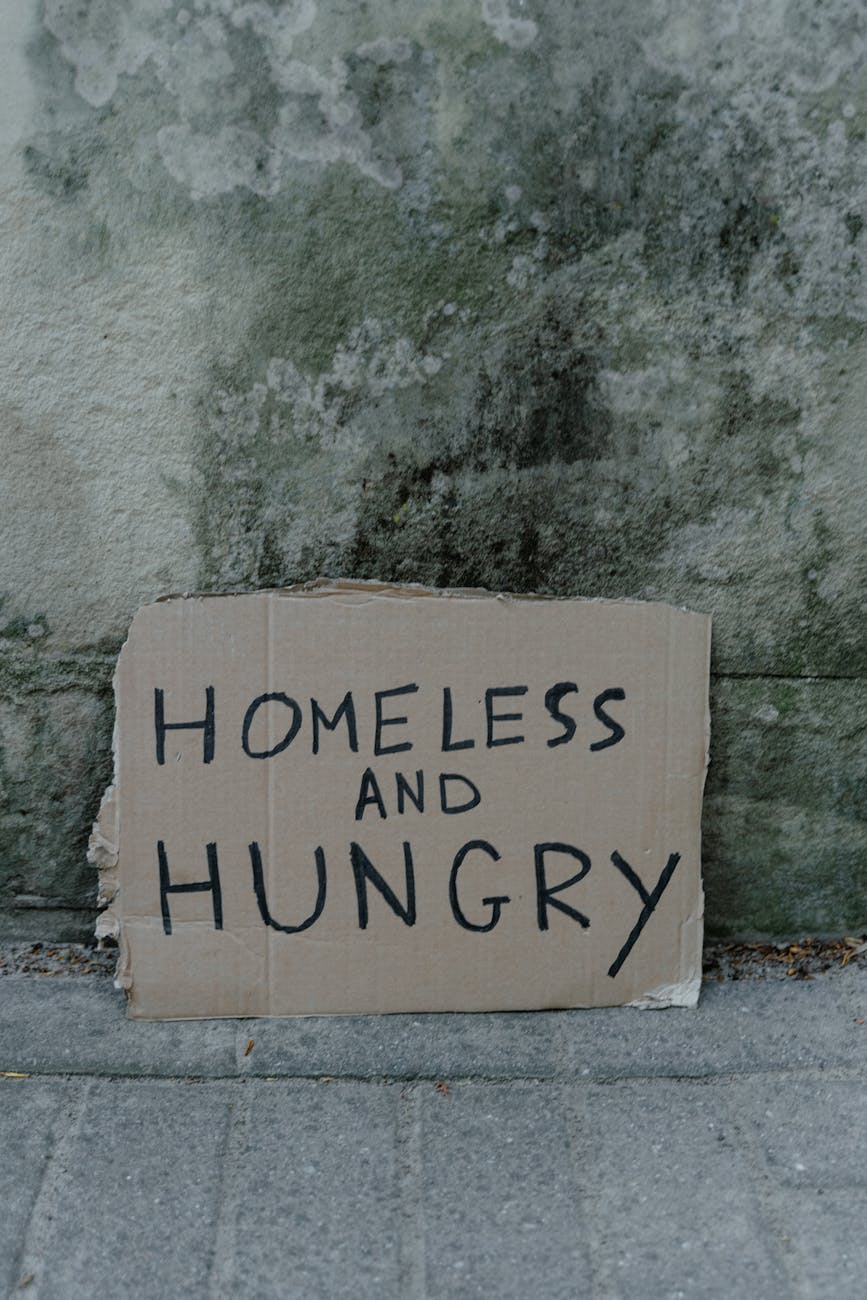
This background story gets me to the heart of this essay. There are a magnitude of rules and laws that make it almost impossible to help homeless people without handing them cash and hoping that it gets used for all the right purposes. We can’t distribute food without jumping through legal hoops and now the Supreme Court says that if a city or town outlaws sleeping in public places, homeless individuals may be punished for doing so. The question becomes who is going to make sure that they have the resources they need to eat and be able to sleep at night?

Our homeless population is on the streets for a multitude of reasons. Some are indeed addicted to drugs or alcohol, but many suffer from mental illnesses that have been left untreated. There are families that have simply hit hard times. There are veterans suffering from multiple illnesses including PTSD. My grandson recently reminded me that we should not just view such people as losers or somehow deficient. But circumstance we might find ourselves or someone we know among them. 

My grandfather often spoke of the grinding inhumanity of poverty. He remembered seeing Coxey’s Army when he was a young boy. They were a congregations of poor souls who were starving, homeless and unable to enjoy the security of home and food that most of us take for granted. This was back in the nineteenth century and we still have people who struggle to find the most basic necessities of living more than a century later. 

Over time we’ve called such people bums or hoboes or Okies. We’ve read about them in The Grapes of Wrath. We often dehumanize them and view them as nuisances who scar the landscape of our cities. We see them as a problem but do so little to help solve the problem like my students attempted to do. We want to punish them rather than work to help them live a dignified life. We don’t want to spend money on them because we see them as helpless and hopeless individuals who will waste or efforts. 

It is our shame to be this way. My grandfather told me this years ago. My students saw this as well. It’s time that we find a humane way to deal with the people who have no place to go instead of creating laws that dehumanize them. They have many needs that we can provide on the way to helping them overcome the issues that have made them homeless in the first place. It’s long past time to really try. We can no longer just look the other way or tsk tsk when we see them. Surely we have enough to share our bounty and our love.

The Most Wonderful Kind of Life

Photo by Niklas Jeromin on Pexels.com

Stories of “what if” are legendary. Perhaps the most popular and touching is the Christmas classic It’s A Wonderful Life. Modern Day Versions include a current hit on Netflix called Dark Waters, a thriller about a man whose life mysteriously turns upside down and inside out in an instant. It is quite human to look backward and wonder about the might have beens that we did not experience because we chose a particular pathway or because unexpected challenges changed the direction of our lives. 

We all instinctively know that dwelling on our perceived mistakes or misdirections is not only unhealthy but totally useless. We can never go back and probably would not want to even if given a chance to do so. Our best bet is to learn from our past and more positively direct our lives into the future. Nonetheless it is all too easy to critique ourselves and our life choices in hindsight when it would be far better to ask how we might make adjustments in the now that might lead us to a future that is more to our liking. It really is never too late to make constructive changes in how we think and how we choose to live. 

There are so many things in life over which we have little or no control. At the same time we each have the capacity to determine how to react to the many tragedies and challenges that derail us. There are going to be moments that seem terribly unfair, horrors that other people don’t appear to have to endure. There is indeed an inequality in the world in which some individuals and groups seem to always get the short straw while others flit merrily along unaware of all the suffering around them. It can be daunting to keep moving forward when every step forward is followed by being pushed back down. Nonetheless we all know people who have made the best of horrific situations and somehow survived the arrows that incessantly whiz toward them. 

I have great compassion for those who are beaten down. In truth the cards really are stacked against some individuals. I can’t even imagine what kept enslaved people from giving up on life. I wonder what human determination kept them going from one day to the next. I marvel at those who endured the horrors of the Holocaust and went on the live productive and happy lives once they were freed. I don’t know if I would have be able to overcome the humiliation that some groups of people still endure to this very day. We humans have a dark tendency to compound the trials of people that we fear only because they are somehow different from ourselves. We fail to notice that they are much more like us than they are different from us. Every human wants to be loved and to feel safe. Such is a common theme of books, movies and songs. We each dream of a good life and we all fall victim to wondering if things would be better if only we might go back and change our histories and the ways that we humans view the world. 

Of course we know that time traveling backwards is impossible. We can’t save Abraham Lincoln from being assassinated. We can’t make sure that Adolf Hitler never rises to power. I can’t force my father to stay home instead of going for a ride that would end in his death. Such magical thinking does us little good but we can study the here and now and realize new pathways that will take us into the future. We can teach ourselves how to deal constructively with the challenges that will inevitably come our way. We don’t have to be mired in hopelessness. 

There were indeed people inside those concentration camps who mentally fought to maintain their sense of self and purpose. That is not to say that overcoming horrors is ever easy but our personal attitudes can help us if we are determined to survive even hellish situations. We all know someone who has done so. We admire those people greatly even as we wonder if we would have their strength in a similar situation. The human spirit can be a powerful force when we are determined to set things right. Our pasts can guide us, but it is in the present that we design our own futures. With hard work we might carve out a reasonable facsimile of the kind of life that we have always dreamed of enjoying. 

I become like a broken record when I speak of my mother but of all the people I have ever known she is the shining example of overcoming the slings and arrows of misfortune. Her life story reads like a sad tale and yet she rose above the constant streams of misfortune that best her. Born into a large immigrant family in the midst of the Great Depression she experienced prejudice and loss even as a child. She watched her mother being forcefully taken to a hospital after a mental breakdown. She had rocks and insults thrown at her as she walked to school. Her fiancé was killed in battle during World War II and she herself went through a time of great depression over losing him. She found love with my father but when she was only thirty he husband died suddenly leaving her with three children and little money. She somehow glued herself back together to earn a college degree and find a job as a teacher only to be brought down again by mental illness that would plague her for the remainder of her life. She would lose friends and be greatly misunderstood but through it all she maintained a generous and loving outlook on life, embracing people just as they were, loving them even when they chose not to love her. She died surrounded by people who revered her with assurances that hers had been a saintly life. 

There is nothing wrong with accumulating money and things and power as long as such persons also have stored the riches of generosity and compassion in their hearts as well. The present and the future should focus on how we might all get along better. It should develop all of our talents and skills in ways that are meaningful and open to new ideas and change for the betterment of all. In the end if we can say that we have truly loved with all of our hearts and worked to bring joy and comfort to others we will have been successful. Sometimes such a life seems tiny and unexceptional when in truth it really is the most wonderful kind of life of which we might dream. 

Blessed Are Those Who Offer Hope

Photo by MART PRODUCTION on Pexels.com

My father-in-law recently spoke of old photographs taken of him when he was a boy. It somehow seemed odd to me that such an item existed because as far as I know there are no photos anywhere of either my mother or my father when they were children. Like my father-in-law they were youngsters during the Great Depression. My father’s family moved from place to place in search of work and food and housing during that time. My mother’s family members were lucky to live in a home built and paid for room by room as my grandfather strove to build a life in America. My father-in-law was the son of a doctor who lived almost without notice of the depravations that so many endured. The contrasts between the stories of that historic moment coming from each of the three are striking and revealing of the differing ways that people endure difficult times. 

I suppose that life was hardest for my father and his family because my grandfather was a construction worker who traveled wherever he might find a construction project needing his skills. His parents did not own a home or have a full-time income that was a sure thing, so they had to resort to creative ways of earning enough to keep a roof over their heads and food on the table. Sometimes that meant travelling to Mexico to purchase low cost vegetables and then selling them for a small profit to pay for food and shelter.

My mother often spoke with pride of how well her father had prepared for unexpected challenges. He owned the land and the house where they lived and even had separate property where he kept a cow and grew vegetables. With a job at a meat packing plant he was able to purchase scraps of meat at a discount, so the family never really worried about the basics of food and shelter even though there was no extra money for frills of any kind including new shoes and clothing. My mother wore dresses that had once clothed her three older sisters and shoes that had run down heels and holes in the soles. Her mother put cardboard inside to cover the openings. 

Mama remembers people coming to the back door of their home begging for any kind of food or drink. Since there were ten members of the family there was little to offer but my grandmother always found something to share if only a hot cup of coffee with a slice of bread. Christmas found the family luxuriating on gifts of an apple and an orange while birthdays meant receiving a nickel to save for a bag of broken cookies at the bakery just down the street. 

Since I had grown up hearing the stories of want and sacrifice from my parents it was startling to learn that some people fared much better during the time of worldwide depression. My father-in-law spoke with joy about the wonderful gifts that his parents and family members showered on him. He even had a little peddle driven car that he rode around in the sidewalks near his home. He vividly remembers Christmases when he received a BB gun and lots of wonderful toys that he wishes he still owned. When he spoke of the photos of him as a child he smiled at the thought of looking so sharp in new clothes purchased for the occasion. He was seemingly as unaware of how hard the depression had been on other people other than in the stories that he had seen in movies or read about in books. LIstening to him made me realize that there were differing gradations of want during Great Depression and some were even more dire than my father’s situation. 

I suppose that it is normal for each of us to react to the state of the world based on our individual experiences. I evolved from a very spoiled early childhood with my father to a more circumspect and frugal life with my single mother after his death. When I married my early years as a wife and mother were sometimes economically tough but I had learned from my mother how to use whatever income I had with inventiveness. Eventually both my husband and I were working and we entered the world of middle class luxury that has always felt more than adequate to me. 

I have been able to provide my children and grandchildren with experiences more in keeping with my father-in-law’s description of his childhood and adolescence. Nonetheless I carry a silent anxiety and need to be always prepared for sudden changes in my economic situation. I feel enormous empathy for those who struggle to survive even in the midst of the plenty of our society. I remember grocery shopping with my mother and watching her carefully considering the cost of every purchase down the the penny. I recall understanding that the food in the pantry and refrigerator had an intended purpose for feeding me and my brothers and so I never felt free to take whatever I wanted without first consulting with my mother. She was the distributor of nourishment and only she could determine if we had enough for snacks beyond the three meals of the day. 

Those days are gone for me. I am able to purchase both food and extras for myself and and husband and father-in-law. We eat well and perhaps a bit too much. We go out to restaurants more often than I did in the totality of my time with a single mother. We grinch about the rising cost of foods that we enjoy and then put them grudgingly into our grocery cart anyway. We buy things that I never saw in my youth after my father died like desserts and soda and salty snacks, Sometimes I actually feel guilty purchasing such items knowing that people are going hungry all over the world. 

I suppose that at any given moment in history there have been ranges of those who have enjoyed plenty and those who have suffered from want of basic needs. I try to remember my family stories and understand the serendipity of my good fortune with gratitude and a willingness to share a portion of what I have.

It would be easy to believe that I fully deserve my riches because of my hard work. While I have indeed labored each day, I have also enjoyed good health, a sharp mind, opportunities to grow and prosper. It would be a mistake to believe that everyone has equal access to the good life. Being born in the wrong place at the wrong time can make all the difference. Hopefully such souls will encounter a kindly woman of little means like my grandmother who will smile and give them a warm drink and a bit of food without judging them during their time of need. Blessed are those who offer hope for one day it may be you or I at someone’s back door begging for a bit of food. If we are lucky someone will be there to help us.  

Calming The Itch

Photo by Chris F on Pexels.com

When my brother, Mike, was a little baby he often became ill. I was not more than four years old but I still have a memory of my mother rocking him while he made a funny sound when he breathed. I would later find out that he suffered from asthma when I asked why our family doctor came so often to our home. Luckily he seemed to outgrow his childhood affliction or at least know how to control it. He became an avid outdoorsman hiking and running for miles. More than anything he loved to travel, often sleeping in a tent or later in his RV with his family as he journeyed across the world. 

Of late Mike and his wife have both been plagued by illnesses and accidents that have left them unable to get too far from home, at least for now. Their once active lives have slowed down. Their adventures mostly involve visits to doctors and exercise programs designed to help them return to a better state of health. What amazes me the most is how optimistically philosophical my dear brother is about his current situation. Instead of holding a pity party for himself he is creating ways to enjoy the slower pace of his life. He finds contentment in sleeping late, reading his many books, revelling in the quiet and undemanding environment that has defined his world for many months now. 

I admire my brother’s chill attitude because I struggle when I have to curtail my active life for any reason. Of late there seem to be a whole passel of things holding me back and I am admittedly not happy about it all. Since my vacation last August I’ve been plagued with one issue after another that has kept me mostly inside the four walls of my home. Admittedly I have a much more  difficult time finding comfort in may fate than my brother, and I actually wish that I might find it easier to adjust my attitude to fit the moment. 

I suppose my decent into a kind of self pity began when my husband’s theoretically easy heart procedure went south and led to some very dire and frightening moments. Of course he was soon declared safe but the past year has seen us making the rounds of one doctor after another in an effort to make certain that he will stay well. 

In the meantime I have had my own battles, minor as they actually are. I injured my leg and my foot at Christmas time and then suddenly developed high blood pressure. At least two months went by before my doctors found the secret formula of medications to return me to a nice even pressure for my heart. Then a regular mammogram turned into a scare that led to a biopsy that also turned out okay. Just when I thought that my little trials were over I developed incredibly painful spasms in my back that took me to the emergency room twice. Happily all ended well and I was looking forward to a small vacation, but that too fell apart when my father-in-law developed an impaction and had to be rushed to the hospital. 

When my father-in-law finally came home he was weak and relegated to a special diet. More importantly it became apparent to me and my husband that leaving him alone while we traveled was out of the question for now, and maybe for a very long time. Of course I secretly sulked, only revealing my true feelings to a dear friend and one of my daughters. Later I felt awful for being so selfish, especially when I hear my brother rhapsodizing about the loveliness of being homebound. 

I have been to so many wonderful places and had more than one “trip of a lifetime.” I should not be so cranky about having to stay home for a time. In truth it has not been so bad. It’s just that I seem to take after my father who always had a kind of Wanderlust. He’d get a faraway look in his eyes and we new that a vacation or even a long distance move was in the offing. He was determined to see all of the United States and most of the world. By the age of thirty who was well on his way to achieving that goal. I suppose that it was somehow fitting that he would die in his car returning home from a trip to the ocean. 

My brother is like my mother who found contentment in whatever state life presented to her. She got as much of a kick out of a trip to the store for ice cream as traveling to far away places. She had a knack for finding happiness that appears to have been passed down to my brother, but not so much to me. I’m always antsy, always dreaming about the next trip, but at the same time I am attempting to change my ways. I know that this moment and this life is temporary and I would do well to find joy in even the small moments of each day. I have to remind myself that my leg and foot have healed, my blood pressure is normal again, my back is not causing me pain, I did not have breast cancer, my husband’s heart is working, my father-in-law received the treatments he needed. How can I not be ecstatic over that? Why would I wallow in a pity party over being tied to my home for an indefinite amount of time.

I reveal these things because I suspect that many people that I know and even more that I do not know are struggling with seemingly insurmountable issues. I want them to know that I understand their fears and their moments of grief or loneliness or concern that life will never again be quite the same. Then I would tell them to be like my brother and attempt to find one thing each day that feels beautiful and wonderful. It may be so small that it is difficult to even notice, but in discovering it they will be able to move forward one more day. 

Some people are so good at being like my brother. I congratulate them for their positive spirits. I’m doing my best to become more like them. I can ignore that siren that is calling me to the mountains and just close my eyes to visualize what I have already seen. The memories of my trips are so crystal clear that I can remember every vivid minute. For now that should be all I need to calm the itch.