99.9%

test_1024x1024AT&T has been running a commercial that features a family that has suddenly lost Internet coverage. They panic, pray, spy on more fortunate neighbors whose wifi is still operating. The seconds and minutes tick by with no relief. Their lives are turned upside down. The ad suggests that if only they had invested in service from AT&T there is a 99.9% probability that this horrific dilemma would never have occurred. The moral of the sad little tale is that we must all be prepared lest we too suffer the indignities of losing our electronic contact with the world.

I always laugh a bit when I see that ad because of late I have been losing my AT&T Internet at least once almost everyday. The suspension of service never lasts more than a minute so I mostly remain calm until the signal returns. Still a fear lurks in the dark recesses of my soul that one day the interruption will last for hours or even an entire day. What would I do now that I am an electronic junkie? Where would I get my fix? Would I become as distressed as the hapless individuals in the advertisement that so amuses me?

Without warning last week I had to learn what measure of a woman I am. I was dog sitting at my daughter’s home when the unthinkable happened. The AT&T Internet went dead. I waited for a few minutes and soon began receiving messages about broadband errors, I was concerned but not totally distressed. I rebooted the system and sent a message to my daughter who was camping in Yellowstone National Park. I busied myself with other pursuits while expecting to be back in business before long. When evening fell and there was still no sign of a repair I began to actually worry but felt determined to ride out the temporary annoyance by reading and watching the local t.v. using an antenna. After all, I grew up in an era of black and white television, a single landline telephone shared by the entire family, libraries with real books, and newspapers delivered to my front yard with only slightly stale news. I understood what it was like to live the simple life without 24/7 contact with the outside world.

I retired to my dreams that night feeling rather superior. I had endured almost an entire day unplugged and it felt good to know that I had not become so spoiled and weak that I would freak out over loss of the Internet. I was not like that pathetic family in the ad.

I awoke the following morning confident that some noble repairman had taken care of the problem during my slumbers. When I realized that I was still offline a momentary panic seized me. I wondered how I would be able to post my blog. I have a hot spot on my phone but I had already received a message indicating that I had used all of my data for the period and I didn’t want to incur anymore additional payments than necessary. After a few minutes my rational side had kicked in quite nicely and I had decided that a nice trip to the local Starbucks would solve my problem.

As I drove through the neighborhood I noticed an AT&T truck parked next to a big box. A man was working away and I heaved a sigh of relief. Surely this meant that the problem would be solved. I relaxed while sipping my tea in the lovely atmosphere of Starbucks. I uploaded my blog and internally patted myself on the back for being so smart. I imagined the universe of online fun that awaited me when I returned to enjoy the once again functioning Internet system but it was not to be.

My hopes and dreams were shattered as soon as I attempted to connect my laptop and my phone to wifi upon my return to the house. The service was still as dead as a doornail. There would be no Netflix in my immediate future. I was stranded on an electronic desert and it felt abnormal. My resolve began to crumble as I finally understood that I was caught in the .1% dead zone of AT&T service. I was the statistic. Somebody had to forfeit their Internet to mathematically support their boast and I realized that I was the lucky loser.

Somehow I found ways to revert back to my old methods for doing things. I used the necessity of visiting different venues to upload my blog as a kind daily entertainment. I enjoyed the quiet of the house and found that I was far more relaxed than normal without the constant news updates that I usually receive. When there was nothing worth watching on the television I explored the area, read, and took walks. I soon established a routine devoid of devotion to social media and the noise of the constant chatter that so dominates the world. It wasn’t a disaster after all. It was actually quite nice. I reached a point when I no longer even checked to see if the service had resumed for fear that I might find it fully repaired. I kept to the slower pace that a lack of media allowed me to enjoy.

I’m back home now. My own Internet is running smoothly. I won’t have to leave to upload my blog and I have hundreds of emails to peruse that I have ignored for over a week. Somehow I am more afraid of reentering the cyber world than being without all of those distractions. I found that my days were far more productive when I wasn’t checking for updates every few minutes. I noticed the loveliness of silence. I played with the dogs and gave them my full attention. I read three books in the space of five days. I actually felt more unencumbered. I had escaped from the bondage of comments and tweets. I was no longer hypnotized by worthless offerings from the television. It was an exhilarating experience.

I’ll be the first to admit that these are the good old days with regard to the tools available to us for communication, research, writing, and entertainment. The Internet has literally revolutionized the way we think and act. I would never want to return to the limits that once defined our possibilities and yet I worry that we have not yet properly adapted to our brave new world. Instead of using the Internet for our benefit I fear that we sometimes allow it to use us. We have ironically fallen into a kind of hypnotic trance orchestrated by soundbites, popular culture, mindless and all too often incorrect information. Our newspapers have become purveyors of online slide shows and our journalists seem more concerned with “gottcha” moments than honest reporting of the news. The online world is falling all over itself playing a competitive game of outrageousness. The cyber universe has us all ginned up and the consequences have at times been disastrous.

I wonder if terrorism and hate would be as rampant without online sources keeping anger alive and well. Would our children be playing healthy outdoor games and reading more without the Internet and its constant stream of questionable entertainment? Do we really need to know things instantly? Do we even care what commentators think? Are we using the power of the Internet as effectively as we should?

The world is changing so rapidly that we rarely have enough time to adapt to the most recent ways of doing things before we are faced with even newer innovations. The pace of our inventiveness is moving faster than our reaction time. We really do need to step back from the insanity now and again. It gives us a fresh perspective as to what we really most need. It’s nice to know that our electronic world is humming 99.9% of the time but we each have the power to pull the plug whenever we wish. Sometimes it’s a good thing to tune out and tune in to what we really need.

Remains of the Days

Mission_Concepcion_San_AntonioSan Antonio is a well known tourist destination. It attracts visitors from around the country and the world with the Riverwalk, Six Flags, Fiesta Texas, Seaworld, friendly citizens and a dedication to showing guests a good time. Virtually everyone who comes to the city takes an inspiring walk through the premier Texas shrine, the Alamo, but far too few realize that this sacred battleground was once part of a network of five missions that were built along the San Antonio River in the early eighteenth century. All of them remain standing even to this day and are easily found just south of downtown. They are a treasure that all too often goes unnoticed but one rife with history.

The missions were the work of Franciscan priests who travelled from the centers of power and commerce in Mexico to the northern reaches of the country to spread the Catholic faith and secure the land for Spain. The missions resembled Spanish villages in Europe, centering life around the church. The priests encouraged the local native people, who had traditionally been hunters and gatherers, to settle down with the offer of food and lodging. Because living off of the land was wrought with difficulties not the least of which were attacks from other tribes, many were attracted to the seeming generosity of the padres.

Of course the real intent of the priests was to convert and change the people. They considered it God’s work to baptize those who were willing to accept their religious beliefs, learn the Spanish language, and be trained to perform various jobs. Much of the labor that built the churches, buildings and walls around the missions was done by the local people whose culture quickly changed under the tutelage of the priests. They learned how to plant and grow crops. They helped to create aqueducts that directed water from the river to the village. They herded cattle and sheep and even became experts at making cloth. They became stonemasons and artisans. In fact the people of each mission were generally so self sufficient that they even had excess supplies of food that they often traded for goods from Mexico City.

Mission Concepcion is perhaps the best preserved of all of the San Antonio historical landmarks and is the closest to the present day center of downtown. Its church is much like it was back when it was an active center of daily living. Even the wall decorations are just as they were back then. The church boasts the Moorish influence seen in many Spanish edifices. It sits along an intersection of busy streets where passersby are moving so quickly that they seem not to even notice this jewel that shares its space with a seemingly forgotten neighborhood. At one time the St. John’s Seminary was next door to the mission but it was abandoned at the end of the twentieth century and is now a spooky mix of rotting buildings scarred with graffiti and neglect. Somehow the entire area is a mix of incongruous contrasts but Mission Concepcion remains gloriously beautiful in spite of the brutal passage of time.

Further down the mission road, which is actually Roosevelt Boulevard, is Mission San Jose which is a massive property that includes the official Visitor Center for all of the missions. It provides a glimpse into what the daily routine might have been for the priests, nuns, military and native people who once lived there. The remains of the wall that surrounded it as well as many of the original buildings are still intact. The church is active to this very day with priests living at the site and providing daily masses and other services for the parishioners.

Next is Mission San Juan located near a present day airport but still somewhat hidden from the view of modernity. It is a quiet place where the spirit of what happened in the long ago feels much more real. It is easy to imagine the gathering of people carrying out their routines of salvation and existence. The work must have been hard and relentless under the hot San Antonio sun. Everyone including the children had jobs to do. Sometimes there were raids on the food supplies and livestock from the Comanche who refused to join the white men who came to the land wearing strange robes and preaching of a God so unlike their own. Here there is a graveyard where many of the people were buried when they lost their lives to disease, violence and old age. It is a sacred place that lies quietly under trees that might have once shaded the very same people when they were alive.

The most rural of the missions is Mission Espada. It stands in a more remote field than any of the others. It was the farthest outpost and the only one that features bricks in its architecture. Like the other missions its purpose was to bring a measure of spiritual and political civilization to an untamed area of Mexico. The efforts were supported by both the government in Mexico and the king in Spain. As the European world colonized north and south America the Spanish government had claimed more land than any other country and missionaries were always part of the efforts to bring the Spanish culture and beliefs to the native people in what was then known as New Spain.

Texas eventually saw an influx of settlers who had come with the promise of a new start in life. When they believed that the Mexican government had reneged on those guarantees they fought for and gained independence from Mexico. The missions lost their importance and faded into history. Somehow in spite of progress all around them they remained as reminders of a forgotten time. They were saved from total destruction by the National Park Service which now serves as the protector of this amazing collection of history. 

It takes most of a day to explore all five of the San Antonio missions but it is time well spent. They provide a glimpse into an era long before there was a Texas or a United States of America. They are monuments that remind us both of our human strengths as well as our failings. Visiting them is much like going on a spiritual journey back through time. They should be at the top of the “things to see” list for anyone who chooses to travel to San Antonio.

We learn much about ourselves by studying history. Discovering how those who came before us did things reveals mankind’s mistakes and complexities. The Spanish missions were part religious, part political, part business much as most things are today. We might debate whether they helped the native people or hurt them. Perhaps it is impossible to ever really know the full ramifications of what happened so long ago. The only reality is that the missionaries came and we are lucky enough to be able to view the remains of their days in places like San Antonio. It is a gift to us to be able to glimpse the past, a destination that we all should seek.

Finding the Gold Within

Olympic-Rings-large_trans++X9gqeEfKXQcqd954t2rXzvTSL8SM4yNVj_ZSDGesqAMEvery four years we become divisive and we also come together. The coincidence of our Presidential election and the games of the summer Olympics creates a kind of love/hate situation in living rooms, at dinner tables and in neighborhoods across our nation. On the one had we speak of issues that divide us into camps and on the other we join together in cheering the best among us. There is a kind of irony in the magnitude of our difference and our sameness that fights for dominance over who we are as a people.   
The Greeks were one of the first nations to experiment with democracy. Theirs was a far cry from the present day government of the United States but the basic elements were there, at least for a handful of the citizens. Women were excluded as were many from lower economic classes and those believed to be outsiders. There were no representatives. Instead it was a system based on one vote for each eligible person with a simple majority determining the fate of any proposal. It was democracy in its purest form. It was the start of a grand experiment that would evolve over time and undergo many iterations. It would be hundreds of years before the grand idea of democracy morphed into a less chaotic and inclusive way of running a more just and fair system.

The Greeks were innovative people who instituted the Olympic games to celebrate the power and beauty of the human body and to bring the people together in harmonious competition. Back then the games were rather simple and the participants performed their athletic feats in the nude. Citizens gathered to watch the events and to cheer for their favorite contestants. The games provided a nice distraction from the hardships of daily life and the continuous discussions and battles that were an inevitable by-product of human attempts to live in harmony. 

The modern day Olympic games attract challengers from over two hundred countries and feature a variety of sporting events that the Greeks of old would not recognize. The athletes come with an array of coaches and specialized equipment. They train for years and rise through the ranks to become contenders for gold medals in their specialties. Just as in days of old there are national heroes among them as well as those deemed so extraordinary in their abilities that they are cheered as heroes by everyone.

The road to the Olympics begins in ordinary ways. A young child joins a neighborhood swim team or runs across a field with the speed of a deer. Somewhere an adult notices the talent and suggests that perhaps a bit of training may help the individual to improve. The most gifted youngsters demonstrate not just natural aptitude but a willingness to devote inordinate amounts of time and money to both learning and competition. Everyone can see that there is indeed something quite special that differentiates the best athletes from their peers. They and the adults who guide them are willing to work long and hard. They do not allow challenges to defeat them. Their quest for excellence becomes a focus for them and their families. Everyone sacrifices. Eventually they excel in the neighborhood, in the city, in the state, in the country and the world.

Few of us have the talent, the inclination, the support or the resources to embark on a journey to the Olympic games. It takes a very special set of circumstances indeed to be among the best in the world and yet every four years we are fascinated by the variety of stories that each of the participants bring to the games. From them all of us become inspired to achieve just a bit more in our own lives. The heroes of the Olympic games are the stuff of legends, human iterations of the gods of old.

My fascination with the Olympics began when I was still in elementary school. I watched an old black and white movie about Jim Thorpe and I was hooked. It told the tale of a native American who seemed able to perform any sort of athletic feat more ably than any of his peers. He came from poverty and want but on the field of competition he was glorious, winning at seemingly anything that he tried. Eventually he found glory and gold at the Olympic games. Sadly, different rules of the day and his own ignorance of them eventually resulted in a decision to strip him of all of his medals simply because he had once played on a semi-professional team to support himself. I remember feeling crushed by the unfairness of what happened to him but still regarding him as amazing.

Perhaps the greatest Olympic story of all is that of Jesse Owens who dominated the games in Munich at a time when Adolf Hitler was intent on spreading the myth of a super race of white men so perfect that they would be able to dominate the entire world. It visibly angered the dictator to watch a black man disprove his theories and served as a reminder to everyone that there is potential greatness in all of us regardless of background or race. The Olympic games have served time and again as the great equalizer that disregards the often faulty thinking of mankind.

During the next couple of weeks we have so many opportunities to watch the most remarkable men and women doing their best not just to represent their respective countries but to demonstrate the power of the human spirit. It is a time when we might teach our young that no worthy goal ever comes easily but with determination we all have the potential to realize our dreams. The games demonstrate, as one of the relentless commercials says, that all of us have gold inside our veins. We were born with abilities just waiting to be released and it is up to each of us to find out what those skills are and how we might use them to better ourselves and the world around us.

I watch the swim competitions and think of hot summer afternoons when I witnessed my grandsons earning multi-colored ribbons in the neighborhood pool. I see the track stars and recall cheering the same boys as they ran in weather so cold that all of the spectators were covered in coats and heavy blankets. I think of the young people dunking basketball after basketball at our local park. I see the bicycle riders struggling up mountain roads. I know that none of the competitors reached the pinnacle in their respective sports without a work ethic that would shame all of us and I applaud each and every person who showed up again and again and again.

I’m not much of an athlete. I grew up at a time when girls were rarely encouraged to pursue sports, especially in my particular family. I never had the kind of coordination needed to work with a ball of any kind. I mostly ran and rode my bicycle and twirled my baton. I practiced tricks on roller skates and learned to swim only enough to save myself if needed. I focused my time and attention on academic pursuits, a worthy cause but one that left me sometimes feeling incomplete. I have come to believe that we humans should develop both body and mind to be whole. I suspect that this is what the ancient Greeks were thinking when they offered their citizens philosophies, innovative political systems, art, literature, mathematics and athleticism. They understood that we are incredible creatures most especially when we strive to use all of our capabilities.

Genius of mind or body is found even in the farthest corners of the world. There is potential for greatness everywhere. Each of us needs to spend more time becoming our personal best and less criticizing those who look or feel or act differently. We are all part of the same team, the human race. When we face our own challenges and embrace everyone around us we all become better. We all find the gold.

Heroes

Wizarding-World-of-Harry-PotterThe love of reading seems to be embedded in my DNA. For as long as I can remember books have played an integral part in my life. They bring me pleasure and contentment. I enjoy a multiplicity of genres and always have. I like fiction as much as nonfiction, poetry as much as prose. The truly great writers capture the essence of the human experience. They introduce us to heroes, real or imagined. They ask us to think and consider alternatives. They transport us to new worlds and ideas. Reading is by far mankind’s most magical experience.

When I was in high school I had the same English teacher for all four years. He required us to read a new book each week and then write a general critique of it. At the beginning of my freshman year he gave us a list of all of the books in our school library and suggested that we enjoy as many of them as possible during our time as students. He not only encouraged but required that we select a variety of authors and topics to gain exposure to many different philosophies and ways of expressing thoughts. It was at times difficult to find the time to meet his demands while balancing all of the other tasks that were part of my life but admittedly I was the most content whenever I was lost inside the pages of a new book.

I came to know many heroes and anti-heroes. I learned that even the most remarkable individuals in fact and fiction had moments of failure in their journeys as well as triumph. I lionized the people who stood for purposes greater than their own. Perhaps my quest to find the goodness in mankind had begun with the fairytales that my father had once read to me. At the time that I sat next to him as he related the stories of triumph over tragedy I had little idea that I would one day embark on my own hero’s journey. When he was gone I became addicted to stories of saints hoping to find a pattern in their sacrifices and the secret to living a good and decent life. It was not until high school that I finally realized that heroism is far more complex than I had once thought. As human beings even the greatest among us often falter. There is never perfection.

There are particular authors who seem to understand our human strengths and frailties. John F. Kennedy’s Profiles in Courage describes unique situations in which individuals had the choice of standing for their convictions or mingling with the crowd. None of the people whose stories he told had particularly demonstrated the characteristics of a hero until the defining moments in their lives when they decided to do what they believed was right and just. In some cases it cost them dearly. In others it elevated their status. In every example their actions took great courage.

Sometimes we seem to have a dearth of heroes. We shouldn’t have to watch a Jason Bourne movie to experience greatness. It is doubtful that we will find true bravery inside the pages of a Marvel comic book. We want to see the real thing and most often find that it is hiding in plain sight in the most unlikely places.

My grandfather traveled across an ocean to a new world and worked from early in the morning until late at night to earn the resources to buy land and build a home for his family. He toiled in a meat packing plant cleaning carcasses and bloody floors. He was wracked with pain in his legs that he stoically endured. He and his children were taunted for being foreigners with unfamiliar ways. He maintained his dignity and his pride in spite of the difficulties that plagued him. He taught his children to work hard, remain optimistic and take full advantage of life’s possibilities. He insisted that they ignore insults and remain strong and confident. He was a hero albeit with his own feet of clay.

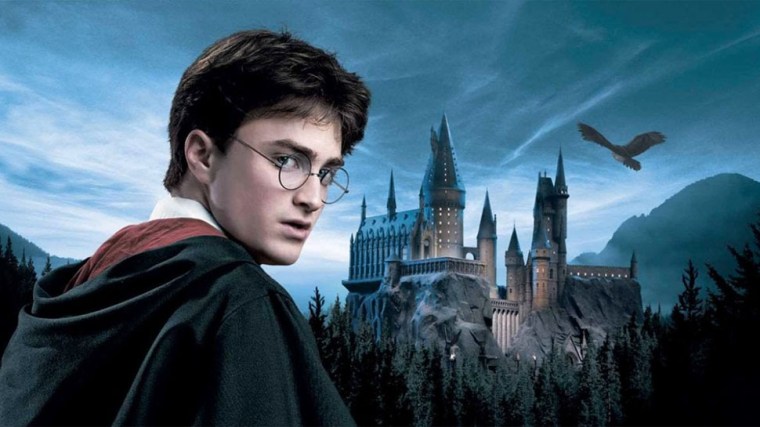
The new installment of the Harry Potter saga comes in the form of a stage play. It is almost Shakespearean in its theme. As the story unfolds we see Harry as a middle aged man, married with three children. His days of adventure are seemingly behind him but his reputation marks him as surely as the scar that reminds everyone of his story. Like many fathers he struggles to communicate his feelings to his children. He is a victim of the inevitable gap that separates one generation from another. As a grownup his heroism takes a new and less romantic form. J.K. Rowling wisely notes that even the greatest wizard has imperfections that make life difficult.

Perhaps we are all guilty of expecting too much from those who would be the heroes among us. We cringe when they make mistakes or say the wrong things. We seem to take joy in noticing their missteps. We magnify not only their accomplishments but also their failures. We place someone like Tiger Woods on a pedestal when he appears to be perfect but joyfully knock him down when he proves to be as flawed as the rest of us. There is something that is not quite right about our hero worship. It is filled with unrealistic expectations that no human being will ever be able to meet. With the media lurking around every dark corner it is almost certain that even the most generous and outstanding individual on earth will ultimately be accused of being a fraud. 

We have a terrible habit in this day and age of confusing heroism with a willingness to agree with us. We tend to disdain anyone who suggests that perhaps there is a different way of viewing things or solving the world’s problems. It is easy to bend and sway with the wind. It is far more difficult to adhere to integrity and endure the boos of the crowd. Sometimes it is that lone voice urging us to realize that the emperor has no clothes that holds the truths that we need to hear. Heroes are not always the most popular or the ones who make us feel good. Often they express truths that challenge our comfort and ask us to suspend our preconceived notions.

The history of the world demonstrates over and over again that we seem to get our heroes just when we need them most. They bravely guide us to be our own best selves.  They may do so quietly and without fanfare or with great flourish. They may live next door to us or in the halls of power. We never quite know when we will encounter them but we recognize them when we see them. They show us how to muster our hopes and dreams into a better reality if only for a brief moment in time. They are Mother Theresa and the woman who brings a casserole to the sick. They are Martin Luther King, Jr. and the man who helps a stranded motorist to change a tire. They can be the child who stands up to a bully or a senator who refuses to endorse a questionable political candidate. Our heroes are not just found between the pages of a good book. They are all around us and in the end they almost always set the world aright.

Bad Moms

bad-moms-trailer-tease-03-160503_354f27e1f5010db26fc76e6faefdda9c.today-inline-largeI have many women friends who are highly accomplished professionals. They are lawyers, doctors, engineers, educators. They have risen through the ranks in their respective careers. They have made important decisions as part of their duties, sometimes involving life and death situations. They are unafraid of hard work and challenging problems. They stride through life with confidence. It is only when they have accepted the role of mother that they falter just a bit. To a woman they each admit that parenting is the hardest job that they have ever held.

The demands of being a mom begin with the first signs of pregnancy. A woman’s body begins to change to accommodate the life growing within. For me the first sign that something was happening was the most extreme heartburn that I have ever experienced. Not long after those first symptoms I was afflicted with morning sickness, a general feeling that I was going to puke my guts out. The sight of certain foods made me even more ill. My high level of energy seemed to become diminished with each passing week. I never strayed far from bathrooms because my bladder seemed to be continually full. Different body parts became sore and I slowly but surely grew to feel like a beached whale. My fingers and ankles swelled to three times their normal size and I developed a limp with my left leg because the baby was lying on a nerve. In spite of all of the aches in my body I was always delighted whenever I felt the flutters and kicks that told me that I was carrying a life inside my body.

I had my children when I was in my twenties. I was thin and wiry back then, a healthy woman who had no problems either carrying my babies or birthing them. So many women are not nearly as fortunate. They have to spend weeks immobilized by bed rest. They require the surgery of a Caesarian section rather than a more natural delivery. By the time that their children are born they themselves are in need of recovery time but instead they are thrown into the whirlwind of routines required to care for an infant. They must awaken for feedings even in the middle of the night. There is little rest. Even with help the tasks of mothering are often daunting in the first weeks and months of a newborn’s life. So many things can and sometimes do go wrong. The mother experiences a roller coaster of emotions, often caused by hormonal imbalances that render her unable to maintain control. It is the best of times and the worst of times.

Those early days when mother and child bond are forever etched in a mom’s memory. No matter how many years pass she always recalls the unmitigated happiness of holding her tiny baby. Those sleep deprived nights become beautiful moments. The chores that were at first exhausting evolve into a routine, her way of life. She begins to react to the demands of her children with love. It is what a mother does. She learns how to snatch a bit of rest here and there in between the caring and the teaching and the loving. She juggles hundreds of tasks in a single day but still worries that she may not be doing enough. Her children become the driving force of her life and even as they become more able to fend for themselves she thinks of them constantly and always will.

The years go by at breakneck speed. The first day of school comes all too soon. The child begins to slowly but surely push away to gain independence. All moms want this for their children but still feel twinges of regret that their roles and relationships are ever changing. They lie awake at night wondering if their actions are building strong and healthy children who will be able to navigate the world. They chastise themselves for the wrongs that they believe they have inflicted. They are their own worst critics.

It is little wonder that the summer comedy hit Bad Moms is resonating so well with mothers across the country. Entire theaters are filled with women laughing hysterically and relating to so many of the over the top jokes. I went to see the film last week with a group of twenty ladies of all different ages and each of us found moments in the movie that spoke to us. The truth is that we are often judged the most in our roles as moms. Society in all eras has inflicted its mores and customs on mothers, often resulting in making them feel inadequate to the task. The truth is that human beings cannot be perfect all of the time. None of us have the fortitude to be without flaws and somehow when we exhibit them in our parenting they are magnified.

Bad Moms points to our tendencies to compare ourselves to others and to standards that may actually make us feel uncomfortable. It also draws back the curtain on the realities that each of us struggles to overcome. Our children are not automatons. They are individuals just as are we. As mothers we have to understand when it is right to curb our ambitions both for them and for ourselves. We have to know when it is okay to pamper ourselves and when we must be available for our children. Raising children is a continual balancing act that requires wisdom and sacrifice but not a total surrender of ourselves.

When I was a young mother life was admittedly a bit simpler. I thought nothing of allowing my children to enjoy free range time around the neighborhood. Nobody was going to judge me for telling them to play outside on a hot summer day. I did not feel any pressure to entertain them or to enroll them in a never ending schedule of activities. I gave them swim lessons and took them to the park. They learned how to roller skate and ride bicycles. When they expressed an interest in dance I found a teacher for them. I purchased art materials and let them experiment. They ran around in their bare feet and often had dirt on their faces. If anyone was thinking ill of me for being lax they never mentioned it. My biggest concern was always that I might be spending too much time on my teaching job. I worried that my girls might think that I cared more for my students. All in all I felt comfortable that I was doing my best but it involved far less than the requirements that I see being placed on today’s young mothers. Bad Moms addressed the pressures that are now overwhelming so many women who are striving to give their children the best possible environment. Sometimes today’s mothers are losing themselves in the process.

Parenting is admittedly difficult. Those of us who agree to accept such a responsibility would do well to support one another rather than constantly critique. We all want our children to do well and that means that we should suspend our judgements and competitive spirits so that we might work together. We don’t all have to rise before dawn to run around the neighborhood track so that we might remain thin. Sometimes that extra hour of sleep does way more for our well being. Our meals don’t have to be ready for the Food Network. Sometimes microwaving some chicken nuggets gives us more time to sit and talk with our kids. If the house is strewn with toys and laundry we can make a game of quickly placing everything into neater piles. Our children do not need to have the latest phone or the most stylish shoes but they do need us. Moms have enough to worry about without including the insignificant in the agenda.

I am more proud of being a mother than anything else that I have ever done. I know without anyone telling me that I was as imperfect in that role as anyone who has come before or after me. I woke up each morning and did my very best. I had to learn how to forgive myself for all of the mistakes. My girls are now in their forties and I am still their mom. These days I have to remind myself that my new job is to support them as they raise their own children rather than to tell them how to do things. They are incredible mothers so I guess I did something right although I’m not sure that I should take full credit. The reality is that all of us are the product of our mothers, our fathers, our extended family members, our teachers, our churches, our entire histories. We are all in the game of life together. Bad Moms reminds us to focus on the things that truly make our families strong.