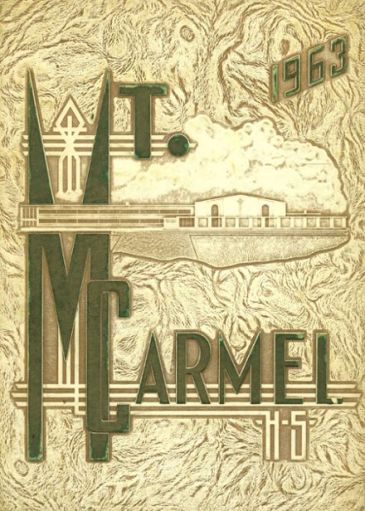
The Beginning: 1962-1963

yearbookIn September of 1962, I entered Mt. Carmel High School as a freshman. I was not quite fourteen years old and looked as though I was only about ten. At under five feet tall and only about seventy pounds I was a tiny girl who didn’t appear to belong. I was both excited and terrified as I walked down the wide gleaming halls in the two story building that still looked as new as it had when it was built only a few years before. I had been warned that members of the upper classes might try to sell me an elevator pass and that I was to politely refuse to purchase one because there was no elevator in the building. It was easy to tell the fish from those who had already spent a year or more studying in those classrooms. We wandered with dazed looks on our faces as we attempted to take in the magnitude of our new phase of life.

The girls looked a bit uncomfortable in our brand new uniforms which seemed to have been designed to make us look as unattractive as possible. We would eventually grow to hate the brown and white pleated skirts, white button shirts, and brown flannel jackets that were our daily wear but in those early days it was all brand new and we did not yet understand how weary we would become of donning the same outfit every single day.

Our teachers were no nonsense as they outlined the requirements for each class. They insinuated that we would have to demonstrate our mettle or be left behind. It felt as though we were in a military boot camp as we wondered how it was even possible to read and report on a book each week while also writing two hundred word themes that would be due every Monday morning. It was difficult to work the combination locks on our lockers and still have time to rush to class from one floor to the next. There was so much to remember, so much to do and learn. I don’t recall much from the beginning because I felt as though I was in a daze but soon enough we all had adjusted to our routines.

The best part of being in high school was a new found freedom that we had never before experienced. Nobody was treating us like babies any longer. We became responsible for ourselves and it was exhilarating. There were also so many new faces with people coming from all over southeast Houston to join us in our adventure. At first I felt shy and self conscious, especially around the older students, but before long I was enjoying brand new friendships that would only grow as I worked my way through the next four years.

This was a year of profound change all around the world. Pope John XXIII died during that school term and would many years later become a saint. A little musical group from Liverpool, England would score a music hit with a catchy tune called I Want To Hold Your Hand. Rachel Carson would alert mankind to the dangers of polluting our environment in Silent Spring. Charles Schulz would introduce Happiness Is a Warm Puppy and Crick, Wilson, and Watson would earn the Nobel Price for Medicine and Physiology for determining the molecular structure of DNA. In my hometown of Houston Dr. Michael DeBakey used the first artificial heart during surgery.

I loved my teachers and my classmates almost instantly. Father Shane, my English teacher, would become a beloved icon and inspiration both for my writing and my career in education. Sister Wanda somehow made Latin fun and Father Bernard opened up the heavens for me in our Physical Science class. Father Franklin did his best to teach us Algebra I but I still suspect that I mostly self taught myself when I went home each evening to unravel the confusion that I felt after each of his lectures. Sister Francina was as sweet as can be but I often experienced stark terror whenever she began shuffling the index cards that contained each of our names so that she might randomly quiz us on the reading that we were supposed to have done the previous night.

Mostly though I loved all of the extracurricular activities associated with a high school. I joined the newspaper and became a cub reporter, although my contributions were minimal. I traveled with the Medical Careers Club on field trips to the Houston Medical Center thinking that I might one day pursue a degree in medicine. I loved our class journeys to the Alley Theater and to the Music Hall to hear the Houston Symphony. I became a member of the Student Council  and for a time marched with the Cadets drill team. Best of all were the Friday night football games where we all met to blow off the stress from studying and to just laugh and yell and be ourselves.

Mt. Carmel sponsored a dance every Saturday night in the school cafeteria. It was open to anyone willing to pay the small entry fee. Disc jockeys from radio station KNUZ played the latest music and sometimes even secured live bands. They advertised on the radio so we usually drew a nice crowd. I went almost every Saturday night and loved listening to the music and visiting with my classmates. I learned the true meaning of being a wallflower as I often found myself relegated to sitting in the metal chairs that lined the perimeter of the dance floor. Somehow I still managed to enjoy the evening even when I never got the opportunity to hit the dance floor.

I was in awe of the older students in the school. I thought that Gerri Gallerano was the most beautiful girl that I had ever seen and since she always smiled at me when she passed in the hallway I knew that she was also quite sweet. I formed a new friendship with a girl named Claudia who had gone to my previous school but whom I had never really known that well. Her sister Camille was a senior who kept us well informed regarding the dos and don’ts of high school society. She was so down to earth and would serve as a major inspiration for me for years. I never really got to know many of the juniors but since my cousin, Ingrid, was in the sophomore class, as was my next door neighbor, I felt more comfortable with them. I had major crushes on several of the sophomore boys but their names will go with me to the grave.

The freshman year of the Class of 1966 would prove to be quite wonderful. Somehow we managed to meet all of the impossible deadlines that our teachers set for us while we were being transformed from babies into bonafide teenagers. We had little warning that the our innocence and that of the world would soon be put to the test. For the time being we lived in a comfortable world where the halls were filled with our laughter and we were certain that the hopes and dreams that we whispered to one another as we walked from class to class would surely come true.

I now look at the cute little faces of my classmates in the yearbook for 1962-1963 and I wonder how I possibly felt intimidated and shy around anyone. All of the kids wear expressions that are so sweet and eager to please. Their smiles are genuine and inviting. It is easy to see that we were all good people beginning a four year journey in which each of us would be forever changed.

Fire

fire-generic-750xx724-407-0-38When my youngest brother, Pat, announced to our mother that he wanted to become a firefighter I suspect that she believed that he was just going through an adolescent phase that would soon enough pass. She told him that she would not give him her blessing to enter the Houston Fire Academy until he had first earned a college degree, a requirement that he dutifully completed. With his diploma from the University of Houston in hand he returned to her once again to announce that he had applied to become a candidate for the Houston Fire Department. This time he was only informing her, not asking for her permission. Shortly thereafter he began his training and was so taken with the lessons and skills that he learned that he graduated number one in his class. It was a proud day for him and all of our family when he earned his badge and a job at the downtown Houston Fire Station Number One.
Pat threw himself wholeheartedly into his work and it was not long before there was a major fire in the downtown area that was so large that it made the nightly news and there in a photograph for the ages stood my brother aiming a stream of water at a wall of red flames that dwarfed him. The image showed his back with his last name emblazoned on his jacket. It was a frightening reminder of just how dangerous his job really was. As a family we tried not to think too much about the kind of things that might happen to him but again and again there were reminders that firefighters literally place their lives on the line each time that they respond to a call for help. They never quite know what kind of situation awaits them and for the most part they rarely discuss what they have seen with those of us who would rather not be reminded of the dangerous possibilities.

Pat was as happy with his career as anyone that I have ever known. He spoke glowingly of the brotherhood and friendships that he shared with his crew members. He proved his mettle as a leader and began to work his way up the ranks, eventually becoming a Captain at one of the neighborhood stations. It was apparent that his men loved him as much as he loved them. They became a second family for him in an environment where he felt confident that he was living his dream.

He returned to school first to earn an advanced degree in Public Administration and then another in Fire Safety. He became such an expert in his field that Mayor Lee Brown tapped him to become the director of the Fire Academy. It was a post that he cherished because it allowed him to share his expertise with young men and women who were as eager to serve as he had always been. He upgraded the rigor of the training process with an eye to preparing his charges for the special demands of being a first responder in one of the nation’s largest cities. It was a very happy time for him but before long he was moving into other arenas of leadership.

He became a District Chief and then a Regional Chief. He helped to investigate fires and to set and maintain high standards for all of the firefighters in the city, all the while humbly doing his work without mentioning his ever growing status within the department. He was always far too busy working for the betterment of Houston to brag about his accomplishments but the men who had worked for him often whispered their admiration.

One of Pat’s most exciting moments came when he accompanied a group of Houston firefighters to New York City on the occasion of the opening of the 9/11 memorial. They traveled by motorcycle all the way from Houston and then participated in a parade in downtown New York. He was so moved by the stories of bravery that he heard from comrades from all around the world. It was a grand moment in which he truly realized the importance of his work and stood shoulder to shoulder with people who understood the unique challenges and joys of being a firefighter.

I can’t imagine what kind of courage it must take to don the heavy equipment of a firefighter and hop onto a truck for a ride to an unknown disaster. On any given day our firefighters know that they may walk into situations from which they will never return. Even in the best of circumstances they often experience damage to their lungs from the continual exposure to smoke. They may fall from the rafters of an attic or have a ceiling come down on their heads. They encounter life and death situations over and over again and are only able to relax once they are safely back at the station. Still they eagerly report to work again and again just as Pat has always done.

Pat Little has served the City of Houston with pride and enthusiasm for thirty six years. He has tirelessly worked during hurricanes, floods, freezes and even when he felt sick. On some nights the alarms awakened him so many times that he had little sleep. There were Thanksgiving and Christmas days when he was faithfully executing his duties while the rest of us were relaxing and celebrating without him. Missing even a single day of work was always anathema to him. He rarely complained when he had to be absent for the milestones of his children or when he had to forego special occasions because he was saving a life. Now his outstanding and selfless career is finally drawing to a close. On Sunday his crew is hosting a party for him and on October 11, he will retire for good. He will be remembered and revered by both family and fellow firefighters for the joy and dedication that he brought to his job for all of those thirty six years. I have little doubt that given the opportunity he would gladly relive his life as a firefighter all over again.

Congratulations, Chief Patrick Little, on a job well done. We are all proud of you and humbled by your quiet courage and your unflagging determination to make a lasting difference in the world. You have done well in a world that is all too often marked by evil and greed. You are our hero, a man who has shown the meaning of service.

Realize

dna_6339076_lrgThe history of mankind is the instant between two strides taken by a traveler. — Franz Kafka

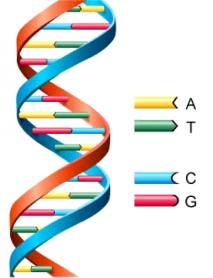
There is great diversity among the people who live on this planet. Each of us is a unique blend of nature and nurture. We are born with a pattern of DNA inside our bodies that identifies us and holds the history of our ancestors. Ironically the genetic differences between one human being and another are miniscule. On the whole we are more alike in basic composition than we are different. All of us are members of the humanoid species known as homo sapiens, a Latin phrase meaning “wise human.” Our kind evolved over hundreds of thousands of years. Other humanoid types did not survive but remarkably we did, overcoming monumental challenges as we traveled from eastern Africa to all parts of the known world.

Modern man often follows the money but our ancestors set out on the original journeys in search of food. Unlike the prey for which they searched homo sapiens stood upright, had a larger brain, and created tools that allowed them to overcome animals that were faster and stronger. Early humans worked together and created societies that moved together, protecting one another from dangers but also communicating with stories and flights of imagination. They not only made useful implements but also invented musical instruments and made images that resembled the animals that they tracked. They explored the world both on foot and inside their minds.

Even as other humanoid species became extinct homo sapiens found ways to grow and prosper as the dominant force on our planet. They imprinted their wills and their creativity on themselves and on the earth. They celebrated the relentless changing of the seasons with rituals and customs that they developed and followed from one generation to the next. They created systems for maintaining their very existence and sidelining the darker sides of their natures. There were geniuses among them who learned how to read the workings of the heavens and to invent better and better tools for survival and comfort.

Today we live in a world so remarkable that none of our earliest ancestors would recognize us as being one of them and yet our DNA tells us that we are indeed mostly the same. We continue to evolve and learn more about our world, our universe and ourselves. There are people so creative that they boggle even our modern minds and yet they are our brothers and sisters, with essentially the identical chemical composition and genetic codes that we possess. Even people in remote and far flung parts of the world operate from similar human habits. The shades of our skin vary according to the adaptations that our ancestors needed to survive in different latitudes. The ways that we eat and the recipes that we use are based on the food sources available to us. Those who came before us were a flexible and ingenious lot who adjusted to the environments in which they found themselves. Our numbers today tell us that most of them made it to live another day and devise better and better ways to do more than simply exist. Time and again mankind has realized the potential that lies within each of us.

While individual accomplishments have literally changed the world, it is in our willingness to live as a community of people that our true greatness is realized. The physicist Stephen Hawking is celebrated for his remarkable intellect but were it not for the contributions of his fellow man he no doubt might have died long before he was able to pronounce his theories of the universe. He is able to “speak” to us in spite of the horrible disease that took his ability to move or talk. Others have provided him with the support and the tools that he needs to continue his work and his conversations with the scientific community. When reveling in his genius we often forget the group effort that has made his survival possible.

Each day there are literally thousands upon thousands of nameless individuals who make our lives what they are. We take our conveniences for granted until a natural disaster or a war causes the systems that we have contrived to break down. When the normalcy of our world falls apart we begin to realize just how greatly we depend on one another and yet somehow even as we create comforts that allow us more and more freedom to develop ourselves we all too often separate ourselves into artificial groups. We identify ourselves based on the color of our skin, our political leanings, our incomes, our levels of education, our sexual orientations, our male or female chromosomes, our religions or lack thereof, our countries, our states, our cities, our zip codes. We become members of certain groups and view those outside of our own parameters with suspicion. We forget that it has always been our ability to work together in a spirit of community that has insured the very survival of our species.

If it were possible for each of us to track our ancestry all the way back to the beginnings of mankind’s time here on earth we would learn that we are all cousins descended from the same people who long ago stood up and began a journey that would ultimately span the globe. Perhaps one day we will realize that our bickering is rivalry among siblings and we will learn how to understand and cooperate in a spirit without judgement or evil intent. Surely if we are able to view inside the very essence of our bodies we will one day realize the ultimate potential of our hearts and minds. 

Big Girls Do Cry

woman-cryingI didn’t cry much when my father died, not because I had no emotions but rather because I somehow believed that I needed to stay strong for my mother and my brothers. I don’t think that it was particularly healthy of me to prevent the natural feelings that were causing me so much internal pain from becoming public. For a great deal of my life I have tended to be stoic. I’ve often put forth a strong face when what I really wanted to do was allow myself to sob. Over time I realized that tears and sadness are a natural aspect of our humanity that is to be celebrated rather than hidden. We are made to react to hurt and loss and pain with a release of our real feelings. Big girls really do cry and it is not just an okay thing to do, but a therapeutic release. When our minds and bodies urge us to set our tears free, we should feel comfortable responding to the instinct.

Of late I have been crying a great deal, but still not so much in front of other people. I’m in the process of becoming able to do that. It have been through a difficult three months as have so many. I find myself reliving the moment when my husband had his stroke, and I cry, mostly because I am relieved that he is still alive and thriving. I have cried almost every single day for the last month because invariably I see or hear something related to the horrible flood in my city, and I sense the struggles that so many are still enduring and will face for months to come. I can hardly watch the news reports of the conditions in Puerto Rico, a place that I recall being so friendly and beautiful. The images that flash across the screen are heartbreaking, and I feel helpless, so I cry. I have cried for my friends whose relatives have so recently died and for those who are reliving the anniversaries of such losses. I cried for my father-in-law who had an accident that has left him barely able to move. I shed twelve hours of tears while watching the Ken Burns series on Vietnam that ran for the last two weeks on PBS. The memories of that era of my life are still raw with emotion and the poignancy of the presentation brought long past feelings to the surface once again. I have cried for the state of our country today which seems as divided and angry and confused as it did back then. Problems that I believed to have been solved were evidently just festering beneath the surface. All of it has made me feel weary because I know of no magical solutions to make things better, and so I cry.

I am by nature a peacemaker. I have always wanted to help people to get along. I have loved living the role of a supporter, a motivator, an inspirer. I feel uncomfortable when people are angry and fighting. I suppose that this is because I learned so long ago that our lives are quite fragile. We simply do not know from one moment to the next how much more time we have on this earth, and so I believe that we must make the best of however many hours that we have. My heroes have been individuals like my Uncle William who was the epitome of kindness. I would be quite surprised to learn of even a single time when he purposely set out to hurt someone. He was a man who mostly set aside his own thoughts and did his very best to consider the wants and needs and dreams of everyone else around him. He was always willing to listen and to love. In that regard as a child I viewed him as the strongest person that I ever knew and my assessment of him has never changed.

I remember our neighbor Mr. Barry who everyone seemed to regard as a living saint. There was nothing wimpy about him. He had served in the Navy during World War II. He managed a large bank for years. He knew how to get things done, but he always accomplished them with an eye toward being sympathetic and good. He was one of those people who noticed the individual who was unseen by everyone else. He didn’t know it, but he was the male role model that I needed after my own father died.

There is a tendency these days to admire people who possess what I call a false bravado, individuals who bully, blame others for their mistakes and take pride in demeaning those who do not agree with them. I personally find such folks to be offensive and weak. They remind me of a student that I once had who found joy in hurting other kids. When he went after a blind girl in order to increase his own popularity I put him down with a vengeance that I never used on another student before or since. I was unwilling to allow him to parade like a champion when what he had done was so vile and cowardly. For that reason I have cried a  great deal of late, because our society appears to be mesmerized by those who behave the ugliest. It is something that I can’t understand.

Social media was a lifesaver during our Houston floods. I kept my sanity because I was able to stay in touch with friends and family members during the long days and nights when the waters filled our streets and homes. Unfortunately there is a negative aspect of that same wondrous means of communication that is hacking away at our decency. I suppose that it is simply too easy these days to dash off a quick and dirty reply to any person or situation that offends us. When we don’t have to look someone in the eye it is more likely that we will be willing to vent in ways that are hurtful. Too often we forget to think about how our comments may affect someone else. Too many among us don’t take the time to consider the impact of our words. When I see the fighting that ensues among people who were once friends and family members it makes me cry. There is simply no reason for any of us to be hateful, and yet even some of our leaders are not able to control their basest tendencies.

I am weary of hearing epithets about snowflakes, commies, ingrates, sons of bitches, entitled kids, abominable people, fascists, racists, homophobes, rednecks, ignoramuses. I listen as we devour one another with words and accusations that often have little or no basis in fact, and yet we speak as though they are gospel. I grow tired of seeing memes and tweets that trivialize serious situations or poke fun at entire groups of people. We seem intent on boiling a pot of furor, and so I cry.

I remember a time when I went on a civil rights tour with my students. We sat in the church in Birmingham where little girls were murdered because of hate. We crossed a bridge in Selma where fire hoses and snarling dogs had once been let lose on protestors whose only crime was asking for the same rights as their white counterparts. I walked down the street toward the capitol building in Montgomery and remembered the hateful rhetoric of  George Wallace. I cried as I looked at my students and remembered the violence and racism that I had witnessed when I was young. I stood in Dr. King’s kitchen and ran my hand across the very table where he sat and prayed for God’s guidance. I cried as I thought of his courage and wisdom and I knew that he too would always be one of my heroes.

I cry when I think of Jesus and the lessons He taught us, the sacrifices that He made. I wonder why it seems so difficult for us humans to follow His very simple message of love whether we believe He was God or not. What is it in our natures that makes us complicate and misinterpret His words? Why did we not learn how horrific hate can become from His death on the cross? What prevents us from being like my uncle or the man who was my neighbor?

As I grow older I find that I remember the kindnesses that were extended to me and I cry tears of joy and gratitude when I recall the people who touched my heart so beautifully. I also think of the ugly things that I have witnessed. They make me cry as well. I had hoped that we would be evolving toward a better way of living with one another by now. Unfortunately we are instead being taunted to take the low road, to dialogue with our fellow men and women with rancor rather than understanding. We give power to the rabble rousers instead of ignoring them and siding with those who would challenge us to bring out the good that resides in our souls. The fact that this is happening makes me cry.

I would so much rather cry over a beautiful sunrise or sunset. I want to shed tears when I see people helping people. I want to release those positive emotions when I watch a toddler so innocently embracing the world. I would prefer feeling a heave in my heart from listening to music or sharing a wonderful time with friends and family. I know that there will be uncontrollable events like natural disasters and deaths, but I am so tired of seeing the kind made by people. It really is up to all of us to begin to demonstrate the kind of understanding that was the hallmark of Uncle William’s and Mr. Barry’s lives. Those two men were so loved because they never hesitated to love.

Perhaps the most telling story about my uncle came when he was delivering mail along the route that had been his for years. He came upon the mother of a notorious serial killer and the emotion that he felt for her was unadulterated love. He spoke of how sad it must have been for her to lose her only son under such circumstances. He did not judge the woman nor consider that she might have somehow been responsible for how her son had become. Instead he simply cared for her, and worried about how she would be now that her son was condemned to prison for life. My uncle taught me how to love. I’m still trying to be as good as he always was, and while I am learning I sometimes cry.

Tree

tree1024x1024There is a tree in Rockport, Texas that has been growing in the same spot for centuries. Some wise soul thought to save the old oak forever by declaring it an historical treasure and building a fence around it. People travel from all parts of the world just to stand under the shade of the sprawling limbs and to marvel at the girth of the ancient trunk. They snap photos of the wondrous image and try to imagine what the old tree has seen in its time on this earth. If only it could talk we might hear of native people pausing under its branches to rest after a day of hunting and fishing or learn of explorers from Spain who traveled along the Gulf Coast searching for cities of gold. Did the tree once see vast flocks of whooping cranes wintering in the area in their annual journey from Canada? How did it manage to withstand the forces of tropical storms and punishing hurricanes? What is its secret to long life?

We humans have love/hate relationships with trees. We plan trips to Vermont in the fall to marvel at the glorious colors of leaves but also cut down beautiful specimens to make way for factories. We plant trees in the yards of our new homes that once sat in forests that we eliminated to build our suburban communities. We enshrine trees in metaphorical poetry even as we topple them in real life. We use them for our own whims often forgetting that they are helping to provide the very oxygen that we breathe. They cool us and shelter us and we all too often take them for granted. When we flee from natural disasters we abandon them to bear the brunt of wind and water and fire.

Along the Big Thompson Canyon on the road leading from Loveland, Colorado to Estes Park is the dead stump of a once mighty tree. It is bent and gnarled into a contortion created by the power of the river that took homes from their foundations and turned nature’s bounty into piles of rubble. Somehow that tree has become a work of art. Its determination to hold fast to the rocks in which it once grew is a testament to its strength and flexibility. It stands as a sentinel as rugged as the huge boulders along the face of the canyon. It has somehow withstood the onslaught of both nature and humans.

We personify trees. They teach us lessons. We track our human history in their branches. We have a special kinship with trees, especially when we are hot and weary. We sit under their branches cooling ourselves and dreaming of futures that we may never see but they are more likely to enjoy. Trees remind us of ourselves as they travel along with us through the seasons and the years. They are our silent partners in a lifetime journey.

My paternal grandmother was a child of nature. Her father and her grandmother are buried in a national forest in Arkansas where their homestead once resided. It seems fitting that her ancestral home is now protected and allowed to return to a wild and unfettered state. She so loved to walk in the woods under a canopy of trees that sheltered the birds and critters that she enjoyed. When she died my grandfather handpicked a spot in the cemetery that sits under a grove of oaks whose limbs reach gracefully over her final resting place. She would have loved the serenity of the area. In life she marveled at nature’s wonders and seemed almost to be a mischievous sprite as she wandered in the forest behind her farm naming every tree, plant and bird that crossed her path.

Hanging on the wall at the entrance to my home is an image of an enormous tree spreading its limbs across a landscape of green. I have placed it there to welcome my guests and to remind myself of the glories of the natural world. The painting calms me and makes me smile. Gazing at it takes me to my roots. I think of the people whom I never met who had to live in order that I might now exist. Like the tree they once began with a tiny seed and then reached to the heavens with their dreams, becoming ever stronger with each new branch. I know their names but not their stories. I can only imagine what their lives had been based on what I know about the places where they lived. I wonder what they would think of me and the world in which I exist. I suspect that they would be happy that things have turned out as well for me and my extended clan as they have. After all, each of us wants the best for our children and grandchildren. We want to know that they will be safe.

One of my favorite books is Shel Silverstein’s The Giving Tree. I have presented it as a gift many times over. I never tire of its story of unconditional love and sacrifice. I have now travelled through almost seven decades from the time when I was born. I have been the child, the teenager, the young adult, the middle aged individual and now the old person described in the tale. I have known both the exuberance and the drudgery of life, sometimes forgetting the people who have brought me to the place where I now linger. Like all humans I sometimes take my blessings for granted and even abuse the kindnesses that have been shown to me. I forget to be thankful and to simply enjoy the shade and the sound of the wind whispering through the leaves of the tree of life.

Trees keep me optimistic. They remind me that there is a continuity in this world that is bigger than our individual human efforts. We may falter and even become a bit full of ourselves but the ebb and flow of life remains essentially the same. We all benefit from being a bit more like trees. It is important that we “Stay grounded. Connect with our roots. Turn over new leaves. Bend before we break. Enjoy our unique natural beauty and keep growing.” (Joanne Chaptis) If we remember these simple rules we will surely find more of the contentment that we seek, especially in a world as seemingly mad as the one that we now face.

That tree in Rockport has seen more than we might ever imagine and still lives on. There is something rather nice about knowing that it is there and will be even when we are gone. Like the giant sequoias of Yosemite, the groves of Aspen in Rocky Mountain National Park and the countless shady lanes that soften the highways and byways across the land trees are the constant that we all wish to be in the world.