Finding Beauty in Humble Places

Minolta DSCBlessed are they who see beautiful things in humble places where others see nothing.

— Camille Pissaro

How does one define beauty? Is it the latest super model on the cover of a magazine? Is it a sleek new car? Perhaps it is a stunning symphony or sunset over the Grand Canyon. For some it might be the laughter of a toddler or the words of a Shakespearean sonnet. For others it is a bouquet of roses or a rare jewel. While these are all stunning examples of loveliness, sometimes it is in the most unlikely corners of the world that we find the most elegant.

I loved my grandmother Minnie’s hands. They were wrinkled, swollen and misshapen. They had tilled soil, picked crops, milked cows, fed chickens and carried heavy loads. They had also held babies, rolled out dough for biscuits, and assembled guilts. They caught Grandma’s tears when her son died and fluttered to her cheeks when something made her laugh. They held a gun to shoot a squirrel for dinner and hauled in many a fish as well. They chopped off the head of a snake with a hoe and mended clothes to be used for another season. They were hard working and loving hands that showed their age without apology. They were indescribably beautiful.

I often find myself gazing at the simple loveliness of a glass of milk. I delight in its creamy color and velvety texture. I enjoy watching the bubbles that sometimes form at its edges when it has been newly poured. I see my good fortune in that liquid that builds bones and provides energy. I wonder how I have always been lucky enough to have as much of it as I have needed while others in the world are denied its hunger chasing powers.

When I attempt to unveil the mysteries of mathematics to my students there is nothing more glorious than the kind of smile that lights up a face at the moment of understanding. It is a marvelous sight indeed. The eyes glow and I can almost see right into the souls of my newfound geniuses. Their mouths curve in an upward smile showing a confidence that wasn’t there only moments before. We share a silent bond of accomplishment. Theirs is the joy of learning and mine is the satisfaction of providing possibilities.

The sound of the school bus stopping on the corner of my street each morning and afternoon tells me that I will soon hear the delightful voices of the youngsters who live in my neighborhood as they laugh and chatter with one another. I exalt in their playfulness and innocence. They remind me of how fantastic the future will most certainly be. The melody of their voices is an alluring concerto.

The first buds of spring, the cooing doves, the tree branches stretching heavenward and the deep blue sky on cool clear days are all gifts from nature, unique works of art. I take great joy in observing the bounty that is there for me to observe on my walks. I see turtles sunning themselves along the banks of the drainage ditch like armed sentinels. I laugh at the cats that skitter across my path taunting me with their agility and energy as I lope along.

A bird’s feather, a heart shaped rock, a golden leaf, a wildflower are all treasures that delight me. A baby’s foot keeping time to music or the friendly smile of a stranger bring glee instantly to my heart. The earnest drawing and sentiments of a young child are worthy of placement in the gallery of my soul. The warmth of a quilt on a cold night or an icy glass of tea on a summer’s day satisfy my wants and needs in ways that great wealth might never bring. A hug from someone that I love is the simplest but most incredible of pleasures.

It takes so very little for the ordinary to become extraordinarily beautiful. All we need do is pause from the hurry and scurry just long enough the hear the breaths that we take and the beats of our hearts. Savoring the quiet and using our senses to be totally in the moment reveals how much exquisiteness is all around us. Beauty is available for our enjoyment whenever we wish. When we take the time to notice we suddenly realize the glory of our universe with its patterns and colors and magnificence. We revel in our own humanity and realize that every shadow and crevice and nuance of our individuality is pleasing. We become one with the world and its people once we are able to still the negative voices in our heads.

It is not that difficult to meditate and reflect in such a way that we feel peace and are able to see the splendor in all things. It only takes a bit of practice and once we learn the tricks it brings us infinite contentment and optimism. It requires watching and listening and accepting, not talking, worrying, arguing or over thinking. It brings heavenly contentment to our bodies and our minds and we begin to see that there truly is beauty everywhere.

Haste Makes Waste

quote-take-time-for-all-things-great-haste-makes-great-waste-benjamin-franklin-65418Has it really only been four weeks since Donald Trump was inaugurated as President of the United States? It’s been wild to say the least. I find myself wondering if Mr. President and his family are wishing that the “nasty woman” had been elected and they were safely enjoying life in Trump Tower. He is surely learning the job in a trial by fire and his opponents are licking their chops gleefully with every mistake that he makes.
It’s been pretty well documented that I am no fan of President Trump, but my personality is such that I have actually been feeling a bit sorry for him of late. He is proving to be quite amateurish and more and more the butt of jokes with each passing day. In the one Mardi Gras parade that I attended this past weekend in New Orleans he was skewered from stem to stern. The jokes were funny but after a time they almost became tedious even though Trump has brought most of the insults on himself.

It’s obvious to me that  President Trump has a strong need to be loved and right now adulation is in short supply. I suspect that he is desperately hoping for a win, something that will put him back in the “good guy” status that he had when he was just a reality television personality and super salesman. Surely he is longing for the days when his and Ivanka’s merchandise were big sellers in major department stores and he was a ratings king on NBC. Now it seems that he is a pariah in the very places that he most loves. He surely proves that it can be very lonely at the top. (Side note: Have you ever tried Ivanka’s dresses? They are actually superb and make women look thinner than they actually are.)

I like to be fair and in all honesty this is not the first time that I have watched an administration produce some wildly unsuccessful policies before they got their sea legs. As beloved as President Kennedy now is, history demonstrates that his invasion of the Bay of Pigs was a total disaster. If he hadn’t been able to face down the Russians in the Cuban missile crisis his reputation for foreign policy would have been dreary. Lyndon Johnson messed up royally in the Bay of Tonkin and even lied about what had actually happened. Of course such missteps contributed to keeping him from seeking a second term of office and probably didn’t help his heart either. I don’t even need to talk specifically about Nixon whose administration might have actually been deemed a success had he not been so paranoid. Then there were all the wonderful highlights from Carter’s time including those long lines at gas stations and the Iranian hostage situation. In the first year’s of Reagan’s tenure elements of the press were certain that he was going to get us into a world war and destroy our economy. George H. W. Bush couldn’t live down his promise not to create new taxes after he turned around and created new taxes. Clinton’s first years had so many scandals that few thought he had a chance of being reelected and that was before he had even met Monica. In case you don’t remember what happened just think about the suicide of his closest aide, the imprisonment of a former business partner in the Whitewater affair and the infamous firing of the entire travel department. Poor George W. listened to some faulty advice and got us entangled in Iraq among other dubious efforts. Obamacare was designed so quickly that it was flawed from its inception. In other words, there have been few presidents with perfectly executed administrations, particularly at the very beginning. Still, President Trump has shown a particular talent for speaking and acting before thinking through the implications of his efforts. I believe that it is now time for him to learn from his mistakes and begin to take more care in making decisions.

We have a tendency in today’s world to want everything to happen quickly, forgetting that sometimes the best results come slowly. We seem to always be focusing on results but we want to see progress as fast as possible. In education we demand that school reforms demonstrate dramatic improvement in the space of only months even though we tend to understand that real change takes time.

I recall once reading about a school that had defied all of the odds in demonstrating excellence in what had once been a sub par campus. The principal explained that it had taken him ten years to create an educational environment in which students consistently learned at a high level. He had to build his faculty and dedicate hours to creating a curriculum attuned to the needs of the student population. He sent school leaders to learn the best educational practices. He and the teachers helped students to build their confidence and push themselves higher and higher. The principal was thankful that he was provided with the time that he needed to accomplish his goals. He noted that if his supervisor had been too anxious he might have been relieved of his duties before his plans had begun to show progress. He urged all leaders as well as the public to be patient and realize that deliberation was always a better strategy than haste.

I would suggest to President Trump that he slow his pace. I understand that he wants to fulfill his promises to his voters but his grand designs can’t be achieved in a matter of days or weeks or even months if they are to have a wise and lasting effect. He would be far better served by spending more time listening not just to his inner circle but also to his critics before writing any more ill conceived orders. I hope that he is beginning to realize that making far reaching pronouncements is not as easy as it may have seemed. Without thinking long and hard disastrous roll outs like his temporary travel ban will happen again and again. If he doesn’t take more care in choosing his closest aides and cabinet members he will be embroiled in legal battles for years. It’s time for him to take a deep breath and recalibrate. He might begin by ridding himself of the very negative influence of Steve Bannon as long as he is in the “you’re fired mode” of this week. Mr. Bannon is reinforcing the worst inclinations of President Trump. He may seem loyal but I think that he actually has his own agenda and is only using his influence to create policy.

I have a bit of advice for the opposition as well. Be selective in your criticism. Be aware that constant negativity soon begins to resemble nagging which virtually nobody likes or considers. Remember that if you make yourself too obnoxious President Trump will never listen to a thing that you have to say. Recall also that he wants to be liked. You can get your foot in the door if you use a bit of positive reinforcement now and again. If someone wise and honest wants to help President Trump encourage them to do so rather than condemning him/her. We definitely need good people around our president, not just those who want to build walls. My suggestion goes for athletes and stars as well. Be willing to go visit him and then quietly and respectfully present your points of view.

I’m hoping for a change all the way around but I’m not counting on anything. I fear that we are so far apart from one another that we are at present incapable of finding even an inch of common ground. I still believe that the answers to our problems lie in compromise. For too long the extremists in our society have been calling the shots. If we are to ever move forward we are going to need to work together. If there were one idea that I would most love for President Trump to embrace it would be to find ways of deliberating with all parties in an attempt to work together for the good of the country. As long as we keep fighting we will simply move back and forth in place never making headway of any kind. Since we can’t seem to agree on much of anything maybe for now that’s a good thing but we have to be ready to feel frustrated until we finally learn how to get along once again.

Karma and Lessons From History

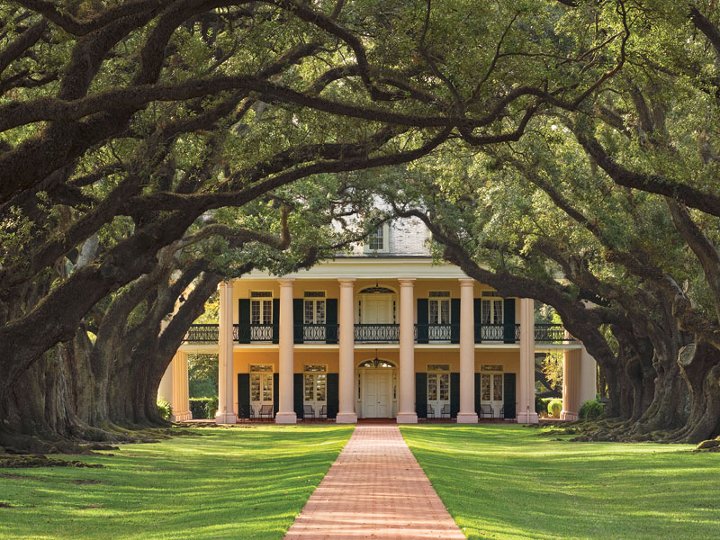
gallery-121Way back in the 1700’s someone planted two rows of oak trees in land facing the Mississippi River. More than a hundred years later Jacque Roman, a wealthy French Creole, saw the avenue created by those trees and purchased the land to build a mansion for his wife and a plantation as a business. The estate that he created would one day become known as Oak Alley and it stands today as a reminder of a controversial time in our nation’s history.

Jacque Roman was a handsome, wealthy and well educated fellow who grew up in the French Quarter of New Orleans. He was considered a promising catch for some fortunate young lady. He thought that he had found the woman of his dreams when he saw Celine, a high spirited soul who lit up drawing rooms and parties wherever she went. Jacque was as shy as Celine was outgoing, but he impressed her with his gentlemanly devotion to her. They married and he promised to one day create a magnificent home for her. Thus he knew that he had found just the place when he saw those elegant oaks.

Jacque started his sugarcane business first. He added more than a hundred fifty slaves to those who came with the land. He paid top dollar for some of them and even sent one to France to train as a chef for the time when Jacque would bring Celine to his dream house. He thought of every little detail that might make her happy and indeed when she first set eyes on the place she was overwhelmed. Sadly her joy was not long lived. She birthed six children in seven years. She had to watch three of them die from diseases like yellow fever and tuberculosis that were the norm for plantation life. It was a sad lifestyle for a social butterfly like Celine. The only people around for miles and miles were Jacque’s relatives with whom she had little in common. Her dislike for them only grew to total disdain as the tedium overtook her once delightful personality. She came more and more to hate the plantation and the dreary routine that her husband had created for her.

When news came that Celine’s mother had died and that her father needed help raising her younger siblings she jumped at the opportunity to leave the plantation. She took her remaining children with her to New Orleans and her visits to her husband grew farther and farther apart until she was no longer even pretending to want to go back to what had been a home built just for her. She made one final visit when Jacque was dying from tuberculosis. After that she attempted to run the plantation from afar racking up huge debts from her profligate spending habits. By the time that her eldest son took over the plantation was mostly in ruins and the Civil War would sound its death knell.

Celine and Jacque’s three children abandoned the family estate. One of the girls lost her left leg in a terrible accident and with no prospects of marriage after becoming disabled she entered a Carmelite convent. The other daughter lead a rather mundane life with a husband and four children. The son was a successful businessman but had to sell the plantation at a huge loss which barely covered the family’s debts.

The house itself languished in ruins until the nineteen twenties. By then the roof had caved in and animals roamed freely through the once elegant rooms. The Italian marble floors were broken and it seemed as though the old place was destined to be destroyed but for a woman from south Texas who had met and married a wealthy New Orleans businessman by the name of Stewart who had promised her that when he retired he would purchase a farm or ranch for her. When the time came Mrs. Stewart became enchanted with the idea of resurrecting the old structure. With an investment double the price of the property the house was renovated and made more modern. Mrs. Stewart brought cattle and horses to the land. She lived happily in the house until the nineteen seventies. She had no children and fearing that her heirs might neglect the estate, Mrs. Stewart created a foundation to care for the antebellum home in perpetuity. Today it stands as a reminder of a time long ago, open to visitors seven days a week.

The story of Jacque and Celine was touching but my feelings for them were offset when I walked to the area that would have once held the slave quarters. The names of the people who built and cared for the house and the land are listed on a wall. They are souls with only first names whose dignity and freedom were stripped from them without regard to their humanity. There were implements of punishment and torture on view. Chains and shackles that were used to hold and torture them. There were copies of letters in which Jacque gave his overseer instructions on how to imprison and punish disobedient slaves. Somehow those very clear words erased the pity that I had felt for this man who was making millions of dollars off of the free labor of two hundred souls. I imagined them living in cramped quarters without heat. I thought of how oppressive it must have been for them in the summer when the humidity was at one hundred percent and the mosquitoes were swarming. The contrast with the way that they were forced to live versus the members of the Roman family was heartbreaking.

One of the things that most struck me was the irony that Jacque thought enough to have his slaves baptized in the Catholic church but he did not see the immorality of his actions toward them. On the one hand he saw them as God’s people but on the other hand he considered them his possessions. He carefully recorded their names and the prices that he paid for them in a ledger. His handwriting was neat and precise and without feeling of any sort. They were simply part of the inventory of his possessions. While they served his every need, he was inside his elegant mansion with ice transported in barrels from the north to the tune of three hundred pounds each week. Somehow I began to feel that his estrangement from his wife and his family’s ultimate downfall was a kind of karma.

I realize that it was a different time. Slavery was legal and very much the rule in both the north and the south. The slaves were the human engines who drove the economic machines. Somehow the vast majority of people had convinced themselves that what they were doing was just, but the fact is that the abolitionists were already quite active when Jacque first decided to build his plantation. He would have heard their calls for emancipation but obviously ignored their arguments. It would take many more years for a war to break out between the states that would ultimately become a means of freeing the slaves. Sadly amidst all of the splendor of the remarkable home there is a stain that somehow can never be erased. Perhaps touring this place should remind us of our own duties to speak up for the rights of those who have no voices for themselves. We will all ultimately be judged by history. Let us hope that we will be on the right side.

A World At War

usa-la_-nola_-wwiimuseumIt’s difficult for most of us to even imagine what the world was like in 1941. The United States was not thought to be a powerful force. In fact it was ranked eighteenth in the terms of military might. The country was only beginning to recover from the effects of the Great Depression. Most of the country was rural and there were still a majority of homes without electricity or indoor plumbing. The mood was isolationist as the populace here watched events unfolding in Europe with horror but an intense belief that our nation needed to stay out of the fray. My mother was fifteen and my father eighteen as December began that year. They were yet to meet one another and naively unaware that life for every American citizen was about to change dramatically.

My mother often spoke of December 9, 1941 when the Japanese bombed the American fleet in Pearl Harbor. It was a fearful and shocking moment. She along with her countrymen listened to President Roosevelt as he reassured the nation. She remembered how quickly people answered his call for all Americans to participate in the coming war effort. She saw her brothers enlisting in various branches of the Armed Forces one by one, and saw high school friends leaving the classroom as soon as they were old enough to lend their help to the cause.

World War II was like no other engagement in history. Its influence stretched across the globe, affecting people on virtually every continent. Here at home citizens of every age contributed in one way or another. Women who had traditionally kept the home fires burning took over manufacturing jobs. Industries were cranking out planes and ships and munitions at a fevered pace. Everyone rationed their use of critical materials, including paper. My mother-in-law often showed me the yearbook from her senior year of high school. It was thinner than a monthly magazine, made only of the cheapest quality pulp. It mirrored the reality of the time with row after row of photos of mostly young girls. The boys had dropped out of school and to join the fight.

When our troops first went to faraway places like northern Africa and the Pacific they were ill prepared to battle the well trained and experienced Germans and Japanese. They often found themselves overwhelmed and in retreat in the earliest forays. They learned on the job and became just a bit better as they slowly understood the demands of the new ways of fighting. I have often wondered how those of us living in today’s world might react to news of battlefield losses and situations requiring our troops to run for safety. Would we have the heart to continue the fighting or would we give up quickly? Luckily the generation who fought World War II was made of stern stuff. They were determined to do whatever it took to free Europe from the grip of Nazi Germany and the Pacific from the Japanese.

There was much at stake and the American people understood that they could not be deterred from seeking total victory. In that regard both Japan and Germany had greatly underestimated the will of our country. There are those who wonder if the world might indeed look very different today had the United States not allied with Great Britain and Russia in that great fight against fascism and tyranny.

The World War II Museum in New Orleans, Louisiana is a repository of the remarkable history of that era. It is filled with the stories of both the leaders and the common people who worked together to defeat the enemies and free the world from their dominance. With hundreds of photographs, artifacts, videos and research texts it leads visitors from the beginnings of the conflict to its horrifying end with the explosions of atomic bombs over Hiroshima and Nagasaki. It is a touching and personal journey that is honestly and beautifully told.

The city of New Orleans was chosen as the site of the museum because it was the birthplace of the the inventor of the Higgins boat which was used to bring troops ashore at Normandy on D Day. Mr. Higgins was already making shallow draft boats for fishing in the bayous and swamps when the military expressed a need for a military version of such craft. He was ready to design a larger boat capable of transporting troops. The Higgins boats that were manufactured in New Orleans have often been credited with helping to win the war in Europe.

It’s been seventy five years since our nation entered World War II. By the end of the conflict the United States was viewed as a major political power. With an infrastructure unharmed by the devastation of the war we were poised to enjoy an economy exploding with innovation and production. The soldiers returned to an exciting time that included creating a new generation of children that would become known as the Boomers. The United States was slowly but surely transformed by the building of a system of interstate highways that made travel from one ocean to the other quicker and more open to all people. The same spirit that drove the success in the war continued its inventiveness all the way to the moon and back.

Those of us who were the children of the men and women who endured the uncertainties of war would inherit the fears of the atomic age. We would wear dog tags for a time to identify us in case of a nuclear attack from the Soviet Union. We practiced air raid drills each Friday afternoon, crouching under our desks in wonder and confusion. Our generation would be drafted into a new and different war in Vietnam that somehow never made as much sense as the one our parents had fought. We would march for the civil rights of our Black neighbors and those of us who are females would blaze new trails in education and work.

World War II was never just a long ago historic event to us. We saw those photos of our dads and uncles in their uniforms. We heard the stories of life under siege. We watched the old black and white movies that celebrated the accomplishments of our generals and troops. We saw the sadness in the eyes of those who lost loved ones in places so far away that nobody had even known that they existed before the battles. We were the link between the past and the present, the generation that watched the world change at such a rapid pace that it was sometimes difficult to keep up. We truly appreciated what the brave men and women of the world endured to secure a time of promise and opportunity for us.

Few people in 1941 might have imagined a nation so filled with the bounty that we now have. Ordinary citizens enjoy lifestyles that once belonged only to the wealthy. We live in modern homes and watch our big screen televisions that bring the world into our living rooms. We travel the world and study at universities at a rate that our parents never saw. We have much for which to be thankful and most of it resulted from the brave and unselfish acts of a generation that chose to defeat the forces of pure evil. Their story is on full view seven days a week at the World War II Museum in New Orleans. Every one of us should take the time to absorb the importance of the stories that are told there and to thank the veterans of that war and those who serve today to protect us. 

The Siren Call

new-orleansI have friends who regularly travel to Las Vegas. Others are addicted to vacations in the Caribbean, camping in the mountains or enjoying the attractions in Orlando. I constantly feel the allure of New Orleans. I fell in love with that city when I was nineteen years old and my feelings have not diminished over the years.

I first went to New Orleans before I was even able to remember the experience. My mom had a photo of me sitting in a stroller in the Cabildo. I seem to be fascinated by the exhibit of old time submarines although I am so young that it is difficult to tell what prompted my curious expression. I don’t believe that I ever returned again until my honeymoon when I was a foolishly young bride only six weeks away from being twenty. I was madly in love and hopelessly naive, but not so much so that I didn’t understand the intent of Bourbon Street.

I enjoyed my first alcoholic beverage inside Pat O’Brian’s. I wisely chose a breeze rather than a hurricane and immediately felt a lightheaded buzz as my new groom and I wandered down Royal Street. I was entranced by the shops and the vibrant feel of the French Quarter. I romantically imagined some of my favorite authors walking in the same alleys as I did. There was music everywhere and food that was so delightful. I weighed all of eighty eight pounds back then and seemed able to consume thousands of calories a day without gaining an ounce. I delighted in the beignets, gumbos, pralines, and coffees. I had breakfast at Brennan’s and dinner at Broussard’s. I sampled po’boy sandwiches and seafood of every variety. It was a culinary adventure that I will never forget.

People often ask me what I love most about New Orleans and I am always quick to answer that the history is what fascinates me most. Rather than spending time gambling or in darkened bars I love to learn about the people and events that have fashioned this remarkable place over time. I understand why artists are drawn to it because I too feel an unexplainable pull. There is something so real and alive. It is a place that overcomes difficulties again and again with a kind of cockeyed optimism that is so very beautiful.

I’ve been to New Orleans with my daughters and they too have caught the bug that brings us back for more. I have visited with good friends, laughing and enjoying the richness of letting the good times roll. I have brought my grandchildren who seem to understand why this city is so special and important to me.

Standing in Jackson Square gazing at the St. Louis Cathedral is magical for me. Feeling the warm brew of Cafe du Monde on my tongue is akin to a shot of serotonin straight to my brain. It makes me so happy. I never seem to tire of driving through the Garden District or visiting the museums. The sound of the steamship on the Mississippi River makes my heart race with joy. I look for Uncle Sam around every corner and smile as though he is a favorite relative each time that I seeing him standing silently with his little dog as though he is out for his regular afternoon stroll. I thrill to the music of Preservation Hall jazz which is as pure and emotion filled as that genre of music gets. I enjoy a nice picnic in Audubon Park and a tour of one of the historic cemeteries. I could spend hours sitting in the square listening to the musicians and watching the artists at work. I seem to discover something new each time I walk along the streets gazing at the amazing architecture and learning about the people who have lived behind those decorative wrought iron gates.

New Orleans has had more than its share of misery. There were many who thought that it had surely gasped its last breaths after hurricane Katrina. It certainly seemed as though it would never be able to overcome the devastating damage that so most of the city incurred. Somehow there were enough people who believed in the place that they were unwilling to let it die. It has changed a bit but like an ancient phoenix it rose from the ashes to deny the pessimism of its detractors.

Last week an area of East New Orleans that had barely healed from its Katrina wounds was ripped apart again by monster tornadoes that destroyed two hundred fifty homes. It was a sad blow to the souls who had so bravely returned to begin again and there may be those who will suggest that they simply face the reality that perhaps they were not meant to live in a place that is so often hit with the vagaries of nature. I’d like to think that the citizens will once again demonstrate a willingness to persevere just as countless have done for hundreds of years.

Houston is my hometown but New Orleans is the city that holds the key to my heart. I suspect that I will continue to visit for as long as I am able. I have one more grandson to introduce to this beautiful place. Since he enjoys visiting antique shops I suspect that he will quickly be drawn in to the charm and grace just as I have.

I’ve never been to a Mardi Gras celebration. I am not one for crowds. I plan my visits around the big events that bring visitors to New Orleans each year. I purposely chose to travel there this week before the parades and galas commence. I like New Orleans best when it is quieter and more personal. I am a bit sad that my grandchildren won’t be able to be with us because they are all in school. Still they have requested that I bring them some beignet mix and pralines and I plan to comply with their wishes until the time comes when they will be able to join us in a trip to the city that has so captured all of our fancies. New Orleans, Louisiana’s siren call will surely lure us back again.