Finding Courage

confusionI have written a book. It has essentially been finished for more than two years and yet it languishes in the memory of my computer and in a distant hard drive that is protecting it lest my laptop suddenly crashes. If I were to take the time to do so I might have it uploaded as a Kindle or Apple book in less than a week. I would be a published author albeit by dent of my own initiative rather than interest from a company. For some reason I have been reluctant to take the final risk of revealing my story to the public. Upon self reflection I realize that my procrastination comes from enormous fear. Even though I place my ideas on public view five days and week, when it comes to my most personal essay ever I feel anxious about being misunderstood.

We live in a very contentious society. Words are continually being parsed and twisted into meanings that were never intended. Good people are all too often portrayed in very misleading and untrue ways. We take sentences out of context and figuratively burn people at the stake for having the temerity to suggest something with which we do not agree. We place our own interpretations on all utterances often to the detriment of what is actually true. Our sense of self-righteousness and judgmental natures have no bounds. It takes great courage to come forward in a very public way and so far I have to admit to being somewhat of a coward.

The topic of my book is quite delicate. It outlines my family’s journey through the tragedy of my father’s death and into the despair of my mother’s battle with bipolar disorder. Because we each perceive reality in different ways I have little doubt that my telling and interpretation of events my vary from others who shared some of the moments that I describe. They may disagree with how I have seen things and even feel betrayed that I have even spoken of some of our very private moments. I suspect that there will be those who do not understand that the intent of my book is to inspire and comfort anyone who has ever had occasion to deal with the complexities and difficulties of mental illness. It is not to embarrass or be disloyal.

Even in our very modern era we tend to have somewhat primitive reactions to mental illness. We do not understand the many forms that it may take. We still hide such diseases and too often treat them as personal defects rather than medical conditions. Our ignorance is indicative of our unwillingness to bring discussions of mental difficulties out into the open. If I mention that my husband has heart disease nobody recoils but if I speak of the bipolar disorder that so tragically invaded my mother’s brain I can visibly see the discomfort on people’s faces. Such conversations often stop abruptly because as a society we are not yet ready to face the realities of conditions that cause our brains to work differently.

There were times when my mother’s illness was quite frightening. She was consumed with paranoia and unable to complete even simple tasks. She became a victim of the delusions that raced through her brain and it was exhausting for her and for those of us who attempted to help her to get the care that she needed. She was not bipolar, she had bipolar disorder. The difference in the wording is significant. She was never defined by her illness. There were times when she appeared to be a very different person but she was merely exhibiting symptoms of her diagnosed disorder. Her true essence could only be found when she was doing well and the ravages of the depression and mania were not affecting her thoughts and actions. Most of the time with diligence on the part of everyone she was able to function in what we often describe as a normal fashion. At other times she experienced setbacks much like anyone with a physical problem might have. It often took time to return her to good health. Her condition was chronic. Like diabetes it could be controlled but it was never going to just miraculously go away.

My mother did nothing to create her illness. It did not come from bad habits or wrong choices. It was a disease that infected the chemistry of her brain without her consent. Her psychiatrist once told me that she might have never had a psychotic experience had my father lived. She may have just appeared to be a bit eccentric, a little manic or melancholy now and again. The stress of losing her husband and being a single parent to three small children only increased the likelihood that her bipolar disorder would become more pronounced without intervention. Since none of us had any idea that she was walking around with a time bomb slowly building up pressure inside her. We were all shocked when she had her first breakdown. It was an event that none of us were able to understand. We would have known what to do if she had been diagnosed with cancer but our knowledge of mental diseases was nil.

For years I was silent about my mother’s condition. Only those closest to me knew the extent of her countless breaks from reality and our efforts to get her the help that she needed. She herself denied that she had bipolar disorder, instead insisting that my brothers and I were being brutally cruel and unfair to her. She was very good at hiding her symptoms from other people but doing so was tiring for her. She often missed work because she worried about being unmasked. She did not realize that her coworkers had figured out what was happening and they quite lovingly allowed her to play out her charade. They were exceptionally good people who alerted me each time that she began to show signs of becoming ill again. They were courageous allies in our family’s fight to keep our mother as healthy and independent as possible.

These are the kinds of things that I want my book to portray. I want people to understand that mental illness is a legitimate medical condition and that each person afflicted with it responds differently. I believe that if we are ever going to effectively treat such disorders we have to become very honest about the mere fact that they exist. We have to teach the public how to cope with such situations in loving and rational ways. Right now we are a long way from being where we need to be but I believe that the more we are willing to learn, the more likely we are to bring such diseases out of the shadows.

Right now there are millions of people suffering needlessly simply because neither they nor those who love them understand that mental illnesses can affect anybody and that they are not signs of weak character. Having a mental illness does not mean that someone is doomed to an abnormal life any more than having cancer is a death sentence. We still have much to learn about how and why such illnesses affect individuals. I believe that with determination we may one day eradicate many of the mental disturbances that now wreak havoc on so many lives, but we have to have open minds and a willingness to honestly dialogue about the realities of mental illness if we are ever to bring the kind of relief and understanding that we need. We have to have courage, something that I am attempting to find inside myself so that I will be willing to share what I believe to be a very important and inspiring story.

No Golden Ticket

the-analogy-of-the-golden-ticketWhen I was a little girl I often drove my friends crazy by suggesting that we play school. Of course I always insisted on being the teacher. I had a cardboard box that was ready for a very realistic rendition of a classroom. It held paper, pencils, pens, textbooks and even prepared tests and report cards that I designed in my leisure time. I suppose that it was rather nerdy on my part but my buddies and brothers placated me now and again by sitting in the makeshift desks that I created and listening to my lessons. There is little wonder that I ultimately dedicated my entire life to education.
I literally worked my way up the ranks of schools. My first job was at Do and Learn Pre-school. I met with my four year old students on Tuesdays and Thursdays in rented rooms at the local Methodist church. I so loved my little foray into the academic world that I became convinced that I had a bonafide vocation to be a teacher. I was determined to finish my degree at the University of Houston and get started as soon as possible.

I’ve always had an abundance of energy and so in addition to working at the pre-school I was also a Sunday school teacher at my church. There I taught kindergarten kids about Jesus. Evidently the nuns who ran the program liked my work enough to recommend that I take over the pre-school and elementary classes when they decided to leave for another posting. I served as the Director of Religious Education while continuing to work on finishing my degree. This gave me my first taste of being an administrator. I was still as happy as a clam and became utterly convinced that I wanted to devote my life to children.

Upon graduating I landed a position at St. Christopher’s Catholic School which was admittedly a bit disappointing to me because I had wanted to go directly to a public school. The economy was in the ditch at the time and there were simply no jobs for teachers that year. As it was, the job at St. Christopher’s was more perfect than if I had hand picked it for myself. I had a super principal who was innovative and child centered. I had great students who allowed me to practice my teaching skills and best of all I was the one and only mathematics teacher for the junior high. I taught the full spectrum of skills and even headed the computer and newspaper electives. I was happier than ever and certain that I had chosen the correct career.

When a public school job became available I reluctantly left. I became a self contained teacher of fourth graders under the guidance of yet another incredible principal who taught me so much about classroom management and taking care of my own physical and emotional needs. The children at this school were far more needy and underserved by society than my private school youngsters. Their stories were often tragic and I had to learn how to keep my emotions in check so that I would be able to provide them with what they needed.

Over time I taught multiple subjects, students from varying races and economic backgrounds, and many different grades. Each experience strengthened my abilities and demonstrated the complexities of teaching. Eventually I became the first ever intermediate Peer Facilitator in the Pasadena Independent School District, an idea from yet another of the outstanding principal for whom I worked. Today every intermediate school has multiple Peer Facilitators. I’d like to think that I helped to convince the higher ups that it was a worthwhile position to have.

I ended my career at KIPP Houston High School, one of the KIPP Charter schools, as the Dean of Faculty. By then I had been working with kids in one way or another for almost forty years. I’d seen public, private and charter schools. I’d taught reading, language arts, mathematics, science, social studies, art, theology and journalism. I had worked in daycare, pre-school, Sunday school, fourth, sixth, seventh, eighth, ninth, tenth, eleventh and twelfth grades. I had observed countless teachers and taken part in hundreds of parent conferences. I had been a Title I Coordinator, Gifted and Talented Coordinator, Magnet School Coordinator, Peer Facilitator, AP Coordinator and Testing Coordinator as well as Dean of Faculty. I conducted training sessions and taught mathematics teachers at an Algebra seminar at Rice University. In other words, I have been around the educational block a time or two and along the way I never lost my enthusiasm for my work. Now that I am retired I continue to tutor intermediate and high school students at both public and private schools.

With all of my knowledge and experience I find it disheartening that our newest Secretary of Education, Betsy Devos, cannot even come close to matching the depth of what I know about schools. She may be a very nice lady who has contributed generously to education and she may even be quite interested in helping to improve our current educational system but it takes way more than just a desire to help to even begin to make the changes that are necessary to make our educational system as strong as possible. It requires someone with intimate knowledge of schools from the ground floor up and I personally believe that it should be an individual with experiences that are so deep and expansive that he or she has a clear understanding of how every facet works. Obviously Ms. Devos is not that person.

The public is always searching for a quick and simple fix for our nation’s educational problems. Every teacher will tell you that there is no golden ticket or one thing that will make everything all right. Children like all people are very complex. Each classroom requires individualized instruction that is seamless. It is a difficult task to pull off but there are many exceptional educators who are doing it every single day. There is something almost magical about watching a great teacher in action but the reality is that it took hours of hard work and practice and self reflection to get there. This takes time and patience and has little to do with whether a school is public, private or charter. There are good, bad and ugly examples of each. The trick is in finding more of the really good educators who understand that they will have to be nimble when adapting to the needs of their kids.

Sadly Ms. Devos appears to be of the mind that the key to improving our American schools lies in turning them into a marketplace using a business model that assumes that demand will eventually supply quality for all students. Of course we all know that even in the world of retail all the economic pressure in the world will not transform a dollar store into Saks Fifth Avenue. It is ridiculous to think of education as some type of commodity and that allowing everyone to choose will somehow spur better possibilities for everyone. It is also a pipe dream to believe that a child in a run down neighborhood will be able to take the meager funds of government to a high priced private institution and suddenly be allowed to run with wealthy. For one, most such exclusive schools have long waiting lists, require entrance exams and cost well above government allotments. Furthermore they may or may not want to accept government money because that will make them beholden to rules not of their own making. Additionally, not all private schools are actually good. I interviewed at one or two that in all honestly should have been shut down. Charter schools are also of varying quality. While the KIPP Charter Schools have managed to maintain a solid reputation, many of those currently available peddle an inferior product that should not even be allowed to exist. The complex network of neighborhood public schools display a wide variety of quality from excellence to despair. The reality is that once the best are filled to capacity most children are still caught in the web of underperforming schools from which there is no escape. If the only idea for improving our schools is to provide students with vouchers, nothing really changes and we have wreaked unnecessary havoc for everyone.

I sincerely hope and pray that Betsy Devos listens to the counsel not of lawmakers but of educators who know more than she does. My wish is that she think very carefully before the burning bridges of our public school system. The project upon which she is embarking will determine the future of millions of young children. She must be very careful and very wise. Somehow my impression of her is not particularly positive. More than anything I want to be wrong because missteps in education will impact our nation for decades.    

Memories of Another Time

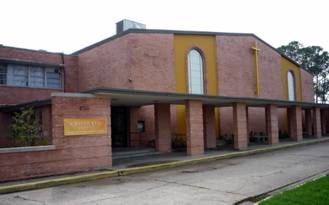
cristoreyhoustonI return to the neighborhood where I grew up at least once a week to tutor high school students in math. The area has changed more than a bit since I once walked the short blocks from my home to the high school that I attended. I suspect that only a few if any of the people who once lived there are still around. It was a working middle class suburb back in the day with a mix of blue collar types and professionals. The entire subdivision centered on the Catholic Church and school that most of us attended. There were other denominations and public institutions as well but Mt. Carmel was the main attraction. Everybody knew everybody and the community spirit was probably the best aspect of living there. It’s not an exaggeration to boast that it was heaven on earth for kids.

Our parents were quite active in providing us with a faith filled life, a great education and lots of after school activities. There was always something wonderful happening and the whole neighborhood felt like a combination of “Leave It To Beaver” land and an episode of “The Wonder Years.” My mother was quite wise to find us a home there after my father died. Our little place provided us with a sense of stability as we were growing up as well as hours of fun.

Of course things never seem to stay the same. Once I was grown and gone the whole area began to change as the old timers moved to newer homes in newer parts of town or to land they had purchased for retirement. It was just never quite the same. The new folks who moved in stayed mostly to themselves and my mother lost her sense of security. Her home was burglarized so many times that on the last break-in the thieves left without taking anything. We joked that we were surprised that they didn’t feel sorry for her and leave something behind. All of her valuables were long gone. Because she was alone and no longer had old friends on whom to depend nearby she became more and more frightened. Each time that she came home to discover an invasion of her property she was less and less willing to stay in the place where we had all shared so many memories. She decided to sell.

It was truly a shame because she had managed to pay for the house in full. She enjoyed having the extra income to make repairs and purchase a luxury now and again.  Because the area had generally deteriorated, at least on our street, she was unable to get a good price for the place. Essentially she had to start all over again making payments on a home that was little better but at least felt more safe. It stretched her already small income to the breaking point but she was always optimistic, believing that the good Lord would work things out, and somehow He always did.

I don’t think that Mama ever went back to see how our old homestead was doing which was actually for the best. The people who bought it did little to keep it in good condition. By the time that I finally drove by a few years back it was a sad broken down property. The roof was sagging and it looked as though it hadn’t been painted since the last time that Mama and me and my brothers had put a fresh coat on it. Mama had always taken pride in having a nice garden and had planted trees, bushes and flowers over the years. Literally all of that was gone. There wasn’t even much grass growing in the yard. It was stark and ugly in the saddest imaginable way. It literally hurt to see it like that. I couldn’t decide whether to be angry or just to cry.

I haven’t dared to go back again. I really don’t even like to think about how battered and neglected the house looks. I drive to my tutoring sessions from a direction that doesn’t take me near the old place. That way I keep only the positive memories of my youth that were so delightful. I picture our home at its best when it represented love and safety.

On sunny days when the temperature isn’t too hot there is a certain kind of breeze in the neighborhood that gives me a strong sense of deja vu. I can close my eyes and listen to the planes flying overhead as they approach nearby Hobby Airport and feel transported back to a time when the subdivision and the school were among the best in town. The sounds of the birds are just like they were when I was a kid and I can almost hear all of the old neighbors laughing and living inside their homes at a time when people still left their windows open and their doors unlocked. For a moment I find myself believing that they are all still there and that I might go see them after finishing my tutoring, but then something always stirs me back to reality and I remember.

The school where I was once a student has a new name now. It used to be Mt. Carmel but the Carmelites and the School Sisters of Notre Dame left and over time there wasn’t enough interest or financial help to keep things afloat. The school began to operate in the red without enough students or help from the diocese and finally was forced to close its doors. It was threatened with destruction until the Jesuits purchased the property and renovated the inside, creating a whole new high school called Cristo Rey. They brought in wealthy individuals willing to help support the education of students who might not otherwise have the privilege of an exceptional private school education. I now tutor some of those same kids and I have to admit that I am quite impressed with how well the hard working teachers and administrators have revitalized things for them.

It sometimes feels quite strange to be back in my old school fifty years after graduating. I tell my tutees about my own adventures there and they stare back at me as though I have two heads. I suspect that it is difficult for them to imagine an old lady like me as a young person with all of the same hopes and dreams that they have. I somehow feel that I am supposed to be there helping them. I have a deep connection and respect for the history of all of the wonderful things that happened inside those walls over the years. So many lives have changed for the better in the classrooms and the laboratories. I feel the spirit of all of us who launched our own lives there with the knowledge and confidence that we developed under the guidance of teachers and parents who truly cared about us.

As I walk through the hallways toward the library where I once devoured the words from books that opened whole new worlds to me I see the newest students experiencing the same emotions of joy and fear and discovery that were once mine. I know that we are somehow brethren. Some things like the freedom and wisdom and growth that come with knowledge never change. Whether they realize it or not those young men and women are part of the same long red thread of learning that wove through my mind so many years ago. We are bound together and no matter how different the world may become that red brick edifice will always represent the everlasting power and beauty of education.

The Brotherhood of Man

frederick-douglass-1852The first slaves were brought to North America in 1619, when the colony at Jamestown, Virginia was formed. It was not until 1863, that all slaves were freed by President Abraham Lincoln’s Emancipation Proclamation. If you quickly do the math you begin to realize that there were slaves on our soil for two hundred forty four years before that barbarous practice was finally outlawed. It is difficult to even consider how anyone might  have ever believed holding another human being in bondage was anything other than immoral. Even considering that times and ways of thinking were different doesn’t seem to absolve the ignorance and evil associated with that custom. The old argument that it was legal so it must be okay trumped common sense and the concerns of religious groups and abolitionists. Those who advocated freedom for all people were often considered overzealous kooks who simply did not understand the complexities of the situation. Most citizens simply looked the other way rather than honestly face the horrific realities of slavery. It was easier to keep it in place than to insist that it be abolished forever.

As with all of history there have always been courageous individuals who have been willing to endure unremitting criticism in a quest for what they believed to be right and just. Frederick Douglass was one of those people. Douglass was born in Maryland in 1818, and named Frederick Augustus Washington Bailey. He was a slave who had little memory of his mother who was traded away while he was still a baby, a common practice designed to keep enslaved people from forming strong attachments to one another. Frederick was moved from one master to another over time. When he was twelve the wife of one of his owners taught him the alphabet and the basics of reading. From this humble beginning he stealthily taught himself how to read and write, often glimpsing newspapers and books when no one was watching. For the rest of his life he believed that “once you learn to read, you will be forever free.” In that spirit he taught other slaves how to decipher the words of the Bible when they came to Sunday school. Once the owners learned what was happening they put an end to the lessons by beating the congregants and disbanding the services for good.

Eventually when Douglass was sixteen years old he ended up in the hands of a man known to be adept at breaking the spirit of slaves. The overseer beat Douglass mercilessly but the sixteen year old fought back in both body and mind. He had already read enough to understand fully that his imprisonment was morally wrong and he became more and more determined to find a way to freedom. After multiple attempts he finally managed to make his way to New York City where he was protected in a safe house run by David Ruggles. He was twenty years old and eager to advocate for other slaves still held in bondage. The year was 1838. It would be twenty five years before Douglass saw his dream of emancipation come true.

Frederick married a free black woman whom he had previously met and they settled in Massachusetts. It was at this time that he chose Douglass as his new last name. He quickly became known as an eloquent orator and writer among abolitionists and was often featured at gatherings of anti-slavery groups. This was a difficult route to follow. He and those with whom he worked were often the victims of violence. Still he dedicated his life not only to abolishing slavery but also to advocating for the rights of women to vote noting, “If there is no struggle, there is no progress. Those who profess to favor freedom and yet depreciate agitation are men who want crops without plowing up the ground. They want rain without thunder and lightning. They want the ocean without the awful roar of its many waters. This struggle may be a moral one; or it may be a physical one; or it may be both moral and physical; but it must be a struggle. Power concedes nothing without a demand. It never did and it never will.”

Douglass was a highly religious man who openly criticized those Christians who remained silent about slavery saying that their refusal to speak up for what was right and just was an abomination of the teachings of Christ. “Here we have religion and robbery the allies of each other – devils dressed in angels’ robes, and hell presenting the semblance of paradise.”

By the outbreak of the Civil War Douglass had become one of the most famous and outspoken black men in the country with his views being published and discussed in gatherings across the globe. His influence was so great that he often conferred with President Lincoln whom he was not loath to criticize for taking too long to free the slaves. He worked tirelessly to secure the passage of the 13th, 14th and 15th amendments which outlawed slavery, provided citizenship and equal protection under the law and protected all citizens from being discriminated against in voting.

Douglass continued to work for causes of fairness and equality for another twenty five years after the war had ended. He understood that there was still much to be done and many injustices to be overcome. He wrote for newspapers and authored books. He spoke all over the world reminding people that “where justice is denied, where poverty is enforced, where ignorance prevails, and where any one class is made to feel that society is an organized conspiracy to oppress, rob and degrade them, neither persons nor property will be safe.” 

Frederick Douglass died at the age of seventy four of a heart attack or possibly a stroke.  He had energetically fought for the rights of all people for his entire life admonishing his fellow man to consider our shared humanity. “A smile or a tear has not nationality; joy and sorrow speak alike to all nations, and they, above all the confusion of tongues, proclaim the brotherhood of man.”

Ever Forward

childhood-011I suspect that there are often times when those of us who are adults wish that we might return to that age of innocence that was ours when we were children. We long for the times when we were yet to realize that evil and hatred exist in our midst. We ask ourselves when we began to lose our sense of wonder. How is it that we find ourselves lacking in trust? What makes us so afraid and reluctant to take risks? When do we begin to pull back on exploring the people and the world around us? Is it in fact true that ignorance is bliss? Does knowing too much make us unhappy?

Perhaps the lessons that we learn from life’s hard knocks teach us to be wary. One of my grandmothers came all the way from Slovakia all alone with little more than a few meager possessions and a profound faith that joining my grandfather in this foreign land would be a good move. For a time she threw herself wholeheartedly into work and learning about her new country but the strain of caring for an ever growing family and dealing with prejudice aimed at her and her kids sent her into a mental tailspin. She had a breakdown and ended up in the state mental hospital. Her trust was broken by this experience. When she returned home she never again left with the exception of the time when her appendix burst and she had to be rushed to the hospital. She was content to stay in the safety of the tiny house that defined the rest of her days. She chose to be purposely insulated from the horrors of the outside world. Her children became fully responsible for her care, paying bills, doing shopping, and repairing her home.

Most of us would not want to withdraw so permanently from reality and yet there is something rather tempting about no longer having to deal with the irritations that seem to take up so much of our time. Such are the dreams of hermits but the truth is that there is little chance that any of us might successfully ignore the ebb and flow of progress. We allow ourselves mental health days and vacations but we ultimately have to return to our duties. It is ridiculous for anyone to believe that there is a way to avoid the hurts that we begin to experience from our earliest childhood days.

We all remember the schoolyard bully who terrorized recess as well as the hero who shut him/her down. We learned how to watch for such people and how to avoid them when possible. We formed friendships that were based on immature connections. Sometimes they didn’t work out and we felt the sting of abandonment and loneliness. With each new experience we catalogued the pluses and minuses of how to react. The Forrest Gump in our natures slowly faded away but oh how we loved to see someone like him operating so fearlessly. It reminded us of the times before we skinned our knees and understood that putting our hands over a flame might result in a burn.

Of course we need to learn caution and how to interpret cues if we are to survive. Fright and flight is an instinct that we must have. We must discover how to tell the difference between good and bad just as importantly as we need the skills of reading and writing and arithmetic. We have to become adults and learn to fend for ourselves. It is the way things are.

The real problem is that even with careful attention and research we find ourselves wondering how we should respond. Should we open our hearts with openness and kindness or is it in reality a dangerous game to be so guileless? Is it wiser to enjoy life while we have the opportunity or should we be more inclined to saving for a rainy day? Do we allow ourselves to love and possibly be hurt or do we lock ourselves away in safety? Is the best person the one who works tirelessly or the one who makes time for family and friends? Who are we? What are our responsibilities? These questions and the like keep us awake at night and make us anxious and sometimes even filled with guilt. We see those who seem to care less than we do and wonder if they have found the secret to a good life or if they are simply selfish. Why can’t we go back to that lovely state of ignorance and should we even think of doing so?

We have watched bright lights among us being snuffed out far too soon because they relied on foreign substances to still the worries in their hearts. They became addicted to the false promises of alcohol and drugs, silent killers murdering their bodies and their souls. We have seen broken souls who were trampled by people to whom they gave their trust and their love. We wonder what we might have done to help them and why we were so busy looking the other way when they were in trouble. Why did we pretend to be ignorant. Did the not knowing really bring us the bliss that we wanted?

The wounded souls are all around us. It is difficult to see their pain and even harder to attempt to do something to help them and yet we all know of brave individuals who open themselves to criticism and misunderstanding by having the courage to take a stand. Whenever someone steps forward to admit to being human they are invariably subjected to insults. It is not easy to walk out of the dark shelter of a closet and tell the world exactly who we are and who we want to be. Just as my grandmother’s children had rocks thrown at them only because they were different from their neighbors, so too do we have a tendency to laugh at and torment those who appear different from ourselves. Where do we learn to do such things? Is it a fact that  ignorance is not bliss at all but instead an evil that causes us to do and say ridiculous things? Is the truth that in learning we actually begin to free ourselves from the chains that bind us to our narrow minds? Should we be less afraid of venturing into unknown territory and more of never going outside? Does our isolation lead to the very heart ache that we most fear?

Each life is a blessed creation that should receive care and feeding. We are born to interact with the universe and to learn as much about ourselves and the people who share the world with us as we possibly can. The happiest souls are not the ones who shutter their windows and never risk being hurt. We become stronger and better even from the most difficult moments of our lives if we are willing to grow from each experience. Ignorance is a false bliss. Knowledge can be frightening but it can also bring truth and truth is ultimately what we all seek. No matter how much we want, it is unwise to turn a blind eye to reality. If we are to find happiness we must first be honest with ourselves. That means having a willingness to learn new ideas and to accept that nobody ever has all of the answers. Ours lives should be exciting adventures in which we steadily increase our knowledge of the world and its people. Regardless of the number of times that we stumble and fall its up to each of us to keep moving forward, ever forward.