The Importance of Stuff

antiques-booth-1My eyes used to glaze over whenever my mother-in-law began recounting her family history. She had worked quite hard to unravel the mysteries of her ancestry. Her quest for answers paid off with a great deal of information that she excitedly related to us in the hopes that we would remember. At the time I suspect that I was a bit too young to truly care about the names and the tales of which she spoke. Now I am duly fascinated by learning not only of her kin but my own. In some ways my husband and I have become the family historians, the keepers of the the tales and artifacts that bring long dead relatives back to life. I now see such responsibility as an honor and I am belatedly scurrying to preserve the information that I know lest it evaporates when I am gone.

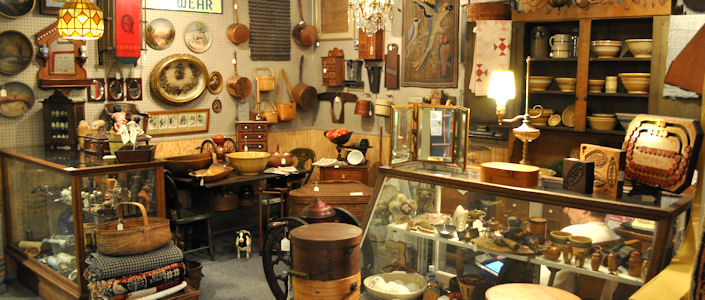
I have rooms of my home filled with furniture and objects that once graced the homes of the people from whom my husband and I descended. I treasure them not so much for their value as for the lives of the people that they represent. I try to tell my children and grandchildren who they belonged to and what they meant to those individuals. I’m not certain that they truly understand. Sadly they are still mostly in the state of mind that I had when my dear mother-in-law tried so hard to get me interested. I suppose that something must have stuck in spite of my lack of enthusiasm, because now I am quite driven to learn even more lest we forget. In fact one of my girls recently laughed at me and called me “Granny” the name that she had for my mother-in-law because I was so insistent that she pay attention to the information that I was conveying.

The world is changing rapidly, sometimes far too quickly for my taste, which is a definite sign of age. I recently read that today’s young people view the antiques and collectibles of their parents and grandparents as junk. They prefer more modern furnishings and tend to donate any old things that they inherit to the Salvation Army or Goodwill. They have big estate sales to get rid of the unwanted items. It makes me a bit sad and worried that so much of what presently resides in my home may one day just become a nuisance to those who are left when I am gone. I would like to believe that in between my two daughters and seven grandchildren surely there will be someone who will step up to be the next keeper of the family flame. My treasures are important to me because they represent real people and are part of the hopes and dreams of their lives.

I have a very old pitcher from my great grandmother, Christina. It doesn’t look like much but it feels magical to know that she once held it in her hands. From my great grandfather, John William Seth Smith, I have discharge papers from the Union army at the end of the Civil War. They hold his signature, the only image of him that I have. That scroll across the paper makes him very much alive in my mind. My grandmother Minnie gave me these things when I was still a very young girl and urged me to care for them always, which I have even when I still did not understand their significance.

There is far more from my mother-in-law. We have beautiful furniture that belonged to her mother, aunt and grandmothers. It is truly quite lovely and enhances our home with style and intersting stories of the people who once owned the pieces. I have to admit to being quite happy that my mother-in-law worked so hard to preserve those memories for us. They link us to both our past and our present and are physical signs of the lives of their owners.

I have dishes, linens, and tableware. Sadly there are books about which I worry because the pages are becoming weak and will one day fall apart, which I suppose is the natural way of things. My favorite is a child’s book that once belonged to my father. It may well have been the first thing that he ever read. Perhaps it even began his love affair with reading. I enjoy looking through the pages but I have to be careful because it has become quite delicate. It must be getting close to being one hundred years old.

I can only hope that there will one day be another who cherishes the humble offerings from the past. Perhaps both of my daughters will truly appreciate the photos and stories that I have saved. They loved their grandmothers so and I suspect that they will want to keep their memories alive at least for the time being. It will be interesting to see who among my grandchildren has a bent for sentimentality.

I try to visit the grave sites of my parents and grandparents and those of my husband’s kin as well. We regularly make a day of bringing flowers and spending time remembering the people who were so much a part of our lives. I sense that we are the only ones in our families who do this anymore because there are no signs that anyone else has visited. It makes me a bit sad to think that the time will come when nobody remembers them or goes to honor them.

I know that many people today think that cremation is the best way to handle death. It is not particularly expensive and it is environmentally friendly. They see little reason to set aside land for eternity just to keep the dust of those who died long ago. They may have a point but there is still something a bit reassuring in those everlasting memorials wherever they may be. I was greatly touched by finding the grave site of my great grandmother Christina. I felt a thrill in being beside her ashes or whatever is left of her. I wanted her to know how things had turned out for at least one of her twelve children and their descendants. I stood in a lonely field with the wind blowing across my face. It was deadly silent save for the chirping of nearby birds. I felt a communion with her that I might otherwise never have had. It was a truly moving moment in which I sensed her life and that of all the women before her. I am but a single link in a chain that will hopefully continue infinitely.

Perhaps I am becoming a bit silly as I grow older. I find myself appreciating things that my mother and mother-in-law did and said far more than I once did. I like thinking about the stories that they told and feeling close to them just from recalling those tidbits about their lives. I like visiting with them in the places where they are buried on sunny afternoons and leaving posies to brighten the places where they now rest. I really do hope that the very young come around in their thinking about the artifacts that were left behind by their ancestors just as I finally did. Things are not so important but the people that they represent are the stuff of who we are.
An Education

free-spirits-ii-13891She was unlike anyone that I had ever known, a free spirit who seemed to float blissfully above the rules of society. She walked through life as though she owned the world, but in reality had few possessions of any merit. More often than not she kept her feet bare, unfettered, even at formal occasions. She was from the north but boasted that once she had found the south there was no turning back. She was an artist, an intellectual, a high school dropout. I could hear her coming in the battered and ancient pick up truck that was her pride and joy. It allowed her to haul items that might one day come in handy for one of her many projects that were rarely fully completed. Her mind skipped merrily from one idea to another with grand bursts of genius. Such it was with our friendship, glorious kinship until she was drawn like a moth to other places.

When she left we both pledged our fealty and promised that we would make great efforts to stay in touch. I even drove a rather long distance to her new home once, a littered slot in a trailer park that was made merry by a colorful garden that she had planted in an old wooden box. She greeted me warmly and we spent an afternoon sipping on herbal teas and laughing at her stories while her children ran like free range chickens in old fashioned play. She never owned a television and didn’t want one. She preferred entertainment from imagination and it was all she really needed because hers was so vibrant. She reminded me of a gypsy princess, exotically beautiful with a fiery personality. I had seen her face down the devil himself and walk away with her head thrown back in haughty victory.

Her husband was a car mechanic and she was madly in love with him, so much so that she had run away with him on the back of his motorcycle. It broke her parents’ hearts and even her relationship with them for a time. Eventually they came around when they saw how deliriously happy she was. She had left the mundaneness of her upstate New York upbringing for adventures that few of us ever experience. She purposely kept few possessions feeling that they held her back whenever wanderlust took hold. Her family was free to go wherever and whenever the winds blew. There were cars to be repaired by her husband everywhere, and her art was as easily created in a small unknown town as in a large urban area.

Eventually she was gone again, too far away this time to pursue. She was not one for exchanging phone numbers or addresses and our acquaintance was in a time before cell phones, email and social media. Our friendship became only a wonderful memory of time spent with a truly ephemeral spirit. Somehow I had known all along that it would not be a permanent thing. I simply enjoyed the moment, knowing that some people cannot set down roots. They must always be on the go, discovering parts of the world that most of us never see.

I still think of her and so many others who have passed through the parade of people I have known. I wonder if any of them ever realized how much I learned from them, how important they were in shaping me into the person that I am today. Each of us encounter individuals who find their way into our hearts, and while their stay is only temporary their influence is forever. There is something about them that we never quite forget no matter how many years and decades pass. Now and again we think of them and hope that they are doing well.

I gravitated toward strong-willed women at a time when I was shy and weak. I observed their behaviors and learned from them. It was an education without walls, so real and meaningful. I surrounded myself with ladies who had known grief, abuse and hard times. They had emerged with dignity and an unwavering sense of themselves. I was their intern, someone longing to learn from them. Like a sponge I soaked up their spirit and determination to face down whatever challenges arose. They did not have degrees or certifications but they were perhaps the smartest people I had ever known. I encountered them when I was struggling to find myself and they showed me how to be what I wanted to be, not what others wanted for me. They taught me how to respect even the most humble and broken among us, treating them with the dignity that everyone deserves.

I suppose I might attempt to find some of them like Diane or Rosie or Debbie. It isn’t that difficult a task with the Internet and all of its resources. Somehow though, I don’t think that it would be wise to do so. I believe that I was only supposed to know them for a certain time during which they would help me to emerge from my awkward cocoon. Their spirits have remained in my heart and they have been there again and again smiling and guiding me.

They would be old ladies now with middle aged children and perhaps a number of grandchildren. We might not even recognize one another even if we were to pass in a crowd. We went our separate ways long ago. Our personal demands overtook us leaving little time for the idle chit chat that we enjoyed when our babies toddled under our watchful eyes. We each found new homes, new jobs, new adventures that moved us farther and farther apart until one day we had lost each other, but never the memories.

We are the sum total of all of the events and people that we have ever known. Their influence lives inside of us and is even passed down to our children long after our acquaintances are done. We find the individuals that we most need at exactly the right times. It is almost magical the way that happens. There are so many who gave me so much of themselves along my journey who are now strangers. I would so like for them to know how much they helped me and how grateful I am that I once knew them. I’d like to think that things turned out as well for them as they did for me.

Why We Gotta Be So Mean?

troubled-teens-bully.jpgI truly believe that we humans are mostly good. Still I see far more signs of bullying and ugliness these days than ever before. A friend confided that her son was being mistreated by the girls in his class. He is a very sweet, almost naive soul who can’t quite understand what he may have done to deserve their ire. An acquaintance who is generally a very kind and sensitive person recently took the bait of societal anger and posted an article poking fun at a female political figure. It was quite negative in tone, and unnecessarily so. It’s only purpose was to be cruel and so it stunned me to see this normally good hearted individual becoming part of the negative crowd. It seems as though just living in the world today can quickly devolve into a blood sport.
There is a certain anonymity that comes with the impersonal nature of social media. Being part of a group that initiates callousness feels safe and without consequence. Bandying about words seems a harmless joke given the old saw that sticks and stones can break our bones, but words will never hurt us. Besides, don’t some of our leaders get by with verbal attacks with impunity? What does it really matter to vent our feelings? Shouldn’t people be mature enough to handle our truths?

Thus we find posts on Facebook that create confrontations and tweets on Twitter that seem to revel in their use of cleverly noxious words. There are those among us who have lost their sense of propriety and are even celebrated for their ability to get a rise from some unsuspecting soul. When such attacks occur frequently enough the inflicted pain can become unbearable and then depression and fear follow quite naturally.

We have tried to instruct our children in how to handle the barbs that may come their way. We teach youngsters to curb any tendencies to be bullies and to help those who are victims. Somehow none of our efforts ever completely take hold. No matter how hard we try the ugliness persists and at times even appears to grow, making life quite difficult for those who are the butt of mean spirited behaviors.

There are celebrities like Lady Gaga who pour themselves into the task of helping to reduce bullying. She has created a brigade of young folks who are trained to encourage and celebrate acts of kindness. The hope is that focusing on the positive natures of humans just might mitigate the more negative aspects of the way we treat one another. It’s a glorious idea and bears watching. God knows that we have nothing to lose by actively trying to improve the ways that we interact. Those who demonstrate concern should become our winners, our heroes, not those whose overbearing remarks and actions wound and leave scars.

I read about a school where the students are encouraged to look for anyone who is seemingly alone and welcome that person into a warm and friendly circle. The young people who have adopted this attitude are finding that they are learning as much about themselves as they are about their classmates. They report that everyone feels safer and better understood.

A little boy in a small town heard about a police officer who was killed in the line of duty. The newscasters spoke of how devastated the fellow officers were, so the child decided to donate his Wii to the station. He remarked that playing the games usually made him feel better even when he was sad and he hoped that the bereaved men and women would find solace in the activities that they would be able to share together.

There are good people everywhere who do the most remarkable things without ever expecting credit or even thanks for their efforts. I still recall a young woman who helped me to feel welcome on my first day of teaching in a new school. I can envision her beautiful smile and hear her encouraging words. Somehow she sensed my nervousness and did her best to assuage my fears. Her thoughtfulness made a discernible difference.

I can only imagine how much more wonderful the world would become if we all tried very hard to turn our temptations to be angry or insulting into opportunities to be caring. It takes so little to be nice but it really does turn the tables. Instead of answering anger with anger we might try showing patience and understanding. Love should always trump hate or as someone has said, “When they go low, we go high.”

I suppose that the most difficult situations are those in which we find ourselves facing someone who is blatantly obnoxious. We might simply ignore that person, especially if we sense that attempting to change him/her is impossible. Walking away is not cowardice. Sometimes it’s the bravest thing we might do.

We should also consider answering unpleasantness with warmth. Sometimes it is possible to disarm the negativity by countering it with understanding. I was involved in an incident in which a parent was loudly upbraiding a colleague at one of my schools. When I asked her to calm down she cursed me and told me to mind my own business. I quietly left the scene and came back with cold drinks, snacks and an invitation to come to the comfort of my office. The lady seemed stunned by my calmness and my small gesture of hospitality. Her demeanor became more relaxed as I told her that as a mother I understood her passionate concern for her child. I suggested that together we might be able to devise a plan that would help. Before long we were all partners in an effort to set things right. The ill feeling had disappeared on all sides.

It is doubtful that we will ever eliminate all of the cruelty that exists but we can make focused efforts to do our own parts to approach our daily lives with a sensitivity to the needs of those with whom we interact. We should strive to consciously compliment rather than criticize, smile rather than frown, find common ground rather than dwell on differences. We really don’t have to be so mean. We can change someone’s state of mind simply by remembering to be kind.   

The Honor of Work

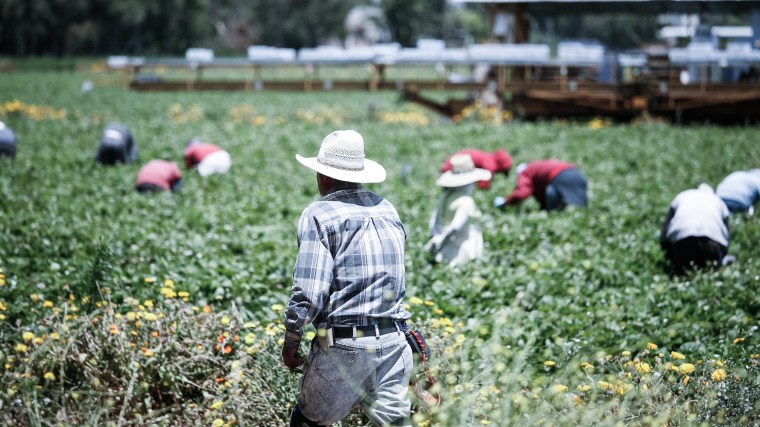
Mexican_Fruit_Pickers_(7618119180).jpgWhen I work in my yard I go all in. I usually end up with dirt smeared on my face and caked under my fingernails. Sweat runs downs my neck and my hair sticks up in all directions. There is nothing pretty about me in those times. The work is hard and often leaves my muscles aching and my back shouting at me in pain. The truth is that I overlook all of those things because I love being a weekend gardner so much. I can feel bursts of serotonin taking me to a happy place in my brain. Still, I think of my grandparents who themselves worked on farms day after back breaking day. I imagine how difficult it must have been for them to rise early and routinely toil in the sun. For me the labor is a hobby, one that I have the power to ignore anytime that I tire of the effort. For them it was the means of earning money to pay for a place to live and food on the table.

My grandparents’ descendants have done well. We generally have professional occupations that allow us to work in air conditioned buildings and bring home salaries good enough to pay others to do most of the back breaking work that we require if we so wish. We purchase our fruits and vegetables from Sprouts and have enough income for luxuries that they never even dreamed of owning. I feel their spirits when I am on my hands and knees caring for my plants while the sun beats down on my head. I frequently stop to savor a cold drink when I grow weary. I survey land that is my own, not the property of someone else. I remember and appreciate all of the things that they did so that one day all of us who came from their blood, sweat and tears would have a far better existence than they had.

I see beauty in the tomatoes, oranges and other produce that lines the bins at HEB. I don’t take such delights for granted because I understand the drudgery that people endured to bring those items to the markets where I shop. There were individuals who picked the fruits and vegetables hour after hour, day after day as long as the sun was shining. They were paid little and only received monetary rewards for full bushel baskets and bins. Their work was routine and tough on both body and soul. They are the nameless men and women whose plight has almost always been ignored throughout history. At one time they may have been slaves or indentured servants. In other eras they were the poor like my grandparents. Today they are mostly immigrants who toil from farm to farm, season to season in search of jobs that few of us would want.

I once traveled to a small town school to work with teachers who were struggling with the Hispanic children in their classrooms. They complained that the sons and daughters of migrant workers were skewing the test scores used to appraise their effectiveness as educators. They referred to the parents “the tree cutters” and insisted that these uneducated people didn’t care enough about their kids to realize the importance of schooling. It didn’t seem to occur to the baffled teachers that the mothers and fathers who worked so hard were in fact incredibly dedicated to their children, so much so that they were willing to do even the dirtiest of jobs. I was saddened by the ignorance of people who should have known better than to treat a significant portion of their student body as stereotypes. Even after my partner and I had shown them how to reach their charges they appeared to be as adamant as ever that the children of these hard working people were an inconvenience that would have preferred to simply wish away.

Most of us who live in the United States of America enjoy a level of plenty that might have made our ancestors feel wealthy. We are provided educational opportunities that were not afforded them. It was not uncommon in my grandparents’ day for youngsters to rarely attend school after the third or fourth grade. Sadly in many parts of the world even today people struggle to meet their most basic needs and even to feel safe. They are chronically hungry and suffer from health problems that are rarely addressed. We on the other hand are a nation that has mostly forgotten what it is like to live the way so many of our grandparents and great grandparents actually did. The conditions under which they labored are now mostly deemed illegal. 

I watched a group of students perform in the one act play, Gut Girls, not long ago. It addressed the working poor at the beginning of the twentieth century. It featured young women who worked in meat packing plants where the conditions were deplorable. I found myself imagining my grandfather who did a similar job for all of his working days. His legs became riddled with varicose veins and more often than not he was in pain but he never missed a single day of work. He boasted to his children that he had managed to feed them all the way through the Great Depression and keep a roof over their heads when others became homeless. He was proud to have regular work no matter how difficult it may have been and his children do not recall a single time when he complained. He endured his aches stoically.

There is great honor in hard work. We should celebrate anyone who is willing to devote time and effort to making an honest living. The person who collects our garbage is important just as the clerk behind the counter of a fast food restaurant is. The janitor is as indispensable as the manager, maybe even more so. We need our engineers and our electricians, our professors and our plumbers. The yard man who sculpts my lawn each weekend is always reliable and willing to do whatever is needed to make my home a lovely place to be. I truly don’t know what I would do without him. 

After a day of manicuring my plants, my hands are shouting at me with the sting of cuts and scrapes and bruises. They remind me to be thankful for what I have. They tell me to appreciate all good people everywhere. They urge me to be more generous and kind. But for the grace of God I might just as well have been born in another place or time that would have demanded more of me than I have ever had to expend.

Science or Art?

yam.jpgWhen my grandson runs the 1600 meter race only time determines the winner. It is a feat that is as objective as any measure might possibly be. Unless there is a photo finish or one of the time keepers doesn’t do his/her job properly there is no doubt about the victor. When another grandson performs in a one act play and a panel of judges decide who the best actors were and which troupe gave the finest overall impression, the yardstick is far more subjective. Hundreds of people seeing exactly the same thing will rate it differently depending on the background that they bring to the theater. There will be questions as to the authenticity and fairness of the evaluations, thus leaving the final votes open for criticism. Most of life is more like the later, subject to preferences rather than a set of hard and fast rules.

Each year when the Oscars are awarded I find myself scratching my head in dismay. I truly wonder how it is possible that Casey Affleck won the best acting prize when Denzel Washington was in the same category. I rail at the television and ask no one in particular if he/she was blind. Of course all such determinations are just a matter of opinion rather than fact. So it is with evaluating a teacher, a student or a school.

There are certain guidelines that are universal aspects of a well run classroom but we have not yet even agreed on whether teaching is an art or a science. There are those who maintain that if an individual understands and uses certain best practices, the results will be quite grand. Such beliefs rely on the idea that there is truly a science that leads to being an effective teacher, and there is something to be said for knowledge of pedagogy. Still, after spending decades inside classrooms both as a teacher and an administrator I have learned that there is something quite artistic about the process that elevates an educator to a magical level. Two people using the exact same methods often achieve very different results that can only be explained by noting that one is unimaginative while the other is an artist.

We attempt to measure educational success with numbers found in the scores of students on standardized exams. Of course we intuitively know that hundreds of factors affect the final outcomes of such attempts to quantify the teaching process. The list is so huge that it would be impossible to name all of the possibilities but a few examples might be the health of each student, the amount of rest each has had, the home environment, the presence of testing fears, hunger and so forth. None of these things can be totally controlled by the teacher and when a preponderance of them are affecting the child negatively the test score may be less than stellar. Somehow our society ignores such things in judging the value of our educational system. The numbers are king and yet they only tell a small part of the story and because of this they have a negative impact on everyone in the classroom.

Our present system of testing students at virtually every turn has created a totally unnecessary level of stress. We decide the futures of our children and their teachers even as we understand that those exam scores do not tell the whole story. Study after study has shown that most standardized tests favor middle class white males. For whatever reason all other groups do not do as well. It would be a stretch to assume that this is because the middle class white males are more intelligent. In fact, they are not, but they respond to the questions and answers differently because of their life experiences. The test items that are supposed to be neutral are far from that. They are often subject to interpretations that result in responses deemed to be incorrect. When students are given the opportunity to explain their reasons for selecting certain answers, interesting trends appear, including the fact that the questions are often more subjective than the creators imagined they would be. Given the importance that test scores are given in today’s world, it is quite distressing to realize that the element of subjectivity is often present.

As we learn these things it seems logical that we would begin to admit that our efforts to judge our students by the numbers is still rather ineffective, but in truth we appear to be relying on such evaluative measures even more than ever. The three ring circus created by this situation is disturbing to everyone involved including students, teachers and parents and yet it continues unabated. I suspect it has to do with our human tendency to desire easy answers for complex problems. Once we suggest a solution it is often impossible to rid ourselves of it even when it is obviously a mistake. Other than the realization that Prohibition was a stupid idea, we rarely turn back once we have chosen to pursue a certain path. Sadly I think that we will remain hell bent on using tests to quantify progress until we finally realize the magnitude of the damage that is being done to our educational processes.

The acquisition of knowledge should be an adventure and there are certainly gifted teachers who manage to achieve that even with the specter of testing hovering over their heads. Unfortunately far too many educators struggle under the pressure to perform. They are more like drones laboring away in a massive hive of routine. They use the prescribed methods but don’t quite know how to elevate them beyond the ordinary. They may even reach very satisfactory results but the love of learning is missing and their students feel the loss.

We have turned education into a political football. How we design curriculum and provide resources tends to depend more on which ideology is victorious in elections rather than a reasoned appraisal of student needs. If we test children it should not be to determine how rewards and punishments should be meted out but rather what educational designs are needed for each individual situation. Testing should be a positive experience rather than one that strikes fear and loathing into everyone concerned. It should be much like a physical exam at a doctor’s office, providing information on the educational health of each child and then determining what measures are needed to insure growth. We need to halt the practice of using exams as evaluative clubs to beat our children and teachers down.

I return to this topic again and again because it is so important. As citizens we have the power to demand that something be done to change the present system into one that generates a positive experience rather than a negative one. We have to admit that the way we evaluate is all too often flawed. There is a better way to determine how well our students are doing and what the results mean. If we return to the original intent of such tests we will do everyone a service. They were never meant to grade schools or teachers but rather to determine how much progress a student has made from one school year to the next and then to devise a learning plan that best suits each individual. If we manage to do this, we won’t need vouchers or children moving from one school to another. We will finally begin to do the work of educating as it should be done. We will finally enhance classrooms with both science and art.